This comprehensive guide provides expert analysis and market forecasts for Wrapped Bitcoin (WBTC) through 2031, helping investors understand this critical bridge between Bitcoin and Ethereum's DeFi ecosystem. The article examines WBTC's current market position at $91,855 with $11.48 billion market capitalization, analyzes historical price evolution and key driving factors including supply mechanisms, institutional dynamics, and macroeconomic conditions. It delivers detailed price predictions ranging from conservative to optimistic scenarios across 2026-2031, with projected average growth of 52% by 2030. The guide offers practical investment strategies for different investor profiles, comprehensive risk management frameworks including secure storage solutions on Gate.com, and evaluation of technical and regulatory challenges. Essential reading for Bitcoin holders seeking DeFi exposure and institutional investors exploring wrapped token opportunities.
Introduction: WBTC's Market Position and Investment Value
Wrapped Bitcoin (WBTC), as a pioneering ERC20 token pegged 1:1 to Bitcoin, has been facilitating cross-chain liquidity since its launch in 2019. Jointly introduced by BitGo, Kyber Network, and Ren, this innovative asset bridges Bitcoin's value with Ethereum's DeFi ecosystem. As of January 2026, WBTC has achieved a market capitalization of approximately $11.48 billion, with a circulating supply of around 124,963 tokens, maintaining a price level near $91,855. This asset, often regarded as "Bitcoin's gateway to decentralized finance," plays an increasingly vital role in enabling Bitcoin holders to participate in Ethereum-based DeFi protocols while preserving their Bitcoin exposure.
This article will comprehensively analyze WBTC's price trajectory from 2026 to 2031, combining historical patterns, market supply-demand dynamics, ecosystem development, and macroeconomic conditions to provide investors with professional price forecasts and practical investment strategies.
I. WBTC Price History Review and Market Status
WBTC Historical Price Evolution Trajectory
- 2019: WBTC launched in January and reached its lowest historical price of $3,139.17 in April, reflecting the early stage of token adoption and market discovery phase.
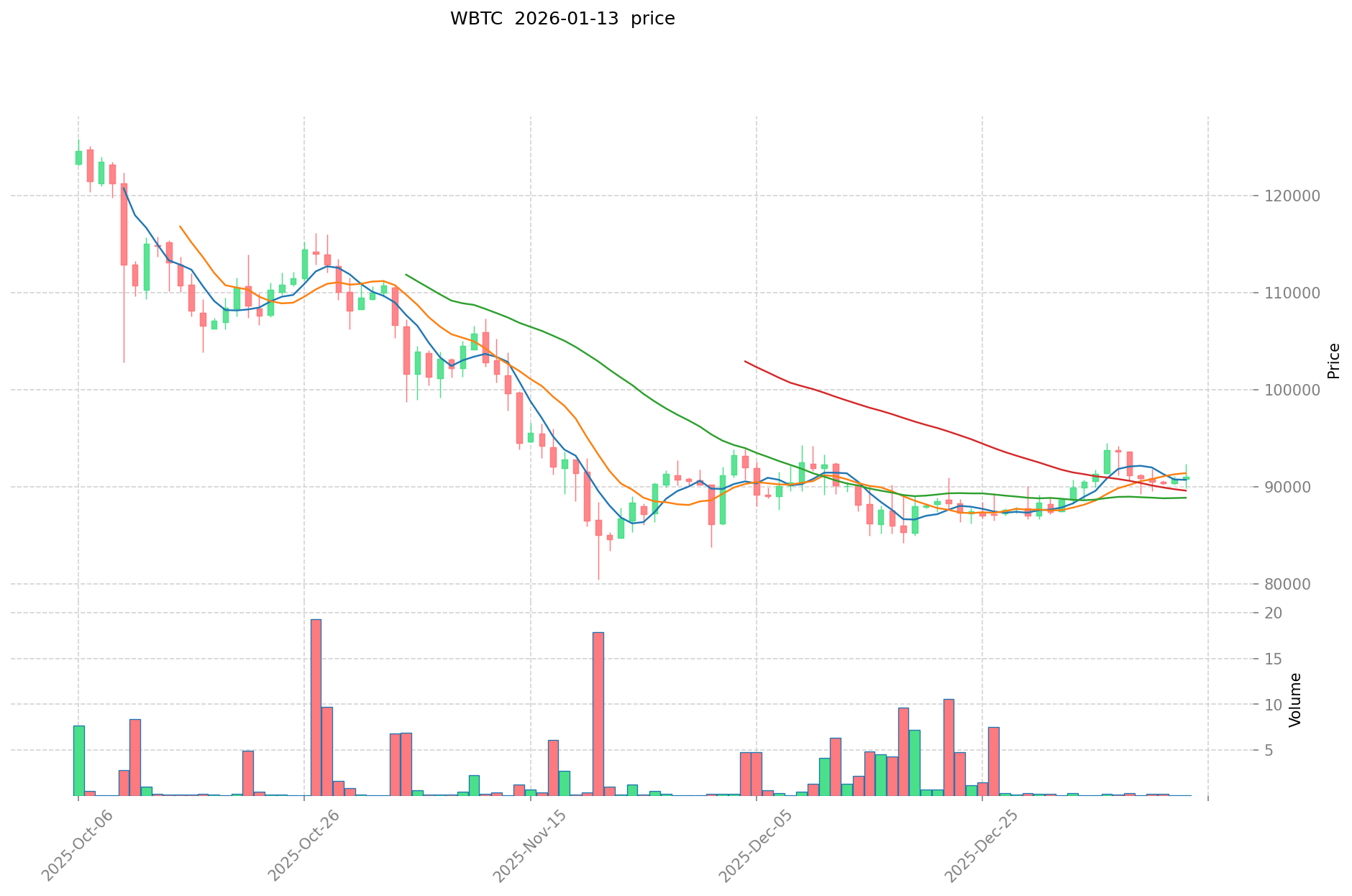
- 2025: Token price experienced significant volatility, reaching a notable level of $125,932 in October, influenced by broader cryptocurrency market trends.
- Recent Period: Price declined from higher levels to the current range around $91,855.1, showing market correction patterns.
WBTC Current Market Situation
As of January 13, 2026, WBTC is trading at $91,855.1, with a 24-hour trading volume of 9,267.90 WBTC. The token has shown a slight increase of 0.03% over the past 24 hours, with the price fluctuating between $89,874.2 and $92,163.7.
Over different timeframes, WBTC has demonstrated varied performance: a 1-hour decline of 0.16%, a 7-day decrease of 1.84%, a 30-day gain of 2.09%, and a 1-year decline of 2.96%. The token currently ranks 14th by market capitalization, which stands at approximately $11.48 billion.
WBTC maintains a circulating supply of 124,963.49 tokens out of a total supply of 124,963.49, representing a circulation ratio of approximately 96.77%. The token holds a market dominance of 0.35%. The current market sentiment indicator shows a fear index of 26, suggesting cautious investor sentiment. With 83,041 token holders and availability across 14 exchanges, WBTC demonstrates considerable market presence in the wrapped Bitcoin ecosystem.
Click to view current WBTC market price
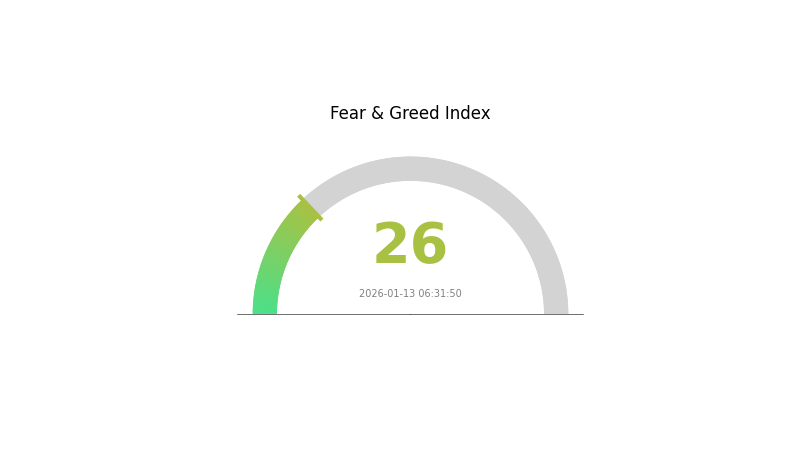
WBTC Market Sentiment Indicator
2026-01-13 Fear and Greed Index: 26 (Fear)
Click to view current Fear & Greed Index
The cryptocurrency market is currently dominated by fear sentiment, with the index standing at 26. This indicates heightened investor anxiety and cautious market positioning. When fear prevails, market participants tend to adopt defensive strategies and reduce risk exposure. Such periods often present buying opportunities for long-term investors, as assets may be undervalued due to panic selling. However, traders should remain vigilant and monitor market developments closely. On Gate.com, you can track real-time sentiment indicators to make informed trading decisions and better understand market dynamics.
WBTC Holdings Distribution
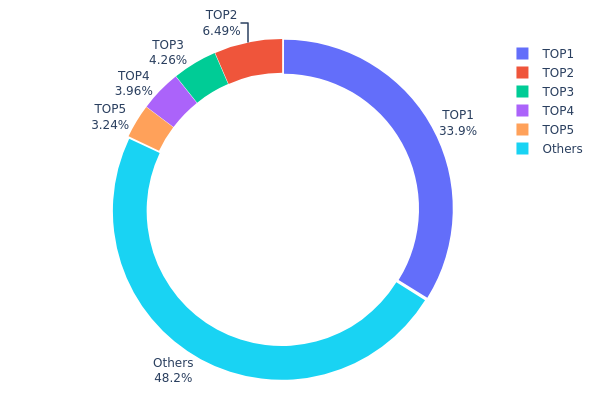
The holdings distribution chart illustrates the allocation of WBTC tokens across different wallet addresses, revealing the level of token concentration among major holders. This metric serves as a crucial indicator of decentralization and potential market manipulation risks within the WBTC ecosystem.
Current data reveals a significant concentration pattern in WBTC holdings. The top address alone controls 42.31K WBTC, representing 33.85% of the total supply, while the top five addresses collectively hold 64.74K WBTC, accounting for 51.78% of the circulating supply. This concentration level suggests a relatively centralized distribution structure, where a small number of entities maintain substantial control over the token supply.
Such concentrated holdings present both structural implications and market risks. The dominance of top holders creates potential vulnerability to large-scale liquidations or coordinated selling pressure, which could trigger significant price volatility. Additionally, this concentration pattern may limit liquidity distribution across the broader market, potentially amplifying price swings during periods of increased trading activity. However, it's worth noting that given WBTC's nature as a wrapped Bitcoin product, some concentration in custodial and institutional addresses is expected and reflects the operational framework of the token's backing mechanism.
Click to view current WBTC Holdings Distribution
| Top |
Address |
Holding Qty |
Holding (%) |
| 1 |
0x5ee5...ec6de8 |
42.31K |
33.85% |
| 2 |
0xa3a7...d60eec |
8.11K |
6.49% |
| 3 |
0xbbbb...eeffcb |
5.32K |
4.26% |
| 4 |
0xc3d6...84cdc3 |
4.95K |
3.95% |
| 5 |
0x3ee1...8fa585 |
4.05K |
3.23% |
| - |
Others |
60.22K |
48.22% |
II. Core Factors Influencing WBTC's Future Price
Supply Mechanism
-
1:1 BTC Pegging Model: WBTC maintains a 1:1 ratio with Bitcoin, meaning each WBTC represents one BTC held in custody reserves. This mechanism allows Bitcoin's value and liquidity to enter the decentralized finance (DeFi) ecosystem, enabling its use in smart contracts, lending, staking, and other DeFi applications.
-
Historical Pattern: WBTC's supply is directly influenced by Bitcoin's price movements and market demand for DeFi applications. As Bitcoin price increases by approximately 29.8% in a single quarter, bridging protocols' Total Value Locked (TVL) tends to rise correspondingly, with major cross-chain bridges' TVL growing from $30.6 billion to $41.5 billion.
-
Current Impact: The supply mechanism faces ongoing scrutiny regarding centralized custody risks. Market participants are increasingly evaluating alternative solutions that balance accessibility with decentralization principles, which may influence WBTC adoption rates in DeFi protocols.
Institutional and Major Holder Dynamics
-
Institutional Holdings: The Bitcoin ecosystem is experiencing a structural shift driven by institutional investors, with institutional participation rates rising from 20% in 2024 to 50% in 2025. Major institutional players are increasingly viewing Bitcoin as a portfolio allocation asset rather than purely speculative instrument.
-
Corporate Adoption: The transformation toward institutional dominance has led to more stable market conditions, with Bitcoin volatility declining to 35-40%, lower than certain technology stocks. This institutional adoption provides underlying support for wrapped Bitcoin products like WBTC.
-
Regulatory Environment: Digital asset regulatory clarity, particularly through potential legislation such as the Digital Asset Market Clarity Act, remains a critical factor. Regulatory progress could unlock additional institutional capital flows, though delays may temper growth momentum.
Macroeconomic Environment
-
Monetary Policy Impact: Central bank policies significantly influence Bitcoin-related assets. While multiple rate cuts occurred in 2025, consensus projections suggest only 1-2 additional cuts may occur in 2026. If economic data remains strong or inflation rebounds, the Federal Reserve may pause or delay rate cuts, potentially increasing the opportunity cost of holding Bitcoin-related assets.
-
Inflation Hedge Characteristics: Bitcoin continues to be evaluated as a potential hedge against currency debasement, with some institutional reports projecting theoretical fair values based on Bitcoin's market capitalization challenging gold's $28.3 trillion scale. However, real interest rate increases could pressure Bitcoin and WBTC valuations.
-
Geopolitical Factors: Global economic growth trajectories, international trade dynamics, and currency strength variations impact Bitcoin as a risk asset. A stronger U.S. dollar index (DXY rising above 105) could directly pressure Bitcoin-related token prices, while global economic uncertainties may drive alternative investment interest.
Technical Development and Ecosystem Building
-
Layer 2 Scaling Solutions: The Bitcoin ecosystem is developing numerous Layer 2 solutions, with over 73 active projects working on Bitcoin L2 implementations and total value locked exceeding $3.61 billion. These developments aim to enhance Bitcoin's utility beyond its native blockchain, though most remain in early stages with only 26 having live mainnets.
-
DeFi Integration Expansion: WBTC serves as a critical bridge bringing Bitcoin value into Ethereum-compatible DeFi protocols. By wrapping BTC as an ERC-20 token, WBTC enables Bitcoin holders to access decentralized applications, lending platforms, and yield-generating opportunities that would otherwise be incompatible with Bitcoin's native blockchain.
-
Ecosystem Applications: The wrapped Bitcoin ecosystem continues evolving alongside broader DeFi infrastructure development. However, centralized custody models face ongoing evaluation, with market participants weighing trade-offs between accessibility, security, and decentralization principles in selecting wrapped Bitcoin solutions.
III. 2026-2031 WBTC Price Forecast
2026 Outlook
- Conservative prediction: $71,646.98 - $91,855.10
- Neutral prediction: approximately $91,855.10
- Optimistic prediction: up to $104,714.81 (requiring favorable market conditions and sustained institutional demand)
2027-2029 Mid-term Outlook
- Market stage expectation: transitioning from recovery phase to potential bull market cycle, with gradual maturation of cryptocurrency adoption
- Price range predictions:
- 2027: $61,919.52 - $130,718.99
- 2028: $59,541.03 - $147,707.55
- 2029: $102,261.71 - $148,148.38
- Key catalysts: expansion of Bitcoin ETF market, increased institutional integration, potential regulatory clarity, and growing demand for Bitcoin-backed DeFi applications
2030-2031 Long-term Outlook
- Baseline scenario: $85,172.21 - $139,626.57 (assuming steady market growth and continued Bitcoin adoption)
- Optimistic scenario: $139,626.57 - $152,192.96 (requiring mainstream institutional adoption and favorable macroeconomic conditions)
- Transformative scenario: reaching toward $156,123.45 (contingent upon breakthrough regulatory frameworks, mass adoption of tokenized assets, and substantial expansion of decentralized finance ecosystems)
- 2026-01-13: WBTC price projections indicate potential growth trajectory with expected average increase of 52% by 2030 compared to 2026 baseline
| Year |
Predicted High Price |
Predicted Average Price |
Predicted Low Price |
Price Change |
| 2026 |
104714.81 |
91855.1 |
71646.98 |
0 |
| 2027 |
130718.99 |
98284.96 |
61919.52 |
7 |
| 2028 |
147707.55 |
114501.97 |
59541.03 |
24 |
| 2029 |
148148.38 |
131104.76 |
102261.71 |
42 |
| 2030 |
152192.96 |
139626.57 |
85172.21 |
52 |
| 2031 |
156123.45 |
145909.77 |
86086.76 |
58 |
IV. WBTC Professional Investment Strategies and Risk Management
WBTC Investment Methodology
(1) Long-term Holding Strategy
- Target Investors: Investors seeking Bitcoin exposure within the Ethereum ecosystem, DeFi participants, and those looking for BTC liquidity without selling their positions
- Operational Recommendations:
- Accumulate WBTC during periods when the price is below $95,000, utilizing dollar-cost averaging to mitigate timing risk
- Monitor the 1:1 peg maintenance with Bitcoin and verify on-chain reserves through custodian transparency reports
- Store assets in Gate Web3 Wallet for secure custody with multi-signature protection and regular backup procedures
(2) Active Trading Strategy
- Technical Analysis Tools:
- Moving Averages: Use 50-day and 200-day moving averages to identify trend direction; the current price of $91,855 suggests consolidation phase analysis
- Volume Analysis: Monitor 24-hour trading volume of 9,267.90 WBTC to gauge market liquidity and potential breakout signals
- Swing Trading Key Points:
- Set stop-loss orders 3-5% below entry price to manage downside risk in volatile market conditions
- Take profit targets near resistance levels, considering the all-time high of $125,932 as a psychological ceiling
WBTC Risk Management Framework
(1) Asset Allocation Principles
- Conservative Investors: 5-10% allocation to WBTC as part of a diversified crypto portfolio
- Aggressive Investors: 15-25% allocation, suitable for those comfortable with price volatility and seeking DeFi yield opportunities
- Professional Investors: 20-40% allocation, leveraging WBTC for advanced strategies including collateralized lending and liquidity provision
(2) Risk Hedging Solutions
- Portfolio Diversification: Balance WBTC holdings with stablecoins and other major cryptocurrencies to reduce correlation risk
- Position Sizing: Never allocate more than you can afford to lose, considering WBTC's historical drawdown from $125,932 to current levels
(3) Secure Storage Solutions
- Hot Wallet Recommendation: Gate Web3 Wallet for active trading and DeFi interactions with user-friendly interface and robust security features
- Cold Storage Solution: Hardware wallet integration for long-term holdings exceeding $10,000 in value, with offline private key management
- Safety Precautions: Enable two-factor authentication, regularly update wallet software, and maintain encrypted backups of recovery phrases in multiple secure locations
V. WBTC Potential Risks and Challenges
WBTC Market Risks
- Price Volatility: WBTC exhibits correlation with Bitcoin price movements, with 1-year performance showing -2.96% decline to $91,855, indicating exposure to broader crypto market sentiment
- Liquidity Risk: Although WBTC maintains substantial trading volume across 14 exchanges, extreme market conditions could impact redemption capabilities and peg stability
- Market Capitalization Concentration: With $11.48 billion market cap and 0.35% market dominance, WBTC's relatively smaller size compared to Bitcoin may amplify volatility during market stress
WBTC Regulatory Risks
- Custodial Oversight: WBTC's reliance on BitGo and other custodians introduces counterparty risk subject to evolving regulatory frameworks for digital asset custody
- Token Classification: Regulatory uncertainty regarding wrapped tokens' status across different jurisdictions may impact accessibility and compliance requirements
- Cross-chain Compliance: Operating on Ethereum while representing Bitcoin creates complex regulatory considerations regarding securities laws and token standards
WBTC Technical Risks
- Smart Contract Vulnerability: As an ERC20 token, WBTC depends on Ethereum smart contract security; potential bugs or exploits could compromise user funds
- Peg Maintenance Risk: The 1:1 Bitcoin backing mechanism requires trust in custodian transparency and minting/burning processes, with any deviation threatening token value
- Bridge Risk: The conversion process between Bitcoin and WBTC introduces technical complexities and potential failure points during high-demand periods
VI. Conclusion and Action Recommendations
WBTC Investment Value Assessment
WBTC represents a bridge between Bitcoin's store-of-value proposition and Ethereum's DeFi ecosystem utility. With 124,963 tokens in circulation backed by verifiable Bitcoin reserves, WBTC offers liquidity and composability advantages for users seeking Bitcoin exposure within smart contract applications. The current price of $91,855 reflects market positioning below the all-time high of $125,932, suggesting potential upside for patient investors. However, custodial dependencies and technical complexities introduce risks that require careful evaluation. Long-term value hinges on sustained demand for Bitcoin-Ethereum interoperability and confidence in the custodial infrastructure.
WBTC Investment Recommendations
✅ Beginners: Start with small positions not exceeding 5% of crypto portfolio; focus on understanding the 1:1 Bitcoin peg mechanism and custodial model before increasing exposure
✅ Experienced Investors: Consider 10-20% allocation for DeFi participation strategies, utilizing WBTC as collateral for lending protocols while monitoring custodian transparency reports
✅ Institutional Investors: Evaluate WBTC for treasury diversification and yield generation, conducting thorough due diligence on custodian counterparty risk and regulatory compliance frameworks
WBTC Trading Participation Methods
- Spot Trading: Purchase WBTC directly on Gate.com with competitive liquidity and secure custody options for immediate exposure
- DeFi Integration: Deploy WBTC in decentralized lending platforms and liquidity pools to generate passive yield while maintaining Bitcoin market exposure
- Portfolio Rebalancing: Use WBTC to adjust Bitcoin allocation within multi-asset portfolios without exiting the crypto ecosystem or incurring additional conversion costs
Cryptocurrency investment carries extreme risk, and this article does not constitute investment advice. Investors should make prudent decisions based on their own risk tolerance and are advised to consult professional financial advisors. Never invest more than you can afford to lose.
FAQ
What is WBTC? How does it differ from Bitcoin?
WBTC is a wrapped token on Ethereum that represents Bitcoin in a 1:1 ratio. Unlike BTC on the Bitcoin blockchain, WBTC is an ERC-20 token enabling Bitcoin holders to access Ethereum's DeFi ecosystem while maintaining Bitcoin's value. Each WBTC is backed by locked Bitcoin through a custody mechanism.
What are the main factors affecting WBTC price?
WBTC price is primarily influenced by Bitcoin price movements, as WBTC is pegged 1:1 to BTC. Ethereum network conditions, market sentiment, trading volume, and overall crypto market trends also significantly impact WBTC valuation.
How to conduct WBTC price prediction? What are the analysis methods?
WBTC price prediction uses technical analysis and fundamental analysis methods. Key tools include candlestick charts, moving averages, and trading volume analysis. Combine market trends and historical data for accurate forecasting.
Why does WBTC price differ from BTC price?
WBTC price differences from BTC stem from liquidity disparities and varying demand across networks. WBTC trades on Ethereum with different market conditions than native BTC, causing price premiums or discounts based on network activity and trading volume.
What are the risks to pay attention to when investing in WBTC?
WBTC investment carries risks including price volatility, smart contract vulnerabilities, and regulatory uncertainty. Key concerns are Ethereum network risks, Bitcoin price fluctuations, and custodian dependencies. Use secure wallets and monitor market developments carefully.
What is the liquidity and trading volume of WBTC?
WBTC demonstrates strong liquidity with trading volume reaching $1.01 billion in December 2024, an all-time high. This reflects robust demand and excellent liquidity in DeFi ecosystems, positioning WBTC as a leading wrapped Bitcoin solution.
* The information is not intended to be and does not constitute financial advice or any other recommendation of any sort offered or endorsed by Gate.