This comprehensive article examines LightLink (LL), an Ethereum Layer 2 blockchain solution, analyzing its price trajectory from 2026-2031 for investors seeking digital asset insights. The guide reviews LL's market position, current trading at $0.004134 with significant volatility, and provides professional price forecasts ranging from $0.00331 to $0.01163 across different scenarios. It addresses core factors influencing price movements, including macroeconomic conditions, market competition, and geopolitical risks, while evaluating LL's holdings distribution showing 83.61% concentration among top five addresses. The article equips investors with actionable strategies covering long-term holding approaches, active trading techniques, and risk management frameworks including portfolio allocation principles and secure storage solutions on Gate. Finally, it identifies critical challenges such as limited liquidity, regulatory uncertainty, and intense Layer 2 competition, offering tailored recommendations for begin
Introduction: LL's Market Position and Investment Value
LightLink (LL), positioned as an Ethereum Layer 2 blockchain offering instant, gasless transactions for dApps and enterprise users, has been developing blockchain solutions since 2017. As of 2026, LL has a market capitalization of approximately $1.73 million, with a circulating supply of around 417.88 million tokens, and the price is maintained at around $0.004134. This asset, characterized by its proprietary stack technology and enterprise-focused approach, is playing an increasingly important role in the Layer 2 scaling solutions sector and enterprise blockchain integration.
This article will comprehensively analyze LL's price trends from 2026 to 2031, combining historical patterns, market supply and demand dynamics, ecosystem development, and macroeconomic environment to provide investors with professional price forecasts and practical investment strategies.
I. LL Price History Review and Current Market Status
LL Historical Price Evolution Trajectory
- 2024: Token launched in April with an initial price of $0.3, establishing its presence in the Ethereum Layer 2 ecosystem
- 2024-2026: Price experienced significant volatility, declining from the launch price of $0.3 to current levels around $0.004134
- Recent Period: Price reached its lowest point at $0.004129 on February 1, 2026, marking a substantial correction from historical levels
LL Current Market Status
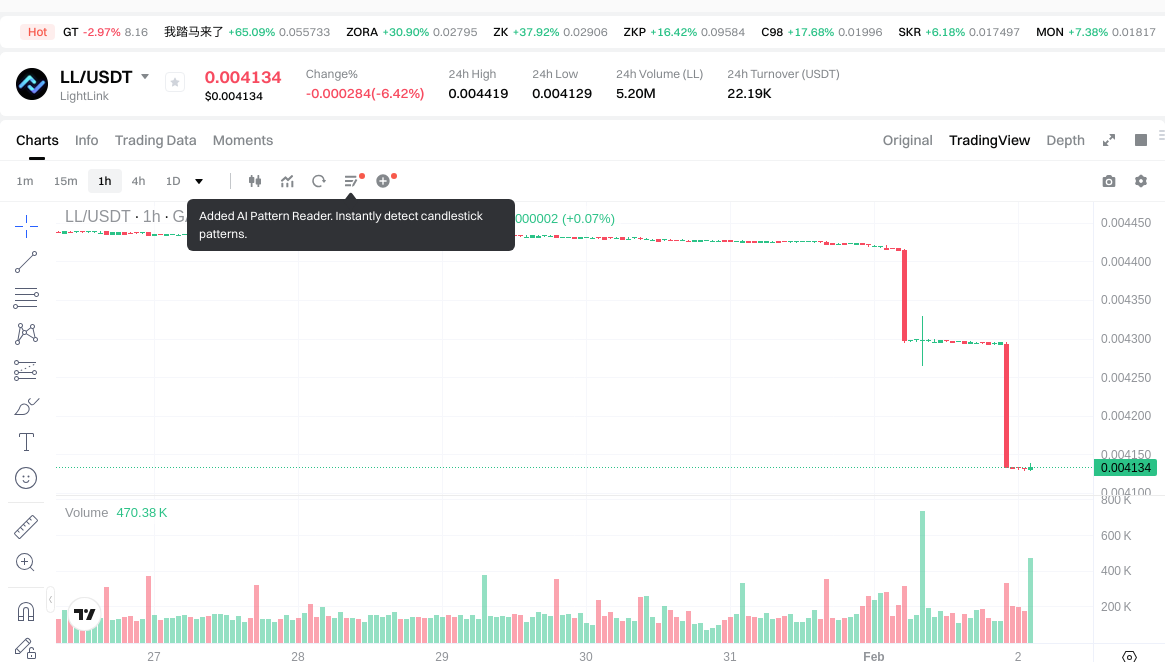
As of February 2, 2026, LightLink (LL) is trading at $0.004134, reflecting a 6.38% decrease over the past 24 hours. The token has demonstrated notable price volatility across different timeframes, with a 6.80% decline over the past week and a more substantial 42.44% decrease over the past 30 days.
The token's 24-hour trading volume stands at approximately $21,633.84, indicating relatively modest trading activity. The current market capitalization is approximately $1.73 million, with a circulating supply of 417.88 million LL tokens, representing 41.79% of the total supply of 1 billion tokens. The fully diluted market cap is calculated at $4.13 million.
From a historical perspective, LL has experienced considerable price movement since its launch. The token reached its peak price of $0.3 on April 24, 2024, and subsequently declined to its current price range. The recent low of $0.004129 recorded on February 1, 2026, represents a significant decline from the launch price.
The token's market position remains relatively modest, with a market dominance of 0.00015%. The circulating market cap to fully diluted valuation ratio of 41.79% suggests that a substantial portion of the total token supply has yet to enter circulation.
Short-term price action shows some stabilization, with a slight 0.16% increase over the past hour, though broader trends indicate continued downward pressure. The 24-hour price range has fluctuated between $0.004129 and $0.00442, demonstrating ongoing volatility within a narrow price band.
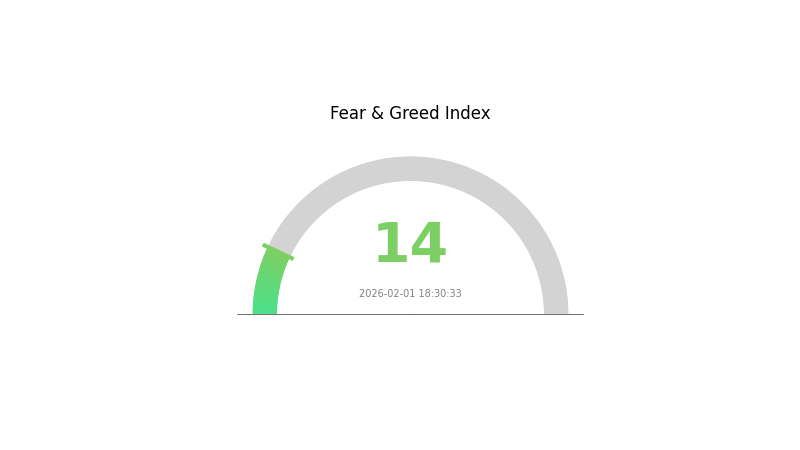
The current market sentiment index stands at 14, indicating an "Extreme Fear" condition in the broader cryptocurrency market, which may be influencing LL's price performance alongside token-specific factors.
Click to view current LL market price
LL Market Sentiment Indicator
2026-02-01 Fear and Greed Index: 14 (Extreme Fear)
Click to view current Fear & Greed Index
The cryptocurrency market is currently in a state of extreme fear, with the index plummeting to 14. This exceptionally low reading suggests investors are experiencing significant pessimism and risk aversion. Market participants are likely reassessing positions and adopting cautious strategies. Such extreme fear levels historically present potential opportunities for contrarian investors, though careful analysis remains essential. Traders should monitor market fundamentals and maintain disciplined risk management during this volatile period.
LL Holding Distribution
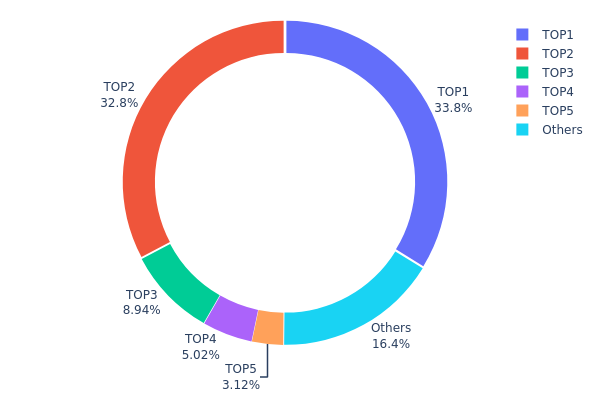
The holding distribution chart illustrates the concentration of token ownership across different wallet addresses, revealing how decentralized or centralized a cryptocurrency's supply is among holders. This metric serves as a critical indicator of market structure, as highly concentrated holdings may suggest potential price manipulation risks or lack of broad market participation.
Based on the current data, LL exhibits significant concentration characteristics, with the top two addresses collectively controlling 66.55% of the total supply—the first address holding 33.79% (337,964.36K tokens) and the second holding 32.76% (327,601.76K tokens). The top five addresses account for 83.61% of total holdings, while all remaining addresses collectively hold only 16.39%. This distribution pattern indicates a highly centralized supply structure, which deviates substantially from the ideal decentralized model typically sought in cryptocurrency ecosystems.
Such concentrated holding distribution presents multiple implications for market dynamics. The dominance of large holders creates potential vulnerabilities, including heightened price volatility susceptibility when major addresses execute transactions, reduced liquidity depth in secondary markets, and elevated systematic risks associated with potential coordinated actions by whale addresses. This concentration level suggests that LL's on-chain structure remains in a relatively early developmental stage, lacking the broad-based holder distribution that characterizes mature cryptocurrency projects with robust decentralization. Market participants should recognize that current price movements may be disproportionately influenced by decisions made by a limited number of large holders, potentially affecting market stability and predictability.
Click to view current LL Holding Distribution
| Top |
Address |
Holding Qty |
Holding (%) |
| 1 |
0x6310...121ee9 |
337964.36K |
33.79% |
| 2 |
0x8c6e...80ca8e |
327601.76K |
32.76% |
| 3 |
0x2da1...82872e |
89403.72K |
8.94% |
| 4 |
0xf89d...5eaa40 |
50197.53K |
5.01% |
| 5 |
0x58ed...a36a51 |
31183.57K |
3.11% |
| - |
Others |
163649.06K |
16.39% |
II. Core Factors Influencing LL's Future Price
Macroeconomic Environment
-
Interest Rate Changes: Global economic trends and interest rate adjustments represent primary factors affecting LL's price trajectory. As central banks continue policy rate relaxation, long-term interest rates have approached or reached expected stable levels, limiting further compression space in the recovery phase.
-
Investment Environment Shifts: The real estate market is experiencing structural transformation with increased market transparency and maturity, leading to intensified competition and reduced opportunities for excess returns. Institutional allocation has stabilized, with scarce new capital inflows creating a more challenging investment landscape.
-
Capital Market Dynamics: The market has evolved to become larger in scale, more transparent, and more mature, resulting in fierce competition and diminished opportunities for outsize profits. Risk premiums have reached extremely low levels as property yields failed to keep pace with rising bond yields.
Market Competition and Transparency
-
Competitive Landscape: Higher real estate market transparency has intensified competition among investors, making it more difficult to secure superior returns compared to previous cycles.
-
Tenant Demand Evolution: Tenant requirements have become increasingly complex and diverse, demanding greater flexibility in building usage and lease agreements with landlords. This shift in tenant dynamics creates additional pressure on property valuations and rental growth potential.
Geopolitical Risks
-
Global Uncertainty: Geopolitical factors and international uncertainties continue to impact real estate investment decisions, adding another layer of complexity to price forecasting and investment strategies.
-
Policy Environment: Regulatory changes and policy shifts at various levels contribute to market volatility and influence long-term price trends.
Structural Changes and Volatility
-
Accelerated Transformation: Structural changes are accelerating across the real estate sector, leading to increased volatility. Business cycles are shortening while divergence in asset returns is widening.
-
Economic Stagnation Pressures: The global economy is returning to an environment of long-term stagnation, with population aging and shrinking labor forces contributing to weakened individual demand dynamics.
III. 2026-2031 LL Price Prediction
2026 Outlook
- Conservative prediction: $0.00331 - $0.00413
- Neutral prediction: $0.00413 (average scenario)
- Optimistic prediction: up to $0.00492 (requires favorable market conditions and increased adoption)
2027-2029 Outlook
- Market stage expectation: The token is anticipated to experience gradual growth as market conditions evolve and potential developments unfold
- Price range prediction:
- 2027: $0.00435 - $0.00525
- 2028: $0.00401 - $0.00699
- 2029: $0.00350 - $0.00748
- Key catalysts: Progressive market maturation, potential technological improvements, and broader ecosystem development may contribute to price movements
2030-2031 Long-term Outlook
- Baseline scenario: $0.00450 - $0.00671 (assuming steady market development)
- Optimistic scenario: $0.00802 - $0.00933 (contingent on enhanced adoption and favorable market dynamics)
- Transformative scenario: up to $0.01163 (dependent on exceptional market conditions and significant ecosystem expansion)
- 2026-02-02: LL current baseline average projection stands at $0.00413 (early stage of predicted trajectory)
| Year |
Predicted High Price |
Predicted Average Price |
Predicted Low Price |
Price Change |
| 2026 |
0.00492 |
0.00413 |
0.00331 |
0 |
| 2027 |
0.00525 |
0.00453 |
0.00435 |
9 |
| 2028 |
0.00699 |
0.00489 |
0.00401 |
18 |
| 2029 |
0.00748 |
0.00594 |
0.0035 |
43 |
| 2030 |
0.00933 |
0.00671 |
0.0045 |
62 |
| 2031 |
0.01163 |
0.00802 |
0.00473 |
94 |
IV. LL Professional Investment Strategy and Risk Management
LL Investment Methodology
(1) Long-term Holding Strategy
- Suitable for: Investors with a long-term outlook and belief in Ethereum Layer 2 ecosystem development
- Operational Recommendations:
- Consider accumulating positions during market corrections when LL price approaches recent support levels
- Monitor LightLink's enterprise partnership developments and technology updates as fundamental indicators
- Implement secure storage using Gate Web3 Wallet for long-term holdings, ensuring private key security
(2) Active Trading Strategy
- Technical Analysis Tools:
- Volume Analysis: Monitor the 24-hour trading volume ($21,633.84) relative to market cap to assess liquidity conditions
- Support/Resistance Levels: Track the 24-hour range ($0.004129-$0.00442) to identify potential entry and exit points
- Swing Trading Considerations:
- Given the -6.38% 24-hour movement, traders should set appropriate stop-loss levels
- Pay attention to broader Layer 2 sector movements as they may influence LL price action
LL Risk Management Framework
(1) Asset Allocation Principles
- Conservative Investors: 1-2% of crypto portfolio allocation
- Aggressive Investors: 3-5% of crypto portfolio allocation
- Professional Investors: Up to 5-8% with active monitoring
(2) Risk Hedging Strategies
- Portfolio Diversification: Balance LL holdings with established Layer 1 and Layer 2 tokens
- Position Sizing: Given the circulating supply of 417.88 million tokens (41.79% of total supply), be aware of potential supply expansion impacts
(3) Secure Storage Solutions
- Hot Wallet Recommendation: Gate Web3 Wallet for active trading and accessibility
- Cold Storage Option: For long-term holdings, consider hardware wallet solutions with proper backup procedures
- Security Precautions: Never share private keys, enable two-factor authentication, and verify contract addresses (0x0921799cb1d702148131024d18fcde022129dc73 on Ethereum)
V. LL Potential Risks and Challenges
LL Market Risks
- High Volatility: LL has experienced significant price fluctuation with -42.44% over 30 days and -85.18% over 1 year, indicating substantial volatility
- Limited Liquidity: With only 2 exchanges listing LL and relatively modest 24-hour volume, liquidity constraints may impact execution during volatile periods
- Market Dominance: LL's 0.00015% market dominance suggests limited market recognition and potential price sensitivity to broader market movements
LL Regulatory Risks
- Layer 2 Regulatory Uncertainty: Evolving regulatory frameworks for Layer 2 solutions may impact LightLink's operational model
- Enterprise Partnership Compliance: As LightLink targets enterprise clients, regulatory requirements for business blockchain applications may affect adoption
- Cross-jurisdictional Considerations: LightLink's APAC enterprise focus may face varying regulatory environments across different regions
LL Technical Risks
- Layer 2 Competition: Intense competition among Ethereum Layer 2 solutions may impact LightLink's market share and technology adoption
- Smart Contract Vulnerabilities: As an ERC20 token on Ethereum, LL faces potential risks from smart contract exploits or protocol vulnerabilities
- Network Dependency: LightLink's performance relies on Ethereum mainnet stability and the success of its proprietary technology stack
VI. Conclusion and Action Recommendations
LL Investment Value Assessment
LightLink (LL) presents as an Ethereum Layer 2 solution focusing on gasless transactions for dApps and enterprise users. With a current price of $0.004134 and significant distance from its all-time high of $0.3 (achieved in April 2024), the token has experienced substantial depreciation. The 41.79% circulating supply suggests potential future dilution concerns. LightLink's enterprise partnership focus and APAC market presence represent potential long-term value drivers, though current market metrics indicate elevated short-term volatility and liquidity challenges. The project's positioning in the competitive Layer 2 landscape requires careful evaluation.
LL Investment Recommendations
✅ Beginners: Start with minimal exposure (less than 1% of portfolio) to understand Layer 2 token dynamics; focus on education about LightLink's technology and market position before increasing allocation
✅ Experienced Investors: Consider small position sizing (2-3% of crypto portfolio) with disciplined risk management; monitor enterprise partnership announcements and technology development milestones
✅ Institutional Investors: Conduct thorough due diligence on LightLink's enterprise client base and technology differentiation; evaluate position sizing based on Layer 2 sector allocation strategy with appropriate hedging
LL Trading Participation Methods
- Spot Trading: Access LL spot trading on Gate.com with appropriate position sizing and risk management
- Dollar-Cost Averaging: Implement systematic accumulation strategy to mitigate timing risk in volatile market conditions
- Portfolio Integration: Consider LL as part of a diversified Layer 2 ecosystem portfolio rather than concentrated holding
Cryptocurrency investment carries extremely high risk, and this article does not constitute investment advice. Investors should make cautious decisions based on their own risk tolerance and are advised to consult professional financial advisors. Never invest more than you can afford to lose.
FAQ
What is LL? What are its uses and value?
LL is a utility token designed for the Web3 ecosystem, providing governance rights and transaction fee discounts. Its value derives from utility within its protocol, community adoption, and potential network growth as demand increases.
What is the historical price trend of LL? What are the main factors affecting its price fluctuations?
LL's historical price is influenced by market demand, trading volume, policy changes, and overall crypto market sentiment. Key volatility drivers include adoption rates, ecosystem developments, and macroeconomic factors affecting the broader digital asset market.
LL price prediction uses technical analysis, on-chain metrics, and machine learning models like linear regression and random forests. Common tools include Python libraries, TradingView, and blockchain analytics platforms. Historical volume and market sentiment are key indicators.
What is the accuracy of LL price predictions? What risks should I pay attention to when making price predictions?
LL price predictions are based on technical analysis and market data, offering directional guidance. Accuracy varies with market volatility. Key risks include sudden market swings, liquidity changes, and unforeseen events. Predictions should supplement your research, not replace fundamental analysis and market monitoring.
LL demonstrates relatively stable price performance with strong resilience during market downturns. Compared to similar assets, LL tends to show conservative price movements while maintaining solid trading volume during volatility periods.
What are professional analysts' expectations for LL's future price?
Professional analysts predict LL could reach $0.007429 by end of 2025 and potentially $0.01505 by 2030. Short-term fluctuations may occur, but long-term growth potential exists based on technical analysis.
* The information is not intended to be and does not constitute financial advice or any other recommendation of any sort offered or endorsed by Gate.