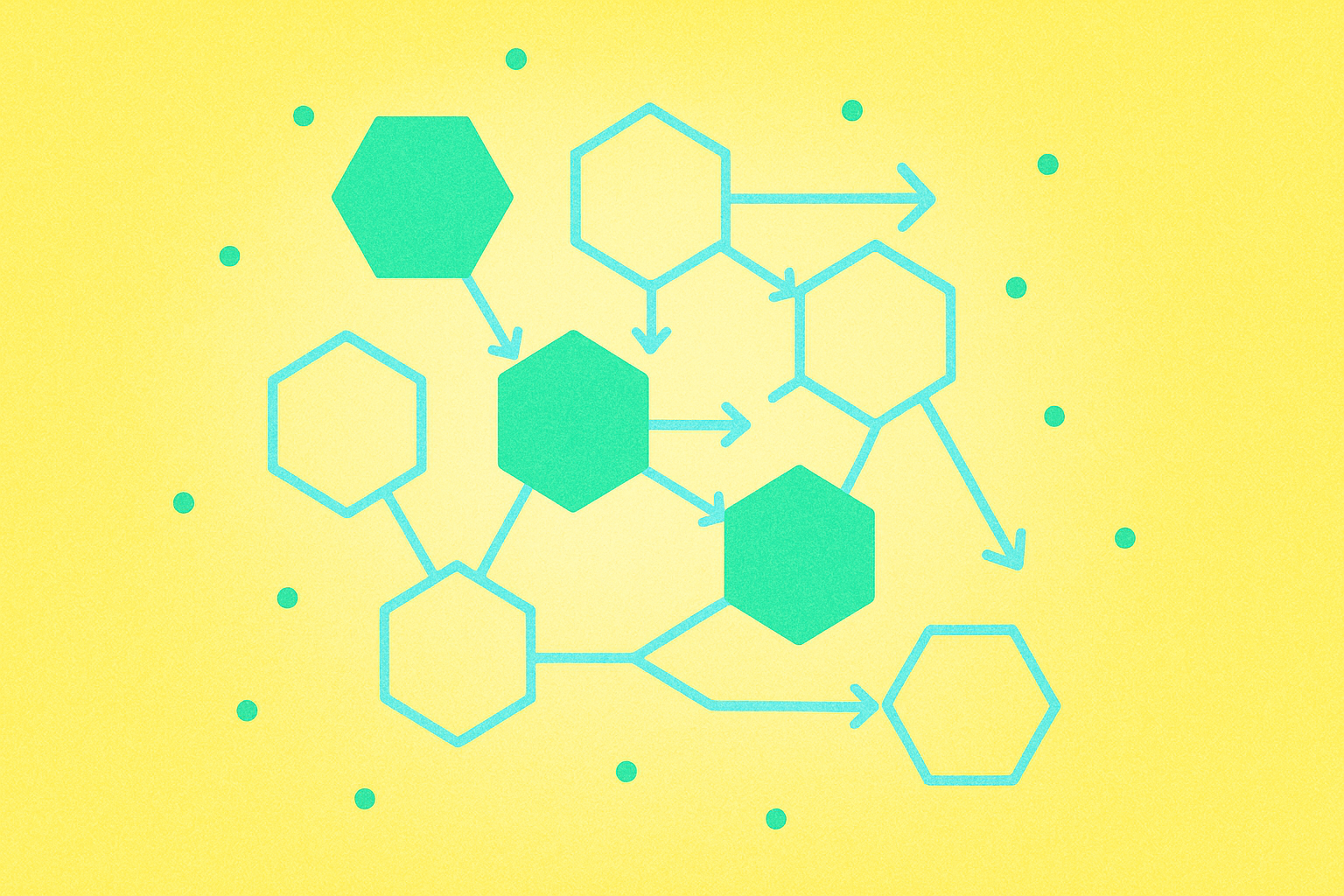
Explore how Tangle technology presents a cutting-edge alternative to conventional blockchain solutions, improving scalability and removing transaction fees. Gain insights into how Tangle works, its benefits compared to blockchain, and the potential challenges facing investors and developers in the crypto and Web3 sectors.
Tangle in Distributed Ledger Technology
What Is a Tangle?
Tangle is a cutting-edge distributed ledger technology that employs a Directed Acyclic Graph (DAG) structure instead of the conventional blockchain design. This distinct architecture marks a major shift from the linear block chains used in traditional systems, as transactions in Tangle are interconnected in a web-like pattern. Rather than organizing transactions sequentially in blocks, Tangle enables multiple transactions to coexist at the same time in a branching structure, resulting in a more complex yet potentially more efficient network.
This structure leverages core concepts from graph theory, allowing each transaction to reference multiple previous transactions rather than just one, as is typical with blockchain. This critical feature lays a robust foundation for decentralized processing and distributed validation.
Validation Mechanism and Functionality
Tangle’s primary innovation is its validation mechanism: when a user initiates a new transaction, they must first validate two prior transactions on the network. This process establishes a self-sustaining system where every participant actively bolsters network security and consensus. As new transactions are added, they create a dense web of interconnected validations, with newer transactions indirectly confirming older ones through this ongoing validation process.
This mechanism fully decentralizes transaction validation. No single authority confirms transactions; instead, confirmation emerges from the collective actions of all network users. Each new transaction reinforces the security and confirmation of earlier transactions, creating a compounding effect that strengthens over time.
Advantages Over Traditional Blockchain Technology
Tangle’s architecture delivers several key advantages over conventional blockchain. It allows parallel transaction processing, opening the door to potentially unlimited scalability. While blockchains process transactions sequentially in blocks, Tangle can handle many simultaneous transactions, dramatically boosting network throughput.
Additionally, since every user helps validate transactions, the system does not require specialized miners or validators, eliminating transaction fees. This makes Tangle exceptionally well-suited for micropayments and Internet of Things (IoT) devices, where minimizing transaction costs is crucial. For instance, in IoT networks with millions of sensors exchanging micropayments, blockchain fees become prohibitive, but Tangle supports nearly fee-free transactions.
Tangle’s architecture also solves typical blockchain bottleneck issues. Rather than channeling all transactions through a single chain, Tangle processes many transactions concurrently. As network activity grows, transaction confirmation speeds may actually increase—unlike blockchain systems, which often slow under heavy load. This inverse scaling is a core advantage of the DAG approach.
Challenges and Limitations
Despite its potential, Tangle faces significant challenges. Transaction security depends on the network’s size and level of activity—a sparse network is more vulnerable to attacks. In low-traffic conditions, attackers could manipulate transaction confirmations, presenting a risk inherent to DAG structures in their early stages.
Achieving distributed consensus within a DAG also presents unique technical hurdles compared to simpler blockchain mechanisms. Maintaining consistency and security in a Directed Acyclic Graph demands advanced algorithms and substantial research. Developers must address complex issues like conflict resolution and double-spending prevention within this new architecture.
Conclusion
Despite these challenges, Tangle offers an innovative and promising direction for distributed ledger technology. It provides potential solutions for long-standing scalability and fee problems that affect traditional blockchains. Tangle is especially attractive for high-performance, low-fee, and decentralized processing applications. Its scalable design, elimination of transaction fees, and distributed validation make it a compelling alternative to blockchain for specific use cases, particularly in IoT and micropayments.
FAQ
What Is Tangle Used For?
Tangle is a decentralized data structure that replaces blockchain. It enables simultaneous transaction processing for improved speed and scalability, supporting higher transaction throughput and lowering operational costs in distributed networks.
How Does Tangler Differ from Similar Concepts?
Tangler stands out due to its Directed Acyclic Graph (DAG) structure, delivering greater scalability and speed than traditional blockchains. It eliminates the need for mining, lowering costs and boosting efficiency for simultaneous transactions.
What Are the Main Characteristics of a Tangler?
A tangler is a distributed network technology offering high performance, scalability, and security. It uses a DAG structure to process parallel transactions, reducing congestion and transaction fees, and enabling faster processing than traditional blockchains.
* The information is not intended to be and does not constitute financial advice or any other recommendation of any sort offered or endorsed by Gate.