Comparez OGN et SNX : analysez les évolutions de prix, les capitalisations boursières, le rendement DeFi par rapport aux actifs synthétiques, les prévisions 2026-2031 et les stratégies d'investissement sur Gate. Identifiez le token qui propose les rendements les plus attractifs.
Introduction : Comparatif d’investissement OGN vs SNX
Sur le marché des cryptomonnaies, la comparaison entre OGN et SNX demeure un sujet récurrent parmi les investisseurs. Les deux actifs affichent des différences marquées en matière de classement par capitalisation, de cas d’usage et de performance de prix, illustrant des positionnements distincts dans l’univers des crypto-actifs.
OGN (Origin Protocol) : Lancé en 2020, il s’est distingué comme l’un des premiers projets DeFi sur Ethereum, avec un écosystème multichaîne axé sur la génération de rendement et un modèle de gouvernance permettant le staking d’OGN contre xOGN pour participer à l’Origin DAO.
SNX (Synthetix) : Depuis 2018 (anciennement Havven), ce protocole vise à prendre en charge des actifs synthétiques, incluant des monnaies fiduciaires indexées sur le dollar, des métaux précieux, des indices et d’autres cryptos, s’imposant comme une infrastructure pour la création de réseaux décentralisés et sans confiance.
Cet article propose une analyse complète de la valeur d’investissement d’OGN vs SNX à travers les tendances historiques des prix, les mécanismes de supply, l’adoption institutionnelle, les écosystèmes techniques et les prévisions à venir, en cherchant à répondre à la question centrale des investisseurs :
"Quel est le meilleur choix aujourd’hui ?"
I. Comparaison historique des prix et état du marché actuel
Tendances historiques des prix OGN (Coin A) et SNX (Coin B)
- 2021 : OGN a atteint un sommet pendant l’expansion du marché DeFi, avec un record historique de 3,35 $ le 8 avril 2021.
- 2021 : SNX a enregistré une forte hausse sur la même période, avec un sommet historique de 28,53 $ le 14 février 2021, porté par l’intérêt croissant pour les protocoles d’actifs synthétiques.
- Analyse comparative : Lors de la correction du marché qui a suivi, OGN est passé de 3,35 $ à un plus bas historique de 0,02590906 $ le 11 octobre 2025, tandis que SNX a également fléchi depuis 28,53 $, tout en maintenant un plancher de prix supérieur avec un plus bas historique de 0,0347864 $ enregistré le 6 janvier 2019.
État du marché actuel (23 janvier 2026)
- Prix OGN actuel : 0,03045 $
- Prix SNX actuel : 0,4233 $
- Volume d’échange sur 24h : OGN 83 612,48 $ vs SNX 1 388 682,21 $
- Indice de sentiment du marché (Fear & Greed Index) : 24 (Peur extrême)
Consulter les prix en temps réel :
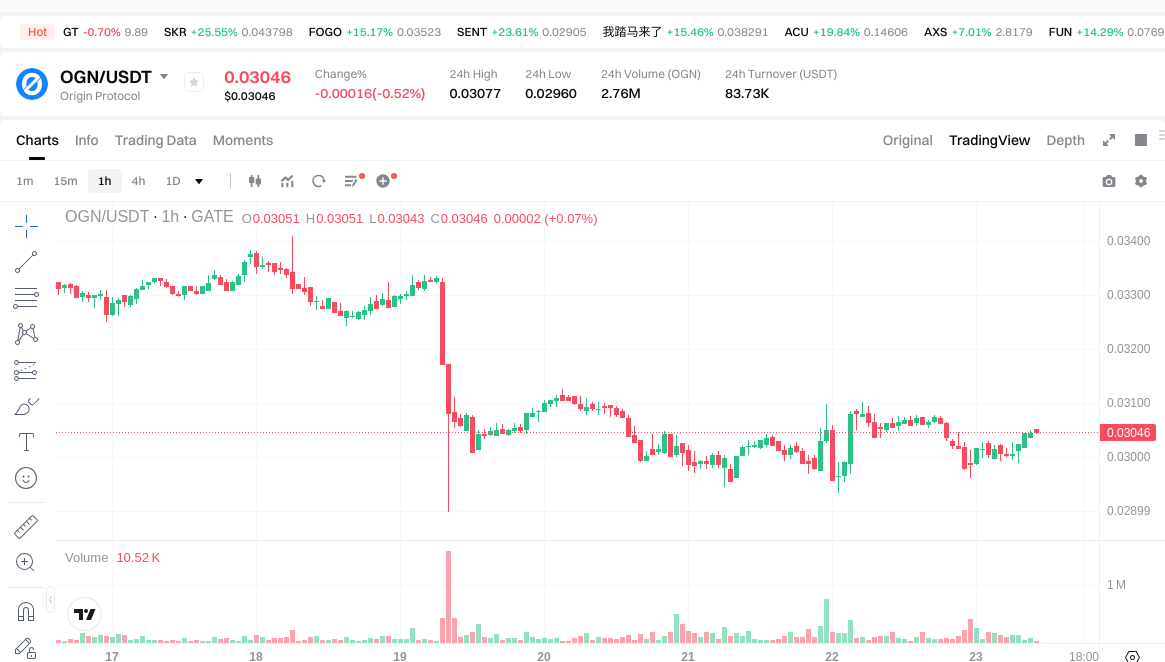
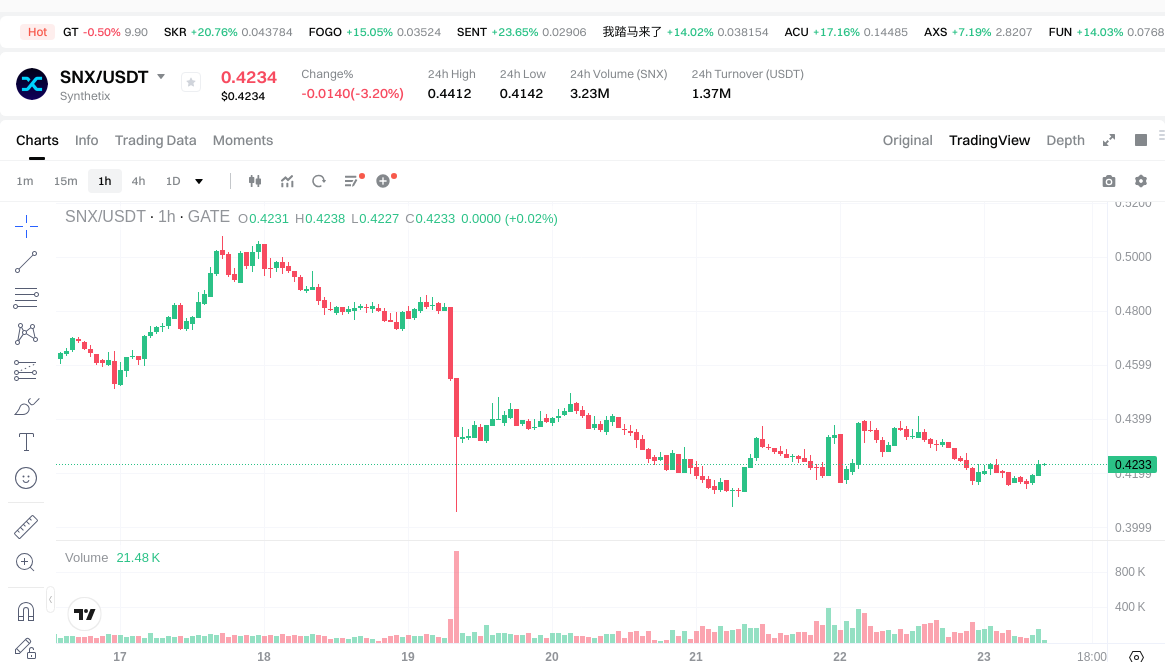
II. Facteurs clés influençant la valeur d’investissement OGN vs SNX
Comparaison des mécanismes de supply (Tokenomics)
Les informations disponibles ne précisent pas les détails des mécanismes de supply pour OGN et SNX. Les structures de tokenomics, plafonds de supply, calendriers d’émission ou dispositifs déflationnistes nécessitent une documentation complémentaire pour une analyse complète.
Adoption institutionnelle et application sur le marché
Les sources ne fournissent pas de données sur les portefeuilles institutionnels, les schémas d’adoption par les entreprises ou les positions réglementaires spécifiques autour d’OGN et SNX selon les juridictions. Une analyse comparative de leur rôle en paiements transfrontaliers, systèmes de règlement ou portefeuilles institutionnels n’est donc pas réalisable sans données supplémentaires.
Développement technique et construction d’écosystème
Faute d’éléments sur les roadmaps techniques, les jalons de développement ou les métriques d’écosystème pour OGN ou SNX, il est impossible de comparer de façon fiable leurs trajectoires technologiques. Le statut de déploiement dans les protocoles DeFi, les marketplaces NFT, les systèmes de paiement et les implémentations de smart contracts reste indéterminé dans les sources consultées.
Facteurs macroéconomiques et cycles de marché
Les sources ne contiennent pas de données historiques sur les performances en contexte d’inflation, de corrélations avec des indicateurs macroéconomiques (taux d’intérêt, US Dollar Index), ni d’indices de demande liés à l’actualité géopolitique. L’évaluation du comportement anti-inflation ou de la sensibilité aux politiques monétaires nécessiterait des données empiriques absentes dans les matériaux disponibles.
III. Prévisions de prix 2026-2031 : OGN vs SNX
Prévision à court terme (2026)
- OGN : Scénario conservateur 0,0222-0,0304 $ | Scénario optimiste 0,0304-0,0323 $
- SNX : Scénario conservateur 0,389-0,423 $ | Scénario optimiste 0,423-0,533 $
Prévision à moyen terme (2028-2029)
- OGN pourrait connaître une appréciation graduelle, fourchette estimée 0,0259-0,0409 $
- SNX pourrait entrer dans une phase de croissance modérée, fourchette estimée 0,462-0,666 $
- Principaux moteurs : flux de capitaux institutionnels, développement des ETF, expansion de l’écosystème
Prévision à long terme (2030-2031)
- OGN : scénario de base 0,0312-0,0411 $ | scénario optimiste 0,0436-0,0517 $
- SNX : scénario de base 0,402-0,726 $ | scénario optimiste 0,834-0,944 $
Consulter les prévisions détaillées pour OGN et SNX
Avertissement
OGN :
| Année |
Prix maximum prévu |
Prix moyen prévu |
Prix minimum prévu |
Variation de prix |
| 2026 |
0,0322558 |
0,03043 |
0,0222139 |
0 |
| 2027 |
0,03761148 |
0,0313429 |
0,017865453 |
2 |
| 2028 |
0,037924909 |
0,03447719 |
0,0258578925 |
13 |
| 2029 |
0,040907185935 |
0,0362010495 |
0,030770892075 |
18 |
| 2030 |
0,043566153020775 |
0,0385541177175 |
0,031228835351175 |
26 |
| 2031 |
0,051735770565113 |
0,041060135369137 |
0,029152696112087 |
34 |
SNX :
| Année |
Prix maximum prévu |
Prix moyen prévu |
Prix minimum prévu |
Variation de prix |
| 2026 |
0,532854 |
0,4229 |
0,389068 |
0 |
| 2027 |
0,5256647 |
0,477877 |
0,3345139 |
12 |
| 2028 |
0,6372489795 |
0,50177085 |
0,461629182 |
18 |
| 2029 |
0,6663266002575 |
0,56950991475 |
0,47838832839 |
34 |
| 2030 |
0,834189647630062 |
0,61791825750375 |
0,401646867377437 |
45 |
| 2031 |
0,943870138336978 |
0,726053952566906 |
0,515498306322503 |
71 |
IV. Comparatif des stratégies d’investissement : OGN vs SNX
Stratégies d’investissement long terme vs court terme
- OGN : Convient aux investisseurs intéressés par la génération de rendement DeFi et l’évolution d’un écosystème multichaîne, avec un accent sur la participation à la gouvernance via le staking
- SNX : Intéresse les investisseurs recherchant une exposition aux actifs synthétiques et à l’infrastructure de trading décentralisée, avec un potentiel sur les marchés de produits dérivés
Gestion des risques et allocation d’actifs
- Investisseurs prudents : OGN 30% / SNX 70% – Cette répartition reflète l’ancienneté de SNX et sa position de protocole établi
- Investisseurs dynamiques : OGN 45% / SNX 55% – Approche plus équilibrée tenant compte du potentiel de croissance d’OGN dans la DeFi
- Outils de couverture : réserves de stablecoins pour gérer la volatilité, portefeuille diversifié sur plusieurs types de protocoles, prise en compte des corrélations d’actifs
V. Comparatif des risques potentiels
Risque de marché
- OGN : Sensible au sentiment du secteur DeFi, avec une volatilité historique marquée par la chute de 3,35 $ à 0,02590906 $, illustrant une forte exposition aux corrections
- SNX : Exposé aux dynamiques du marché des actifs synthétiques et aux fluctuations de volume des dérivés, avec des prix influencés par l’adoption des protocoles DeFi et la liquidité
Risque technique
- OGN : Enjeux liés à la complexité du déploiement multichaîne, à la sécurité des smart contracts sur plusieurs réseaux et au maintien de mécanismes de rendement constants
- SNX : Stabilité de la collatéralisation des actifs synthétiques, fiabilité des oracles pour les prix, et complexité du maintien des mécanismes de peg
Risque réglementaire
- Les deux protocoles sont soumis à des cadres réglementaires changeants pour la DeFi, le modèle d’actifs synthétiques de SNX pouvant être débattu au regard de la classification en valeurs mobilières selon les juridictions, tandis que la structure de gouvernance d’OGN peut recevoir un traitement variable selon l’interprétation locale des tokens utilitaires ou de sécurité
VI. Conclusion : Quel est le meilleur choix ?
📌 Synthèse de la valeur d’investissement :
- OGN : Positionné sur la DeFi et la génération de rendement, modèle gouvernance lancé en 2020, prix actuel 0,03045 $ et potentiel d’appréciation estimé entre 0,0322558 $ et 0,051735770565113 $ sur 2026-2031
- SNX : Protocole d’actifs synthétiques établi depuis 2018, prix actuel 0,4233 $, volume d’échange sur 24h de 1 388 682,21 $ (contre 83 612,48 $ pour OGN), et fourchette projetée de 0,532854 $ à 0,943870138336978 $ jusqu’en 2031
✅ Points d’attention pour l’investissement :
- Participants débutants : Construire progressivement leur position, comprendre la mécanique des protocoles, la gouvernance et les profils risque/rendement de chaque actif dans le contexte global du marché
- Participants expérimentés : Évaluer les métriques de valorisation, le développement des écosystèmes et la volatilité historique pour composer une exposition DeFi diversifiée
- Investisseurs institutionnels : Prendre en compte la maturité des protocoles, la profondeur de liquidité, la conformité réglementaire et le potentiel d’intégration dans des stratégies de portefeuille élargies
⚠️ Avertissement sur les risques : Les cryptomonnaies sont sujettes à une forte volatilité et à des fluctuations de valeur importantes. Cette analyse ne constitue ni conseil financier, ni recommandation d’investissement, ni garantie de performance. Au 23 janvier 2026, le Fear & Greed Index affiche 24 (Peur extrême), signalant une forte incertitude. Il est recommandé de mener ses propres recherches et d’évaluer sa tolérance au risque avant toute décision d’investissement.
VII. FAQ
Q1 : Quelles sont les principales différences entre OGN et SNX en termes de fonctionnalités ?
OGN privilégie la génération de rendement DeFi via un écosystème multichaîne et la participation à la gouvernance, tandis que SNX se spécialise dans les protocoles d’actifs synthétiques pour le trading de produits dérivés. OGN, lancé en 2020, permet le staking d’OGN contre xOGN pour participer à la gouvernance de l’Origin DAO, se positionnant comme protocole orienté rendement. SNX, en place depuis 2018 (ex-Havven), est un protocole décentralisé pour la création d’actifs synthétiques indexés sur les monnaies fiduciaires, métaux précieux, indices et autres cryptos, servant d’infrastructure au marché des dérivés, sans génération directe de rendement.
Q2 : Quelles sont les performances historiques des prix d’OGN et SNX sur les cycles de marché ?
SNX a affiché une meilleure résilience avec un plancher de prix supérieur lors des corrections par rapport à OGN. OGN a atteint 3,35 $ le 8 avril 2021 avant de tomber à 0,02590906 $ le 11 octobre 2025, soit une baisse d’environ 99,2 %. SNX a culminé à 28,53 $ le 14 février 2021 et son plus bas est de 0,0347864 $ le 6 janvier 2019, montrant une stabilité supérieure en période baissière. Au 23 janvier 2026, SNX s’échange à 0,4233 $ avec un volume sur 24h nettement supérieur (1 388 682,21 $) comparé à OGN (0,03045 $ et 83 612,48 $ de volume), ce qui indique une meilleure liquidité et un plus grand intérêt du marché.
Q3 : Quelles projections de prix pour OGN et SNX jusqu’en 2031 ?
SNX propose des projections plus élevées sur toutes les périodes comparé à OGN. Pour 2026, OGN est attendu entre 0,0222 $ et 0,0323 $ (scénario conservateur/optimiste), tandis que SNX vise 0,389 $ à 0,533 $. En 2031, OGN pourrait évoluer entre 0,029152696112087 $ et 0,051735770565113 $, soit une hausse potentielle de 34 % par rapport à 2026. SNX est estimé entre 0,515498306322503 $ et 0,943870138336978 $, équivalant à une hausse possible de 71 % sur la même période. Ces prévisions intègrent l’adoption institutionnelle, l’expansion de l’écosystème et la conjoncture globale du marché.
Q4 : Quelle stratégie d’allocation pour différents profils de risque ?
Un investisseur prudent pourra opter pour une allocation 30 % OGN / 70 % SNX, reflétant la maturité de SNX. Cette pondération privilégie l’infrastructure synthétique plus solide face au protocole DeFi d’OGN. Un investisseur dynamique pourra choisir 45 % OGN / 55 % SNX pour un équilibre entre la génération de rendement DeFi et la croissance du marché synthétique. Dans les deux cas, il est conseillé d’intégrer des réserves de stablecoins pour gérer la volatilité et de diversifier sur plusieurs types de protocoles. L’indice de sentiment à 24 (Peur extrême) au 23 janvier 2026 incite à une construction progressive plutôt qu’une entrée massive.
Q5 : Quels sont les principaux risques différenciant OGN et SNX ?
OGN fait face à des risques techniques liés à la complexité multichaîne et à la pérennité de la génération de rendement, tandis que SNX doit assurer la stabilité de la collatéralisation et la fiabilité des oracles. Sur le plan marché, OGN a subi une volatilité extrême avec une chute de 99,2 %, alors que SNX a mieux maintenu son plancher. Côté régulation, SNX peut être soumis à des débats sur la classification en valeurs mobilières, tandis qu’OGN dépend d’interprétations locales de la gouvernance et de la nature du token.
Q6 : Comment comparer les volumes d’échange et la liquidité entre OGN et SNX ?
SNX bénéficie d’une liquidité nettement supérieure avec un volume sur 24h de 1 388 682,21 $ contre 83 612,48 $ pour OGN au 23 janvier 2026, soit près de 16,6 fois plus d’activité. Cette différence suggère que SNX offre davantage de facilité pour les entrées et sorties, réduisant le risque de slippage. Un volume élevé est généralement synonyme d’intérêt du marché, d’adoption institutionnelle et de robustesse du protocole. Pour ceux qui privilégient la liquidité ou le trading court terme, l’avantage de SNX est notable.
Q7 : Quels développements d’écosystème surveiller pour OGN et SNX ?
Pour OGN, il est essentiel de suivre l’expansion multichaîne, la participation à la gouvernance Origin DAO, l’adoption du staking xOGN et les intégrations avec d’autres protocoles DeFi. Pour SNX, il faut surveiller la diversité des actifs synthétiques, la TVL, la croissance des volumes dérivés, la stabilité du ratio de collatéralisation et les partenariats DeFi. La sécurité des smart contracts, les upgrades techniques et les décisions de gouvernance sont à prendre en compte pour les deux. Enfin, l’évolution du cadre réglementaire sur la DeFi et les actifs synthétiques dans les grandes juridictions aura un impact majeur sur leur attractivité.
Q8 : Quelle stratégie d’entrée privilégier pour les nouveaux investisseurs dans le contexte actuel ?
Avec un Fear & Greed Index à 24 (Peur extrême) au 23 janvier 2026, le marché reste incertain et volatile. Les nouveaux entrants devraient privilégier le DCA (achat progressif), en répartissant les investissements pour limiter le risque de timing. Commencer avec 20 à 30 % de l’allocation cible permet d’apprendre le fonctionnement des protocoles et du marché avant de s’exposer pleinement. Grâce à la liquidité supérieure de SNX, il offre des conditions d’exécution plus souples pour ceux qui privilégient la rapidité. Fixer à l’avance des seuils de sortie, conserver des stablecoins pour saisir d’autres opportunités en cas de correction, et réaliser sa propre analyse des fondamentaux sont indispensables, quel que soit le moment d’entrée.
* Les informations ne sont pas destinées à être et ne constituent pas des conseils financiers ou toute autre recommandation de toute sorte offerte ou approuvée par Gate.