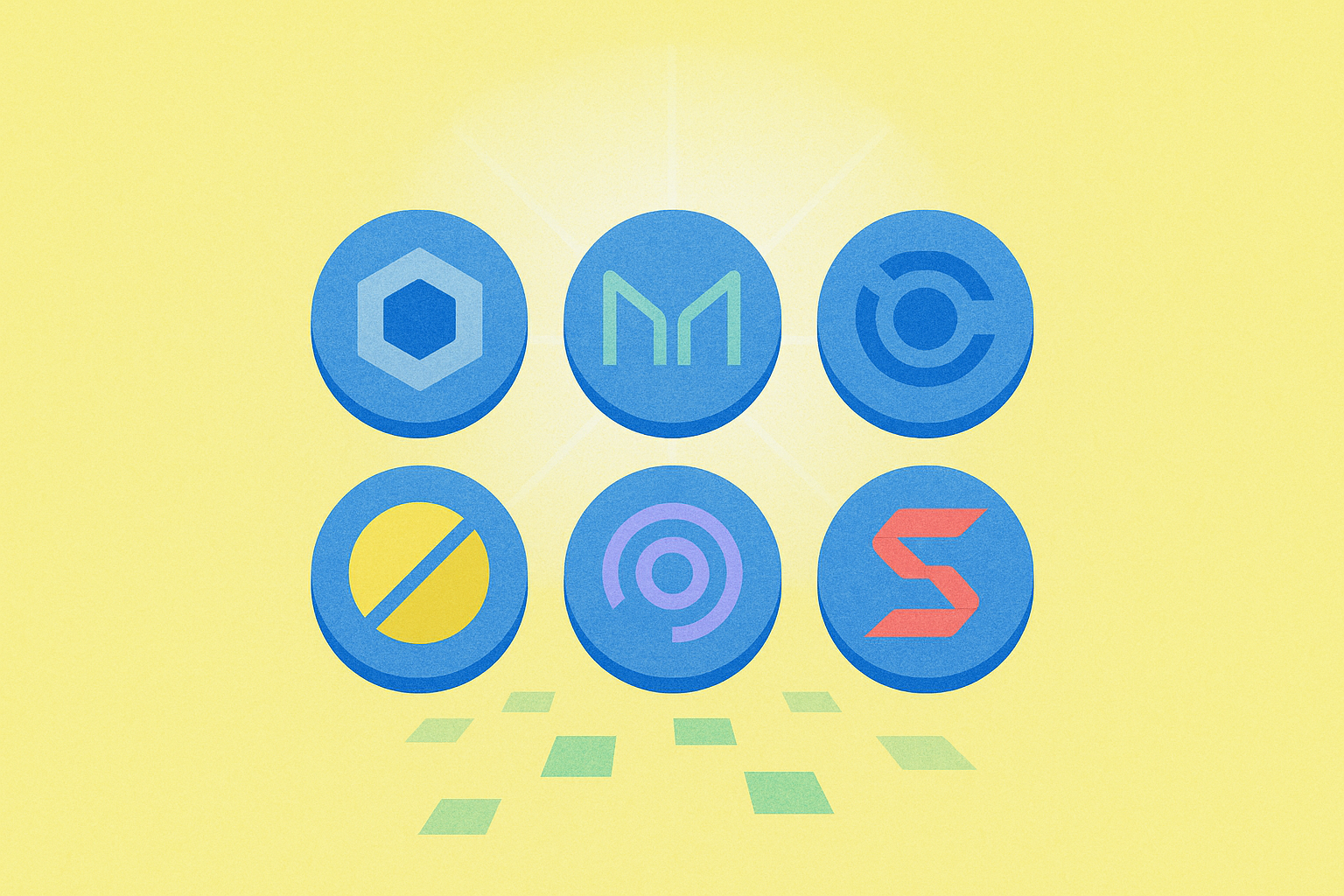
2024 Guide to the Latest RWA Cryptocurrencies. This guide provides an in-depth look at six leading projects, including Chainlink, Maker, and XDC Network. It offers a complete, beginner-friendly overview of real-world asset tokenization, investment strategies, and a step-by-step process for buying on Gate. Discover the latest trends every Web3 investor should know.
What Are RWAs? An In-Depth Guide to Tokenizing Real World Assets
Real World Assets (RWAs) are physical assets—such as real estate, bonds, cash, or commodities—converted into digital tokens. These tokens are issued and managed on blockchain networks, offering innovative advantages compared to traditional asset management methods.
Tokenizing RWAs fundamentally reshapes how ownership of physical assets works. By converting asset rights into blockchain-verifiable and storable digital tokens, tokenization delivers several key benefits:
- Fractional Ownership: Divides high-value assets into smaller shares, allowing broader investor participation.
- Greater Liquidity: Makes it easier to trade assets that were historically difficult to buy or sell, helping to energize markets.
- Enhanced Security: Uses blockchain technology to provide immutable records and highly transparent transactions.
- Full Transparency: Records every transaction on the blockchain, simplifying audits.
Recently, tokenizing RWAs has become a major trend in the crypto industry. Larry Fink, CEO of BlackRock—one of the world’s largest asset managers—has expressed a bullish outlook on this sector, recognizing tremendous potential in tokenizing traditional finance (TradFi) products. Pantera Capital, a leading US venture capital firm, also considers RWA tokenization a core investment theme.
In Japan, the Japan Research Institute’s report notes that “RWA tokens are gaining attention as a new fundraising tool, with global market tradability as a major draw. However, it also points out challenges around rights transfer processes and contract comprehension, stating that appropriate regulation is needed to address consumer access difficulties and prevent speculative overheating.”
Featured RWA Project: Chainlink
Chainlink is a decentralized oracle network that plays a critical role in the RWA ecosystem by supplying external data to smart contracts.
Its network consists of multiple independent oracle nodes, providing multi-layered reliability and security for data feeds. This ensures that Chainlink can deliver the external data (pricing, market, legal information, and more) needed for tokenized RWAs with robust accuracy and safety.
Chainlink’s core features include:
Proof of Reserve: Keeps on-chain asset values up-to-date and verifies that backing assets for tokens exist. This gives investors transparency and confidence in the assets’ credibility.
On-Chain Identity System: Proves asset ownership and transaction legitimacy without disclosing personal data, protecting privacy while meeting compliance standards.
Cross-Chain Interoperability Protocol (CCIP): Enables seamless data and token transfers across different blockchains. For example, Australia’s ANZ Bank used Chainlink’s CCIP for successful cross-chain tokenized asset transactions, significantly improving financial transparency and efficiency.
Chainlink provides vital infrastructure for RWA tokenization, bridging traditional finance and blockchain technology.
Featured RWA Project: Maker
Maker is a decentralized application on Ethereum, architected by its developer community and governed by MakerDAO—a decentralized autonomous organization.
Maker’s primary function is to issue the stablecoin Dai. Dai is a decentralized, US dollar-pegged stablecoin widely used throughout the DeFi ecosystem. It operates automatically via smart contracts—without a centralized administrator—combining censorship resistance with transparency.
MakerDAO is a pioneer in RWA tokenization. For instance, it diversifies revenue by investing in US Treasury bonds, boosting protocol stability and sustainability. This further strengthens Dai’s price stability and offers users steady income opportunities.
MakerDAO segments RWAs into four categories for systematic management:
- Cash-Like Assets: Highly liquid, stable assets such as centralized stablecoins and short-term government bonds
- Clean Money Assets: Assets with environmental or social value, such as renewable energy projects and sustainable agriculture
- Other RWAs: A range of digital assets, including ERC-20 tokens
- Physically Resilient RWAs: Physical assets difficult to seize or confiscate (e.g., precious metals, real estate)
This categorization allows MakerDAO to manage assets with diverse risk profiles and maintain protocol stability.
Featured RWA Project: XinFin Network (XDC)
XDC Network is a blockchain platform tailored for enterprises and financial institutions, designed to boost trade finance efficiency.
XDC Network’s standout feature is its proprietary consensus algorithm, XDPoS (XinFin Delegated Proof of Stake). This upgraded version of DPoS enables high-speed, low-cost transactions while providing enterprise-grade security and reliability.
A flagship example of RWA tokenization on the XDC Network is the USTY token. USTY is backed by a US Treasury ETF managed by BlackRock, one of the world’s leading asset managers. This token is recognized as a breakthrough financial product bridging traditional and digital assets.
Key USTY token features:
- Trustworthiness: Backed by assets managed by BlackRock, a globally respected institution
- Transparency: Asset backing can be verified anytime on the blockchain
- Accessibility: Lets individual investors access US Treasury bonds previously available only to institutions
XDC Network uses such tokenization projects to drive the fusion of traditional finance and blockchain, helping to streamline global trade finance.
Featured RWA Project: Ondo Finance
Ondo Finance is an innovative project using blockchain to tokenize traditional financial assets, aiming to integrate digital and legacy finance. Its main goal is to deliver high-quality financial products for institutions and create broader access to traditional assets.
Signature RWA products from Ondo Finance include:
USDY (US Dollar Yield Token):
- A token backed by short-term US Treasury bonds and bank deposits, providing stable USD-denominated returns
- Independently verified daily by third-party institutions for high transparency and reliability
- Investors benefit from both US Treasury stability and crypto convenience
OUSG (Tokenized BlackRock Short-Term US Treasury ETF):
- A tokenized version of BlackRock’s US Treasury bond ETF
- Delivers high liquidity and stability, attractive for both institutional and retail investors
- Allows instant settlement and 24/7 trading on blockchain
Flux Finance Protocol:
- Innovative protocol integrating tokenized assets into lending markets
- Digitizes various types of loans—real estate, consumer finance, corporate—creating new revenue opportunities for investors
- Smart contract automation dramatically improves lending efficiency and transparency
Ondo Finance democratizes access to traditional assets, enabling more investors to participate in premium financial products.
Featured RWA Project: Centrifuge
Centrifuge is a decentralized platform focused on tokenizing RWAs, especially to support small and medium-sized businesses’ access to capital. Historically, SMEs had limited access to bank loans, but Centrifuge uses blockchain to help these companies raise funds more efficiently.
Centrifuge is technically compatible with both Polkadot and Ethereum, connecting to a broad blockchain ecosystem and increasing accessibility for investors and businesses.
Its flagship product, Tinlake, enables companies to tokenize assets like real estate, invoices, or receivables as NFTs—then use those NFTs as collateral for rapid fundraising.
How Tinlake works:
- Tokenize Assets: Companies issue NFTs representing their assets (e.g., real estate, invoices)
- Invest in Pools: Investors lock stablecoins like Dai into Tinlake’s pools
- Receive Tokens: Based on risk profile, investors receive TIN tokens (higher risk/return) or DROP tokens (lower risk/stable return)
- Earn Distributions: Earnings from the company’s assets are automatically distributed to investors
This model lets SMEs quickly raise funds without banks, while investors gain stable income opportunities. Centrifuge is a vital bridge for those underserved by traditional finance.
Featured RWA Project: Synthetix
Synthetix is an innovative DeFi protocol that enables the creation and trading of synthetic assets (Synths) on the blockchain. Synthetic assets digitally represent the value of real-world assets (RWAs), allowing exposure to price movements without physical ownership.
Synthetix’s native token, SNX, is essential for collateralizing synthetic assets. Users stake SNX to mint Synths.
Examples of synthetic assets:
- sGold: Tracks the price of gold
- sUSD: USD-pegged synthetic stablecoin
- sProperty: Tracks real estate price indices
- sOil: Tracks crude oil prices
Key Synthetix benefits:
- Global Access: Invest in assets worldwide without geographic limits
- 24/7 Trading: Trade anytime, not restricted by traditional market hours
- Low Entry Barriers: Start investing with small amounts
- High Liquidity: Instant trades on decentralized exchanges
Synthetix gives investors easy access to a wide range of RWAs and expands the use of RWAs in the DeFi ecosystem.
How to Buy RWA Tokens in Japan: Exchanges and Step-by-Step Process
Japanese investors can buy RWA-related tokens via two main channels: domestic exchanges and overseas exchanges.
Using Overseas Exchanges
Overseas exchanges offer a broader selection of RWA-related tokens, including those not available domestically.
General steps:
- Create an account: Sign up on the overseas exchange’s official website and complete KYC identity verification
- Buy and transfer crypto: Purchase low-fee cryptocurrencies (like XRP or XLM) on a major domestic exchange and transfer them to your overseas exchange wallet
- Buy RWA tokens: On the trading interface, select your preferred RWA token pair and place a market or limit order
Using Domestic Exchanges
Leading domestic exchanges list some RWA tokens (Chainlink, Maker, XDC, etc.). Advantages include Japanese language support and direct purchases in yen.
General steps:
- Create an account: Register on a major domestic exchange and complete KYC verification
- Deposit yen: Fund your exchange wallet via bank transfer or convenience store deposit
- Buy RWA tokens: On the trading interface, select the desired RWA token JPY pair and place a market or limit order
Key Considerations When Buying
- Security: Always set up two-factor authentication for added account protection
- Fee awareness: Check trading and deposit/withdrawal fees beforehand
- Risk management: Only invest funds you’re prepared to lose—invest at your own risk
- Compliance: Use exchanges that adhere to Japanese financial regulations
Summary
RWA tokenization is among the most significant trends in the crypto space. This article covered the fundamentals, benefits, and challenges of tokenization, plus six standout projects for investors.
Main advantages of RWA tokenization:
- Fractional ownership: Splits expensive assets for broader investor access
- Improved liquidity: Makes trading previously illiquid assets easier
- Full transparency: Blockchain records ensure traceable transactions
- Global reach: Invest in assets worldwide, regardless of location
The six highlighted projects (Chainlink, Maker, XDC Network, Ondo Finance, Centrifuge, Synthetix) each take a unique approach to tokenizing RWAs, offering diverse investment opportunities.
Japanese investors now have access to these RWA tokens via domestic and overseas exchanges, opening new asset classes. However, it’s vital to understand each project’s specifics and risks and to practice sound risk management.
RWA tokenization drives the convergence of traditional finance and blockchain, shaping the future of financial markets. Ongoing attention to this sector’s growth is essential.
FAQ
What Are Real World Asset (RWA) Tokens? How Are They Different from Traditional Cryptocurrencies?
RWA tokens are digital representations of tangible assets—such as real estate or bonds—on the blockchain. Unlike traditional cryptocurrencies, RWAs are backed by real-world value and can be fractionalized, offering more substantial utility.
Which Exchanges in Japan Allow You to Buy RWA Tokens?
In Japan, Coincheck supports RWA token purchases. Coins like AVAX and LINK are available, making it accessible for beginners.
What Are the Benefits and Risks of Investing in RWA Tokens?
Benefits include real asset backing, stability, and increased institutional participation. Risks cover regulatory uncertainty, liquidity constraints, and technology vulnerabilities.
What Are the Features and Selection Tips for the Top 6 Recommended RWA Tokens?
Top picks include Chainlink, Maker, XDC Network, and Algorand, all focused on real asset tokenization. When selecting, check project utility, partnerships, market size, and choose actively traded tokens.
Step-by-Step Guide to Buying RWA Tokens
To buy RWA tokens, create a wallet account and fund it via bank transfer or credit card. Select your desired RWA token, specify the amount, and confirm your order. Manage your assets in your wallet.
Are RWA Tokens Suitable for Long-Term Holding? What Is Their Growth Potential?
RWA tokens are well-suited for long-term holding and have strong growth prospects. The market is expanding rapidly and is forecast to reach trillions of dollars by 2030, offering significant investment opportunities.
* The information is not intended to be and does not constitute financial advice or any other recommendation of any sort offered or endorsed by Gate.