Bandingkan VFY dengan ADA: Jelajahi tren harga, tokenomik, adopsi institusional, serta prediksi tahun 2026-2031. Analisis infrastruktur blockchain berbasis AI yang sedang berkembang terhadap platform smart contract yang sudah mapan. Tinjau harga secara real-time dan strategi investasi di Gate.
Pendahuluan: Perbandingan Investasi VFY dan ADA
Di pasar mata uang kripto, perbandingan antara zkVerify (VFY) dan Cardano (ADA) mencerminkan diskusi antara infrastruktur blockchain yang baru berkembang dan platform smart contract yang telah mapan. Kedua proyek ini menempati posisi berbeda dalam lanskap aset kripto, baik dari sisi peringkat kapitalisasi pasar, skenario aplikasi, maupun performa harga.
zkVerify (VFY): Diluncurkan pada September 2025, blockchain Layer 1 ini memosisikan diri sebagai lapisan verifikasi bukti universal untuk zero-knowledge proofs, dengan misi menyediakan layanan verifikasi berkecepatan tinggi dan biaya rendah bagi aplikasi Web2 dan Web3.
Cardano (ADA): Diluncurkan Oktober 2017, Cardano telah menjadi platform blockchain berlapis yang mendukung smart contract dan aplikasi terdesentralisasi, menempati peringkat ke-11 kapitalisasi pasar dengan valuasi lebih dari 12,9 miliar USD.
Artikel ini menyajikan analisis komprehensif nilai investasi VFY dan ADA, menyoroti tren harga historis, mekanisme suplai, adopsi institusional, ekosistem teknis, serta prospek masa depan, untuk menjawab pertanyaan utama para investor:
"Mana yang menghadirkan peluang investasi yang lebih menarik berdasarkan kondisi pasar saat ini?"
I. Perbandingan Harga Historis dan Status Pasar Terkini
Tren Harga Historis VFY dan ADA
- 2025: VFY mengalami volatilitas tinggi setelah peluncurannya pada September 2025, sempat mencapai $0,20814 pada 30 September 2025 sebelum terkoreksi.
- 2021: ADA mencatat lonjakan harga signifikan karena perkembangan ekosistem dan peluncuran smart contract, mencapai rekor tertinggi $3,09 pada 2 September 2021.
- Analisis Perbandingan: Selama siklus pasar terakhir, VFY turun dari puncaknya $0,20814 ke level terendah $0,0229 pada 18 Desember 2025, menunjukkan koreksi yang tajam. Sementara itu, ADA mengalami penyesuaian lebih panjang dari rekor 2021 di $3,09 ke level sekarang sekitar $0,3528, sejalan dengan tekanan pasar yang memengaruhi platform blockchain utama.
Situasi Pasar Terkini (27 Januari 2026)
- Harga Terkini VFY: $0,02613
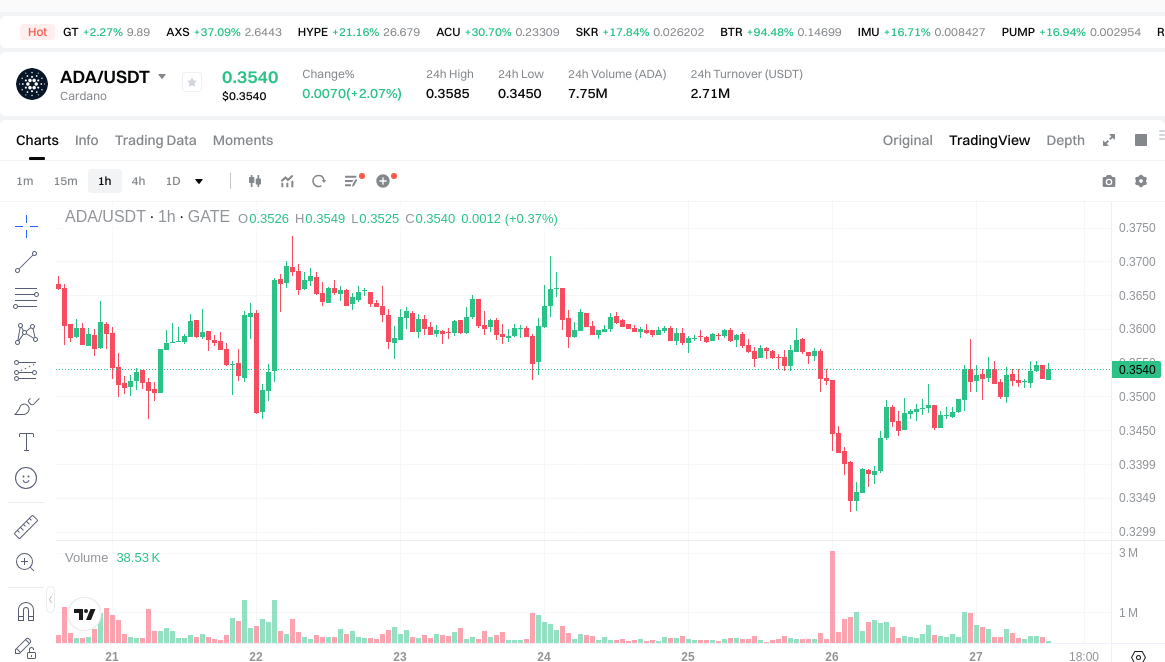
- Harga Terkini ADA: $0,3528
- Volume Perdagangan 24 Jam: VFY $138.860,86, sedangkan ADA jauh lebih tinggi, $2.720.611,28. Perbedaan ini mencerminkan tingkat likuiditas dan aktivitas perdagangan yang berbeda.
- Indeks Sentimen Pasar (Fear & Greed Index): 29 (Fear)
Lihat harga real-time:

II. Faktor Inti Penentu Nilai Investasi VFY vs ADA
Perbandingan Tokenomics
-
VFY: Token ini merupakan aset utama ekosistem untuk verifikasi, tata kelola, dan staking. Dirancang agar mampu beroperasi secara multi-chain dan mendukung verifikasi kepercayaan berbasis AI, VFY berfungsi sebagai utility token di berbagai jaringan terdesentralisasi.
-
ADA: Cardano menggunakan model suplai terbatas dengan maksimum 45 miliar token. Jaringan ini menerapkan konsensus proof-of-stake yang memberikan reward pada validator dan staker, sehingga menciptakan tekanan deflasi melalui insentif staking dan partisipasi jaringan.
-
📌 Pola Historis: Mekanisme suplai memengaruhi siklus harga dengan mengatur ketersediaan token yang beredar dan insentif partisipasi jaringan. Model deflasi atau suplai tetap cenderung menjaga nilai jangka panjang ketika adopsi jaringan meningkat.
Adopsi Institusional dan Aplikasi Pasar
-
Kepemilikan Institusional: ADA telah menarik minat institusi berkat pendekatan berbasis riset dan kemitraan dengan institusi akademik. Sementara itu, adopsi institusional pada VFY masih minim dokumentasi.
-
Kasus Penggunaan Enterprise: ADA telah diadopsi untuk verifikasi identitas, manajemen rantai pasok, dan kredensial pendidikan. Fokus VFY pada verifikasi AI dan tata kelola lintas-chain membuka peluang aplikasi di integritas data dan kerangka keputusan terdesentralisasi.
-
Regulasi: Cardano diuntungkan oleh kejelasan regulasi di beberapa yurisdiksi yang menerima proof-of-stake sebagai solusi ramah lingkungan. Status regulasi VFY bergantung pada evolusi tata kelola dan protokol verifikasinya.
Pengembangan Teknologi dan Ekosistem
-
Teknologi VFY: Menonjolkan verifikasi berbasis AI dan kompatibilitas multi-chain, VFY bertujuan menciptakan mekanisme validasi yang terdesentralisasi dan tepercaya di berbagai jaringan blockchain.
-
Teknologi ADA: Cardano terus meningkatkan skalabilitas melalui arsitektur berlapis, smart contract Plutus dan Marlowe, serta pembaruan yang fokus pada interoperabilitas dan peluncuran aplikasi terdesentralisasi.
-
Perbandingan Ekosistem: ADA memiliki ekosistem DeFi, NFT, dan identitas terdesentralisasi yang matang. Ekosistem VFY berfokus pada tata kelola dan layanan verifikasi, dengan potensi pertumbuhan pada kolaborasi lintas-chain dan aplikasi AI.
Faktor Makroekonomi dan Siklus Pasar
-
Resistensi Inflasi: Kedua proyek menekankan desentralisasi dan sistem trustless, menarik bagi investor yang mencari alternatif saat inflasi. Jaringan ADA yang mapan dan reward staking menawarkan potensi retensi nilai yang lebih stabil.
-
Dampak Kebijakan Moneter: Perubahan suku bunga dan kekuatan dolar AS memengaruhi arus modal ke aset digital. Proyek dengan utilitas kuat dan komunitas solid cenderung bertahan di siklus pengetatan kebijakan.
-
Geopolitik: Permintaan transaksi lintas negara dan perubahan regulasi internasional memengaruhi tingkat adopsi. Cardano fokus pada inklusi keuangan di negara berkembang, sementara VFY menekankan verifikasi terdesentralisasi, keduanya responsif pada tren global tata kelola digital dan kepercayaan.
III. Prediksi Harga 2026-2031: VFY vs ADA
Prediksi Jangka Pendek (2026)
- VFY: Konservatif $0,0207-$0,0262 | Optimis $0,0262-$0,0325
- ADA: Konservatif $0,340-$0,354 | Optimis $0,354-$0,422
Prediksi Jangka Menengah (2028-2029)
- VFY berpotensi memasuki fase pertumbuhan bertahap, estimasi harga $0,0165 hingga $0,0438
- ADA dapat memasuki fase ekspansi, estimasi harga $0,284 hingga $0,579
- Pendorong utama: masuknya modal institusi, pengembangan ETF, dan ekspansi ekosistem
Prediksi Jangka Panjang (2030-2031)
- VFY: Skenario baseline $0,0244-$0,0393 | Skenario optimis $0,0334-$0,0432
- ADA: Skenario baseline $0,403-$0,630 | Skenario optimis $0,425-$0,747
Lihat prediksi harga detail untuk VFY dan ADA
Disclaimer
VFY:
| Tahun |
Prediksi Harga Tertinggi |
Prediksi Harga Rata-rata |
Prediksi Harga Terendah |
Perubahan Harga |
| 2026 |
0,0325376 |
0,02624 |
0,0207296 |
0 |
| 2027 |
0,031739904 |
0,0293888 |
0,026743808 |
12 |
| 2028 |
0,03239821312 |
0,030564352 |
0,01650475008 |
16 |
| 2029 |
0,0437589827584 |
0,03148128256 |
0,0295924056064 |
20 |
| 2030 |
0,041005944598528 |
0,0376201326592 |
0,02445308622848 |
43 |
| 2031 |
0,04324434249175 |
0,039313038628864 |
0,033416082834534 |
50 |
ADA:
| Tahun |
Prediksi Harga Tertinggi |
Prediksi Harga Rata-rata |
Prediksi Harga Terendah |
Perubahan Harga |
| 2026 |
0,421736 |
0,3544 |
0,340224 |
0 |
| 2027 |
0,485085 |
0,388068 |
0,28717032 |
9 |
| 2028 |
0,45403956 |
0,4365765 |
0,283774725 |
23 |
| 2029 |
0,578900439 |
0,44530803 |
0,3473402634 |
26 |
| 2030 |
0,74767218237 |
0,5121042345 |
0,425046514635 |
45 |
| 2031 |
0,69917591136285 |
0,629888208435 |
0,4031284533984 |
78 |
IV. Perbandingan Strategi Investasi: VFY vs ADA
Strategi Investasi Jangka Panjang vs Pendek
-
VFY: Ideal untuk investor yang mencari eksposur pada infrastruktur blockchain baru dan teknologi verifikasi berbasis AI, dengan toleransi risiko lebih tinggi pada proyek tahap awal. Posisi token pada tata kelola lintas-chain dan validasi terdesentralisasi menarik bagi yang ingin masuk ke sektor blockchain yang berkembang.
-
ADA: Cocok bagi investor yang ingin eksposur pada platform smart contract mapan dengan rekam jejak, pengakuan institusional, dan pengembangan ekosistem yang matang. Pendekatan berbasis riset dan model proof-of-stake Cardano menarik bagi mereka yang mengutamakan stabilitas jaringan dan utilitas jangka panjang.
Manajemen Risiko dan Alokasi Aset
-
Investor Konservatif: VFY 10-15% vs ADA 85-90%
- Portofolio konservatif cenderung memilih posisi pasar ADA yang sudah mapan, adopsi institusi, dan infrastruktur terbukti dibandingkan VFY yang masih tahap awal.
-
Investor Agresif: VFY 30-40% vs ADA 60-70%
- Strategi agresif dapat meningkatkan alokasi pada VFY untuk potensi pertumbuhan teknologi verifikasi baru, tetap menjaga eksposur ADA untuk stabilitas ekosistem.
-
Alat Hedging: Alokasi stablecoin, strategi opsi, dan diversifikasi aset bisa digunakan untuk mengelola volatilitas di kedua posisi.
V. Perbandingan Risiko Potensial
Risiko Pasar
-
VFY: Likuiditas rendah (volume 24 jam $138.860,86) meningkatkan volatilitas harga dan kesulitan eksekusi order besar. Karena baru diluncurkan September 2025, data historis untuk analisis perilaku pasar jangka panjang masih terbatas.
-
ADA: Meski likuiditas tinggi ($2.720.611,28 per 24 jam), ADA mengalami penurunan harga berkelanjutan dari puncak 2021 ($3,09) ke level sekarang ($0,3528), mencerminkan koreksi pasar dan persaingan dari platform smart contract lain.
Risiko Teknis
-
VFY: Skalabilitas dan stabilitas jaringan belum teruji pada skala besar. Mekanisme interoperabilitas multi-chain dan verifikasi AI masih butuh pengembangan dan validasi nyata.
-
ADA: Kemacetan jaringan saat aktivitas tinggi dan persaingan dari platform transaksi lebih cepat menjadi tantangan. Kompleksitas smart contract menimbulkan isu keamanan seiring adopsi ekosistem meningkat.
Risiko Regulasi
- Perkembangan regulasi global berpengaruh berbeda pada kedua proyek. Model proof-of-stake ADA dan kemitraan akademik memberi keunggulan di yurisdiksi dengan fokus lingkungan dan kepatuhan. Protokol tata kelola dan verifikasi VFY menghadapi kerangka regulasi yang masih berkembang terkait identitas terdesentralisasi dan operasi lintas-chain.
VI. Kesimpulan: Mana Pilihan Terbaik?
📌 Ringkasan Nilai Investasi:
-
Kelebihan VFY: Posisi awal di sektor verifikasi berbasis AI dan tata kelola lintas-chain menawarkan potensi pertumbuhan seiring perkembangan infrastruktur blockchain. Harga masuk yang lebih rendah berpotensi memberi return persentase lebih tinggi jika adopsi meningkat.
-
Kelebihan ADA: Ekosistem matang, smart contract teruji, pengakuan institusional, dan likuiditas pasar luas. Pengembangan berbasis riset dan proof-of-stake menjadi fondasi keberlanjutan jangka panjang.
✅ Rekomendasi Investasi:
-
Investor Pemula: Prioritaskan ADA untuk ekosistem yang mapan, likuiditas tinggi, dan sumber edukasi luas. Alokasikan VFY secara terbatas untuk diversifikasi setelah memahami fundamental proyek.
-
Investor Berpengalaman: Eksposur seimbang pada kedua aset dapat menangkap segmen pasar berbeda—ADA untuk kematangan ekosistem, VFY untuk peluang infrastruktur baru. Manajemen risiko tetap kunci melalui pembagian posisi dan rebalancing portofolio rutin.
-
Investor Institusi: Adopsi institusional, kejelasan regulasi, dan proof-of-stake ADA lebih sesuai kriteria investasi institusi. Eksposur VFY bisa dipertimbangkan lewat dana infrastruktur blockchain khusus atau kemitraan strategis seiring perkembangan proyek.
⚠️ Peringatan Risiko: Pasar mata uang kripto sangat volatil. Artikel ini bukan merupakan nasihat investasi.
VII. FAQ
Q1: Apa perbedaan utama VFY dan ADA dari sisi teknologi inti dan kasus penggunaan?
VFY fokus pada verifikasi bukti berbasis AI dan tata kelola lintas-chain sebagai infrastruktur Layer 1, sedangkan ADA adalah platform smart contract mapan dengan ekosistem DeFi, NFT, dan aplikasi terdesentralisasi yang matang. VFY memosisikan diri sebagai lapisan verifikasi universal zero-knowledge proofs untuk aplikasi Web2 dan Web3 sejak September 2025. Sementara itu, ADA (Cardano), yang diluncurkan Oktober 2017, punya arsitektur berlapis yang mendukung smart contract melalui Plutus dan Marlowe, dengan aplikasi pada verifikasi identitas, manajemen rantai pasok, dan kredensial pendidikan. VFY adalah infrastruktur baru, ADA platform mapan dengan adopsi ekosistem luas.
Q2: Token mana yang menawarkan likuiditas lebih tinggi untuk trading dan mengapa penting?
ADA menawarkan likuiditas jauh lebih tinggi ($2.720.611,28 per 24 jam) dibanding VFY ($138.860,86 per 27 Januari 2026). Likuiditas tinggi mengurangi slippage, memudahkan keluar-masuk posisi, dan menandakan kepercayaan pasar serta partisipasi investor yang luas. Likuiditas rendah VFY meningkatkan volatilitas harga dan menyulitkan eksekusi order besar. Untuk efisiensi eksekusi dan manajemen posisi, ADA jelas unggul, khususnya untuk investasi besar atau strategi trading aktif.
Q3: Bagaimana perbedaan tokenomics VFY dan ADA terkait suplai dan inflasi?
ADA memakai suplai terbatas 45 miliar token dan proof-of-stake yang memberi reward validator dan staker sehingga menciptakan tekanan deflasi. VFY adalah utility token untuk verifikasi, tata kelola, dan staking, dirancang mendukung multi-chain dan verifikasi kepercayaan berbasis AI. ADA memiliki tokenomics deflasi dan staking mapan, sedangkan tokenomics VFY masih baru dan belum teruji sejak peluncuran September 2025.
Q4: Berapa alokasi portofolio yang direkomendasikan antara VFY dan ADA untuk berbagai profil investor?
Investor konservatif: ADA 85-90%, VFY 10-15%. Investor agresif: ADA 60-70%, VFY 30-40%. Investor pemula sebaiknya prioritaskan ADA, dengan VFY terbatas hanya jika sudah memahami fundamental. Investor berpengalaman dapat melakukan eksposur seimbang—ADA untuk ekosistem matang, VFY untuk potensi pertumbuhan—dengan manajemen risiko dan rebalancing portofolio rutin.
Q5: Berapa prediksi harga VFY dan ADA hingga 2031, dan apa pendorongnya?
2026: VFY $0,0207-$0,0262 (konservatif), $0,0262-$0,0325 (optimis); ADA $0,340-$0,354 (konservatif), $0,354-$0,422 (optimis). 2031: VFY $0,0334-$0,0432 (optimis); ADA $0,425-$0,747 (optimis). Faktor pendorong: masuknya modal institusi, ETF, ekspansi ekosistem, dan kondisi makroekonomi. Potensi kenaikan persentase VFY lebih tinggi, namun harga ADA lebih stabil karena ekosistem dan adopsi institusi yang matang.
Q6: Apa risiko utama investasi di VFY dibanding ADA?
VFY: Likuiditas rendah ($138.860,86/hari), skalabilitas belum teruji, data historis minim, regulasi verifikasi terdesentralisasi masih berkembang. ADA: Penurunan harga dari $3,09 (2021) ke $0,3528, kemacetan jaringan, persaingan platform smart contract lain, dan isu keamanan smart contract. Risiko pasar: VFY lebih volatil dan sulit dieksekusi, ADA menghadapi persaingan dan kebutuhan inovasi berkelanjutan.
Q7: Bagaimana perbedaan pola adopsi institusi antara VFY dan ADA, dan mengapa penting?
ADA menarik institusi melalui riset, kemitraan akademik, dan proof-of-stake ramah lingkungan, dengan aplikasi nyata di inklusi keuangan, verifikasi identitas, rantai pasok, dan kredensial pendidikan. Adopsi institusi VFY masih minim dan fokus pada verifikasi AI serta tata kelola lintas-chain tahap awal. Adopsi institusi meningkatkan stabilitas, likuiditas, validasi teknologi, dan kejelasan regulasi. ADA lebih unggul untuk investor institusi, VFY masih spekulatif menunggu validasi pasar institusi.
Q8: Token mana lebih cocok untuk eksposur pada infrastruktur blockchain baru dibanding platform mapan?
VFY cocok bagi investor yang ingin masuk ke infrastruktur blockchain baru, terutama teknologi verifikasi berbasis AI dan tata kelola lintas-chain, dengan risiko lebih tinggi dan potensi return persentase lebih besar. ADA cocok untuk investor yang mencari platform smart contract mapan, ekosistem matang, dan pengakuan institusi, dengan risiko lebih rendah dan potensi return lebih stabil.
* Informasi ini tidak bermaksud untuk menjadi dan bukan merupakan nasihat keuangan atau rekomendasi lain apa pun yang ditawarkan atau didukung oleh Gate.










