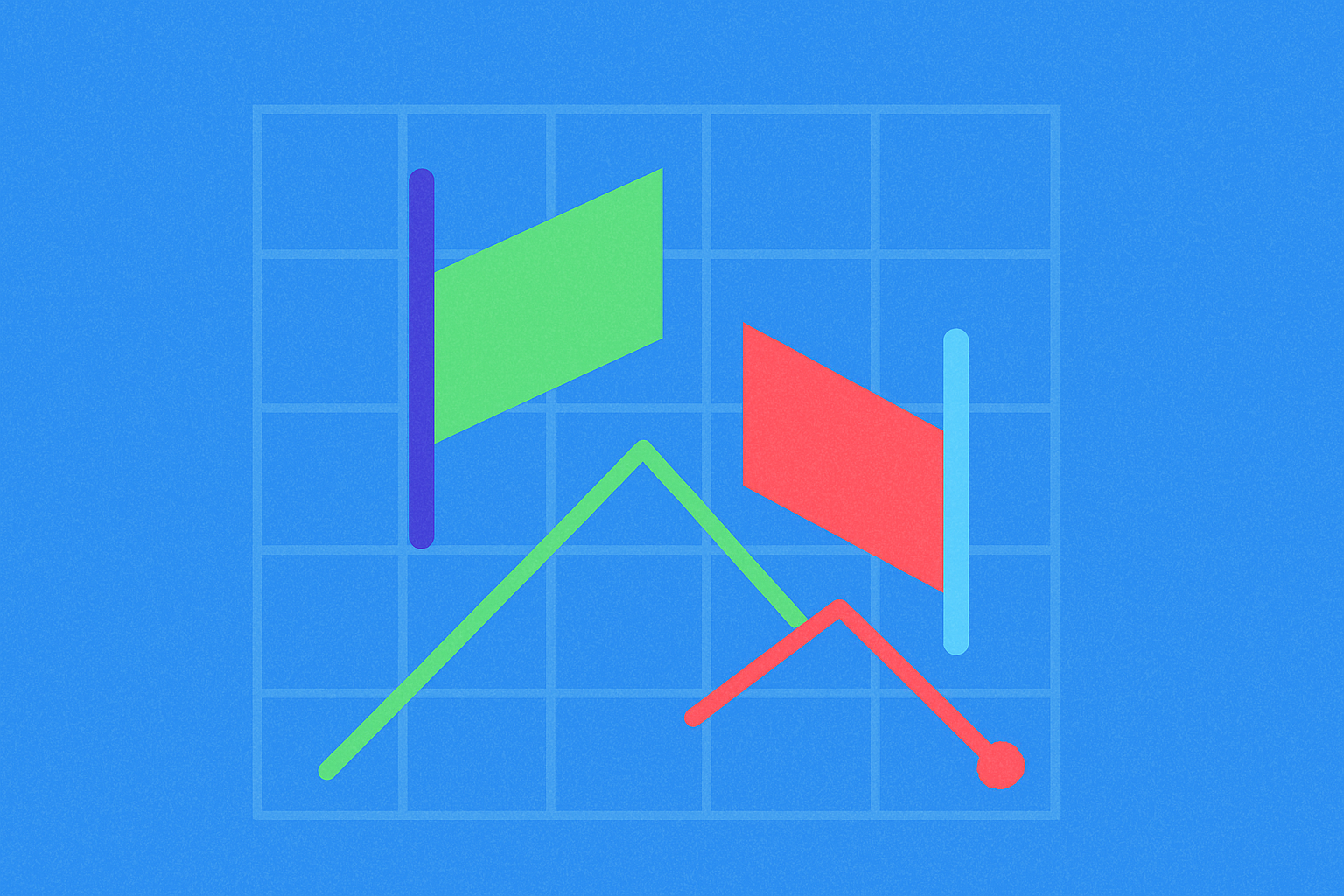
Master the flag pattern in cryptocurrency trading on Gate. This in-depth guide covers bullish and bearish flags—exploring their structure, entry strategies, risk management techniques, and actionable insights tailored for novice and intermediate traders.
What Is a Flag Pattern in Trading?
The flag pattern is one of the most common and reliable formations in technical analysis. It regularly appears on price charts during periods of heightened market volatility, especially when a clear trend is present. Professional traders and technical analysts view the flag as a classic continuation pattern, making it a valuable tool for forecasting the next price move of an asset.
The flag acts as a stabilizer for market price action, smoothing sharp price swings and stretching the trend over time. This pattern offers market participants a pause after sharp price moves, giving them time to assess the situation and prepare for the next phase of the trend. In the cryptocurrency market, flag patterns are particularly relevant due to the high volatility of digital assets.
Bull Flag vs. Bear Flag: Key Differences
In technical analysis, traders clearly distinguish two primary types of flag patterns: bear flags and bull flags. The classification depends on the direction of the preceding trend and the specific signals generated by each pattern on the chart. Understanding the differences between these patterns is critical for interpreting market conditions and making informed trading decisions.
Each flag type features unique characteristics, identification rules, and trading strategies that traders must consider to maximize profit and minimize risk in financial markets.
What Is a Bear Flag?
The bear flag is a technical analysis pattern that signals a high probability of downtrend continuation following a brief pause or price consolidation. This pattern is widely recognized among professional traders as a reliable indicator for identifying optimal short entry points and selling opportunities.
Bear flags typically form in the middle of a downtrend, indicating a temporary pause before the next wave of selling. Traders focused on short positions use this pattern to spot promising moments for entering sell trades.
Bear Flag Structure
A bear flag is defined by two key structural elements, each playing a crucial role in pattern formation:
Flagpole. This initial phase features a sharp, intense price drop, kicking off the entire formation. The flagpole results from a strong downward move, marked by high trading volume and a wide price range. This stage demonstrates seller dominance and sets the foundation for consolidation.
Flag. Following the flagpole, the second phase is a consolidation period where the asset price moves sideways or slightly higher. This period creates a price channel that visually resembles a flag. For a true bear flag, the trendlines forming the upper and lower boundaries must be parallel or nearly parallel and slope gently upward, giving the pattern its signature shape.
How to Trade the Bear Flag
Step 1. Identify the Bear Flag
Determine the trend. First, confirm that the asset is in a sustained downtrend. The bear flag most often forms midtrend, during a pause before further decline. Analyzing prior price action helps confirm strong bearish momentum.
Find the flagpole. Identify the sharp price drop immediately before the flag forms. The flagpole should be steep, high-volume, and show strong selling pressure. Typically, a flagpole involves a 10–30% drop over a short period with elevated volume.
Find the flag formation. After the impulse move down, price consolidates, creating a price channel with a slight upward tilt. This consolidation forms the "flag" and usually lasts from a few days to several weeks, depending on the timeframe.
Step 2. Chart Markup
Draw trendlines. Use technical analysis tools to draw precise trendlines for the upper and lower boundaries of the flag. Lines should be strictly parallel and slope against the main downtrend. Accurate channel markup is critical for identifying breakouts.
Mark breakout zones. Focus on pinpointing the price level where a breakout below the flag's lower boundary could occur. This is a key signal for entering short positions. Mark several potential breakout zones for better accuracy.
Step 3. Trade Entry Planning
Wait for the breakout. Open a short position only after price closes decisively below the flag's lower boundary on the chosen timeframe. This close confirms a true breakout and indicates a high probability of trend continuation. Wait for several candles to close below the boundary for additional confirmation.
Volume confirmation. The breakout below the flag's lower boundary must be accompanied by a significant increase in trading volume compared to the consolidation average. High volume indicates active seller participation and reduces the risk of a false breakout.
Step 4. Risk Management
Stop-loss. Place a stop order slightly above the flag's upper boundary or at the last local high within the consolidation. This placement limits potential losses if the trend reverses or the analysis is incorrect.
Profit targets. Set your profit target by measuring the flagpole's height and projecting that distance downward from the breakout point. This method provides a realistic estimate of the potential move after the breakout.
Step 5. Monitoring and Trade Exit
Monitor price action. After opening a short position, closely monitor price movement and react quickly to any market changes. Flexibility in position management is essential for success.
Exit at target. Close the position when price hits the pre-set target. Alternatively, if bearish momentum weakens or reversal patterns emerge, consider an early exit to protect profits.
Bear Flag Psychology
Psychologically, the flag formation period in a bear market is when buyers (bulls) attempt to regain control and trigger a correction. These attempts usually fail—bulls can’t hold their ground, allowing sellers (bears) to regroup and prepare for the next selling round.
A break below the flag’s lower boundary confirms that sellers are back in control and ready to continue the downtrend. This often creates psychological pressure on buyers and heightens market pessimism.
What Is a Bull Flag?
The bull flag is a critical technical analysis pattern that signals a high probability of uptrend continuation after a brief pause or consolidation. Professional traders use this pattern to identify promising long entries and buy opportunities to profit from further price advances.
Bull flags usually appear mid-uptrend, indicating a brief pause before the next buying wave. Traders seeking to capitalize on rising markets use this pattern to identify optimal entry points.
Bull Flag Structure
A bull flag is composed of two fundamental elements, each with specific features:
Flagpole. The initial, most dynamic phase, marked by a sharp, strong price surge that starts the pattern. The flagpole is formed by a robust upward move, with high trading volume and a wide price range. This stage shows buyer dominance and sets the stage for consolidation.
Flag. After the surge, the second phase is a consolidation period, where prices move sideways or slightly downward. This forms a price channel resembling a flag. For a valid bull flag, the trendlines must be parallel or nearly parallel and slope gently downward.
How to Trade the Bull Flag
Step 1. Identify the Bull Flag
Determine the trend. A bull flag typically forms in a strong uptrend. Confirm that the asset showed a clear, sustained price increase before the flag. Strong bullish momentum is crucial for correct identification.
Find the flagpole. Identify the sharp, significant price increase before the flag forms. The flagpole is the first key indicator for a bull flag. It usually represents a 10–30% rise over a short period with high volume.
Find the start of the flag. After the impulse up, a clear consolidation period should follow, forming the flag. This involves sideways or slightly downward movement within parallel or nearly parallel trendlines.
Step 2. Chart Markup
Draw trendlines. Use advanced charting tools to draw parallel trendlines along the upper and lower consolidation points to clearly define the flag's boundaries. Accurate markup is essential for breakout identification and trading success.
Mark breakout zones. Define channel boundaries to identify local highs, lows, and likely breakout areas above the flag. These are key for planning long entries.
Step 3. Trade Entry Planning
Wait for the breakout. Open a long position only after price breaks convincingly above the flag’s upper boundary and holds above it, confirming trend continuation. Patience for confirmation helps avoid false signals and premature entries.
Volume confirmation. The breakout above the flag’s upper boundary must be accompanied by a clear increase in trading volume versus the consolidation average. Strong volume signals active market support and greatly increases the odds of trend continuation.
Step 4. Risk Management
Stop-loss. Place a stop order below the last local low within the flag, or below the flag's lower boundary. This helps minimize losses if the analysis is wrong or the market reverses unexpectedly.
Profit targets. Set your profit target by measuring the flagpole height and projecting that distance upward from the breakout. This classic approach provides realistic profit targets based on the prior impulse move.
Step 5. Monitoring and Trade Exit
Monitor price action. After entering a long position, track price behavior and market dynamics closely. If price continues to move confidently toward your target, be ready to close and secure gains.
Closing the position. When price reaches your target, close the trade fully or partially. If bullish momentum weakens or reversal patterns appear before reaching your target, consider an early exit to protect profits.
Bull Flag Psychology
From a psychological perspective, the flag period in a bull pattern is when sellers (bears) try to regain control and push prices down. Typically, these attempts fail—bears can’t hold their ground, letting buyers (bulls) regroup and prepare for the next phase of buying.
A breakout above the flag’s upper boundary confirms buyers are back in control and ready to drive the uptrend higher. This is often accompanied by increased optimism and new capital entering the market.
What Can Be Mistaken for a Flag Pattern?
Flag patterns are often confused with other chart formations that look similar but differ significantly in structure and trading implications.
Wedge
Wedges can visually resemble flags, especially in strong trends. However, several key differences exist:
Flag. Features parallel or nearly parallel boundaries for the consolidation channel, usually sloping opposite the main trend (upward in a bear flag, downward in a bull flag). This parallelism is critical for flag identification.
Wedge. Trendlines converge, forming a sharp angle. Wedges may slope up or down and often signal a trend reversal, not continuation—this is the main distinction from a flag.
Rectangle
Rectangles can also resemble flags, especially when consolidation follows a sharp move:
Flag. The consolidation channel typically slopes opposite the prior impulse, creating the flag’s angled appearance.
Rectangle. Forms within a horizontal range, with upper and lower boundaries parallel and flat. This horizontality is the key difference.
Tips for Accurate Flag Identification:
Review the lead-up. A flag is almost always preceded by a strong, sharp price move forming the flagpole. This clear impulse is a key indicator that you’re seeing a true flag.
Analyze the channel slope. Flags have a consolidation channel that slopes against the main trend. If consolidation is horizontal or slopes with the trend, the pattern is likely not a flag.
Watch trading volume. Volume is critical for confirmation. Look for a volume spike during the flagpole, lower volume during consolidation, and a volume surge at the breakout, confirming trend continuation.
Check the time frame. Flags are typically short- to medium-term patterns, forming over several days to weeks depending on timeframe. If consolidation lasts much longer, it’s likely a different technical pattern.
FAQ
What Are Bull Flag and Bear Flag Patterns in Technical Analysis?
A bull flag signals uptrend continuation with an upside breakout. A bear flag signals downtrend continuation with a downside breakout. Both patterns form after a strong price move.
How Do You Identify and Trade the Bull Flag Pattern Correctly?
The bull flag forms after a sharp price rally followed by consolidation. Identify it by two parallel trendlines. Enter when price breaks above the upper line. Set a stop-loss below the flag and a profit target equal to the preceding move.
How Do You Use the Bear Flag for Trading and Price Forecasting?
The bear flag forms after a sharp price drop (flagpole) and a period of consolidation within a narrow range. Traders enter short on a breakout below the flag's support. Use Fibonacci levels to set profit targets and manage risk in a downtrend.
What Is the Difference Between a Flag and a Pennant in Trading?
A flag forms between two parallel lines (support and resistance); a pennant forms between converging lines. A flag signals price consolidation; a pennant signals the start of a new trend after breakout.
How Reliable Are Bull Flag and Bear Flag Signals?
Bull and bear flags are reliable continuation patterns when used properly. Their effectiveness depends on the size of the flagpole and the post-breakout price action. Consolidation should not exceed 50% of the flagpole. However, losses are always possible, so stop-losses are essential.
What Stop-Losses and Take-Profits Should Be Used When Trading Flags?
Set stop-loss orders outside the correction zone when trading flags. Calculate take-profit targets by projecting the impulse move length from the breakout point. Exact levels depend on volatility and pattern size.
* The information is not intended to be and does not constitute financial advice or any other recommendation of any sort offered or endorsed by Gate.