The 2025 XRP ETF approval timeline marks a pivotal milestone following Ripple's August settlement with the SEC, which confirmed that secondary-market XRP is not classified as a security. This regulatory clarity enabled the SEC to introduce new fast-track auto-effective S-1 filing standards in September 2025, accelerating spot XRP ETF launches through major issuers including Bitwise, Franklin Templeton, Canary Capital, and REX-Osprey trading on NYSE, Nasdaq, and Cboe exchanges. The article outlines two distinct XRP ETF categories: spot funds holding physical tokens with fees from 0.19–0.75%, ideal for long-term investors seeking retirement account compatibility; and futures ETFs tracking CME contracts with leveraged variants (0.94–1.15% fees), designed for tactical trading. Key developments include record-breaking institutional inflows, five operational spot products as of December 2025, and over $75 billion in combined futures ETF assets, demonstrating mature market infrastructure. The comprehensive guide com
Key Points
Spot XRP ETFs launched in 2025 through an auto-effective S-1 filing process under new SEC standards, following Ripple's August settlement that confirmed secondary-market XRP is not classified as a security. This regulatory clarity enabled the first U.S.-listed physically backed funds to enter the market. Products from major issuers including Bitwise (ticker XRP), Canary Capital, REX-Osprey, Amplify, and Franklin Templeton trade on NYSE, Nasdaq, and Cboe exchanges.
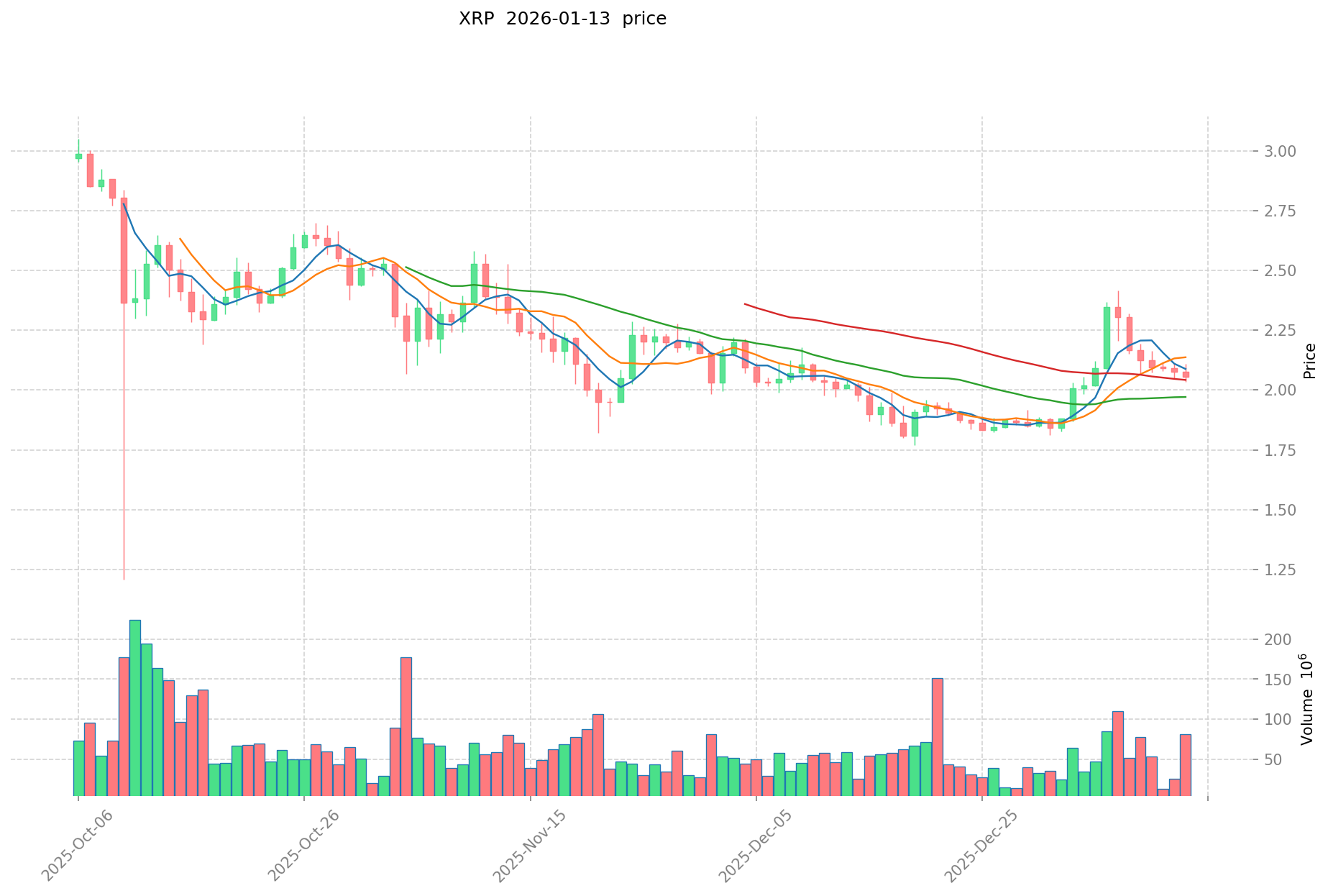 These exchange-traded funds provide regulated exposure to XRP through standard brokerage and retirement accounts, while the creation and redemption mechanism supports overall XRP market liquidity. Investors benefit from simplified access and SEC oversight, while direct exchange trading remains available for those seeking 24/7 market access and full on-chain utility features.
Two Types of XRP ETFs Available in 2025
The U.S. market offers two distinct categories of XRP exchange-traded funds, each designed to serve different investment strategies and risk profiles:
-
Spot XRP ETFs: These funds directly hold actual XRP tokens in institutional-grade cold storage, providing physically backed exposure with a 1:1 relationship to the underlying asset. This structure minimizes tracking error and offers the most straightforward way to gain XRP exposure through traditional investment accounts.
-
Futures XRP ETFs: These products track XRP price movements through CME futures contracts rather than holding the tokens directly. They include multiple variations such as 1x standard exposure, 2x leveraged long positions, -1x inverse exposure, and -2x double inverse positions. While offering tactical trading opportunities, these funds carry higher fee structures and face leverage decay risks due to daily rebalancing.
Both categories operate under full SEC regulation, trade through standard brokerage and retirement accounts like traditional stocks, and provide distinct advantages depending on whether investors prioritize long-term holding strategies or short-term tactical trading opportunities.
What Is a Spot XRP ETF?
A spot XRP ETF represents a traditional exchange-traded fund structure that physically owns real XRP tokens and lists its shares on major U.S. stock exchanges including the NYSE, Nasdaq, and Cboe BZX. When an investor purchases one share of such an ETF, they effectively gain proportional exposure to XRP's price movements without the operational complexity of setting up cryptocurrency wallets, managing private keys, or navigating exchange security protocols in the same manner as direct token ownership.
The fund structure involves holding actual XRP in institutional-grade cold storage facilities, primarily through Coinbase Custody, which provides enhanced security measures beyond what most individual investors can implement. The fund calculates its daily net asset value using independent pricing sources such as the CME CF XRP-Dollar Reference Rate, ensuring transparent and reliable valuation. The share price tracks XRP's market price with minimal deviation, after deducting a small annual management fee that ranges from 0.19% to 0.75% depending on the specific issuer and their fee structure.
Operational Mechanics: When investors buy shares under popular tickers such as XRP, EZRP, XRPC, or XRPR, they acquire fractional ownership of a pool of actual XRP tokens without ever needing to interact with cryptocurrency infrastructure or manage private keys directly.
Main Advantages:
- 100% backed by real XRP tokens maintained in institutional cold storage facilities, predominantly through Coinbase Custody
- Tracks the live XRP spot price with minimal tracking error
- Compatible with regular brokerage accounts, Individual Retirement Accounts (IRAs), 401(k) plans, and other qualified retirement vehicles
- Fee structures as low as 0.00%–0.19% after temporary waivers, with Franklin Templeton's EZRP offering the most competitive pricing in the spot cryptocurrency ETF market
Ideal Use Case: Long-term investors seeking straightforward, clean exposure to XRP price movements through traditional investment vehicles.
What Is a Futures XRP ETF?
A futures XRP ETF tracks XRP price movements through futures contracts traded on regulated exchanges like the CME Group, rather than holding the underlying tokens in custody. These products, which began launching in April 2025, provide indirect exposure to XRP's price dynamics and often include leveraged or inverse variants designed for amplified returns or hedging strategies. For example, a 2x leveraged fund aims to deliver twice the daily performance of XRP futures, making it appropriate for short-term trading strategies but introducing significant risks for long-term positions due to compounding effects and futures contract roll costs.
These ETFs allocate their portfolios primarily to cash-settled XRP futures, swap agreements, and related derivative instruments, maintaining at least 80% of total assets in XRP-linked derivatives to ensure tracking fidelity. They trade during standard U.S. market hours on exchanges including Nasdaq and NYSE Arca, with annual expense ratios typically ranging from 0.94% to 1.15%. Unlike spot ETFs, futures-based products do not provide access to on-chain utility features, but they contribute meaningfully to market depth through hedging activities and speculative trading, thereby enhancing overall XRP liquidity across multiple market venues.
Available Futures-Based XRP ETFs:
- XRPI – Volatility Shares → 1× daily performance tracking → annual fee 0.94%
- UXRP – ProShares → 2× leveraged daily performance → annual fee 0.95%
Critical Warning: Due to daily rebalancing mechanics and futures roll costs, these products are specifically designed for short-term tactical trading rather than long-term portfolio holdings.
Spot vs Futures XRP ETF – Quick Comparison
| Feature |
Spot XRP ETF |
Futures XRP ETF |
| Holds real XRP? |
Yes |
No |
| Best for |
Long-term holding |
Short-term trading only |
| Fee range |
0.00% – 0.90% (many with temporary waivers) |
0.94% – 0.95% (no waivers) |
| Launch period |
October – November 2025 |
May – July 2025 |
| Popular tickers |
XRP, EZRP, XRPC, XRPR |
UXRP, XRPI |
The Full Regulatory Journey (2020–2025)
2020–2023: SEC Lawsuit and Partial Victory
The pathway to XRP ETF approval began with the SEC lawsuit filed in December 2020, which characterized XRP as an unregistered security and prompted most U.S. exchanges to delist the token. A significant breakthrough occurred in July 2023 when Judge Analisa Torres issued a ruling that programmatic sales of XRP on secondary markets do not constitute securities offerings under federal law. This judicial decision established the foundational legal framework necessary for future ETF approvals by clarifying XRP's regulatory status in the context of exchange trading.
April–July 2025: Futures ETFs Pave the Way
Building upon the 2023 judicial ruling, the CFTC and CME Group launched XRP futures contracts in May 2025, creating the regulatory infrastructure for futures-based ETF products. Volatility Shares' XRPI debuted on May 23 as the inaugural non-leveraged futures product, followed by ProShares' leveraged product suite (UXRP, XRPS, RIPS) on May 14. These approvals under existing commodity ETF regulatory frameworks demonstrated XRP's market maturity and institutional acceptance, with futures open interest surpassing $4 billion by July, signaling robust institutional participation.
August 2025: Final Settlement and Non-Security Confirmation
After extended negotiations between Ripple and the SEC, the case reached its formal conclusion on August 7, 2025. Under the settlement terms, Ripple agreed to pay a $125 million civil penalty, both parties withdrew all pending appeals, and the court's ruling confirming that secondary-market XRP sales do not constitute securities transactions became permanent. This settlement removed the final regulatory obstacle to spot XRP ETF approvals by providing definitive legal clarity on XRP's classification.
September 2025: New SEC Fast-Track Standards Introduced
Three weeks following the August 7 settlement, the SEC introduced new generic listing standards specifically for commodity-based cryptocurrency exchange-traded products. This fast-track regulatory framework allows qualifying filings to become effective automatically after a 20-day review period through S-1 amendments, eliminating the multi-year individual review process that previously delayed Bitcoin and Ethereum spot ETF approvals. This streamlined approach significantly accelerated the XRP ETF launch timeline.
Complete XRP ETF List – All Live U.S. Spot Products (as of December 10, 2025)
| Ticker |
Issuer |
Launch Date |
Exchange |
Fee |
Key Highlights |
| XRP |
Bitwise |
November 20, 2025 |
NYSE |
0.34% (waived on first $500M) |
Ultra-rare single-letter ticker symbol, initially seeded with approximately $2.27M in XRP |
| XRPC |
Canary Capital |
November 13, 2025 |
Nasdaq |
0.50% |
Record-breaking debut with $59M first-day trading volume, approximately $250M in assets under management |
| EZRP |
Franklin Templeton |
November 18, 2025 |
Cboe BZX |
0.19% (waived until $1B AUM) |
Lowest fee structure in spot cryptocurrency ETF history |
| XRPR |
REX-Osprey |
September 18, 2025 |
Cboe BZX |
0.75% |
First U.S. spot XRP ETF to launch, approximately $100M in assets under management |
| XRPM |
Amplify |
November 18, 2025 |
Cboe BZX |
0.75% |
Employs covered-call strategy targeting approximately 3% monthly income (approximately 36% annualized yield in stable market conditions) |
Complete XRP ETF List – All Live U.S. Futures Products (as of December 10, 2025)
| Ticker |
Issuer |
Launch Date |
Exchange |
Fee |
Key Highlights |
| XRPI |
Volatility Shares |
May 23, 2025 |
Nasdaq |
0.94% |
First non-leveraged futures product, $5B in assets under management, 1× XRP futures tracking |
| UXRP |
ProShares |
May 14, 2025 |
NYSE Arca |
1.15% |
2× long daily exposure, $70B in assets under management – dominates leveraged trading volume |
| XRPS |
ProShares |
May 14, 2025 |
NYSE Arca |
1.15% |
–1× inverse daily exposure designed for hedging strategies |
| RIPS |
ProShares |
May 14, 2025 |
NYSE Arca |
1.15% |
–2× inverse daily exposure, attracts significant bearish trading volume |
| XXRP |
Teucrium |
April 8, 2025 |
NYSE |
0.95% |
2× long exposure through swaps and futures, $450M+ in assets under management, demonstrated strong early capital flows |
Recent XRP ETF Developments & Key Milestones
November 2025 delivered a continuous stream of significant market events through the auto-effective S-1 filing process under the new SEC regulatory framework. The following developments highlight the rapid market evolution:
-
Canary Capital establishes global 2025 record with $59M first-day trading volume: The XRPC launch on November 13 marked one of the most successful ETF debuts of the year, attracting $245–250M in initial capital inflows and demonstrating strong institutional demand.
-
Bitwise secures ultra-rare single-letter ticker symbol "XRP" on NYSE: This milestone achievement highlights growing institutional confidence in XRP as an asset class, with initial seeding and temporary fee waivers strategically positioning the fund for sustained growth.
-
Franklin Templeton launches lowest base fee structure in spot cryptocurrency ETF history: The EZRP's fee waiver until reaching $1B in assets under management intensifies competitive pressure on fee structures across the industry, backed by Franklin Templeton's $1.5 trillion in total firm assets.
-
Over 80 million XRP tokens transferred to Coinbase Custody during first half of November: On-chain data analytics confirm substantial institutional capital inflows, significantly boosting custody-level liquidity in advance of additional product launches.
-
Futures ETFs reach $75B in combined assets under management: ProShares' UXRP leads the category with $70B in assets, while XRPI contributes steady 1x exposure flows; total futures trading volume exceeds $1.3B monthly, signaling mature derivatives market development.
Ripple CEO Brad Garlinghouse acknowledged the momentum through social media commentary referencing the "turkey trot"—a reference to the pre-Thanksgiving timing coinciding with multiple product launches.
How Creation and Redemption Improves XRP Liquidity
The creation and redemption mechanism establishes a direct operational link between ETF capital flows and the underlying XRP market. When investor demand pushes an ETF's market price above its net asset value, authorized participants execute arbitrage by purchasing XRP tokens on spot markets, delivering them to the designated custodian, and receiving newly created ETF shares in return. The reverse process occurs during redemption cycles when the ETF trades at a discount.
This arbitrage mechanism maintains tight alignment between ETF share prices and XRP's spot market price while typically narrowing bid-ask spreads and reducing medium-term price volatility. Market data collected since September 2025 indicates that XRP's 30-day realized volatility has declined by approximately 28%, suggesting that ETF-related flows contribute to more stable price discovery and enhanced market depth across multiple trading venues.
Advantages of Investing in XRP ETFs
XRP ETFs significantly simplify cryptocurrency exposure for traditional investors who prefer regulated investment vehicles. The following benefits explain why many investors choose ETF structures:
-
IRA & Retirement Account Compatibility: These funds are fully eligible for inclusion in Individual Retirement Accounts (IRAs), 401(k) plans, and standard brokerage accounts, enabling tax-advantaged growth strategies without requiring direct cryptocurrency handling or specialized custody arrangements.
-
Full SEC Regulation and Daily Audits: Daily portfolio audits and comprehensive transparency requirements under SEC regulatory frameworks enhance investor trust and provide protection against fraud risks that can affect unregulated trading platforms.
-
Institutional-Grade Custody & Reduced Hacking Risk: Professional institutional custodians employ multi-layered security protocols that significantly minimize hacking risks compared to personal wallet storage, where individual users bear full responsibility for key management.
-
Monthly Income Option: Covered-call ETF strategies like XRPM target approximately 3% monthly distribution yields (approximately 36% annualized), providing steady income streams that can offset portfolio volatility while maintaining underlying XRP exposure.
-
Seamless Brokerage Access & High Liquidity: Trade execution through established brokers like Fidelity eliminates the need for cryptocurrency wallets or exchange accounts, while improved market depth resulting from institutional participation reduces bid-ask spreads and enhances execution quality.
-
Potential Tax Deferral in Qualified Accounts: Holdings within qualified retirement accounts enable potential deferral of capital gains taxes, preserving more after-tax returns compared to direct token holdings in taxable accounts.
Risks of Investing in XRP ETFs
While ETF structures mitigate certain cryptocurrency-specific risks, they introduce their own limitations and retain exposure to core market uncertainties. Key risk factors include:
-
Annual Management Fees (0.19–0.75%): Ongoing expense ratios ranging from EZRP's 0.19% to XRPM's 0.75% create a continuous drag on returns over extended holding periods, potentially reducing long-term wealth accumulation compared to direct token ownership.
-
No Airdrops, Staking, or DeFi Access: ETF shareholders forfeit access to XRP Ledger ecosystem benefits including potential airdrops, staking rewards, and decentralized finance yield opportunities that remain available exclusively to direct token holders with wallet custody.
-
Ongoing Price Volatility: XRP's inherent price fluctuations, which can range from 5–15% weekly during volatile market conditions, directly impact ETF net asset values, with price swings amplified during major market events or regulatory announcements.
-
Covered-Call Strategies Cap Upside in Bull Markets: Income-focused ETFs like XRPM may significantly underperform during strong bull market rallies because option premium collection strategies limit participation in explosive upside price movements.
-
Possible Tracking Error & Early Liquidity Premiums: ETF market prices may deviate from underlying XRP spot values due to supply-demand imbalances, with newly launched funds potentially experiencing wider bid-ask spreads until liquidity deepens through market maturation.
-
Regulatory Uncertainty Remains: Despite the 2025 regulatory clarity provided by the Ripple settlement and new SEC standards, future policy changes, legislative actions, or regulatory reinterpretations could impact XRP's classification or ETF operational viability.
XRP ETFs vs. Bitcoin & Ethereum ETFs (Quick Comparison)
| Feature |
XRP ETFs |
Bitcoin ETFs |
Ethereum ETFs |
| First U.S. Launch |
September–November 2025 |
January 2024 |
May–July 2024 |
| Approval Path |
Auto-effective S-1 |
Full 19b-4 + S-1 |
Full 19b-4 + S-1 |
| Total Inflows |
Approximately $300M (early combined) |
Over $65 billion |
Approximately $15 billion |
| Fee Range |
0.19% – 0.75% |
0.20% – 0.90% |
0.19% – 0.25% |
| Main Use Case |
Cross-border payments and settlement |
Digital gold / store of value |
Smart contracts / DeFi infrastructure |
| Primary Custodian |
Predominantly Coinbase Custody |
Coinbase, Gemini, BitGo |
Same as Bitcoin |
| Income Option |
Yes (e.g., XRPM covered-call strategy) |
Rare |
Rare |
XRP ETFs vs. Buying XRP Directly on an Exchange
Investors face two primary pathways for gaining XRP exposure: regulated ETF structures or flexible direct trading through cryptocurrency platforms. The following comparison illustrates the trade-offs:
| Feature |
XRP ETFs |
Direct Exchange Trading |
| Regulation |
Full SEC oversight and compliance |
State licensing + FinCEN registration |
| Trading Hours |
U.S. market hours only |
24/7 continuous trading |
| Retirement Accounts |
Yes, fully compatible |
No, not eligible |
| Fees |
0.19–0.75% annual management fee |
Typically zero spot trading fees |
| Leverage |
Not available |
Up to 100× leverage available |
| On-chain Benefits |
None |
Full access (airdrops, DeFi, staking) |
Final Thoughts
Spot XRP ETFs began trading in 2025 following the SEC–Ripple settlement and the introduction of the auto-effective S-1 regulatory framework. Futures XRP ETFs, launching earlier between April and May, established critical derivatives market infrastructure, accumulating over $75B in combined assets under management and driving futures open interest beyond $4B, thereby setting the foundation for spot product approvals. These funds provide U.S. investors with a regulated pathway to gain XRP exposure through traditional brokerage accounts and qualified retirement vehicles. The creation and redemption mechanism has contributed measurably to increased market liquidity and a reduction in short-term volatility since the initial product launches.
Investors can choose between two distinct approaches:
- XRP ETFs (limited to stock market trading hours, full SEC regulatory oversight, eligible for retirement account inclusion)
- Direct XRP trading on cryptocurrency platforms (24/7 market access, no ongoing management fees, full access to on-chain functionality)
Both options operate within legal frameworks and remain available to qualified investors, allowing each individual to select the approach that best aligns with their investment preferences, risk tolerance, and long-term financial objectives.
FAQ
What is an XRP ETF? How does it differ from buying XRP directly?
An XRP ETF is an investment fund that directly holds XRP tokens, managed through custodians. Unlike direct purchases, ETFs offer easier access, institutional-grade security, and traditional investment account integration without managing private keys yourself.
What XRP ETF products are available in 2025 and which exchanges are they listed on?
In 2025, five spot XRP ETFs were listed in the United States through DTCC and are expected to launch this month. These ETFs provide direct exposure to XRP through regulated investment vehicles.
XRP ETF的上市时间表是怎样的?
Multiple XRP ETF applications have been submitted by firms like Canary Capital, Bitwise, and Grayscale. These ETFs are expected to activate in mid-November, with Canary's ETF launching on November 13th, enabling institutional access to XRP through regulated investment products.
How should I buy XRP ETF? What conditions do I need?
Connect your crypto wallet to a decentralized exchange like Uniswap or PancakeSwap. Select the XRP ETF trading pair and complete the purchase. Ensure your wallet supports the required blockchain network.
What are the main risks of investing in XRP ETF?
Main risks include regulatory policy changes, market competition intensification, technology security vulnerabilities, and overall cryptocurrency market systemic risks. XRP price volatility and project development delays also pose significant concerns.
XRP ETF相比于其他加密货币ETF有什么优势?
XRP ETF具有更强的监管清晰度,审批流程相对更快。它吸引机构投资者关注,交易额显著增长,市场流动性改善。ProShares XRP ETF推出后,XRP价格上涨,机构采用度提高,投资透明度优于其他加密货币ETF。
What is the typical management fee rate for XRP ETFs?
The Bitwise XRP ETF charges a management fee of 0.34%. The first month and first $500 million in assets under management are fee-exempt, making it competitive among crypto ETF offerings.
Is XRP ETF suitable for long-term investors and short-term traders respectively?
XRP ETF with 2x leverage is ideal for short-term traders seeking to capitalize on price movements, but unsuitable for long-term investors due to daily rebalancing effects and high fees. Long-term investors should consider spot XRP ETF alternatives instead.
* The information is not intended to be and does not constitute financial advice or any other recommendation of any sort offered or endorsed by Gate.