


什么是 SSV:以太坊未来单槽投票(Single Slot Voting)权威指南
SSV Network 的定位与意义
2021 年,SSV Network 团队推出了 SSV Network(SSV),旨在解决以太坊质押基础设施中的安全风险与中心化问题。 作为基于 Secret Shared Validators 技术的去中心化验证者基础设施协议,SSV Network 在以太坊质押及验证者运营中发挥着核心作用。
截至 2026 年,SSV Network 已成为以太坊质押生态系统的重要基础设施,持币者数量约为 7,150 人,并拥有活跃的开发者社区。 本文将深入探讨其技术架构、市场表现及未来发展潜力。
起源与发展历程
背景
SSV Network 源自 Blox(CDT),并于 2021 年完成品牌升级,旨在应对以太坊质押中的验证者密钥管理难题及单点故障风险。 SSV Network 诞生于以太坊 2.0 过渡期及质押需求高速增长阶段,致力于提供安全、稳健的验证者密钥拆分与分发方案,推动行业变革。 SSV Network 的推出为以太坊验证者和质押服务提供商带来了新的可能性。
关键里程碑
- 2021 年:品牌由 Blox 升级为 SSV Network,代币按 100 CDT = 1 SSV 转换,并实现 Secret Shared Validators 技术落地。
- 2024 年:网络生态快速发展,越来越多以太坊质押运营商采纳该方案。
- 在 SSV Network 基金会及社区的持续支持下,项目不断优化技术,总供应量达 1,470 万枚 SSV。
依托社区与基金会支持,SSV Network 持续推进技术、安全性及实际应用的优化。
SSV Network 的运作机制
无中心化控制
SSV Network 依托全球分布的去中心化节点网络运行,不受银行或政府干预。 这些节点协同完成交易验证,保障系统透明度和抗攻击能力,赋予用户更大自主权并增强网络韧性。
区块链核心
SSV Network 基础设施建立在以太坊之上,利用公开且不可篡改的数字账本记录验证者操作。 所有操作均通过密码学方法验证,形成安全链结构。 任何人都可随时查阅记录,无需中介即可建立信任。 Secret Shared Validators 技术将验证者密钥拆分至多个互不信任的节点,进一步提升安全性和去中心化水平。
保障公平性
SSV Network 采用分布式验证者技术(DVT)架构进行质押管理与验证,防止单点故障。 运营者通过运行分布式验证者节点、管理密钥份额维护网络安全,并获得 SSV 代币奖励。 其创新点在于提升容错能力,降低验证者管理的中心化风险。
安全运行
SSV Network 应用密码学密钥拆分技术,保障验证者操作安全:
- 密钥份额分散至多位运营者,防止单点被攻破
- 门限签名机制确保部分运营者失效时,验证者操作依然安全
该机制实现验证者安全与运营弹性、去中心化的有机结合。 协议通过多运营者共识和自动故障转移机制进一步提升安全防护。
SSV Network 的市场表现
流通概览
截至 2026 年 1 月 19 日,SSV Network 流通量为 14,699,173.1 枚,总代币供应量同为 14,699,173.1 枚,流通占比 100%,即代币已全部释放至市场。SSV 源自 Blox(CDT)品牌升级,代币按 100 CDT = 1 SSV 分发。作为协议原生代币,SSV 通过初始分发机制进入流通,影响去中心化验证者技术生态内的供需关系。
价格波动
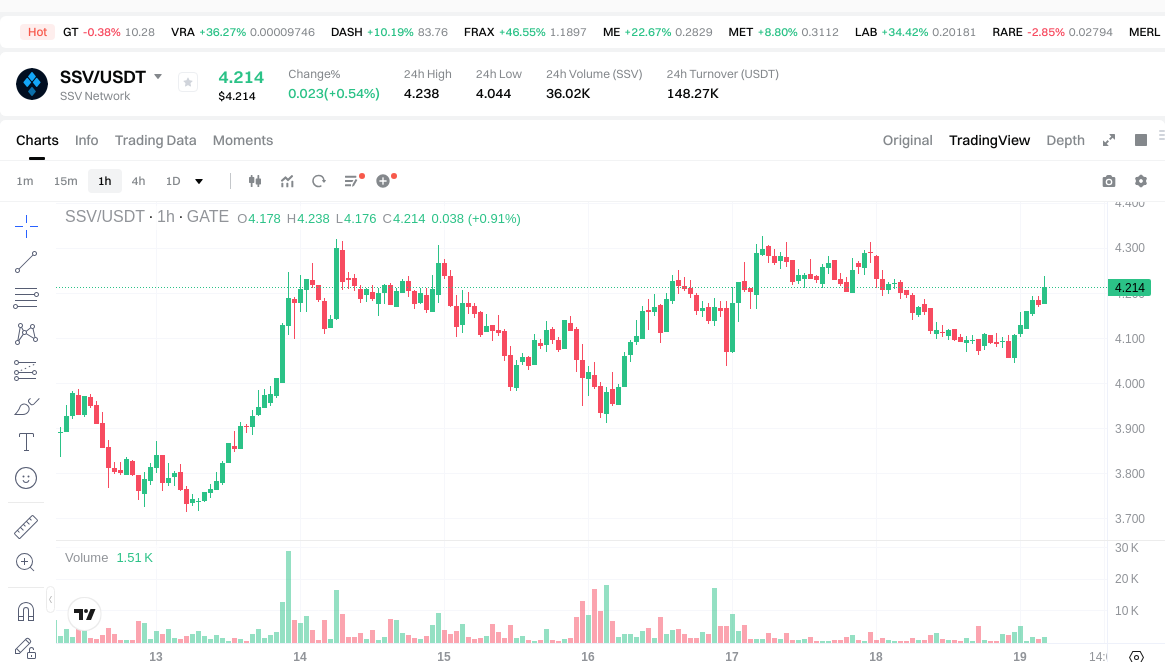
2024 年 3 月 25 日,SSV Network 价格达历史高点 $65.82,彼时以太坊质押基础设施受到极大关注。2025 年 10 月 11 日,代币录得历史最低 $2.65,反映出市场调整及质押技术演变。2026 年 1 月 19 日,SSV 报价 $4.223,24 小时涨幅 +0.83%,7 天涨幅 +6.88%。近 30 天内上涨 13.02%,但全年仍较高点下跌 80.77%。这些波动体现了市场情绪周期、验证者基础设施采用变化及以太坊质押格局演变的影响。
点击查看当前 SSV 市场价格
链上指标
- 24 小时交易量:$146,731.62(反映市场流动性与交易活跃度)
- 持币地址数:7,150(代表代币分布的广度)
- 市值:$62,074,608.00(反映 SSV 在验证者基础设施领域的市场地位)
SSV Network 生态应用与合作伙伴
核心应用场景
SSV Network 生态涵盖多种应用:
- 以太坊质押基础设施:SSV Network 提供分布式验证者技术(DVT)解决方案,实现去中心化且容错的验证者密钥管理,支持 ETH 质押操作。
- 验证者服务:平台通过 Secret Shared Validators 技术保障验证者操作安全,提升质押服务商的安全性与运营韧性。
战略合作伙伴
SSV Network 通过合作提升技术能力和市场影响力,这些合作为生态扩展奠定了坚实基础。
挑战与考量
SSV Network 需应对多方面挑战:
- 技术复杂性:分布式验证者技术的集成和运维要求高
- 市场竞争:以太坊质押解决方案不断演进
- 采用曲线:分布式验证者技术的市场认知和实际应用仍在推进
这些因素促使社区持续讨论,并推动 SSV Network 不断创新。
SSV Network 社区与社交媒体氛围
社区参与度
SSV Network 拥有活跃社区,推动以太坊质押基础设施的发展。 在 X 平台,分布式验证者技术相关话题和标签频繁引发讨论。
社交媒体情绪
X 平台上观点多元:
- 支持者强调 SSV Network 的去中心化验证者基础设施和安全性,认为其对于以太坊质押的韧性至关重要。
- 观察者则关注实施复杂度和采用进度等话题。
热门话题
X 用户聚焦 SSV Network 在以太坊质押基础设施、验证者去中心化及分布式验证者技术应用中的作用。
SSV Network 相关信息来源
- 官方网站:访问 SSV Network 网站,了解功能、应用和最新动态。
- X 平台动态:SSV Network 在 X 平台 @ssv_network 活跃,分享技术进展、社区活动和生态更新内容。
SSV Network 未来发展路线图
- 生态目标:推动分布式验证者技术在以太坊质押生态的广泛应用
- 长期愿景:为以太坊构建去中心化且高韧性的验证者基础设施
如何参与 SSV Network?
- 购买方式:可在 Gate.com 等加密货币交易所获取 SSV 代币
- 存储方案:选择支持 SSV 的安全钱包进行代币存储
- 治理参与:通过治理机制参与社区决策
- 生态建设:参与 SSV Network 生态开发机会
总结
SSV Network 为以太坊质押提供分布式验证者技术,具备更高安全性、容错性和去中心化特征。 其专注于验证者基础设施及开发者社区的活跃发展,使其成为以太坊质押生态的重要推动者。 在应对采用挑战和市场变革的同时,SSV Network 的技术路线有效满足验证者运营中的核心需求。 无论是探索质押方案还是关注去中心化基础设施,SSV Network 都值得持续关注。
常见问题
什么是加密 SSV(单一质押验证者),其原理如何?
SSV 是去中心化协议,通过分布式验证者实现以太坊安全质押。它将验证者职责分配给多个运营者,提升容错性和安全性,用户可对 ETH 持仓获得质押奖励。
SSV 在区块链质押中的核心优势和应用有哪些?
SSV 提升质押的去中心化与容错能力,支持分布式验证者操作。其主要优势包括安全性增强、降低宕机风险,及为资产管理提供无需信任的质押基础设施。
如何参与 SSV 质押及参与条件?
参与 SSV 质押时,用户可在支持平台创建验证者池,无需独立运行完整验证者节点。只需满足最低质押额度即可启动质押并获得奖励。
使用 SSV 有哪些风险和安全考量?
SSV 风险包括密钥拆分漏洞和运营者可信度问题。需持续监控运营者潜在威胁并保障基础设施稳健。相比传统模式,分布式密钥架构显著降低了单点故障风险。
SSV 相较传统独立质押和其他质押方案有何优势?
SSV 允许用户持有自己的 ETH,由他人运营验证者节点,比独立质押更灵活。与其他方案相比,SSV 能降低中心化风险并增强网络去中心化。
SSV Network 的代币经济与治理结构如何?
SSV Network 采用去中心化 DAO 治理,无单一实体控制。代币经济包含 DAO 财库持续资金支持,治理决策通过 SSV 持币人民主投票产生。
分享
目录


热门加密货币



如何购买加密货币:Gate.com详细指南

2025年最佳加密质押平台推荐:安全获利两不误

2025年的以太坊2.0:权益质押、可扩展性和环境影响
MemeBox 价格和空投指南2025:你需要知道的事情

加密货币质押全解析:如何通过代币赚取被动收入
AI伴侣(AIC)能否达到0.2729美元的价格预测?

Gate Ventures 每周加密市场回顾(2026年3月23日)


Gate Ventures 每周加密市场回顾(2026年3月2日)
Gate Ventures 每周加密货币市场回顾(2026年2月23日)

Gate Ventures 本周加密货币回顾(2026年2月9日)
