イーサリアム・バーチャル・マシン(EVM)とは何か、その仕組みとスマートコントラクトの実行方法について
Ethereumは、単なる価値移転ネットワークからプログラム可能なブロックチェーンプラットフォームへと進化し、EVMは分散型アプリケーションのエコシステムを支える主要な実行レイヤーとなっています。その定義や実行構造、実行フロー、ガス機構、セキュリティモデルを分析することで、Ethereumシステム内におけるEVMの重要性がより明確になります。
Ethereum Virtual Machine(EVM)とは?
Ethereum Virtual Machine(EVM)は、準チューリング完全な仮想コンピューターです。Ethereumのすべてのアカウントやスマートコントラクトが存在するサンドボックス環境として機能します。Ethereumブロックチェーンを分散型台帳に例えると、EVMはその台帳の各ページを変更するプロセッサの役割を担います。
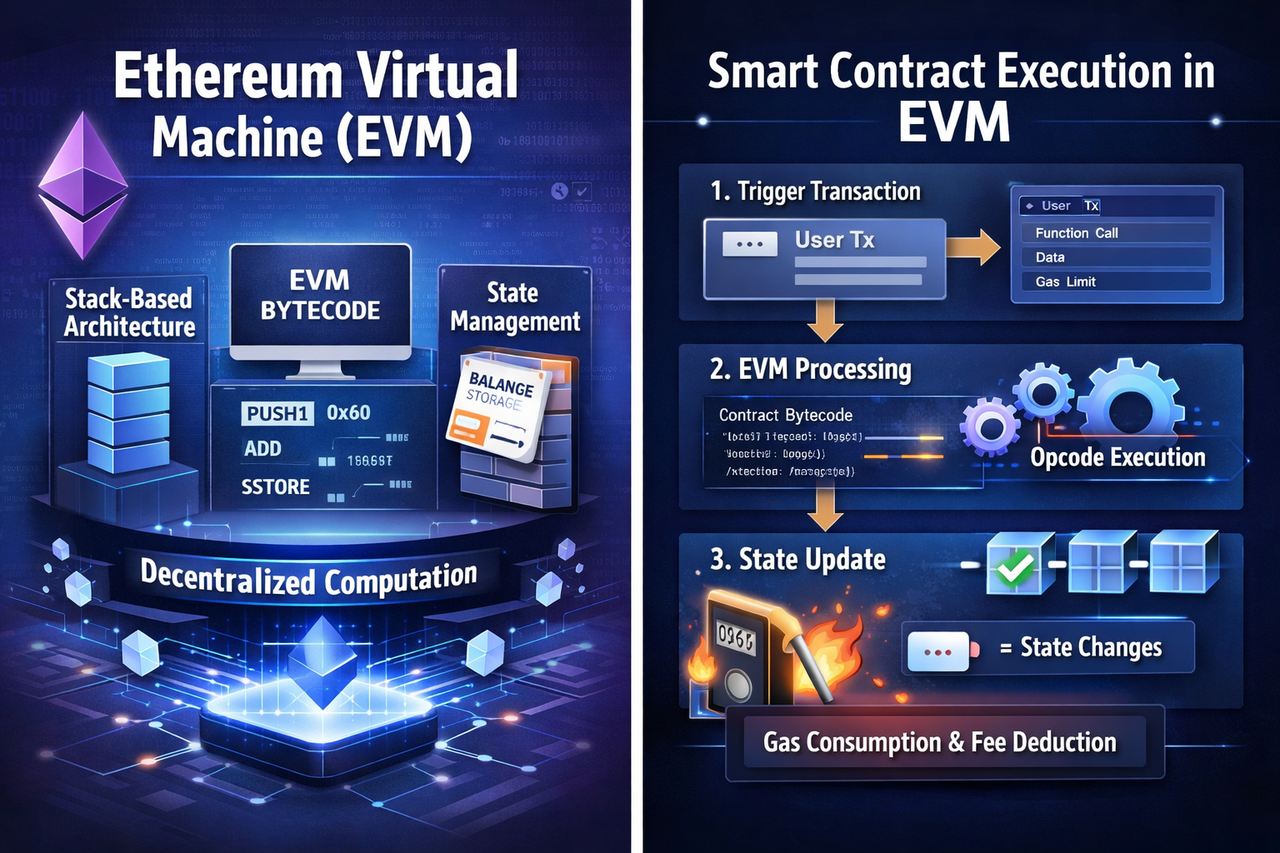
Ethereumアーキテクチャにおいて、EVMは実行レイヤーに属し、トランザクションに含まれるコントラクトロジックの処理を担っています。EVMは中央サーバーではなく、すべてのノードが独立して実行する統一された計算ルールシステムです。トランザクションでスマートコントラクトが呼び出されると、ネットワーク全体の検証ノードが同じコントラクトコードをローカルで実行し、同一の実行ルールにより同じ結果を得ます。
EVMの存在によって、ノードの場所やハードウェア環境に関係なく、同じスマートコントラクトコードを実行すれば常に完全に同じ結果が得られます。この特性がEthereumを単なる決済ネットワークからプログラム可能なグローバル価値決済レイヤーへと進化させています。
EVMのコア構造と実行環境
EVMの実行環境は効率性と隔離性の両立を目的に設計されています。コア構造は以下の3つの主要コンポーネントで構成されています:
- スタック:EVM内の主要な計算スペースです。後入れ先出しの原則で動作します。すべての命令パラメータや結果はスタックを通して受け渡されます。簡潔性を保つため、スタックの最大深度は1,024要素に制限されています。
- メモリ:アドレス指定可能な一時的なバイト配列です。コントラクト実行中の関数パラメータやローカル変数など、一時データの保存に利用されます。実行終了時にはメモリ内のデータはすべて消去されます。
- ストレージ:メモリとは異なり、ストレージは永続的です。各スマートコントラクトにはキー・バリュー型のデータベースが紐付いています。ストレージの変更はブロックチェーン状態に永久記録されるため、ガスコストが高くなります。
EVMによるスマートコントラクトの実行方法
Ethereumエコシステムでは、開発者は一般的にSolidityなどの高水準言語でコードを書きます。EVMはこれらの言語を直接解釈できないため、コードは複数の変換工程を経て実行されます:
- コンパイルとバイトコード生成:高水準コードはまずバイトコードにコンパイルされます。バイトコードは16進数形式で表現される機械可読な命令セットです。
- トリガーとオペコード抽出:ユーザーがトランザクション(コントラクト関数の呼び出しなど)を送信すると、EVMはバイトコードをADDやPUSHなどのオペコード列に分解します。これらのオペコードはスタックデータを操作し、ストレージを更新します。
- 命令実行:EVMは仮想ランタイム環境内でオペコードを1つずつ読み取り、実行します。各呼び出しごとに独立した実行コンテキストが生成されます。例外が発生した場合は状態がロールバックされます。
- 状態更新と結果確定:実行が正常に完了し、十分なガスがある場合、EVMはアカウント残高やコントラクトストレージを更新し、結果状態をネットワークにブロードキャストします。
EVM実行におけるガスの役割
無限ループによるネットワーク資源の消費などの悪意ある行為を防ぐため、EVMは計算コストを測るガス機構を導入しています。
- 資源価格付け:各オペコードには事前に定義されたガスコストが割り当てられています。加算などの単純操作は少量のガスしか消費しませんが、永続ストレージへのデータ書き込みは大幅に多く消費します。
- 実行制限:トランザクション送信者はガスリミットを指定する必要があります。実行中にガスが枯渇した場合、EVMは即座に実行を停止し、状態変更をすべてロールバックします。消費されたガスは返金されません。
- インセンティブ調整:ガス手数料は最終的にバリデーターへの報酬となり、計算資源提供とネットワークセキュリティ維持の対価となります。
EVMの決定性とセキュリティモデル
EVMの最も本質的な特性は決定性です。同じ入力と同じブロックチェーン状態が与えられれば、コードがいつどこで実行されても結果は必ず同一になります。
さらに、EVMはサンドボックス環境で動作します。EVM内で実行されるスマートコントラクトはホストマシンのネットワークやファイルシステム、他プロセスにアクセスできません。この設計により、悪意あるコントラクトによるノードサーバーへの損害を防ぎ、分散ネットワークの堅牢性を確保しています。
EVMと他の実行環境の違い
EVMは最も広く利用されている実行環境ですが、それだけが唯一ではありません。
Bitcoin Scriptのような機能が限定された環境と比較すると、EVMはより複雑なロジック構造やコントラクト間の相互作用をサポートします。
SolanaのSealevel(並列実行対応)やPolkadotのWebAssembly環境と比較すると、EVMの主な制約は直列実行モデルにあります。トランザクションは順番に処理されるため、スループットに制限が生じます。
しかし、EVMの強みは圧倒的なネットワーク効果です。多くのLayer 2ソリューション(ArbitrumやOptimismなど)やBSC、Avalancheなどの競合パブリックチェーンも「EVM互換」アプローチを採用しています。これにより開発者はコードをシームレスに移行し、Ethereumの成熟した開発ツールチェーンを活用できます。
まとめ
Ethereum Virtual Machine(EVM)は、Ethereumネットワーク上でスマートコントラクトを実行する中核的な計算環境です。スタックベースのアーキテクチャ、バイトコード実行、決定的なルールによって分散型状態遷移を可能にします。ガス機構は資源管理とセキュリティ保護を提供し、決定性設計が安定したネットワーク合意形成を支えます。
EVMはスマートコントラクト実行エンジンであるだけでなく、Web3時代の分散型オペレーティングシステムとしても機能します。構造化されたスタック設計、ガス制約、決定的セキュリティモデルが、グローバルな信頼不要型協調の技術基盤となっています。
よくある質問
EVMオペコードとは何ですか?
オペコードはEVMが理解する最も基本的な命令です。高水準コントラクトコードは最終的にPUSH、POP、MLOADなどの単純な操作に分解され、仮想マシンで順次処理されます。
EVMがサポートする命令は何ですか?
約140種類のオペコードがあり、ADDのような算術操作、JUMPなどの制御フロー操作、SHA3などの暗号操作を含みます。
なぜEVMの実行にはガスが必要なのですか?
ガスは計算資源の乱用を防ぎます。各操作にコストを割り当てることで、EVMは無限ループや悪意ある大規模計算によるネットワーク停止を防止します。
EVM互換性とは何を意味しますか?
他のブロックチェーンでもEthereumと同じスマートコントラクトを実行できることを意味します。開発者はコードを書き直すことなく、複数のネットワークでアプリケーションを展開できます。
EVMはインターネットデータにアクセスできますか?
できません。EVMは完全に隔離された実行環境であり、外部APIやインターネットには直接アクセスできません。コントラクトが外部データを必要とする場合、オラクルを通じてブロックチェーンに書き込む必要があります。
共有
内容


関連記事

ONDOトークン経済モデル:プラットフォームの成長とユーザーエンゲージメントをどのように推進するのか

Falcon FinanceとEthena:合成ステーブルコイン市場の徹底比較

Falcon Financeトークノミクス:FFバリューキャプチャの解説

Raydiumの利用方法:初心者のための取引と流動性提供ガイド

ETHを賭ける方法は?