


Malaysian man who bought AI.com in 1993 made a huge profit? Foreign media question technical feasibility

It is widely circulated that Malaysian man Arsyan Ismail bought the AI.com domain at age 10 for $100 and sold it for $70 million. However, local tech media Lowyat.net questions the plausibility of this story from a technological and historical perspective. Investor tracking suggests Arsyan likely purchased the domain in 2021 via SAW.com, with the previous owner being a Kuwaiti collector.
Why 1993 Online Credit Card Purchase Is Impossible
However, today Lowyat.net published a report questioning the story, arguing that given the technological context of 1993, it is impossible for a 10-year-old to have bought a domain using a credit card. According to their investigation, AI.com was indeed registered on May 4, 1993—just five days after the World Wide Web (WWW) officially entered the public domain, which is undisputed.
But the first online credit card transaction did not occur until August 1994 or fall 1993, and online card processing was not officially approved until 1996. The CVV security code on the back of credit cards was only introduced in 1997. These timelines show that it was impossible to purchase a domain online via credit card in May 1993. At that time, domain registration was mainly done via email or phone, and for individuals, it was mostly free (only requiring annual renewal fees).
Additionally, Malaysia’s first internet service provider, Jaring, was established in 1992, but commercial dial-up internet only became widespread around 1995. Before 1995, domain registration was free, but registrants needed the capability to set up dedicated DNS servers and maintain permanent internet connectivity. Maintaining a domain in that era required substantial infrastructure and technical expertise, which would have been beyond the reach of a 10-year-old, both technically and financially.
Three Major Technical Barriers to Buying AI.com in 1993
No online credit card: First online credit card transaction occurred in 1994, making it impossible in 1993.
No widespread internet: Commercial internet in Malaysia only became common around 1995; where would a 10-year-old get internet access?
High technical requirements: Maintaining a domain required DNS servers and permanent connectivity—beyond a 10-year-old’s capabilities.
These technical facts essentially disprove the claim that a 10-year-old bought AI.com in 1993. The more likely scenario is that Arsyan Ismail misremembered the purchase year or deliberately fabricated a more sensational story to attract media attention. In the internet age, a story about a “10-year-old genius investor” spreads much more virally than one about an adult making a normal purchase.
The Real Possibility: Bought in 2021
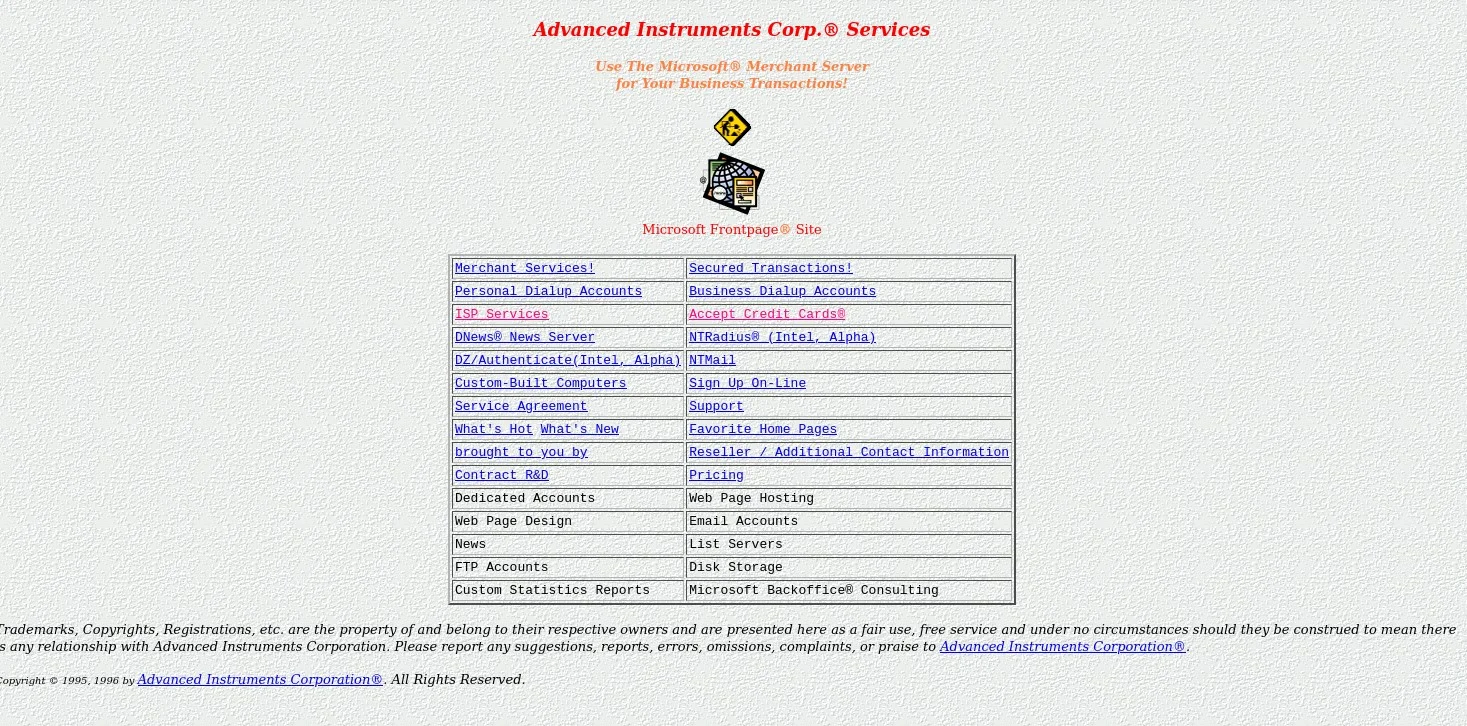
(Source: Wayback Machine)
If it wasn’t purchased in 1993, then when was it? Lowyat.net cites tracking data from investors George Kirikos and investigator Bill Patterson, indicating that Arsyan Ismail most likely bought the domain in 2021 through domain broker site SAW.com, with the exact price undisclosed. The investigation shows that prior to Arsyan’s acquisition, AI.com was owned by Future Media Architects, Inc., a company associated with Kuwait’s renowned top-level domain collector Thunayan Khalid AL-Ghanim.
This suggests that Arsyan probably bought the domain in 2021 and recently sold it for $70 million. His profit could still be substantial—if he bought it for a few million dollars in 2021, he could have made several times or even ten times that amount. But it’s unlikely that he held the domain for 32 years before selling, as the myth suggests. Currently, social media posts claiming Arsyan bought AI.com at age 10 are met with skepticism and comments questioning the story’s authenticity.
The 2021 purchase scenario is far more plausible. AI technology began gaining widespread attention around that time (GPT-3 was released in 2020 and sparked a frenzy). Forward-looking investors might have anticipated the skyrocketing value of AI-related domains. Arsyan could have bought AI.com from the Kuwaiti collector for a few million dollars, betting on the AI industry’s explosive growth. This “buy low, sell high” story, while less dramatic than “bought at age 10,” aligns better with business logic and technological reality.
If he bought it for $5 million in 2021 and sold for $70 million in 2025, that’s a profit of $65 million, a 1,300% return over four years, with an annualized return of about 90%. While still an excellent investment, it’s far from the myth of “70 million times” return.
Seller Identity Exposure and Tax Implications
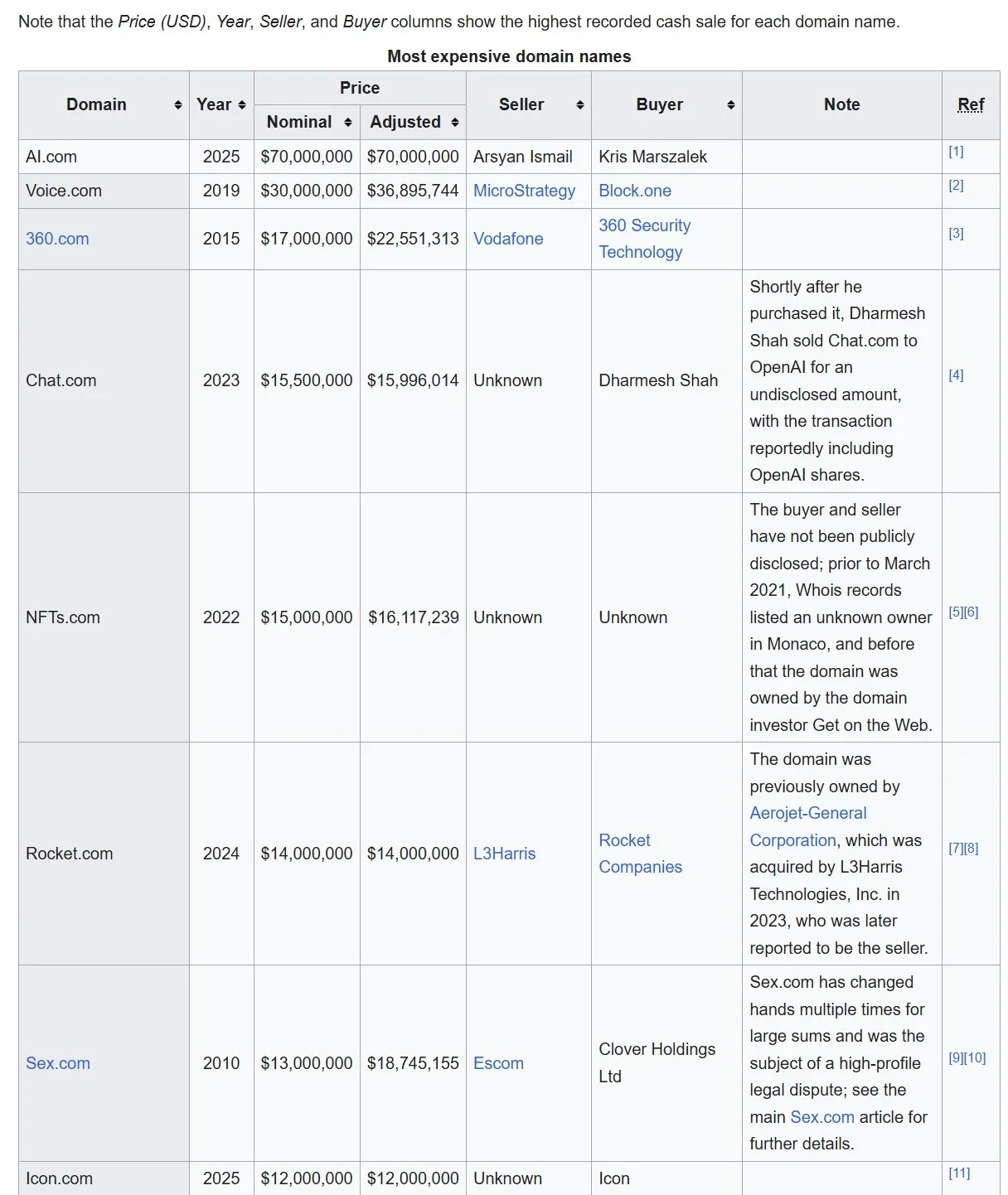
The exposure of this deal stems from a LinkedIn post by domain broker Larry Fisher, who directly revealed the seller’s identity. Usually, high-value domain transactions are kept confidential, especially when not involving public companies. Lowyat.net notes that revealing the seller’s identity is not in their best interest, as Malaysia’s Inland Revenue Board (LHDN) would scrutinize the transaction.
Given the $70 million price tag and partial or full payment in cryptocurrency (as reported), the seller faces significant capital gains tax issues. Malaysia’s tax system for capital gains is complex; it has clear rates for real estate but remains unclear for domains and cryptocurrencies. If the tax authorities view this as a capital gain, the tax rate could be 10-30%, meaning Arsyan might owe between $7 million and $21 million in taxes.
Complicating matters, Malaysian tax authorities currently do not accept cryptocurrency as a tax payment method. If Arsyan received Bitcoin or USDT, he would need to convert it into fiat currency to pay taxes. In the current bear market, if his crypto holdings have decreased in value, he could face a situation where the tax owed exceeds the actual value of his assets.
It’s also unclear whether Larry Fisher’s public disclosure of the seller’s name was authorized or just an accidental “name drop.” As the news spreads across social media and news outlets, the seller may face intense scrutiny from tax authorities. This case serves as a reminder to all high-value traders: in the crypto era, anonymity and privacy are crucial. Once identities are exposed, it can trigger multiple risks—tax, security, and legal issues.
