# 2025 AGENT Price Prediction: Expert Analysis and Market Forecast
AgentLayer (AGENT) represents the first decentralized network for autonomous AI agents, currently trading at $0.0008294 with a market cap of $189,300. This comprehensive analysis delivers professional price forecasts through 2031, addressing critical needs for investors evaluating early-stage AI infrastructure assets. The article provides actionable investment strategies, risk management frameworks, and detailed market analysis for beginners through institutional investors. By examining historical price trajectories, ecosystem development, macroeconomic factors, and technical challenges, readers gain essential insights for informed decision-making on Gate trading platforms. Whether pursuing long-term holdings or active trading, this guide equips investors with data-driven forecasts, security protocols, and portfolio allocation recommendations tailored to varying risk profiles and investment horizons.
Introduction: AGENT's Market Position and Investment Value
AgentLayer (AGENT) stands as the first decentralized network for autonomous AI agents, leveraging Byzantine fault-tolerant blockchain technology to enable secure coordination and collaboration with human oversight. Since its launch in September 2024, the project has established itself as a pioneering platform in decentralized AI governance. As of January 2026, AGENT maintains a market capitalization of approximately $189,300, with a circulating supply of around 228.24 million tokens trading at $0.0008294 per token. This innovative asset, recognized for its groundbreaking approach to "decentralized AI agent coordination," is playing an increasingly vital role in the emerging intersection of blockchain technology and autonomous artificial intelligence systems.
This article will provide a comprehensive analysis of AGENT's price trajectory through 2031, integrating historical patterns, market supply-demand dynamics, ecosystem development, and macroeconomic factors to deliver professional price forecasts and practical investment strategies for investors.
AgentLayer (AGENT) Market Analysis Report
I. AGENT Price History Review and Current Market Status
AGENT Historical Price Evolution Trajectory
- September 2024: Project launch on Base blockchain with initial publish price of $0.025, marking the beginning of AgentLayer's market entry as the first decentralized autonomous AI agent network.
- November 2024: AGENT reached its all-time high (ATH) of $0.098 on November 30, 2024, representing a 292% gain from the launch price and reflecting strong early market enthusiasm for decentralized AI governance solutions.
- December 2024 - January 2026: Significant market correction phase, with price declining from ATH to current levels, demonstrating the volatile nature of early-stage AI infrastructure tokens. The token hit its all-time low (ATL) of $0.00069 on December 22, 2025.
AGENT Current Market Situation
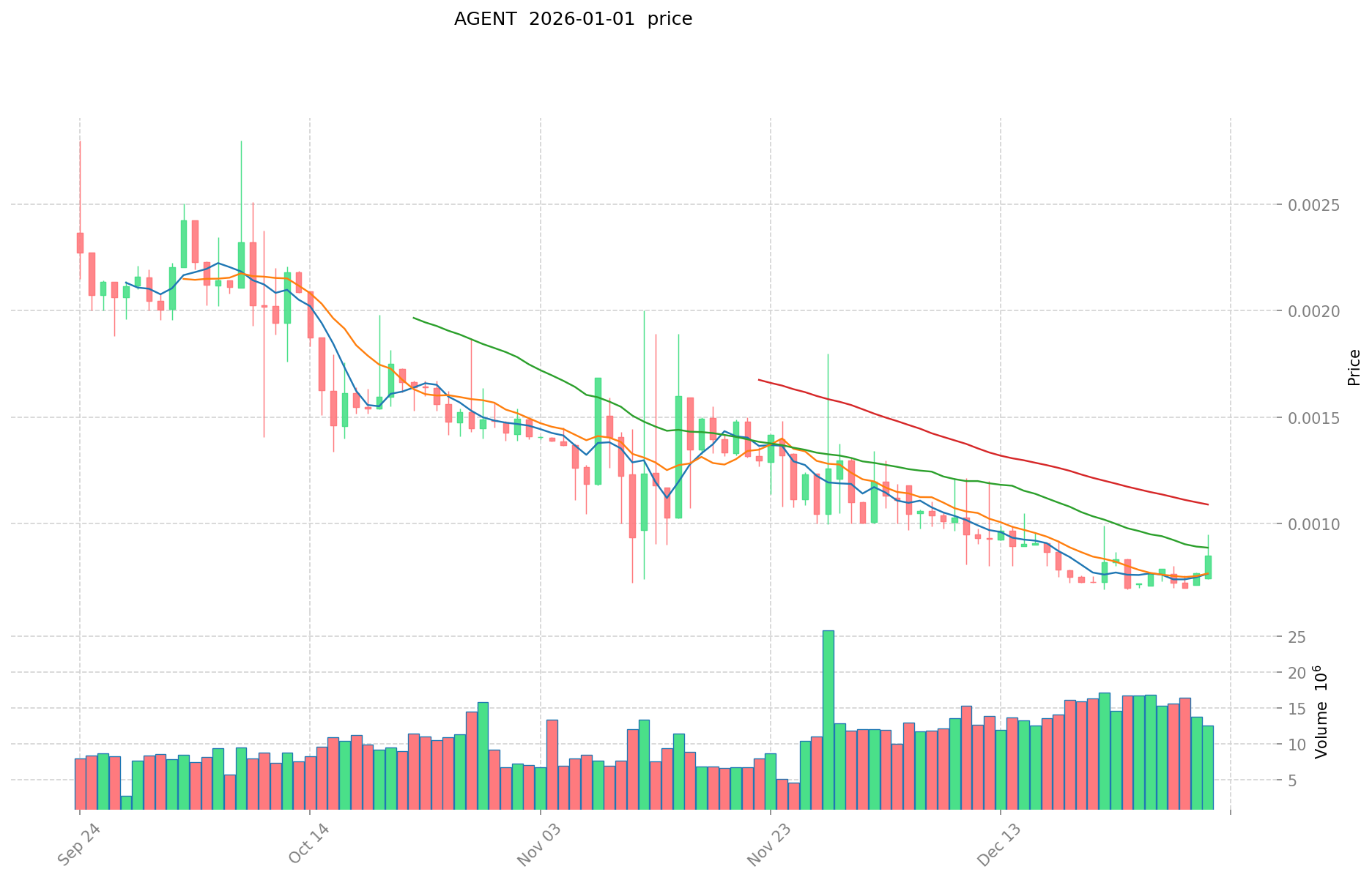
As of January 2, 2026, AGENT is trading at $0.0008294, reflecting substantial depreciation from its peak valuation. The token has experienced a -98.18% decline over the past year, indicating severe market correction from its launch momentum.
24-Hour Performance: AGENT declined -8.03% in the last 24 hours, with trading range between $0.0008029 (low) and $0.0009019 (high). The 24-hour trading volume stands at approximately $10,212.35, demonstrating limited liquidity in current market conditions.
Market Capitalization: The fully diluted valuation (FDV) is $829,400, while the current market cap based on circulating supply is $189,300.41. With 228,237,770 AGENT tokens in circulation out of a maximum supply of 1,000,000,000 tokens, the circulating supply represents 22.82% of total supply.
Short-term Momentum:
- 1-Hour change: -2.37%
- 7-Day change: +17.08% (indicating some recovery momentum within weekly timeframe)
- 30-Day change: -32.05% (continued downtrend over monthly period)
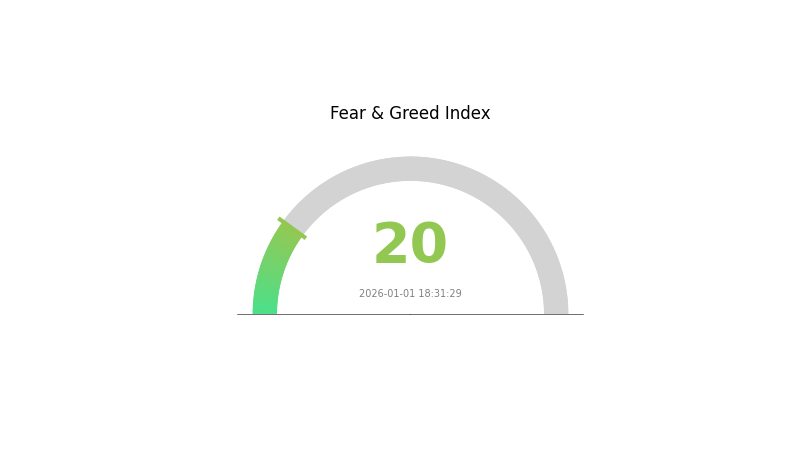
Market Sentiment: Current market emotion indicator registers at 1, while the broader market fear and greed index shows "Extreme Fear" conditions, suggesting heightened market apprehension and limited investor confidence across digital assets.
Network Activity: AGENT maintains 92,277 token holders, indicating a distributed holder base despite the significant price depreciation. The token is currently listed on 2 exchanges, with Gate.com being one of the primary trading venues.
Click to view current AGENT market price
AGENT Market Sentiment Index
2026-01-01 Fear and Greed Index: 20 (Extreme Fear)
Click to view current Fear & Greed Index
The cryptocurrency market is experiencing extreme fear sentiment, with the Fear and Greed Index dropping to 20. This indicates investors are highly pessimistic about market conditions. During such periods of extreme fear, long-term investors often view significant price declines as buying opportunities, as historically these levels have preceded market recoveries. However, traders should remain cautious and conduct thorough research before making investment decisions. Monitor market developments closely and consider your risk tolerance before entering positions at these fear-driven price levels.
AGENT Holdings Distribution
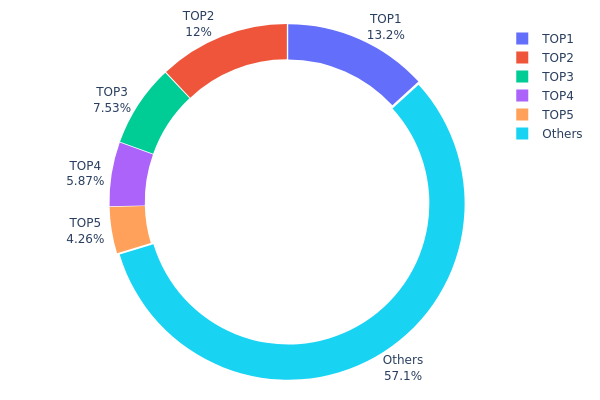
The address holdings distribution represents the concentration of AGENT token ownership across the blockchain network, illustrating how the total circulating supply is allocated among the top holders and the broader community. This metric serves as a critical indicator of token decentralization and potential systemic risks related to market manipulation or sudden liquidity events.
Current analysis of AGENT's holder distribution reveals a moderately concentrated structure. The top five addresses collectively control approximately 42.89% of the token supply, with the largest holder commanding 13.23% and the second-largest holding 12.01%. While this concentration level suggests meaningful institutional or strategic participation, it does not yet indicate severe centralization concerns. The fact that 57.11% of tokens remain distributed among other addresses demonstrates a reasonably dispersed holder base, which is generally viewed as a positive indicator for long-term ecosystem health and decentralization objectives.
The existing distribution pattern presents mixed implications for market dynamics. On one hand, the moderate concentration among top holders could facilitate coordinated liquidity provision and institutional participation, potentially supporting price stability. Conversely, the substantial holdings of the top addresses create inherent asymmetry in decision-making power and heightened sensitivity to large-scale liquidation events. The current structure suggests that AGENT maintains a relatively balanced on-chain foundation, with neither excessive centralization nor fragmented dispersion, positioning it favorably compared to more concentrated token ecosystems while still warranting ongoing monitoring of major holder activities for potential market impact scenarios.
Check the current AGENT holdings distribution
| Top |
Address |
Holding Qty |
Holding (%) |
| 1 |
0x0d07...b492fe |
132044.25K |
13.23% |
| 2 |
0xab4f...719bd3 |
119912.54K |
12.01% |
| 3 |
0xf8bb...2a6dee |
75198.53K |
7.53% |
| 4 |
0xd971...3b670d |
58535.44K |
5.86% |
| 5 |
0xd4ed...018485 |
42527.29K |
4.26% |
| - |
Others |
569785.75K |
57.11% |
II. Core Factors Affecting AGENT's Future Price
Macroeconomic Environment
-
Macroeconomic Impact on Demand: Fluctuations in exchange rates, commodity prices, and inflation levels directly impact consumer demand for discretionary goods and services. These macroeconomic factors create volatility in market demand for AI Agent technologies and related applications.
-
Technology Iteration Expectations: The pace of large language model and AI Agent development significantly influences market sentiment. Slower-than-expected technological advancement in AI Agent capabilities and large model iterations can dampen price appreciation.
Technology Development and Ecosystem Building
-
Large Language Model Competition and Safety Performance: The competitive landscape of AI models directly affects Agent development and adoption. According to recent safety evaluations, GPT-5 leads with an 86% safety score, followed by Claude 4 Opus at 83%, while domestic models like Doubao 1.5 Pro score 72%. Superior hallucination control and harmful content filtering capabilities enhance model reliability for Agent applications, influencing institutional adoption rates.
-
Vertical Domain Specialization: The industry is shifting from universal Agent applications toward specialized vertical solutions. Agents that demonstrate genuine value in specific business domains—such as contract review, customer support, and financial decision-making—show stronger market potential than general-purpose implementations.
-
Reliability and Execution Challenges: Current limitations in model hallucination, knowledge staleness, and execution brittleness remain critical obstacles. Addressing these issues through structured workflows and decision trajectory capture is essential for enterprise adoption, which directly impacts the technology's market valuation.
-
Context Graph and Decision Trajectory Development: Emerging infrastructure for capturing organizational decision patterns and execution contexts represents a critical technological advancement. Systems that successfully generate structured decision trajectories with each Agent operation create competitive advantages and improve Agent performance over time, supporting long-term value growth.
Market Demand and Adoption Dynamics
-
Efficiency Tool Positioning: AI Agents currently function primarily as efficiency enhancement tools, particularly in code generation and development workflows. Their value proposition remains strongest where they demonstrably reduce cognitive and time costs compared to traditional methods.
-
Enterprise Adoption Barriers: Enterprise-grade AI Agents face significant challenges including insufficient performance stability, compliance concerns, and poor traceability. Organizations prioritize Agents only when they deliver measurable improvements over existing software solutions with lower user verification and correction costs.
-
Industry Knowledge Requirements: Successful Agent deployment demands deep accumulation of expertise in specific business domains. Early-stage startups struggle to compete with established enterprises that possess organizational knowledge and decision-making frameworks necessary for effective Agent implementation.
III. AGENT Price Forecast for 2026-2031
2026 Outlook
- Conservative Prediction: $0.00055–$0.00083
- Neutral Prediction: $0.00083 (average expected price)
- Optimistic Prediction: $0.0011 (requiring sustained market momentum and increased adoption)
2027-2029 Medium-term Outlook
- Market Stage Expectation: Gradual accumulation phase with incremental price appreciation as the project matures and market sentiment stabilizes.
- Price Range Forecasts:
- 2027: $0.00059–$0.00108 (16% potential upside)
- 2028: $0.00079–$0.00136 (23% potential upside)
- 2029: $0.00092–$0.00173 (43% potential upside)
- Key Catalysts: Enhanced protocol functionality, ecosystem expansion, increased institutional participation, and broader market recovery cycles.
2030-2031 Long-term Outlook
- Base Case: $0.00115–$0.00209 (76% potential upside by 2030, assuming stable market conditions and consistent development progress)
- Optimistic Scenario: $0.00115–$0.0022 (114% potential upside by 2031, with accelerated adoption and favorable macroeconomic conditions)
- Transformative Scenario: $0.0022+ (contingent on breakthrough technological innovations, mainstream integration, and significant market-wide bull cycle)
Note: Price forecasts reflect potential trajectories based on historical data patterns. Investors are advised to conduct independent research and consider risk factors before making investment decisions on platforms such as Gate.com.
| 年份 |
预测最高价 |
预测平均价格 |
预测最低价 |
涨跌幅 |
| 2026 |
0.0011 |
0.00083 |
0.00055 |
0 |
| 2027 |
0.00108 |
0.00097 |
0.00059 |
16 |
| 2028 |
0.00136 |
0.00102 |
0.00079 |
23 |
| 2029 |
0.00173 |
0.00119 |
0.00092 |
43 |
| 2030 |
0.00209 |
0.00146 |
0.00115 |
76 |
| 2031 |
0.0022 |
0.00178 |
0.00112 |
114 |
AgentLayer (AGENT) Professional Investment Strategy and Risk Management Report
IV. AGENT Professional Investment Strategy and Risk Management
AGENT Investment Methodology
(1) Long-term Holding Strategy
-
Target Investors: Believers in decentralized AI governance, long-term blockchain infrastructure investors, and those with high risk tolerance seeking exposure to emerging AI agent technologies.
-
Operational Recommendations:
- Dollar-cost averaging (DCA) approach: Invest fixed amounts at regular intervals to reduce the impact of price volatility. Given the 98.18% one-year decline, this strategy helps mitigate timing risk.
- Accumulation during market downturns: The current price of $0.0008294 represents a significant discount from the all-time high of $0.098, potentially offering long-term value for believers in the project's vision.
- Maintain a diversified portfolio: AGENT should represent only a portion of overall cryptocurrency holdings, given its speculative nature and early-stage status.
-
Storage Solution:
- For significant holdings, utilize the Gate Web3 Wallet for secure, non-custodial asset management with easy access to trading on Gate.com when needed.
- Keep smaller trading amounts on Gate.com for liquidity and quick execution capability.
(2) Active Trading Strategy
AGENT Risk Management Framework
(1) Asset Allocation Principles
-
Conservative Investors: 0-1% of portfolio allocation. Given the speculative nature and extreme volatility, conservative investors should maintain minimal or no exposure to AGENT.
-
Active Investors: 1-3% of portfolio allocation. This allows meaningful exposure while maintaining portfolio stability and limiting downside risk.
-
Professional/Institutional Investors: 3-5% of alternative asset allocation. Institutions may allocate based on specific thematic exposure to decentralized AI infrastructure with appropriate hedging strategies.
(2) Risk Hedging Solutions
-
Stablecoin Position Maintenance: Hold 30-50% of allocated funds in stablecoins on Gate.com to enable rapid rebalancing during market dislocations or trading opportunities.
-
Portfolio Diversification: Pair AGENT holdings with established layer-1 or layer-2 blockchain assets to mitigate protocol-specific and market concentration risks.
(3) Secure Storage Solutions
-
Hot Wallet Recommendation: Gate Web3 Wallet provides an optimal balance of security and accessibility for active traders, with direct integration to Gate.com trading pairs.
-
Cold Storage Strategy: For long-term holdings exceeding 12 months, transfer AGENT tokens to hardware-secured wallets or institutional custody solutions to minimize hacking risks.
-
Security Considerations:
- Never share private keys or seed phrases with third parties.
- Enable two-factor authentication (2FA) on all exchange and wallet accounts.
- Verify contract addresses carefully: AGENT on Base blockchain uses address 0xF5Bc3439f53A45607cCaD667AbC7DAF5A583633F.
- Be aware of potential phishing attacks targeting the project's social media channels (Twitter: @Agent_Layer).
V. AGENT Potential Risks and Challenges
AGENT Market Risks
-
Extreme Volatility and Price Deterioration: AGENT has experienced a 98.18% decline over one year (from approximately $0.025 at launch to current $0.0008294), indicating severe downward pressure. The 32.05% negative performance over 30 days suggests continued weakness. This trajectory raises questions about project adoption and market confidence.
-
Low Liquidity and Market Depth: With only 24-hour volume of $10,212.35 and a market cap of $189,300, AGENT exhibits dangerously low liquidity. This creates significant slippage risk for traders and makes price discovery inefficient. Small trades can cause disproportionate price movements.
-
Speculative Valuation and Early-Stage Risk: As an emerging decentralized AI agent network, AGENT lacks proven use cases or revenue generation mechanisms. The fully diluted valuation of $829,400 relies entirely on future adoption prospects, making current valuations highly speculative.
AGENT Regulatory Risks
-
Uncertain AI Governance Regulatory Environment: Decentralized autonomous AI systems operate in largely unregulated territory globally. Future government regulations targeting AI governance or autonomous agents could significantly impact project viability and token value.
-
Cryptocurrency Market Regulation: Ongoing regulatory scrutiny of cryptocurrency markets and token projects could restrict trading access, require regulatory compliance, or result in delisting from trading platforms.
-
Unclear Token Utility Classification: Regulatory authorities may reassess whether the AGENT token constitutes a security, commodity, or utility token, potentially triggering compliance requirements or trading restrictions.
AGENT Technical Risks
-
Byzantine Fault Tolerance Implementation Complexities: While the whitepaper claims Byzantine fault-tolerant coordination, complex distributed systems are prone to consensus failures, fork risks, or governance attacks. The practical implementation security remains unproven at scale.
-
AI Agent Coordination Challenges: Autonomous AI agent coordination on blockchain introduces novel technical risks including agent misbehavior, collusion, or failure to execute intended functions. These risks lack historical precedent in mature blockchain systems.
-
Limited Adoption and Network Effects: With only 92,277 token holders and available on only 2 exchanges, AGENT has minimal network adoption. Critical mass is required for decentralized AI agent coordination to function effectively; absence of this creates existential technical and economic risks.
VI. Conclusion and Action Recommendations
AGENT Investment Value Assessment
AgentLayer presents an innovative thesis combining decentralized governance with autonomous AI agent coordination, representing a compelling long-term conceptual vision. However, the current risk-reward profile is dominated by execution uncertainty, minimal market validation, and severe price deterioration. The 98.18% one-year decline reflects market skepticism regarding near-term adoption prospects.
While the project addresses a potentially significant future market need (decentralized AI infrastructure), investors should recognize that AGENT is in the earliest stages of development with unproven technology and minimal real-world utility. The extreme volatility, low liquidity, and recent negative momentum create substantial capital preservation concerns in the short to medium term.
AGENT Investment Recommendations
✅ Beginners: Avoid AGENT as a first cryptocurrency investment. If interested in AI-themed blockchain exposure, consider more established projects with proven track records and deeper liquidity. If pursuing AGENT, limit allocation to 0.5-1% of total portfolio with strict risk parameters and diversification.
✅ Experienced Investors: AGENT may warrant tactical positions (1-3% allocation) as part of a diversified alternative portfolio, particularly for those with high conviction in decentralized AI governance thesis. Implement strict entry discipline, position sizing, and stop-loss protocols. Consider averaging in during further capitulation or technical support-level bounces.
✅ Institutional Investors: Institutional allocation to AGENT should be limited to specialized AI infrastructure thematic funds with appropriate hedging and maximum drawdown tolerances (typically <5% of fund exposure). Conduct thorough due diligence on project team credentials, tokenomics sustainability, and development roadmap before deployment.
AGENT Trading Participation Methods
-
Trading on Gate.com: Access AGENT token trading through Gate.com's spot trading pairs. Utilize limit orders to avoid slippage given low liquidity. Maintain strict position sizing and risk management protocols.
-
Secure Self-Custody via Gate Web3 Wallet: For investors choosing to hold AGENT off-exchange, the Gate Web3 Wallet provides secure, non-custodial storage with direct market access when repositioning is desired.
-
Dollar-Cost Averaging (DCA) Implementation: For long-term believers, implement systematic DCA purchases at predetermined intervals and price targets to accumulate exposure while managing downside volatility risk.
Cryptocurrency investment carries extreme risk. This report does not constitute investment advice. Investors must carefully evaluate their personal risk tolerance, investment horizon, and financial situation before engaging with AGENT or any cryptocurrency assets. Consider consulting qualified financial advisors before making investment decisions. Never invest more capital than you can afford to lose completely. Past performance does not guarantee future results.
FAQ
What is the AGENT token and what are its main uses?
AGENT token is a utility token designed to reward users for participating in decentralized AI agent networks. Its main uses include incentivizing community participation, enabling governance voting, and facilitating rewards distribution within the AI agent ecosystem.
What price level is AGENT currently at? What are its all-time high and all-time low prices?
AGENT's all-time high reached US$0.01555 and all-time low was US$0.0001349. Current price levels reflect ongoing market dynamics in the AI agent token sector.
What price levels might AGENT token reach in 2024 and 2025?
AGENT token could potentially reach several hundred dollars by 2025, driven by dTAO launch in Q1 2025. However, exact price predictions are difficult due to high market volatility. Monitor market developments closely for accurate forecasting.
What are the main factors affecting AGENT price?
AGENT price is primarily influenced by market demand, trading volume, overall crypto market sentiment, technological developments, adoption rates, and macroeconomic conditions. Price movements reflect real-time supply and demand dynamics.
AGENT offers specialized AI agent automation capabilities with focused development, but may have smaller ecosystem scale than FET's established network or RENDER's graphics specialization. AGENT's strength lies in targeted agent technology, while competitors benefit from broader market adoption and longer operational history.
What are the main risks of investing in AGENT tokens?
Main risks include market volatility, liquidity constraints, and significant price fluctuations. AGENT may experience substantial drawdowns and thin order books. Investors should carefully assess market conditions and their risk tolerance before participating.
What is the circulation supply and total supply of AGENT? What impact does this have on price?
AGENT's circulating supply and total supply significantly influence its market price. Lower circulating supply typically supports higher valuations, while total supply determines potential price volatility range. The token release schedule affects gradual price dynamics over time.
What is the long-term price prediction for AGENT by professional analysts?
Professional analysts predict AGENT's long-term price will rise significantly as AI technology becomes increasingly integrated into business operations. Market adoption and maturity will drive substantial growth, with analysts expecting considerable future value appreciation.
* The information is not intended to be and does not constitute financial advice or any other recommendation of any sort offered or endorsed by Gate.