This comprehensive guide analyzes CodexField (CODEX) price trends for 2026-2031, combining technical analysis, market fundamentals, and sentiment indicators to help investors make informed decisions. Trading at $31.20 with a $226.51M market cap, CODEX represents an early-stage decentralized infrastructure protocol for assetizing digital knowledge on BNB Chain. The article examines key price drivers including ecosystem development, adoption rates, macroeconomic conditions, and regulatory landscape, while addressing concentration risks from its 77.79% top-5 holder dominance. Professional forecasts range from $17.43-$38.90 in 2026, potentially reaching $64.34-$95.15 by 2031 under favorable conditions. Investment strategies span long-term holding to active trading with tiered risk management frameworks, complemented by secure storage solutions via Gate Web3 Wallet. The analysis emphasizes liquidity constraints, volatility risks, and smart contract vulnerabilities, providing beginner to institutional investor reco
Introduction: CODEX's Market Position and Investment Value
CodexField (CODEX) serves as a decentralized infrastructure protocol for storing, sharing, and assetizing code and structured digital knowledge. Since its launch in 2026, the project has emerged as an innovative platform built on BNB Greenfield and BNB Smart Chain. As of January 16, 2026, CODEX maintains a market capitalization of approximately $226.51 million, with a circulating supply of around 7.26 million tokens, and its price fluctuates near $31.20. This asset, characterized as "programmable and tradable technical knowledge," is playing an increasingly significant role in the Web3 infrastructure ecosystem.
This article will comprehensively analyze CODEX's price trends from 2026 to 2031, combining historical patterns, market supply and demand dynamics, ecosystem development, and macroeconomic conditions to provide investors with professional price forecasts and practical investment strategies.
I. CODEX Price History Review and Current Market Status
CODEX Historical Price Evolution Trajectory
CodexField (CODEX) is a relatively new cryptocurrency project that launched on January 2, 2026. Due to its recent entry into the market, the token has limited historical data available. On its launch date, CODEX reached both its recorded low of $1 and high of $50, demonstrating significant initial volatility characteristic of newly launched crypto assets.
CODEX Current Market Situation
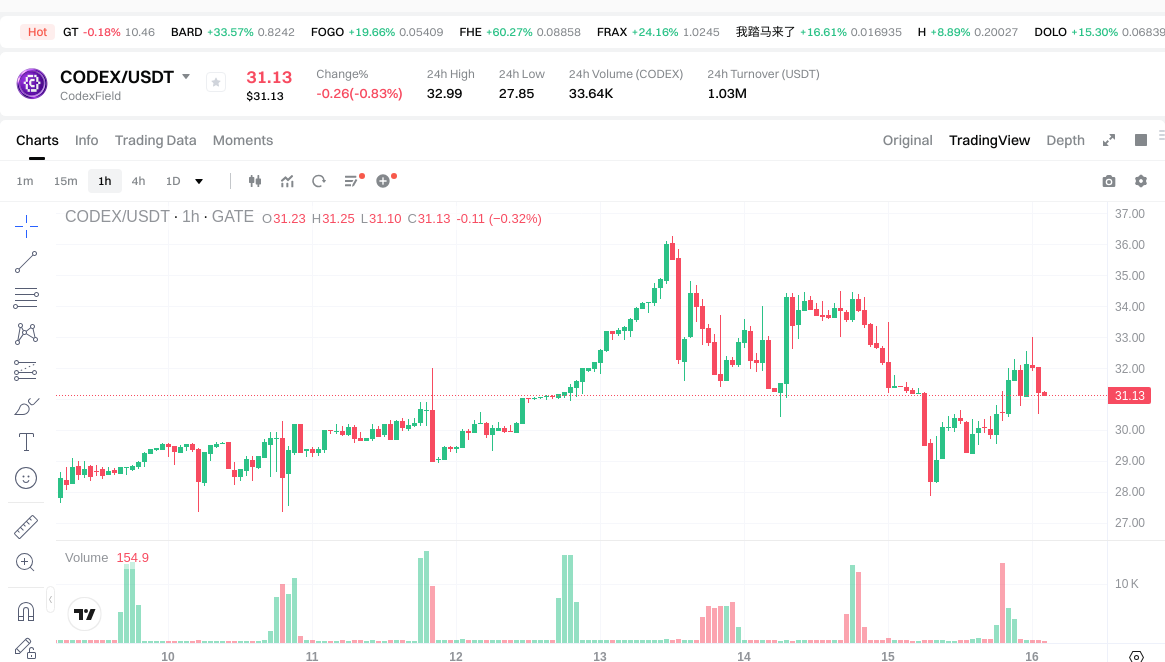
As of January 16, 2026, CODEX is trading at $31.2, representing the project's early-stage price discovery phase. Over the past 24 hours, the token has experienced a slight decline of 0.73%, with trading within a range of $27.85 to $32.99. However, the 7-day trend shows positive momentum with an increase of 11.32%, suggesting growing market interest in the project.
The token currently holds a market capitalization of approximately $226.51 million, with 7.26 million CODEX tokens in circulation out of a maximum supply of 120 million tokens. This represents a circulating supply ratio of 6.05%, indicating that a substantial portion of tokens remains to be released into the market. The fully diluted market cap stands at $3.74 billion, reflecting the potential total valuation if all tokens were in circulation.
CODEX has demonstrated a 24-hour trading volume of approximately $1.03 million across 4 exchanges where it is listed. The token maintains a market dominance of 0.11%, positioning it as an emerging project within the broader cryptocurrency ecosystem. With 38 token holders currently recorded, the project is in its early adoption phase.
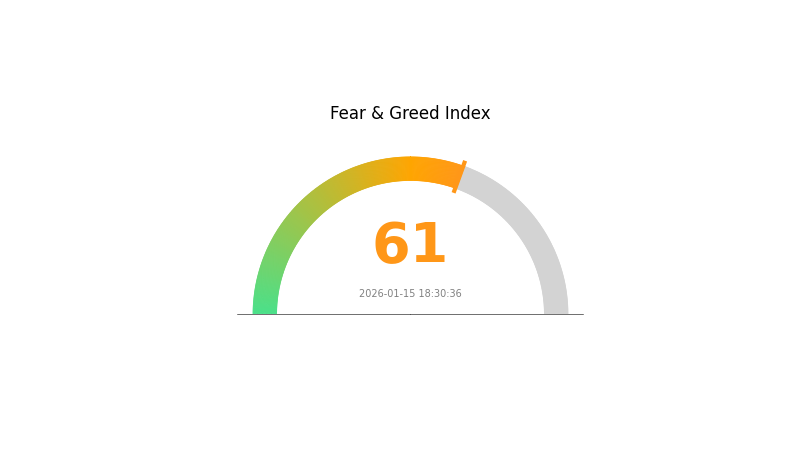
The cryptocurrency market sentiment index currently stands at 61, indicating a "Greed" phase in the overall market, which may influence trading behavior and price movements for CODEX and other digital assets.
Click to view current CODEX market price
CODEX Market Sentiment Index
2026-01-15 Fear and Greed Index: 61 (Greed)
Click to view the current Fear & Greed Index
The cryptocurrency market is currently in a state of greed with a CODEX index reading of 61. This elevated sentiment suggests strong bullish momentum and increased investor confidence. Market participants are displaying optimistic behavior, with heightened buying pressure driving price movements upward. During greed periods, traders often show increased risk appetite and FOMO-driven trading activity. While positive sentiment can fuel rally continuation, investors should remain cautious about potential pullbacks. Consider maintaining balanced portfolio management and avoiding overexposure during peak greed cycles. Monitor market fundamentals alongside sentiment indicators for well-informed trading decisions.
CODEX Holding Distribution
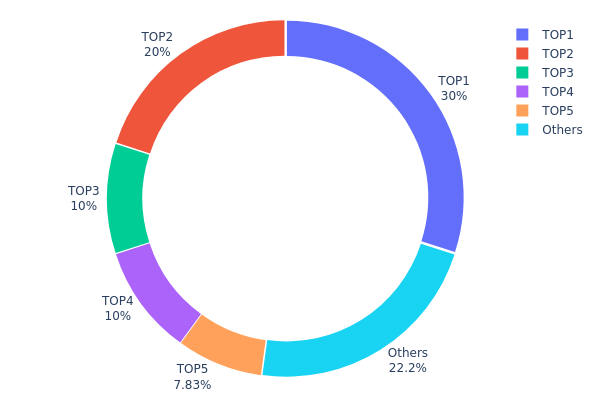
The holding distribution chart reveals the allocation of tokens across different wallet addresses, serving as a critical indicator of market concentration and decentralization level. According to the latest on-chain data as of January 16, 2026, CODEX exhibits a relatively concentrated distribution pattern. The top five addresses collectively hold 77.79% of the total supply, with the largest holder controlling 29.99% (36 million tokens), followed by the second-largest at 19.99% (24 million tokens). This high concentration level suggests that a small number of entities maintain substantial influence over the token's circulating supply.
From a market structure perspective, such concentration presents dual implications. On one hand, this distribution pattern may reflect the involvement of institutional investors or project treasury reserves, potentially indicating confidence from major stakeholders. On the other hand, the significant holdings by top addresses create vulnerability to large-scale sell pressure, as any substantial movement by these major holders could trigger notable price volatility. The remaining 22.21% distributed among other addresses indicates limited retail participation depth, which may constrain market liquidity during periods of heightened trading activity.
The current holding structure reveals moderate centralization risks within CODEX's ecosystem. While not reaching extreme concentration levels seen in some emerging tokens, the dominance of top holders necessitates careful monitoring of their on-chain behavior. This distribution configuration suggests that the token's price discovery mechanism remains susceptible to decisions by a limited cohort of addresses, underscoring the importance of tracking wallet movements and transfer patterns to assess potential market impact and stability concerns.
Click to view current CODEX Holding Distribution
| Top |
Address |
Holding Qty |
Holding (%) |
| 1 |
0xcfa5...8fa529 |
36000.00K |
29.99% |
| 2 |
0xfc1c...818e48 |
24000.00K |
19.99% |
| 3 |
0x2fb8...28c5e9 |
12000.00K |
9.99% |
| 4 |
0xa9e9...1d8302 |
12000.00K |
9.99% |
| 5 |
0xa012...8ce5ed |
9399.00K |
7.83% |
| - |
Others |
26601.00K |
22.21% |
II. Core Factors Influencing CODEX's Future Price
Market Sentiment and Adoption
- Investor Confidence: Market sentiment and investor confidence directly impact CODEX's price trajectory. Positive news regarding widespread adoption or significant partnerships tends to strengthen price momentum, while uncertainty or negative developments may trigger sell-offs.
- Community Engagement: The level of community participation and user adoption plays a crucial role in sustaining demand. Active community support can generate both immediate and long-term interest in CODEX.
- Historical Patterns: Short-term price corrections have been observed following early profit-taking activities and shifts in overall market sentiment.
Technical Developments and Ecosystem Growth
- Modular Multi-Chain Architecture: Codex Chain's design supports efficient stablecoin transactions through its specialized modular architecture, enabling scalability for AI, DePIN, and DeFi applications. This infrastructure aims to reduce transaction costs while maintaining high throughput.
- API Integration and Cross-Border Solutions: Codex API facilitates seamless integration for enterprises, particularly in cross-border payment scenarios. Partnerships with payment platforms in Southeast Asia demonstrate practical applications in addressing regional business challenges.
- Ecosystem Expansion: Collaborations with payment service providers and enterprise-level fund management solutions contribute to building real-world use cases, which may support sustained adoption and price stability over time.
Macroeconomic and Regulatory Environment
- Monetary Policy Considerations: Broader cryptocurrency market conditions, including Bitcoin (BTC) and Ethereum (ETH) trends, may influence CODEX's price volatility. Macroeconomic factors such as central bank announcements and inflation reports can also affect investor sentiment.
- Regulatory Developments: Changes in cryptocurrency-specific regulations, such as protocol upgrades or policy adjustments in different jurisdictions, may impact market dynamics. Compliance with evolving regulatory frameworks remains essential for maintaining investor trust.
- Global Policy Landscape: The project's ability to adapt to international regulatory requirements, particularly regarding stablecoin operations, may influence institutional confidence and adoption rates.
III. 2026-2031 CODEX Price Prediction
2026 Outlook
- Conservative forecast: $17.43-$31.12
- Neutral forecast: around $31.12
- Optimistic forecast: up to $38.90 (requires favorable market conditions and increased adoption)
2027-2029 Mid-term Outlook
- Market stage expectation: CODEX may experience gradual growth driven by ecosystem development and broader crypto market momentum
- Price range forecast:
- 2027: $19.61-$52.16, average around $35.01
- 2028: $23.97-$64.95, average around $43.59
- 2029: $51.01-$74.89, average around $54.27
- Key catalysts: technological upgrades, partnership expansions, and increased market liquidity could serve as primary drivers for price appreciation
2030-2031 Long-term Outlook
- Baseline scenario: $51.66-$72.33 (assuming steady ecosystem growth and moderate market conditions)
- Optimistic scenario: $64.34-$95.15 by 2031 (contingent upon significant protocol adoption and favorable regulatory developments)
- Transformative scenario: potential to exceed $95 (under exceptionally favorable market conditions with mainstream institutional adoption)
- 2026-01-16: CODEX trading within early-stage valuation range as the project continues its development roadmap
| Year |
Predicted High Price |
Predicted Average Price |
Predicted Low Price |
Price Change |
| 2026 |
38.9 |
31.12 |
17.4272 |
0 |
| 2027 |
52.1649 |
35.01 |
19.6056 |
12 |
| 2028 |
64.9453 |
43.58745 |
23.9731 |
39 |
| 2029 |
74.8876 |
54.26638 |
51.01039 |
74 |
| 2030 |
72.32622 |
64.57699 |
51.66159 |
107 |
| 2031 |
95.14773 |
68.45161 |
64.34451 |
119 |
IV. CODEX Professional Investment Strategy and Risk Management
CODEX Investment Methodology
(I) Long-term Holding Strategy
- Suitable for: Investors who believe in the Web3 infrastructure vision and the assetization of digital knowledge
- Operational Recommendations:
- Consider accumulating positions during market corrections when the token price approaches support levels
- Monitor project development milestones, including platform upgrades and ecosystem expansion on BNB Chain
- Secure Storage Solution: Use Gate Web3 Wallet for secure asset management with multi-signature protection
(II) Active Trading Strategy
- Technical Analysis Tools:
- Volume Analysis: Monitor the 24-hour trading volume ($1.03M) relative to market cap to identify liquidity trends
- Price Action: Track the 24-hour range ($27.85-$32.99) to identify support and resistance levels
- Key Trading Points:
- Set stop-loss orders below key support levels to manage downside risk
- Consider taking partial profits during periods of high volatility given the token's early-stage status
CODEX Risk Management Framework
(I) Asset Allocation Principles
- Conservative Investors: 1-3% of cryptocurrency portfolio
- Aggressive Investors: 3-8% of cryptocurrency portfolio
- Professional Investors: Up to 10% with appropriate hedging strategies
(II) Risk Hedging Solutions
- Portfolio Diversification: Balance CODEX holdings with established cryptocurrencies to reduce exposure to single-asset volatility
- Position Sizing: Start with smaller allocations given the token's relatively low circulating supply (6.05% of max supply)
(III) Secure Storage Solutions
- Hot Wallet Recommendation: Gate Web3 Wallet for convenient trading and staking participation
- Cold Storage Plan: For long-term holdings exceeding $10,000, consider hardware wallet solutions
- Security Precautions: Enable two-factor authentication, never share private keys, and verify contract addresses (0x4af228a5fba8fb4ff64b5b9563fd114595fa6686 on BSC) before transactions
V. CODEX Potential Risks and Challenges
CODEX Market Risks
- Liquidity Risk: With only 4 exchanges listing CODEX and a relatively modest 24-hour trading volume, large orders may experience significant slippage
- Volatility Risk: The token has experienced a 30-day decline of 2.45%, and early-stage tokens often face heightened price volatility
- Concentration Risk: With only 38 holders, the token distribution may be concentrated, potentially leading to price manipulation or large sell-offs
CODEX Regulatory Risks
- Digital Asset Classification: Regulatory frameworks governing code and knowledge assetization remain undefined in many jurisdictions
- Cross-border Compliance: As a decentralized protocol, CODEX may face varying regulatory treatments across different countries
- Smart Contract Regulation: Future regulations on smart contract-based intellectual property rights could impact the platform's operational model
CODEX Technical Risks
- Smart Contract Vulnerabilities: As a protocol built on BNB Greenfield and BNB Smart Chain, any bugs in smart contracts could result in asset loss
- Infrastructure Dependencies: The platform's reliance on BNB Chain infrastructure means network issues or changes could affect CODEX functionality
- Adoption Risk: The success of CodexField depends on developer adoption of its code assetization model, which remains unproven at scale
VI. Conclusion and Action Recommendations
CODEX Investment Value Assessment
CodexField presents an innovative approach to transforming digital knowledge and code into tradeable assets within the Web3 ecosystem. With a market cap of approximately $226.5M and ranking #223, the project is in its early stages with significant upside potential if the platform gains developer adoption. However, investors should note the limited circulating supply (6.05%), modest holder base (38 addresses), and recent price volatility. The 7-day performance of +11.32% suggests growing interest, but the 30-day decline of 2.45% indicates market uncertainty. Long-term value depends on the successful execution of the decentralized knowledge economy vision and increased ecosystem participation.
CODEX Investment Recommendations
✅ Beginners: Start with a small allocation (under 2% of crypto portfolio), focus on understanding the project fundamentals, and use Gate Web3 Wallet for secure storage
✅ Experienced Investors: Consider dollar-cost averaging during market dips, monitor on-chain metrics including holder growth and transaction volume, and set clear profit-taking levels
✅ Institutional Investors: Conduct thorough due diligence on smart contract audits, evaluate long-term infrastructure partnerships, and consider OTC options for large positions to minimize market impact
CODEX Trading Participation Methods
- Spot Trading: Available on Gate.com and 3 other exchanges with current price around $31.20
- Portfolio Integration: Add CODEX as a strategic holding within a diversified Web3 infrastructure portfolio
- DeFi Opportunities: Monitor potential liquidity provision opportunities on BNB Chain-based decentralized exchanges
Cryptocurrency investment carries extremely high risks, and this article does not constitute investment advice. Investors should make cautious decisions based on their own risk tolerance and are advised to consult professional financial advisors. Never invest more than you can afford to lose.
FAQ
What is CODEX? What are its main uses and functions?
CODEX is a decentralized AI-powered protocol designed to enhance blockchain development and smart contract optimization. Its primary functions include intelligent code analysis, automated security auditing, and predictive analytics for cryptocurrency markets. CODEX enables developers to streamline Web3 applications while providing real-time transaction volume monitoring and market insights for informed trading decisions.
What are the main factors affecting CODEX price?
CODEX price is influenced by supply and demand dynamics, market sentiment driven by news and investor confidence, regulatory developments such as ETF approvals, institutional adoption rates, and macroeconomic trends including inflation and interest rates. These factors collectively determine CODEX's price movements and market outlook.
How to make reasonable price predictions for CODEX's future?
Analyze CODEX's trading volume trends, market sentiment, and historical price patterns. Monitor project developments, adoption metrics, and overall crypto market conditions. Use technical analysis tools like RSI and moving averages to identify price trends and potential support/resistance levels for informed forecasting.
CODEX price prediction risks and uncertainties?
CODEX price predictions face market demand uncertainty, technological development risks, and geopolitical impacts. These factors collectively increase prediction complexity and volatility.
What are the advantages or disadvantages of CODEX compared to similar tokens?
CODEX offers strong community support and innovative technology framework. However, it faces competition from established projects with larger trading volumes and longer market presence. Its success depends on sustained development and ecosystem adoption.
CODEX has experienced notable volatility typical of emerging crypto assets. The token's price movements reflect broader market cycles and protocol developments. Key fluctuations occurred during major market corrections and exchange listing announcements. While specific price events vary, CODEX demonstrates the dynamic nature of newer digital assets in the cryptocurrency market.
* The information is not intended to be and does not constitute financial advice or any other recommendation of any sort offered or endorsed by Gate.