This comprehensive analysis examines CoW Protocol (COW), a pioneering DeFi token addressing MEV protection and user-safe trading mechanisms. Currently trading at $0.24 with a $134 million market cap, COW demonstrates significant volatility and recovery potential. The article explores COW's market position, historical price trajectory, and key growth drivers including ecosystem expansion, institutional adoption, and technological advancement. Expert price predictions range from $0.21-$0.25 in 2026, potentially reaching $0.52+ by 2031 under optimistic scenarios. Investment strategies span from conservative long-term holding to active trading approaches, with detailed risk management frameworks. Discover actionable insights for navigating COW token investments on Gate exchange, including entry points, position sizing, and secure storage solutions through Web3 Wallet.
Introduction: COW's Market Position and Investment Value
CoW Protocol (COW), as a pioneering DeFi infrastructure project focused on user-protective trading mechanisms, has established itself since its inception. As of 2026, COW maintains a market capitalization of approximately $134 million, with a circulating supply of around 554 million tokens, and the price hovering around $0.24. This asset, recognized for its innovative approach to combating MEV (Maximal Extractable Value) and front-running, is playing an increasingly vital role in the decentralized finance ecosystem through its CoW Swap and CoW AMM products.
This article will comprehensively analyze COW's price trajectory from 2026 to 2031, combining historical patterns, market supply-demand dynamics, ecosystem development, and macroeconomic conditions to provide investors with professional price forecasts and practical investment strategies.
I. COW Price History Review and Market Status
COW Historical Price Evolution Trajectory
- 2024: The token experienced notable volatility, reaching a peak of $1.2279 on December 25, 2024, demonstrating strong market interest during this period.
- 2025: A significant correction phase occurred, with the price declining to a low of $0.1323 on October 10, 2025, representing a substantial downward movement from previous highs.
COW Current Market Dynamics
As of January 16, 2026, CoW Protocol (COW) is trading at $0.2422, reflecting a 24-hour decrease of 3.81%. The token has shown mixed short-term performance, with a slight 1-hour decline of 0.25%, while demonstrating positive momentum over the 7-day period with a gain of 5.21%. The 30-day performance indicates stronger recovery with a 28.13% increase.
The cryptocurrency currently maintains a market capitalization of approximately $134.16 million, with a circulating supply of 553.91 million COW tokens, representing 55.39% of the maximum supply of 1 billion tokens. The fully diluted market cap stands at $242.2 million. Within the 24-hour trading window, COW reached a high of $0.2521 and a low of $0.24.
CoW Protocol ranks 305th in the cryptocurrency market, commanding a market dominance of 0.0071%. The token has experienced significant volatility since its launch, with the current price showing a year-over-year decline of 69.69% from January 2025 levels. The project maintains a presence across 26 exchanges and has attracted approximately 6,977 token holders. Trading volume over the past 24 hours reached $115,523.53.
Click to view the current COW market price

COW Market Sentiment Index
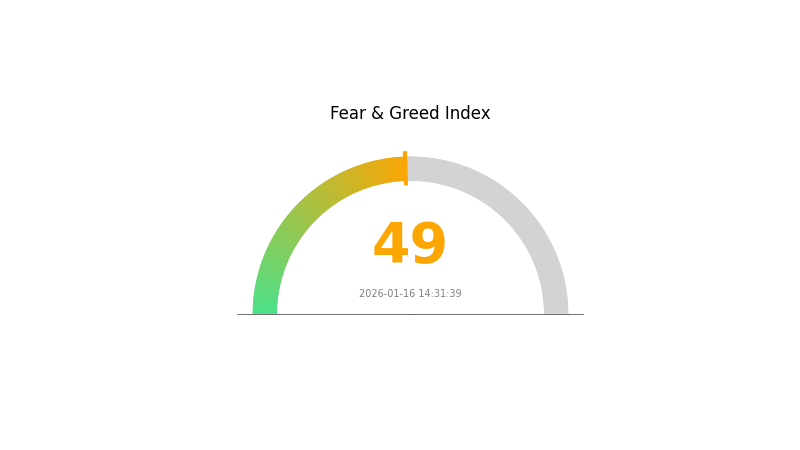
2026-01-16 Fear and Greed Index: 49 (Neutral)
Click to view the current Fear & Greed Index
The cryptocurrency market is currently in a neutral sentiment state with an index reading of 49. This balanced indicator suggests that market participants are neither excessively fearful nor overly greedy. Investors should exercise measured caution while remaining attentive to emerging opportunities. Such neutral conditions often precede significant market movements, making it an ideal time for careful portfolio management and strategic decision-making based on fundamental analysis rather than emotional impulses.
COW Holding Distribution
The holding distribution chart reveals the concentration of token ownership across different wallet addresses, serving as a critical indicator of decentralization and potential market manipulation risks. According to the latest on-chain data as of January 16, 2026, COW exhibits a relatively concentrated holding pattern. The top address controls 360,015.51K tokens, representing 36.00% of the total supply, while the second-largest holder possesses 155,087.25K tokens (15.50%). Combined, the top two addresses alone account for over half of the circulating supply at 51.50%, with the top five addresses collectively holding approximately 62.45% of all tokens.
This concentration level presents both structural advantages and potential vulnerabilities for COW's market dynamics. On one hand, the significant holdings by major addresses—likely including the project treasury, liquidity pools, and strategic partners—can provide price stability during periods of heightened volatility. However, such concentration also introduces considerable risks: any large-scale selling activity from these whale addresses could trigger substantial price fluctuations, while the relatively modest "Others" category at 37.55% suggests limited token distribution among retail participants. This imbalance may expose the token to manipulation risks and could potentially hinder organic price discovery mechanisms.
From a decentralization perspective, COW's current holding structure indicates moderate centralization that requires ongoing monitoring. While not reaching extreme concentration levels seen in some newly launched projects, the distribution pattern suggests the project is still in its early development phase, with token ownership yet to achieve broad-based distribution across the community. For investors, this holding structure necessitates careful attention to large address movements and consideration of liquidity risks during position management.
Click to view current COW Holding Distribution

| Top |
Address |
Holding Qty |
Holding (%) |
| 1 |
0xca77...8fe662 |
360015.51K |
36.00% |
| 2 |
0xd057...688048 |
155087.25K |
15.50% |
| 3 |
0x849d...8d039d |
38761.89K |
3.87% |
| 4 |
0x5237...d478b0 |
38180.35K |
3.81% |
| 5 |
0xf977...41acec |
32752.19K |
3.27% |
| - |
Others |
375202.81K |
37.55% |
II. Core Factors Influencing COW's Future Price
Supply Mechanism
-
Community-Driven Token Distribution: COW operates as a community-driven project where token distribution and supply dynamics are influenced by the active participation of holders within the cryptocurrency ecosystem. The protocol's governance structure allows community members to influence decisions that may affect token supply and circulation.
-
Historical Patterns: In community-driven cryptocurrency projects, supply changes have historically impacted price through shifts in circulating supply and token unlock schedules. When community engagement increases and token utility expands, demand typically rises relative to available supply, creating upward price pressure.
-
Current Impact: The future supply dynamics of COW will likely be shaped by ongoing community governance decisions and the expansion of its utility within the DeFi ecosystem. As the protocol grows and attracts more active holders, supply-demand equilibrium may shift favorably for price appreciation.
Institutional and Major Holder Dynamics
-
Institutional Holdings: Current reference materials do not provide specific data on institutional holdings of COW tokens. The community-driven nature of the project suggests that distribution may be relatively decentralized among active participants in the ecosystem.
-
Enterprise Adoption: Information regarding specific enterprises adopting COW Protocol was not available in the provided materials. The protocol's success will depend on attracting institutional users and DeFi protocols to integrate its trading infrastructure.
-
Regulatory Environment: The broader cryptocurrency regulatory landscape continues to evolve globally. Market participants should monitor developments in major jurisdictions that could affect decentralized exchange protocols and governance tokens like COW.
Macroeconomic Environment
-
Monetary Policy Impact: Global cryptocurrency markets remain sensitive to monetary policy decisions by major central banks. Interest rate adjustments, quantitative easing measures, and inflation expectations in major economies can influence risk appetite for digital assets, including COW.
-
Inflation Hedge Characteristics: Cryptocurrencies have demonstrated varying degrees of correlation with traditional inflation hedges. While some digital assets have shown potential as stores of value during inflationary periods, individual token performance depends heavily on project-specific fundamentals and market adoption.
-
Geopolitical Factors: International tensions, trade policies, and cross-border financial regulations can create volatility in cryptocurrency markets. Projects with decentralized governance structures like COW Protocol may attract users seeking alternatives to traditional financial systems during periods of geopolitical uncertainty.
Technology Development and Ecosystem Building
-
Protocol Infrastructure Enhancement: CoW Protocol's future development will focus on improving its decentralized trading infrastructure, enhancing user experience, and expanding compatibility with other DeFi protocols. Technical improvements to settlement mechanisms and order routing can strengthen the protocol's competitive position.
-
Partnership and Collaboration Expansion: The number of active holders, strategic partnerships, and collaborative relationships within the cryptocurrency ecosystem will play a crucial role in COW's price trajectory. Expanding utility and use cases through integrations with other protocols can drive increased demand for the token.
-
Ecosystem Applications: The growth of decentralized applications (DApps) and DeFi projects utilizing CoW Protocol's infrastructure will be essential for long-term value creation. As more projects integrate the protocol's trading mechanisms, network effects may contribute to increased token utility and demand.
III. 2026-2031 COW Price Prediction
2026 Outlook
- Conservative Forecast: $0.21375 - $0.2429
- Neutral Forecast: Around $0.2429
- Optimistic Forecast: Up to $0.25262 (requires favorable market conditions and increased adoption)
2027-2029 Outlook
- Market Stage Expectation: Gradual growth phase with potential volatility as the cryptocurrency market matures and COW Protocol expands its ecosystem presence
- Price Range Predictions:
- 2027: $0.16848 - $0.28492
- 2028: $0.25302 - $0.31961
- 2029: $0.17871 - $0.42188
- Key Catalysts: Protocol upgrades, expanding DeFi integrations, growing trading volume on decentralized exchanges, and increased recognition of MEV protection solutions
2030-2031 Long-term Outlook
- Base Scenario: $0.32526 - $0.47181 (assumes steady adoption of decentralized trading protocols and stable market conditions)
- Optimistic Scenario: $0.38974 - $0.52656 (assumes significant protocol enhancements, broader institutional adoption, and favorable regulatory environment)
- Transformative Scenario: Potential to exceed $0.52656 (requires breakthrough adoption in DeFi sector, major partnership announcements, and sustained bull market momentum)
- 2026-01-16: COW trading within projected range as market participants assess the protocol's competitive positioning in the decentralized exchange landscape
| Year |
Predicted High Price |
Predicted Average Price |
Predicted Low Price |
Price Change |
| 2026 |
0.25262 |
0.2429 |
0.21375 |
0 |
| 2027 |
0.28492 |
0.24776 |
0.16848 |
2 |
| 2028 |
0.31961 |
0.26634 |
0.25302 |
9 |
| 2029 |
0.42188 |
0.29297 |
0.17871 |
20 |
| 2030 |
0.47181 |
0.35743 |
0.32526 |
47 |
| 2031 |
0.52656 |
0.41462 |
0.38974 |
71 |
IV. COW Professional Investment Strategies and Risk Management
COW Investment Methodology
(1) Long-term Holding Strategy
- Target Investors: DeFi enthusiasts and believers in decentralized trading infrastructure who have a strong conviction in user-protective financial products
- Operational Recommendations:
- Accumulate positions during market corrections when COW trades below key support levels, targeting entry points around $0.20-$0.24 range
- Maintain a core position while taking partial profits during strong rallies above $0.30, considering the token's historical volatility
- Storage Solution: Utilize Gate Web3 Wallet for secure self-custody, enabling direct interaction with CoW Protocol's DeFi ecosystem while maintaining full control over private keys
(2) Active Trading Strategy
- Technical Analysis Tools:
- Volume Analysis: Monitor 24-hour trading volumes (currently around $115,523) to identify accumulation or distribution patterns that may precede significant price movements
- Support/Resistance Levels: Track key price zones with the 24-hour range of $0.24-$0.2521 providing short-term trading boundaries
- Swing Trading Key Points:
- Consider the 7-day positive momentum (+5.21%) while being mindful of the 24-hour decline (-3.81%) to time entry and exit points
- Set stop-loss orders below recent support levels to manage downside risk in volatile market conditions
COW Risk Management Framework
(1) Asset Allocation Principles
- Conservative Investors: 1-3% of crypto portfolio allocation
- Aggressive Investors: 5-8% of crypto portfolio allocation
- Professional Investors: Up to 10-15% with active hedging strategies
(2) Risk Hedging Solutions
- Position Sizing: Scale into positions gradually rather than deploying full capital at once, averaging down during market weakness
- Diversification: Balance COW holdings with exposure to other DeFi protocols and layer-1 tokens to reduce protocol-specific risk
(3) Secure Storage Solutions
- Hot Wallet Recommendation: Gate Web3 Wallet for active trading and DeFi participation, offering seamless integration with Ethereum-based protocols
- Cold Storage Solution: For long-term holdings exceeding $10,000, consider splitting assets between hot and cold storage solutions
- Security Precautions: Never share private keys or seed phrases; verify contract addresses (0xdef1ca1fb7fbcdc777520aa7f396b4e015f497ab) before transactions; be wary of phishing attempts targeting DeFi users
V. COW Potential Risks and Challenges
COW Market Risks
- High Volatility: The token has experienced significant price fluctuations, declining approximately 69.69% over the past year from higher levels, indicating substantial volatility
- Liquidity Concerns: With a market capitalization of approximately $134 million and 24-hour volume around $115,523, liquidity may be limited during extreme market conditions
- Market Cap to FDV Ratio: The 55.39% circulating supply ratio indicates potential dilution pressure as more tokens enter circulation over time
COW Regulatory Risks
- DeFi Regulatory Uncertainty: Evolving regulatory frameworks globally may impact decentralized trading protocols and governance token models
- Cross-border Compliance: Operating across multiple jurisdictions exposes the protocol to varying regulatory interpretations of DeFi activities
- Securities Classification: Governance tokens face ongoing scrutiny regarding potential securities classification in major markets
COW Technical Risks
- Smart Contract Vulnerabilities: As an Ethereum-based protocol (ERC-20), COW depends on smart contract security; any exploit could impact token value and user trust
- MEV Competition: While CoW Protocol addresses MEV protection, the evolving MEV landscape presents ongoing technical challenges
- Protocol Dependency: The token's value is tied to adoption of CoW Swap and CoW AMM; competition from established DEX platforms may limit growth
VI. Conclusion and Action Recommendations
COW Investment Value Assessment
CoW Protocol represents an innovative approach to user-protective DeFi trading, addressing critical concerns around MEV, front-running, and impermanent loss. The protocol's focus on trader protection positions it within a growing niche of security-conscious DeFi solutions. However, the significant year-over-year decline of 69.69% alongside a relatively modest market capitalization of $134 million reflects both market challenges and growth potential. The 30-day performance showing +28.13% suggests renewed interest, though investors should weigh this against sustained volatility. Long-term value depends on continued protocol adoption, successful competition against established DEX platforms, and the team's ability to maintain technological advantages in MEV protection.
COW Investment Recommendations
✅ Beginners: Start with small allocations (1-2% of crypto portfolio) through Gate.com spot trading, focusing on learning DeFi mechanics before deploying significant capital; avoid leverage until fully understanding protocol risks
✅ Experienced Investors: Consider a 3-5% strategic allocation with active monitoring of protocol metrics and trading volumes; employ scaling strategies during market corrections and take partial profits during rallies
✅ Institutional Investors: Evaluate COW as part of a broader DeFi infrastructure thesis with 5-10% allocation within DeFi-focused portfolios; conduct thorough due diligence on protocol security audits and governance mechanisms
COW Trading Participation Methods
- Spot Trading: Access COW/USDT pairs on Gate.com with competitive trading fees and deep liquidity for efficient execution
- DeFi Integration: Use Gate Web3 Wallet to interact directly with CoW Protocol's native ecosystem, including CoW Swap for MEV-protected trading
- Dollar-Cost Averaging: Implement systematic purchase schedules through Gate.com to reduce timing risk and build positions gradually over extended periods
Cryptocurrency investment carries extremely high risks, and this article does not constitute investment advice. Investors should make prudent decisions based on their own risk tolerance and are advised to consult professional financial advisors. Never invest more than you can afford to lose.
FAQ
What is the current price of COW token and how has its historical price trend been?
COW token is currently trading at approximately $0.0676. Historically, COW has experienced minor fluctuations, with recent 24-hour changes showing modest volatility. The token has demonstrated steady market presence with consistent trading activity. For detailed price charts and long-term trend analysis, check real-time market data.
What are the main factors affecting COW price?
COW price is mainly influenced by market supply and demand, trading volume, protocol utility, governance developments, and broader crypto market sentiment. Token economics and adoption growth also significantly impact price movements.
Will COW price go up or down in 2024?
Based on predictions, COW price is expected to rise to $0.379416 by November 2024 and continue growing to $0.380941 by December 2024. The forecast indicates an upward trend.
What advantages does COW token have compared to other DeFi tokens?
COW token offers significant MEV protection, safeguarding users from price manipulation and enhancing trading efficiency. Its unique mechanism optimizes settlement processes while maintaining transparency and security in decentralized finance.
What are the risks to pay attention to when investing in COW tokens?
COW tokens face significant price volatility risks influenced by market sentiment and investor confidence. Market manipulation and liquidity constraints may impact pricing. Regulatory changes in crypto markets could affect token value. Investors should conduct thorough research before investing.
What is the liquidity and trading volume of COW tokens?
COW token maintains healthy liquidity with consistent trading activity across major markets. Trading volume fluctuates based on market demand and sentiment. Current liquidity data reflects active participation from traders, supporting efficient price discovery and order execution in the ecosystem.
* The information is not intended to be and does not constitute financial advice or any other recommendation of any sort offered or endorsed by Gate.