The article provides a detailed analysis of StaFi (FIS), focusing on price trends and market dynamics as of 2025, along with a forecast from 2025 to 2030. It addresses key factors such as historical price evolution, current market status, and holding distributions, relevant for both new and experienced investors looking to understand FIS's investment potential within the DeFi space. Core influences on future prices, including macroeconomic conditions and technical risks, are discussed. Also included is a professional investment and risk management strategy tailored to long-term and active investors via Gate. Practical recommendations and potential challenges are highlighted, ensuring readers gain a concise yet comprehensive understanding suitable for strategic decision-making.
Introduction: FIS Market Position and Investment Value
Stafi (FIS) is a DeFi protocol designed to unlock the liquidity of staked assets, allowing users to earn staking rewards while maintaining asset liquidity through derivative tokens. Since its launch in 2020, FIS has established itself as a functional token within the StaFi ecosystem. As of December 2025, FIS has a market capitalization of approximately $2.93 million with a circulating supply of around 155 million tokens, trading at approximately $0.01889 per token.
FIS serves multiple critical functions within the StaFi protocol, including network validation through staking, transaction fee mechanisms, on-chain governance participation, and value capture through platform fee distribution and token buyback mechanisms. This multi-functional utility positions FIS as a key component in the liquid staking derivative sector.
This article will provide a comprehensive analysis of FIS price trends and market dynamics, examining historical performance, market supply and demand dynamics, ecosystem development, and broader macroeconomic factors to deliver professional price forecasts and practical investment guidance for 2025-2030.
I. FIS Price History Review and Market Status
FIS Historical Price Evolution
- March 2021: Protocol launch and early market adoption phase, reached all-time high of $4.70 on March 19, 2021, representing peak market enthusiasm for liquid staking solutions.
- 2021-2024: Extended bear market cycle, price experienced significant depreciation from historical highs as broader crypto market sentiment declined.
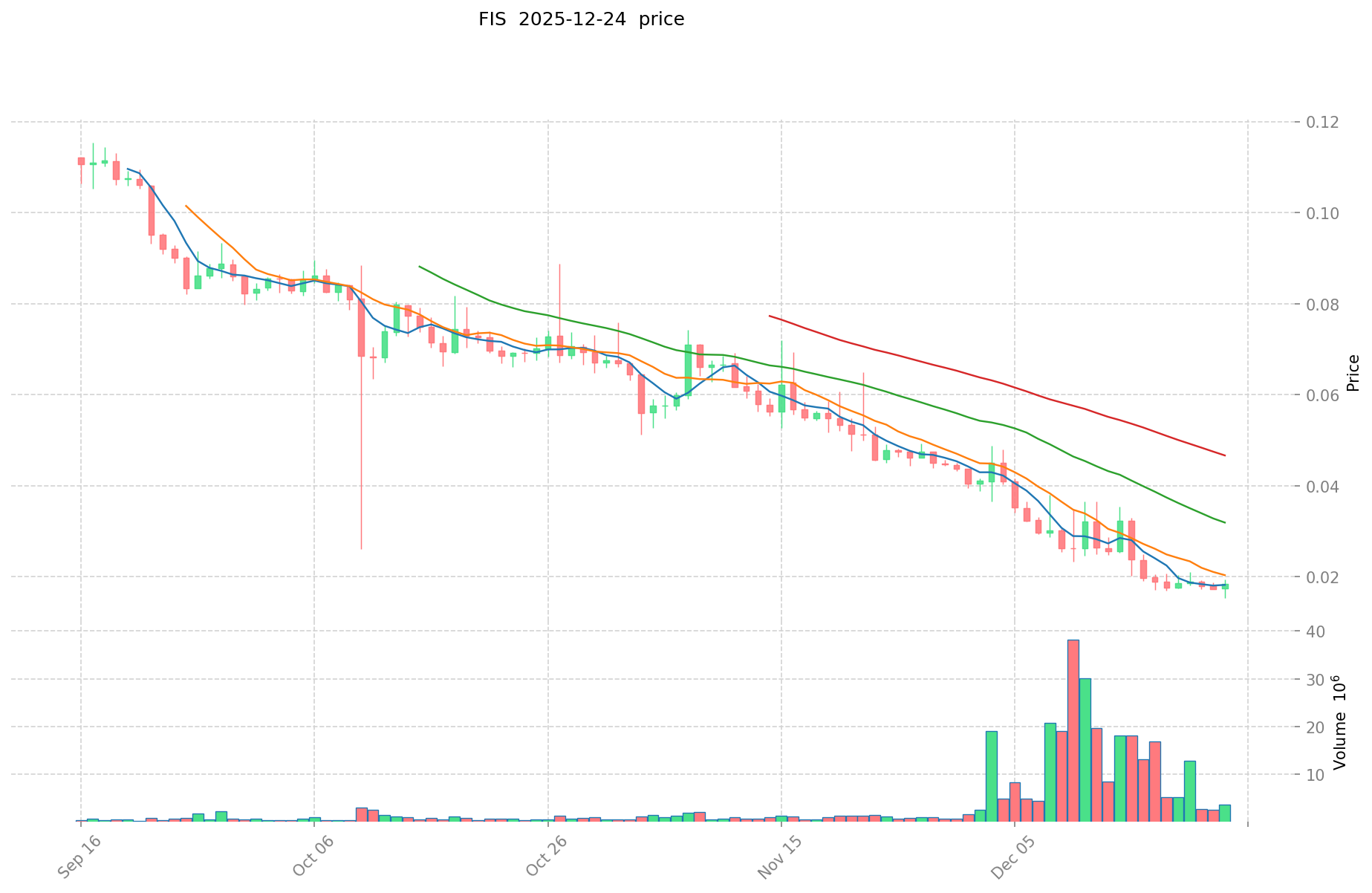
- 2025: Continued downward pressure, reached new all-time low of $0.01624717 on December 24, 2025, marking the lowest price point in protocol history.
FIS Current Market Status
As of December 24, 2025, FIS is trading at $0.01889 with a 24-hour trading volume of approximately $126,720.47. The token shows mixed short-term price action, gaining 9.57% over the past 24 hours but declining 1.60% in the past hour. Over the longer term, FIS has declined 59.27% in the past 30 days and 95.61% over the past year, indicating sustained downward pressure. The current market capitalization stands at approximately $2.93 million with a fully diluted valuation matching the circulating market cap, as the total supply equals the circulating supply of 155.04 million FIS tokens. The token maintains a market dominance of 0.000092%, ranking 1884 by market capitalization. Current market sentiment shows extreme fear (VIX: 24), reflecting prevailing bearish conditions across the broader cryptocurrency market.
Click to view current FIS market price
FIS Market Sentiment Indicator
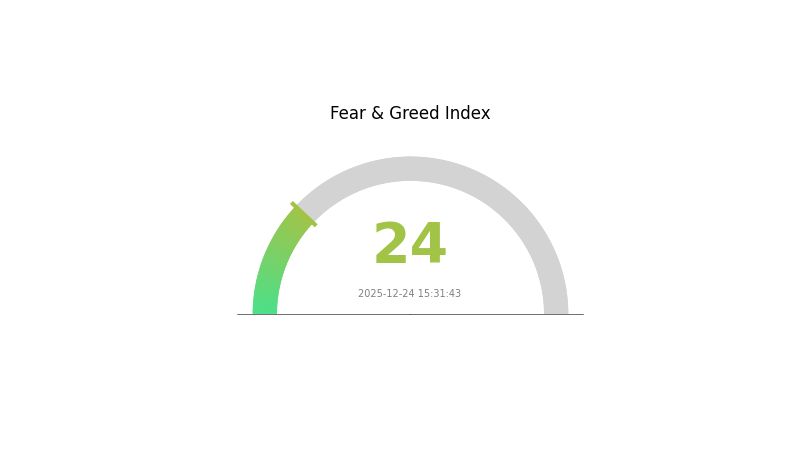
2025-12-24 Fear and Greed Index: 24 (Extreme Fear)
Click to view current Fear & Greed Index
The crypto market is experiencing extreme fear with an FIS reading of 24. This indicates significant market pessimism and heightened investor anxiety. During periods of extreme fear, risk-averse investors typically reduce positions, while contrarian traders may view this as a potential buying opportunity. Market volatility remains elevated as sentiment reaches critical lows. Monitor key support levels and market developments closely. Such extreme readings often precede market reversals, presenting both risks and opportunities for strategic investors on Gate.com.
FIS Holding Distribution
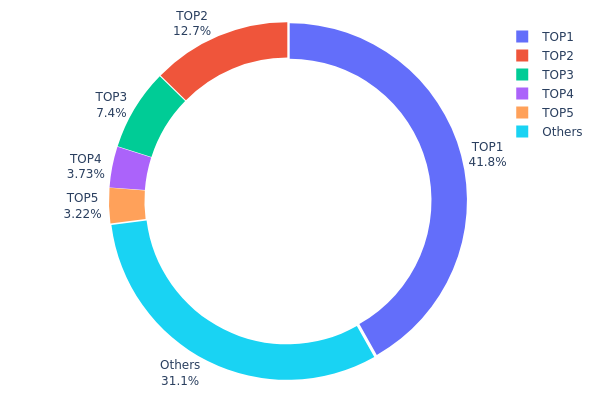
The address holding distribution chart represents the concentration of FIS tokens across different wallet addresses, revealing the degree of token decentralization and market structure. By analyzing the top holders and their respective proportions, we can assess whether the token supply is widely distributed or heavily concentrated among a small number of entities, which has significant implications for market stability and governance.
FIS exhibits notable concentration characteristics in its current holding distribution. The top holder controls 41.82% of the total supply, while the combined top five addresses account for approximately 68.83% of all FIS tokens in circulation. This level of concentration suggests a moderately centralized token structure, with significant influence concentrated in the hands of a limited number of stakeholders. The remaining 31.17% distributed across other addresses indicates that while a substantial portion of tokens are held more widely, the majority of voting power and liquidity remains in the upper tier of holders.
The current address distribution pattern presents both structural considerations and market dynamics. With nearly 42% of tokens held by a single address, there exists potential for substantial market impact should this holder execute large-scale transactions. However, the secondary and tertiary holders possess more distributed stakes, which may provide some counterbalance to extreme concentration. This distribution structure suggests a market environment where price volatility could be influenced by the actions of top-tier holders, while the wider holder base provides a foundation for organic ecosystem participation. The overall configuration reflects a moderately decentralized asset with meaningful concentration risk, typical of projects in their growth phase.
Check the latest FIS Holding Distribution
| Top |
Address |
Holding Qty |
Holding (%) |
| 1 |
0x66b1...d43cce |
53028.99K |
41.82% |
| 2 |
0xa9d1...1d3e43 |
16073.86K |
12.67% |
| 3 |
0x28c6...f21d60 |
9386.91K |
7.40% |
| 4 |
0xa992...55a047 |
4725.02K |
3.72% |
| 5 |
0xcdac...6217be |
4082.61K |
3.22% |
| - |
Others |
39491.08K |
31.17% |
II. Core Factors Influencing FIS Future Price
Macroeconomic Environment
-
Monetary Policy Impact: Global monetary policy decisions, particularly from the U.S. Federal Reserve, influence financial technology sector performance. Cryptocurrency and fintech assets are sensitive to interest rate expectations and central bank policy shifts.
-
Market Sentiment and External Events: Cryptocurrency prices are highly volatile and susceptible to external factors including financial events, regulatory announcements, and political developments. Market liquidity concentration during significant trading events can trigger short-term price fluctuations and sentiment shifts.
Supply and Market Dynamics
- Futures Contract Activity: FIS perpetual contract adjustments, including forced liquidations and contract delisting, may create concentrated liquidity events and temporary market emotion volatility, potentially stimulating short-term price movements.
Note: The provided research materials contain limited specific information about FIS supply mechanisms, institutional holdings, technology upgrades, and ecosystem applications. For comprehensive analysis of these factors, additional proprietary data about FIS tokenomics, major stakeholder positions, and development roadmap would be required.
Three、2025-2030 FIS Price Prediction
2025 Outlook
- Conservative Forecast: $0.01609 - $0.01916
- Neutral Forecast: $0.01916 - $0.02000
- Optimistic Forecast: $0.02000 - $0.02184 (requires sustained ecosystem development and increased institutional adoption)
2026-2028 Mid-term Outlook
- Market Stage Expectation: Consolidation phase with gradual recovery, characterized by increasing developer activity and protocol upgrades driving incremental value accrual.
- Price Range Prediction:
- 2026: $0.01169 - $0.0287
- 2027: $0.01599 - $0.0278
- 2028: $0.02437 - $0.03144
- Key Catalysts: Enhanced interoperability features, expansion of DeFi applications on the FIS network, growing enterprise partnerships, and improving market sentiment as crypto adoption accelerates.
2029-2030 Long-term Outlook
- Base Case Scenario: $0.02882 - $0.03574 in 2029 and $0.03228 - $0.04584 in 2030 (assuming stable regulatory environment and moderate adoption growth)
- Optimistic Scenario: $0.04000+ by 2030 (assuming significant breakthrough in cross-chain solutions and major institutional inflows)
- Transformative Scenario: $0.05000+ by 2030 (contingent on FIS becoming a dominant cross-chain infrastructure provider and achieving mainstream adoption in enterprise applications)
- 2030-12-31: FIS demonstrates 70% cumulative growth trajectory (reflects sustained network expansion and ecosystem maturation)
| 年份 |
预测最高价 |
预测平均价格 |
预测最低价 |
涨跌幅 |
| 2025 |
0.02184 |
0.01916 |
0.01609 |
1 |
| 2026 |
0.0287 |
0.0205 |
0.01169 |
8 |
| 2027 |
0.0278 |
0.0246 |
0.01599 |
30 |
| 2028 |
0.03144 |
0.0262 |
0.02437 |
38 |
| 2029 |
0.03574 |
0.02882 |
0.01873 |
52 |
| 2030 |
0.04584 |
0.03228 |
0.02582 |
70 |
StaFi (FIS) Professional Investment Strategy and Risk Management Report
IV. FIS Professional Investment Strategy and Risk Management
FIS Investment Methodology
(1) Long-term Holding Strategy
- Target Investors: DeFi protocol believers, staking enthusiasts, and investors with long-term conviction in liquid staking solutions
- Operational Recommendations:
- Accumulate FIS during market downturns when prices show significant weakness, as the current 30-day decline of -59.27% and 1-year decline of -95.61% may present accumulation opportunities for long-term believers
- Participate in StaFi's governance mechanisms by holding FIS to vote on protocol upgrades and parameter changes, aligning with protocol development
- Monitor the rToken ecosystem performance and track how effective the protocol is at releasing liquidity of pledged assets across different PoS chains
(2) Active Trading Strategy
- Technical Analysis Considerations:
- Price Action Analysis: Monitor the current trading range between $0.01525 (24h low) and $0.02104 (24h high), with FIS showing volatility that presents intraday trading opportunities
- Volume Assessment: With 24-hour volume of $126,720.47, traders should note the relatively modest liquidity pool and adjust position sizes accordingly to avoid slippage
- Swing Trading Key Points:
- Watch for reversal signals given the extreme downtrend (-95.61% yearly), as any sustained recovery above $0.02 could signal institutional re-entry
- Exercise caution during low-volume periods, as FIS's limited trading activity could amplify price movements in either direction
FIS Risk Management Framework
(1) Asset Allocation Principles
- Conservative Investors: 1-2% maximum allocation to FIS within a diversified crypto portfolio
- Active Investors: 3-5% allocation for positions that align with conviction in DeFi liquid staking protocols
- Professional Investors: 5-10% allocation with structured hedging strategies through other DeFi protocols
(2) Risk Hedging Solutions
- Protocol Risk Mitigation: Diversify exposure across multiple liquid staking protocols rather than concentrating solely in StaFi, as protocol-specific vulnerabilities could impact FIS value
- Market Volatility Protection: Consider reducing position sizes during periods of extreme price decline, and implement stop-loss orders at predetermined levels to protect capital
(3) Secure Storage Solutions
- Hot Wallet Solution: Gate Web3 wallet for active trading and governance participation, offering convenient access to FIS holdings with professional-grade security
- Cold Storage Approach: For long-term holders, utilize hardware wallet solutions stored offline to minimize exposure to exchange hacks or smart contract vulnerabilities
- Security Considerations: Never share private keys or seed phrases; enable multi-factor authentication on all trading accounts; verify contract addresses before interacting with FIS tokens; be cautious of phishing attempts targeting DeFi protocol holders
V. FIS Potential Risks and Challenges
FIS Market Risks
- Extreme Price Depreciation: FIS has declined 95.61% over the past year and 59.27% in the past month, indicating substantial investor skepticism about the protocol's value proposition or market conditions
- Limited Liquidity: With only $126,720 in daily trading volume and a market cap of $2.93 million, FIS suffers from relatively thin order books that could result in significant slippage for larger transactions
- Low Token Holder Base: Only 3,998 token holders suggests limited adoption and network effects, creating concentration risk if large holders choose to exit positions
FIS Regulatory Risks
- DeFi Protocol Classification Uncertainty: Regulators across multiple jurisdictions continue to develop frameworks for classifying DeFi protocols and governance tokens, creating potential compliance challenges for StaFi
- Cross-Chain Regulatory Complexity: Since StaFi operates across multiple blockchain ecosystems (including Polkadot), the protocol faces regulatory scrutiny from multiple jurisdictions simultaneously
- Staking Regulation Ambiguity: Several jurisdictions are still determining whether staking activities constitute securities offerings, potentially affecting StaFi's core business model
FIS Technical Risks
- Smart Contract Vulnerabilities: As with all DeFi protocols, StaFi's staking contracts and rToken mechanisms are subject to potential security flaws that could result in loss of user funds
- Multi-Chain Dependency: StaFi's reliance on multiple blockchain networks means the protocol is exposed to risks across multiple chains, including consensus failures or network upgrades
- rToken Redemption Risks: If the underlying staking mechanism encounters issues on connected chains, users may face difficulties redeeming rTokens for original staking tokens
VI. Conclusion and Action Recommendations
FIS Investment Value Assessment
FIS presents a complex risk-reward proposition for crypto investors. The protocol addresses a legitimate market need by unlocking liquidity for PoS token stakers through rToken mechanisms, which is a valuable service in the DeFi ecosystem. However, the token has experienced severe depreciation (down 95.61% annually), suggesting either fundamental protocol challenges, market saturation in the liquid staking sector, or broader crypto market headwinds. The protocol's limited trading volume ($126,720 daily) and small holder base (3,998 addresses) indicate weak market confidence and adoption metrics. While FIS's governance utility and value capture mechanism through fee burns theoretically support long-term value, execution risk remains high given the competitive landscape and current market performance.
FIS Investment Recommendations
✅ Newcomers: Only consider FIS as a speculative position representing less than 1-2% of your crypto portfolio. Thoroughly research StaFi's protocol mechanics and competitive position before investing. Use Gate.com for secure trading access.
✅ Experienced Investors: Evaluate FIS as part of a broader DeFi portfolio strategy, potentially accumulating during extreme downturns if you have strong conviction in the protocol's long-term viability. Engage with governance to understand development direction.
✅ Institutional Investors: Conduct comprehensive due diligence on StaFi's technical architecture, team qualifications, and competitive moat before considering allocation. Consider the token's limited liquidity when determining position sizing and exit strategies.
FIS Trading Participation Methods
- Spot Trading: Purchase FIS directly through Gate.com's spot trading platform for long-term holding or short-term trading
- Governance Participation: Hold FIS tokens to participate in StaFi protocol governance, voting on parameter changes and protocol upgrades
- Staking Integration: Use FIS to stake in the StaFi network to support consensus and earn validation rewards as the protocol evolves
Cryptocurrency investments carry extreme risk. This report does not constitute investment advice. Investors should make decisions based on their personal risk tolerance and strongly consider consulting professional financial advisors. Never invest more than you can afford to lose. The information presented reflects conditions as of December 24, 2025, and cryptocurrency markets are highly volatile and subject to rapid change.
FAQ
Is FIS a good stock to buy?
FIS demonstrates strong momentum indicators, making it attractive for momentum-focused investors. However, its P/E ratio may not suit value investors. Your decision should align with your investment strategy and risk tolerance.
What is the price prediction for FIS stock?
FIS has a price target of $83.00 with a forecast range of $60.00-$93.00 based on analyst consensus. This prediction reflects current market analysis and sentiment.
What factors influence FIS token price movements?
FIS token price is influenced by supply mechanisms, market demand, macroeconomic trends, technological advancements, regulatory changes, and trading volume dynamics.
What is Filecoin (FIS) and what are its use cases?
Filecoin is a decentralized storage network enabling secure, scalable file storage with economic incentives. Use cases include reliable data storage, content delivery, backup solutions, and decentralized cloud services for enterprises and individuals.
What are the risks associated with investing in FIS tokens?
FIS token investments carry volatility risk due to market fluctuations, short history risk with limited performance data, and liquidity risk affecting trading ease. Cryptocurrency markets are highly unpredictable and prices can change significantly.
* The information is not intended to be and does not constitute financial advice or any other recommendation of any sort offered or endorsed by Gate.