This comprehensive KAVA price prediction article provides professional analysis for 2026-2031, examining the cross-chain DeFi token's market position, historical performance, and future outlook. KAVA, currently trading at $0.09122 with a $98.78M market cap, faces significant volatility but offers cross-chain infrastructure potential. The article analyzes core price drivers including supply dynamics, ecosystem development, and macroeconomic factors, presenting conservative to optimistic price scenarios ranging from $0.05833 to $0.19367 by 2031. Readers receive practical investment strategies tailored to different risk profiles, risk management frameworks, and secure custody solutions via Gate Web3 Wallet. Technical analysis tools, DeFi ecosystem catalysts, and regulatory considerations equip investors with actionable insights for strategic KAVA positioning on Gate exchange.
Introduction: KAVA's Market Position and Investment Value
Kava (KAVA), as a decentralized Layer 1 hub supporting cross-chain DeFi applications and services, has been providing threshold-free financial service infrastructure for developers and users since its launch in 2019. As of 2026, Kava maintains a market capitalization of approximately $98.78 million, with a circulating supply of around 1.08 billion tokens, and its price hovers around $0.09122. This asset, recognized for its cross-chain capabilities and decentralized banking features through Kava CDP lending platform and HARD Protocol, is playing an increasingly important role in the DeFi ecosystem.
This article will comprehensively analyze KAVA's price movements from 2026 to 2031, combining historical patterns, market supply and demand dynamics, ecosystem development, and macroeconomic conditions to provide investors with professional price forecasts and practical investment strategies.
I. KAVA Price History Review and Market Status
KAVA Historical Price Evolution Trajectory
- October 2019: KAVA launched at $0.46, marking the beginning of its journey as a cross-chain DeFi platform
- August 2021: KAVA reached its all-time high of $9.12, representing substantial growth from its initial offering price
- December 2025: KAVA touched its all-time low of $0.071579, reflecting significant market corrections during this period
KAVA Current Market Status
As of January 17, 2026, KAVA is trading at $0.09122, demonstrating a modest recovery from its recent low point. The token has shown mixed performance across different timeframes, with a slight decline of 0.86% over the past 24 hours, while posting gains of 7.38% over the past week and 19.8% over the past month. However, the year-over-year performance shows a decline of 81.78%.
KAVA currently holds a market ranking of 360, with a circulating supply of 1,082,847,624 tokens and a market capitalization of approximately $98.78 million. The 24-hour trading volume stands at $166,838.60, with the price ranging between $0.08844 and $0.09345. The market dominance of KAVA is approximately 0.0029%, with a market cap to fully diluted valuation ratio of 100%, indicating that all tokens are currently in circulation.
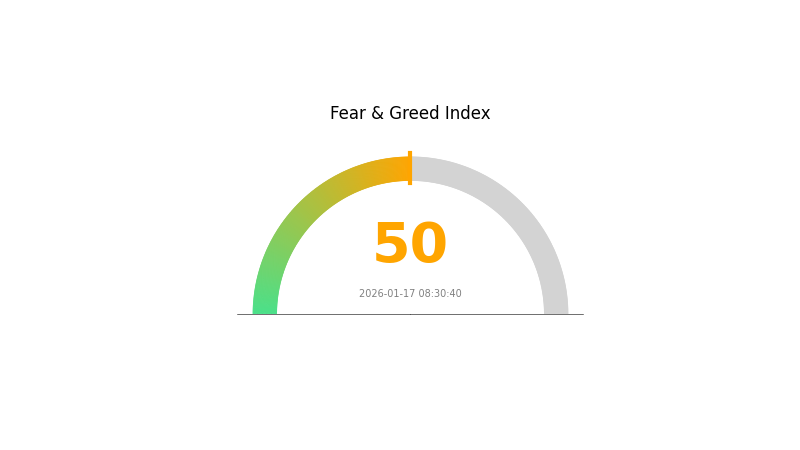
The Gate Crypto Fear & Greed Index currently registers at 50, indicating a neutral market sentiment for the broader cryptocurrency market.
Click to view current KAVA market price

KAVA Market Sentiment Index
2026-01-17 Fear and Greed Index: 50 (Neutral)
Click to view the current Fear & Greed Index
The KAVA market is currently displaying neutral sentiment with an index reading of 50. This balanced positioning suggests that neither fear nor greed is dominating market participants' decision-making processes. Investors should maintain a measured approach, as neutral conditions typically indicate stable market dynamics without extreme directional bias. This environment can present opportunities for both conservative positioning and strategic accumulation, depending on individual risk tolerance and investment objectives. Monitoring this indicator alongside other market fundamentals remains essential for informed trading decisions.
KAVA Holding Distribution
The holding distribution chart visually represents the concentration of KAVA tokens across different wallet addresses, providing critical insights into the token's ownership structure and decentralization level. By analyzing the percentage of total supply held by top addresses, researchers can assess potential risks related to market manipulation, liquidity dynamics, and overall network health. A highly concentrated distribution typically indicates significant control by a small number of entities, which may pose stability concerns, while a more dispersed structure generally reflects broader community participation and enhanced decentralization.
Based on the current data, KAVA demonstrates a moderate concentration pattern within its top holding addresses. The distribution reveals that while several major addresses control substantial portions of the circulating supply, the token has not reached extreme concentration levels that would trigger immediate red flags regarding centralization risks. This structure suggests a relatively balanced ecosystem where institutional holders, early investors, and exchange reserves coexist alongside retail participants. However, the presence of dominant addresses still warrants careful monitoring, as coordinated movements from these entities could introduce volatility or influence price discovery mechanisms during critical market periods.
The current holding distribution reflects KAVA's maturation as an established DeFi protocol token with gradually improving decentralization characteristics. The on-chain structure indicates sufficient distribution to maintain reasonable liquidity across major trading platforms while avoiding the fragility associated with excessive concentration. As KAVA continues to expand its ecosystem and attract diverse stakeholders, ongoing observation of holding pattern evolution will remain essential for assessing long-term structural stability and market resilience.
Click to view current KAVA Holding Distribution

| Top |
Address |
Holding Qty |
Holding (%) |
II. Core Factors Influencing KAVA's Future Price
Supply Mechanism
- Market Demand and Trading Volume: KAVA's price is influenced by market demand and trading volume within its ecosystem. As demand increases or decreases, supply-demand dynamics directly impact price movements.
- Historical Patterns: Price volatility in the cryptocurrency market has historically affected KAVA, with market sentiment and external factors playing significant roles in price fluctuations.
- Current Impact: The overall cryptocurrency market trends and regulatory policy changes continue to exert considerable influence on KAVA's price trajectory.
Institutional and Major Holder Dynamics
- Governance Concentration: Current governance models show centralization tendencies, which may affect long-term value sustainability. The concentration of decision-making power could impact investor confidence and token distribution patterns.
- Market Sentiment: Altcoin market sentiment and major cryptocurrency price movements, particularly Bitcoin's performance, can significantly influence KAVA's price behavior.
Macroeconomic Environment
- Regulatory Policy Impact: Regulatory policies in various jurisdictions continue to shape the operating environment for DeFi platforms like KAVA. Policy changes can create both opportunities and challenges for price performance.
- Market Volatility: The cryptocurrency market's inherent volatility affects KAVA's price stability. Market sentiment shifts and external economic factors contribute to price fluctuations.
- Geopolitical Factors: Broader market trends and international developments in the cryptocurrency space influence investor confidence and trading patterns.
Technical Development and Ecosystem Building
- Cross-chain Technology: KAVA Network leverages Cosmos SDK blockchain technology to provide fast, permissionless lending with seamless interoperability. This technical foundation supports its DeFi ecosystem.
- DeFi Protocol Suite: The platform offers multiple protocols including Kava Mint, Kava Lend, Kava Swap, Kava Earn, Kava Staking, and Kava Liquid Staking, creating a comprehensive DeFi service ecosystem.
- Stablecoin Limitations: Limited stablecoin usage and ecosystem application diversity represent constraints on long-term value. The platform's ability to convert technical advantages into practical user experiences and ecosystem applications remains a key factor for sustainable growth.
- Ecosystem Applications: KAVA aims to enable users to borrow and lend multiple cryptocurrencies within its network, positioning itself as a DeFi platform that seeks to improve upon traditional financial services and current DeFi offerings.
III. 2026-2031 KAVA Price Prediction
2026 Outlook
- Conservative prediction: $0.05833 - $0.09114
- Neutral prediction: Around $0.09114
- Optimistic prediction: Up to $0.10299 (requires favorable market conditions and increased adoption)
2027-2029 Outlook
- Market stage expectation: Potential gradual growth phase with increasing network activity and ecosystem expansion
- Price range predictions:
- 2027: $0.07183 - $0.13007
- 2028: $0.0829 - $0.15445
- 2029: $0.07906 - $0.14071
- Key catalysts: DeFi protocol integration, cross-chain functionality improvements, and broader institutional interest in multi-chain lending platforms
2030-2031 Long-term Outlook
- Baseline scenario: $0.12774 - $0.13736 (assuming steady ecosystem development and maintained market share)
- Optimistic scenario: $0.15227 - $0.19367 (contingent upon significant protocol upgrades and expanded use cases)
- Transformational scenario: Potential to reach $0.19367 (requires breakthrough partnerships, major technical innovations, and substantial market capitalization growth)
- 2026-01-17: KAVA trading within early 2026 predicted range, positioning for potential multi-year growth trajectory
| Year |
Predicted High Price |
Predicted Average Price |
Predicted Low Price |
Price Change |
| 2026 |
0.10299 |
0.09114 |
0.05833 |
0 |
| 2027 |
0.13007 |
0.09706 |
0.07183 |
6 |
| 2028 |
0.15445 |
0.11356 |
0.0829 |
24 |
| 2029 |
0.14071 |
0.13401 |
0.07906 |
46 |
| 2030 |
0.19367 |
0.13736 |
0.12774 |
50 |
| 2031 |
0.19034 |
0.16552 |
0.15227 |
81 |
IV. KAVA Professional Investment Strategies and Risk Management
KAVA Investment Methodology
(1) Long-term Holding Strategy
- Suitable for: Investors seeking exposure to cross-chain DeFi infrastructure with a multi-year investment horizon
- Operational Recommendations:
- Consider accumulating positions during periods of market consolidation when KAVA trades within established support zones
- Monitor the development progress of Kava's Layer 1 hub and cross-chain DeFi applications as key indicators of long-term value
- Storage Solution: Utilize Gate Web3 Wallet for secure custody of KAVA tokens, ensuring private key control and access to staking opportunities
(2) Active Trading Strategy
- Technical Analysis Tools:
- Moving Averages: Apply 20-day and 50-day moving averages to identify trend direction and potential entry/exit points during KAVA's price fluctuations
- Support and Resistance Levels: Reference the 24-hour range ($0.08844-$0.09345) to establish short-term trading boundaries
- Swing Trading Key Points:
- Monitor KAVA's correlation with broader DeFi sector movements and cross-chain bridge activity
- Consider volume patterns alongside price action, as the current 24-hour volume of approximately $166,839 suggests moderate liquidity conditions
KAVA Risk Management Framework
(1) Asset Allocation Principles
- Conservative Investors: 2-3% of crypto portfolio allocation
- Active Investors: 5-8% of crypto portfolio allocation
- Professional Investors: Up to 10-15% of crypto portfolio allocation with hedging strategies
(2) Risk Hedging Solutions
- Portfolio Diversification: Balance KAVA holdings with other Layer 1 platforms and DeFi protocols to reduce concentrated exposure
- Stop-Loss Implementation: Consider setting stop-loss orders at 15-20% below entry points to limit downside risk
(3) Secure Storage Solutions
- Hot Wallet Recommendation: Gate Web3 Wallet for active traders requiring frequent access and staking functionality
- Cold Storage Option: Consider hardware wallet solutions for long-term holdings exceeding $10,000 equivalent value
- Security Precautions: Never share private keys, enable two-factor authentication, and regularly verify wallet addresses before transactions
V. KAVA Potential Risks and Challenges
KAVA Market Risks
- Volatility Risk: KAVA has demonstrated significant price fluctuation, with a 1-year decline of approximately 81.78%, indicating substantial market volatility that may impact short-term holdings
- Liquidity Considerations: Daily trading volume of approximately $166,839 suggests moderate liquidity, which may result in slippage during large transactions
- Market Capitalization Risk: With a market cap of approximately $98.78 million and ranking around 360, KAVA faces competition from larger-cap DeFi platforms
KAVA Regulatory Risks
- DeFi Regulatory Uncertainty: Cross-chain lending platforms may face evolving regulatory scrutiny across different jurisdictions
- Stablecoin Regulatory Environment: KAVA's USDX stablecoin component may be subject to increasing regulatory requirements for algorithmic and collateralized stablecoins
- Compliance Evolution: Changes in crypto asset classification and reporting requirements could impact KAVA's operational framework
KAVA Technical Risks
- Smart Contract Vulnerabilities: DeFi lending platforms and cross-chain bridges inherently carry risks of code exploits and security breaches
- Cross-Chain Bridge Risks: Interoperability features connecting multiple blockchain networks may introduce additional attack vectors
- Network Dependency: KAVA's functionality relies on the stability and security of its underlying Layer 1 infrastructure and connected chains
VI. Conclusion and Action Recommendations
KAVA Investment Value Assessment
KAVA represents a cross-chain DeFi infrastructure project with established lending and stablecoin services. While the platform has demonstrated resilience through multi-year operations and support from over 100 companies, investors should carefully weigh the significant price decline over the past year against the long-term potential of cross-chain DeFi solutions. The current market position suggests KAVA may appeal to investors with higher risk tolerance and conviction in the cross-chain DeFi narrative, though short-term volatility remains a considerable factor.
KAVA Investment Recommendations
✅ Beginners: Start with a small position (1-2% of crypto portfolio) to gain exposure while learning about DeFi mechanics; consider dollar-cost averaging to mitigate entry timing risk
✅ Experienced Investors: Evaluate KAVA within a diversified DeFi portfolio allocation; monitor development milestones and ecosystem growth metrics for position adjustments
✅ Institutional Investors: Conduct thorough due diligence on smart contract audits and cross-chain security protocols; consider KAVA as part of a broader Layer 1 and DeFi infrastructure thesis
KAVA Trading Participation Methods
- Spot Trading: Purchase and hold KAVA tokens on Gate.com with options for immediate trading or transfer to Gate Web3 Wallet for self-custody
- Staking Participation: Explore staking opportunities within the Kava ecosystem to earn potential yield on held tokens
- DeFi Integration: Utilize KAVA tokens within the Kava CDP lending platform and HARD Protocol for yield generation and collateralized borrowing
Cryptocurrency investment carries extremely high risk, and this article does not constitute investment advice. Investors should make prudent decisions based on their own risk tolerance and are advised to consult professional financial advisors. Never invest more than you can afford to lose.
FAQ
What is KAVA token? What are its main uses and value drivers?
KAVA is the native token of the Kava network used for paying transaction fees and governance. Its value drivers include network activity, DeFi ecosystem adoption, and decentralized governance participation in the Kava protocol.
What are the key factors affecting KAVA price? How does the overall DeFi market status influence KAVA price?
KAVA price is driven by DeFi market sentiment, trading volume, and macroeconomic factors. The overall DeFi market performance directly influences KAVA's price movements. Strong DeFi adoption and platform growth typically support upward price momentum.
How to conduct technical analysis of KAVA price? What are the important support and resistance levels in historical price trends?
KAVA technical analysis shows 0.081 as a strong resistance level, while 0.0755 and 0.0713 serve as key support levels. Monitor trading volume patterns and chart formations around these price zones for potential trend reversals and breakout opportunities.
KAVA demonstrates stable price performance with strong growth potential. While Aave and Compound lead in total value locked, KAVA differentiates through Cosmos ecosystem integration and innovative lending solutions. As cross-chain DeFi adoption accelerates, KAVA is positioned for significant appreciation with expanding market opportunities.
What are the main risks and opportunities in KAVA price predictions for 2024-2025?
KAVA faces market volatility risks and regulatory uncertainty in 2024-2025. Opportunities include DeFi ecosystem expansion, increased transaction volume, and growing institutional adoption driving potential price appreciation.
How will KAVA ecosystem development progress and new feature releases impact future price trends?
KAVA ecosystem expansion and new feature releases enhance platform utility and adoption, potentially driving increased demand and upward price momentum. Technical advancements and ecosystem growth are key catalysts for future price appreciation.
* The information is not intended to be and does not constitute financial advice or any other recommendation of any sort offered or endorsed by Gate.