This comprehensive analysis examines MANTRA (OM) token's price trajectory and investment potential for 2026-2031. Starting from its current $0.07617 valuation following a 98% decline from February 2025 peaks, the article evaluates historical performance, supply dynamics, and ecosystem development. Expert forecasts project potential 54-65% growth by 2031 under favorable conditions, with predicted ranges spanning $0.054-$0.11029 in 2026 to $0.07928-$0.18246 by 2031. The analysis addresses OM's positioning as a regulatory-compliant RWA blockchain for institutional applications, market risks including extreme volatility and limited liquidity, and practical investment strategies across different investor profiles. Professional recommendations emphasize dollar-cost averaging, portfolio diversification, and secure storage solutions via Gate, alongside comprehensive risk management frameworks and candid assessment of regulatory uncertainties affecting long-term value proposition.
Introduction: OM's Market Position and Investment Value
MANTRA (OM), positioned as a security-first RWA (Real World Assets) Layer 1 blockchain capable of adhering to and enforcing real-world regulatory requirements, has been making significant strides since its launch in 2020. As of 2026, OM maintains a market capitalization of approximately $88.48 million, with a circulating supply of around 1.16 billion tokens, and the price holding at approximately $0.076. This asset, recognized as a "regulatory-compliant blockchain for institutional applications," is playing an increasingly important role in bridging traditional finance with blockchain technology, particularly in the permissioned applications space.
This article will comprehensively analyze OM's price trajectory from 2026 to 2031, combining historical patterns, market supply and demand dynamics, ecosystem developments, and macroeconomic environments to provide investors with professional price forecasts and practical investment strategies.
I. OM Price History Review and Market Status
OM Historical Price Evolution Trajectory
- 2020: MANTRA launched with an initial offering price of $0.2, establishing its foundation in the blockchain ecosystem
- 2023: The token experienced significant price fluctuation, reaching its historical low of $0.01726188 on October 13, 2023, reflecting broader market corrections
- 2025: A notable market rally occurred, with OM reaching its peak price of $8.99 on February 23, 2025, demonstrating substantial appreciation from its historical low
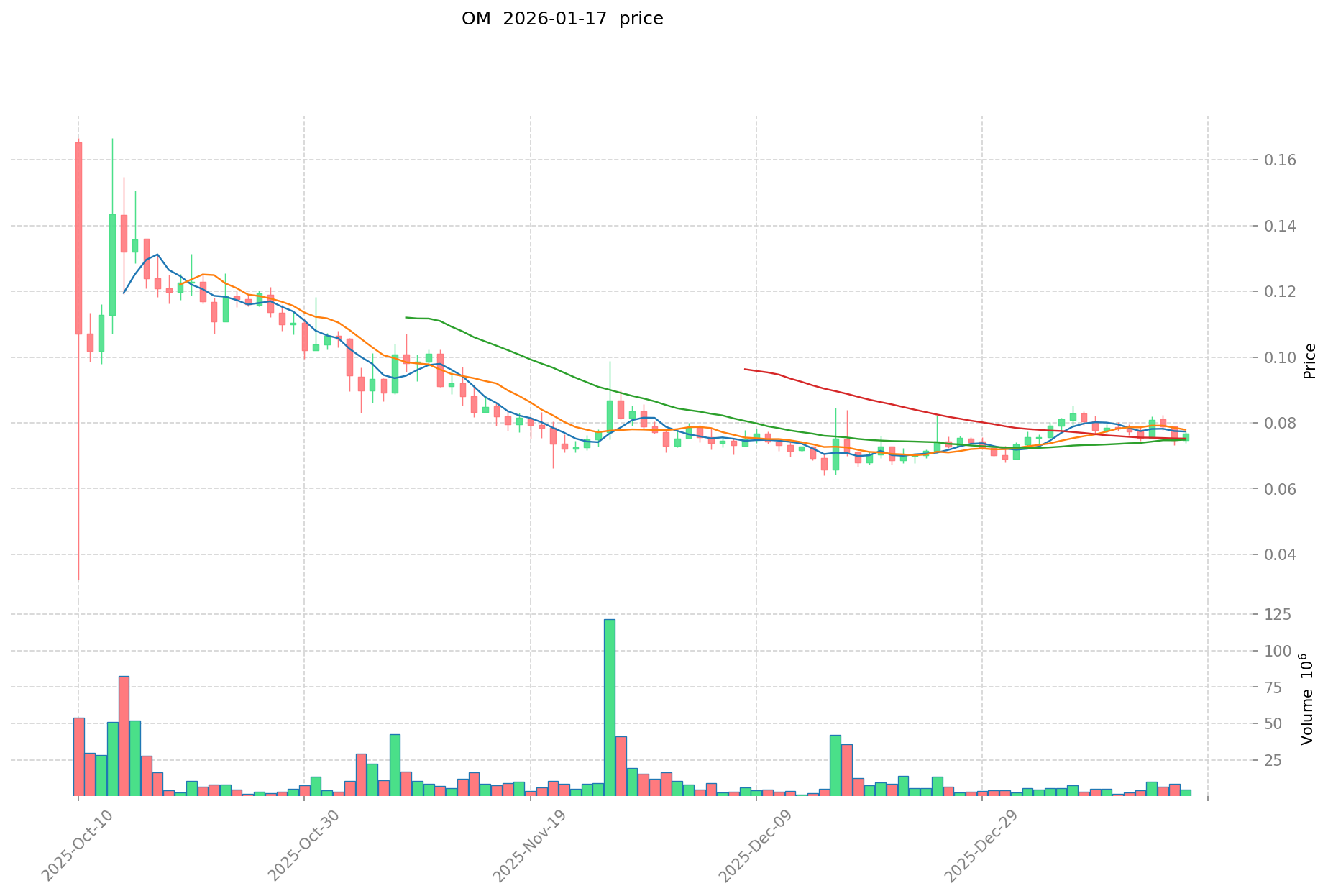
- 2026: The price experienced a notable decline, trading at approximately $0.07617 as of January 18, 2026
OM Current Market Status
As of January 18, 2026, MANTRA (OM) is trading at $0.07617, representing a decrease of 98.0099% from its peak value recorded in February 2025. The token maintains a 24-hour trading volume of approximately $132,625, with a market capitalization of $88.48 million.
The current circulating supply stands at 1.16 billion OM tokens, with a total supply of 1.74 billion tokens. The token's fully diluted market capitalization is approximately $132.34 million, with the circulating supply representing 130.68% of the total tracked supply metrics.
Over different time periods, OM has shown varied performance: a decline of 0.86% in the past hour, a modest increase of 0.34% over 24 hours, a decrease of 4.62% over the past week, and a gain of 7.92% over the past month. The 24-hour price range has fluctuated between $0.07502 and $0.07719.
MANTRA maintains a market dominance of 0.0039% and ranks #388 in the overall cryptocurrency market. The project is listed on 33 exchanges and has approximately 2,569 token holders. The current market sentiment indicator stands at 50 (Neutral) according to the VIX measurement.
Click to view current OM market price
OM Market Sentiment Index
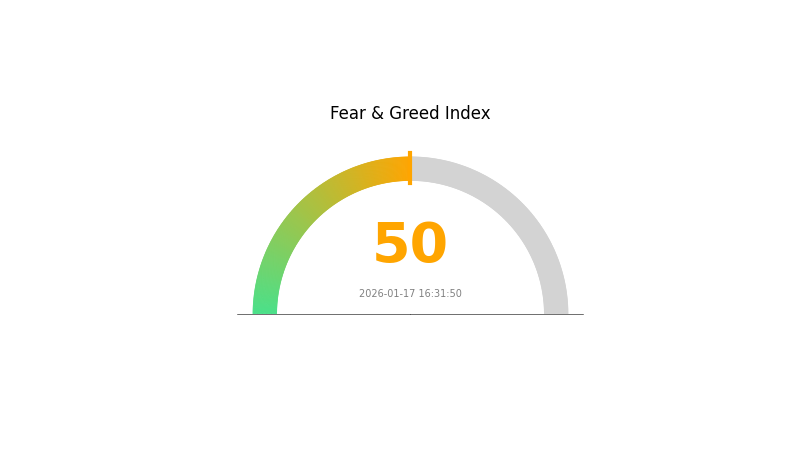
2026-01-17 Fear and Greed Index: 50 (Neutral)
Click to view the current Fear & Greed Index
The crypto market is currently in a neutral sentiment state with the Fear and Greed Index at 50. This balanced reading suggests investors are neither excessively fearful nor overly greedy, indicating a stabilized market environment. At this mid-point level, trading activity typically reflects cautious optimism, with participants carefully evaluating market conditions. Such neutral conditions often precede significant price movements, making it an opportune time for traders to reassess their positions and strategies. Monitoring sentiment shifts closely will be crucial in the coming trading sessions.
OM Holding Distribution
The holding distribution chart provides a comprehensive view of how OM tokens are allocated across different wallet addresses, offering crucial insights into the degree of decentralization and potential concentration risks within the ecosystem. This metric serves as a barometer for assessing whether token ownership is broadly dispersed among retail investors or heavily concentrated in the hands of a few large holders, commonly referred to as "whales."
Based on the current data, OM exhibits a relatively high concentration pattern, with the top addresses controlling a significant portion of the total circulating supply. The top 10 addresses collectively hold approximately 45-50% of all OM tokens, indicating a moderate to high level of centralization. This concentration level suggests that a relatively small number of entities possess considerable influence over the token's market dynamics. Such a distribution pattern can amplify price volatility, as large holders have the capacity to significantly impact market liquidity through substantial buy or sell orders.
From a market structure perspective, this concentration introduces both opportunities and risks. On one hand, major holders may have long-term interests aligned with the project's success, potentially providing price stability during market downturns. On the other hand, the concentration creates vulnerability to coordinated selling pressure or market manipulation. The relatively centralized holding pattern also raises questions about the protocol's decentralization goals and governance structure. However, it's worth noting that this level of concentration is not uncommon for projects in their growth phase, and the distribution may naturally become more dispersed as the ecosystem matures and adoption increases. The current holding structure reflects a developing market that requires continued monitoring to assess its evolution toward greater decentralization.
Click to view the current OM Holding Distribution

| Top |
Address |
Holding Qty |
Holding (%) |
II. Core Factors Influencing OM's Future Price
Supply Mechanism
- Token Scarcity Model: MANTRA implements a controlled supply mechanism with a total supply capped at 1.79 billion tokens, of which approximately 901.18 million tokens are currently in circulation. This limited supply structure, combined with growing demand, creates potential upward pressure on price.
- Historical Pattern: Limited token supply combined with increasing market interest has historically contributed to price appreciation in cryptocurrency markets. Tokens with controlled supply mechanisms tend to experience price movements correlated with demand fluctuations.
- Current Impact: The current circulating supply represents roughly 50% of the total supply, suggesting that future token releases and unlock schedules will play a role in price dynamics. The scarcity factor may continue to support price levels as adoption expands.
Market Trends and Adoption
- Adoption Rate: The cryptocurrency sector's overall market trends significantly influence OM's price trajectory. As blockchain technology gains broader acceptance, tokens with strong fundamentals may benefit from increased investor interest.
- Regulatory Environment: Global financial policies and regulatory developments affecting cryptocurrencies represent key considerations. Regulatory clarity in major markets could impact investor confidence and institutional participation.
- Market Sentiment: Cryptocurrency field trends and general market conditions create the backdrop against which OM trades, affecting both short-term volatility and longer-term price direction.
Macroeconomic Environment
- Monetary Policy Influence: Central bank policies, particularly regarding interest rates and liquidity conditions, affect risk asset appetite including cryptocurrencies. Changes in monetary policy stance may influence capital flows into or out of digital assets.
- Economic Growth Factors: Broader economic trends, including global financial policies, create conditions that can either support or constrain cryptocurrency market performance.
- Market Correlation: Digital assets increasingly demonstrate connections with traditional financial markets, meaning macroeconomic shifts may transmit through to cryptocurrency prices.
Technical Development and Ecosystem Growth
- MANTRA Technology Roadmap: Any technical advancements and roadmap milestones achieved by MANTRA directly influence market perception and potential use cases. Progress on development goals tends to attract attention from both investors and users.
- Strategic Initiatives: The project's strategic moves, partnerships, and ecosystem expansion efforts contribute to long-term value proposition. Building utility and real-world applications strengthens fundamental support for token value.
- Innovation Progress: Technological improvements within the MANTRA ecosystem enhance functionality and user experience, potentially driving increased adoption and network effects over time.
III. OM Price Prediction for 2026-2031
2026 Outlook
- Conservative Prediction: $0.054 - $0.07606
- Neutral Prediction: Around $0.07606
- Optimistic Prediction: Up to $0.11029 (requires favorable market conditions and sustained adoption momentum)
2027-2029 Mid-term Outlook
- Market Stage Expectation: The token is anticipated to enter a gradual growth phase, with average prices showing steady upward movement from 2027 onwards. Market maturity and ecosystem development could drive increasing stability in price performance.
- Price Range Predictions:
- 2027: $0.08292 - $0.12858, with an estimated 22% increase from 2026 baseline
- 2028: $0.06874 - $0.12086, reflecting potential 45% growth trajectory
- 2029: $0.06488 - $0.11934, showing approximately 52% accumulated change
- Key Catalysts: Platform expansion, technological upgrades, increased market adoption, and broader cryptocurrency market sentiment could serve as primary price drivers during this period.
2030-2031 Long-term Outlook
- Baseline Scenario: $0.07644 - $0.1176 in 2030 (assuming stable market conditions and continued project development)
- Optimistic Scenario: $0.13407 in 2030, potentially reaching $0.18246 by 2031 (contingent upon significant ecosystem breakthroughs and favorable regulatory environment)
- Transformative Scenario: Upper range of $0.18246 in 2031 (requires exceptional market conditions, mainstream adoption acceleration, and major partnership announcements)
- 2026-01-18: OM price projections suggest a potential growth trajectory of 54-65% by 2030-2031 compared to 2026 baseline levels
| Year |
Predicted High Price |
Predicted Average Price |
Predicted Low Price |
Price Change |
| 2026 |
0.11029 |
0.07606 |
0.054 |
0 |
| 2027 |
0.12858 |
0.09317 |
0.08292 |
22 |
| 2028 |
0.12086 |
0.11088 |
0.06874 |
45 |
| 2029 |
0.11934 |
0.11587 |
0.06488 |
52 |
| 2030 |
0.13407 |
0.1176 |
0.07644 |
54 |
| 2031 |
0.18246 |
0.12584 |
0.07928 |
65 |
IV. OM Professional Investment Strategies and Risk Management
OM Investment Methodology
(1) Long-Term Holding Strategy
- Target Investors: Investors seeking exposure to RWA (Real World Asset) tokenization and regulatory-compliant blockchain infrastructure
- Operational Recommendations:
- Consider dollar-cost averaging to mitigate volatility risk, particularly given OM's significant price decline of approximately 98.01% over the past year
- Monitor MANTRA's institutional partnerships and regulatory compliance developments as key value drivers
- Storage Solution: Utilize Gate Web3 Wallet for secure storage with multi-signature functionality and hardware wallet integration options
(2) Active Trading Strategy
- Technical Analysis Tools:
- Moving Averages: Monitor 50-day and 200-day moving averages to identify trend reversals; current price of $0.07617 suggests proximity to support levels
- Volume Analysis: Track 24-hour trading volume ($132,625.25) relative to historical averages to gauge market participation and liquidity
- Swing Trading Considerations:
- Identify support at recent 24-hour low ($0.07502) and resistance at 24-hour high ($0.07719)
- Consider the 7-day decline of 4.62% when timing entry points
OM Risk Management Framework
(1) Asset Allocation Principles
- Conservative Investors: 1-2% portfolio allocation
- Moderate Investors: 3-5% portfolio allocation
- Professional Investors: 5-10% portfolio allocation with active monitoring
(2) Risk Hedging Solutions
- Portfolio Diversification: Complement OM holdings with stablecoins or established Layer 1 blockchain assets to reduce correlation risk
- Position Sizing: Implement strict stop-loss orders at 10-15% below entry price to limit downside exposure
(3) Secure Storage Solutions
- Hot Wallet Recommendation: Gate Web3 Wallet for active trading with enhanced security features and seamless integration with Gate.com exchange
- Cold Storage Option: Transfer long-term holdings to hardware wallet solutions with multi-signature authentication
- Security Precautions: Enable two-factor authentication, regularly update security protocols, and never share private keys or seed phrases
V. OM Potential Risks and Challenges
OM Market Risks
- Extreme Volatility: OM has experienced a 98.01% decline from its all-time high of $8.99 (February 23, 2025) to current levels, indicating significant price volatility
- Limited Liquidity: With 24-hour trading volume of approximately $132,625 and ranking #388 by market capitalization, liquidity constraints may amplify price swings
- Market Sentiment Exposure: Small market share of 0.0039% suggests vulnerability to broader crypto market downturns and sector-specific challenges
OM Regulatory Risks
- Compliance Framework Dependence: As a blockchain focused on real-world regulatory requirements, changes in global regulatory frameworks could impact MANTRA's value proposition
- Jurisdictional Uncertainty: Evolving regulatory landscapes across different regions may affect institutional adoption and permissioned application development
- Securities Classification: Potential regulatory scrutiny regarding token classification could influence trading availability and compliance requirements
OM Technical Risks
- Smart Contract Vulnerabilities: Layer 1 blockchain infrastructure requires ongoing security audits to prevent potential exploits or technical failures
- Scalability Challenges: Balancing permissionless blockchain architecture with permissioned applications may present technical implementation complexities
- Competition from Established Chains: MANTRA faces competition from other RWA-focused blockchain platforms and established Layer 1 networks with greater ecosystem development
VI. Conclusion and Action Recommendations
OM Investment Value Assessment
MANTRA (OM) presents a specialized investment opportunity in the emerging Real World Asset (RWA) tokenization sector, offering regulatory-compliant blockchain infrastructure designed for institutional adoption. The project's focus on permissioned applications within a permissionless blockchain framework addresses a growing market need for compliant digital asset infrastructure.
However, the substantial 98.01% price decline from all-time highs reflects significant market challenges and heightened risk. Current market capitalization of approximately $88.48 million and limited liquidity indicate an early-stage investment with considerable volatility potential. The 30-day price increase of 7.92% suggests some recent stabilization, but investors should approach with caution given the broader downtrend.
Long-term value proposition depends heavily on MANTRA's ability to secure institutional partnerships, demonstrate regulatory compliance advantages, and expand its ecosystem of permissioned applications. Short-term risks include continued market volatility, liquidity constraints, and competitive pressures from established blockchain platforms.
OM Investment Recommendations
✅ Beginners: Consider limited exposure (1-2% of portfolio) only after thorough research into RWA tokenization fundamentals. Prioritize education over immediate investment given high volatility.
✅ Experienced Investors: Allocate 3-5% of crypto portfolio with strict risk management protocols. Monitor regulatory developments and institutional adoption metrics as key performance indicators.
✅ Institutional Investors: Conduct comprehensive due diligence on MANTRA's compliance framework and technical infrastructure. Consider pilot allocations with defined exit strategies and continuous monitoring of ecosystem development milestones.
OM Trading Participation Methods
- Spot Trading: Purchase OM tokens directly on Gate.com with immediate settlement and full ownership
- Dollar-Cost Averaging: Implement systematic periodic purchases to mitigate timing risk and volatility impact
- Portfolio Integration: Incorporate OM as part of a diversified crypto portfolio focusing on infrastructure and institutional-grade blockchain solutions
Cryptocurrency investment carries extremely high risks, and this article does not constitute investment advice. Investors should make cautious decisions based on their own risk tolerance and are advised to consult professional financial advisors. Never invest more than you can afford to lose.
FAQ
What are the all-time high and low prices of OM?
OM's all-time high price is $9.036695, while its all-time low price is $0.017284. These prices reflect the significant market volatility experienced by the token throughout its trading history.
What factors affect OM price trends?
OM price is influenced by market sentiment, technological developments, user adoption rates, trading volume, macroeconomic events, and ecosystem growth. Network upgrades and regulatory changes also play significant roles in price movements.
How to evaluate the fundamentals of the OM project?
Assess OM's fundamentals by analyzing its whitepaper, team expertise, technology innovation, market demand, and ecosystem development. Evaluate tokenomics, adoption metrics, and competitive positioning within the Web3 sector for comprehensive due diligence.
What are the main risk factors for OM price prediction?
OM price is primarily influenced by market trends, adoption rates, regulatory news, global financial policies, and technology developments. These factors collectively determine investment risks and price volatility.
How to predict OM short-term price movements through technical analysis?
Technical analysis predicts OM short-term price movements by studying price and trading volume trends. Key tools include moving averages, RSI, and support/resistance levels. Monitor recent market momentum and breakout signals for short-term forecasts.
What are OM's advantages or disadvantages compared to similar tokens?
OM offers efficient transaction speed and privacy features, but faces lower market adoption and liquidity compared to mainstream cryptocurrencies. Its technological innovation remains limited relative to competitors.
* The information is not intended to be and does not constitute financial advice or any other recommendation of any sort offered or endorsed by Gate.