This article provides a detailed analysis of Perpetual Protocol (PERP) price predictions from 2025 to 2030, considering historical data, market dynamics, and ecosystem developments. It addresses investment strategies, emphasizing long-term holding and active trading, while discussing market sentiment, token distribution, and risks. Targeted at investors and traders, it offers insights into future price trajectories, investment methods via Gate, and risk management. Key elements include PERP's market position, factors influencing its price, and professional recommendations for navigating its volatile market.
Introduction: Market Position and Investment Value of PERP
Perpetual Protocol (PERP) is a decentralized perpetual futures protocol that supports any asset through virtual automated market makers (vAMM). Since its launch in 2020, the protocol has established itself as a pioneering solution enabling traders to execute perpetual contracts without requiring counterparties. As of December 2025, PERP has achieved a market capitalization of approximately $13.65 million, with a circulating supply of around 72.61 million tokens, currently trading at $0.09097. This innovative protocol is revolutionizing the decentralized derivatives market by democratizing access to perpetual futures trading and enabling community governance through its native token.
This article will comprehensively analyze PERP's price trajectory from 2025 through 2030, integrating historical performance patterns, market supply and demand dynamics, ecosystem development, and macroeconomic factors to provide investors with professional price forecasts and actionable investment strategies.
I. PERP Price History Review and Current Market Status
PERP Historical Price Evolution
Perpetual Protocol (PERP) was launched on September 12, 2020, with an initial price of $1.2. The token experienced significant growth in its early stages, reaching an all-time high of $24.4 on August 30, 2021, during the peak of the decentralized finance (DeFi) market cycle. However, following this peak, PERP entered a prolonged downtrend, reflecting the broader crypto market corrections and evolving market dynamics in the derivatives trading sector.
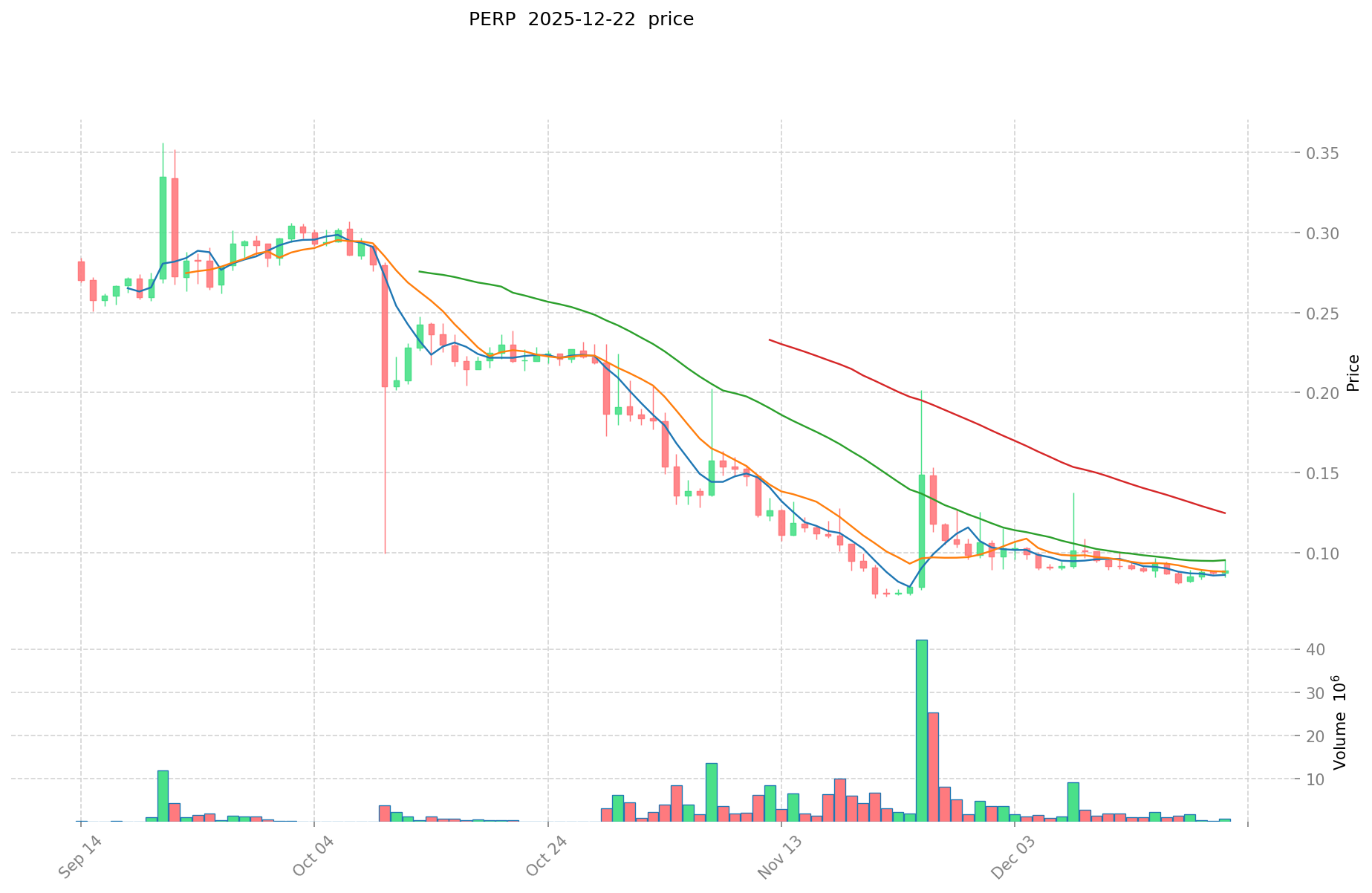
By November 22, 2025, PERP hit an all-time low of $0.072752, marking a significant decline of approximately 88.46% over the past year and representing a 99.70% decrease from its historical peak.
PERP Current Market Conditions
As of December 23, 2025, PERP is trading at $0.09097, with a 24-hour trading volume of $306,245.54. The token has demonstrated modest recovery momentum in the short term, gaining 1.89% over the past 24 hours and 0.22% in the last hour. However, over the 7-day period, PERP declined by 3.06%, indicating mixed price action. More positively, the 30-day performance shows a 23.16% increase, suggesting some recovery trend from recent lows.
The market capitalization of PERP stands at approximately $6.61 million, with a fully diluted valuation of $13.65 million. The circulating supply is 72,609,864 PERP out of a total maximum supply of 150,000,000 tokens, representing 48.41% circulation. Currently, PERP ranks 1,374 by market capitalization with a market dominance of 0.00042%.
The token is actively traded on Gate.com and has 13,196 holders. The 24-hour price range spans from $0.0888 to $0.10616.
Click to view current PERP market price
PERP Market Sentiment Index
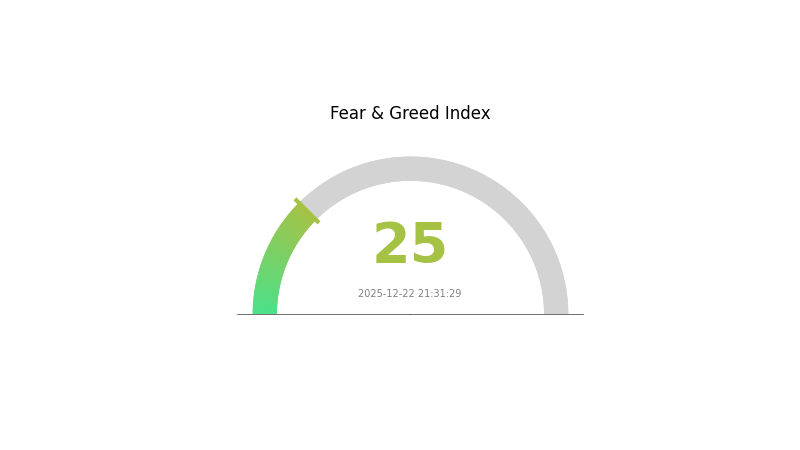
2025-12-22 Fear and Greed Index: 25 (Extreme Fear)
Click to view current Fear & Greed Index
The cryptocurrency market is currently experiencing extreme fear, with the Fear and Greed Index dropping to 25. This indicates widespread pessimism and risk aversion among traders. Market participants are highly cautious, with selling pressure dominating. Such extreme fear levels often present contrarian opportunities for long-term investors, as panic-driven sell-offs can create potential entry points. However, traders should remain vigilant regarding market volatility and manage risk carefully during this period of heightened uncertainty and negative sentiment.
PERP Holdings Distribution
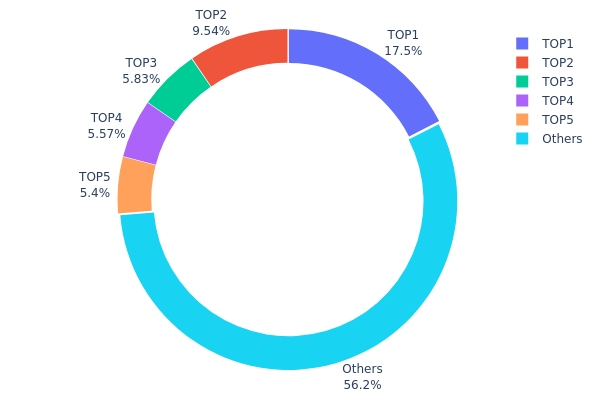
Address holdings distribution represents the concentration of token ownership across blockchain addresses, serving as a critical indicator of market structure decentralization and potential systemic risks. By analyzing the top holders and their proportional stakes, market participants can assess the degree of wealth concentration, liquidity depth, and vulnerability to large-scale sell-offs or coordinated market movements.
The current PERP distribution exhibits moderate concentration characteristics. The top five addresses collectively control approximately 43.77% of total holdings, with the largest holder commanding 17.46% of the circulating supply. This concentration level suggests a defined whale presence, though not at critical thresholds that would indicate severe centralization risks. The top two addresses account for 27.0% of holdings, indicating that significant market movements could potentially be influenced by coordinated actions from these key stakeholders. However, the substantial 56.23% allocation among "Others" demonstrates that a majority of PERP tokens remain distributed across numerous smaller holders, providing a counterbalance to concentrated ownership.
From a market structure perspective, this distribution pattern reflects a relatively healthy ecosystem with distributed participation. The presence of multiple large holders creates natural market depth and reduces single-point-of-failure risk, while the significant "Others" segment suggests robust grassroots adoption and community engagement. Nevertheless, the top-five concentration warrants continued monitoring, as potential liquidations or strategic repositioning by these major holders could introduce temporary price volatility. Overall, PERP's current address distribution indicates a market transitioning toward decentralization while maintaining sufficient institutional or early-stage investor participation to support liquidity and market stability.
Click to view current PERP Holdings Distribution
| Top |
Address |
Holding Qty |
Holding (%) |
| 1 |
0xc49f...f8033e |
26197.43K |
17.46% |
| 2 |
0x8098...bd6eec |
14308.75K |
9.53% |
| 3 |
0xf663...9ca383 |
8752.24K |
5.83% |
| 4 |
0x99c9...884be1 |
8348.64K |
5.56% |
| 5 |
0xf42a...36f173 |
8098.58K |
5.39% |
| - |
Others |
84294.37K |
56.23% |
II. Core Factors Influencing PERP's Future Price
Market Demand and Capital Flow Dynamics
-
Trading Volume and Platform Success: PERP's price trajectory is significantly influenced by trading volumes on perpetual DEX platforms and overall market demand for perpetual futures contracts. Platform growth metrics such as TVL (Total Value Locked) expansion and increased wallet activity directly correlate with token valuation.
-
Capital Rotation Among Competitors: Capital flows are increasingly rotating toward emerging perpetual platforms, with institutional and retail investors dynamically allocating funds across competing protocols. This rotation mechanism creates both upward and downward price pressure depending on relative platform performance and innovation cycles.
-
Short-term Profit-taking Patterns: Following significant price rallies, market participants tend to realize gains, creating periodic downward corrections that characterize PERP's volatility profile.
Structural Token Supply and Incentive Mechanisms
-
Token Distribution and Incentive Sales: Structural token issuance and platform incentive mechanisms continue to exert downward pressure on PERP pricing. These include ongoing token emissions designed to bootstrap liquidity and user participation in the perpetual trading ecosystem.
-
Historical Impact on Valuations: Past experiences with similar perpetual DEX protocols demonstrate that aggressive token incentivization strategies can create temporary trading volumes while simultaneously dampening long-term price appreciation.
Market Sentiment and Investor Confidence
-
Community Engagement Metrics: TVL growth, wallet activity acceleration, and Discord community engagement serve as leading indicators for market sentiment. These metrics are actively tracked by market participants and influence investment decisions.
-
Content and Narrative Influence: Marketing narratives promoted through social media platforms, YouTube content, and Twitter discussions significantly shape investor perception and participation levels in PERP-related activities.
III. 2025-2030 PERP Price Forecast
2025 Outlook
- Conservative Forecast: $0.05936 - $0.09132
- Base Case Forecast: $0.09132
- Optimistic Forecast: $0.12328 (requires sustained market recovery and positive regulatory developments)
2026-2028 Medium-term Outlook
- Market Stage Expectation: Gradual accumulation and recovery phase with progressive price appreciation driven by ecosystem expansion and adoption growth
- Price Range Forecast:
- 2026: $0.0558 - $0.13735
- 2027: $0.06605 - $0.15168
- 2028: $0.10275 - $0.18358
- Key Catalysts: Platform utility expansion, institutional adoption acceleration, derivative market maturation, and increased protocol integration across DeFi ecosystems
2029-2030 Long-term Outlook
- Base Case Scenario: $0.14426 - $0.20998 (assumes steady market growth and moderate macroeconomic headwinds)
- Optimistic Scenario: $0.16029 - $0.18514 (assumes accelerated mainstream adoption and supportive regulatory framework)
- Transformative Scenario: $0.19995 - $0.20998 (assumes breakthrough in perpetual futures market penetration and significant institutional capital inflows)
- 2030-12-23: PERP reaches $0.19995, representing 103% cumulative growth from 2025 baseline levels (represents maturation of perpetual derivatives market)
| 年份 |
预测最高价 |
预测平均价格 |
预测最低价 |
涨跌幅 |
| 2025 |
0.12328 |
0.09132 |
0.05936 |
0 |
| 2026 |
0.13735 |
0.1073 |
0.0558 |
17 |
| 2027 |
0.15168 |
0.12232 |
0.06605 |
34 |
| 2028 |
0.18358 |
0.137 |
0.10275 |
50 |
| 2029 |
0.20998 |
0.16029 |
0.14426 |
76 |
| 2030 |
0.19995 |
0.18514 |
0.16107 |
103 |
Perpetual Protocol (PERP) Investment Analysis Report
IV. PERP Professional Investment Strategy and Risk Management
PERP Investment Methodology
(1) Long-term Holding Strategy
-
Target Investors: Institutional investors, protocol believers, and long-term value investors who understand decentralized derivatives
-
Operational Recommendations:
- Dollar-cost averaging (DCA) approach: Accumulate PERP tokens gradually over months to reduce entry point risk, given the token's current trading price of $0.09097 representing an 88.46% decline over one year
- Participate in protocol governance: Actively engage in voting on new asset listings and protocol development decisions to maximize governance utility
- Stake accumulated PERP tokens to earn staking rewards and transaction fee sharing, creating passive income streams while supporting market protection
-
Storage Solution:
- Gate Web3 Wallet: Secure non-custodial storage with direct access to staking mechanisms and governance participation features on the Perpetual Protocol platform
- Self-custody best practices: Maintain private keys offline in a secure location for holdings exceeding $10,000 equivalent value
(2) Active Trading Strategy
-
Price Action Monitoring:
- 24-hour volatility analysis: Track the PERP token's recent 24-hour high of $0.10616 and low of $0.0888, with current trading activity at $306,245.53 in daily volume
- Monthly trend assessment: Leverage the positive 23.16% gain over the 30-day period as a reference point for market sentiment recovery
-
Wave Trading Key Points:
- Capitalize on recovery phases: Given the historically low price of $0.072752 (recorded November 22, 2025), position entries during price consolidation near support levels
- Monitor governance voting cycles: Participate in active trading around significant governance proposals that may drive protocol adoption and token utility
PERP Risk Management Framework
(1) Asset Allocation Principles
- Conservative Investors: 1-3% portfolio allocation - Focus on governance participation and small staking positions with minimal leverage exposure
- Active Investors: 3-8% portfolio allocation - Combine long-term holding with tactical trading positions, utilizing 50% for staking and 50% for active trading
- Professional Investors: 5-15% portfolio allocation - Multi-strategy approach including market-making positions, governance engagement, and derivative protocol experimentation
(2) Risk Hedging Solutions
- Volatility Hedging: Maintain a portion of PERP holdings in complementary decentralized finance protocols to diversify protocol risk exposure and reduce concentration risk
- Liquidation Risk Management: Implement position sizing rules that ensure trading collateral never exceeds 30% of total PERP holdings to prevent cascade liquidations during market downturns
(3) Secure Storage Solution
- Non-Custodial Wallet Recommendation: Gate Web3 Wallet provides secure token storage with integrated access to staking features, governance voting, and transaction approval controls
- Hardware Security Approach: For substantial positions exceeding $50,000 equivalent, utilize hardware security devices in conjunction with multi-signature authorization protocols
- Security Best Practices:
- Never share private keys or recovery phrases with third parties
- Verify smart contract addresses on official Perpetual Protocol channels (https://perp.com and https://app.perp.com) before interacting
- Enable transaction approval notifications and regular security audits
- Maintain separate wallets for active trading and long-term storage
V. PERP Potential Risks and Challenges
PERP Market Risk
- Extreme Price Volatility: The token has experienced an 88.46% decline over one year and currently trades 99.63% below its all-time high of $24.40 (set August 30, 2021), indicating substantial downside risk potential and historical losses for early investors
- Low Trading Liquidity: With 24-hour trading volume of only $306,245.53 and market capitalization of $13.65 million, PERP faces significant liquidity constraints that can result in large slippage during significant buy or sell orders
- Market Dominance Decline: The token represents only 0.00042% of total cryptocurrency market dominance, demonstrating limited market influence and institutional adoption compared to major crypto assets
PERP Regulatory Risk
- Derivatives Protocol Scrutiny: Decentralized derivatives and perpetual futures protocols face increasing regulatory examination in major jurisdictions, with potential restrictions on leverage and perpetual trading mechanisms
- Jurisdiction-Specific Limitations: Different countries implement varying restrictions on decentralized finance protocols, creating uncertainty for global protocol participants and potential service limitations by geography
- Compliance Uncertainty: Future regulatory frameworks may require protocol modifications or governance changes that could reduce trading functionality or investor access to the platform
PERP Technical Risk
- Smart Contract Vulnerability Exposure: As a decentralized protocol utilizing virtual automated market maker (vAMM) mechanisms, any undiscovered vulnerabilities could result in fund loss through flashloan attacks or exploit vectors
- Oracle Dependency: The protocol's reliance on price feeds from Chainlink, Uniswap, and other oracle sources creates risk exposure to oracle manipulation or failure, potentially triggering liquidations or pricing errors
- Protocol Upgrade Risk: Future protocol updates to support additional assets or modify vAMM mechanics could introduce new vulnerabilities or operational risks requiring community governance decision-making
VI. Conclusion and Action Recommendations
PERP Investment Value Assessment
Perpetual Protocol represents a niche but technically significant player in the decentralized derivatives ecosystem. The protocol's vAMM architecture enables permissionless perpetual contract creation for any chainlink-priced asset, addressing a critical gap in decentralized leveraged trading infrastructure. However, the token faces significant headwinds: an 88.46% annual decline, minimal market capitalization of $13.65 million, and extreme illiquidity create substantial risk factors. The current market environment suggests PERP remains in a recovery phase following the 2021-2025 bear market cycle, with long-term viability dependent on achieving mainstream adoption of decentralized derivatives trading and successful governance execution around new asset listings and protocol enhancements.
PERP Investment Recommendations
✅ Beginners: Start with micro-positions (0.5-1% portfolio allocation) through dollar-cost averaging on Gate.com, focusing on understanding governance participation before considering active trading or staking
✅ Experienced Investors: Deploy 3-8% allocations combining long-term staking positions for fee revenue participation with tactical trading around governance voting events and protocol announcements
✅ Institutional Investors: Establish 5-15% strategic positions focused on governance participation, protocol development engagement, and derivative market-making opportunities as the decentralized futures ecosystem matures
PERP Trading Participation Methods
- Direct Token Purchase: Access PERP trading on Gate.com through spot trading pairs, utilizing dollar-cost averaging strategies to reduce entry point volatility risk
- Governance Staking: Deposit PERP tokens on the Perpetual Protocol platform to earn staking rewards, transaction fee sharing, and market protection participation rights
- Protocol Integration: Participate as a liquidity provider or contract market creator on the Perpetual Protocol platform, earning protocol fees similar to Uniswap liquidity provider mechanisms
Disclaimer: Cryptocurrency and decentralized finance investments carry extreme risk, including potential total capital loss. This report does not constitute investment advice. Investors must conduct independent due diligence and consult qualified financial professionals before committing capital. Never invest more than you can afford to lose. Past performance does not guarantee future results.
FAQ
What is the prediction for the perp coin?
PERP is projected to average around $0.15 in 2025, with strong bullish momentum expected as the perpetual futures market expands. Long-term growth potential remains significant through 2030.
What is the all-time high for the PERP coin?
The all-time high for PERP coin is $24.40, which represents a significant peak in its trading history before recent market movements.
What factors influence PERP coin price movements?
PERP price movements are driven by funding rates, interest rates, market sentiment, and trading volume. Higher funding rates typically boost prices, while rising interest rates pressure them downward. Market demand and overall sentiment significantly impact price direction.
How does PERP compare to other perpetual protocol tokens?
PERP distinguishes itself through its innovative virtual AMM mechanism, setting it apart from competitors like dYdX and DerivaDEX. This unique architecture enhances liquidity efficiency and trading execution, positioning PERP as a leading perpetual protocol solution with superior design and functionality.
* The information is not intended to be and does not constitute financial advice or any other recommendation of any sort offered or endorsed by Gate.