This comprehensive analysis examines POL's price trajectory from 2026 to 2031, providing expert forecasts and actionable investment strategies for Polygon's native token. POL serves as the core asset of Polygon 2.0, integrating zero-knowledge technology to enable Ethereum scaling and Layer 2 solutions. The article analyzes historical price patterns, current market status at $0.16 USD with $1.69B market cap, and key influencing factors including supply mechanisms, institutional dynamics, macroeconomic conditions, and ecosystem development. Professional price forecasts range from $0.10686 to $0.22169 in 2026, with potential growth to $0.35139 by 2031 under optimistic scenarios. Investment strategies encompass dollar-cost averaging through Gate.com, technical analysis tools, and comprehensive risk management frameworks. The analysis identifies critical risks including high volatility, liquidity concerns, regulatory uncertainty, and competitive pressure from alternative Layer 2 solutions, while offering tailored
Introduction: POL's Market Position and Investment Value
Polygon Ecosystem Token (POL) serves as the core asset of the Polygon 2.0 protocol ecosystem, which integrates zero-knowledge (ZK) technology to create a value layer that enables seamless network usage and scales Ethereum to internet-level capacity. Since its initial launch in 2021, the project has evolved significantly with the introduction of Polygon 2.0's enhanced governance mechanisms, multi-layered network architecture, and ZK ecosystem. As of 2026, POL maintains a market capitalization of approximately 1.69 billion USD, with a circulating supply of around 10.57 billion tokens, and its price hovers near 0.16 USD. This asset, recognized for its role in Layer 2 scaling solutions, is playing an increasingly vital role in the blockchain infrastructure and decentralized application development sectors.
This article will comprehensively analyze POL's price trends from 2026 to 2031, combining historical patterns, market supply and demand dynamics, ecosystem development trajectories, and macroeconomic conditions to provide investors with professional price forecasts and practical investment strategies.
I. POL Price History Review and Market Status
POL Historical Price Evolution Trajectory
- 2021: Token launched in June with an initial price of $0.31, entering the market during the cryptocurrency bull cycle
- 2023: Market experienced significant volatility, with price reaching its historical low of $0.0921 in November, reflecting broader market corrections
- 2024: Price recovered notably, achieving a peak of $1.5711 in April, demonstrating renewed market interest in the Polygon ecosystem
POL Current Market Situation
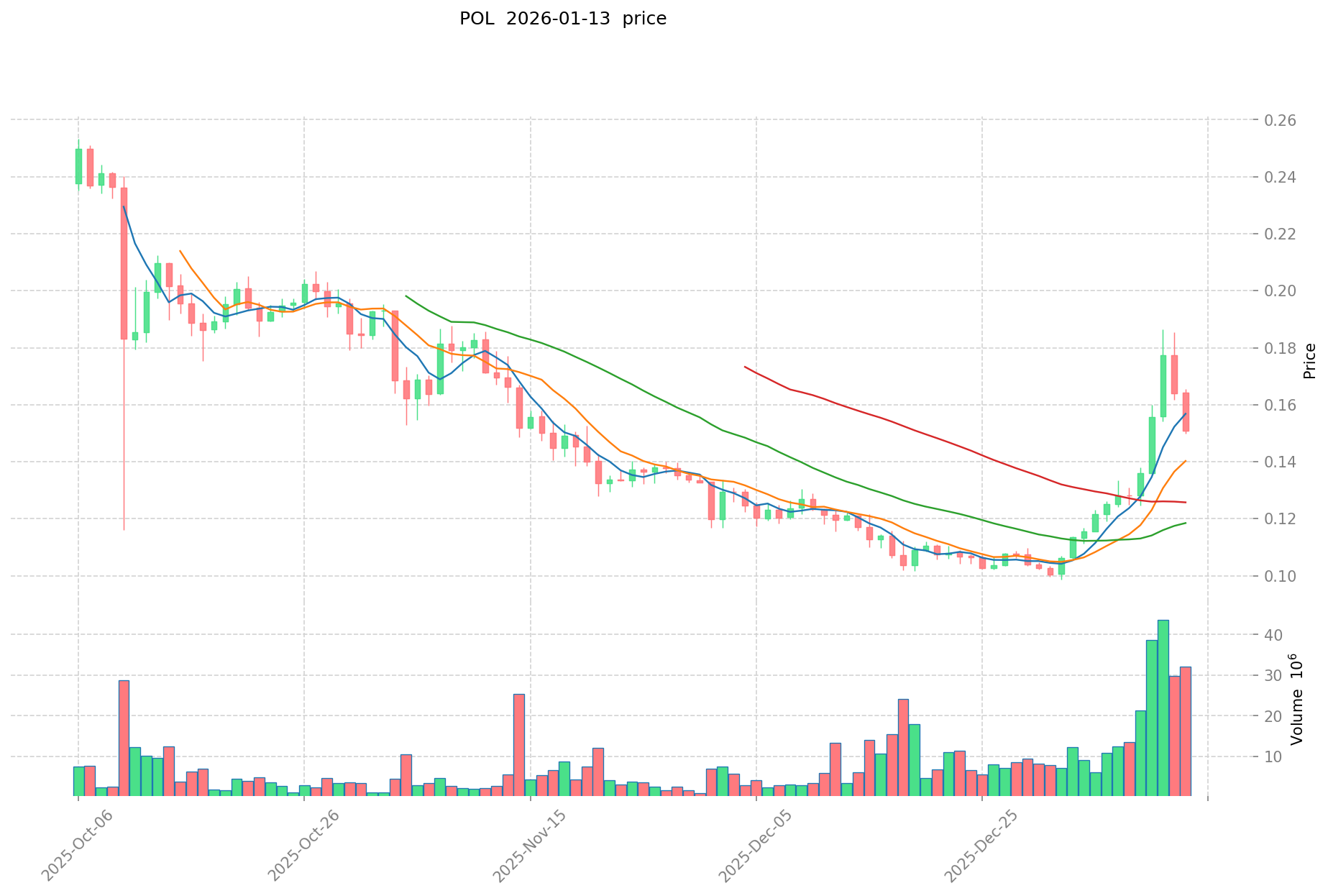
As of January 14, 2026, POL is trading at $0.15992, showing a 5.01% increase over the past 24 hours. The token has demonstrated positive momentum across multiple timeframes, with a 1.78% gain in the last hour and a notable 23.36% increase over the past week. The 30-day performance shows a 36.04% appreciation, indicating growing market confidence.
The 24-hour trading range has fluctuated between $0.1484 and $0.16221, with a trading volume of $4,468,084.39. POL currently holds the 58th position by market capitalization, which stands at approximately $1.69 billion. The circulating supply is 10.57 billion tokens, with a market cap to fully diluted valuation ratio of 100%.
The token's market dominance is 0.049%, and it is listed on 68 exchanges. The current price represents a decline of approximately 89.8% from its all-time high of $1.5711 recorded in April 2024, while remaining significantly above its historical low. The market sentiment index indicates a fear level of 26, suggesting cautious investor behavior in the broader cryptocurrency market.
POL serves as the ecosystem token for Polygon 2.0, which integrates zero-knowledge technology to create a value layer for scaling Ethereum. The token has approximately 85,724 holders, and its primary contract is deployed on the Ethereum network at address 0x455e53cbb86018ac2b8092fdcd39d8444affc3f6.
Click to view current POL market price
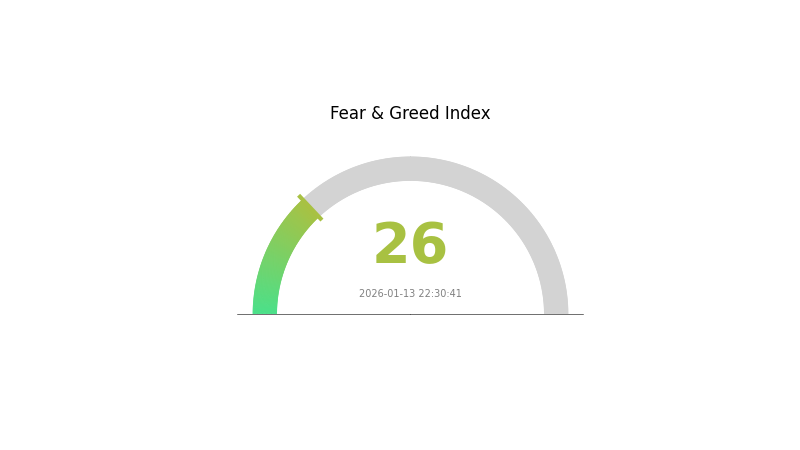
POL Market Sentiment Index
2026-01-13 Fear and Greed Index: 26 (Fear)
Click to view the current Fear & Greed Index
Market Analysis:
The Fear and Greed Index stands at 26, indicating a "Fear" sentiment in the cryptocurrency market. This low reading reflects heightened market anxiety and pessimism among investors. During periods of fear, prices tend to be suppressed as participants reduce their exposure to risk assets. This environment can create potential buying opportunities for long-term investors who maintain conviction in the fundamentals, while short-term traders may adopt more cautious strategies. Monitor key support levels and market catalysts that could shift sentiment in coming sessions.
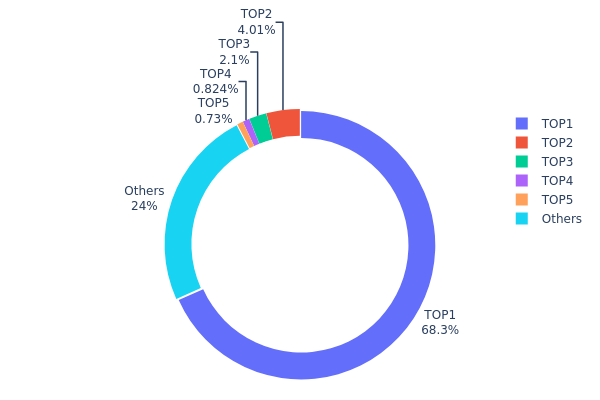
POL Holding Distribution
The holding distribution chart illustrates the concentration of POL tokens across different wallet addresses, providing insights into the decentralization level and potential market risks associated with the asset's ownership structure.
Based on the current data, POL exhibits a significantly concentrated holding pattern. The top address controls approximately 68.29% of the total supply with 7.21 billion tokens, representing an extraordinarily high concentration level. The second and third largest holders possess 4.01% and 2.10% respectively, while the remaining addresses outside the top five collectively hold 24.05% of the supply. This distribution pattern reveals a substantial degree of centralization, with the dominant address holding more than two-thirds of all circulating tokens.
Such pronounced concentration poses considerable implications for market dynamics. The overwhelming control by a single address creates significant price vulnerability, as large-scale movements by this holder could trigger substantial market volatility. This structure also raises concerns about potential market manipulation risks and reduces the token's resilience against concentrated selling pressure. Furthermore, this centralization pattern contradicts the fundamental principles of decentralized finance, potentially affecting investor confidence and the token's long-term stability. The limited distribution among multiple holders suggests that POL's current on-chain structure reflects a highly centralized ecosystem, which may require careful monitoring by market participants when evaluating investment decisions.
Click to view the current POL Holding Distribution
| Top |
Address |
Holding Qty |
Holding (%) |
| 1 |
0x0000...001010 |
7214696.09K |
68.29% |
| 2 |
0x4c56...989ff4 |
423683.56K |
4.01% |
| 3 |
0x0d50...df1270 |
221858.88K |
2.10% |
| 4 |
0x0182...099ee8 |
86999.27K |
0.82% |
| 5 |
0x7d34...c4777e |
77152.77K |
0.73% |
| - |
Others |
2539818.77K |
24.05% |
II. Core Factors Influencing POL's Future Price
Supply Mechanism
- Annual Inflation Rate: POL currently operates with a 2% annual inflation rate. Community proposals are being discussed to potentially reduce or eliminate this inflation through mechanisms such as token burns and buyback programs using treasury funds.
- Historical Pattern: The continuous inflationary pressure has historically created persistent selling pressure in the market, contributing to price suppression even when fundamental improvements occur.
- Current Impact: If the proposed tokenomics upgrades for 2025-2026 are implemented—including the removal of the 2% annual inflation and introduction of burn and buyback mechanisms—supply could tighten significantly, potentially providing upward price support.
Institutional and Major Holder Dynamics
- Institutional Holdings: Current data shows major institutional holdings remain relatively stable, with approximately 21.86% allocated to the Polygon Foundation according to historical distribution records.
- Enterprise Adoption: Polygon has secured partnerships with various Web3 projects, with zkEVM adoption rates steadily increasing. Polygon Labs recently launched the Open Money Stack, a modular framework designed to enhance stablecoin payments and cross-border transfers, targeting financial institutions and fintech companies.
- Policy Landscape: While no specific national-level policies directly targeting POL were mentioned in available materials, the broader regulatory environment for Layer 2 solutions continues to evolve, with increasing focus on compliance frameworks for blockchain payment infrastructure.
Macroeconomic Environment
- Monetary Policy Impact: Materials reference expectations of potential interest rate cuts by major central banks (Federal Reserve, European Central Bank, and Bank of England) beginning mid-year, with cumulative cuts potentially reaching 100-125 basis points. Such monetary easing could improve conditions for risk assets including cryptocurrencies.
- Inflation Hedge Characteristics: Available materials do not provide specific evidence of POL's performance as an inflation hedge. The broader crypto market has shown mixed correlations with traditional inflation hedges.
- Geopolitical Factors: Materials note geopolitical pressures and short-term supply tensions could affect overall market sentiment, though specific impacts on POL were not detailed.
Technology Development and Ecosystem Building
- Polygon 2.0 Upgrade: The MATIC to POL migration completed in September 2024 represents a fundamental transformation. POL is designed as a "hyperproductive token," enabling holders to perform multiple roles across different Polygon chains (including PoS, zkEVM, and other networks) while earning diversified rewards.
- Open Money Stack Launch: Polygon Labs introduced this modular framework to streamline stablecoin payments and cross-border transfers. The system integrates on-chain settlement, fiat on-ramps, identity verification, and compliance tools into a single architecture, reducing enterprise operational complexity while maintaining full interoperability across networks.
- Ecosystem Applications: The Polygon ecosystem continues to expand with increasing zkEVM adoption and partnerships across the Web3 landscape. However, the Layer 2 competition has intensified, with projects like Arbitrum and Optimism presenting strong alternatives in the scaling solution space.
III. 2026-2031 POL Price Forecast
2026 Outlook
- Conservative estimate: $0.10686 - $0.15949
- Neutral estimate: Around $0.15949
- Optimistic estimate: Up to $0.22169 (requiring favorable market conditions and increased adoption)
2027-2029 Mid-term Outlook
- Market stage expectation: POL is anticipated to experience gradual growth as the Polygon ecosystem continues to mature and expand its user base
- Price range predictions:
- 2027: $0.18487 - $0.23633 (projected increase of approximately 19%)
- 2028: $0.17077 - $0.24121 (projected increase of approximately 33%)
- 2029: $0.20915 - $0.29099 (projected increase of approximately 42%)
- Key catalysts: Network upgrades, growing DeFi and NFT adoption, institutional partnerships, and broader Layer 2 scaling solutions implementation
2030-2031 Long-term Outlook
- Baseline scenario: $0.16068 - $0.27730 (assuming steady ecosystem development and sustained market interest)
- Optimistic scenario: $0.25916 - $0.35139 (with accelerated adoption and favorable regulatory environment)
- Transformative scenario: Potential to exceed $0.35139 (contingent on breakthrough technological advancements and mass adoption of Polygon's infrastructure)
- 2026-01-14: POL currently trading within expected range as market participants evaluate the token's utility and ecosystem growth potential
| Year |
Predicted High Price |
Predicted Average Price |
Predicted Low Price |
Price Change |
| 2026 |
0.22169 |
0.15949 |
0.10686 |
0 |
| 2027 |
0.23633 |
0.19059 |
0.18487 |
19 |
| 2028 |
0.24121 |
0.21346 |
0.17077 |
33 |
| 2029 |
0.29099 |
0.22734 |
0.20915 |
42 |
| 2030 |
0.2773 |
0.25916 |
0.16068 |
62 |
| 2031 |
0.35139 |
0.26823 |
0.13948 |
68 |
IV. POL Professional Investment Strategy and Risk Management
POL Investment Methodology
(1) Long-term Holding Strategy
- Suitable for: Investors who believe in Ethereum scaling solutions and the future of Layer 2 ecosystems
- Operational Recommendations:
- Consider dollar-cost averaging (DCA) to build positions gradually, mitigating timing risk in volatile markets
- Monitor Polygon's ecosystem development, including adoption of ZK technology and expansion of network participants
- Store POL in secure wallets like Gate Web3 Wallet for enhanced security and easy access to staking opportunities
(2) Active Trading Strategy
- Technical Analysis Tools:
- Moving Averages: Use 50-day and 200-day moving averages to identify trend direction and potential reversal points
- Relative Strength Index (RSI): Monitor overbought (>70) and oversold (<30) conditions to time entries and exits
- Swing Trading Key Points:
- POL has shown significant volatility with 24H range between $0.1484 and $0.16221, presenting short-term trading opportunities
- Set stop-loss orders at key support levels to manage downside risk in rapid price movements
POL Risk Management Framework
(1) Asset Allocation Principles
- Conservative Investors: 1-3% of cryptocurrency portfolio
- Aggressive Investors: 5-10% of cryptocurrency portfolio
- Professional Investors: Up to 15% of cryptocurrency portfolio with active hedging strategies
(2) Risk Hedging Solutions
- Portfolio Diversification: Combine POL with other Layer 2 tokens and established cryptocurrencies to reduce concentration risk
- Position Sizing: Never allocate more than a predetermined percentage to any single asset, regardless of conviction level
(3) Secure Storage Solutions
- Hot Wallet Option: Gate Web3 Wallet for convenient trading and staking access with reasonable security
- Cold Storage Solution: Hardware wallets for long-term holdings exceeding your active trading allocation
- Security Precautions: Enable two-factor authentication, never share private keys, and verify all contract addresses before transactions
V. POL Potential Risks and Challenges
POL Market Risks
- High Volatility: POL has declined 64.38% over the past year, demonstrating significant price volatility that may result in substantial losses
- Liquidity Concerns: With 24-hour trading volume of approximately $4.47 million, liquidity may be insufficient during extreme market conditions
- Competitive Pressure: Intense competition from other Layer 2 solutions may impact POL's market share and long-term value proposition
POL Regulatory Risks
- Cryptocurrency Regulation Evolution: Changes in global cryptocurrency regulations could affect POL's accessibility and trading on certain platforms
- Securities Classification Uncertainty: Regulatory bodies may classify certain tokens differently across jurisdictions, impacting compliance requirements
- Cross-border Transaction Restrictions: Increasing scrutiny of cryptocurrency transactions may limit POL's utility in certain regions
POL Technical Risks
- Smart Contract Vulnerabilities: Despite audits, smart contract bugs could potentially expose users to security risks or fund losses
- Network Upgrade Risks: The transition to Polygon 2.0 and integration of ZK technology involves technical complexity that may encounter unexpected challenges
- Ethereum Dependency: As an Ethereum scaling solution, POL's performance remains tied to Ethereum's network health and development roadmap
VI. Conclusion and Action Recommendations
POL Investment Value Assessment
POL presents a compelling long-term value proposition as part of Polygon's evolution toward a unified Layer 2 ecosystem powered by zero-knowledge technology. The protocol's focus on scalability, interoperability, and community governance aligns with growing demand for efficient blockchain infrastructure. However, the token faces near-term challenges including significant price decline over the past year (-64.38%), competitive pressure from alternative Layer 2 solutions, and ongoing technical implementation risks associated with the Polygon 2.0 upgrade. The current market capitalization of approximately $1.69 billion and ranking of 58 suggest moderate market recognition, though investors should carefully weigh the protocol's technical ambitions against execution risks and market volatility.
POL Investment Recommendations
✅ Beginners: Start with small allocations (1-2% of cryptocurrency portfolio) through dollar-cost averaging on established platforms like Gate.com, and prioritize learning about Layer 2 technology before increasing exposure
✅ Experienced Investors: Consider moderate allocations (3-7% of cryptocurrency portfolio) while monitoring Polygon's ecosystem development, ZK rollup implementation progress, and competitive positioning against other scaling solutions
✅ Institutional Investors: Conduct thorough due diligence on Polygon's technology roadmap, evaluate correlation with broader cryptocurrency markets, and implement sophisticated hedging strategies if pursuing larger allocations
POL Trading Participation Methods
- Spot Trading: Purchase POL directly through Gate.com with support for multiple trading pairs and competitive liquidity
- Strategic Accumulation: Utilize limit orders at key support levels to build positions gradually during market corrections
- Portfolio Integration: Include POL as part of a diversified Layer 2 and Ethereum ecosystem allocation strategy
Cryptocurrency investment carries extremely high risk, and this article does not constitute investment advice. Investors should make prudent decisions based on their own risk tolerance and are advised to consult professional financial advisors. Never invest more than you can afford to lose.
FAQ
What is POL token? What are its uses and value?
POL is Polygon 2.0's core governance token, replacing MATIC. It powers the multi-chain ecosystem through staking rewards, transaction fees, re-staking mechanisms across AggLayer chains, and community governance voting rights for holders.
What is the current POL price? How has the historical price trend been?
POL is currently trading at 0.1479 USD, up 2.43% in the last 24 hours. You can view detailed historical price charts and trends on TradingView for comprehensive analysis of POL's price movement over time.
What price predictions do experts have for POL in the future? What are the expected prices for 2024 and 2025?
Experts predict POL prices ranging from $0.41 to $1.10 by end of 2024, with most predictions around $1.10. For 2025, analysts expect further upward momentum as network adoption and ecosystem development continue to drive value.
What are the main factors affecting POL price?
POL price is primarily influenced by Ethereum Layer 2 adoption rates, institutional partnerships, developer activity, regulatory policies, and macroeconomic conditions. Ecosystem growth and network utility also play key roles.
What is the relationship between POL and MATIC? Why upgrade to POL?
POL is the upgraded token replacing MATIC on the Polygon network. The upgrade enhances network security, liquidity, and efficiency while improving transaction speed and reducing fees. This transition strengthens Polygon's overall performance and ecosystem development.
What are the risks of investing in POL? What should I pay attention to?
POL carries experimental status with high volatility. Monitor market sentiment closely, understand tokenomics changes from MATIC migration, and only invest capital you can afford to lose given its nascent stage.
What is the role of POL in the Polygon ecosystem?
POL is the core token of Polygon 2.0, serving as the native gas token for network transactions. It enables staking for network security, supports governance participation, and powers the multi-chain AggLayer ecosystem through restaking mechanisms.
How to buy and store POL tokens?
Purchase POL tokens through major cryptocurrency platforms using USDT or other trading pairs. For storage, use secure wallets such as hardware wallets or reputable custodial solutions to protect your assets.
How reliable are POL price predictions? How should one invest rationally?
POL price predictions have moderate reliability based on technical and fundamental analysis. Rational investment requires diversification, understanding market dynamics, monitoring trading volume trends, and investing only what you can afford to lose while maintaining long-term perspective.
How is POL's competitiveness compared to other Layer 2 tokens?
POL strengthens Polygon's scalability with zkEVM technology, enabling faster transactions while maintaining Ethereum compatibility. Its vision for interoperability and Polygon 2.0 positions it competitively against Arbitrum and Optimism in the Layer 2 ecosystem.
* The information is not intended to be and does not constitute financial advice or any other recommendation of any sort offered or endorsed by Gate.