The article provides an in-depth analysis of the Ready to Fight (RTF) platform, focusing on its investment potential and price forecast for 2025. RTF transforms the professional fighting industry by integrating blockchain and SocialFi principles, offering decentralized solutions. It includes a thorough review of RTF's historical price evolution, current market status, and sentiment indicators. The article presents future price predictions from 2025 to 2030, outlines investment strategies, and discusses potential risks and challenges. Suitable for both novice and seasoned investors, it offers actionable insights for navigating the RTF investment landscape.
Introduction: RTF's Market Position and Investment Value
Ready to Fight (RTF) is a revolutionary blockchain-based platform that transforms the professional fighting industry by integrating SocialFi principles and Web3 technology. Since its launch in April 2024, RTF has established itself as a unique ecosystem connecting fighters, coaches, fans, promoters, and other stakeholders in the combat sports space. As of December 2025, RTF's market capitalization stands at approximately $1.34 million with a circulating supply of 80 million tokens, currently trading around $0.01679 per token. This innovative platform, recognized for its pioneering approach to decentralizing professional fighting through blockchain automation and community engagement, is playing an increasingly significant role in reshaping how the fighting industry operates.
This article provides a comprehensive analysis of RTF's price trends and market dynamics, examining historical performance patterns, supply-demand mechanics, ecosystem development, and broader market conditions. By synthesizing these factors, we deliver professional price forecasts and actionable investment guidance for 2025 and beyond, helping investors make informed decisions in this emerging sector.
I. RTF Price History Review and Market Status
RTF Historical Price Evolution
RTF was launched on April 24, 2024, at an initial price of $0.10. The token experienced significant appreciation in its early trading period, reaching its all-time high (ATH) of $0.356 on April 24, 2024, representing a 256% gain from the launch price. However, the token subsequently entered a prolonged correction phase throughout 2024 and into 2025. RTF reached its all-time low (ATL) of $0.00861 on November 22, 2025, marking an 97.6% decline from its peak value.
RTF Current Market Situation
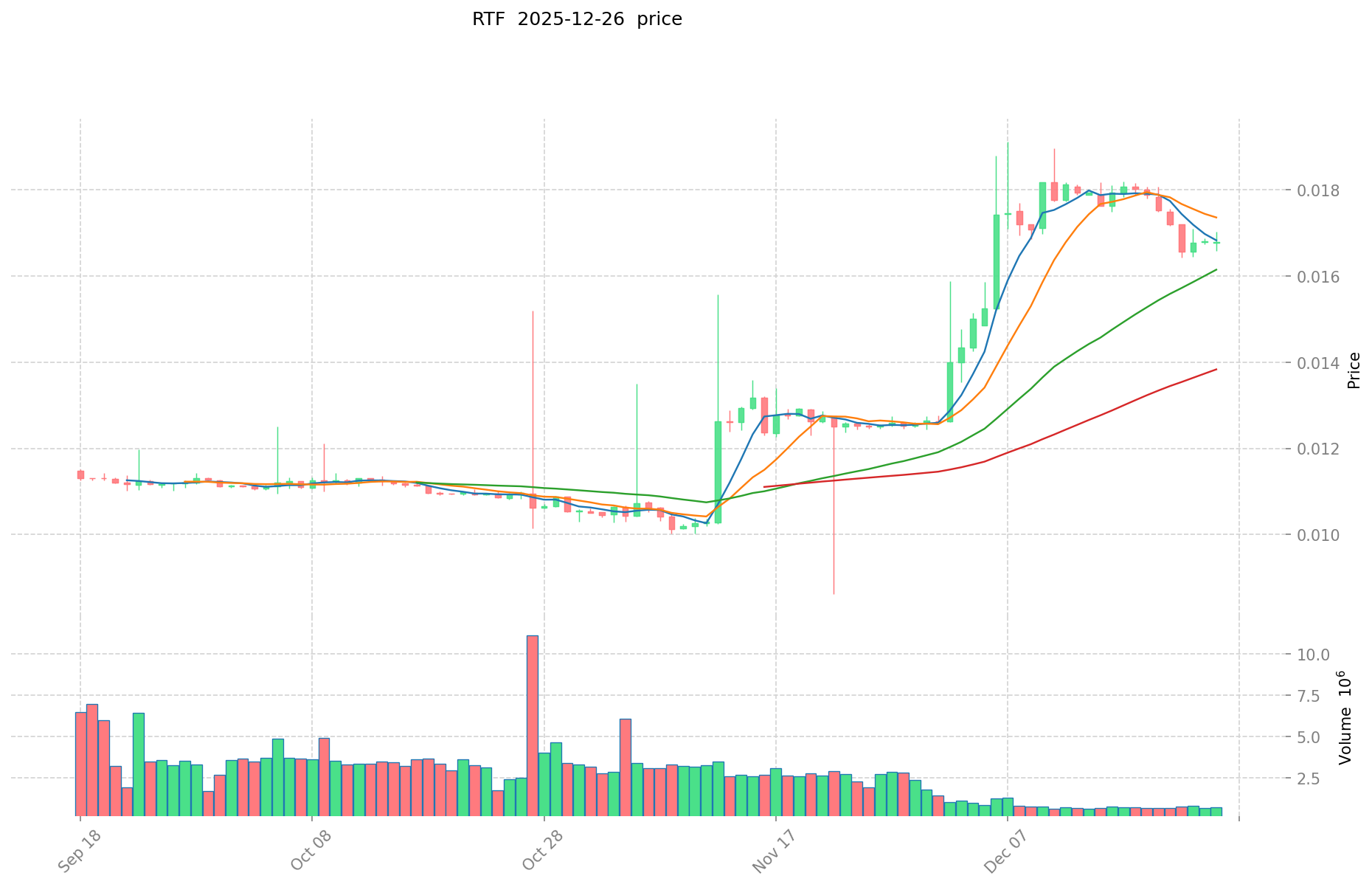
As of December 26, 2025, RTF is trading at $0.01679, reflecting a market capitalization of $1,343,200 and a fully diluted valuation of $6,716,000. The token demonstrates a 20% circulating supply ratio, with 80,000,000 tokens circulating out of a total supply of 400,000,000 tokens. The maximum supply remains unlimited.
Over the trailing twelve-month period, RTF has declined 44.37% from its prior year level. In the short-term perspective, the token has recovered 34.54% over the past 30 days, though it remains down 6.93% over the past seven days. Daily volatility shows minimal movement, with the token declining 0.05% over the last 24 hours and falling 0.18% over the past hour. The 24-hour trading volume stands at $11,924.63, indicating relatively modest liquidity.
RTF maintains a market dominance of 0.00020% within the broader cryptocurrency ecosystem and is ranked 2,412 by market capitalization. The token holds 4,478 token holders and trades on 3 exchanges. Current market sentiment indicates "Extreme Fear" conditions with a VIX reading of 20.
Click to view the current RTF market price
RTF Market Sentiment Indicator
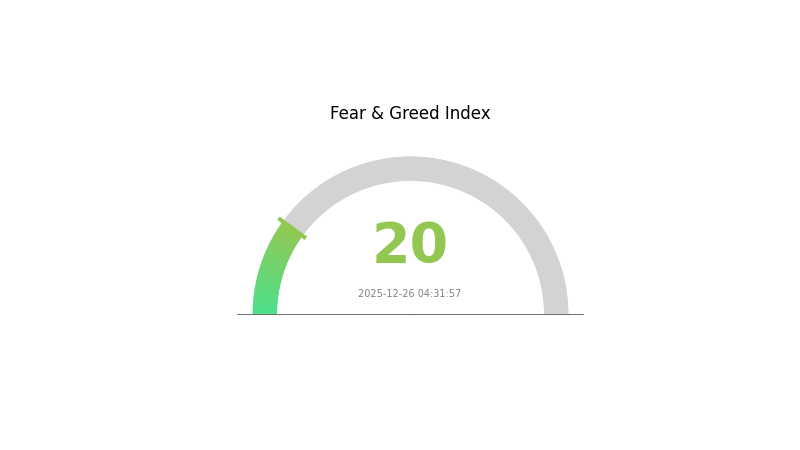
2025-12-26 Fear and Greed Index: 20 (Extreme Fear)
Click to view the current Fear & Greed Index
The cryptocurrency market is experiencing extreme fear as the Fear and Greed Index plummets to 20. This reading signals significant market pessimism and panic selling among investors. When the index reaches such extreme lows, it often presents contrarian opportunities for long-term investors. Extreme fear typically indicates oversold conditions where assets may be trading below their intrinsic value. However, caution is warranted as market volatility may persist. Monitor key support levels and consider dollar-cost averaging strategies. Track market developments closely on Gate.com for real-time insights and trading opportunities during this fearful market phase.
RTF Holding Distribution
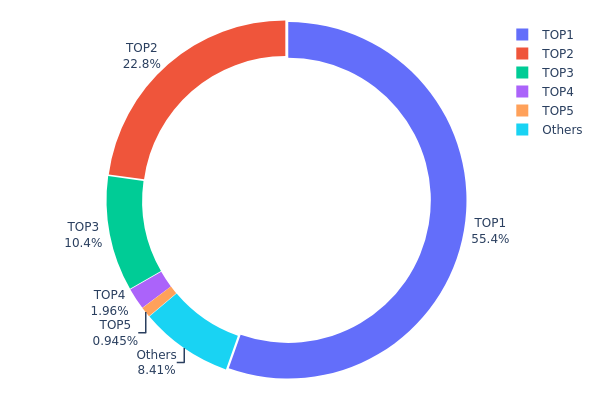
The address holding distribution map illustrates the concentration pattern of RTF tokens across blockchain addresses, providing critical insights into the asset's decentralization level and market structure. By tracking the top holders and their respective ownership percentages, this metric reveals potential concentration risks, governance dynamics, and the likelihood of coordinated market movements that could impact price stability and market integrity.
The current holding distribution of RTF demonstrates significant concentration among a limited number of addresses. The top address commands 55.42% of total holdings, while the second-largest holder controls 22.82%, collectively representing over 78% of all circulating tokens. This degree of concentration is further compounded by the third-largest address holding 10.43%, bringing the cumulative stake of the top three addresses to approximately 88.25%. The remaining addresses, including the fourth and fifth-largest holders, collectively account for less than 3% of token supply, with other addresses representing only 8.43%. Such distribution patterns indicate pronounced centralization, where decision-making power and market influence are concentrated in the hands of relatively few stakeholders.
This structural imbalance raises material concerns regarding market dynamics and stability. The high concentration among top holders creates potential vulnerabilities to sudden liquidation events, coordinated selling pressure, or strategic accumulation that could trigger substantial price volatility. The concentration level suggests limited decentralization, potentially constraining the asset's resilience and exposing it to execution risk by dominant stakeholders. For market participants and investors, this holding distribution underscores the importance of monitoring large holder activities closely, as their actions could disproportionately influence token price movements and market sentiment.
For current token holding data, visit RTF Holding Distribution
| Top |
Address |
Holding Qty |
Holding (%) |
| 1 |
0x9820...679734 |
221684.52K |
55.42% |
| 2 |
0x33ea...5d21fe |
91306.54K |
22.82% |
| 3 |
0xedd2...f43d05 |
41758.05K |
10.43% |
| 4 |
0x2e8f...725e64 |
7846.68K |
1.96% |
| 5 |
0xd971...3b670d |
3778.25K |
0.94% |
| - |
Others |
33625.96K |
8.43% |
II. Core Factors Affecting RTF's Future Price
Supply Mechanism
-
Industry Capacity Expansion and Competition: The copper foil industry has experienced rapid capacity expansion in recent years, leading to severe overcapacity, oversupply, and intense price competition. Processing fees for copper foil have declined significantly as a result.
-
Current Market Status: Processing fees for copper foil have reached bottom levels, with some products showing marginal price increases. The market is currently experiencing relative price stability. Industry consolidation is expected, with market share concentrating toward leading enterprises as capacity is cleared.
-
Raw Material Supply: Major manufacturers are securing long-term supply contracts for electrolytic copper materials. For example, leading producers have signed long-term purchase agreements with combined purchase volumes of 70,000 tons at an estimated total value of approximately 5.066 billion USD (including taxes).
Macro-Economic Environment
-
Monetary Policy Impact: U.S. interest rate policies and their uncertainty create fluctuations in Asia-Pacific economic conditions, affecting downstream demand for RTF products across various industries.
-
Raw Material Price Volatility: Original material price fluctuations, including copper and other metal prices, directly impact production costs and profit margins. Supply chain disruptions, including rising shipping costs and skilled labor shortages, also influence order fulfillment timelines.
-
Global Economic Conditions: Overall economic trends and industry cycles create pressures on companies throughout the supply chain, though leading manufacturers demonstrate resilience through innovation and market expansion.
Technology Development and Ecosystem Building
-
Advanced RTF Product Development: Manufacturers have achieved technological breakthroughs in high-performance reverse treated foil (RTF), including high-grade RTF, HTE (high-temperature high-elongation copper foil), HVLP (ultra-low profile copper foil), and IC packaging ultra-thin copper foil.
-
AI and PCB Market Expansion: The AI server and high-density interconnection (HDI) PCB markets are expanding rapidly. HDI technology is increasingly critical for applications requiring high-density circuit distributions. Manufacturers with leading technology and production capacity are positioned to benefit from this growth trend.
-
Ecosystem Applications: RTF is essential for semiconductor chip packaging substrates, HDI circuit boards, and advanced electronic circuit applications. The material supports lightweight and thin product design requirements in modern electronics manufacturing, including applications in next-generation computing infrastructure.
Three、2025-2030 RTF Price Forecast
2025 Outlook
- Conservative Forecast: $0.00908 - $0.01682
- Neutral Forecast: $0.01682 (average expected price)
- Bullish Forecast: $0.018 (peak potential under favorable market conditions)
2026-2028 Medium-term Outlook
- Market Phase Expectation: Gradual consolidation with steady upward momentum, characterized by incremental growth as market adoption expands and utility cases develop.
- Price Range Predictions:
- 2026: $0.01027 - $0.02089 (+3% expected gain)
- 2027: $0.01647 - $0.02011 (+14% expected gain)
- 2028: $0.01217 - $0.02238 (+16% expected gain)
- Key Catalysts: Enhanced protocol adoption, ecosystem expansion, integration on major trading platforms including Gate.com, increased institutional interest, and regulatory clarity in major markets.
2029-2030 Long-term Outlook
- Base Case: $0.01785 - $0.02457 by 2029; $0.01185 - $0.02712 by 2030 (assuming sustained market interest and moderate ecosystem growth)
- Bullish Case: $0.02457 - $0.02712 range (2029-2030 period, contingent on accelerated adoption and positive macroeconomic conditions)
- Transformational Case: Potential for higher valuations above $0.027 (assuming breakthrough technological developments, major partnerships, or significant market-wide institutional adoption)
- 2030-12-26: RTF reaching $0.02712 at peak (projected maximum price scenario under cumulative positive conditions)
| 年份 |
预测最高价 |
预测平均价格 |
预测最低价 |
涨跌幅 |
| 2025 |
0.018 |
0.01682 |
0.00908 |
0 |
| 2026 |
0.02089 |
0.01741 |
0.01027 |
3 |
| 2027 |
0.02011 |
0.01915 |
0.01647 |
14 |
| 2028 |
0.02238 |
0.01963 |
0.01217 |
16 |
| 2029 |
0.02457 |
0.021 |
0.01785 |
25 |
| 2030 |
0.02712 |
0.02279 |
0.01185 |
35 |
RTF (Ready to Fight) Professional Investment Strategy and Risk Management Report
IV. RTF Professional Investment Strategy and Risk Management
RTF Investment Methodology
(1) Long-term Holding Strategy
- Suitable Investors: Community believers in SocialFi and professional fighting industry transformation, long-term supporters of blockchain-based ecosystem development
- Operational Recommendations:
- Establish a core position during market consolidation phases, with dollar-cost averaging to reduce timing risk
- Monitor ecosystem development milestones including platform adoption metrics, fighter partnerships, and fan engagement growth
- Maintain holdings through volatility cycles to capture potential upside as the platform matures
(2) Active Trading Strategy
- Technical Analysis Tools:
- Support and Resistance Levels: Utilize $0.01659 as dynamic support and $0.01702 as near-term resistance for swing trading opportunities
- Moving Average Crossovers: Apply 20-day and 50-day moving averages to identify trend reversals given the -6.93% 7-day performance
- Wave Operation Key Points:
- Monitor 24-hour volume trends relative to the average of 11,924.63 USDT to confirm breakout authenticity
- Consider the 30-day gain of 34.54% as context for potential profit-taking levels and market saturation indicators
RTF Risk Management Framework
(1) Asset Allocation Principles
- Conservative Investors: 1-2% of total portfolio
- Active Investors: 2-5% of total portfolio
- Professional Investors: 5-10% of total portfolio
(2) Risk Hedging Solutions
- Position Sizing: Implement strict position limits based on account size to prevent overexposure to a single speculative asset
- Stop-Loss Management: Set stop-loss orders at 15-20% below entry points to protect against sudden downside movements given historical volatility patterns
(3) Secure Storage Solutions
- Hot Wallet Solution: Gate.com Web3 Wallet recommended for frequent trading and ecosystem interaction with RTF platform features
- Cold Storage Strategy: Transfer long-term holdings to secure storage solutions to reduce counterparty and hacking risks
- Security Precautions: Enable two-factor authentication on all exchange accounts, use hardware security keys, never share private keys, and verify all transaction addresses before confirming transfers
V. RTF Potential Risks and Challenges
RTF Market Risk
- High Volatility Risk: RTF exhibits significant price fluctuations with a 1-year decline of -44.37% from historical highs, indicating market instability and speculative trading patterns
- Low Liquidity Risk: With only 3 exchange listings and a 24-hour volume of 11,924.63 USDT, liquidity constraints may result in slippage and difficulty exiting positions during adverse market conditions
- Market Sentiment Risk: As a niche SocialFi token focused on professional fighting, RTF faces concentration risk with limited mainstream adoption and dependency on sector-specific demand
RTF Regulatory Risk
- Industry Uncertainty: The convergence of cryptocurrency, SocialFi mechanics, and professional fighting creates regulatory ambiguity across multiple jurisdictions regarding token classification and utility
- Compliance Evolution: Changes in global cryptocurrency regulations, particularly regarding gaming tokens and reward mechanisms, could impact RTF's operational model and token utility
- Geographic Restrictions: Certain jurisdictions may impose restrictions on SocialFi platforms or tokenized fighting industry services, limiting market expansion potential
RTF Technology Risk
- Smart Contract Risk: As an ERC-20 token on BSC, RTF depends on blockchain infrastructure reliability and smart contract security, with potential vulnerabilities in platform contracts affecting token value
- Platform Scalability: The SocialFi ecosystem requires robust infrastructure to handle fighter profiles, fan interactions, and transaction processing; technical failures could undermine user confidence
- Interoperability Challenges: Automating industry processes such as partner matching and logistics management through blockchain requires seamless integration with existing fighting industry systems
VI. Conclusion and Action Recommendations
RTF Investment Value Assessment
RTF presents a speculative opportunity within the SocialFi and blockchain-based professional fighting sectors. The platform addresses genuine pain points in the fighting industry through decentralized infrastructure, offering potential long-term value if ecosystem adoption accelerates. However, current market metrics reveal significant challenges: a market cap of $1,343,200 with only $11,924.63 in daily trading volume indicates nascent liquidity, while the -44.37% year-to-date decline reflects investor concerns about execution and market viability. The token's allocation (20% circulating supply) suggests future dilution risks. Success depends critically on achieving meaningful fighter participation, fan engagement, and sustainable business models for stakeholders.
RTF Investment Recommendations
✅ Beginners: Start with minimal allocation (0.5-1% of portfolio) on Gate.com, focus on understanding the fighting industry ecosystem before expanding exposure, and utilize limit orders to avoid market impact
✅ Experienced Investors: Consider 2-5% portfolio allocation with staged entry points aligned with platform development announcements, implement technical analysis for tactical trading around resistance/support levels, and maintain stop-loss discipline
✅ Institutional Investors: Conduct thorough due diligence on team execution, regulatory landscape, and market expansion potential before considering meaningful allocation; monitor ecosystem metrics including fighter adoption rates and transaction volumes
RTF Trading Participation Methods
- Gate.com Spot Trading: Direct RTF/USDT trading pairs offering immediate liquidity and market access for real-time position management
- Dollar-Cost Averaging: Systematic purchases over time using Gate.com recurring buy features to mitigate timing risk and reduce entry price volatility impact
- Strategic Position Building: Accumulate during periods of reduced volatility and ecosystem uncertainty to establish positions before potential breakout events tied to platform milestones
Cryptocurrency investment carries extreme risk. This report does not constitute investment advice. Investors should make decisions based on their risk tolerance and consult professional financial advisors. Never invest more than you can afford to lose.
FAQ
What is RTF token and what is its current use case?
RTF token is the governance token of Regiment Finance, enabling holders to participate in protocol governance through voting on key decisions. Users can stake RTF to earn rewards and actively shape the platform's development and future direction.
What factors influence RTF price movements?
RTF price movements are influenced by market sentiment, trading volume, technological developments, and user adoption trends. Broader cryptocurrency market conditions and ecosystem growth also impact pricing dynamics.
What is the price prediction for RTF in 2025?
Based on current market analysis with a 5% annual growth rate, RTF is predicted to reach approximately $0.022972 by December 31, 2025. This forecast reflects ongoing market trends and adoption momentum throughout the year.
How does RTF compare to similar tokens in the same ecosystem?
RTF declined 7.40% in the last week, underperforming the global crypto market but outperforming most Ethereum ecosystem competitors. With a 24-hour trading volume of $293,757.78 and price of BTC0.061927, RTF maintains stable liquidity within its ecosystem tier.
What are the risks associated with RTF price volatility?
RTF price volatility involves risks from market fluctuations, liquidity variations, economic conditions, and regulatory changes. These factors can cause unpredictable price movements and potential investment losses.
* The information is not intended to be and does not constitute financial advice or any other recommendation of any sort offered or endorsed by Gate.