This comprehensive guide analyzes SmarDex (SDEX) price trends from 2026 to 2031, examining the token's market position, historical performance, and investment potential. Currently trading at $0.005688 with a $53.19M market cap, SDEX offers innovative impermanent loss mitigation through dynamic liquidity pools. The article projects price ranges from $0.00379-$0.00831 in 2026 to $0.00772-$0.01369 by 2031, incorporating market sentiment, regulatory factors, and DeFi ecosystem growth. Detailed investment strategies for beginners and institutional investors, risk management frameworks, and secure trading methods on Gate.com are provided, alongside critical analysis of liquidity constraints, regulatory risks, and smart contract vulnerabilities. Suitable for investors seeking DeFi exposure with proper risk assessment.
Introduction: SDEX's Market Position and Investment Value
SmarDex (SDEX), as an innovative decentralized exchange protocol developed through extensive research by independent researchers from EPFL, has been making notable progress since its launch in 2023. As of January 2026, SDEX has achieved a market capitalization of approximately $53.19 million, with a circulating supply of around 9.35 billion tokens, and its price is maintained at approximately $0.005688. This asset, recognized for its groundbreaking approach to minimizing impermanent loss through dynamic liquidity pool ratio adjustments, is playing an increasingly important role in the decentralized finance ecosystem.
This article will comprehensively analyze SDEX's price trends from 2026 to 2031, combining historical patterns, market supply and demand dynamics, ecosystem development, and macroeconomic conditions to provide investors with professional price forecasts and practical investment strategies.
I. SDEX Price History Review and Market Status
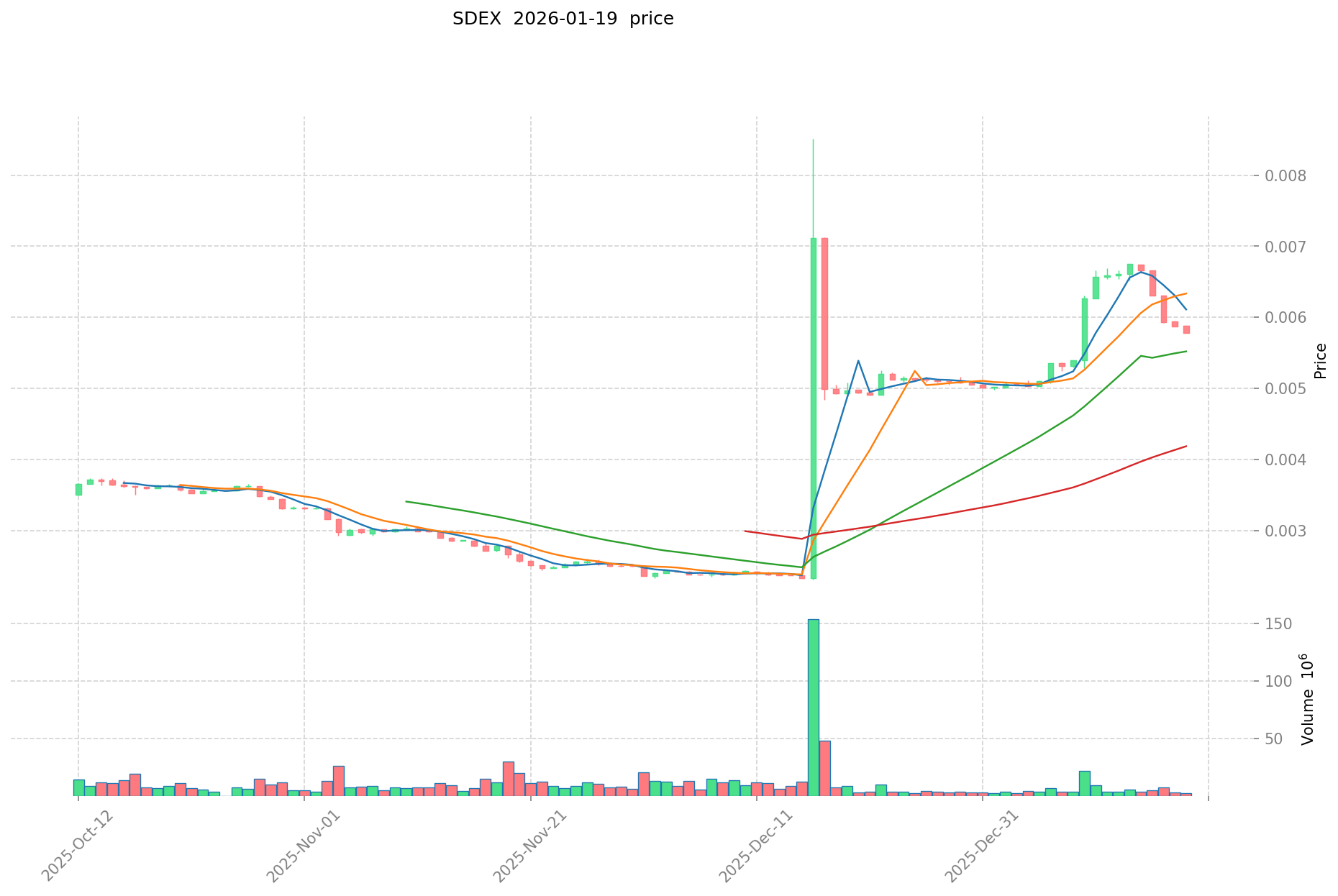
SDEX Historical Price Evolution Trajectory
- 2023: SDEX launched in March with an initial price of $0.000129, experiencing significant volatility throughout the year. The token reached its all-time low of $0.0009926 on September 8, marking a period of market adjustment following its debut.
- 2024: The token demonstrated notable recovery momentum, achieving its all-time high of $0.026562 on March 11. This represented a substantial increase from its launch price, reflecting growing market interest in the SmarDex protocol.
- 2025-2026: Following the peak in early 2024, SDEX entered a consolidation phase with considerable price correction. Over the past year, the token has declined by 66.64%, settling at approximately $0.005688 as of January 19, 2026.
SDEX Current Market Status
As of January 19, 2026, SDEX is trading at $0.005688, experiencing short-term bearish pressure with a 2.84% decline over the past 24 hours and a 2.86% decrease in the last hour. The token has faced more pronounced downward movement over the weekly timeframe, dropping 13.5% in the past seven days. However, the 30-day performance shows a positive trend with a 14.45% gain, suggesting potential stabilization after recent corrections.
The token maintains a market capitalization of approximately $53.19 million, ranking 501st in the cryptocurrency market with a 0.0017% market share. With a circulating supply of 9.35 billion SDEX tokens out of a maximum supply of 10 billion, the circulation ratio stands at 93.52%. The fully diluted market cap is $56.69 million, closely aligned with the current market cap, indicating minimal overhang from unreleased tokens.
Trading activity remains modest with a 24-hour volume of $17,645.71. The token holder base consists of 8,136 addresses, demonstrating a relatively engaged community. SDEX is currently available on 4 exchanges, with trading accessible on Gate.com. The current market sentiment index shows a reading of 44, indicating a "Fear" environment in the broader cryptocurrency market.
Click to view the current SDEX market price
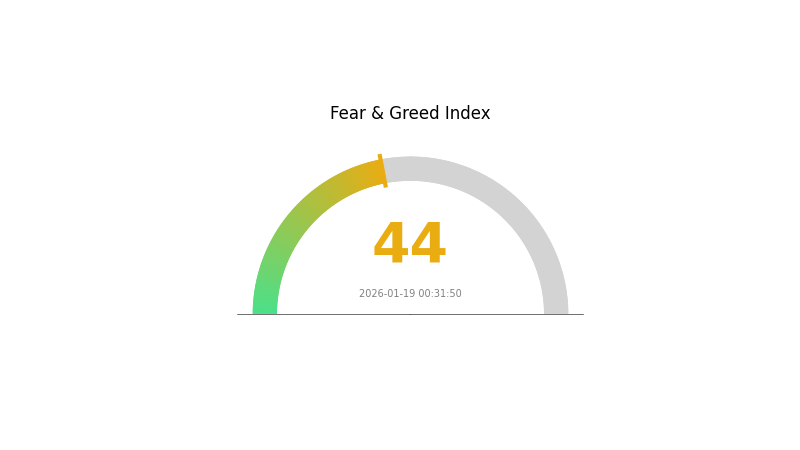
SDEX Market Sentiment Index
2026-01-19 Fear and Greed Index: 44 (Fear)
Click to view current Fear & Greed Index
The cryptocurrency market is currently experiencing fear sentiment with an index reading of 44. This level indicates increased market anxiety and cautious investor behavior. When the fear index is in this range, market participants tend to adopt defensive strategies, potentially creating buying opportunities for long-term investors. Historical data suggests that extreme fear periods often precede market recoveries. Traders should monitor market developments closely and consider their risk tolerance when making investment decisions during these periods of heightened uncertainty.
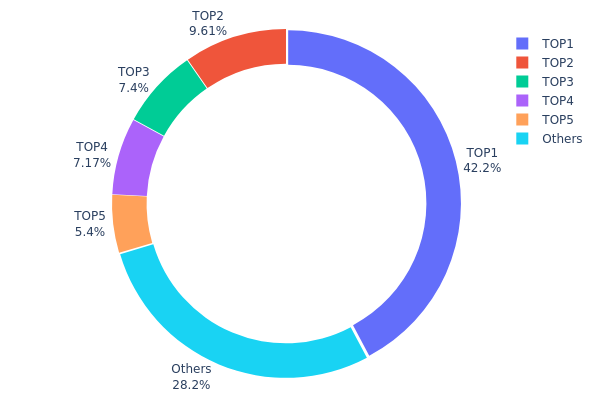
SDEX Holding Distribution
The holding distribution chart illustrates the concentration of token holdings across different wallet addresses, providing insights into the level of decentralization and potential market control within the SDEX ecosystem. By analyzing the distribution pattern, we can assess whether the token supply is widely dispersed among numerous participants or heavily concentrated in the hands of a few major holders.
Based on the current data, SDEX exhibits a notably concentrated holding structure. The top address alone controls approximately 42.22% of the total supply (4.22 million tokens), while the top five addresses collectively hold 71.77% of all tokens in circulation. This high concentration level suggests that a relatively small number of entities possess significant influence over the token's market dynamics. The remaining 28.23% is distributed among other addresses, indicating limited diversification beyond the major holders.
Such concentrated holding patterns typically introduce elevated volatility risks and potential manipulation concerns. When a substantial portion of the supply resides with few addresses, large-scale transactions or coordinated selling activities could trigger significant price fluctuations. Additionally, centralized control may undermine confidence in the project's decentralization ethos, particularly among investors who prioritize community-driven governance. However, it is worth noting that some major addresses may represent legitimate entities such as development teams, foundation reserves, or institutional partners, whose holdings serve specific ecosystem functions rather than speculative purposes.
Click to view current SDEX Holding Distribution
| Top |
Address |
Holding Qty |
Holding (%) |
| 1 |
0x8049...eb1a31 |
4222631.42K |
42.22% |
| 2 |
0x3ee1...8fa585 |
961449.44K |
9.61% |
| 3 |
0xccff...3ff846 |
739799.76K |
7.39% |
| 4 |
0x7d85...a77523 |
716817.95K |
7.16% |
| 5 |
0x969b...337084 |
539906.44K |
5.39% |
| - |
Others |
2819394.99K |
28.23% |
II. Core Factors Influencing SDEX's Future Price
Market Sentiment and Regulatory Environment
- Market Sentiment: Investor sentiment plays a significant role in driving SDEX price movements, with positive market conditions potentially increasing demand for decentralized exchange tokens.
- Regulatory Policy: Clear and supportive regulatory frameworks can enhance investor confidence in cryptocurrency markets and promote growth. Supportive policies tend to drive price appreciation, while ambiguous or overly restrictive regulations may hinder development and suppress valuation.
- Policy Impact: Regulatory changes and policy shifts in major jurisdictions can create substantial price volatility, affecting both short-term trading patterns and long-term investment strategies.
Macroeconomic Indicators and Traditional Financial Factors
- Economic Indicators: Traditional economic factors such as interest rates, inflation levels, and GDP performance directly influence fiat currency strength, which in turn affects cryptocurrency valuations.
- Inflation and Alternative Assets: When fiat currencies weaken due to inflation or policy changes, investors may seek alternative assets like SDEX, potentially increasing demand and driving exchange rates upward.
- Risk Asset Dynamics: Cryptocurrency prices are susceptible to external factors including financial events, regulatory developments, and political circumstances, with margin trading amplifying financial risk exposure.
Technology Innovation and DeFi Ecosystem Development
- DeFi Infrastructure: As part of the decentralized exchange ecosystem, SDEX benefits from ongoing innovations in DeFi technology and infrastructure improvements.
- Ecosystem Integration: The growth and adoption of decentralized finance applications and protocols can enhance the utility and demand for exchange tokens.
- Market Competition: The performance and development of other prominent DEX tokens may influence SDEX's competitive positioning within the broader decentralized trading landscape.
III. 2026-2031 SDEX Price Forecast
2026 Outlook
- Conservative estimate: $0.00379 - $0.00566
- Neutral estimate: $0.00566 (average market scenario)
- Optimistic estimate: $0.00831 (subject to favorable market conditions and increased adoption)
2027-2029 Mid-term Outlook
- Market stage expectation: Gradual growth phase with moderate volatility, characterized by steady accumulation and ecosystem development
- Price range projections:
- 2027: $0.00461 - $0.00803 (approximately 22% growth potential)
- 2028: $0.00428 - $0.00909 (approximately 32% growth potential)
- 2029: $0.00622 - $0.00880 (approximately 45% growth potential)
- Key catalysts: Platform upgrades, expanding user base, strategic partnerships, and broader decentralized exchange sector developments
2030-2031 Long-term Outlook
- Baseline scenario: $0.00675 - $0.00855 in 2030 (assuming steady market maturation and sustained project development)
- Optimistic scenario: $0.00772 - $0.00919 in 2031 (contingent on significant technological breakthroughs and widespread adoption)
- Transformative scenario: $0.01369 (under exceptionally favorable conditions including major protocol enhancements and substantial market expansion)
- 2026-01-19: SDEX baseline projection indicates potential trading range between $0.00379 and $0.00831 for the current year
| Year |
Predicted High Price |
Predicted Average Price |
Predicted Low Price |
Price Change |
| 2026 |
0.00831 |
0.00566 |
0.00379 |
0 |
| 2027 |
0.00803 |
0.00699 |
0.00461 |
22 |
| 2028 |
0.00909 |
0.00751 |
0.00428 |
32 |
| 2029 |
0.0088 |
0.0083 |
0.00622 |
45 |
| 2030 |
0.00983 |
0.00855 |
0.00675 |
50 |
| 2031 |
0.01369 |
0.00919 |
0.00772 |
61 |
IV. SDEX Professional Investment Strategies and Risk Management
SDEX Investment Methodology
(I) Long-term Holding Strategy
- Suitable for: Investors seeking exposure to decentralized finance innovation and liquidity provision mechanisms
- Operational Recommendations:
- Consider accumulation during market consolidation periods, particularly when price approaches support levels around $0.0057
- Monitor liquidity provider performance metrics and impermanent loss mitigation effectiveness as key evaluation indicators
- Storage Solution: Utilize Gate Web3 Wallet for secure multi-chain asset management with enhanced security features
(II) Active Trading Strategy
- Technical Analysis Tools:
- Volume Analysis: Monitor 24-hour trading volume fluctuations; current volume of approximately $17,645 suggests moderate liquidity conditions
- Support and Resistance Levels: Key resistance at $0.00588 (24H high) and support at $0.00571 (24H low) provide reference points for entry and exit
- Swing Trading Key Points:
- Short-term volatility presents opportunities; recent 7-day decline of 13.5% may indicate oversold conditions for potential reversal
- Position sizing should account for the token's market cap of approximately $53.19 million and moderate daily volatility patterns
SDEX Risk Management Framework
(I) Asset Allocation Principles
- Conservative Investors: 1-3% of crypto portfolio allocation
- Aggressive Investors: 3-7% of crypto portfolio allocation
- Professional Investors: Up to 10% with active management and hedging strategies
(II) Risk Hedging Solutions
- Diversification Strategy: Combine SDEX holdings with established DeFi blue-chip tokens to balance portfolio risk exposure
- Stop-loss Implementation: Set protective stops 10-15% below entry price to limit downside risk in volatile market conditions
(III) Secure Storage Solutions
- Hot Wallet Recommendation: Gate Web3 Wallet provides convenient access for active trading with multi-layer security protocols
- Cold Storage Option: For long-term holdings exceeding $10,000 equivalent, consider hardware wallet solutions with offline key storage
- Security Precautions: Enable two-factor authentication, regularly verify contract addresses (0x5de8ab7e27f6e7a1fff3e5b337584aa43961beef on Ethereum), and never share private keys or seed phrases
V. SDEX Potential Risks and Challenges
SDEX Market Risks
- Liquidity Constraints: With a market cap of $53.19 million and ranking at #501, the token faces limited depth that may result in significant price slippage during large transactions
- Historical Volatility: The token has experienced a 66.64% decline over the past year, indicating substantial price volatility and downside risk exposure
- Exchange Availability: Currently listed on 4 exchanges, limited trading venue options may constrain liquidity and price discovery efficiency
SDEX Regulatory Risks
- DeFi Protocol Scrutiny: Evolving regulatory frameworks for decentralized exchanges may impact operational compliance requirements
- Cross-border Compliance: As a European-developed project, potential regulatory developments in EU jurisdictions could affect project operations and token utility
- Smart Contract Oversight: Increasing regulatory focus on DeFi protocols may introduce new compliance obligations affecting development roadmap
SDEX Technical Risks
- Smart Contract Vulnerabilities: Despite academic research backing, complex algorithmic mechanisms for impermanent loss mitigation may contain undiscovered code vulnerabilities
- Network Dependencies: Ethereum-based deployment exposes the protocol to mainnet congestion, gas fee volatility, and potential network disruptions
- Adoption Challenges: Competition from established DEX platforms requires sustained innovation and user acquisition to maintain technological advantages
VI. Conclusion and Action Recommendations
SDEX Investment Value Assessment
SmarDex presents an academically-backed approach to addressing impermanent loss in decentralized exchanges, representing potential innovation in liquidity provision mechanisms. The project's foundation in EPFL research provides theoretical credibility, while dynamic liquidity pool algorithms offer differentiation in the competitive DEX landscape. However, the token's significant one-year decline of 66.64%, current price of $0.005688 (approximately 78% below all-time high of $0.026562), and moderate market capitalization of $53.19 million indicate substantial volatility and market positioning challenges. Short-term technical indicators show weakness with recent 7-day decline of 13.5%, though the 30-day gain of 14.45% suggests some recovery momentum. The circulating supply represents 93.52% of maximum supply, indicating minimal future dilution concerns.
SDEX Investment Recommendations
✅ Beginners: Allocate no more than 1-2% of crypto portfolio; prioritize education on impermanent loss concepts and DEX mechanics before participating; consider paper trading to understand volatility patterns
✅ Experienced Investors: Evaluate technical innovation against competitive landscape; consider 3-5% allocation with active monitoring of liquidity metrics and protocol development milestones; implement stop-loss strategies
✅ Institutional Investors: Conduct comprehensive due diligence on algorithmic mechanisms and smart contract audits; consider pilot allocation of 2-4% for DeFi innovation exposure; evaluate liquidity provision opportunities alongside token holdings
SDEX Trading Participation Methods
- Spot Trading on Gate.com: Direct token purchase and sale with competitive trading fees and 24/7 market access
- Liquidity Provision: Participate in SmarDex protocol as liquidity provider to earn fees while experiencing the platform's impermanent loss mitigation technology
- Dollar-Cost Averaging: Systematic accumulation strategy to smooth entry prices across market cycles, particularly suitable given current volatility conditions
Cryptocurrency investment carries extremely high risks, and this article does not constitute investment advice. Investors should make prudent decisions based on their own risk tolerance and are advised to consult professional financial advisors. Never invest more than you can afford to lose.
FAQ
What is SDEX? What are its uses and characteristics?
SDEX is a decentralized exchange operating on automated smart contracts across multiple blockchain networks. It prioritizes transparency and practicality, offering users a trustless trading environment without relying on traditional order books.
What is the current price of SDEX? What are the main factors affecting its price fluctuations?
SDEX currently trades between $0.005902 and $0.00599. Price fluctuations are primarily driven by market demand, trading volume, and overall market trends affecting the broader crypto sector.
SDEX's all-time high reached $0. Future price predictions are based on user target prices and project confidence ratings. The prediction method integrates community consensus and fundamental analysis of the project.
What are the risks of investing in SDEX? How should I evaluate its investment value?
SDEX investment carries market volatility and technology risks. Evaluate its value by assessing the project team, technical innovation, tokenomics, and market adoption potential. Monitor price trends and community sentiment for informed decisions.
How does SDEX differ from and what advantages does it have compared to mainstream tokens like BTC and ETH?
SDEX optimizes liquidity provider returns through impermanent loss (IL) reduction, unlike traditional AMMs. Running on EVM-compatible chains with open-source smart contracts, SDEX offers enhanced transparency, security, and lower trading fees while improving overall liquidity efficiency.
How is SDEX's technical team, project progress, and ecosystem development?
SDEX's technical team launched mainnet in 2021, marking transition from testing to practical application. The ecosystem is steadily advancing with continuous development and expansion of on-chain utilities and partnerships.
* The information is not intended to be and does not constitute financial advice or any other recommendation of any sort offered or endorsed by Gate.