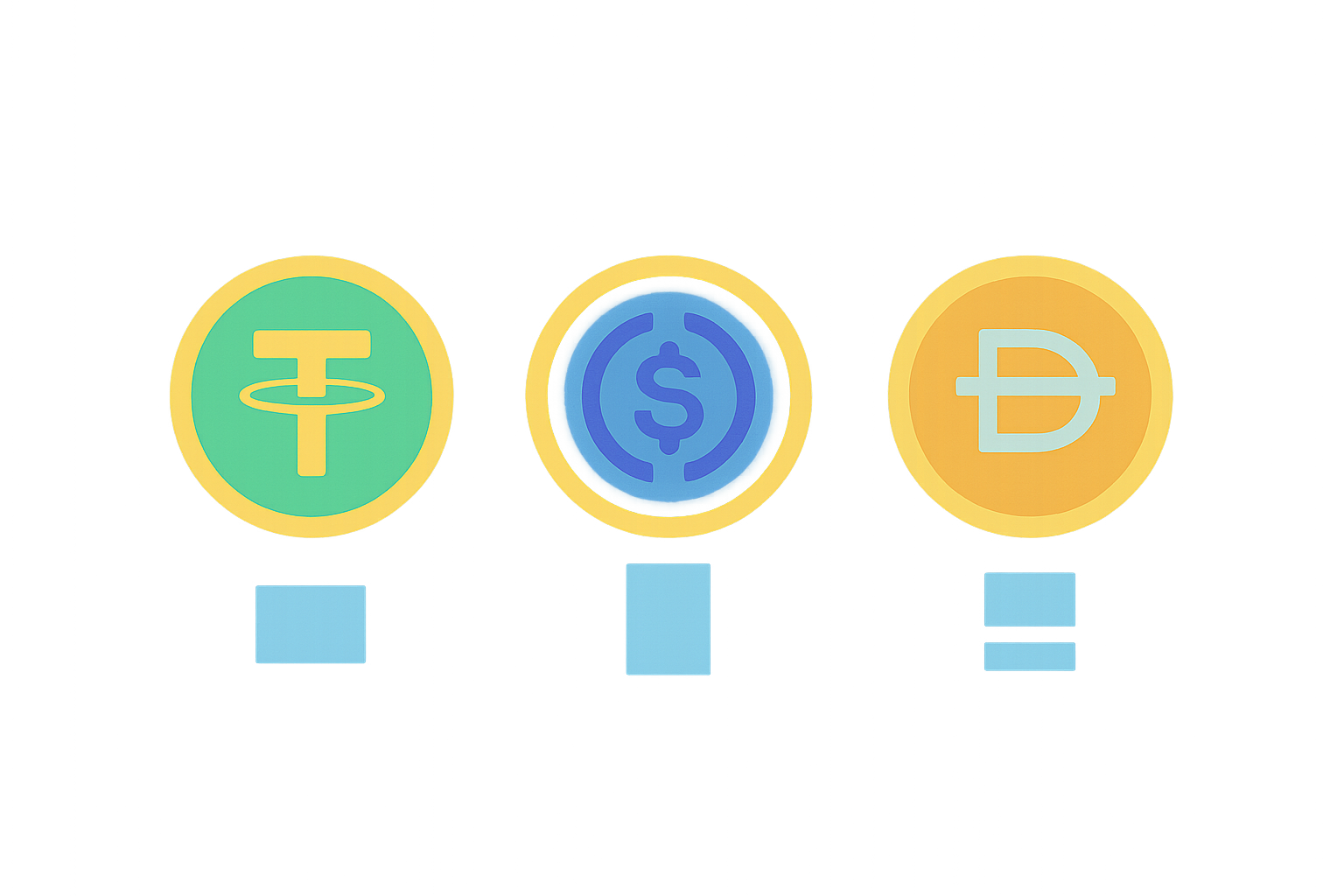
A comprehensive overview of stablecoin types and features. This guide examines leading stablecoins like USDT, USDC, and DAI, and explains the mechanisms behind fiat-backed and crypto-backed models. Explore their applications in DeFi, payments, and RWA transactions, along with regulatory developments and risk management strategies for 2025. Essential for both newcomers and experienced investors. Trade with confidence on Gate.
Key Points
Stablecoins offer low-volatility digital assets that are essential for secure cryptocurrency trading in 2025. Recent leading stablecoins include USDT, USDC, DAI, and innovative tokenized asset-backed coins. Major exchanges deliver first-class stablecoin trading with low fees, high liquidity, and staking options. To ensure safe trading, keep a close eye on global stablecoin regulations and the trend toward greater asset transparency.
Stablecoins are the backbone of today's digital asset economy, providing price stability and a straightforward gateway to DeFi (decentralized finance), payments, and trading. In 2025, understanding stablecoins is more important than ever—they support the crypto market and bridge the gap between traditional and digital economies.
What Are Stablecoins?
Stablecoins are crypto assets designed to maintain price stability. They're typically pegged to fiat currencies like the US dollar or euro, or to tangible assets such as gold or real estate. The main goal is to combine the technical advantages of cryptocurrencies—speed, global reach, programmability—with price predictability. This reduces risk and drives broader adoption of digital transactions.
Recently, the stablecoin sector’s market cap topped $170 billion, accounting for more than 11% of all crypto trading volume. The space has evolved beyond traditional USD-pegged coins to include asset-backed and algorithmic tokens, as well as central bank digital currencies (CBDCs). This diversification gives investors and users the flexibility to choose stablecoins that best match their needs and risk profiles.
How Stablecoins Work
Stablecoins maintain price stability through various mechanisms. Some are backed by traditional assets held as reserves, while others use algorithms that adjust supply based on price movements. Understanding the unique features of each stablecoin is key to making the right choice.
There are three main approaches to maintaining price stability. First, in fully collateralized fiat or asset-backed models, each token issued is backed by an equivalent value of reserves. Second, crypto-collateralized models use more collateral than the value of the stablecoins issued—usually 150% or more—to cushion against price swings. Third, algorithmic stablecoins rely on smart contracts to automatically adjust supply according to market demand and supply.
Main Types of Stablecoins
Fiat-Collateralized Stablecoins are backed 1:1 by fiat currencies (USD, EUR, etc.), with reserves held and audited. This category has the highest transparency and is generally more trusted by regulators. Issuers must undergo regular third-party audits to confirm reserve adequacy.
Crypto-Collateralized Stablecoins are secured by on-chain crypto assets (like ETH), with over-collateralization providing a buffer. Collateral ratios of 150% or more are typical to offset crypto price volatility. This approach is highly decentralized and avoids centralized control.
Algorithmic Stablecoins use software algorithms to expand or contract supply and keep prices stable. New tokens are minted when demand grows and supply is reduced when demand falls. However, this model is vulnerable to sharp market swings and requires careful evaluation.
Asset-Backed Stablecoins are pegged to commodities such as gold, real estate, or tokenized assets. Lately, diversified risk management and alternatives to fiat-backed stores of value have become major points of interest.
Key Examples: Leading Stablecoins in 2025
| Stablecoin |
Type |
Market Cap (Mid-2025) |
Main Use Cases |
| Tether (USDT) |
Fiat-collateralized |
Over $155 billion |
Trading, DeFi |
| USD Coin (USDC) |
Fiat-collateralized |
Over $61 billion |
Payments, Remittances |
| Dai (DAI) |
Crypto-collateralized |
Over $5.8 billion |
DeFi, Lending |
Tether is the most liquid stablecoin and is widely used on exchanges worldwide. USD Coin stands out for its regulatory compliance and transparency, attracting strong institutional support. Dai is the only major stablecoin managed by a decentralized autonomous organization (DAO), making it popular with users who want to avoid centralized risks.
Why Stablecoins Matter in 2025
Stablecoins are the backbone of global crypto liquidity, enable cross-chain interoperability, and form the core of DeFi lending and borrowing. They allow fast, affordable payments and transparent global remittances, providing trustworthy alternatives to traditional banking for both businesses and consumers as regulations become clearer.
Key use cases in recent years include: DeFi, where nearly all major protocols use stablecoins as collateral, trading pairs, or yield tokens. Leading platforms like Aave, Compound, and Curve depend on stablecoins to deliver billions in liquidity.
In the tokenized asset market, real-world assets (RWAs) like real estate and bonds are being tokenized, with stablecoins streamlining settlement and fractional ownership. This fast-growing sector democratizes investment in assets that were once illiquid and exclusive to the wealthy.
For global payments and remittances, stablecoins offer businesses and individuals low-cost, reliable cross-border transfers—sidestepping the high fees and delays of traditional systems. In emerging economies, stablecoins let people send money instantly with just a smartphone, even where banking infrastructure is weak.
In crypto trading, stablecoins are a go-to hedge against price swings. Traders can enter or exit positions instantly and transact efficiently without converting to fiat. Fast inter-exchange transfers also create arbitrage opportunities.
On CBDC integration, central bank digital currencies are expanding globally, and their interoperability and settlement with major stablecoins is accelerating. This is paving the way for a new financial system where public digital currencies and private stablecoins coexist.
Main Stablecoin Use Cases: DeFi, Payments, and More
Stablecoin Use in DeFi
Stablecoins are the foundation of the DeFi ecosystem. Lending protocols like Aave and Compound allow users to borrow and lend stablecoins at floating or fixed rates, using crypto as collateral. Lenders earn steady yields, while borrowers can access liquidity without selling their assets.
Yield farmers supply stablecoins to decentralized liquidity pools and often earn returns that surpass those of traditional banks. Protocols like Curve Finance and Yearn Finance use multi-stablecoin optimization strategies targeting annual yields of 5–15%.
Synthetic stablecoin pairs enable advanced trading strategies, while insurance protocols use stablecoins for premium payments and payouts. Platforms like Nexus Mutual and InsurAce have standardized insurance payments and claims in stablecoins.
Are Stablecoins Usable for Everyday Payments?
Yes. More merchants and payment processors are accepting stablecoins for both retail and B2B transactions. Web3 and mobile apps now support USDC and eEUR payments, enabling nearly instant, fee-free cross-border transactions.
Major payment companies like Stripe and Visa are integrating stablecoins for payroll, invoicing, and global settlement, boosting financial inclusion. In emerging markets such as Latin America, Southeast Asia, and Africa, stablecoins are rapidly adopted as inflation hedges and as financial tools for the unbanked.
Retailers are seeing increased use of QR codes and NFC for stablecoin payments, allowing customers to complete transactions in seconds. Fees are a fraction of those for credit cards, making stablecoins attractive for merchants as well.
What Are Tokenized Real-World Assets Enabled by Stablecoins?
Tokenization is the process of putting real-world assets—like real estate, bonds, or stocks—on the blockchain. Stablecoins serve as a neutral, durable settlement currency for RWA transactions and dividend payments.
This trend is accelerating, with platforms like Centrifuge and Ondo Finance offering on-chain asset management using USDC and other stablecoins. For example, a $10 million commercial property can be divided into 100,000 tokens, allowing investments as small as $100—making real estate accessible to ordinary investors.
Dividends and rental income can be distributed automatically in stablecoins, letting global investors earn returns while minimizing currency risk. This model applies to a wide range of asset classes, including art, intellectual property, and infrastructure.
Stablecoin Regulation in 2025: Key Updates
Regulation is evolving quickly. In early 2025, the EU’s MiCA (Markets in Crypto-Assets) and the U.S. Stablecoin Act took effect, introducing the following requirements.
First, fiat-collateralized stablecoins must maintain audited, segregated reserves. Issuers are required to publish independent audit certificates quarterly. Reserves must be fully separated from customer assets and remain protected even if the issuer fails.
Second, issuers and major exchanges are now subject to licensing and registration. Issuing stablecoins requires formal approval from financial regulators, minimum capital requirements, and robust risk management. Exchanges also need special registration to support stablecoins.
Transparency reports, reserve attestations, and real-time disclosures for USD/EUR stablecoins are now the norm. Issuer websites offer round-the-clock breakdowns of reserves (cash, government securities, and other assets).
Algorithmic and RWA-backed stablecoins now face clear investor protection rules and stricter disclosure requirements. For algorithmic coins, issuers must disclose historical price stability data and stress test results.
As a result, only compliant, regularly audited stablecoins are offered by reputable exchanges, ensuring user trust and stable access. Regulatory clarity has also lowered barriers for institutional investors and driven overall market maturity.
Stablecoin Risks and Challenges
Reserve Transparency: Always review the latest audit reports and real-time reserve data before using a stablecoin. Some issuers lack transparency, and real reserves may differ from public reports. Choose coins that undergo regular, credible third-party audits.
Smart Contract Vulnerabilities: Especially in innovative or algorithmic models, code exploits remain a risk. The 2022 Terra/LUNA collapse is a prime example of structural risk in algorithmic stablecoins. Stick with proven protocols and trusted exchanges, and approach new projects with caution.
Regulatory Risk: Regulatory uncertainty or changes can lead to service suspensions or asset freezes. For cross-border transfers, understand the rules in both sending and receiving countries. Use compliance-focused platforms and issuers that publicize cooperation with regulators for added safety.
Depegging Events: Occasionally, market turmoil or operational failures can cause a stablecoin to lose its peg. In 2023, USDC temporarily fell to $0.87 but rebounded within days. Diversify across multiple stablecoins and keep up with market news to mitigate this risk.
Counterparty Risk is another factor. Fiat-backed stablecoins could be affected if the issuer’s partner banks fail. Check whether reserves are spread across multiple financial institutions and whether they’re covered by deposit insurance.
FAQ
What is a stablecoin and how is it different from regular cryptocurrencies?
Stablecoins are digital currencies pegged to fiat currencies like the US dollar, providing a steady value. Unlike high-volatility cryptocurrencies such as Bitcoin, stablecoins are designed for price stability.
What are the main types of stablecoins in 2025? (e.g., fiat-collateralized, crypto-collateralized, algorithmic, etc.)
In 2025, the main stablecoin types are: fiat-collateralized (USDT and USDC lead, representing over 86% of the market), crypto-collateralized (like DAI, which requires over-collateralization), and algorithmic (which lost market trust after the 2022 UST collapse). Fiat-backed coins dominate, while decentralization increases across other types.
What are the main uses and use cases for stablecoins?
Stablecoins are primarily used for payments and as trading intermediaries to avoid price volatility. They enable crypto conversions, cross-border remittances, and smart contract payments.
What risks are associated with using stablecoins? What should users pay attention to?
Stablecoins carry regulatory, market volatility, and smart contract risks. Fiat-backed stablecoins may have unstable returns and can lose value during extreme market events. Before use, always check the issuer’s reputation and collateral status.
USDT, USDC, and DAI are all stablecoins but differ in issuers and mechanisms. USDT and USDC are pegged 1:1 to the US dollar; USDT has the largest trading volume, while USDC is known for its transparency. DAI, issued by MakerDAO, is decentralized and pegged to the US dollar via smart contracts.
What are the development trends and outlook for stable assets in 2025?
In 2025, the global stable asset market cap surpasses $250 billion, with the top five assets dominating the market. Supported by policy and technological advances, the outlook for continued growth is very strong.
How can you safely buy and store stablecoins?
Buy stablecoins through trusted platforms and transfer them to a Web3 wallet. For enhanced security, keep private keys offline and back them up regularly. Using a hardware wallet is also recommended.
* The information is not intended to be and does not constitute financial advice or any other recommendation of any sort offered or endorsed by Gate.