This comprehensive analysis examines STO Chain (STOC) price trends and investment opportunities from 2026 through 2031. Currently trading at $0.183 with a $534.35 million market cap, STOC serves as a specialized blockchain infrastructure bridging traditional finance and decentralized assets, focusing on Real-World Asset (RWA) tokenization. The article evaluates historical price movements, market sentiment indicators, and key influencing factors including supply mechanisms, macroeconomic conditions, and ecosystem development. Detailed price forecasts range from $0.13-$0.24 in 2026 to $0.23-$0.45 by 2031, alongside professional investment strategies for different investor profiles. Risk assessment addresses volatility, liquidity constraints, and regulatory considerations, while providing actionable trading recommendations on Gate.com. Investors gain strategic frameworks for portfolio allocation, security storage solutions, and informed decision-making in the emerging RWA tokenization sector.
Introduction: STOC's Market Position and Investment Value
STO Chain (STOC), positioned as a blockchain designed specifically for regulated assets and Real-World Assets (RWAs), has been facilitating the seamless issuance, trading, and settlement of security tokens since its launch. As of 2026, STOC has achieved a market capitalization of approximately $534.35 million, with a circulating supply of around 2.92 billion tokens, and the price maintains at approximately $0.183. This asset, bridging traditional finance with decentralized finance (DeFi), is playing an increasingly important role in providing secure, transparent, and scalable infrastructure for institutional investors and projects seeking to unlock liquidity in the global financial ecosystem.
This article will comprehensively analyze STOC's price trends from 2026 to 2031, combining historical patterns, market supply and demand dynamics, ecosystem development, and macroeconomic environment to provide investors with professional price forecasts and practical investment strategies.
I. STOC Price History Review and Market Status
STOC Historical Price Evolution Trajectory
- 2025: STOC launched and experienced significant volatility, with the price reaching a high of $2.39999 in July 2025, followed by a sharp decline to a low of $0.02718 in August 2025
- 2025-2026: The token demonstrated strong recovery momentum, with the price increasing substantially from its low point
STOC Current Market Situation
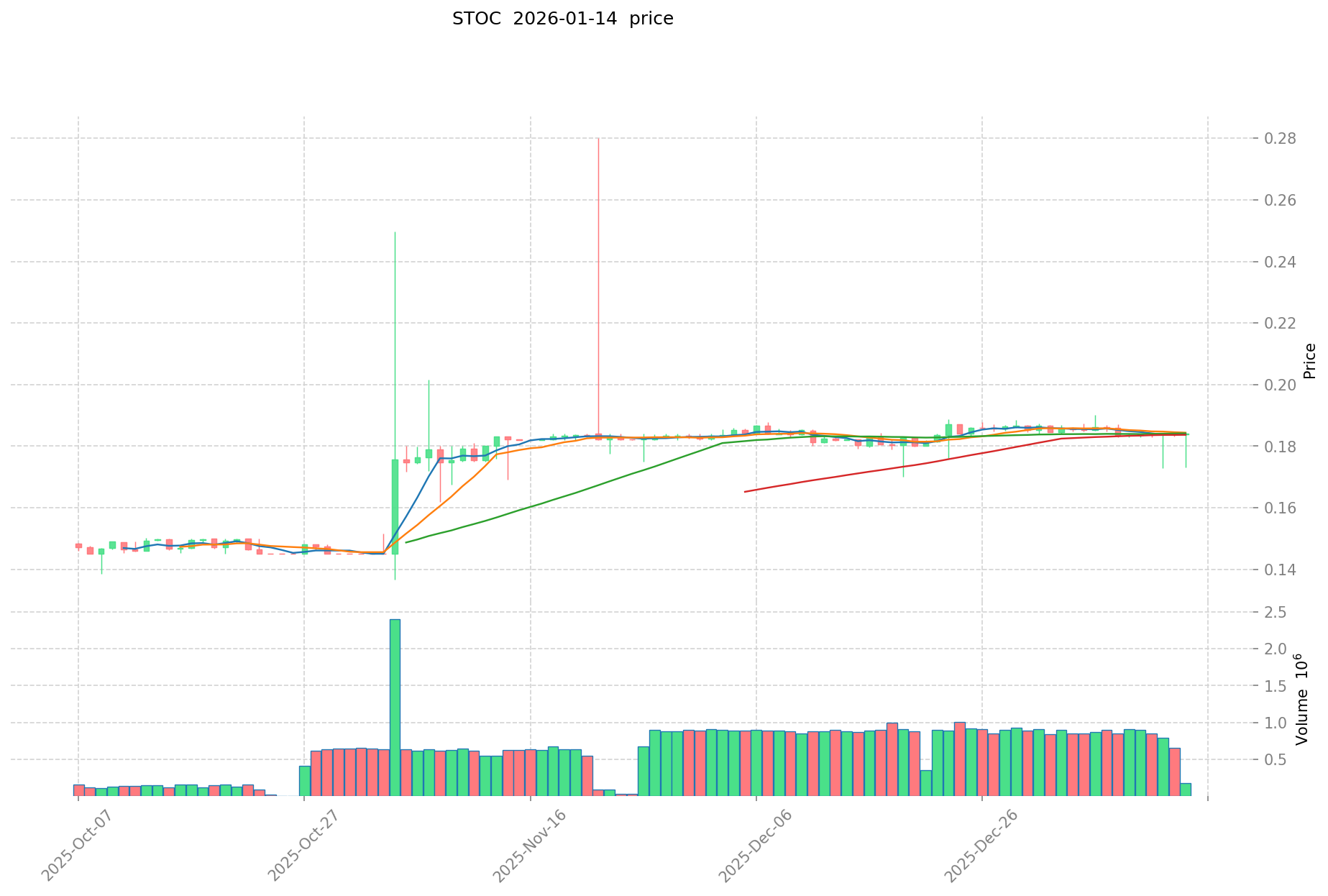
As of January 14, 2026, STOC is trading at $0.18303, with a 24-hour trading volume of $29,713.12. The token's market capitalization stands at $534.35 million, representing approximately 0.053% of the total cryptocurrency market.
In terms of recent price movements, STOC has shown relatively stable performance in the short term, with a slight decline of 0.01% over the past hour and 0.35% over the past 24 hours. The 7-day trend indicates a decrease of 0.45%, while the 30-day period shows positive growth of 1.67%. Notably, the 1-year performance demonstrates substantial appreciation, with the price increasing by 6543.66% from its initial levels.
The current circulating supply of STOC is 2.92 billion tokens, representing 29.19% of the total supply of 10 billion tokens. The fully diluted market capitalization is calculated at $1.83 billion. Within the past 24 hours, the token has fluctuated between a low of $0.18302 and a high of $0.18401.
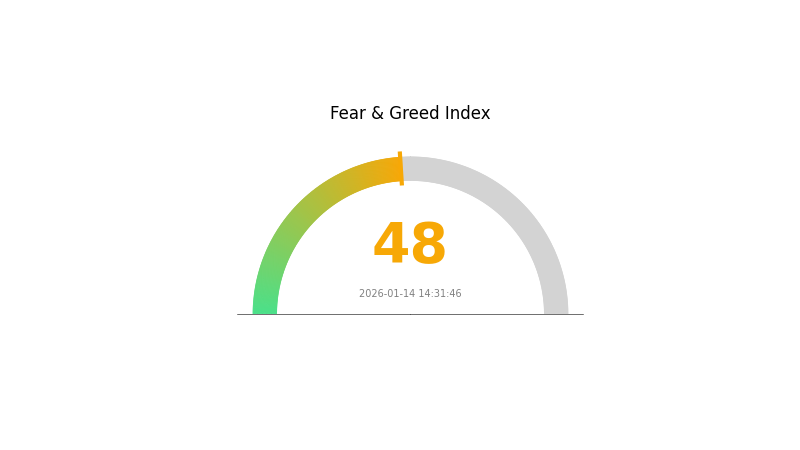
The Gate.com market sentiment indicator currently shows a neutral reading of 48, suggesting balanced market conditions without extreme fear or greed among traders.
Click to view the current STOC market price
STOC Market Sentiment Indicator
2026-01-14 Fear and Greed Index: 48 (Neutral)
Click to view the current Fear & Greed Index
The crypto market is currently in a neutral sentiment state with a Fear and Greed Index reading of 48. This moderate level indicates balanced market conditions, where neither excessive fear nor irrational greed is dominating investor behavior. Market participants should maintain a measured approach, carefully evaluating investment opportunities while managing risks appropriately. This neutral positioning presents a reasonable environment for strategic decision-making on Gate.com, allowing traders to assess their portfolios without extreme market pressure influencing their judgment.
STOC Holding Distribution
The holding distribution chart illustrates the concentration of token ownership across different wallet addresses, providing crucial insights into the decentralization level and potential market manipulation risks of a cryptocurrency. By analyzing the percentage of total supply held by top addresses, investors can assess whether the token exhibits healthy distribution or excessive centralization that may pose liquidity and volatility concerns.
Based on the current data, STOC demonstrates a relatively concentrated holding pattern, with the top addresses controlling a significant portion of the total circulating supply. This concentration level suggests that a small number of entities maintain substantial influence over the token's market dynamics. Such distribution characteristics typically indicate that large holders, often referred to as "whales," possess considerable power to impact price movements through their trading activities.
The current holding structure presents both opportunities and challenges for STOC's market stability. While concentrated holdings may initially facilitate coordinated development efforts and strategic partnerships, they simultaneously increase vulnerability to sharp price fluctuations if major holders decide to liquidate their positions. The distribution pattern reflects a market structure still in its maturation phase, where gradual decentralization through broader community participation would enhance long-term stability and reduce single-entity influence on token valuation.
Click to view current STOC Holding Distribution

| Top |
Address |
Holding Qty |
Holding (%) |
II. Core Factors Influencing STOC's Future Price
Supply Mechanism
- Deflationary Mechanism: STOC incorporates a deflationary structure that may enhance its anti-inflation capabilities during inflationary periods.
- Historical Pattern: Supply-side adjustments have historically influenced market valuations, though specific historical data for STOC is limited in available materials.
- Current Impact: The deflationary design could potentially support price stability in inflationary environments, though actual market response depends on multiple interacting factors.
Institutional and Major Holder Dynamics
Available materials do not provide specific information regarding institutional holdings, corporate adoption, or national policies directly related to STOC.
Macroeconomic Environment
- Monetary Policy Impact: STOC exhibits sensitivity to Federal Reserve interest rate adjustments, showing negative correlation with rate hikes. Changes in central bank monetary policy may significantly influence price movements.
- Inflation Hedge Attributes: Due to its deflationary mechanism, STOC demonstrates relatively strong anti-inflation characteristics in inflationary environments.
- Geopolitical Factors: International political developments and geopolitical events may create additional volatility in STOC's price trajectory.
Technology Development and Ecosystem Building
Available materials do not contain specific information about technical upgrades, ecosystem applications, or major DApp projects directly associated with STOC.
III. 2026-2031 STOC Price Prediction
2026 Outlook
- Conservative Forecast: $0.13001 - $0.18311
- Neutral Forecast: $0.18311
- Optimistic Forecast: $0.23987 (subject to favorable market conditions and increased adoption)
2027-2029 Mid-term Outlook
- Market Stage Expectation: STOC may experience steady growth as the broader crypto market matures, with potential fluctuations driven by technological developments and market sentiment.
- Price Range Forecast:
- 2027: $0.15439 - $0.26437 (approximately 15% increase from 2026)
- 2028: $0.14989 - $0.32834 (approximately 29% increase from 2026)
- 2029: $0.20669 - $0.31428 (approximately 54% increase from 2026)
- Key Catalysts: Enhanced ecosystem development, strategic partnerships, and growing institutional interest could serve as primary drivers for price appreciation during this period.
2030-2031 Long-term Outlook
- Baseline Scenario: $0.19117 - $0.37637 in 2030 (assuming sustained market growth and stable regulatory environment)
- Optimistic Scenario: $0.22953 - $0.4523 in 2031 (assuming accelerated adoption and favorable macroeconomic conditions)
- Transformative Scenario: Price could potentially reach the upper range of $0.4523 by 2031 (contingent upon breakthrough developments and significant market expansion)
- 2026-01-14: STOC trading within projected range as market participants assess long-term potential
| Year |
Predicted High Price |
Predicted Average Price |
Predicted Low Price |
Price Change |
| 2026 |
0.23987 |
0.18311 |
0.13001 |
0 |
| 2027 |
0.26437 |
0.21149 |
0.15439 |
15 |
| 2028 |
0.32834 |
0.23793 |
0.14989 |
29 |
| 2029 |
0.31428 |
0.28313 |
0.20669 |
54 |
| 2030 |
0.37637 |
0.29871 |
0.19117 |
63 |
| 2031 |
0.4523 |
0.33754 |
0.22953 |
84 |
IV. STOC Professional Investment Strategy and Risk Management
STOC Investment Methodology
(1) Long-term Holding Strategy
- Suitable for: Institutional investors and individuals seeking exposure to regulated digital assets and Real-World Assets (RWA) tokenization
- Operational Recommendations:
- Consider accumulating STOC during periods of market consolidation, given its relatively low circulating supply ratio of 29.19%
- Monitor the project's progress in bridging traditional finance with DeFi, as this represents the core value proposition
- Storage Solution: Utilize Gate Web3 Wallet for secure custody, enabling seamless interaction with the STO Chain ecosystem while maintaining control of private keys
(2) Active Trading Strategy
- Technical Analysis Tools:
- Support and Resistance Levels: Monitor the 24-hour price range between $0.18302 and $0.18401 to identify key trading zones
- Volume Analysis: Current 24-hour trading volume of approximately $29,713 provides insights into liquidity conditions
- Swing Trading Key Points:
- Consider the token's moderate volatility, with 7-day and 30-day changes of -0.45% and +1.67% respectively, for short-term positioning
- Set stop-loss orders to manage downside risk, particularly given the significant gap between current price ($0.183) and historical high ($2.40)
STOC Risk Management Framework
(1) Asset Allocation Principles
- Conservative Investors: 1-3% of crypto portfolio allocation
- Aggressive Investors: 5-8% of crypto portfolio allocation
- Professional Investors: Up to 10-15% of crypto portfolio allocation, with dynamic adjustment based on market conditions and regulatory developments
(2) Risk Hedging Solutions
- Portfolio Diversification: Combine STOC holdings with established cryptocurrencies and stablecoins to reduce concentration risk
- Position Sizing: Scale investments gradually rather than committing full capital at once, considering the token's early-stage market presence
(3) Secure Storage Solutions
- Software Wallet Recommendation: Gate Web3 Wallet offers user-friendly interface with robust security features for STOC storage
- Cold Storage Option: For larger holdings, consider offline storage solutions to minimize online exposure
- Security Considerations: Enable two-factor authentication, regularly backup wallet recovery phrases, and verify contract addresses before transactions to prevent phishing attacks
V. STOC Potential Risks and Challenges
STOC Market Risk
- High Volatility: The token experienced significant price fluctuations, with a historical high of $2.40 in July 2025 followed by a sharp decline to $0.027 in August 2025, demonstrating substantial volatility
- Limited Liquidity: With only 2 exchanges listing STOC and a 24-hour trading volume of approximately $29,713, liquidity constraints may result in wider bid-ask spreads and potential slippage during large transactions
- Market Cap Sensitivity: A relatively modest market capitalization of approximately $534 million makes the token susceptible to significant price movements from large trades or market sentiment shifts
STOC Regulatory Risk
- Security Token Classification: As a blockchain focused on security tokens and regulated assets, STOC may face evolving regulatory scrutiny across different jurisdictions
- Compliance Requirements: The project's emphasis on regulated assets necessitates ongoing adaptation to changing securities laws, which could impact operational flexibility
- Jurisdictional Variations: Different regulatory approaches to security tokens globally may affect the platform's adoption rate and geographic expansion
STOC Technical Risk
- Platform Development Risk: As a specialized blockchain infrastructure, the project's success depends on continuous technical development and ecosystem expansion
- Smart Contract Vulnerabilities: Potential security flaws in smart contracts governing token issuance and trading could pose risks to user assets
- Network Security: The blockchain's resilience against potential attacks or technical failures remains critical for maintaining user trust and platform stability
VI. Conclusion and Action Recommendations
STOC Investment Value Assessment
STO Chain presents a specialized value proposition targeting the intersection of traditional finance and decentralized infrastructure, with a focus on regulated assets and Real-World Asset tokenization. The project's emphasis on compliance and institutional-grade infrastructure addresses growing demand for regulated digital asset solutions. However, the token's price history reveals significant volatility, having experienced both substantial gains and sharp corrections since its historical high in mid-2025. The relatively low circulating supply ratio of 29.19% compared to maximum supply suggests potential future dilution considerations. While the long-term thesis around RWA tokenization holds promise, short-term risks include limited liquidity, market volatility, and ongoing regulatory developments affecting the security token sector.
STOC Investment Recommendations
✅ Beginners: Start with minimal exposure (1-2% of crypto portfolio) to understand the project's dynamics and RWA tokenization sector before increasing position size
✅ Experienced Investors: Consider moderate allocation (3-5% of crypto portfolio) with active monitoring of regulatory developments and platform adoption metrics, employing dollar-cost averaging to manage volatility
✅ Institutional Investors: Conduct thorough due diligence on regulatory compliance framework and security infrastructure, potentially allocating 5-10% of crypto portfolio with appropriate risk management protocols and legal consultation
STOC Trading Participation Methods
- Spot Trading: Access STOC through Gate.com and other supporting exchanges, utilizing limit orders to optimize entry points given moderate liquidity conditions
- Long-term Accumulation: Implement systematic investment plans during market consolidation phases, focusing on the project's fundamental development rather than short-term price movements
- Active Portfolio Management: Monitor key metrics including circulating supply changes, exchange listings, and ecosystem partnerships to inform position adjustments
Cryptocurrency investment carries extremely high risks, and this article does not constitute investment advice. Investors should make prudent decisions based on their own risk tolerance and are advised to consult professional financial advisors. Never invest more than you can afford to lose.
FAQ
What is STOC? What are its uses and value?
STOC is the native token of the STO Cash platform, designed for security token offerings. It facilitates token issuance, transaction settlements, and platform fee payments. STOC enables compliant trading of security tokens globally, providing liquidity and utility within the ecosystem while supporting institutional-grade tokenized assets with long-term appreciation potential.
STOC reached its historical peak on January 5, 2026, showing strong upward momentum. The token demonstrated significant price appreciation during this period, reflecting growing market interest and adoption. Current market conditions continue to show positive performance indicators.
What are the main factors affecting STOC price fluctuations?
STOC price fluctuations are primarily driven by market demand and supply dynamics, trading volume and liquidity, overall cryptocurrency market sentiment, blockchain technology developments, macroeconomic conditions, and regulatory policy changes in the crypto industry.
How to predict STOC price? What are the analysis methods?
STOC price prediction uses technical analysis with tools like moving averages and RSI indicators. Fundamental analysis examines project metrics and market trends. On-chain analysis tracks transaction volume and holder behavior. Combine multiple methods for comprehensive forecasting.
Where can STOC be traded? How is the liquidity?
STOC is available on B2Broker with strong liquidity and multiple trading pairs. The platform provides reliable access for traders seeking consistent trading volume and efficient order execution.
What risks should I pay attention to when investing in STOC?
STOC investment carries price volatility risk and market speculation risk. Smaller-scale projects may experience unstable performance, leading to higher price fluctuations. Investors should conduct thorough research and monitor market conditions closely.
What are the advantages and disadvantages of STOC compared to similar tokens?
STOC excels in regulatory compliance and transparency, making it suitable for institutional adoption. However, its complex legal framework increases implementation costs. Its flexibility supports diverse financial operations, though market liquidity remains limited compared to established tokens.
* The information is not intended to be and does not constitute financial advice or any other recommendation of any sort offered or endorsed by Gate.