This comprehensive guide analyzes Starknet's native token STRK from 2026-2031, examining its market position as a ZK-Rollup Layer 2 scaling solution. The article reviews STRK's historical price evolution from its February 2024 launch peak of $4 to its current January 2026 level of $0.09074, providing professional price forecasts ranging from $0.06615 to $0.23294 across different market scenarios. Core analysis encompasses supply mechanisms, institutional dynamics, macroeconomic factors, and ecosystem development influencing token valuation. Investment strategies include long-term holding approaches for believers in Layer 2 technology and active trading methods utilizing technical analysis on Gate.com. Risk management frameworks address asset allocation, market volatility, regulatory uncertainties, and technical vulnerabilities. The guide recommends differentiated strategies for beginners, experienced investors, and institutions, emphasizing careful position sizing and portfolio diversification within the Laye
Introduction: STRK's Market Position and Investment Value
Starknet (STRK), as a ZK-Rollup Layer 2 scaling solution built on Ethereum, has been dedicated to enabling decentralized applications to scale massively without compromising security since its launch in 2024. As of 2026, STRK has achieved a market capitalization of approximately $457.59 million, with a circulating supply of around 5.04 billion tokens, and a price hovering around $0.09074. This asset, recognized as an innovative participant in the Layer 2 scaling sector, is playing an increasingly vital role in enhancing Ethereum's transaction throughput and reducing costs while maintaining robust security.
This article will comprehensively analyze STRK's price trends from 2026 to 2031, combining historical patterns, market supply and demand dynamics, ecosystem development, and macroeconomic conditions to provide investors with professional price forecasts and practical investment strategies.
I. STRK Price History Review and Market Status
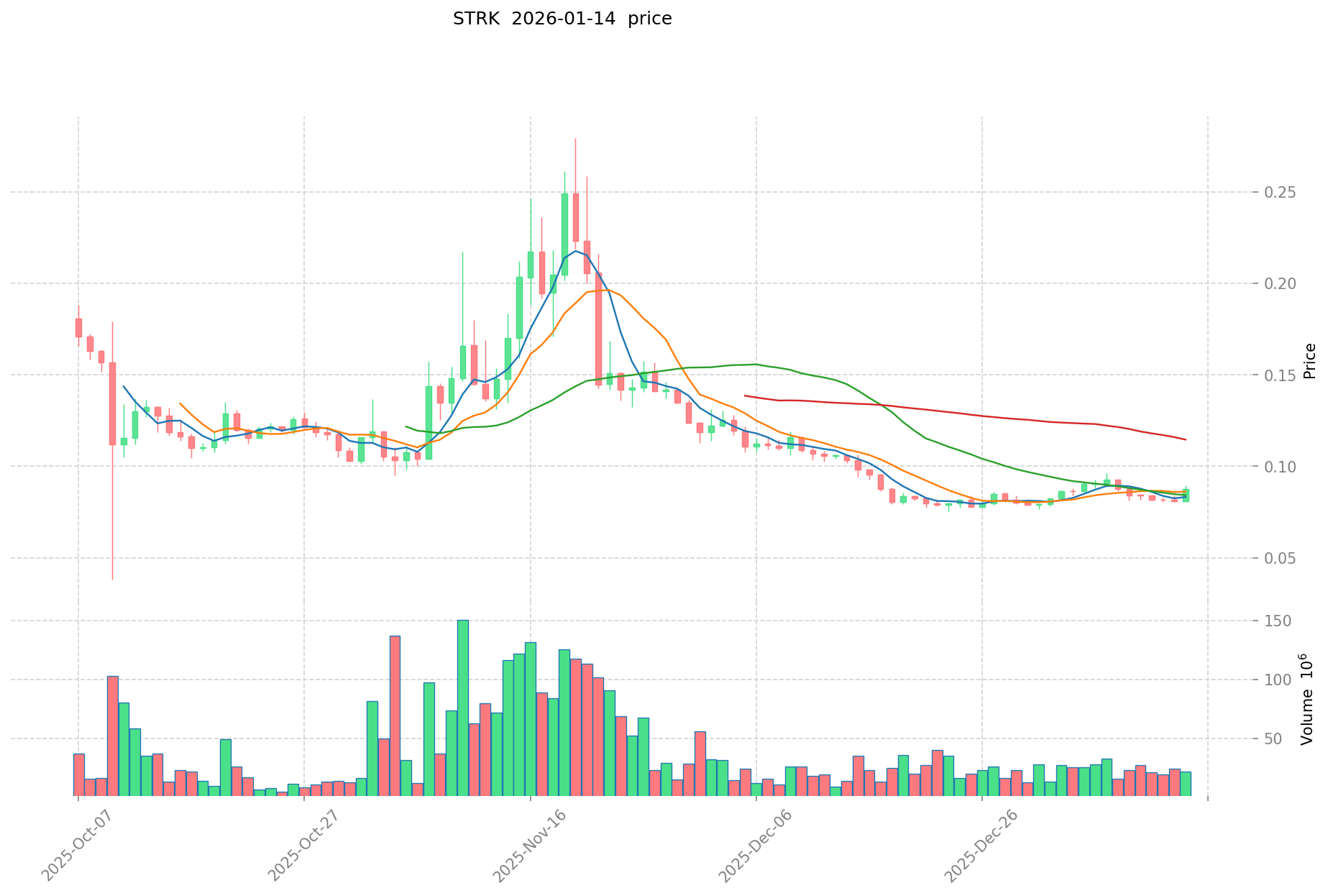
STRK Historical Price Evolution Trajectory
- February 2024: Starknet launched on mainnet with STRK token deployment, price reached a peak of approximately $4 during the initial trading period
- 2024-2025: Price experienced significant volatility, declining from the February 2024 high of $4 as the market entered a correction phase
- October 2025: Price reached a low point of approximately $0.03799, marking a substantial decline from earlier levels
STRK Current Market Status
As of January 15, 2026, STRK is trading at $0.09074, representing a recovery from the October 2025 low. The token has shown short-term positive momentum with a 4.26% increase over the past 24 hours and a 3.69% gain over the past 7 days. The 24-hour trading volume stands at approximately $1.72 million.
The current market capitalization is approximately $457.59 million, with a circulating supply of 5.04 billion STRK tokens out of a maximum supply of 10 billion tokens, representing a circulation ratio of approximately 50.43%. The fully diluted market cap is approximately $907.4 million. STRK currently ranks 139th by market capitalization, with a market dominance of 0.026%.
The token's price range over the past 24 hours has been between $0.0857 and $0.09414. Despite recent short-term gains, the 30-day performance shows a decline of 5.24%, and the 1-year performance reflects a significant decrease from earlier price levels.
Click to view current STRK market price
STRK Market Sentiment Indicator
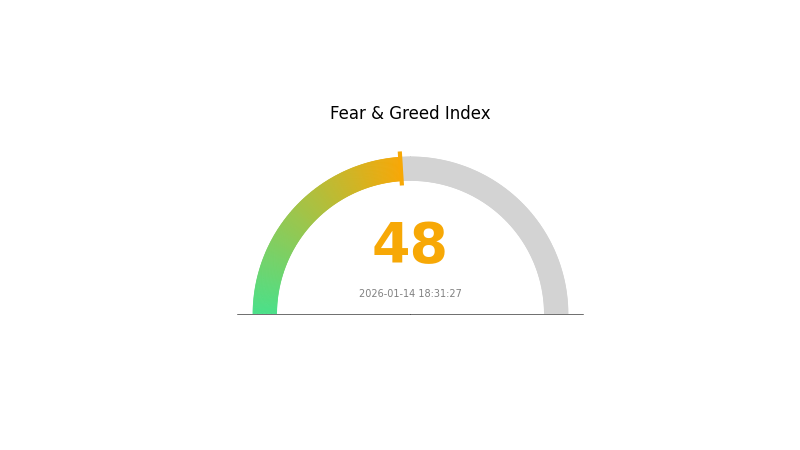
2026-01-14 Fear and Greed Index: 48 (Neutral)
Click to view current Fear & Greed Index
The STRK market is currently displaying neutral sentiment with a fear and greed index reading of 48. This balanced indicator suggests that market participants are neither excessively fearful nor overly greedy, reflecting a stable market condition. Investors should maintain a measured approach to their trading strategies during this neutral phase. The moderate index level indicates relatively balanced buying and selling pressure, making it an appropriate time for careful portfolio evaluation on Gate.com.
STRK Holding Distribution
Based on current on-chain data analysis, STRK exhibits notable concentration characteristics in its holding distribution. The top addresses control a significant proportion of the total token supply, which reflects typical patterns observed in emerging blockchain ecosystems during their early development stages.
From a market structure perspective, this concentration level presents both opportunities and challenges. On one hand, concentrated holdings among major addresses may indicate strong institutional confidence or strategic reserve requirements within the Starknet ecosystem. On the other hand, elevated concentration ratios can amplify price volatility during market fluctuations, as large-scale transfers or sell-offs by whale addresses could trigger cascading effects on market sentiment and liquidity depth.
The current holding distribution suggests that STRK's on-chain structure is still evolving toward greater decentralization. While the existing concentration levels warrant monitoring, they align with the developmental trajectory of many layer-2 scaling solutions where ecosystem participants, infrastructure providers, and early contributors initially hold substantial positions. As the Starknet ecosystem matures and adoption expands, natural distribution mechanisms through staking rewards, ecosystem incentives, and broader market participation are expected to gradually reduce concentration ratios and enhance overall market resilience.
Click to view the current STRK Holding Distribution

| Top |
Address |
Holding Qty |
Holding (%) |
II. Core Factors Influencing STRK's Future Price
Supply Mechanism
- Token Unlock Events: STRK faced significant unlock events, with approximately $70 million worth of tokens scheduled for release in July. This represented a notable supply increase that could create downward pressure on prices.
- Historical Patterns: Following its debut on February 20, STRK experienced a sharp 60% decline from its peak, primarily driven by early recipient selling activity. This demonstrated the token's sensitivity to supply-side pressures.
- Current Impact: The scheduled unlocks in the Ethereum Layer 2 ecosystem, including STRK alongside ARB and OP, may continue to influence price dynamics as new tokens enter circulation.
Institutional and Whale Dynamics
- Institutional Holdings: Information regarding specific institutional holdings of STRK was not extensively detailed in the available materials. However, the broader crypto market has seen increased institutional participation through ETF approvals for major assets like BTC and ETH.
- Strategic Reserve Considerations: While not directly related to STRK, the materials highlighted Strategy's (MicroStrategy) approach to bitcoin accumulation through preferential stock instruments like STRK (in their context, referring to preferred shares), which demonstrates institutional investment mechanisms in the broader crypto space.
- Market Positioning: STRK's performance is closely tied to the overall Layer 2 ecosystem sentiment, with competition from established players like ARB and OP shaping its market position.
Macroeconomic Environment
- Monetary Policy Influence: The U.S. Federal Reserve's stance on interest rates plays a significant role in crypto market dynamics. As of mid-2024, Fed Chair Powell indicated progress on inflation control but maintained caution on rate cuts. Market expectations pointed to potential rate reductions in September, with a 61% probability of a 25 basis point cut, though uncertainty remained regarding subsequent moves.
- Inflation Hedge Characteristics: The core PCE annual rate dropped to 2.6% in May, reaching a three-year low. This improvement in inflation metrics generally supports risk assets, though the crypto market's response has been measured due to ongoing uncertainties around U.S. election outcomes and policy directions.
- Geopolitical Factors: International economic adjustments, particularly U.S.-China trade dynamics and global supply chain restructuring, continue to exert influence on risk asset performance. The strong U.S. dollar, maintaining levels near 30-year highs, creates headwinds for dollar-denominated crypto assets by making them relatively more expensive and potentially reducing investor risk appetite.
Technical Development and Ecosystem Building
- Layer 2 Infrastructure Evolution: As part of the Ethereum Layer 2 ecosystem, STRK benefits from ongoing scalability improvements and transaction cost reductions. The broader L2 narrative gained attention with ETH spot ETF approvals potentially catalyzing increased adoption.
- Ecosystem Applications: The development of decentralized applications and protocols within the Starknet ecosystem continues to evolve, though specific breakthrough projects were not detailed in the available materials. The overall Layer 2 space has seen growing adoption across DeFi, gaming, and NFT sectors.
- Competitive Landscape: STRK operates in a competitive environment alongside other Layer 2 solutions. Innovation in parallel EVM implementations and alternative scaling approaches, such as those being developed by Fuel, Monad, and Berachain, may influence market share and investor attention within the scaling solution category.
III. 2026-2031 STRK Price Prediction
2026 Outlook
- Conservative Prediction: $0.06615 - $0.09061
- Neutral Prediction: Around $0.09061
- Optimistic Prediction: Up to $0.1187 (contingent on favorable market conditions and ecosystem growth)
2027-2029 Outlook
- Market Stage Expectation: The token may enter a gradual growth phase as the Starknet ecosystem matures and adoption increases. Price movements could reflect broader layer-2 scaling solution trends and DeFi integration progress.
- Price Range Predictions:
- 2027: $0.09105 - $0.12768 (approximately 15% potential increase)
- 2028: $0.06041 - $0.16031 (approximately 28% potential increase with possible volatility)
- 2029: $0.08156 - $0.17418 (approximately 52% potential increase)
- Key Catalysts: Network upgrades, increased transaction throughput, expanding developer ecosystem, institutional adoption, and potential integration with major DeFi protocols
2030-2031 Long-term Outlook
- Base Scenario: $0.10154 - $0.15621 in 2030 (assuming steady ecosystem development and moderate market conditions)
- Optimistic Scenario: $0.16197 - $0.20776 in 2030, potentially reaching $0.23294 by 2031 (assuming accelerated adoption and favorable regulatory environment)
- Transformative Scenario: Up to $0.23294 in 2031 (contingent on breakthrough technological implementations, mass adoption of layer-2 solutions, and sustained bull market momentum with approximately 100% cumulative growth potential)
- 2026-01-15: STRK baseline reference point for tracking future performance trajectory
| Year |
Predicted High Price |
Predicted Average Price |
Predicted Low Price |
Price Change |
| 2026 |
0.1187 |
0.09061 |
0.06615 |
0 |
| 2027 |
0.12768 |
0.10465 |
0.09105 |
15 |
| 2028 |
0.16031 |
0.11617 |
0.06041 |
28 |
| 2029 |
0.17418 |
0.13824 |
0.08156 |
52 |
| 2030 |
0.20776 |
0.15621 |
0.10154 |
72 |
| 2031 |
0.23294 |
0.18198 |
0.16197 |
100 |
IV. STRK Professional Investment Strategies and Risk Management
STRK Investment Methodology
(1) Long-term Holding Strategy
- Target Investors: Investors who believe in Ethereum Layer 2 scaling solutions and ZK-Rollup technology with a long-term vision
- Operational Recommendations:
- Consider accumulating positions during market corrections when STRK trades closer to support levels
- Monitor Starknet ecosystem development milestones and network adoption metrics
- Implement a dollar-cost averaging approach to reduce timing risk given the token's volatility
- Storage Solution: Utilize Gate Web3 Wallet for secure multi-chain asset management with user-friendly interface
(2) Active Trading Strategy
- Technical Analysis Tools:
- Moving Averages: Track 50-day and 200-day moving averages to identify trend direction and potential entry/exit points
- Relative Strength Index (RSI): Monitor overbought (above 70) and oversold (below 30) conditions for timing adjustments
- Swing Trading Key Points:
- Pay attention to the 24-hour high ($0.09414) and low ($0.0857) levels as potential resistance and support zones
- Consider the significant decline from all-time high of $4 to current levels when evaluating risk-reward ratios
STRK Risk Management Framework
(1) Asset Allocation Principles
- Conservative Investors: 2-3% of cryptocurrency portfolio
- Aggressive Investors: 5-8% of cryptocurrency portfolio
- Professional Investors: Up to 10-15% with appropriate hedging strategies
(2) Risk Hedging Solutions
- Portfolio Diversification: Combine STRK with established Layer 1 assets and other Layer 2 solutions to reduce concentration risk
- Position Sizing: Limit individual position size based on the current market capitalization ranking (#139) and relatively early stage of the project
(3) Secure Storage Solutions
- Hot Wallet Recommendation: Gate Web3 Wallet offers convenient access for active trading while maintaining security standards
- Cold Storage Solution: For long-term holdings, consider transferring significant amounts to hardware wallets after accumulation
- Security Precautions: Never share private keys, enable two-factor authentication, and verify contract addresses before transactions
V. STRK Potential Risks and Challenges
STRK Market Risks
- High Volatility: The token has experienced a 77.83% decline over the past year, indicating significant price volatility
- Liquidity Concerns: With a market cap of approximately $457.6 million and ranking at #139, liquidity may be limited during extreme market conditions
- Competition Pressure: The Layer 2 scaling space is highly competitive with multiple established and emerging solutions
STRK Regulatory Risks
- Regulatory Uncertainty: Evolving global cryptocurrency regulations may impact Layer 2 solutions and token operations
- Compliance Requirements: Future regulatory frameworks may impose additional compliance burdens on the Starknet ecosystem
- Jurisdictional Variations: Different regulatory approaches across jurisdictions may affect token accessibility and adoption
STRK Technical Risks
- Smart Contract Vulnerabilities: Despite ZK-Rollup security advantages, smart contract bugs or exploits remain potential concerns
- Network Scalability: While designed for scaling, the network must prove its capabilities under sustained high-demand conditions
- Technology Evolution: Rapid technological changes in the blockchain space may require continuous protocol upgrades and adaptations
VI. Conclusion and Action Recommendations
STRK Investment Value Assessment
Starknet represents a promising approach to Ethereum scaling through ZK-Rollup technology, positioning STRK as a potential beneficiary of growing Layer 2 adoption. The project's focus on decentralized scaling using STARK proofs offers technical differentiation. However, the significant price decline from all-time highs and current market positioning suggest elevated short-term risks. Long-term value depends on sustained ecosystem development, network adoption, and the broader success of Layer 2 solutions in the Ethereum ecosystem.
STRK Investment Recommendations
✅ Beginners: Start with small positions (1-2% of crypto portfolio) to gain exposure while learning about Layer 2 technologies; avoid investing during high volatility periods
✅ Experienced Investors: Consider strategic accumulation during market weakness with strict position limits (3-5% allocation); actively monitor ecosystem developments and technical indicators
✅ Institutional Investors: Evaluate STRK as part of a diversified Layer 2 basket; conduct thorough due diligence on protocol security, tokenomics, and competitive positioning before establishing positions
STRK Trading Participation Methods
- Spot Trading: Access STRK spot markets on Gate.com with competitive fees and deep liquidity
- Dollar-Cost Averaging: Implement systematic purchase plans to reduce timing risk and volatility impact
- Portfolio Integration: Include STRK as part of a broader Layer 2 and Ethereum ecosystem investment strategy
Cryptocurrency investment carries extremely high risks, and this article does not constitute investment advice. Investors should make prudent decisions based on their own risk tolerance and are advised to consult professional financial advisors. Never invest more than you can afford to lose.
FAQ
What is the STRK token and what are its uses?
STRK is the native cryptocurrency of StarkNet, serving as the governance and incentive token for the Layer 2 network. It enables network participation, transaction processing, and protocol governance on StarkNet's scaling solution.
What are the main factors affecting STRK price?
STRK price is primarily influenced by Starknet platform development, market sentiment, trading volume, and community activity. Technical upgrades and ecosystem adoption directly impact its value.
How to conduct STRK price prediction? What are the analysis methods?
STRK price prediction uses technical analysis with moving averages and RSI indicators, combined with fundamental analysis of project development and market demand. Predictions are based on current market trends and historical data patterns.
STRK投资存在哪些风险?
STRK投资主要风险包括:技术风险、生态系统风险、竞争风险、安全风险、监管风险、经济风险及对以太坊的依赖。投资者应充分了解这些因素后再做决策。
What advantages does STRK have compared to other Layer 2 tokens such as ARB and OP?
STRK features high liquidity, low transaction fees, and stronger stability compared to ARB and OP. It offers superior performance with a more robust user foundation and ecosystem foundation in the Layer 2 space.
Starknet生态发展如何?会影响STRK价格吗?
Starknet生态发展积极,DeFi、gaming等应用增长快速。生态扩展直接推动STRK需求增长,供应量固定在100亿,预计将对STRK价格形成持续上升支撑。
STRK未来价格前景如何?
STRK price shows strong growth potential driven by increasing adoption and market demand. With improving fundamentals and expanding ecosystem, STRK is positioned for sustained upward momentum in the coming years.
* The information is not intended to be and does not constitute financial advice or any other recommendation of any sort offered or endorsed by Gate.