This comprehensive analysis examines WEETH (Wrapped eETH) as Ether.Fi's liquid staking token, currently trading at $3,399.86 with a $10.01 billion market capitalization. The article evaluates WEETH's price trajectory from 2026-2031 through detailed examination of historical patterns, supply-demand dynamics, and macroeconomic conditions. Key price predictions range from conservative estimates around $1,934-$3,596 in 2026 to optimistic long-term scenarios approaching $7,551 by 2031, driven by Ethereum network upgrades, institutional adoption, and regulatory clarity. The analysis provides professional investment strategies tailored for beginners through institutional investors, emphasizing dollar-cost averaging and technical analysis frameworks. Additionally, the guide addresses critical risk factors including smart contract vulnerabilities, liquidity constraints, and regulatory uncertainties while offering secure storage solutions via Gate Web3 Wallet and position-sizing recommendations for optimal portfolio al
Introduction: WEETH's Market Position and Investment Value
Wrapped eETH (WEETH), as Ether.Fi's Liquid Staking Token (LST), has established a significant presence in the decentralized finance ecosystem since its launch in November 2023. As of January 13, 2026, WEETH maintains a market capitalization of approximately $10.01 billion with a circulating supply of around 2.94 million tokens, trading at $3,399.86. This innovative asset, representing a wrapped version of staked Ethereum, plays an increasingly important role in liquidity provision and yield optimization within the DeFi landscape.
This article provides a comprehensive analysis of WEETH's price trajectory from 2026 to 2031, examining historical patterns, market supply-demand dynamics, ecosystem development, and macroeconomic conditions to deliver professional price forecasts and practical investment strategies for investors navigating this evolving market.
I. WEETH Price History Review and Market Status
WEETH Historical Price Evolution Trajectory
- 2023: Wrapped eETH (WEETH) was launched in November 2023 as Ether.Fi's Liquid Staking Token (LST), establishing its initial market presence in the Ethereum staking ecosystem.
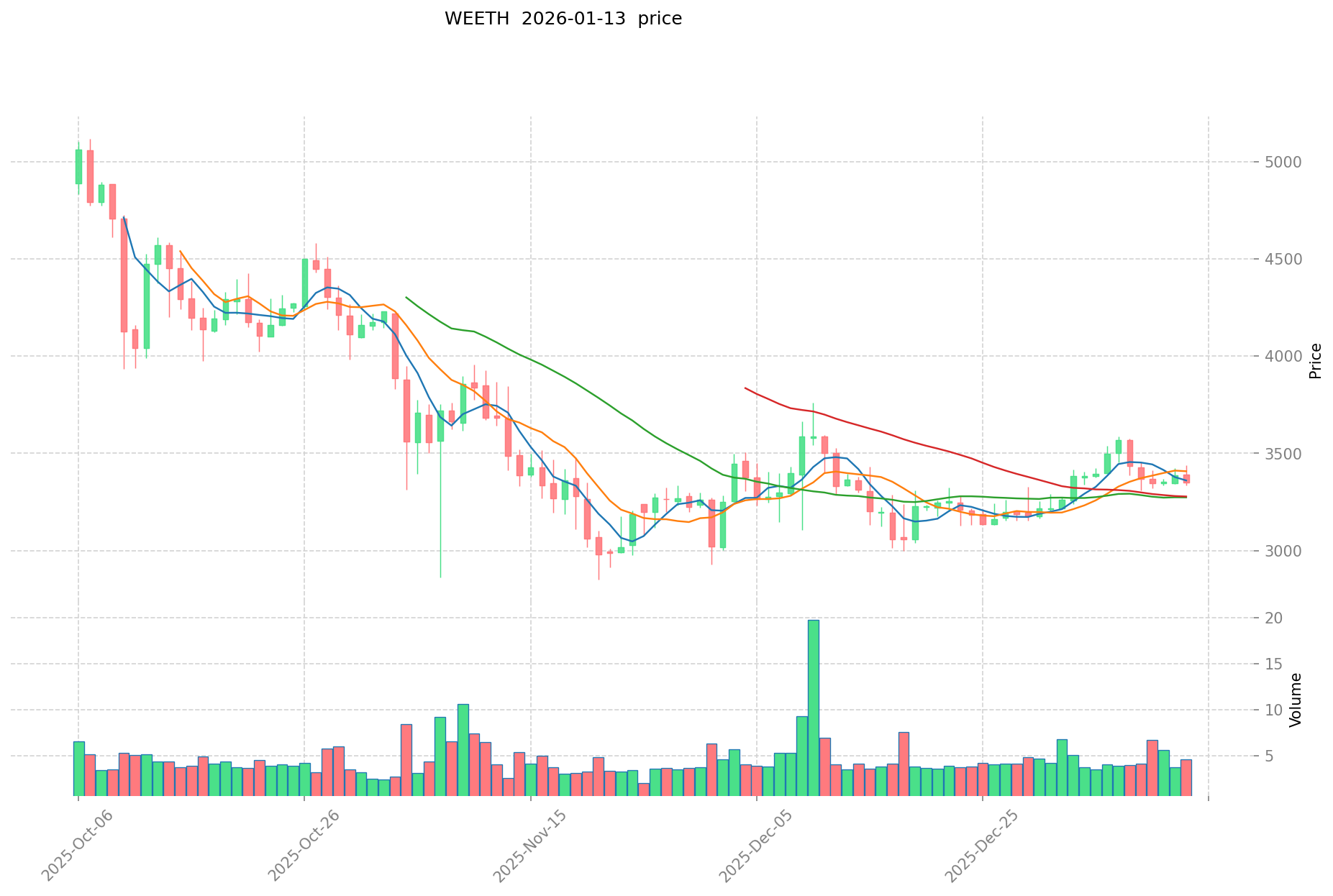
- 2025: The token experienced significant volatility throughout the year. In March 2025, WEETH reached its historical low of 1,461.44, reflecting broader market corrections. However, by August 2025, the token surged to an all-time high of 5,379.82, demonstrating substantial recovery and growth momentum during this period.
- 2026: As of early 2026, WEETH has undergone a price adjustment from its peak levels, currently trading around 3,399.86, representing a decline from the August 2025 highs.
WEETH Current Market Situation
As of January 13, 2026, WEETH is trading at 3,399.86, with a 24-hour trading volume of 15,351.51 tokens. The price has experienced a slight decline of 0.91% over the past 24 hours, with an intraday high of 3,439.19 and a low of 3,336.06. Over the past week, WEETH has decreased by 2.56%, while the 30-day performance shows a positive gain of 1.13%.
The token maintains a circulating supply of 2,944,180.68 WEETH, with a total supply of 2,528,741 tokens and no maximum supply cap. The current market capitalization stands at approximately 10.01 billion, ranking 16th in the cryptocurrency market with a 0.26% market dominance. The market cap to fully diluted valuation ratio is 100%, and the circulating supply represents 120.11% of the total supply, indicating an uncapped token model typical of liquid staking derivatives.
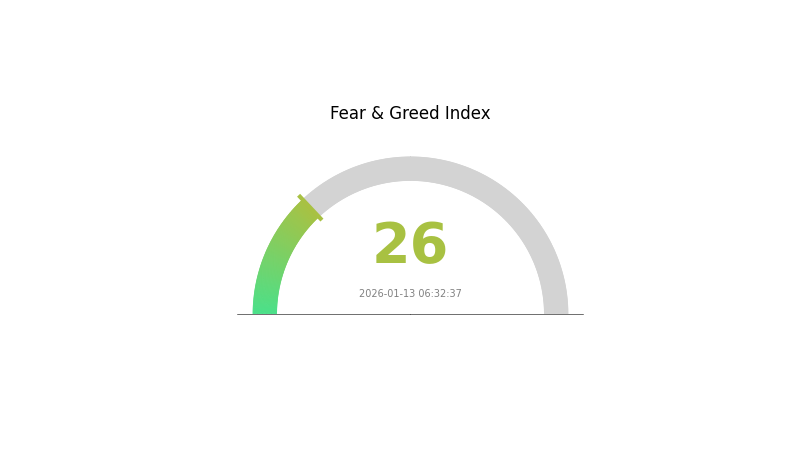
WEETH is deployed on the Ethereum blockchain as an ERC20 token, with its smart contract address at 0xCd5fE23C85820F7B72D0926FC9b05b43E359b7ee. The token is currently available for trading on 2 exchanges, with Gate.com being a primary trading venue. The current market sentiment index stands at 26, classified as "Fear" on the volatility index, suggesting cautious investor positioning in the current market environment.
The year-over-year performance shows a decline of 2.73%, reflecting the broader market adjustments following the August 2025 peak. Trading activity remains consistent with institutional-grade liquid staking tokens, and WEETH continues to serve as a wrapped version of Ether.Fi's eETH, providing users with enhanced composability across DeFi protocols while maintaining staking rewards exposure.
Click to view current WEETH market price
WEETH Market Sentiment Indicator
2026-01-13 Fear and Greed Index: 26 (Fear)
Click to view current Fear & Greed Index
The cryptocurrency market is currently experiencing fear sentiment with an index reading of 26. This level indicates heightened caution among investors as market uncertainty persists. During fearful periods, investors tend to adopt defensive strategies and reduce risk exposure. This environment may present opportunities for contrarian investors seeking favorable entry points. Market participants should remain vigilant, monitor key support levels, and maintain proper risk management protocols. The current sentiment suggests continued volatility, making it essential to stay informed through reliable market data and analysis tools available on Gate.com.
WEETH Holdings Distribution
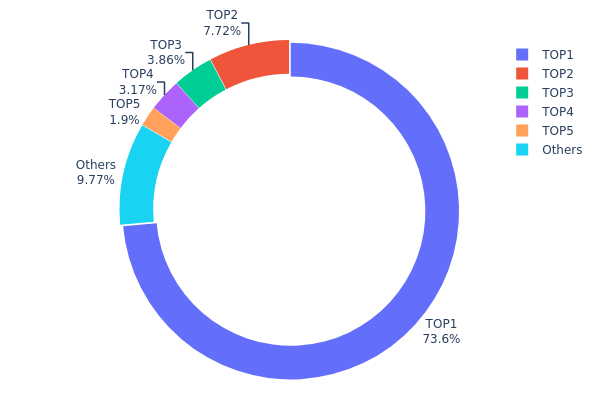
The holdings distribution chart illustrates the concentration of token supply across different wallet addresses, providing insights into the decentralization level and potential market manipulation risks. For WEETH, the current distribution data reveals a highly concentrated ownership structure that warrants careful examination.
According to the latest on-chain data, the top holder controls approximately 2,166.55K WEETH tokens, representing 73.57% of the total circulating supply. This extreme concentration is further reinforced by the second-largest address holding 7.71%, while the third through fifth addresses collectively account for 8.92%. The remaining addresses outside the top five only control 9.8% of the supply. Such a distribution pattern indicates that over 90% of WEETH tokens are held by merely five addresses, presenting a significant centralization concern that could expose the market to elevated volatility and potential price manipulation risks.
This concentration structure may introduce several market implications. The dominant position of the top holder creates substantial selling pressure risks, as any significant movement from this address could trigger sharp price fluctuations. Additionally, the limited distribution among other holders suggests relatively shallow market depth, which could result in amplified price swings during periods of increased trading activity. From a governance perspective, this centralized holding pattern may also affect the decentralization principles typically associated with blockchain assets, potentially impacting investor confidence and long-term market stability.
Click to view current WEETH Holdings Distribution
| Top |
Address |
Holding Qty |
Holding (%) |
| 1 |
0xbdfa...275129 |
2166.55K |
73.57% |
| 2 |
0xcd2e...cdca63 |
227.32K |
7.71% |
| 3 |
0x3cfd...76b008 |
113.54K |
3.85% |
| 4 |
0xa3a7...d60eec |
93.49K |
3.17% |
| 5 |
0xf047...aeafa6 |
56.04K |
1.90% |
| - |
Others |
287.83K |
9.8% |
II. Core Factors Influencing WEETH's Future Price
Supply Mechanism
-
EIP-1559 Fee Burn Mechanism: Introduced in 2021, this mechanism burns a portion of transaction fees, creating deflationary pressure during periods of high network activity. The burning mechanism fundamentally altered Ethereum's supply dynamics, transforming it from an inflationary to potentially deflationary asset during peak usage periods.
-
Historical Pattern: Since the implementation of EIP-1559, over 4 million ETH has been burned, demonstrating the mechanism's effectiveness during periods of elevated network activity. Historical data shows that when daily transaction volumes exceed 1 million, the burn rate can outpace new issuance.
-
Current Impact: With network activity expanding and DeFi Total Value Locked (TVL) projected to grow from the current 80 billion to potentially 120 billion, the deflationary effect is expected to strengthen, providing fundamental support for price appreciation.
Institutional and Whale Dynamics
-
Institutional Holdings: BlackRock's ETH trust holdings reached 832,000 ETH, representing a 218% increase compared to Q4 2024. On August 8, a single day saw record ETF inflows of 461 million, with institutional holdings now accounting for 1.6% of total supply.
-
Enterprise Adoption: Ethereum continues to serve as the dominant settlement layer for stablecoins, tokenized real-world assets (RWA), and decentralized finance (DeFi) applications. Major institutional players have integrated Ethereum-based solutions for cross-border payments and asset management.
-
National Policy: Regulatory clarity is improving in multiple jurisdictions. The potential passage of the CLARITY Act could establish clearer frameworks for digital assets and DeFi, potentially unlocking additional activity across Ethereum ecosystem protocols. Standard Chartered Bank projects 2026 as "Ethereum's year" based on advancing real-world blockchain use cases and strengthening network fundamentals.
Macroeconomic Environment
-
Monetary Policy Impact: The Federal Reserve's anticipated rate cuts (90% probability of a 25 basis point reduction in September) could enhance risk appetite for crypto assets. Market participants generally expect monetary policy easing to create favorable conditions for digital asset appreciation.
-
Inflation Hedge Properties: During periods of elevated inflation, Ethereum's deflationary mechanism and scarcity dynamics position it as an alternative store of value. When network activity intensifies, the token burn rate can exceed new issuance, creating genuine scarcity.
-
Geopolitical Factors: Trade policy developments, such as the US-UK trade agreement that reduced baseline tariffs, have eased global trade tensions and bolstered optimism for risk assets including cryptocurrencies. Traditional equity markets (S&P 500, Nasdaq 100) have shown synchronous rebounds with crypto markets, demonstrating the transmission effects of macroeconomic policy on risk preferences.
Technological Development and Ecosystem Building
-
Pectra Upgrade: This upgrade introduced new functionalities including EIP-7702, which allows standard accounts to temporarily function like smart contracts, enabling one-click multi-operation wallets and sponsored gas fees for users without ETH holdings. The upgrade significantly enhances network efficiency and user experience.
-
Fusaka Upgrade: Scheduled for November 5-12, this mainnet upgrade will increase gas limits by 5x and implement PeerDAS, substantially improving Layer 1 throughput with a target of approximately 10x processing capacity enhancement. Standard Chartered's internal analysis indicates a positive correlation between higher transaction processing capacity and network market capitalization.
-
Ecosystem Applications: Ethereum remains the foundational infrastructure for DeFi, NFTs, GameFi, and decentralized applications (DApps). Layer 2 scaling solutions like Arbitrum and Optimism have achieved widespread adoption, effectively resolving mainnet congestion and high fee issues while enabling low-cost ecosystem access for more users and applications. The Ethereum Foundation allocated 32.64 million in Q1 2025 to support ecosystem projects including ZK proofs and developer tools, strengthening its competitive moat.
III. 2026-2031 WEETH Price Prediction
2026 Outlook
- Conservative prediction: $1,934.04 - $3,393.05
- Neutral prediction: around $3,393.05
- Optimistic prediction: up to $3,596.63 (requires favorable market conditions and increased adoption)
2027-2029 Outlook
- Market stage expectation: WEETH may enter a growth phase driven by Ethereum staking ecosystem expansion and institutional participation
- Price range prediction:
- 2027: $3,005.56 - $4,578.24
- 2028: $3,673.25 - $5,368.60
- 2029: $3,103.70 - $5,502.01
- Key catalysts: enhanced liquidity staking solutions, regulatory clarity, and broader DeFi integration could serve as primary drivers for price appreciation
2030-2031 Long-term Outlook
- Baseline scenario: $4,132.85 - $5,102.29 (assuming steady market growth and maintained staking yields)
- Optimistic scenario: $5,102.29 - $7,551.39 (with increased institutional adoption and favorable regulatory developments)
- Transformative scenario: approaching $7,149.33 - $7,551.39 (under conditions of widespread DeFi adoption and significant Ethereum network upgrades)
- 2026-01-13: WEETH price predictions indicate potential growth trajectory with baseline average around $3,393.05
| Year |
Predicted High Price |
Predicted Average Price |
Predicted Low Price |
Price Change |
| 2026 |
3596.63 |
3393.05 |
1934.04 |
0 |
| 2027 |
4578.24 |
3494.84 |
3005.56 |
3 |
| 2028 |
5368.6 |
4036.54 |
3673.25 |
18 |
| 2029 |
5502.01 |
4702.57 |
3103.7 |
38 |
| 2030 |
7551.39 |
5102.29 |
4132.85 |
50 |
| 2031 |
7149.33 |
6326.84 |
3732.84 |
86 |
IV. WEETH Professional Investment Strategies and Risk Management
WEETH Investment Methodology
(I) Long-Term Holding Strategy
- Target Investors: Crypto investors seeking exposure to Ethereum staking yields with enhanced liquidity
- Operational Recommendations:
- Consider accumulating WEETH during market corrections when the price shows support above $3,300
- Monitor the token's staking yield mechanism and compounding rewards structure
- Storage Solution: Use Gate Web3 Wallet for secure storage with multi-signature protection and regular backup of recovery phrases
(II) Active Trading Strategy
- Technical Analysis Tools:
- Moving Averages: Monitor 50-day and 200-day moving averages to identify trend reversals; current price at $3,399.86 suggests consolidation phase
- Volume Analysis: 24-hour trading volume of $15,351.51 indicates moderate liquidity for position entry and exit
- Swing Trading Key Points:
- Establish position scaling approach between support at $3,336.06 and resistance at $3,439.19
- Set stop-loss orders below recent 24-hour low to manage downside risk
WEETH Risk Management Framework
(I) Asset Allocation Principles
- Conservative Investors: 3-5% of crypto portfolio allocation
- Aggressive Investors: 10-15% of crypto portfolio allocation
- Professional Investors: 15-25% with hedging strategies in place
(II) Risk Hedging Solutions
- Diversification Strategy: Balance WEETH holdings with other LST tokens and base layer assets like ETH
- Position Sizing: Use dollar-cost averaging to mitigate timing risk given recent 7-day decline of 2.56%
(III) Secure Storage Solutions
- Hot Wallet Recommendation: Gate Web3 Wallet for active trading and staking participation
- Cold Storage Solution: Hardware wallet integration for long-term holdings exceeding $10,000
- Security Precautions: Never share private keys, enable two-factor authentication, and verify contract addresses (0xCd5fE23C85820F7B72D0926FC9b05b43E359b7ee) before transactions
V. WEETH Potential Risks and Challenges
WEETH Market Risks
- Price Volatility: WEETH has experienced fluctuations with 30-day change of 1.13% and 1-year decline of 2.73%, indicating sensitivity to broader market conditions
- Liquidity Risk: Trading volume of $15,351.51 may present challenges for large position liquidation during market stress
- Correlation Risk: As an ETH derivative, WEETH price movements closely track Ethereum network performance and sentiment
WEETH Regulatory Risks
- Staking Service Regulation: Evolving global frameworks around liquid staking derivatives may impact token classification and compliance requirements
- Securities Classification Uncertainty: Regulatory bodies in various jurisdictions continue examining whether LST tokens constitute securities
- Cross-Border Compliance: Operating across multiple jurisdictions creates exposure to conflicting regulatory standards
WEETH Technical Risks
- Smart Contract Vulnerability: ERC20 token contract on Ethereum mainnet faces potential exploit risks despite audit procedures
- Oracle Dependency: Price feed mechanisms for wrapped assets may experience delays or manipulation during network congestion
- Protocol Integration Risk: Dependencies on Ether.Fi protocol infrastructure create single points of failure for token functionality
VI. Conclusion and Action Recommendations
WEETH Investment Value Assessment
WEETH represents a liquid staking derivative offering exposure to Ethereum staking yields with enhanced tradability. The token maintains a market capitalization of $10.01 billion with a circulating supply of 2.94 million tokens, representing 120.11% of total supply due to rebasing mechanics. Current market dominance stands at 0.26%, positioning WEETH as a specialized instrument within the DeFi ecosystem. Short-term price action shows consolidation with recent 24-hour decline of 0.91%, while longer-term fundamentals depend on Ethereum network adoption and staking participation rates. Investors should recognize the token's exposure to both ETH price movements and protocol-specific risks.
WEETH Investment Recommendations
✅ Beginners: Start with small position sizes (1-3% of portfolio) to understand LST mechanics; use Gate Web3 Wallet for accessible storage and consider dollar-cost averaging over 3-6 months
✅ Experienced Investors: Implement tactical allocations (5-10%) with technical analysis-based entry points; monitor 7-day and 30-day trends for position adjustments
✅ Institutional Investors: Structure hedged positions with correlation analysis to ETH; evaluate custodial solutions and regulatory compliance frameworks for jurisdiction-specific deployment
WEETH Trading Participation Methods
- Spot Trading: Access WEETH markets on Gate.com with limit orders to optimize entry prices around current $3,399.86 level
- Staking Integration: Hold WEETH to accumulate compounding ETH staking rewards through Ether.Fi protocol
- Portfolio Rebalancing: Use WEETH as a yield-bearing alternative to ETH holdings while maintaining Ethereum network exposure
Cryptocurrency investment carries extremely high risk, and this article does not constitute investment advice. Investors should make prudent decisions based on their own risk tolerance and are advised to consult professional financial advisors. Never invest more than you can afford to lose.
FAQ
What is WEETH? How does it differ from ETH and stETH?
WEETH is a wrapped version of stETH that earns staking rewards while maintaining ERC-20 compatibility. Unlike ETH (native cryptocurrency) and stETH (staking derivative), WEETH offers enhanced liquidity and DeFi utility with continuous reward accrual.
What are the main factors driving WEETH's price?
WEETH's price is primarily driven by supply and demand dynamics, market sentiment, trading volume, and news coverage. Ethereum staking trends and broader market conditions also significantly influence its valuation.
How to analyze WEETH's technical and fundamental aspects to predict price trends?
Analyze WEETH's fundamentals by examining its tokenomics, ecosystem development, and market adoption metrics. Use technical analysis to study price patterns, trading volume, and key support/resistance levels. Combine both analyses with current market news to form a comprehensive price outlook.
WEETH has experienced significant volatility, ranging from a historical low of BTC0.01885 to a peak of BTC0.06288. Currently trading near mid-range levels, the token declined 1.10% over the past 7 days, suggesting consolidation within the broader crypto market dynamics.
What are the main risks to pay attention to when investing in WEETH?
Main risks include market volatility, smart contract vulnerabilities, and liquidity risks. WeETH price fluctuates significantly, technical exploits could cause asset losses, and low trading volume may impact exit liquidity.
What are the advantages and disadvantages of WEETH compared to other staking derivatives such as Lido's stETH?
WEETH offers lower fees and greater trading flexibility compared to stETH, but may have relatively lower liquidity and narrower application scope. stETH maintains advantages in ecosystem integration and broader usage scenarios.
What is the market consensus expectation for WEETH's future price?
Market consensus shows conservative predictions targeting WEETH around $12,300, while optimistic forecasts suggest prices could exceed $250,000. The range reflects varying market sentiment on adoption and ecosystem growth.
How is the liquidity and trading volume of WEETH? What impact does this have on price prediction?
WEETH maintains strong liquidity and trading volume as a leading liquid restaking token. High liquidity ensures price stability and reduces slippage, supporting more accurate price predictions. Strong trading activity indicates healthy market demand, typically driving positive price momentum.
* The information is not intended to be and does not constitute financial advice or any other recommendation of any sort offered or endorsed by Gate.