This comprehensive analysis examines XLM's price trajectory through 2031, examining historical patterns and current market dynamics with XLM trading at $0.22282 and holding the 21st position by market capitalization. The article evaluates core factors driving XLM's value including network adoption, institutional interest, and technical infrastructure capabilities that facilitate rapid, low-cost cross-border payments. Detailed price predictions span 2026-2031 across conservative, neutral, and optimistic scenarios, supported by professional investment strategies including dollar-cost averaging and risk management frameworks. Key insights address market risks, regulatory considerations, and secure storage solutions via Gate, enabling investors to make informed decisions based on their risk tolerance and investment objectives. The guide concludes with actionable recommendations for beginners, experienced investors, and institutional participants seeking exposure to blockchain payment infrastructure.
Introduction: XLM's Market Position and Investment Value
Stellar (XLM), positioned as a decentralized gateway for cross-border digital asset transfers between banks, payment institutions, and individuals, has been facilitating rapid, stable, and low-cost transactions since its launch in 2014. As of 2026, Stellar's market capitalization stands at approximately $7.22 billion, with a circulating supply of around 32.41 billion tokens, and the price maintaining around $0.2228. This asset, recognized for its strong network throughput and cost-efficiency, is playing an increasingly vital role in enabling seamless transfers between digital currencies and fiat money across financial institutions.
This article will comprehensively analyze XLM's price movements from 2026 to 2031, combining historical patterns, market supply and demand dynamics, ecosystem development, and macroeconomic conditions to provide investors with professional price forecasts and practical investment strategies.
I. XLM Price History Review and Current Market Status
XLM Historical Price Evolution Trajectory
- 2014: Stellar project launched on July 31, with an initial issuance price of $0.002, marking the beginning of its journey in the blockchain payment network space
- 2018: Network experienced significant growth momentum, reaching an all-time high of $0.875563 on January 3, demonstrating strong market interest during the cryptocurrency bull market
- 2015-2025: The price experienced considerable volatility, with the all-time low of $0.00047612 recorded on March 5, 2015, reflecting the early-stage challenges and market uncertainty
- Recent Period: Over the past year, XLM has faced downward pressure with a decline of 47.21%, influenced by broader market conditions and sector adjustments
XLM Current Market Status
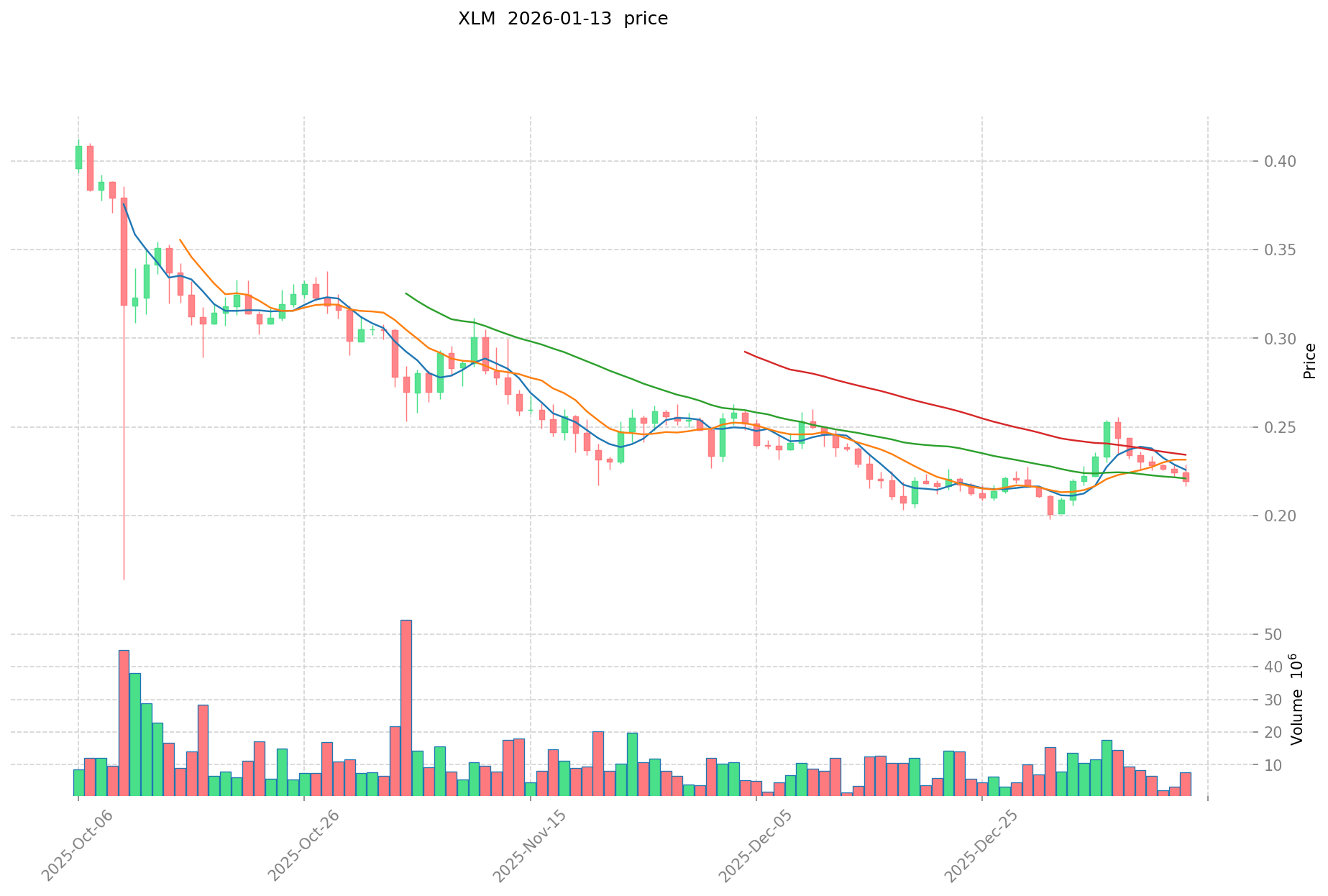
As of January 13, 2026, XLM is trading at $0.22282, showing a slight decrease of 0.36% over the past 24 hours. The 24-hour trading range has been between $0.21635 and $0.2246, indicating moderate intraday volatility.
The cryptocurrency currently holds the 21st position by market capitalization, with a circulating market cap of approximately $7.22 billion. The circulating supply stands at 32.41 billion XLM, representing 64.83% of the maximum supply of 50 billion tokens. The fully diluted market capitalization reaches $11.14 billion.
Recent price trends show mixed momentum: while the 1-hour performance indicates a modest gain of 0.069%, the asset has experienced declines across longer timeframes, with a 9.31% decrease over 7 days and a 5.53% drop over 30 days. The 24-hour trading volume totals approximately $1.55 million.
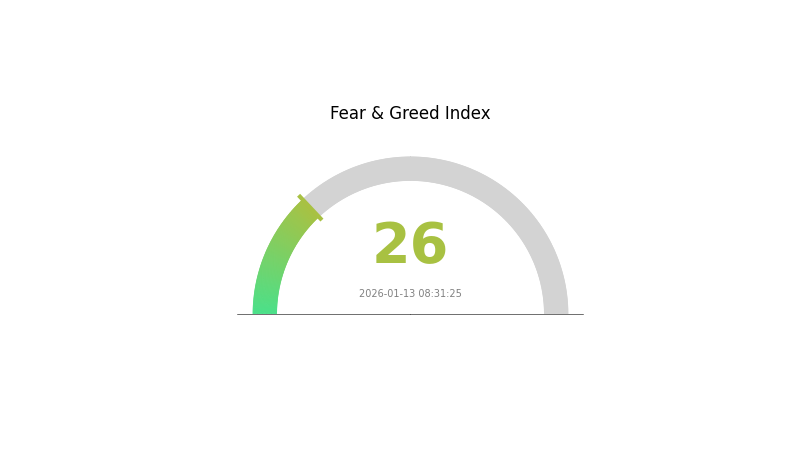
Market sentiment currently reflects a fear index of 26, suggesting cautious investor behavior in the broader cryptocurrency market. XLM maintains a market dominance of 0.34%, with an active holder base of over 10.2 million addresses. The token is listed on 67 exchanges, with trading available on Gate.com.
Click to view current XLM market price
XLM Market Sentiment Indicator
2026-01-13 Fear and Greed Index: 26 (Fear)
Click to view the current Fear & Greed Index
Current market sentiment shows significant fear among investors, with the index reading 26 indicating heightened anxiety. This fear-driven environment typically presents opportunities for contrarian investors, as extreme sentiment often precedes market reversals. XLM traders should exercise caution while monitoring potential accumulation opportunities. When fear dominates, volatility increases, making risk management essential. Consider adjusting portfolio positions based on your investment strategy and risk tolerance during such periods.
XLM Holdings Distribution
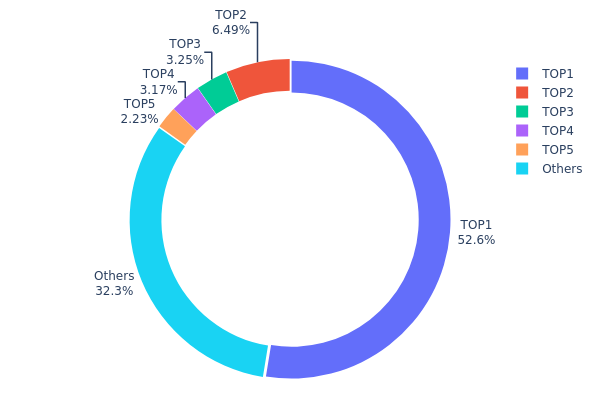
The holdings distribution chart illustrates the allocation of XLM tokens across different addresses within the network, reflecting the degree of concentration among major holders. This metric serves as a critical indicator of decentralization and potential market structure risks, as excessive concentration in a few addresses may amplify price volatility and increase susceptibility to coordinated market actions.
Based on the current data, XLM exhibits a moderate to high level of concentration. The top-ranked address (GALAXY...ZILUTO) holds approximately 554.42 billion XLM, accounting for 52.57% of the total supply—a significantly dominant position. The second-largest holder (GDUY7J...LDERI4) controls 68.46 billion XLM (6.49%), while the third through fifth addresses hold between 2.22% and 3.24% respectively. Collectively, the top five addresses control 67.69% of the circulating supply, with the remaining 32.31% distributed among other participants.
This concentration pattern presents a dual-edged scenario for market dynamics. On one hand, the dominance of the largest address—likely representing a foundation, institutional reserve, or escrow account—creates structural imbalances that could trigger substantial price swings if any portion of these holdings enters active circulation. The relatively modest holdings of the second through fifth addresses, while still significant, suggest limited diversification among major stakeholders. On the other hand, the 32.31% allocation to smaller participants indicates some degree of retail and institutional distribution, which may provide marginal liquidity buffers during market stress periods.
Click to view the current XLM Holdings Distribution
| Top |
Address |
Holding Qty |
Holding (%) |
| 1 |
GALAXY...ZILUTO |
554421152.04K |
52.57% |
| 2 |
GDUY7J...LDERI4 |
68461825.55K |
6.49% |
| 3 |
GDKIJJ...CCWNMX |
34265991.80K |
3.24% |
| 4 |
GBFZPA...ZJJFNP |
33459507.10K |
3.17% |
| 5 |
GB6NVE...4MY4AQ |
23508201.71K |
2.22% |
| - |
Others |
340322342.68K |
32.31% |
II. Core Factors Influencing XLM's Future Price
Network Development and Adoption Dynamics
- Partnership Expansion: Stellar has established collaborations with multiple enterprises and financial institutions, enhancing the network's utility and appeal. These strategic partnerships play a crucial role in expanding XLM's real-world applications.
- Cross-Border Payment Solutions: One of Stellar's primary use cases involves facilitating cross-border payments, particularly in regions where traditional banking services are insufficient or prohibitively expensive. As global demand for financial inclusion increases, adoption of the Stellar network may correspondingly grow.
- Ecosystem Growth: The active community and developer ecosystem remain vital for Stellar's innovation trajectory. Community engagement and sustained support for Stellar projects can strengthen its market position.
Institutional and Market Sentiment
- Institutional Interest: Although specific large-scale institutional holdings fluctuate, increased demand from institutional investors could support price appreciation. The network's focus on enterprise-grade solutions positions it favorably for institutional adoption.
- Enterprise Integration: Stellar's commitment to connecting diverse financial systems and enabling instant, secure fund transfers attracts businesses seeking efficient payment infrastructure.
- Regulatory Environment: The evolving regulatory landscape significantly impacts XLM's trajectory. Clearer regulatory frameworks could facilitate broader institutional participation and market confidence.
Macroeconomic Conditions
- Market Sentiment Impact: The overall trends within the cryptocurrency market substantially influence XLM's price movements. When broader crypto market conditions turn bullish, investor confidence typically rises, potentially benefiting XLM alongside other digital assets.
- Economic Policy Considerations: Macro-economic factors, including monetary policy shifts and global financial conditions, affect risk appetite for crypto assets and can create price volatility.
Technical Infrastructure and Network Capabilities
- Smart Contract Functionality: While Stellar's smart contract capabilities are relatively straightforward compared to some platforms, they sufficiently support various financial use cases. Ongoing improvements to these functions could expand the network's application scope.
- Transaction Efficiency: Stellar's decentralized blockchain platform, powered by the Stellar Consensus Protocol, ensures rapid and cost-effective transactions without energy-intensive mining processes. This technical foundation supports its value proposition for cross-border payments.
- On-Chain Innovation: Recent developments include the completion of the first fully on-chain Universal Basic Income (UBI) distribution through the Stellar network, demonstrating blockchain's practical utility beyond speculation. Such implementations showcase the platform's capability to address real-world financial challenges with transparent, auditable processes.
III. 2026-2031 XLM Price Prediction
2026 Outlook
- Conservative Prediction: $0.13594 - $0.15906
- Neutral Prediction: $0.19440 - $0.25132
- Optimistic Prediction: $0.26853 - $0.29418 (requires favorable market conditions and increased institutional adoption)
2027-2029 Outlook
- Market Stage Expectation: Gradual growth phase with periodic consolidation, potentially influenced by broader cryptocurrency market cycles and Stellar network development progress
- Price Range Predictions:
- 2027: $0.22491 - $0.28437
- 2028: $0.24701 - $0.37731
- 2029: $0.18814 - $0.41196
- Key Catalysts: Network expansion, strategic partnerships in cross-border payment sectors, and potential integration with financial institutions
2030-2031 Long-term Outlook
- Baseline Scenario: $0.34608 - $0.39762 (assuming steady network growth and stable market conditions)
- Optimistic Scenario: $0.36817 - $0.49776 (contingent on significant protocol upgrades and widespread enterprise adoption)
- Transformative Scenario: Approaching $0.50 (requires breakthrough developments in decentralized finance applications and substantial regulatory clarity)
- 2026-01-13: XLM price predictions indicate potential growth trajectory with estimated average price around $0.22286 (based on current market analysis)
| Year |
Predicted High Price |
Predicted Average Price |
Predicted Low Price |
Price Change |
| 2026 |
0.29418 |
0.22286 |
0.13594 |
0 |
| 2027 |
0.28437 |
0.25852 |
0.22491 |
16 |
| 2028 |
0.37731 |
0.27144 |
0.24701 |
21 |
| 2029 |
0.41196 |
0.32437 |
0.18814 |
45 |
| 2030 |
0.39762 |
0.36817 |
0.34608 |
65 |
| 2031 |
0.49776 |
0.38289 |
0.30248 |
71 |
IV. XLM Professional Investment Strategies and Risk Management
XLM Investment Methodology
(1) Long-term Holding Strategy
- Suitable for: Investors seeking exposure to blockchain-based payment infrastructure with a long-term perspective
- Operational Recommendations:
- Consider dollar-cost averaging to mitigate short-term price volatility, particularly given XLM's 47.21% decline over the past year
- Monitor network adoption metrics and partnership developments as indicators of long-term value
- Storage Solution: Utilize Gate Web3 Wallet for secure custody, ensuring private key management and backup procedures are properly implemented
(2) Active Trading Strategy
- Technical Analysis Tools:
- Support and Resistance Levels: Monitor the 24-hour range between $0.21635 (low) and $0.2246 (high) to identify potential entry and exit points
- Volume Analysis: Track the current 24-hour trading volume of $1.55 million to assess market liquidity and trading opportunities
- Swing Trading Considerations:
- Observe the weekly trend showing a 9.31% decline, which may present tactical opportunities for mean reversion strategies
- Set stop-loss orders to manage downside risk, particularly given recent negative momentum across multiple timeframes
XLM Risk Management Framework
(1) Asset Allocation Principles
- Conservative Investors: 1-3% portfolio allocation, focusing on capital preservation
- Moderate Investors: 3-7% portfolio allocation, balancing growth potential with risk management
- Aggressive Investors: 7-15% portfolio allocation, accepting higher volatility for potential returns
(2) Risk Hedging Approaches
- Diversification Strategy: Balance XLM holdings with other digital assets and traditional investments to reduce concentration risk
- Position Sizing: Avoid over-allocation given XLM's current market dominance of 0.34% and recent price performance
(3) Secure Storage Solutions
- Hot Wallet Recommendation: Gate Web3 Wallet for active trading and convenient access
- Cold Storage Approach: Consider hardware wallet solutions for long-term holdings exceeding significant value thresholds
- Security Precautions: Enable two-factor authentication, maintain offline backups of recovery phrases, and verify all transaction addresses before confirming transfers
V. XLM Potential Risks and Challenges
XLM Market Risks
- Price Volatility: XLM has experienced a 47.21% decline over the past year, demonstrating significant price fluctuation potential
- Liquidity Considerations: With a circulating supply of 32.41 billion tokens (64.83% of maximum supply), market dynamics may be influenced by large holder movements
- Market Sentiment: Recent negative momentum across 7-day (-9.31%) and 30-day (-5.53%) periods reflects challenging market conditions
XLM Regulatory Risks
- Cross-border Payment Scrutiny: As a platform facilitating transfers between digital and fiat currencies, XLM may face evolving regulatory frameworks affecting payment networks
- Compliance Requirements: Banks and payment institutions using the Stellar network may need to navigate changing regulatory landscapes across different jurisdictions
- Policy Uncertainty: The broader cryptocurrency regulatory environment remains in flux, potentially impacting adoption and usage
XLM Technical Risks
- Network Competition: Despite strong throughput capabilities and low-cost characteristics, XLM faces competition from other blockchain payment solutions
- Adoption Dependency: The platform's value proposition relies on continued adoption by financial institutions and payment providers
- Smart Contract Ecosystem: Compared to more established platforms, the Stellar network may have limitations in certain decentralized application use cases
VI. Conclusion and Action Recommendations
XLM Investment Value Assessment
XLM represents a specialized blockchain infrastructure focused on facilitating low-cost, rapid transfers between digital and fiat currencies. With a current price of $0.22282 and market capitalization of $7.22 billion (ranking 21st), the token has experienced significant price pressure over the past year. The platform's core value proposition centers on its network efficiency and cost advantages, which have attracted various projects to issue assets on the Stellar network. However, recent negative momentum across multiple timeframes and substantial distance from its all-time high of $0.875563 (reached on January 3, 2018) suggest investors should carefully evaluate risk-reward profiles before committing capital.
XLM Investment Recommendations
✅ Beginners: Start with minimal allocation (1-2% of crypto portfolio) to understand the technology and market dynamics; utilize dollar-cost averaging through Gate.com to reduce timing risk
✅ Experienced Investors: Consider XLM as a component of a diversified digital asset portfolio (3-7%), monitoring network development metrics and partnership announcements for tactical adjustments
✅ Institutional Investors: Evaluate XLM's role in blockchain payment infrastructure strategies, conducting thorough due diligence on network economics, adoption trends, and regulatory considerations
XLM Trading Participation Methods
- Spot Trading: Purchase XLM directly on Gate.com with various fiat and cryptocurrency pairs for straightforward exposure
- Portfolio Integration: Include XLM as part of a broader cryptocurrency allocation strategy, balancing with other digital assets
- Research-Based Approach: Monitor developments in the Stellar ecosystem, including new asset issuances and institutional partnerships, to inform investment decisions
Cryptocurrency investment carries extremely high risk, and this article does not constitute investment advice. Investors should make prudent decisions based on their own risk tolerance and are advised to consult professional financial advisors. Never invest more than you can afford to lose.
FAQ
What is XLM (Stellar Lumens) and what practical application value does it have?
XLM is the native cryptocurrency of Stellar network, designed for fast, low-cost cross-border payments. It facilitates instant transactions in 3-5 seconds, serves as a bridge currency for asset exchanges, and powers the network's decentralized infrastructure for global financial inclusion.
What is the price prediction for XLM in 2024-2025?
Based on market analysis, XLM price predictions for 2024-2025 range from 0.1632 USD to 0.2440 USD on the bullish side, with bearish predictions around 0.0704 USD. Some analysts suggest XLM could potentially reach 1 USD.
What are the main factors affecting XLM price fluctuations?
XLM price is primarily influenced by market sentiment, overall cryptocurrency market trends, and trading volume. Investor confidence, major news events, and Stellar network developments also significantly impact its price movements.
What advantages does XLM have compared to other mainstream cryptocurrencies like XRP and USDC?
XLM offers ultra-low fees (0.00001 XLM per transaction), 2-5 second settlement, and strong institutional partnerships with Mastercard and PayPal. Unlike XRP's enterprise focus, XLM prioritizes financial inclusion and retail payments. Compared to USDC, XLM provides a complete blockchain infrastructure for cross-border transfers with superior cost efficiency.
What risks and precautions should be noted when investing in XLM?
When investing in XLM, be aware of security risks including hacking attacks, wallet information leaks, and smart contract vulnerabilities. Use hardware wallets, strong passwords, and never share private keys publicly to protect your assets.
How to predict XLM's short-term price movements through technical analysis?
Monitor key resistance and support levels, analyze trading volume, track moving averages and RSI indicators. Watch for breakouts above resistance or breakdowns below support. Use candlestick patterns and trend lines to identify entry and exit signals for short-term price predictions.
* The information is not intended to be and does not constitute financial advice or any other recommendation of any sort offered or endorsed by Gate.