This comprehensive analysis explores ZBU's price trajectory from 2026 to 2031, examining ZEEBU's position as a Web3 Neobank for telecommunications. The article reviews historical price movements, current market status with ZBU trading at $0.526, and core factors including supply mechanisms, institutional dynamics, and ecosystem development. Detailed price predictions range from $0.42-$0.68 in 2026 to potentially $0.48-$0.99 by 2031, based on conservative, neutral, and optimistic scenarios. The guide provides professional investment strategies including long-term holding and active trading approaches, comprehensive risk management frameworks, and security solutions via Gate exchange. Critical risk factors including market volatility, regulatory uncertainty, and technical challenges are thoroughly analyzed, with actionable recommendations for beginners, experienced investors, and institutions seeking exposure to ZBU's growth potential.
Introduction: ZBU's Market Position and Investment Value
ZEEBU (ZBU), positioned as a next-generation Web3 Neobank for the telecommunications sector, has been making strides in revolutionizing telecom payment ecosystems since its launch in 2023. As of 2026, ZBU has achieved a market capitalization of approximately $217.57 million, with a circulating supply of around 413.63 million tokens, and a current trading price hovering near $0.526. This asset, recognized as a loyalty token integrated with an on-chain invoice settlement platform, is playing an increasingly vital role in providing unified payment solutions for telecom carriers and businesses.
This article will comprehensively analyze ZBU's price trends from 2026 to 2031, combining historical patterns, market supply and demand dynamics, ecosystem development, and macroeconomic conditions to provide investors with professional price forecasts and practical investment strategies.
I. ZBU Price History Review and Market Status
ZBU Historical Price Evolution Trajectory
- 2023: ZEEBU launched with an initial offering price of $1.6, and the price reached a historical low of $0.162 on November 9, 2023, reflecting early market volatility and adjustment period.
- 2024: The token experienced substantial growth momentum, reaching an all-time high of $6.6 on December 17, 2024, representing a significant appreciation from its launch price.
- 2025-2026: Following the peak in late 2024, the price underwent a correction phase, declining from the high of $6.6 to current levels around $0.526, reflecting broader market adjustments.
ZBU Current Market Status
As of January 16, 2026, ZBU is trading at $0.526, with a 24-hour trading range between $0.5173 and $0.5275. The token has experienced a modest decline of 0.54% over the past 24 hours, with a trading volume of approximately $20,697.
The recent price performance shows varied momentum across different timeframes. Over the past hour, ZBU decreased by 0.046%, while the 7-day performance indicates an 8.55% decline. The 30-day trend reflects a 21.95% decrease, and the one-year performance shows an 87.56% reduction from previous levels.
ZBU currently holds a market ranking of #226, with a circulating supply of approximately 413.63 million tokens out of a maximum supply of 5 billion tokens, representing a circulation ratio of 8.27%. The market capitalization stands at approximately $217.57 million, while the fully diluted valuation reaches $2.63 billion. The token maintains a market dominance of 0.077%.
The current market sentiment index registers at 61, indicating a "Greed" phase in the broader market environment. ZBU is available for trading on Gate.com and four other exchanges, with approximately 14 token holders tracked.
Click to view the current ZBU market price

ZBU Market Sentiment Index
2026-01-15 Fear and Greed Index: 61 (Greed)
Click to view the current Fear & Greed Index
The cryptocurrency market is currently displaying strong greed sentiment, with the Fear and Greed Index standing at 61. This reading indicates that market participants are exhibiting elevated optimism and risk appetite. When the index reaches this level, investors tend to be more aggressive in their trading positions and capital allocation. However, such high greed levels historically precede market corrections, so traders should remain cautious and implement proper risk management strategies. It is advisable to monitor market developments closely and avoid over-leveraging positions during periods of excessive optimism.

ZBU Holding Distribution
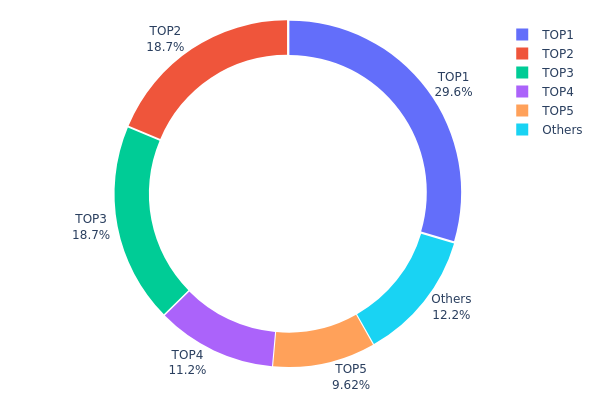
The holding distribution chart reveals the allocation of ZBU tokens across different wallet addresses, serving as a key indicator of token concentration and market structure. According to the latest on-chain data, the top 5 addresses collectively control approximately 87.76% of the total ZBU supply, with the largest holder possessing 791,666.67K tokens (29.58%), followed by two addresses each holding 500,000.00K tokens (18.68%). The remaining addresses outside the top 5 account for only 12.24% of the total supply, indicating a highly centralized holding pattern.
This concentration level suggests significant centralization risk in ZBU's market structure. When a small number of addresses control such a substantial portion of the circulating supply, it creates potential vulnerabilities including heightened price volatility, reduced market liquidity, and increased susceptibility to large-scale sell-offs. The dominance of the top holder, controlling nearly 30% of the supply, particularly warrants attention as any significant movement from this address could trigger substantial market fluctuations.
From a decentralization perspective, ZBU's current holding distribution reflects a relatively immature token economy structure. While some concentration among early investors, team allocations, or institutional holdings is common in emerging projects, the 87.76% concentration among top 5 addresses exceeds typical industry standards for established tokens. This pattern may indicate either an early development stage or strategic holding arrangements, which could impact long-term market stability and organic price discovery mechanisms as the project evolves.
Click to view current ZBU Holding Distribution
| Top |
Address |
Holding Qty |
Holding (%) |
| 1 |
0x5d19...4327bc |
791666.67K |
29.58% |
| 2 |
0x4c79...adba55 |
500000.00K |
18.68% |
| 3 |
0xae0c...f0d6ca |
500000.00K |
18.68% |
| 4 |
0xef83...fd0da5 |
300000.00K |
11.21% |
| 5 |
0x4922...e6a12a |
257301.95K |
9.61% |
| - |
Others |
326816.73K |
12.24% |
II. Core Factors Influencing ZBU's Future Price
Supply Mechanism
-
Economic Recovery and Consumer Demand: The gradual recovery of the economy in 2026 is expected to drive consumer demand, particularly in service consumption and quality upgrades. Sectors such as dining experiences, cultural tourism, and premium daily goods may see modest price increases, which could indirectly support demand for digital assets like ZBU as disposable income rises.
-
Historical Patterns: Past economic cycles show that when consumer confidence strengthens and spending increases, risk assets including cryptocurrencies tend to benefit from improved market sentiment and liquidity inflows.
-
Current Impact: With China's Consumer Price Index (CPI) and Producer Price Index (PPI) remaining relatively low in 2025, there exists room for rebound. As consumption patterns shift toward higher value and digital services, ZBU may experience increased adoption if positioned within growing digital consumption ecosystems.
Institutional and Major Holder Dynamics
-
Institutional Holdings: While specific institutional positions in ZBU are not detailed in available materials, the broader trend shows institutional interest in digital assets is growing, particularly in Asia where regulatory frameworks are evolving to accommodate crypto investments.
-
Corporate Adoption: Information regarding major corporations specifically adopting ZBU is not provided in the reference materials. However, the expansion of digital consumption platforms and e-commerce ecosystems in China creates potential partnerships for blockchain-based payment solutions.
-
National Policies: China continues to emphasize high-quality economic development through its 15th Five-Year Plan, focusing on technological innovation, digital economy integration, and consumption upgrading. These policy directions may create favorable conditions for compliant digital assets, though regulatory clarity remains essential.
Macroeconomic Environment
-
Monetary Policy Impact: Central banks across Asia, including China's People's Bank, are expected to maintain moderately supportive monetary policies in 2026. China's policy rates are projected to remain stable with targeted adjustments rather than aggressive cuts, balancing growth support with inflation management and banking sector profitability.
-
Inflation Hedge Attributes: With global commodity prices showing mixed trends and China's inflation expected to remain moderate around 2%, ZBU's performance as an inflation hedge will depend on its positioning relative to traditional safe-haven assets. International gold prices are projected to continue strengthening, which may set a comparative benchmark.
-
Geopolitical Factors: Trade tensions and supply chain restructuring continue to reshape global economic dynamics. China's export competitiveness remains strong despite protectionist measures, and the country's role in AI infrastructure development presents both opportunities and challenges for technology-linked digital assets.
Technological Development and Ecosystem Building
-
Digital Consumption Integration: China's digital consumption market demonstrates strong momentum with e-commerce penetration reaching 47%, far exceeding developed markets. The integration of AI technologies into consumption platforms, enabling precision recommendations and automated services, creates infrastructure that could support blockchain-based solutions.
-
Instant Retail and On-Demand Services: The rapid growth of instant retail, projected to exceed 1 trillion yuan by 2026, reflects evolving consumer preferences for immediate gratification. Digital payment and settlement solutions that can support this ecosystem may find increased adoption.
-
Ecosystem Applications: The expansion of digital services including online education, internet healthcare, and digital entertainment, with user bases reaching hundreds of millions, creates potential use cases for blockchain applications in identity verification, micro-payments, and value transfer within these growing sectors.
III. 2026-2031 ZBU Price Prediction
2026 Outlook
- Conservative Forecast: $0.42-$0.52
- Neutral Forecast: $0.52-$0.68
- Optimistic Forecast: $0.68+ (requires favorable market conditions and increased adoption)
2027-2029 Mid-term Outlook
- Market Phase Expectation: ZBU may enter a gradual growth phase with increasing volatility as the market matures and adoption expands
- Price Range Predictions:
- 2027: $0.44-$0.71
- 2028: $0.42-$0.72
- 2029: $0.58-$0.76
- Key Catalysts: Market expansion, technological developments, and broader ecosystem integration could drive price appreciation during this period
2030-2031 Long-term Outlook
- Baseline Scenario: $0.42-$0.73 (assuming steady market development and moderate adoption rates)
- Optimistic Scenario: $0.73-$1.04 (with accelerated ecosystem growth and favorable regulatory environment)
- Transformative Scenario: $1.04+ in 2030 (under exceptional conditions including significant institutional adoption and breakthrough developments)
- 2031-12-31: ZBU could potentially reach $0.48-$0.99 range (reflecting cumulative growth of approximately 67% from 2026 baseline under favorable conditions)
| Year |
Predicted High Price |
Predicted Average Price |
Predicted Low Price |
Price Change |
| 2026 |
0.68237 |
0.5249 |
0.41992 |
0 |
| 2027 |
0.70625 |
0.60364 |
0.44065 |
14 |
| 2028 |
0.72044 |
0.65494 |
0.41916 |
24 |
| 2029 |
0.76334 |
0.68769 |
0.58454 |
30 |
| 2030 |
1.03749 |
0.72551 |
0.4208 |
37 |
| 2031 |
0.98728 |
0.8815 |
0.48482 |
67 |
IV. ZBU Professional Investment Strategy and Risk Management
ZBU Investment Methodology
(I) Long-term Holding Strategy
- Suitable for: Investors who believe in the long-term development of Web3 telecom payment infrastructure and have medium to high risk tolerance
- Operational Recommendations:
- Consider dollar-cost averaging (DCA) to build positions gradually, reducing entry price volatility impact
- Monitor the adoption rate of ZEEBU's on-chain invoice settlement platform among telecom carriers and enterprises
- Storage solution: Use Gate Web3 Wallet for secure asset custody with multi-signature protection enabled
(II) Active Trading Strategy
- Technical Analysis Tools:
- Moving Averages: Use 20-day and 50-day moving averages to identify trend reversals and potential entry/exit points
- Volume Analysis: Monitor trading volume patterns alongside price movements to confirm trend strength
- Swing Trading Key Points:
- Pay attention to price reactions near the 24-hour range of $0.5173-$0.5275 for short-term opportunities
- Set stop-loss orders to limit downside risk, particularly given the recent 7-day decline of 8.55%
ZBU Risk Management Framework
(I) Asset Allocation Principles
- Conservative investors: 1-3% of crypto portfolio
- Aggressive investors: 5-8% of crypto portfolio
- Professional investors: Up to 10% of crypto portfolio with active hedging strategies
(II) Risk Hedging Solutions
- Portfolio diversification: Combine ZBU with established cryptocurrencies and stablecoins to reduce concentration risk
- Position sizing: Scale positions based on market conditions and avoid overexposure during high volatility periods
(III) Security Storage Solutions
- Hot wallet recommendation: Gate Web3 Wallet for convenient trading access with enhanced security features
- Cold storage solution: Consider hardware wallet integration for long-term holdings exceeding investment thresholds
- Security precautions: Enable two-factor authentication, regularly update security settings, and never share private keys or seed phrases
V. ZBU Potential Risks and Challenges
ZBU Market Risks
- Price volatility: ZBU has experienced significant price fluctuations, with a 1-year decline of 87.56% from its all-time high of $6.6 in December 2024
- Limited liquidity: With a circulating supply of approximately 413.6 million tokens representing only 8.27% of total supply, potential token unlocks may create selling pressure
- Market cap correlation: Current market dominance of 0.077% indicates sensitivity to broader cryptocurrency market movements
ZBU Regulatory Risks
- Telecom sector regulations: Changes in telecommunications industry regulations across different jurisdictions may impact ZEEBU's business model
- Crypto payment regulations: Evolving regulatory frameworks for cryptocurrency-based payment systems could affect platform adoption
- Cross-border settlement compliance: International payment regulations may pose challenges for global telecom carrier participation
ZBU Technical Risks
- Smart contract vulnerabilities: As a BSC-based token, ZBU relies on blockchain security and smart contract auditing
- Platform adoption uncertainty: The success of ZEEBU's loyalty token depends on widespread adoption by telecom operators and enterprises
- Technology competition: Emerging blockchain-based payment solutions in the telecom sector may create competitive pressures
VI. Conclusion and Action Recommendations
ZBU Investment Value Assessment
ZBU represents an innovative approach to telecom payment infrastructure through its Web3 Neobank model combining loyalty tokens with on-chain invoice settlement. The long-term value proposition centers on addressing inefficiencies in telecom carrier payment systems. However, investors should note the significant short-term risks, including substantial price depreciation over the past year, low circulating supply ratio, and early-stage adoption challenges. The project's success depends heavily on achieving meaningful adoption among telecom carriers and enterprises.
ZBU Investment Recommendations
✅ Beginners: Start with small allocations (1-2% of crypto portfolio) and focus on understanding the project fundamentals before increasing exposure
✅ Experienced investors: Consider strategic entry points during market corrections, implement disciplined position sizing, and monitor adoption metrics closely
✅ Institutional investors: Conduct thorough due diligence on ZEEBU's business partnerships, evaluate tokenomics structure, and assess regulatory landscape before deployment
ZBU Trading Participation Methods
- Spot trading: Purchase ZBU directly on Gate.com with various trading pairs for straightforward exposure
- Dollar-cost averaging: Establish systematic purchase plans to mitigate timing risk and smooth entry prices
- Portfolio integration: Include ZBU as part of a diversified Web3 infrastructure investment strategy alongside other sector projects
Cryptocurrency investment carries extremely high risks, and this article does not constitute investment advice. Investors should make prudent decisions based on their own risk tolerance and are advised to consult professional financial advisors. Never invest more than you can afford to lose.
FAQ
What is ZBU? What are its uses and value?
ZBU is a cryptocurrency designed for Web3.0 ecosystems, enabling governance, payments, and incentive mechanisms. It supports decentralized applications and promotes community participation. Its value derives from enhanced platform functionality and ecosystem utility.
What are the main factors affecting ZBU price?
ZBU price is primarily influenced by market supply and demand, trading volume, market sentiment, technology updates, regulatory environment, and macroeconomic conditions. These factors collectively determine price movements and market trends.
How to predict ZBU price? What are the analysis methods?
ZBU price prediction uses technical analysis (support/resistance levels, moving averages), fundamental analysis (project development, adoption metrics), and quantitative methods (regression analysis, time series modeling). Combine historical price data, trading volume, and market sentiment for comprehensive analysis.
What is ZBU's historical price trend? What stage is it currently in?
ZBU has experienced volatility recently. Over the past 24 hours, it declined 0.09%, while the 7-day period showed a 1.55% gain. However, the 30-day and 3-month periods reflected significant declines of 37.66% and 66.94% respectively, indicating the token is in a consolidation and recovery phase.
What are the risks to be aware of when investing in ZBU?
ZBU investment carries market volatility risk, regulatory uncertainty, liquidity risk, and potential price fluctuations. Consider your risk tolerance before investing, as crypto markets are highly dynamic and unpredictable.
What are the advantages or disadvantages of ZBU compared to other similar tokens?
ZBU offers fast transaction speeds and low fees with stable value and strong community support. However, it has limited technological innovation compared to competitors and may face development challenges.
What are professional analysts' price predictions for ZBU in the future?
Professional analysts project ZBU's future price based on token economics, adoption trends, and market sentiment. Predictions consider supply dynamics, ecosystem growth, and broader crypto market conditions. Long-term outlook remains positive given ZBU's utility within the telecom industry.
* The information is not intended to be and does not constitute financial advice or any other recommendation of any sort offered or endorsed by Gate.