This comprehensive analysis examines CHESS (Tranchess) token dynamics through 2026-2031, providing expert price forecasts and actionable investment strategies. Currently trading at $0.02948 with a $6.07 million market cap, CHESS faces significant challenges including 80.65% year-over-year decline and high concentration risks from whale holders controlling 83.49% of supply. The article projects conservative 2026 price range of $0.02007-$0.03512, with potential recovery to $0.04555-$0.06287 by 2031 under favorable conditions. Key drivers include protocol development, ecosystem adoption, and broader DeFi market sentiment. Risk management strategies recommend portfolio allocation of 1-8% depending on investor profile, emphasizing diversification, secure storage on Gate Web3 Wallet, and disciplined position sizing to navigate volatility and regulatory uncertainties in this specialized tokenized asset management protocol.
Introduction: CHESS's Market Position and Investment Value
Tranchess (CHESS), as a tokenized asset management and derivatives trading protocol, has been operating since 2021 and has established its presence in the decentralized finance sector. As of 2026, CHESS maintains a market capitalization of approximately $6.07 million, with a circulating supply of around 205.97 million tokens, trading at $0.02948. This protocol, inspired by tranche fund structures that cater to investors with different risk preferences, is playing a role in the tokenized asset management space.
This article will comprehensively analyze CHESS's price trends from 2026 to 2031, combining historical patterns, market supply and demand dynamics, ecosystem development, and macroeconomic conditions to provide professional price forecasts and practical investment strategies for investors.
I. CHESS Price History Review and Current Market Status
CHESS Historical Price Evolution Trajectory
- 2021: CHESS was published in July 2021 at $1.55, reaching an all-time high of $7.91 in October 2021, demonstrating strong initial market interest
- 2025: The token experienced significant downward pressure, recording an all-time low of $0.0170983 in October 2025
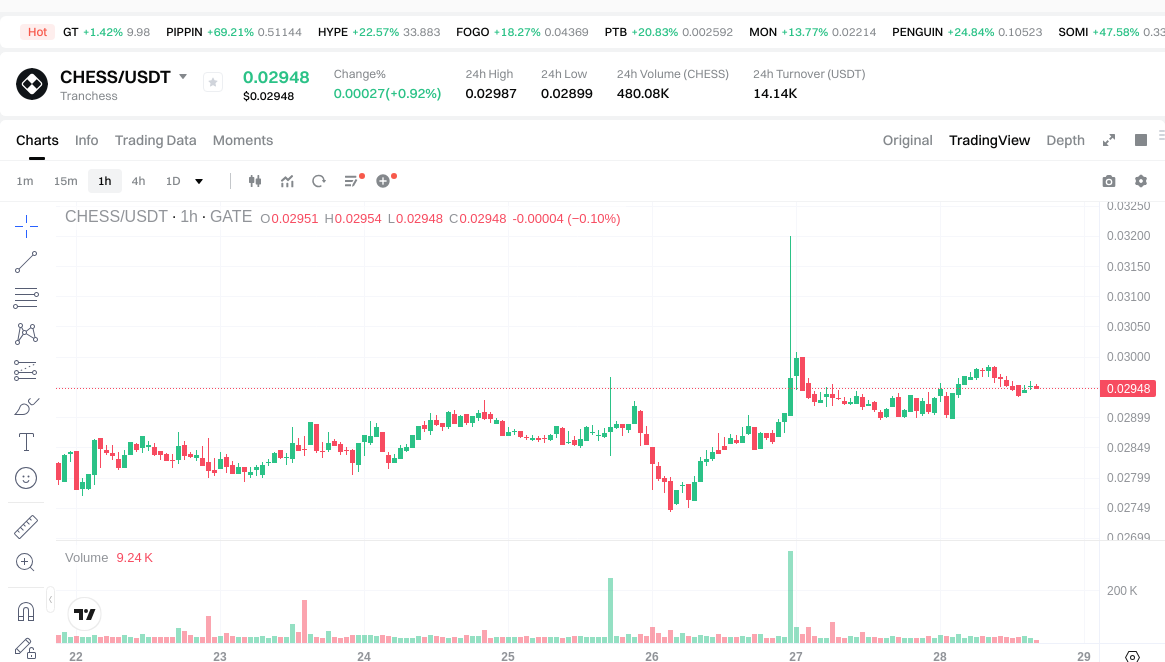
- 2026: As of January 28, 2026, the price stands at $0.02948, showing a 0.92% increase over 24 hours but down 80.65% from one year ago
CHESS Current Market Status
CHESS currently trades at $0.02948, with a 24-hour trading volume of $14,165.60. The token has shown mixed short-term performance, with a 1-hour decline of 0.03% and a 7-day gain of 5.35%. However, the 30-day performance reflects a 15.9% decrease.
The market capitalization stands at approximately $6.07 million, with a circulating supply of 205,971,700 CHESS tokens, representing 68.66% of the maximum supply of 300,000,000 tokens. The fully diluted market cap reaches $8.84 million. Within the past 24 hours, the price has fluctuated between a high of $0.02987 and a low of $0.02899.
The token maintains a market dominance of 0.00027% and ranks #1428 among cryptocurrencies. CHESS is listed on 17 exchanges and has approximately 17,438 holders. The current market sentiment index stands at 29, indicating a "Fear" level in the broader market environment.
Click to view the current CHESS market price
CHESS Market Sentiment Indicator
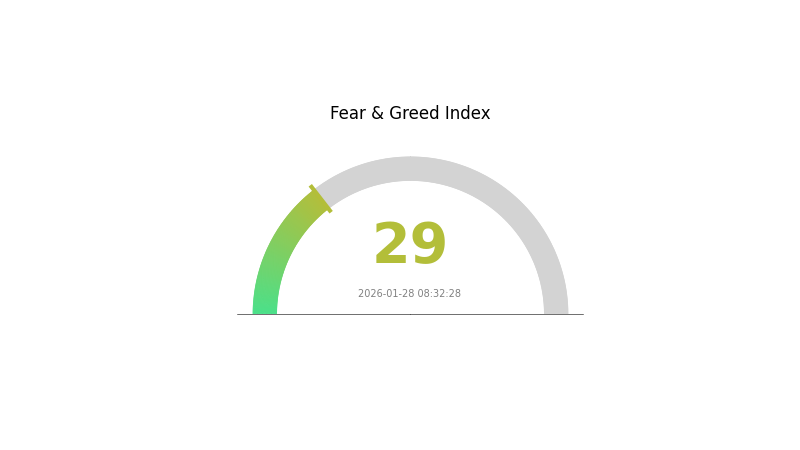
2026-01-28 Fear and Greed Index: 29 (Fear)
Click to view current Fear & Greed Index
The cryptocurrency market is currently experiencing significant fear sentiment with an index reading of 29. This fear-driven environment typically indicates heightened market uncertainty and investor caution. When the index remains in the fear zone, it often presents contrarian opportunities for long-term investors, as extreme fear can precede market recoveries. Market participants should monitor key support levels and maintain disciplined trading strategies during such volatile periods. Consider your risk tolerance and investment objectives carefully before making trading decisions in this fearful market sentiment.
CHESS Holding Distribution
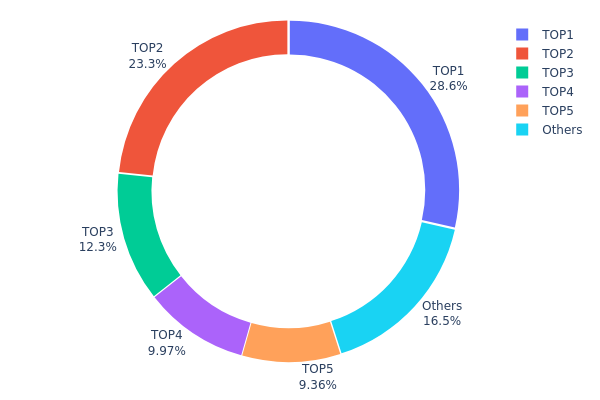
The CHESS holding distribution reveals a highly concentrated ownership structure, with the top 5 addresses collectively controlling approximately 83.49% of the total token supply. The largest holder (0x1bf0...ff3a7b) alone commands 28.56% of circulating tokens, holding 85.698 million CHESS. Following closely, the second-largest address (0xf977...41acec) maintains 23.33% ownership with 70 million tokens. The third through fifth positions hold 12.28%, 9.97%, and 9.35% respectively, while all remaining addresses combined account for merely 16.51% of the supply.
This extreme concentration pattern indicates a market structure dominated by institutional holders or project-affiliated entities, significantly limiting decentralization. Such distribution creates substantial vulnerability to price manipulation, as top holders possess sufficient market power to influence price movements through coordinated actions. The minimal representation of smaller holders (16.51% distributed among all other addresses) suggests limited retail participation and potential liquidity constraints during market stress events.
From an on-chain structural perspective, this concentration level poses systemic risks to market stability. Large-scale token movements from any top-tier address could trigger cascading liquidations or panic selling. However, if these major holders represent project treasury wallets, locked staking contracts, or long-term committed investors, this distribution might indicate strong conviction from strategic stakeholders rather than immediate selling pressure. The current holding pattern reflects a centralized ecosystem requiring careful monitoring of whale wallet activities for anticipating potential market volatility.
Click to view current CHESS Holding Distribution
| Top |
Address |
Holding Qty |
Holding (%) |
| 1 |
0x1bf0...ff3a7b |
85698.32K |
28.56% |
| 2 |
0xf977...41acec |
70000.00K |
23.33% |
| 3 |
0x95a2...abc6c2 |
36847.55K |
12.28% |
| 4 |
0x8894...e2d4e3 |
29920.51K |
9.97% |
| 5 |
0x5a52...70efcb |
28078.02K |
9.35% |
| - |
Others |
49455.61K |
16.51% |
II. Core Factors Influencing CHESS Future Price
Supply Mechanism
- Trading Volume and Liquidity: CHESS price movements are closely tied to its trading volume and market liquidity. The listing of CHESS/USDT perpetual contracts has enhanced market liquidity, providing more trading opportunities for investors.
- Historical Patterns: On August 30th, CHESS traded at $0.1903, rising 26.74% in 24 hours with a peak of $0.2241. This price increase was driven by the contract listing, demonstrating how enhanced liquidity can positively impact price performance.
- Current Impact: The addition of perpetual contract trading on major platforms is expected to attract more institutional and retail participants, potentially supporting sustained trading activity and price stability.
Institutional and Major Holder Dynamics
- Market Recognition: CHESS has gained attention through partnerships with prominent cryptocurrency platforms, which has helped increase its market visibility and investor confidence.
- Project Quality: The project's development standards and team commitment remain critical evaluation criteria. According to platform assessments, factors such as project development quality and team dedication directly influence market perception.
- Platform Support: The token benefits from listing support on major platforms, which provides enhanced market access and trading infrastructure for users globally.
Macroeconomic Environment
- Market Demand: Overall cryptocurrency market sentiment and investor appetite for DeFi protocols significantly affect CHESS price dynamics. Broader market trends in digital asset adoption influence trading patterns.
- Risk Appetite: The token's price performance correlates with general market risk appetite, as investors balance between high-risk and stable investment options within the crypto ecosystem.
- Network Stability: The underlying network's resilience against potential attacks and system stability considerations impact investor confidence and long-term price sustainability.
Technical Development and Ecosystem Building
- Project Development Standards: CHESS maintains focus on development quality and operational excellence, which forms the foundation for long-term value creation and market competitiveness.
- Ecosystem Applications: The token operates within a structured investment framework, offering different risk-return profiles that cater to varying investor preferences and risk tolerances.
- Market Infrastructure: Continuous improvements in trading infrastructure, settlement systems, and user experience contribute to ecosystem growth and adoption potential.
III. 2026-2031 CHESS Price Prediction
2026 Outlook
- Conservative prediction: $0.02007 - $0.02951
- Neutral prediction: $0.02951
- Optimistic prediction: $0.03512 (requires favorable market conditions and increased trading volume)
2027-2029 Outlook
- Market stage expectation: Gradual recovery and growth phase with increasing adoption
- Price range forecast:
- 2027: $0.02262 - $0.04201 (projected 9% increase)
- 2028: $0.03307 - $0.05128 (projected 26% increase)
- 2029: $0.04113 - $0.04687 (projected 50% increase)
- Key catalysts: Platform development progress, expanding user base, and broader cryptocurrency market recovery
2030-2031 Long-term Outlook
- Baseline scenario: $0.03553 - $0.04691 (assuming steady ecosystem growth)
- Optimistic scenario: $0.04555 - $0.06287 (with enhanced platform utility and strategic partnerships)
- Transformative scenario: Above $0.06287 (given exceptional market conditions and significant protocol upgrades)
- 2026-01-28: CHESS trading at approximately $0.02951 (current baseline estimate)
| Year |
Predicted High Price |
Predicted Average Price |
Predicted Low Price |
Price Change |
| 2026 |
0.03512 |
0.02951 |
0.02007 |
0 |
| 2027 |
0.04201 |
0.03231 |
0.02262 |
9 |
| 2028 |
0.05128 |
0.03716 |
0.03307 |
26 |
| 2029 |
0.04687 |
0.04422 |
0.04113 |
50 |
| 2030 |
0.04691 |
0.04555 |
0.03553 |
54 |
| 2031 |
0.06287 |
0.04623 |
0.03652 |
56 |
IV. CHESS Professional Investment Strategy and Risk Management
CHESS Investment Methodology
(1) Long-term Holding Strategy
- Suitable for: Investors seeking exposure to tokenized asset management protocols with moderate risk tolerance
- Operational Recommendations:
- Consider gradual accumulation during market corrections to build positions at favorable price levels
- Monitor protocol development milestones and ecosystem growth metrics as indicators for holding decisions
- Secure Storage Solution: Utilize Gate Web3 Wallet for convenient access to DeFi features while maintaining custody of private keys
(2) Active Trading Strategy
- Technical Analysis Tools:
- Moving Averages: Apply 50-day and 200-day moving averages to identify potential trend reversals and momentum shifts
- Volume Analysis: Monitor trading volume patterns on Gate.com to assess market interest and potential breakout opportunities
- Band Trading Key Points:
- Establish clear entry and exit levels based on support and resistance zones identified from historical price action
- Implement stop-loss orders to limit downside exposure in volatile market conditions
CHESS Risk Management Framework
(1) Asset Allocation Principles
- Conservative Investors: 1-2% of crypto portfolio
- Aggressive Investors: 3-5% of crypto portfolio
- Professional Investors: Up to 8% of crypto portfolio with active risk monitoring
(2) Risk Hedging Solutions
- Portfolio Diversification: Balance CHESS holdings with stablecoins and established cryptocurrencies to reduce concentration risk
- Position Sizing: Scale exposure based on market volatility metrics and personal risk tolerance thresholds
(3) Secure Storage Solutions
- Hot Wallet Recommendation: Gate Web3 Wallet for active trading and DeFi participation with user-friendly interface
- Cold Storage Solution: Consider hardware wallet options for long-term holdings exceeding comfortable risk thresholds
- Security Precautions: Enable two-factor authentication, verify contract addresses before transactions, and never share private keys or seed phrases
V. CHESS Potential Risks and Challenges
CHESS Market Risks
- Price Volatility: CHESS has experienced significant price fluctuations, with current price at $0.02948 representing approximately 99.6% below its all-time high of $7.91 recorded on October 22, 2021
- Liquidity Concerns: With 24-hour trading volume of $14,165.60 and market capitalization of approximately $6.07 million, the token may face liquidity constraints during periods of high market stress
- Market Ranking: Currently ranked #1428 by market capitalization with 0.00027% market dominance, indicating limited mainstream adoption
CHESS Regulatory Risks
- DeFi Protocol Scrutiny: Tokenized asset management platforms face evolving regulatory frameworks across different jurisdictions that may impact operational capabilities
- Derivatives Trading Oversight: The protocol's derivatives trading functionality may attract increased regulatory attention as authorities establish clearer guidelines for crypto derivatives
- Geographic Restrictions: Potential regulatory developments could limit access to the protocol in certain regions, affecting user base growth
CHESS Technical Risks
- Smart Contract Vulnerabilities: As with any DeFi protocol, potential undiscovered vulnerabilities in smart contracts could expose user funds to security risks
- Protocol Dependency: The project's functionality relies on BSC infrastructure, creating exposure to network-level risks including congestion and potential technical issues
- Competition Pressure: The tokenized asset management sector faces increasing competition from established and emerging protocols, potentially impacting CHESS adoption and utility
VI. Conclusion and Action Recommendations
CHESS Investment Value Assessment
CHESS represents a specialized protocol in the tokenized asset management and derivatives trading space, offering unique tranched investment structures inspired by traditional finance. The project's long-term value proposition centers on its innovative approach to risk-stratified crypto investment products. However, significant short-term risks include substantial price depreciation from historical highs, limited liquidity, and ongoing market uncertainty. The protocol's position within the BSC ecosystem provides established infrastructure but also concentration risk. Current market metrics suggest cautious evaluation is warranted, particularly given the 80.65% year-over-year price decline.
CHESS Investment Recommendations
✅ Beginners: Limit exposure to 1-2% of total crypto portfolio, prioritize education about DeFi protocols and tranched fund structures before investing, and use Gate.com's educational resources to understand project fundamentals
✅ Experienced Investors: Consider strategic small-cap allocation (3-5%) with active monitoring of protocol metrics, ecosystem developments, and market sentiment indicators
✅ Institutional Investors: Conduct thorough due diligence on smart contract audits, team background, and competitive positioning before considering portfolio inclusion; implement strict risk parameters and regular rebalancing protocols
CHESS Trading Participation Methods
- Spot Trading on Gate.com: Direct purchase and sale of CHESS tokens with access to competitive spreads and trading tools
- Protocol Interaction: Engage directly with Tranchess platform features including token creation, staking for CHESS rewards, and utilizing Tranchess Swap functionality
- Portfolio Integration: Include CHESS as part of a diversified DeFi exposure strategy alongside established protocols to balance risk and potential returns
Cryptocurrency investment carries extremely high risk, and this article does not constitute investment advice. Investors should make prudent decisions based on their own risk tolerance and are advised to consult professional financial advisors. Never invest more than you can afford to lose.
FAQ
What is the historical price trend of CHESS token and what are the main factors affecting its price changes?
CHESS has experienced volatility influenced by DeFi market sentiment and Tranchess protocol developments. Key factors include overall DeFi performance, protocol upgrades, trading volume, and market adoption rates affecting its price movements.
Use technical analysis methods like moving averages and relative strength index to analyze price trends. Monitor trading volume, support and resistance levels, and market sentiment indicators to inform CHESS price predictions.
How does CHESS compare to mainstream cryptocurrencies in terms of price volatility and risk characteristics?
CHESS exhibits lower price volatility compared to major cryptocurrencies like Bitcoin and Ethereum due to its smaller market capitalization and limited trading volume. This results in reduced market risk exposure, making it relatively more stable than mainstream digital assets.
What risks exist in CHESS price prediction? How should investors mitigate these risks?
CHESS price prediction faces market volatility, regulatory uncertainty, and technology changes. Investors should diversify portfolios, conduct thorough research, and monitor market developments continuously to manage exposure.
What is CHESS's fundamentals? What are the development prospects and market potential of its project?
CHESS demonstrates strong market fundamentals with steady growth and increasing user engagement. The project benefits from expanding digital platform reach and growing interest in online gaming sectors. Market potential remains robust with promising long-term development prospects.
What are professional analysts' price prediction targets for CHESS? How do predictions vary across different time periods?
Professional analysts project CHESS price targets ranging from $0.50 to $2.00+ depending on timeframe. Short-term predictions (3-6 months) tend toward conservative estimates around $0.60-$0.80, while medium-term (6-12 months) targets reach $1.00-$1.50. Long-term predictions (1-2 years) show higher potential at $1.50-$2.50+, reflecting increased adoption and market maturation.
* The information is not intended to be and does not constitute financial advice or any other recommendation of any sort offered or endorsed by Gate.