This comprehensive analysis examines GITCOIN's price trajectory and investment potential from 2026 to 2031. The article reviews GTC's historical performance, noting its peak at $22.37 in November 2021 and current trading price of $0.1268 as of January 2026. It provides professional price forecasts across conservative, neutral, and optimistic scenarios, projecting potential recovery through 2031. The guide outlines core market factors, ecosystem developments, and macroeconomic conditions influencing GTC's value. Additionally, it presents detailed investment strategies tailored for beginners, experienced traders, and institutional investors, emphasizing risk management through portfolio diversification and secure storage via Gate Web3 Wallet. Readers gain actionable insights into governance token dynamics, technical analysis tools, and regulatory considerations essential for informed cryptocurrency investment decisions.
Introduction: GITCOIN's Market Position and Investment Value
Gitcoin (GTC), as an open-source platform governance token designed to fund public goods and decentralize development incentives, has been serving the blockchain developer community since its launch in 2021. As of 2026, Gitcoin holds a market capitalization of approximately $11.09 million, with a circulating supply of around 87.49 million tokens, and the price is maintained at approximately $0.1268. This asset, known as a "governance token for public goods funding," is playing an increasingly important role in decentralized autonomous organization (DAO) governance and open-source software development funding.
This article will comprehensively analyze Gitcoin's price trends from 2026 to 2031, combining historical patterns, market supply and demand dynamics, ecosystem development, and macroeconomic conditions to provide investors with professional price forecasts and practical investment strategies.
I. GITCOIN Price History Review and Market Status
GITCOIN Historical Price Evolution Trajectory
- 2021: Gitcoin launched its governance token GTC in May 2021 with a publish price of $3.5281. The token reached its all-time high of $22.37 in November 2021, reflecting strong market enthusiasm during the bull market cycle.
- 2022-2024: The token experienced significant price corrections along with broader market trends, gradually declining from its peak levels as the crypto market entered a prolonged bear cycle.
- 2025: The token continued its downward trajectory and recorded its all-time low of $0.118188 in December 2025, representing a substantial decline from historical highs as market conditions remained challenging.
GITCOIN Current Market Status
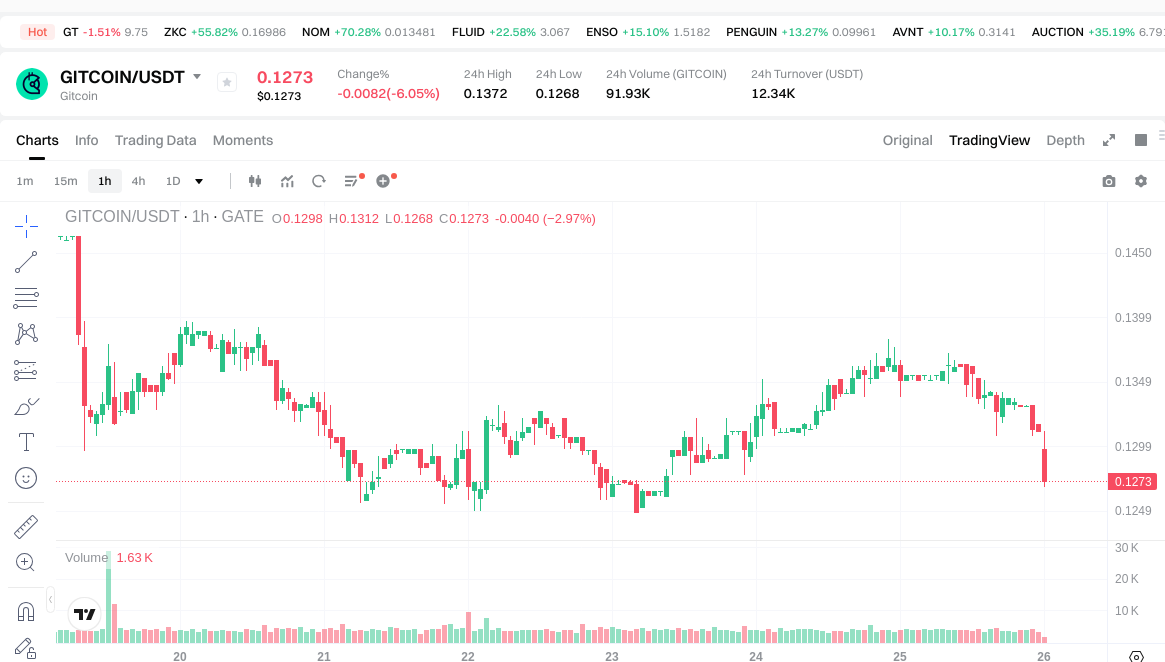
As of January 26, 2026, GITCOIN is trading at $0.1268, showing a decline of 5.1% over the past 24 hours. The token has experienced negative momentum in the short term, with a 3.71% decrease in the last hour and an 11.70% decline over the past week. However, the 30-day performance shows a modest recovery of 1.18%, indicating some stabilization in recent weeks.
The current price represents a 78.10% decline over the past year, reflecting the challenging market environment. The 24-hour trading volume stands at $12,335.36, while the token maintains a market capitalization of approximately $11.09 million. With a current market ranking of 1148 and a dominance of 0.00040%, GITCOIN represents a relatively small position in the overall cryptocurrency market.
The circulating supply is 87.49 million tokens out of a maximum supply of 100 million tokens, representing a circulation ratio of 87.49%. The fully diluted market cap stands at $12.68 million, with a market cap to FDV ratio of 87.49%. The token is held by approximately 91,106 addresses and is listed on 21 exchanges.
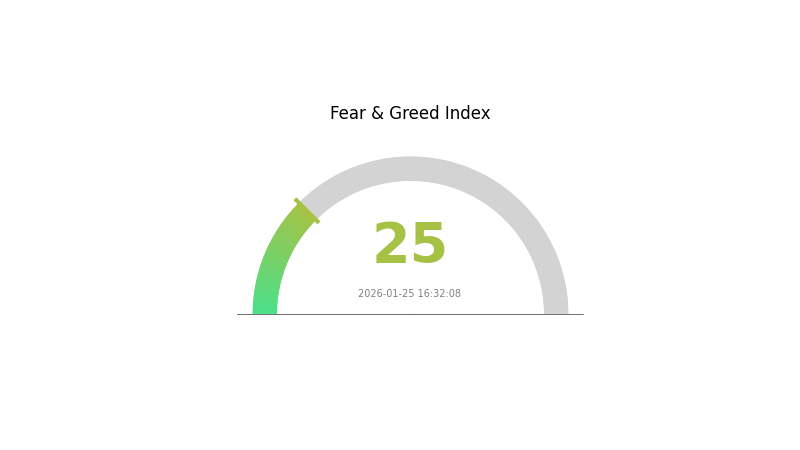
The current market sentiment index stands at 25, indicating extreme fear among market participants, which typically suggests heightened caution and risk-averse behavior in the trading environment.
Click to view current GITCOIN market price
GITCOIN Market Sentiment Index
2026-01-25 Fear and Greed Index: 25 (Extreme Fear)
Click to view the current Fear & Greed Index
The cryptocurrency market is currently experiencing extreme fear, with the Fear and Greed Index reaching 25. This indicates heightened market anxiety and significant pessimism among investors. During such periods, market volatility tends to increase, and asset prices often decline as fear-driven selling accelerates. However, experienced traders recognize that extreme fear can present contrarian opportunities. When sentiment reaches these lows, historically, markets have shown potential for recovery. Investors should remain cautious, conduct thorough research, and consider their risk tolerance before making investment decisions.
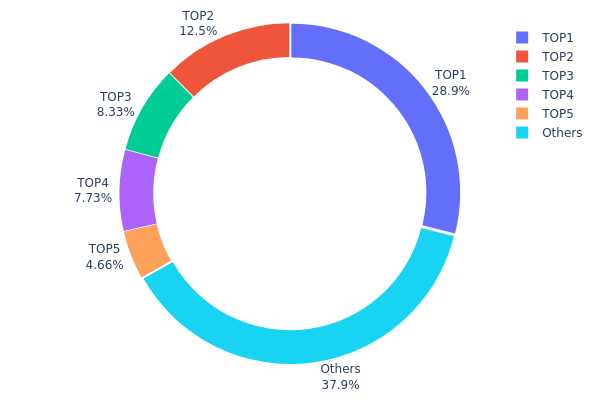
GITCOIN 持仓分布
The holding distribution chart illustrates the concentration of GITCOIN tokens across different wallet addresses, providing crucial insights into the token's decentralization level and potential market manipulation risks. By analyzing the percentage of total supply held by top addresses, investors can assess whether the token exhibits a healthy distribution or faces centralization concerns that could impact price stability.
Based on current data, GITCOIN demonstrates a moderately concentrated holding structure. The top address controls 28.91% of the total supply, while the top five addresses collectively hold 62.11% of all tokens. This concentration level indicates that a significant portion of the token supply remains in the hands of a few major holders, which could potentially expose the market to elevated volatility risks. If these large holders decide to liquidate their positions, the resulting sell pressure could trigger substantial price fluctuations.
However, it's worth noting that 37.89% of the supply is distributed among other addresses outside the top five, suggesting some degree of decentralization. This relatively diverse ownership among smaller holders provides a buffer against complete market control by major addresses. The current distribution pattern reflects a balance between project development needs and community participation, though investors should remain vigilant about potential concentration risks when making investment decisions.
Click to view current GITCOIN Holding Distribution
| Top |
Address |
Holding Qty |
Holding (%) |
| 1 |
0xf977...41acec |
28917.41K |
28.91% |
| 2 |
0x57a8...5be518 |
12508.50K |
12.50% |
| 3 |
0x4da8...932a14 |
8330.19K |
8.33% |
| 4 |
0x74be...873f13 |
7729.08K |
7.72% |
| 5 |
0x14d7...90f86c |
4658.99K |
4.65% |
| - |
Others |
37855.83K |
37.89% |
II. Core Factors Influencing GITCOIN's Future Price
Based on the currently available information, there is insufficient data regarding GITCOIN's supply mechanisms, institutional holdings, macroeconomic correlations, or recent technical developments to provide a comprehensive analysis of the core factors that may influence its future price trajectory.
Investors interested in GITCOIN should conduct thorough research through official project channels, reputable cryptocurrency data platforms, and community resources to better understand the token's fundamental characteristics and market dynamics. As with all cryptocurrency investments, price movements can be influenced by various factors including market sentiment, broader crypto market trends, regulatory developments, and project-specific news.
For the latest information about GITCOIN, users may visit Gate.com to access real-time trading data and market insights.
III. 2026-2031 GITCOIN Price Forecast
2026 Outlook
- Conservative Forecast: $0.10184 - $0.1273
- Neutral Forecast: Around $0.1273
- Optimistic Forecast: Up to $0.17822 (requires favorable market conditions and ecosystem growth)
2027-2029 Outlook
- Market Phase Expectations: Gradual recovery and expansion phase, with increasing adoption of decentralized funding mechanisms
- Price Range Forecast:
- 2027: $0.11151 - $0.16345
- 2028: $0.12016 - $0.21344
- 2029: $0.17277 - $0.23036
- Key Catalysts: Growing demand for public goods funding solutions, potential partnerships within the Web3 ecosystem, and broader cryptocurrency market momentum
2030-2031 Long-term Outlook
- Baseline Scenario: $0.11652 - $0.20807 (assuming steady platform development and user engagement)
- Optimistic Scenario: $0.20807 - $0.23096 (driven by significant expansion in decentralized grant programs and institutional adoption)
- Transformative Scenario: Up to $0.32049 (contingent upon major protocol upgrades, widespread Web3 integration, and favorable regulatory developments)
- 2026-01-26: GITCOIN trading within the initial forecast range, positioned at the beginning of a potential multi-year growth trajectory
| Year |
Predicted High Price |
Predicted Average Price |
Predicted Low Price |
Price Change |
| 2026 |
0.17822 |
0.1273 |
0.10184 |
0 |
| 2027 |
0.16345 |
0.15276 |
0.11151 |
20 |
| 2028 |
0.21344 |
0.15811 |
0.12016 |
24 |
| 2029 |
0.23036 |
0.18578 |
0.17277 |
46 |
| 2030 |
0.23096 |
0.20807 |
0.11652 |
64 |
| 2031 |
0.32049 |
0.21951 |
0.12073 |
73 |
IV. GITCOIN Professional Investment Strategy and Risk Management
GITCOIN Investment Methodology
(1) Long-term Holding Strategy
- Suitable for: Investors who believe in funding open-source software development and public goods, with medium to long-term investment horizons
- Operational Recommendations:
- Consider accumulating positions during periods of market stabilization, given the recent decline of 11.70% over 7 days
- Monitor Gitcoin DAO governance proposals and community developments that may impact token utility
- Storage Solution: Utilize Gate Web3 Wallet for secure custody, supporting ETH network where GTC is deployed
(2) Active Trading Strategy
- Technical Analysis Tools:
- Support and Resistance Levels: Current 24-hour range between 0.1278 and 0.1372 provides short-term trading boundaries
- Volume Analysis: Monitor daily trading volume (currently 12,335.37) for momentum signals
- Band Trading Key Points:
- Watch for volatility around the current price level of 0.1268, which remains close to the historical low of 0.118188
- Consider the 1-hour decline of 3.71% when setting short-term position sizes
GITCOIN Risk Management Framework
(1) Asset Allocation Principles
- Conservative Investors: 1-2% of crypto portfolio allocation
- Aggressive Investors: 3-5% of crypto portfolio allocation
- Professional Investors: Up to 5-8% with active monitoring and rebalancing strategies
(2) Risk Hedging Solutions
- Portfolio Diversification: Balance GTC exposure with other governance tokens and established cryptocurrencies
- Position Sizing: Given the 78.10% decline over 1 year, use small position entries with potential for averaging
(3) Secure Storage Solutions
- Hot Wallet Recommendation: Gate Web3 Wallet for active traders needing quick access
- Cold Storage Solution: For long-term holdings, consider hardware wallet solutions with ETH network support
- Security Precautions: Verify contract address (0xde30da39c46104798bb5aa3fe8b9e0e1f348163f) before any transactions, enable two-factor authentication
V. GITCOIN Potential Risks and Challenges
GITCOIN Market Risks
- Price Volatility: GTC has experienced significant decline of 78.10% over the past year, indicating high volatility potential
- Liquidity Concerns: With 24-hour trading volume of 12,335.37 and relatively low market ranking at 1148, liquidity may be limited during market stress
- Market Sentiment: Recent negative price trends across 1H, 24H, and 7D timeframes suggest prevailing bearish sentiment
GITCOIN Regulatory Risks
- Governance Token Classification: Evolving regulatory frameworks may impact governance tokens differently across jurisdictions
- DAO Operational Compliance: GitcoinDAO structure may face scrutiny as regulators develop clearer guidelines for decentralized organizations
- Cross-border Considerations: Funding public goods across multiple jurisdictions may present complex compliance requirements
GITCOIN Technical Risks
- Smart Contract Dependency: GTC operates on Ethereum network, inheriting associated technical risks and gas fee fluctuations
- Platform Development Risk: As an open-source funding platform, continued developer adoption and ecosystem growth are critical to token utility
- Competition Risk: Emerging platforms offering similar open-source funding mechanisms may impact Gitcoin's market position
VI. Conclusion and Action Recommendations
GITCOIN Investment Value Assessment
Gitcoin (GTC) serves as a governance token for funding open-source software development and public goods through the GitcoinDAO ecosystem. With a circulating supply of 87.49% and market cap of approximately 11.09 million, the token currently trades at 0.1268, representing a substantial decline from its all-time high of 22.37 in November 2021. While the platform's mission of supporting open-source development remains relevant, recent price performance shows significant downward pressure with declines across multiple timeframes. The token's long-term value proposition depends on the continued growth of the Gitcoin ecosystem and broader adoption of decentralized funding mechanisms for public goods. Short-term risks include ongoing bearish momentum and relatively low trading volume.
GITCOIN Investment Recommendations
✅ Beginners: Consider starting with small allocations (1-2% of crypto portfolio) while learning about DAO governance and open-source funding models; use platforms like Gate.com for straightforward access
✅ Experienced Investors: May explore 3-5% allocation with active monitoring of GitcoinDAO developments and governance participation; implement disciplined entry strategies given recent volatility
✅ Institutional Investors: Conduct thorough due diligence on governance structure and platform metrics; consider strategic positioning aligned with broader thesis on decentralized public goods funding
GITCOIN Trading Participation Methods
- Spot Trading: Available on Gate.com and 20 other exchanges, offering direct exposure to GTC price movements
- Governance Participation: Token holders can engage in GitcoinDAO governance proposals, influencing platform direction and fund allocation
- DeFi Integration: Explore opportunities within the Ethereum ecosystem where GTC may be utilized in various protocols
Cryptocurrency investment carries extremely high risks, and this article does not constitute investment advice. Investors should make prudent decisions based on their own risk tolerance and are advised to consult professional financial advisors. Never invest more than you can afford to lose.
FAQ
What is the current price of Gitcoin (GTC) token, and what are its all-time high and low prices?
As of January 2026, GTC trades around $8-12 depending on market conditions. The all-time high reached approximately $28.50 in 2021, while the all-time low was near $0.30 during its initial launch. Current prices fluctuate based on market sentiment and ecosystem developments.
What are the main factors affecting Gitcoin price?
Gitcoin price is primarily influenced by trading volume, ecosystem development progress, community growth, grant funding activity, platform adoption rate, overall crypto market sentiment, and governance token utility within the platform.
How do Gitcoin's governance model and ecosystem development impact GTC token price?
Gitcoin's decentralized governance empowers community decision-making, strengthening ecosystem trust and adoption. Enhanced grant mechanisms and developer funding drive platform utility, increasing GTC demand. Strong ecosystem growth attracts more stakeholders, potentially supporting upward price momentum through increased network effects and long-term value creation.
What are professional analysts' price predictions for Gitcoin in 2024-2025?
Professional analysts anticipated Gitcoin reaching $15-25 in 2024-2025, driven by growing Web3 ecosystem adoption, increased developer engagement, and platform expansion. Factors included rising DAO governance demand and GitcoinDAO's ecosystem contributions strengthening long-term value.
Gitcoin offers unique value through its direct funding mechanism for developer ecosystems. Unlike layer-2 tokens, GTC captures utility from grants distribution and community governance, positioning it as a long-term growth asset in the Web3 infrastructure space.
What are the main risks of holding and trading Gitcoin (GTC) tokens?
GTC token risks include market volatility and price fluctuations, liquidity variations affecting trading volumes, regulatory uncertainty in crypto markets, smart contract vulnerabilities, and governance token concentration risks. Monitor project developments and market conditions carefully.
* The information is not intended to be and does not constitute financial advice or any other recommendation of any sort offered or endorsed by Gate.