This comprehensive analysis examines Goatseus Maximus (GOAT), a Solana-based memecoin trading at $0.03228 as of January 2026, providing expert price forecasts through 2031. The article reviews GOAT's historical trajectory from its $0.3113 launch to current levels, analyzes current market dynamics including its $32.28M market cap and extreme fear sentiment, and delivers detailed price predictions ranging from conservative to optimistic scenarios. Professional investment strategies encompassing long-term holding and active trading approaches are presented alongside robust risk management frameworks suitable for different investor profiles. The guide addresses critical considerations including market volatility, liquidity metrics, holder distribution analysis, and regulatory risks, equipping investors with actionable insights for navigating GOAT on Gate.com and implementing disciplined portfolio allocation strategies.
Introduction: GOAT's Market Position and Investment Value
Goatseus Maximus (GOAT), positioned as a Solana-based memecoin endorsed by the AI bot Truth Terminal, has carved out a distinctive presence in the cryptocurrency landscape since its inception. As of January 21, 2026, GOAT maintains a market capitalization of approximately $32.28 million with a circulating supply of nearly 1 billion tokens, trading at around $0.03228. This asset, which emerged from the intersection of artificial intelligence narratives and meme culture, represents an intriguing case study in community-driven digital assets within the Solana ecosystem.
With over 76,000 holders and listings on 33 exchanges including Gate.com, GOAT has demonstrated notable community engagement despite experiencing considerable price volatility throughout its trading history. The token's journey from its previous heights to current levels reflects the dynamic nature of memecoin markets and the broader challenges facing speculative crypto assets.
This article provides a comprehensive analysis of GOAT's potential price trajectory from 2026 through 2031, examining historical patterns, market supply-demand dynamics, ecosystem developments, and macroeconomic factors. Our goal is to equip investors with professional insights and practical strategies for navigating this unique digital asset opportunity.
I. GOAT Price History Review and Market Status
GOAT Historical Price Evolution Trajectory
- October 2024: Goatseus Maximus (GOAT) launched as a Solana-based memecoin with an initial trading price around $0.3113, gaining attention through endorsement by the AI bot Truth Terminal.
- November 2024: The token experienced significant upward momentum, reaching a notable price level of $1.373 on November 17, 2024, marking a substantial increase from its launch price.
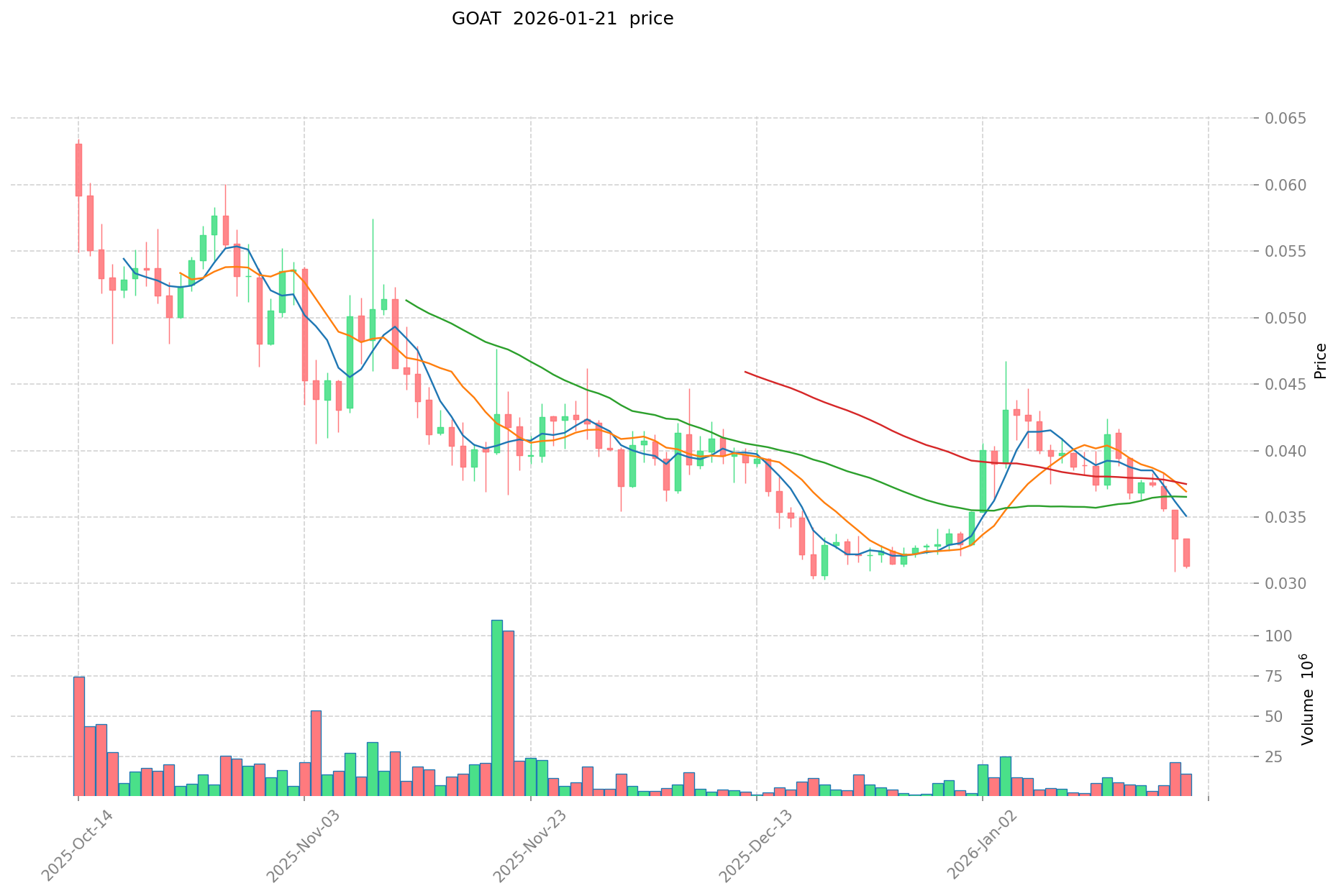
- 2025-2026: Following the peak period, the market entered a correction phase, with prices declining and reaching a lower level of $0.02656 on October 10, 2025.
GOAT Current Market Situation
As of January 21, 2026, Goatseus Maximus (GOAT) is trading at $0.03228, representing a 24-hour change of -2.41%. The token's intraday trading range spans from a low of $0.03115 to a high of $0.03336.
The current market capitalization stands at approximately $32.28 million, with a circulating supply of 999,985,615 GOAT tokens out of a maximum supply of 1,000,000,000 tokens, indicating a circulation ratio of approximately 99.998%. The 24-hour trading volume amounts to $453,205.37.
GOAT maintains a market dominance of 0.0010% within the broader cryptocurrency ecosystem. The token is held by approximately 76,493 addresses and is listed on 33 exchanges. The fully diluted market cap matches the current market capitalization at $32.28 million, with the market cap to FDV ratio at 100%.
Looking at recent price trends, GOAT has shown mixed performance across different timeframes. While the 1-hour change indicates a slight increase of 0.44%, the token has experienced declines over longer periods, with a 7-day decrease of -21.12% and a 30-day change of -0.86%. The 1-year performance reflects a significant decline of -87.68% from previous levels.
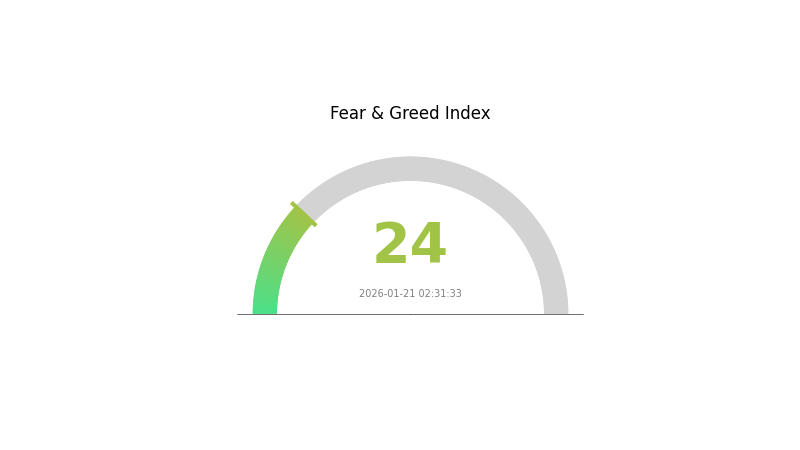
The cryptocurrency fear and greed index currently registers at 24, indicating an "Extreme Fear" sentiment in the broader market, which may be influencing trading behavior across digital assets including GOAT.
Click to view the current GOAT market price
GOAT Market Sentiment Index
2026-01-21 Fear and Greed Index: 24 (Extreme Fear)
Click to view current Fear & Greed Index
The cryptocurrency market is currently experiencing extreme fear, with the Fear and Greed Index at 24. This indicates intense market pessimism and heightened risk aversion among investors. During periods of extreme fear, market volatility typically increases, creating both significant risks and potential opportunities for strategic traders. Historical data suggests such conditions often precede market reversals. Investors should exercise caution, conduct thorough due diligence, and avoid emotional decision-making. Consider this environment as a potential accumulation phase for long-term investors with strong risk tolerance and sufficient capital reserves.
GOAT Holding Distribution
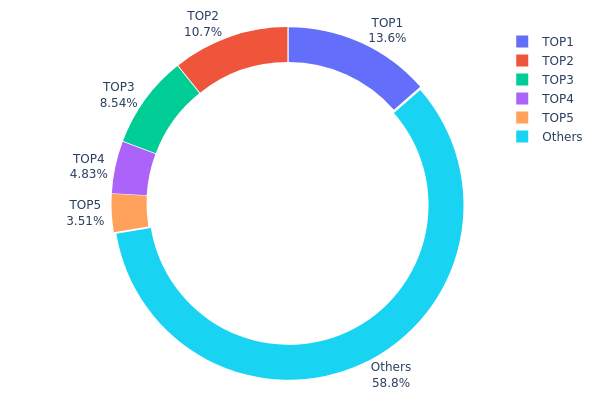
The holding distribution chart illustrates the concentration of GOAT tokens across different wallet addresses, providing insights into the decentralization level and potential market control dynamics. By analyzing the percentage of tokens held by top addresses versus the broader holder base, investors can assess the risk of price manipulation and the overall health of token distribution.
According to the current data, the top five addresses collectively hold approximately 41.14% of the total GOAT supply, with the largest single address controlling 13.55% (135,548.67K tokens). The second and third largest holders possess 10.73% and 8.53% respectively, while the remaining addresses in the top five hold between 3.50% and 4.83%. The distribution reveals a moderately concentrated ownership structure, where nearly 59% of tokens are distributed among other holders, suggesting a relatively balanced ecosystem compared to projects with extreme centralization.
This holding pattern indicates a moderate level of decentralization risk. While the top address's 13.55% stake could theoretically influence short-term price movements through large-scale sell-offs, the presence of multiple substantial holders and a significant "Others" category (58.86%) provides some buffer against single-entity manipulation. The current distribution reflects a maturing market structure where token ownership has gradually dispersed from initial concentrated positions, though vigilance regarding the top holders' activities remains prudent for market participants monitoring liquidity and volatility patterns.
Click to view current GOAT Holding Distribution
| Top |
Address |
Holding Qty |
Holding (%) |
| 1 |
8Mm46C...zrMZQH |
135548.67K |
13.55% |
| 2 |
EZ41Wc...ybxjsJ |
107369.20K |
10.73% |
| 3 |
Am8MAE...i2B4hg |
85388.76K |
8.53% |
| 4 |
Gem2VA...rPoTka |
48324.99K |
4.83% |
| 5 |
5Q544f...pge4j1 |
35072.40K |
3.50% |
| - |
Others |
588281.59K |
58.86% |
II. Core Factors Affecting GOAT's Future Price
Based on the available information, there is insufficient data in the provided materials to comprehensively analyze the core factors affecting GOAT's future price. The reference materials do not contain specific details regarding supply mechanisms, institutional holdings, macroeconomic correlations, or technical developments related to GOAT.
Without verifiable data on supply dynamics, major holder activities, enterprise adoption patterns, or ecosystem developments, a detailed analysis of price-influencing factors cannot be accurately constructed. Any speculation on these elements would lack factual foundation from the source materials.
III. 2026-2031 GOAT Price Prediction
2026 Outlook
- Conservative Prediction: $0.018 - $0.032
- Neutral Prediction: Around $0.032
- Optimistic Prediction: Up to $0.046 (requires favorable market conditions and increased adoption)
2027-2029 Outlook
- Market Stage Expectation: Gradual growth phase with moderate volatility, potentially influenced by broader cryptocurrency market trends and project development milestones
- Price Range Predictions:
- 2027: $0.035 - $0.042
- 2028: $0.034 - $0.046
- 2029: $0.034 - $0.065
- Key Catalysts: Enhanced ecosystem development, strategic partnerships, and potential integration with major platforms may drive price appreciation during this period
2030-2031 Long-term Outlook
- Baseline Scenario: $0.051 - $0.060 (assuming steady project development and maintained market interest)
- Optimistic Scenario: $0.057 - $0.061 (with accelerated adoption and favorable regulatory environment)
- Transformative Scenario: Potential to reach $0.065+ (under exceptionally favorable conditions including widespread institutional adoption and significant technological breakthroughs)
- 2026-01-21: GOAT trading within established range (current market positioning phase)
| Year |
Predicted High Price |
Predicted Average Price |
Predicted Low Price |
Price Change |
| 2026 |
0.0463 |
0.03215 |
0.018 |
0 |
| 2027 |
0.04197 |
0.03922 |
0.0353 |
21 |
| 2028 |
0.04628 |
0.0406 |
0.0341 |
25 |
| 2029 |
0.06472 |
0.04344 |
0.03432 |
34 |
| 2030 |
0.06003 |
0.05408 |
0.05138 |
67 |
| 2031 |
0.06105 |
0.05705 |
0.03081 |
76 |
IV. GOAT Professional Investment Strategy and Risk Management
GOAT Investment Methodology
(I) Long-Term Holding Strategy
- Suitable for: Investors seeking exposure to AI-endorsed memecoins with high risk tolerance
- Operational recommendations:
- Consider dollar-cost averaging (DCA) to mitigate volatility impact given GOAT's 87.68% decline from its all-time high
- Monitor the Solana ecosystem developments as GOAT operates on the SOL blockchain
- Utilize Gate Web3 Wallet for secure storage with multi-signature protection
(II) Active Trading Strategy
- Technical analysis tools:
- Volume analysis: Monitor 24-hour trading volume ($453,205) relative to market cap ($32.28M) to gauge liquidity
- Price range identification: Track support levels around $0.03115 (24h low) and resistance near $0.03336 (24h high)
- Swing trading key points:
- Set stop-loss orders below recent support levels to manage downside risk
- Consider the -21.12% weekly decline when establishing position sizes
GOAT Risk Management Framework
(I) Asset Allocation Principles
- Conservative investors: 1-2% of crypto portfolio
- Aggressive investors: 3-5% of crypto portfolio
- Professional investors: Up to 10% with active hedging strategies
(II) Risk Hedging Solutions
- Portfolio diversification: Balance GOAT exposure with established cryptocurrencies and stablecoins
- Position sizing discipline: Never allocate more than a small percentage to single memecoin assets
(III) Secure Storage Solutions
- Hot wallet recommendation: Gate Web3 Wallet for active trading with enhanced security features
- Cold storage approach: Consider hardware wallet solutions for long-term holdings exceeding $10,000
- Security considerations: Enable two-factor authentication, verify contract address (CzLSujWBLFsSjncfkh59rUFqvafWcY5tzedWJSuypump) before transactions, and never share private keys
V. GOAT Potential Risks and Challenges
GOAT Market Risks
- High volatility: The token has experienced significant price swings, with a 1-year decline of 87.68% from $0.26 to current levels
- Memecoin nature: As an AI-endorsed memecoin, GOAT may be subject to sentiment-driven price movements with limited fundamental value backing
- Liquidity concerns: With $453,205 in 24-hour volume against a $32.28M market cap, large transactions may face slippage
GOAT Regulatory Risks
- Memecoin scrutiny: Regulatory bodies may impose stricter oversight on speculative digital assets
- AI-related concerns: Tokens associated with AI narratives may face additional regulatory examination
- Compliance requirements: Potential restrictions on memecoin trading in certain jurisdictions
GOAT Technical Risks
- Blockchain dependency: GOAT's functionality relies entirely on Solana network stability and performance
- Smart contract risks: While operating on Solana, the token contract may contain vulnerabilities
- Concentration risk: With 76,493 holders, token distribution may be concentrated among few large holders
VI. Conclusion and Action Recommendations
GOAT Investment Value Assessment
Goatseus Maximus represents a speculative asset within the AI-memecoin narrative, operating on the Solana blockchain. While the token benefits from the AI bot Truth Terminal endorsement and maintains presence across 33 exchanges, its 87.68% annual decline and -21.12% weekly performance indicate substantial volatility. The fully diluted market cap of $32.28M with near-complete circulation (99.99%) suggests limited token inflation risk, but the memecoin classification presents fundamental valuation challenges. Short-term risks include continued price pressure and sentiment-driven volatility, while long-term value proposition remains uncertain given the speculative nature of AI-endorsed memecoins.
GOAT Investment Recommendations
✅ Beginners: Avoid or allocate only minimal amounts (<1% of portfolio) after thorough research; focus on understanding memecoin risks before participation
✅ Experienced investors: Consider tactical positions with strict risk management; limit exposure to 2-3% of crypto portfolio with predetermined exit strategies
✅ Institutional investors: May explore limited exposure as part of diversified memecoin basket; implement rigorous risk controls and regular portfolio rebalancing
GOAT Trading Participation Methods
- Spot trading: Purchase GOAT directly on Gate.com with SOL or USDT trading pairs for straightforward exposure
- Automated trading: Utilize Gate.com's trading bots for systematic entry and exit strategies based on predefined parameters
- Wallet integration: Store GOAT tokens in Gate Web3 Wallet for secure management and potential DeFi interactions on Solana
Cryptocurrency investment carries extremely high risks, and this article does not constitute investment advice. Investors should make prudent decisions based on their own risk tolerance and are advised to consult professional financial advisors. Never invest more than you can afford to lose.
FAQ
What is GOAT token and what are its practical uses?
GOAT is a utility token designed for the web3 ecosystem, primarily used for governance, transaction fees, and access to exclusive features. It enables community participation in protocol decisions and facilitates decentralized activities within its network infrastructure.
How to predict GOAT price? What analysis methods are available?
Analyze GOAT through technical analysis(K-line patterns, support/resistance levels), fundamental analysis(tokenomics, community activity), and on-chain metrics(transaction volume, holder distribution). Monitor market sentiment, trading volume, and correlation with Bitcoin trends for comprehensive price forecasting.
What is GOAT's historical price trend? What are the main factors affecting its price?
GOAT has shown significant volatility since launch, driven by community sentiment, trading volume, market adoption, and broader crypto market conditions. Key factors include ecosystem development, social engagement metrics, and macroeconomic trends influencing altcoin performance.
What are the risks of investing in GOAT tokens and how should I manage them?
GOAT token risks include market volatility, liquidity fluctuations, and regulatory changes. Manage risk by diversifying your portfolio, investing only disposable capital, setting stop-loss orders, and staying informed on project developments and market trends.
What are the differences between GOAT and other mainstream cryptocurrencies?
GOAT distinguishes itself through innovative tokenomics, community-driven governance, and unique utility features. Unlike traditional cryptocurrencies, GOAT emphasizes sustainable transaction fees, enhanced scalability, and stronger ecosystem integration, positioning itself as a next-generation digital asset with superior performance metrics and long-term growth potential.
How is GOAT's liquidity and trading volume? On which exchanges can it be traded?
GOAT maintains strong liquidity with substantial daily trading volume across major exchanges. The token is widely available on leading centralized and decentralized platforms, ensuring easy access for traders seeking exposure to GOAT's market performance and growth potential.
How do experts view GOAT's future price prospects?
Experts are optimistic about GOAT's long-term potential, citing strong community engagement, innovative tokenomics, and growing adoption in the AI-agent ecosystem. Many predict significant appreciation as the project continues to expand its utility and market presence.
* The information is not intended to be and does not constitute financial advice or any other recommendation of any sort offered or endorsed by Gate.