This comprehensive analysis examines HARD Protocol, a decentralized lending platform on Kava, offering expert price forecasts from 2026 to 2031. Currently trading at $0.002624 with a $353,693 market cap, HARD faces both opportunities and challenges in the competitive DeFi landscape. The article evaluates core factors influencing token valuation including supply dynamics, institutional activity, macroeconomic conditions, and ecosystem development. Detailed price predictions span conservative to optimistic scenarios, complemented by professional investment strategies tailored for different investor profiles. Risk management frameworks address liquidity constraints, regulatory uncertainties, and technical vulnerabilities. Available on Gate and alternative exchanges, HARD presents a specialized investment opportunity requiring careful analysis and risk-aware positioning for portfolio consideration.
Introduction: HARD's Market Position and Investment Value
HARD Protocol (HARD), positioned as a decentralized cross-chain lending platform built on Kava, has been facilitating crypto asset borrowing and lending since its launch in 2020. As of 2026, HARD maintains a market capitalization of approximately $353,693, with a circulating supply of around 134.79 million tokens, and its price hovering near $0.002624. This governance token, recognized as a "DeFi infrastructure asset" within the Kava ecosystem, plays an increasingly vital role in enabling cross-chain liquidity mining and decentralized governance.
This article will comprehensively analyze HARD's price trajectory from 2026 to 2031, combining historical patterns, market supply-demand dynamics, ecosystem development, and macroeconomic conditions to provide investors with professional price forecasts and practical investment strategies.
I. HARD Price History Review and Market Status
HARD Historical Price Evolution Trajectory
- 2020: HARD Protocol launched in October with an initial price of $0.85, establishing its foundation as a decentralized money market on Kava
- 2021: Market expansion phase saw price movement reaching notable levels in March, reflecting broader DeFi sector growth during this period
- 2025-2026: Market adjustment phase, with price experiencing significant fluctuations across different timeframes
HARD Current Market Situation
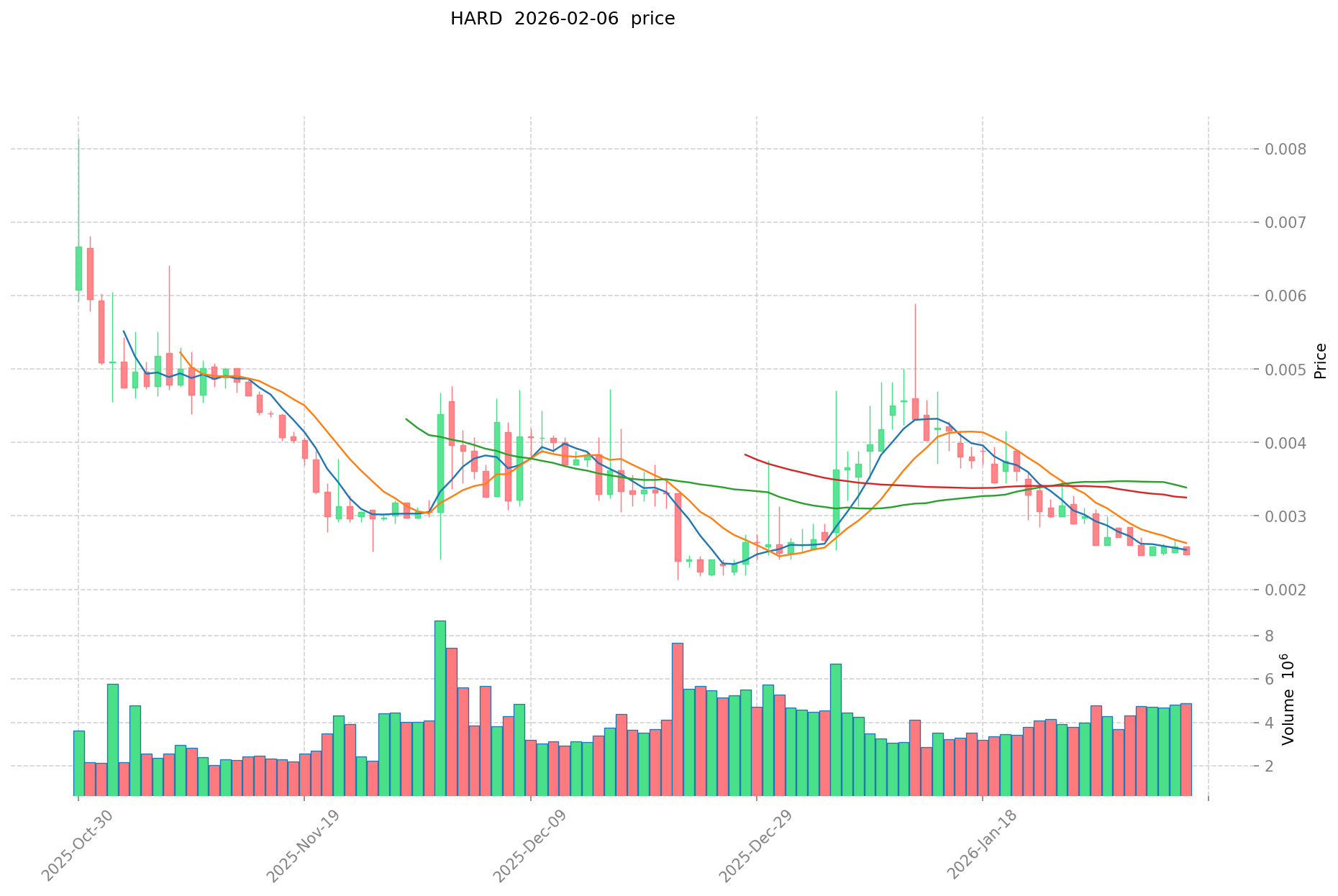
As of February 7, 2026, HARD is trading at $0.002624, showing a 24-hour increase of 4.91%. The token demonstrates mixed short-term performance with a slight 1-hour decline of 0.011%, while experiencing a 7-day decrease of 3.20% and a 30-day decline of 20.1%.
The current market capitalization stands at approximately $353,693, with a fully diluted valuation of $524,800. The circulating supply represents 134.79 million HARD tokens out of a maximum supply of 200 million, indicating a circulation ratio of 67.4%. The 24-hour trading volume is recorded at $16,512.
HARD Protocol maintains its position as a decentralized lending platform built on Kava, supporting cross-chain asset borrowing and lending. The platform's native governance token continues to serve its core functions in liquidity mining rewards and governance voting mechanisms. Token holders participating in longer lock-up periods receive enhanced reward distributions, with specific parameters subject to governance modifications.
The market dominance shows a minimal share of 0.000020%, reflecting the token's current positioning within the broader cryptocurrency ecosystem. HARD is available for trading on Gate.com and one other exchange platform.
Click to view current HARD market price
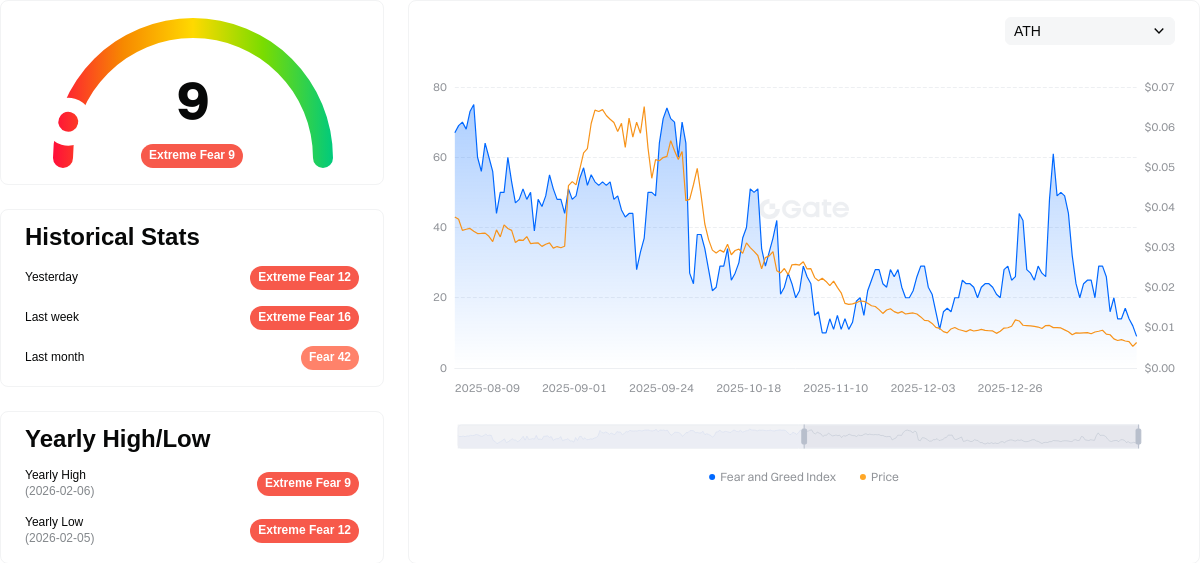
HARD Market Sentiment Indicator
2026-02-06 Fear and Greed Index: 9 (Extreme Fear)
Click to view the current Fear & Greed Index
The crypto market is currently experiencing extreme fear, with the Fear and Greed Index hitting just 9 points. This historically low reading suggests widespread panic and pessimism among investors. During such periods, market volatility typically increases as sellers dominate. However, contrarian investors often view extreme fear as potential buying opportunities, as assets may be undervalued. Traders should exercise caution and maintain strict risk management strategies. Monitor market developments closely before making investment decisions.
HARD Holder Distribution
The holder distribution chart visualizes the concentration of HARD tokens across different wallet addresses, providing insights into the degree of decentralization and potential market control dynamics. This metric reveals how tokens are distributed among various holders, from large institutional investors to retail participants, offering a crucial perspective on the token's ownership structure and potential vulnerability to price manipulation.
Based on the current distribution data, HARD demonstrates a relatively moderate concentration pattern. The top holders collectively control a significant portion of the total supply, which is typical for many cryptocurrency projects but warrants careful monitoring. While some concentration among early investors, team members, or institutional participants is expected, excessive accumulation in few addresses could pose risks to market stability and price discovery mechanisms.
The current distribution structure suggests a developing ecosystem where major stakeholders maintain substantial positions, potentially reflecting long-term confidence in the project's fundamentals. However, this concentration level also implies that large-scale token movements by top holders could trigger significant price volatility. The balance between concentrated holdings and broader token distribution will be crucial for HARD's market maturity, as a more distributed ownership pattern typically correlates with enhanced price stability and reduced susceptibility to coordinated market manipulation.
Click to view current HARD Holder Distribution

| Top |
Address |
Holding Qty |
Holding (%) |
II. Core Factors Influencing HARD's Future Price
Supply Mechanism and Scarcity
- Token Supply Dynamics: HARD Protocol operates with a defined token supply structure that influences market scarcity. The supply mechanism plays a role in determining token availability across the DeFi lending platform ecosystem.
- Historical Patterns: Past supply adjustments and token distribution patterns have demonstrated correlation with price movements, though the relationship varies based on broader market conditions.
- Current Influence: Supply dynamics continue to interact with demand from the platform's lending and borrowing activities, creating potential pressure points during periods of increased DeFi utilization.
Institutional and Major Holder Activity
- Institutional Interest: The level of institutional investment in HARD remains a factor in price stability and potential growth trajectories. Institutional participation in DeFi lending platforms can provide liquidity depth and market confidence.
- Platform Adoption: The degree to which the HARD Protocol platform attracts users and integrates with other DeFi ecosystems influences token utility and demand patterns.
Macroeconomic Environment
- Monetary Policy Impact: Global central bank policies, particularly Federal Reserve interest rate decisions, exert considerable influence on HARD pricing. Expectations of rate adjustments can create upward or downward pressure as they affect the broader cryptocurrency market and risk appetite.
- Economic Growth Trends: Macroeconomic conditions including inflation dynamics and economic growth patterns shape investor behavior toward DeFi assets. Changes in these fundamental conditions can redirect capital flows into or away from lending protocol tokens.
- Geopolitical Considerations: International economic relationships and regional policy shifts contribute to market uncertainty levels, which can amplify or dampen volatility in cryptocurrency assets including HARD.
Technology and Ecosystem Development
- Platform Technology: The underlying technical infrastructure of the HARD Protocol lending platform, including smart contract security, transaction efficiency, and user interface improvements, influences user adoption rates and token demand.
- Ecosystem Applications: The development and integration of decentralized applications within the HARD ecosystem can expand use cases and utility for the token, potentially supporting valuation through increased platform activity.
- DeFi Integration: Cross-platform compatibility and partnerships within the broader DeFi landscape can enhance liquidity pathways and create additional demand channels for HARD tokens.
The interplay among supply constraints, institutional positioning, macroeconomic shifts, and technological advancement creates a complex pricing environment for HARD. Market participants should consider how these factors interact rather than evaluating them in isolation, as their combined effect shapes both short-term volatility and longer-term trend formation.
III. 2026-2031 HARD Price Prediction
2026 Outlook
- Conservative Prediction: $0.00179 - $0.00252
- Neutral Prediction: approximately $0.00252
- Optimistic Prediction: up to $0.0027 (requires favorable market conditions and ecosystem development)
2027-2029 Outlook
- Market Stage Expectation: transitional phase with gradual accumulation and potential ecosystem expansion
- Price Range Prediction:
- 2027: $0.00193 - $0.00357, average around $0.00261
- 2028: $0.00198 - $0.00386, average around $0.00309
- 2029: $0.00327 - $0.0047, average around $0.00348
- Key Catalysts: protocol upgrades, increased DeFi adoption, potential partnerships, and broader cryptocurrency market recovery
2030-2031 Long-term Outlook
- Baseline Scenario: $0.00335 - $0.00601 in 2030 (assuming steady DeFi sector growth)
- Optimistic Scenario: $0.00454 - $0.00626 in 2031 (contingent on significant protocol enhancements and expanded user base)
- Transformative Scenario: potential to reach upper boundaries if mainstream DeFi integration accelerates and favorable regulatory frameworks emerge
- 2026-02-07: HARD trading within predicted baseline range, reflecting current market consolidation phase
| Year |
Predicted High Price |
Predicted Average Price |
Predicted Low Price |
Price Change |
| 2026 |
0.0027 |
0.00252 |
0.00179 |
0 |
| 2027 |
0.00357 |
0.00261 |
0.00193 |
3 |
| 2028 |
0.00386 |
0.00309 |
0.00198 |
22 |
| 2029 |
0.0047 |
0.00348 |
0.00327 |
37 |
| 2030 |
0.00601 |
0.00409 |
0.00335 |
62 |
| 2031 |
0.00626 |
0.00505 |
0.00454 |
100 |
IV. HARD Professional Investment Strategy and Risk Management
HARD Investment Methodology
(1) Long-term Holding Strategy
- Suitable for: Investors seeking exposure to DeFi lending protocols with cross-chain capabilities
- Operational Recommendations:
- Consider accumulating positions during market downturns, given the token's 97.48% decline over the past year
- Monitor protocol development updates and cross-chain asset support expansion
- Secure storage solution: Use Gate Web3 Wallet for convenient management with enhanced security features
(2) Active Trading Strategy
- Technical Analysis Tools:
- Volume Analysis: Current 24-hour trading volume stands at approximately $16,512, indicating relatively low liquidity that may impact execution
- Price Action Analysis: Track recent volatility patterns, with 24-hour range between $0.002469 and $0.002624
- Swing Trading Considerations:
- Given the low liquidity environment, limit order placement becomes essential to minimize slippage
- Monitor 24-hour price movements, currently showing a 4.91% gain, while evaluating whether short-term momentum can sustain
HARD Risk Management Framework
(1) Asset Allocation Principles
- Conservative Investors: 0.5-1% of crypto portfolio allocation
- Active Investors: 2-3% of crypto portfolio allocation
- Professional Investors: Up to 5% allocation with active risk monitoring
(2) Risk Hedging Solutions
- Diversification Approach: Combine HARD exposure with established DeFi blue-chip tokens to reduce protocol-specific risk
- Position Sizing Strategy: Implement gradual entry positions to manage volatility risk, particularly given limited market depth
(3) Secure Storage Solutions
- Hot Wallet Recommendation: Gate Web3 Wallet for active trading and convenient access
- Cold Storage Option: Hardware wallet solutions for long-term holdings exceeding short-term trading needs
- Security Considerations: Enable two-factor authentication, maintain backup phrases offline, and verify contract addresses before transactions
V. HARD Potential Risks and Challenges
HARD Market Risks
- Liquidity Constraints: With only 2 exchanges listing HARD and daily volume around $16,512, significant price impact risk exists for larger transactions
- Price Volatility: The token experienced a 97.48% decline over the past year, reflecting substantial downside risk and market confidence challenges
- Market Depth Limitations: Current circulating market cap of approximately $353,693 indicates limited institutional participation and potential for sharp price movements
HARD Regulatory Risks
- DeFi Protocol Oversight: Evolving regulatory frameworks for decentralized lending platforms may impact protocol operations
- Cross-chain Compliance: Multi-asset support including BTC, XRP, and BNB may face varying regulatory treatment across jurisdictions
- Token Classification Uncertainty: Governance token status may attract regulatory scrutiny depending on future policy developments
HARD Technical Risks
- Smart Contract Vulnerabilities: DeFi lending protocols face inherent risks of code exploits or vulnerabilities
- Cross-chain Bridge Security: Protocol dependency on Kava blockchain and cross-chain operations introduces additional technical risk vectors
- Protocol Adoption Risk: Limited exchange listings and trading activity suggest challenges in achieving broader market adoption
VI. Conclusion and Action Recommendations
HARD Investment Value Assessment
HARD Protocol represents a specialized DeFi lending solution built on Kava blockchain with cross-chain asset capabilities. The long-term value proposition centers on enabling decentralized borrowing and lending across major cryptocurrencies including BTC, XRP, and BNB. However, the token faces considerable short-term challenges, reflected in its 97.48% annual decline and limited liquidity profile with daily volume around $16,512. The project's governance mechanism and liquidity mining rewards structure provide foundational utility, but broader adoption remains constrained by competitive DeFi lending landscape and market conditions.
HARD Investment Recommendations
✅ Beginners: Approach with extreme caution due to high volatility and limited liquidity. If considering exposure, allocate no more than 0.5% of crypto portfolio and prioritize educational understanding of DeFi lending mechanisms before investing.
✅ Experienced Investors: Consider small speculative positions (1-2% allocation) with clear risk parameters and stop-loss levels. Monitor protocol development updates and trading volume trends for signs of ecosystem growth.
✅ Institutional Investors: Evaluate protocol fundamentals and competitive positioning within DeFi lending sector. Current liquidity constraints may limit position sizing; consider waiting for improved market conditions or protocol developments before significant allocation.
HARD Trading Participation Methods
- Spot Trading on Gate.com: Direct purchase and sale of HARD tokens with access to real-time market data and trading tools
- Gradual Accumulation Strategy: Implement dollar-cost averaging approach to build positions over time, mitigating timing risk
- Governance Participation: Stake HARD tokens to participate in protocol governance decisions and potentially earn additional rewards, though liquidity trade-offs should be considered
Cryptocurrency investment carries extremely high risk, and this article does not constitute investment advice. Investors should make prudent decisions based on their own risk tolerance and are advised to consult professional financial advisors. Never invest more than you can afford to lose.
FAQ
What is HARD token and what are its uses?
HARD is the governance token of Kava Lend platform, enabling holders to participate in protocol decisions. It's used for liquidity mining rewards and platform incentives, playing a vital role in the ecosystem's growth and decentralized governance.
What is the current price of HARD token? What are its all-time high and all-time low prices?
HARD token's all-time high price reached US$2.97, while its all-time low was US$0.002068. Current price details may vary across different market conditions.
How high will HARD token price go in the future? How do experts predict?
Experts predict HARD token may reach a peak of $0.0668097 in 2025-2026. By 2036, forecasts suggest prices could range between $0.007488 and $0.045718, representing potential growth of up to 1294.45%.
What are the risks of investing in HARD tokens? What should I pay attention to?
HARD token investment carries market volatility risks. Monitor price fluctuations closely, understand market sentiment, and set clear entry/exit strategies. Conduct thorough research before investing and only invest capital you can afford to lose.
What are the advantages and disadvantages of HARD tokens compared to similar tokens?
HARD offers strong governance control and high transparency within its platform. However, it faces lower market liquidity causing higher volatility, and limited ecosystem support compared to major competing tokens in the market.
* The information is not intended to be and does not constitute financial advice or any other recommendation of any sort offered or endorsed by Gate.