This comprehensive article analyzes IO.NET's price trajectory and investment outlook through 2031. Currently trading at $0.1575 with a $42.4 million market cap, IO represents a decentralized AI computing platform. The analysis examines historical price evolution, identifying IO's 2024 launch at $2 and subsequent 95% correction. Key influencing factors include limited token supply (269M circulating of 800M total), institutional adoption trends, macroeconomic conditions, and ecosystem development. Price predictions range from conservative $0.1568 to optimistic $0.3707 by 2031. The article provides strategic recommendations for beginners through institutional investors, emphasizing dollar-cost averaging, risk management frameworks, and secure storage via Gate Web3 Wallet, while highlighting volatility risks and regulatory uncertainties in decentralized computing infrastructure.
Introduction: IO's Market Position and Investment Value
IO.NET (IO), as a decentralized AI computing and cloud platform, has been bridging the gap between underutilized GPU resources and machine learning startups since its launch in 2024. As of 2026, IO maintains a market capitalization of approximately $42.4 million, with a circulating supply of around 269 million tokens, and the price holding at approximately $0.1575. This asset, known as the "decentralized GPU network enabler," is playing an increasingly important role in providing cost-effective computing power for AI and machine learning applications.
This article will comprehensively analyze IO's price trends from 2026 to 2031, combining historical patterns, market supply and demand dynamics, ecosystem development, and macroeconomic environment to provide investors with professional price forecasts and practical investment strategies.
I. IO Price History Review and Market Status
IO Historical Price Evolution Trajectory
-
2024: IO launched on Gate.com on June 10, 2024 with a publishing price of $2. The token reached its all-time high of $6.5 on June 12, 2024, representing a 225% increase from its launch price within just two days of trading.
-
2025: The token experienced significant price corrections throughout the year. By October 10, 2025, IO reached its all-time low of $0.1003, marking a decline of approximately 98.46% from its all-time high.
IO Current Market Status
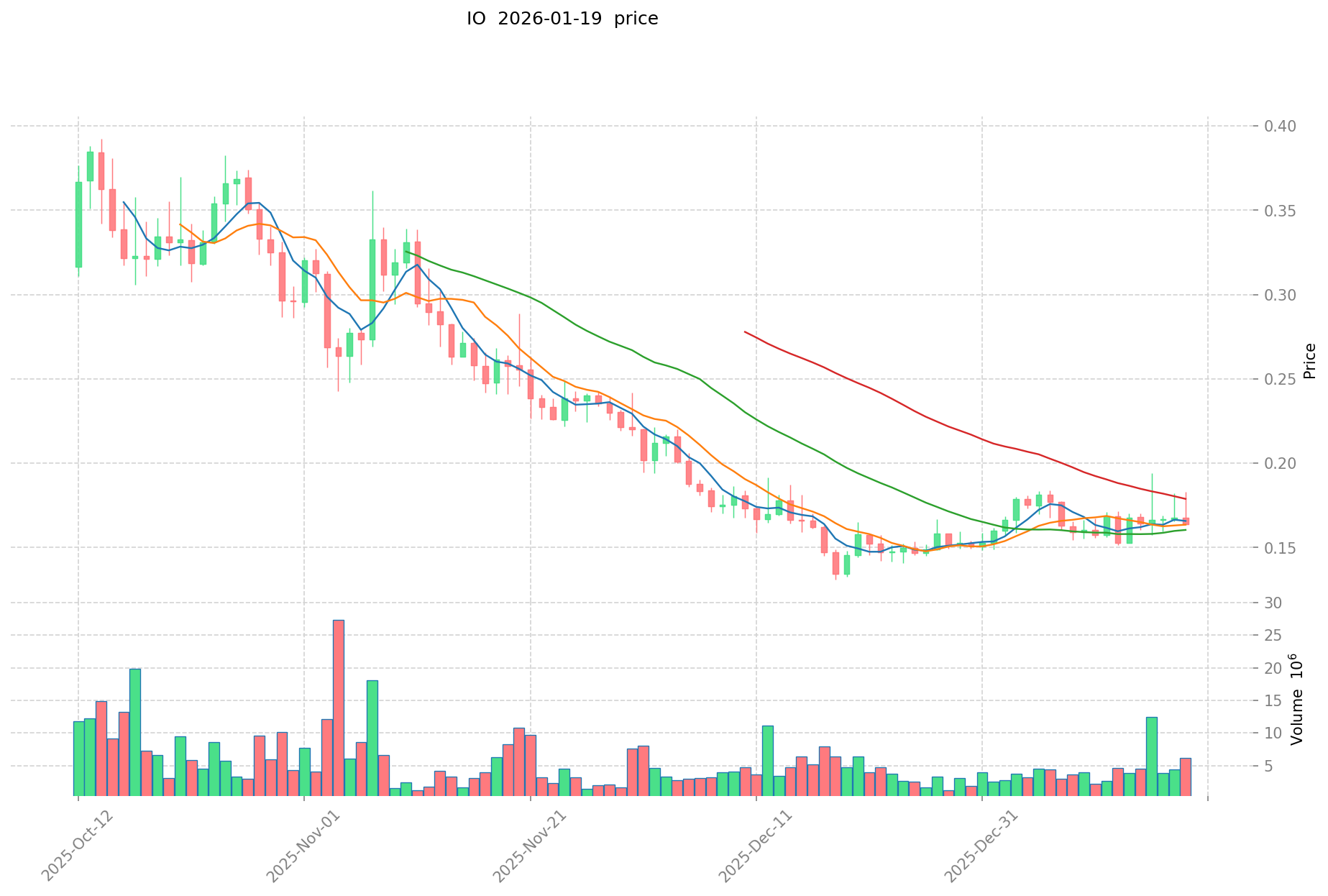
As of January 20, 2026, IO is trading at $0.1575, showing mixed short-term performance across different timeframes. The token has declined by 0.69% in the past hour and experienced a more pronounced 12.35% decrease over the last 24 hours, with the 24-hour trading range between $0.14 and $0.1803.
Looking at broader timeframes, IO demonstrates modest recovery signs with a 1.29% increase over the past 7 days and a 0.51% gain over the 30-day period. However, the 1-year performance remains deeply negative at -95.17%, reflecting the substantial price correction from its 2024 highs.
The token currently holds a market capitalization of approximately $42.40 million, with a circulating supply of 269.19 million IO tokens out of a maximum supply of 800 million tokens. This represents a circulation ratio of 33.65%. The fully diluted market cap stands at $126 million. With a 24-hour trading volume of $1.09 million, IO maintains a market cap to fully diluted valuation ratio of 33.65% and ranks #582 in the cryptocurrency market, commanding a 0.0038% market dominance. The token is currently listed on 43 exchanges and has attracted 84,802 holders.
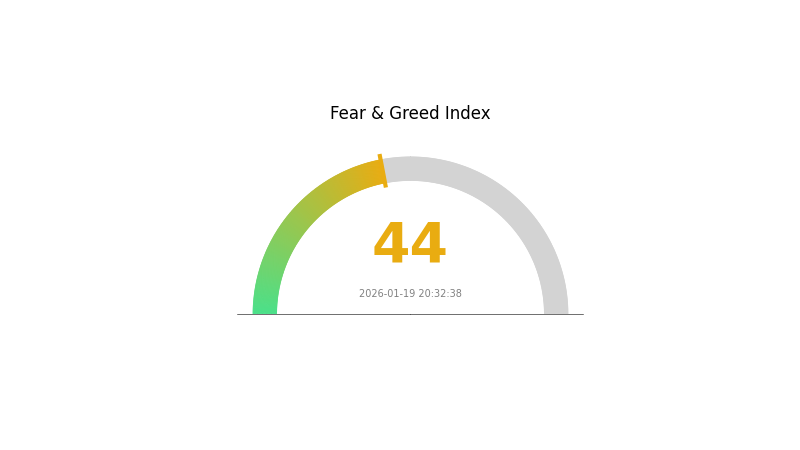
The current market sentiment index stands at 44, indicating a "Fear" sentiment level in the broader cryptocurrency market.
Click to view current IO market price
IO Market Sentiment Indicator
2026-01-19 Fear and Greed Index: 44 (Fear)
Click to view the current Fear & Greed Index
The cryptocurrency market is currently experiencing a fear sentiment, with the Fear and Greed Index standing at 44. This reading indicates that market participants are displaying heightened caution and risk aversion. When the index enters fear territory, it often presents contrarian opportunities for value-oriented investors, as excessive pessimism can lead to oversold conditions. Market participants should monitor key support levels and consider their investment thesis carefully during periods of elevated fear.
IO Holding Distribution
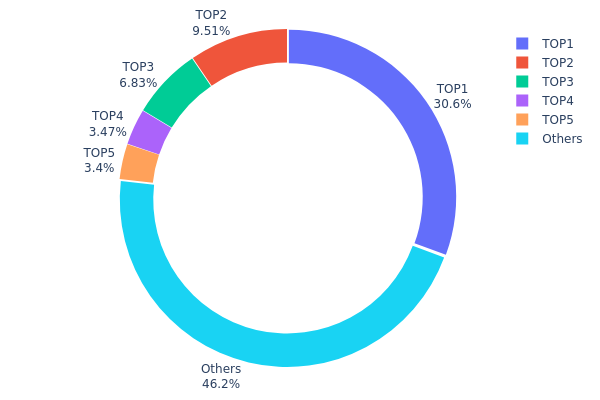
The holding distribution chart reveals the concentration of token supply across different wallet addresses, serving as a key indicator of market structure and decentralization. For IO, the data shows a moderate concentration pattern where the top 5 addresses collectively hold 53.82% of the total supply, with the largest single address controlling 30.61% (244,907.13K tokens). The second and third largest holders possess 9.51% and 6.83% respectively, while the remaining addresses (categorized as "Others") account for 46.18% of the supply.
This distribution pattern suggests a semi-centralized structure that warrants careful consideration. The dominance of the top address, holding nearly one-third of the circulating supply, creates potential vulnerability to large-scale sell pressure or market manipulation. However, the relatively dispersed nature of the remaining 46.18% across numerous smaller holders provides some counterbalance, indicating a growing retail and institutional participation base. The gap between the first and second largest holders (over 21 percentage points) is particularly noteworthy, as it concentrates significant influence in a single entity.
From a market dynamics perspective, this holding structure implies elevated volatility risk. Large holders possess substantial power to influence price movements through strategic buying or selling decisions. The current distribution reflects a transitional phase in IO's market maturity, where early investors and project-related addresses still maintain considerable control. For market participants, monitoring any significant transfers from these top addresses becomes crucial for anticipating potential price fluctuations.
Click to view current IO Holding Distribution
| Top |
Address |
Holding Qty |
Holding (%) |
| 1 |
3EpUYH...gaLfGt |
244907.13K |
30.61% |
| 2 |
9WzDXw...YtAWWM |
76118.91K |
9.51% |
| 3 |
28SqbT...UZFWTm |
54670.40K |
6.83% |
| 4 |
Gm9t9T...7feNZv |
27785.66K |
3.47% |
| 5 |
6erNn9...CWuWdj |
27234.41K |
3.40% |
| - |
Others |
369280.64K |
46.18% |
II. Core Factors Influencing IO's Future Price
Supply Mechanism
- Limited Total Supply: IO coin operates with a capped total supply, creating scarcity dynamics in the market. This fundamental supply constraint means that as demand increases, price pressure tends to build upward.
- Historical Patterns: Market data suggests that when institutional investors entered the market, IO coin experienced notable price movements. The supply-demand imbalance created by growing institutional interest has historically contributed to price appreciation.
- Current Impact: With institutional adoption gradually increasing, the limited supply structure continues to provide potential support for price growth, though market volatility remains a consideration for investors.
Institutional and Major Holder Dynamics
- Institutional Holdings: Institutional investors have shown growing interest in IO coin, with reports indicating strategic accumulation by investment firms seeking exposure to blockchain infrastructure assets.
- Enterprise Adoption: IO.NET's decentralized GPU network has attracted attention from organizations seeking cost-effective computing resources, particularly for AI and machine learning workloads.
- Regulatory Landscape: Various jurisdictions continue to develop regulatory frameworks for cryptocurrency trading. While some regions have implemented stricter regulations, others are working toward balanced approaches that could provide more stable market conditions.
Macroeconomic Environment
- Monetary Policy Influence: Global interest rate policies, particularly from major central banks, affect cryptocurrency markets broadly. Periods of monetary easing tend to increase market liquidity, potentially supporting risk assets including cryptocurrencies.
- Inflation Hedge Characteristics: During periods of currency devaluation concerns, some investors have turned to digital assets as potential portfolio diversifiers, though the effectiveness of this strategy varies based on market conditions.
- Geopolitical Factors: Global economic uncertainty and international developments continue to influence investor sentiment across financial markets, including cryptocurrency sectors.
Technology Development and Ecosystem Building
- Sharding Technology: IO coin leverages sharding technology to support high throughput and low latency transaction processing, enabling large-scale decentralized applications (DApps) and providing foundational infrastructure for ecosystem growth.
- Platform Adoption Growth: Increased usage of IO.NET's decentralized GPU network creates demand for the platform's services, with growth in AI and machine learning workloads serving as a potential driver for network expansion.
- Ecosystem Applications: The development of applications in areas such as decentralized finance (DeFi) and other blockchain-based services contributes to the platform's utility and may influence long-term value perception among market participants.
III. 2026-2031 IO Price Prediction
2026 Outlook
- Conservative prediction: $0.07997 - $0.1568
- Neutral prediction: $0.1568
- Optimistic prediction: $0.17405 (requires favorable market conditions and increased adoption)
2027-2029 Outlook
- Market stage expectation: IO is anticipated to enter a gradual growth phase, with price fluctuations reflecting broader market sentiment and project development milestones
- Price range prediction:
- 2027: $0.14723 - $0.20182 (approximately 5% growth)
- 2028: $0.14322 - $0.24789 (approximately 16% growth)
- 2029: $0.11003 - $0.25675 (approximately 36% growth)
- Key catalysts: Project ecosystem expansion, technological improvements, and potential partnerships could serve as primary drivers for price appreciation
2030-2031 Long-term Outlook
- Baseline scenario: $0.13466 - $0.28586 (assuming steady market growth and continued project development)
- Optimistic scenario: $0.21146 - $0.3707 (assuming accelerated adoption and favorable regulatory environment)
- Transformative scenario: Price could potentially exceed $0.3707 by 2031 (under conditions of significant technological breakthroughs and mainstream adoption)
- 2026-01-20: IO's current positioning suggests potential for moderate long-term appreciation, though investors should remain cautious of market volatility
| Year |
Predicted High Price |
Predicted Average Price |
Predicted Low Price |
Price Change |
| 2026 |
0.17405 |
0.1568 |
0.07997 |
0 |
| 2027 |
0.20182 |
0.16542 |
0.14723 |
5 |
| 2028 |
0.24789 |
0.18362 |
0.14322 |
16 |
| 2029 |
0.25675 |
0.21575 |
0.11003 |
36 |
| 2030 |
0.28586 |
0.23625 |
0.13466 |
50 |
| 2031 |
0.3707 |
0.26106 |
0.21146 |
65 |
IV. IO Professional Investment Strategy and Risk Management
IO Investment Methodology
(1) Long-term Holding Strategy
- Target Investors: Investors with medium to long-term investment horizons who believe in the decentralized AI computing infrastructure
- Operational Recommendations:
- Consider accumulating positions during market corrections when price approaches key support levels around $0.14-$0.15 range
- Implement dollar-cost averaging (DCA) strategy to mitigate timing risk, spreading purchases over 3-6 month periods
- Store assets in secure wallets such as Gate Web3 Wallet for enhanced security and convenience
(2) Active Trading Strategy
- Technical Analysis Tools:
- Moving Averages: Monitor 50-day and 200-day moving averages to identify trend reversals and momentum shifts
- Volume Analysis: Pay attention to trading volume patterns, as current 24-hour volume of approximately $1.09 million indicates moderate liquidity
- Swing Trading Guidelines:
- Establish clear entry and exit points based on support ($0.14) and resistance ($0.18) levels observed in recent 24-hour trading
- Set stop-loss orders to limit downside risk, typically 5-8% below entry price for short-term positions
IO Risk Management Framework
(1) Asset Allocation Principles
- Conservative Investors: 1-3% of total crypto portfolio
- Aggressive Investors: 5-10% of total crypto portfolio
- Professional Investors: Up to 15% of total crypto portfolio, with proper hedging strategies
(2) Risk Hedging Solutions
- Portfolio Diversification: Combine IO holdings with established cryptocurrencies and stablecoins to reduce concentration risk
- Position Sizing: Limit individual position size to prevent excessive exposure to single-asset volatility
(3) Secure Storage Solutions
- Hot Wallet Recommendation: Gate Web3 Wallet offers convenient access for active trading while maintaining security standards
- Cold Storage Solution: For large holdings intended for long-term storage, consider hardware wallet solutions with multi-signature capabilities
- Security Precautions: Enable two-factor authentication, regularly update security software, and never share private keys or seed phrases
V. IO Potential Risks and Challenges
IO Market Risks
- High Volatility: IO has experienced a 95.17% decline over the past year, demonstrating substantial price volatility typical of emerging crypto assets
- Liquidity Concerns: With a circulating market cap of approximately $42.4 million and daily volume around $1.09 million, liquidity may be limited during periods of market stress
- Market Sentiment Dependency: Price movements can be heavily influenced by broader crypto market trends and sentiment shifts in the AI computing sector
IO Regulatory Risks
- Decentralized Computing Regulations: Evolving regulatory frameworks for decentralized infrastructure services may impact IO's operational model
- Cross-border Compliance: As a global decentralized platform, IO may face varying regulatory requirements across different jurisdictions
- Token Classification Uncertainty: Regulatory clarity regarding IO's token status could affect its trading and usage scenarios
IO Technical Risks
- Smart Contract Vulnerabilities: As IO operates on the Solana blockchain, potential smart contract bugs or exploits could affect token security
- Network Dependencies: IO's functionality relies on the underlying Solana network performance and stability
- Competition Risks: The decentralized AI computing space faces competition from both centralized cloud providers and other decentralized alternatives
VI. Conclusion and Action Recommendations
IO Investment Value Assessment
IO.NET represents an innovative approach to decentralized AI computing infrastructure, aiming to democratize access to GPU resources for machine learning applications. The project addresses a real market need by aggregating underutilized GPU capacity and offering cost-effective alternatives to traditional cloud computing. However, investors should note the token's high volatility, with current trading at $0.1575—a significant distance from its historical high of $6.5. The circulating supply of approximately 269 million tokens represents 33.65% of the total supply, with a fully diluted market cap of $126 million. While the long-term value proposition depends on successful adoption of the decentralized computing model and growth in the AI sector, short-term risks include market volatility, liquidity constraints, and competitive pressures.
IO Investment Recommendations
✅ Beginners: Start with small positions (no more than 1-2% of crypto portfolio) and focus on learning about the project's fundamentals and the decentralized computing sector. Consider using Gate Web3 Wallet for secure storage and easy access.
✅ Experienced Investors: Consider a balanced approach combining long-term holdings with tactical trading opportunities. Monitor key technical levels and sector developments. Maintain proper position sizing (3-5% of crypto portfolio) with appropriate stop-loss levels.
✅ Institutional Investors: Conduct thorough due diligence on IO's technology stack, competitive positioning, and market adoption metrics. Consider strategic allocation (up to 10% of crypto portfolio) with comprehensive risk management frameworks and hedging strategies.
IO Trading Participation Methods
- Spot Trading: Purchase IO tokens directly through Gate.com and other supported exchanges, currently listed on 43 exchanges globally
- Dollar-Cost Averaging: Implement regular periodic purchases to smooth out entry prices and reduce timing risk
- Gate Web3 Wallet Integration: Utilize Gate Web3 Wallet for convenient storage, management, and potential participation in IO network activities
Cryptocurrency investment carries extremely high risks, and this article does not constitute investment advice. Investors should make prudent decisions based on their own risk tolerance and are advised to consult professional financial advisors. Never invest more than you can afford to lose.
FAQ
What is the historical price trend of IO coin?
IO coin reached a peak of 0.192 and a low of 0.131, with average price of 0.161 as of January 19, 2026. Overall change was -5.172%.
What are the main factors affecting IO coin price?
IO coin price is primarily influenced by supply mechanisms, market demand, and macroeconomic conditions. Technological development, investor sentiment, market trends, and policy changes also significantly impact its valuation.
How to predict the future price of IO coin?
IO coin's future price is influenced by supply-demand dynamics, blockchain technology advancement, market sentiment, and regulatory policies. Analyze trading volume trends, ecosystem development, and community engagement. Use technical analysis tools to identify price patterns, but remember that predictions carry inherent uncertainty requiring prudent risk management.
What are the advantages of IO coin compared to other mainstream cryptocurrencies?
IO coin offers lower usage costs and flexible rapid deployment without licensing requirements. Users can access and deploy resources in 90 seconds, unlike traditional cloud providers. Its incentive model efficiently utilizes idle computing resources while providing greater operational flexibility.
What are the technical foundation and application scenarios of IO coin?
IO coin is a blockchain-based decentralized digital asset supporting payments, staking mining, network governance, and smart contracts. It enables DApp applications, cross-chain functionality, DeFi, and NFT ecosystems on its network infrastructure.
* The information is not intended to be and does not constitute financial advice or any other recommendation of any sort offered or endorsed by Gate.