This comprehensive guide analyzes LQTY (Liquity) token's price trajectory and investment potential through 2031. As of January 2026, LQTY trades at $0.357 with a $35 million market cap, representing a significant opportunity in the decentralized lending sector. The article examines LQTY's historical performance, current market dynamics, and provides detailed price forecasts: conservative estimates suggest $0.338-$0.356 for 2026, while optimistic scenarios project growth to $0.745 by 2029 and $0.965 by 2031. Key analysis includes holder distribution patterns, technical trading strategies, and comprehensive risk management frameworks for different investor profiles. The guide offers actionable investment recommendations for beginners, experienced traders, and institutional investors, highlighting LQTY's zero-interest borrowing mechanism and fee-sharing utility. Essential risk factors including market volatility, liquidity constraints, and regulatory uncertainties are thoroughly assessed, with secure storage sol
Introduction: LQTY's Market Position and Investment Value
Liquity (LQTY), as a decentralized lending protocol token enabling interest-free borrowing against Ethereum collateral, has established itself as a distinctive player in the DeFi lending sector since its launch in 2021. As of 2026, LQTY maintains a market capitalization of approximately $35 million, with a circulating supply of around 98.03 million tokens, and the price hovering around $0.357. This asset, recognized for its zero-interest borrowing mechanism and fee revenue distribution model, continues to serve an important function within the decentralized finance ecosystem, particularly in facilitating collateralized lending and stability pool operations.
This article will comprehensively analyze LQTY's price trajectory from 2026 to 2031, integrating historical patterns, market supply-demand dynamics, ecosystem developments, and macroeconomic conditions to provide investors with professional price forecasts and practical investment strategies.
I. LQTY Price History Review and Market Status
LQTY Historical Price Evolution Trajectory
- 2021: Protocol launch in April with initial trading debut, price reached all-time high of $146.94 on April 6
- 2021-2024: Extended market cycle adjustment period, price experienced significant volatility amid broader crypto market movements
- 2025: Market cycle downturn continued, price declined to historical low of $0.298378 on October 11
LQTY Current Market Dynamics
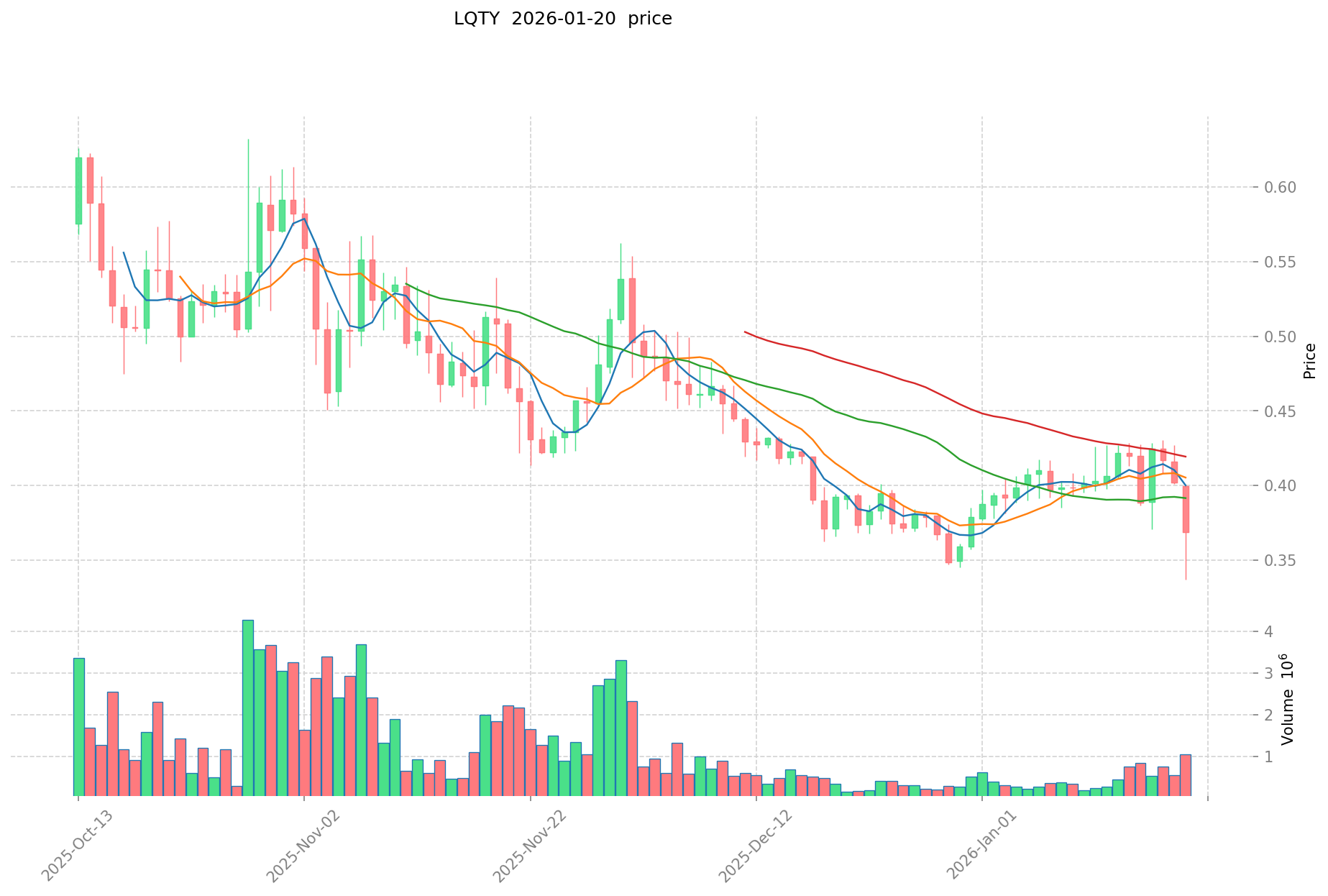
As of January 21, 2026, LQTY is trading at $0.357, with a circulating supply of 98.03 million tokens representing 98.03% of the maximum supply of 100 million tokens. The current market capitalization stands at approximately $35.00 million, ranking 645th among crypto assets with a market dominance of 0.0011%.
Recent price movements show a 24-hour decline of 4.73%, with trading activity recording a daily volume of $176,737. The asset has experienced broader downward pressure, with a 7-day decline of 15.73% and a 30-day decrease of 3.37%. Over the past year, LQTY has declined 80.22% from previous levels.
The token maintains active trading across 32 exchanges and has approximately 14,304 token holders. Market sentiment indicators currently reflect a fear reading of 32 on the volatility index, suggesting cautious investor positioning in the current environment.
Click to view current LQTY market price
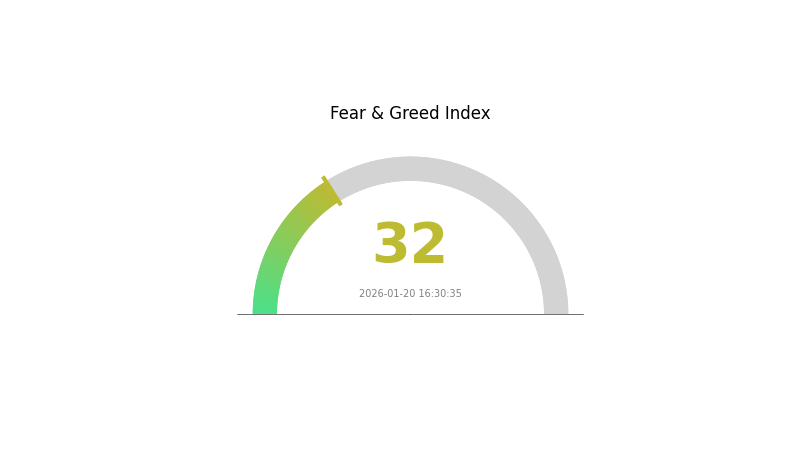
LQTY Market Sentiment Indicator
2026-01-20 Fear and Greed Index: 32 (Fear)
Click to view current Fear & Greed Index
The market is currently experiencing significant fear sentiment, with the Fear and Greed Index standing at 32. This reading suggests heightened market anxiety and risk aversion among investors. During periods of fear, market volatility typically increases, creating both challenges and opportunities for traders. It is advisable to exercise caution when making investment decisions and consider diversifying your portfolio. Monitor market developments closely on Gate.com to stay informed about potential market shifts and emerging trading opportunities.
LQTY Holding Distribution
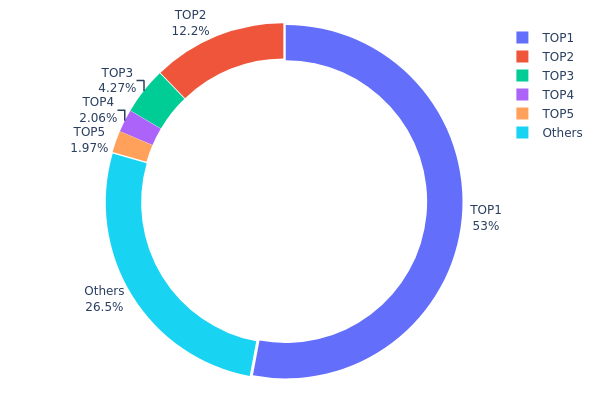
The holding distribution chart illustrates the percentage allocation of LQTY tokens across different wallet addresses, revealing the degree of token concentration among major holders. By analyzing the top addresses and their respective holdings, we can assess the decentralization level of LQTY's on-chain structure and identify potential risks associated with centralized control.
According to the current data, LQTY demonstrates a highly concentrated holding pattern. The top address (0x4f9f...fc605d) controls approximately 52.97% of the total supply, holding 52.97 million tokens. Combined with the second-largest holder (0xf977...41acec) at 12.23%, the top two addresses collectively control 65.20% of LQTY's circulating supply. The third through fifth addresses hold 4.26%, 2.06%, and 1.96% respectively, while the remaining addresses collectively account for only 26.52%. This extreme concentration creates a market structure where a single entity or related parties could potentially exert significant influence over price discovery and trading dynamics. Such distribution patterns typically indicate that the token remains heavily controlled by early investors, project teams, or exchange wallets, which may expose retail participants to elevated risks of price manipulation or sudden large-scale sell-offs.
From a market structure perspective, this level of concentration suggests limited decentralization and raises concerns about LQTY's liquidity stability. When major holders decide to adjust their positions, even modest percentage changes in their holdings can trigger substantial market volatility due to the relatively small free-float available for active trading. Additionally, the dominance of top addresses reduces the token's resistance to coordinated market actions and increases vulnerability to whale manipulation. For investors, monitoring changes in these top addresses' holdings becomes crucial for anticipating potential market movements and managing exposure risks effectively.
Click to view the current LQTY Holding Distribution
| Top |
Address |
Holding Qty |
Holding (%) |
| 1 |
0x4f9f...fc605d |
52973.16K |
52.97% |
| 2 |
0xf977...41acec |
12232.42K |
12.23% |
| 3 |
0xd9c2...37f8af |
4266.63K |
4.26% |
| 4 |
0x91d4...c8debe |
2062.16K |
2.06% |
| 5 |
0xd8c9...08d816 |
1965.88K |
1.96% |
| - |
Others |
26499.76K |
26.52% |
II. Core Factors Influencing LQTY's Future Price
Due to the absence of specific data in the provided materials regarding LQTY's supply mechanisms, institutional dynamics, macroeconomic factors, and technical developments, a comprehensive analysis cannot be conducted at this time. Market participants are advised to monitor official project announcements and conduct independent research before making investment decisions.
III. 2026-2031 LQTY Price Prediction
2026 Outlook
- Conservative Forecast: $0.338-$0.356
- Neutral Forecast: $0.356-$0.400
- Optimistic Forecast: $0.400-$0.438 (requires sustained DeFi sector growth and increased protocol adoption)
2027-2029 Mid-Term Outlook
- Market Phase Expectation: Potential consolidation followed by gradual upward momentum as the DeFi ecosystem matures and lending protocols gain broader acceptance
- Price Range Predictions:
- 2027: $0.325-$0.500
- 2028: $0.435-$0.601
- 2029: $0.446-$0.745
- Key Catalysts: Expansion of decentralized lending infrastructure, potential protocol upgrades, and increased institutional interest in DeFi lending solutions
2030-2031 Long-Term Outlook
- Baseline Scenario: $0.502-$0.635 (assuming steady market growth and maintained protocol utility)
- Optimistic Scenario: $0.635-$0.723 (assuming enhanced protocol features and expanded user base)
- Transformative Scenario: $0.723-$0.965 (contingent upon breakthrough adoption levels and favorable regulatory frameworks for decentralized finance)
| Year |
Predicted High Price |
Predicted Average Price |
Predicted Low Price |
Price Change |
| 2026 |
0.43776 |
0.3559 |
0.33811 |
0 |
| 2027 |
0.5 |
0.39683 |
0.3254 |
11 |
| 2028 |
0.60088 |
0.44842 |
0.43496 |
25 |
| 2029 |
0.745 |
0.52465 |
0.44595 |
46 |
| 2030 |
0.7237 |
0.63482 |
0.50151 |
77 |
| 2031 |
0.96455 |
0.67926 |
0.50945 |
90 |
IV. LQTY Professional Investment Strategies and Risk Management
LQTY Investment Methodology
(I) Long-term Holding Strategy
- Suitable for: Investors seeking exposure to decentralized lending protocols and DeFi ecosystem participants
- Operational Recommendations:
- Consider accumulating LQTY during market downturns when protocol fundamentals remain strong
- Monitor the protocol's stability pool performance and fee generation metrics
- Storage Solution: Utilize Gate Web3 Wallet for secure multi-chain asset management with enhanced security features
(II) Active Trading Strategy
- Technical Analysis Tools:
- Moving Averages: Track 50-day and 200-day moving averages to identify trend reversals and potential entry points
- Volume Analysis: Monitor 24-hour trading volume patterns to gauge market interest and liquidity conditions
- Swing Trading Key Points:
- Pay attention to price fluctuations within the support range of $0.355 and resistance near $0.379
- Consider protocol-specific events such as fee redistribution periods and governance proposals that may impact price action
LQTY Risk Management Framework
(I) Asset Allocation Principles
- Conservative Investors: 1-3% of cryptocurrency portfolio allocation
- Aggressive Investors: 5-8% of cryptocurrency portfolio allocation
- Professional Investors: Up to 10-15% with active hedging strategies
(II) Risk Hedging Solutions
- Diversification Strategy: Balance LQTY holdings with other DeFi protocol tokens and stablecoins to reduce sector-specific risks
- Position Sizing: Implement gradual accumulation rather than lump-sum investments to average entry costs
(III) Secure Storage Solutions
- Hot Wallet Recommendation: Gate Web3 Wallet offers convenient access with institutional-grade security features
- Cold Storage Option: For long-term holdings exceeding significant value thresholds, consider hardware wallet solutions
- Security Precautions: Never share private keys, enable two-factor authentication, and regularly verify contract addresses before transactions
V. LQTY Potential Risks and Challenges
LQTY Market Risks
- High Volatility: LQTY has experienced an 80.22% decline over the past year, indicating substantial price volatility and market sensitivity
- Limited Liquidity: With 24-hour trading volume of approximately $176,737, liquidity constraints may lead to increased slippage during large transactions
- Market Cap Ranking: Currently ranked #645 with a market dominance of 0.0011%, suggesting limited mainstream adoption compared to larger DeFi protocols
LQTY Regulatory Risks
- DeFi Regulation Uncertainty: Evolving regulatory frameworks for decentralized lending protocols may impact operational viability
- Compliance Requirements: Potential future KYC/AML requirements could affect protocol accessibility and user adoption
- Cross-border Regulatory Divergence: Different jurisdictions may implement varying regulatory standards affecting global protocol operations
LQTY Technical Risks
- Smart Contract Vulnerabilities: Despite audits, complex DeFi protocols may contain undiscovered security vulnerabilities
- Ethereum Network Dependency: As an ERC-20 token on Ethereum, LQTY is subject to network congestion and gas fee fluctuations
- Protocol Competition: Increasing competition from alternative lending protocols may impact LQTY's market position and utility value
VI. Conclusion and Action Recommendations
LQTY Investment Value Assessment
LQTY represents exposure to the decentralized lending sector with its unique zero-interest borrowing model. The protocol's long-term value proposition centers on its governance utility and fee-sharing mechanism for stability providers. However, the significant year-over-year decline of 80.22% and relatively low market cap ranking indicate substantial short-term risks. The protocol's 98.03% circulating supply suggests limited token inflation concerns, but the distance from all-time high of $146.94 to current price of $0.357 reflects considerable market skepticism or sector-wide challenges.
LQTY Investment Recommendations
✅ Beginners: Start with minimal allocation (1-2% of crypto portfolio) and prioritize understanding the Liquity protocol mechanics before increasing exposure
✅ Experienced Investors: Consider LQTY as a strategic DeFi sector play with 3-5% allocation, actively monitoring protocol metrics and competitive landscape
✅ Institutional Investors: Evaluate LQTY within a diversified DeFi basket strategy with appropriate hedging mechanisms and regular rebalancing based on protocol performance indicators
LQTY Trading Participation Methods
- Spot Trading: Access LQTY trading pairs on Gate.com with competitive fees and deep liquidity pools
- Staking Opportunities: Participate in stability pool deposits to earn protocol fees and LQTY rewards while supporting system stability
- Portfolio Integration: Include LQTY as part of a broader DeFi exposure strategy alongside complementary protocol tokens for risk diversification
Cryptocurrency investment carries extremely high risks, and this article does not constitute investment advice. Investors should make prudent decisions based on their own risk tolerance and are advised to consult professional financial advisors. Never invest more than you can afford to lose.
FAQ
LQTY tokens have demonstrated significant volatility since launch. The token experienced notable price movements influenced by platform developments, market conditions, and DeFi ecosystem trends. Historical data shows periods of growth during bull markets and corrections during market downturns, reflecting typical cryptocurrency market dynamics.
What are the main factors affecting LQTY price?
LQTY price is influenced by protocol adoption rates, total value locked in Liquity, market sentiment, Bitcoin's performance, DeFi sector trends, governance decisions, and overall cryptocurrency market conditions.
What is the price prediction for LQTY in 2024?
LQTY demonstrated strong growth potential through 2024, with analysts projecting prices ranging from $2.50 to $4.50 based on increased adoption and market recovery trends. Long-term fundamentals suggest continued upside as the protocol expands its ecosystem and user base.
What advantages does LQTY have compared to other DeFi governance tokens?
LQTY offers superior capital efficiency through its innovative stability mechanism, lower governance overhead, and sustainable tokenomics. Its unique collateral system and optimized fee structure enable higher yields while maintaining protocol stability, distinguishing it from traditional DeFi governance tokens.
What are the risks of buying and holding LQTY tokens?
LQTY carries market volatility risk, liquidity risk, and smart contract risk. Price fluctuations can be significant. Token utility and adoption may change. Regulatory changes could impact value. Always conduct thorough research before investing.
How does the development prospects of the Liquity protocol impact LQTY price?
Liquity protocol's growth drives LQTY appreciation. Enhanced functionality, increased TVL, and expanded DeFi integration strengthen demand. Improved stability mechanisms and governance features attract users, boosting token utility and long-term value potential significantly.
* The information is not intended to be and does not constitute financial advice or any other recommendation of any sort offered or endorsed by Gate.