This comprehensive article provides an expert analysis of MIRA's price trajectory from 2026 to 2031, examining a decentralized AI verification network currently trading at $0.121 with a $23.14 million market cap. The analysis combines historical price patterns, market supply-demand dynamics, and ecosystem developments to deliver professional price forecasts and actionable investment strategies. Key sections address MIRA's current market position, factors influencing future prices, detailed year-by-year price predictions ranging from $0.1209 in 2026 to $0.21894 by 2031, and risk management frameworks suitable for different investor profiles. The article offers spot trading guidance through Gate and other exchanges, addresses critical risks including high volatility and regulatory challenges, and provides strategic recommendations for beginners, experienced investors, and institutions seeking MIRA exposure.
Introduction: MIRA's Market Position and Investment Value
Mira (MIRA), positioned as a decentralized verification network enabling autonomous AI systems, has emerged as an innovative solution addressing reliability challenges in artificial intelligence outputs. As of January 2026, MIRA maintains a market capitalization of approximately $23.14 million, with around 191.2 million tokens in circulation, trading at roughly $0.121. This asset, recognized as a pioneering infrastructure for trustless AI verification, is playing an increasingly significant role in high-stakes domains including healthcare, finance, and legal services.
This article comprehensively analyzes MIRA's price trajectory from 2026 to 2031, combining historical patterns, market supply-demand dynamics, ecosystem developments, and macroeconomic conditions to provide investors with professional price forecasts and practical investment strategies.
I. MIRA Price History Review and Market Status
MIRA Historical Price Evolution Trajectory
- 2025: MIRA reached a price peak of $2.6662 on September 26, followed by a significant correction that brought the price down to $0.1122 by December 18, representing a substantial decline from its historical high.
- 2025-2026: The token experienced a prolonged downward trend, with the annual performance showing a decline of approximately 91.46% from its peak levels.
MIRA Current Market Situation
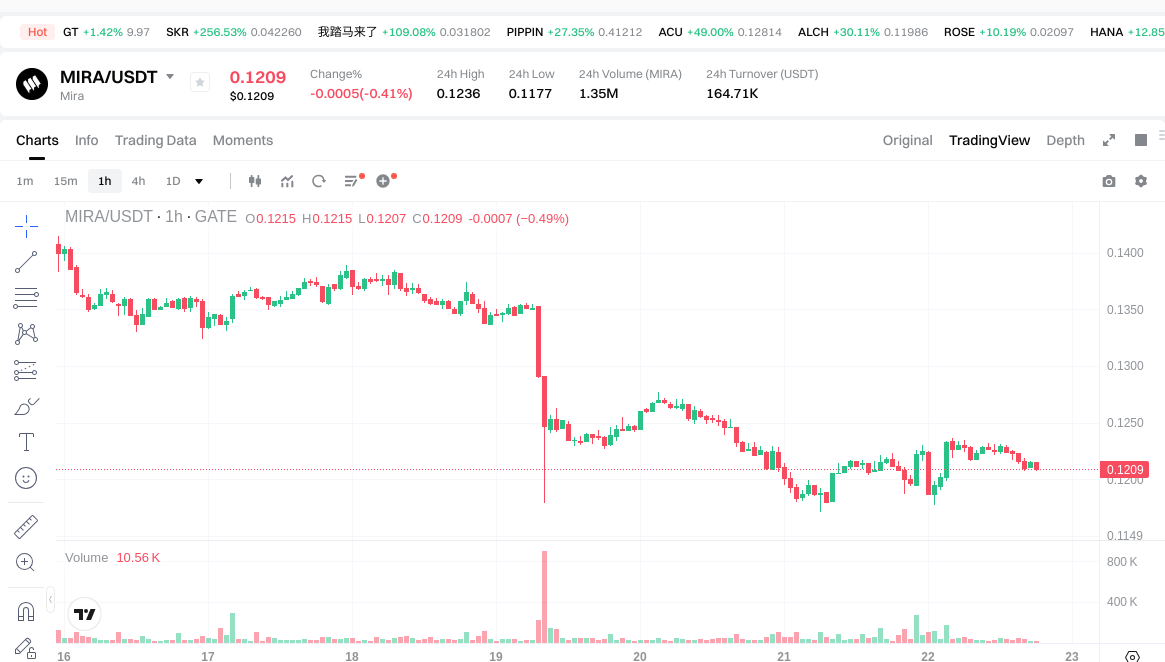
As of January 22, 2026, MIRA is trading at $0.121, demonstrating relatively subdued market activity. The token has exhibited mild price fluctuations across different timeframes, with a 1-hour change of -0.25% and a 24-hour movement of -0.73%. Over the past week, MIRA has experienced a more pronounced decline of 15.62%, while the 30-day performance shows a decrease of 2.97%.
The current trading range shows MIRA fluctuating between a 24-hour high of $0.1236 and a low of $0.1177. The 24-hour trading volume stands at approximately $164,435, indicating moderate market participation. With a market capitalization of $23.14 million and a circulating supply of 191.2 million tokens out of a maximum supply of 1 billion, MIRA's circulating ratio is 19.12%.
The fully diluted market cap is calculated at $121 million, suggesting significant potential dilution from the remaining uncirculated token supply. MIRA currently holds a market share of 0.0037% in the overall cryptocurrency market and ranks #818 by market capitalization. The token is deployed on the BASE blockchain, with the contract address verified on BaseScan.
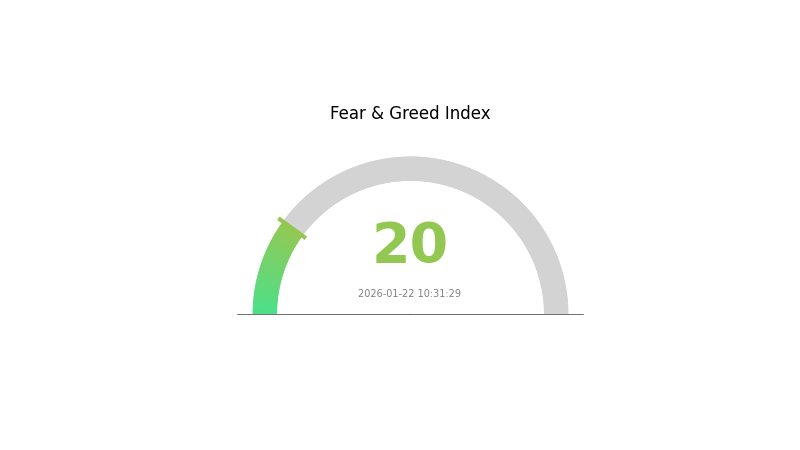
MIRA's market presence is reflected across 26 exchanges, with a holder count of 13,021 addresses. The broader cryptocurrency market sentiment indicator shows a reading of 20, corresponding to an "Extreme Fear" level, which may be influencing MIRA's current trading patterns and investor behavior.
Click to view current MIRA market price
MIRA Market Sentiment Index
01-22-2026 Fear and Greed Index: 20 (Extreme Fear)
Click to view current Fear & Greed Index
The crypto market is experiencing extreme fear conditions, with the MIRA index hitting 20. This indicates significant market pessimism and heightened risk aversion among investors. During such periods, market volatility tends to increase substantially, creating both opportunities and challenges for traders. Investors should exercise caution and consider their risk tolerance carefully. Those with a long-term investment horizon may view extreme fear as potential buying opportunities, while short-term traders should prepare for increased price swings and maintain strict risk management protocols.
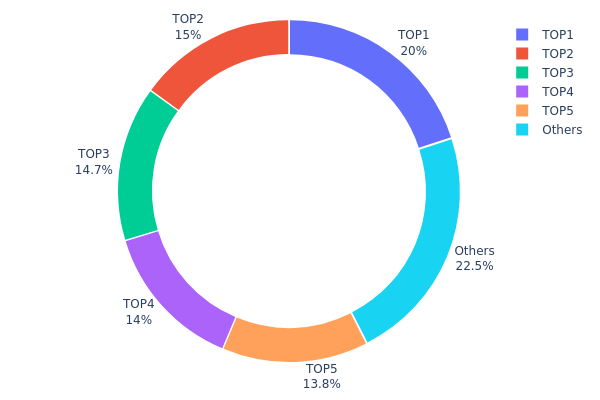
MIRA Holding Distribution
The holding distribution chart reflects the proportion of token supply held by different wallet addresses, serving as a key indicator of asset concentration and decentralization. According to the latest on-chain data, the top 5 addresses collectively hold 790,086.54K MIRA, accounting for 79.01% of the total supply. The largest holder controls 200,000K tokens (20.00%), followed by the second-largest with 150,000K tokens (15.00%). The remaining addresses outside the top 5 hold only 224,913.47K tokens, representing 22.50% of the total supply.
This distribution pattern reveals a significant concentration risk in MIRA's current market structure. With nearly four-fifths of the supply controlled by just five addresses, the token exhibits a highly centralized ownership model that could potentially expose the market to substantial volatility. Large holders possess considerable influence over price movements, as their trading decisions can trigger significant supply-side shocks. Such concentration also raises concerns about potential market manipulation, where coordinated actions by major stakeholders could artificially influence price discovery mechanisms.
From a market stability perspective, this centralized holding structure suggests limited decentralization at the current stage. The relatively small proportion held by other addresses indicates that retail participation and broader distribution remain underdeveloped. This imbalance may constrain organic market depth and liquidity, making the token more susceptible to sharp price swings during periods of large-scale position adjustments by top holders.
Click to view the current MIRA holding distribution
| Top |
Address |
Holding Qty |
Holding (%) |
| 1 |
0x157d...e91cb2 |
200000.00K |
20.00% |
| 2 |
0xf688...528cf1 |
150000.00K |
15.00% |
| 3 |
0x8b78...84977f |
146757.06K |
14.67% |
| 4 |
0x231d...f67d81 |
140017.86K |
14.00% |
| 5 |
0x5fc7...de4006 |
138311.62K |
13.83% |
| - |
Others |
224913.47K |
22.5% |
II. Core Factors Affecting MIRA's Future Price
Based on the currently available information, there is insufficient data regarding MIRA's supply mechanisms, institutional dynamics, macroeconomic positioning, and technical developments to provide a comprehensive analysis of the factors that may influence its future price trajectory.
As more information becomes available about MIRA's tokenomics, adoption patterns, and ecosystem development, a more detailed assessment of price-influencing factors can be conducted. Investors should conduct thorough research and monitor official project announcements for updates on these fundamental aspects.
III. 2026-2031 MIRA Price Prediction
2026 Outlook
- Conservative Forecast: $0.10035 - $0.1209
- Neutral Forecast: Around $0.1209
- Optimistic Forecast: Up to $0.16442 (requires favorable market conditions and increased adoption)
2027-2029 Outlook
- Market Stage Expectation: Gradual growth phase with moderate volatility, characterized by steady adoption and market maturation
- Price Range Forecast:
- 2027: $0.09273 - $0.19117, with an average around $0.14266 (approximately 17% year-over-year change)
- 2028: $0.09347 - $0.1786, with an average around $0.16691 (approximately 37% cumulative change from 2026)
- 2029: $0.12266 - $0.19521, with an average around $0.17276 (approximately 42% cumulative change from 2026)
- Key Catalysts: Ecosystem expansion, technological developments, broader market adoption, and potential partnership announcements
2030-2031 Long-term Outlook
- Baseline Scenario: $0.18399 - $0.2539 in 2030 (assuming continued market development and stable macro conditions)
- Optimistic Scenario: $0.21894 - $0.25178 in 2031 (with enhanced utility, expanded use cases, and favorable regulatory environment)
- Transformative Scenario: Potential to reach upper price ranges of $0.25178 - $0.2539 (under conditions of exceptional market growth, widespread adoption, and significant technological breakthroughs)
- 2026-01-22: MIRA price predictions suggest potential growth trajectory with projected average values ranging from $0.1209 in 2026 to $0.21894 by 2031 (representing approximately 80% cumulative change over the five-year period)
| Year |
Predicted High Price |
Predicted Average Price |
Predicted Low Price |
Price Change |
| 2026 |
0.16442 |
0.1209 |
0.10035 |
0 |
| 2027 |
0.19117 |
0.14266 |
0.09273 |
17 |
| 2028 |
0.1786 |
0.16691 |
0.09347 |
37 |
| 2029 |
0.19521 |
0.17276 |
0.12266 |
42 |
| 2030 |
0.2539 |
0.18399 |
0.10487 |
52 |
| 2031 |
0.25178 |
0.21894 |
0.11604 |
80 |
IV. MIRA Professional Investment Strategy and Risk Management
MIRA Investment Methodology
(1) Long-term Holding Strategy
- Suitable for: Investors who believe in the future of AI verification infrastructure and decentralized consensus mechanisms
- Operational Recommendations:
- Consider accumulating positions gradually during market corrections to average down entry costs
- Monitor developments in AI autonomy adoption across healthcare, finance, and legal sectors as potential catalysts
- Storage Solution: Use Gate Web3 Wallet for secure self-custody with multi-layer security features
(2) Active Trading Strategy
- Technical Analysis Tools:
- Volume Analysis: Monitor the 24-hour trading volume (currently around $164,435) for liquidity assessment and trend confirmation
- Support and Resistance Levels: Track the recent low at $0.1122 as key support and assess resistance near recent highs
- Swing Trading Considerations:
- Given the -15.62% weekly decline, traders may watch for reversal signals before establishing long positions
- Set stop-loss orders below key support levels to manage downside risk in volatile conditions
MIRA Risk Management Framework
(1) Asset Allocation Principles
- Conservative Investors: 1-3% of crypto portfolio allocation
- Aggressive Investors: 3-8% of crypto portfolio allocation
- Professional Investors: up to 10% with active hedging strategies
(2) Risk Hedging Solutions
- Portfolio Diversification: Balance MIRA holdings with established cryptocurrencies and stablecoins to reduce concentration risk
- Position Sizing: Avoid over-exposure given the current circulating supply of only 19.12% of maximum supply
(3) Secure Storage Solutions
- Self-Custody Recommendation: Gate Web3 Wallet provides secure storage with user-controlled private keys for BASEEVM tokens
- Cold Storage Option: For larger holdings, consider hardware wallet solutions with BASEEVM compatibility
- Security Precautions: Never share private keys, enable two-factor authentication, and regularly backup wallet recovery phrases
V. MIRA Potential Risks and Challenges
MIRA Market Risks
- High Volatility: The token has experienced a -91.46% decline over the past year, indicating significant price volatility
- Liquidity Concerns: With a market cap of approximately $23.14 million and relatively modest 24-hour trading volume, liquidity may be limited during market stress
- Early Stage Circulating Supply: Only 19.12% of maximum supply is currently circulating, potential future unlocks could create selling pressure
MIRA Regulatory Risks
- AI Regulation Evolution: As governments develop frameworks for AI governance, decentralized AI verification networks may face regulatory scrutiny
- Cross-jurisdictional Compliance: Operating across healthcare, finance, and legal sectors may require compliance with multiple regulatory regimes
- Autonomous AI Classification: Regulatory treatment of truly autonomous AI systems remains undefined in most jurisdictions
MIRA Technical Risks
- Consensus Mechanism Dependencies: The verification system relies on multiple independent AI models reaching agreement, creating potential points of failure
- Scalability Challenges: Routing outputs through multiple models for consensus verification may face performance bottlenecks as adoption scales
- Smart Contract Vulnerabilities: As with any blockchain-based project, smart contract bugs or exploits could pose risks to token holders
VI. Conclusion and Action Recommendations
MIRA Investment Value Assessment
MIRA represents an innovative approach to addressing AI reliability through decentralized verification, targeting critical applications in healthcare, finance, and legal services. The long-term value proposition depends on successful adoption of consensus-based AI verification in high-stakes domains. However, investors should weigh this potential against current market headwinds, including substantial year-to-date price decline, limited liquidity, and early-stage project risks. The 19.12% circulating supply ratio suggests potential future token distribution events that warrant monitoring.
MIRA Investment Recommendations
✅ Beginners: Start with small position sizes (under 2% of crypto portfolio) and focus on understanding the project's fundamentals before increasing exposure
✅ Experienced Investors: Consider dollar-cost averaging strategies to navigate volatility, while monitoring adoption metrics in target industries
✅ Institutional Investors: Conduct thorough due diligence on consensus mechanism architecture and evaluate regulatory implications for target use cases before establishing positions
MIRA Trading Participation Methods
- Spot Trading: Purchase MIRA directly on Gate.com and other supporting exchanges (currently listed on 26 exchanges)
- Strategic Accumulation: Set limit orders at key support levels to build positions during market dips
- Risk-Adjusted Exposure: Allocate only funds you can afford to lose completely, given the project's early stage and market volatility
Cryptocurrency investment carries extremely high risk, and this article does not constitute investment advice. Investors should make prudent decisions based on their own risk tolerance and are advised to consult professional financial advisors. Never invest more than you can afford to lose.
FAQ
What is MIRA token and what is its practical application value?
MIRA is a utility token powering decentralized AI prediction protocols. It enables users to participate in price forecasting, stake for rewards, and access advanced analytics tools. The token drives network governance and incentivizes accurate predictions through its economic mechanisms.
What are the main factors affecting MIRA price?
MIRA price is primarily influenced by market demand and trading volume, project development progress, community sentiment, overall crypto market trends, and macroeconomic conditions. Technological updates and partnerships also play significant roles in price movements.
How to predict MIRA price? What analysis methods are available?
Analyze MIRA through technical analysis(trend lines, moving averages), fundamental analysis(adoption, partnerships), on-chain metrics(transaction volume, holder distribution), and market sentiment indicators. Combine multiple approaches for comprehensive price forecasting.
How will MIRA's price develop in the future? What are the prospects?
MIRA demonstrates strong growth potential driven by increasing adoption and ecosystem expansion. With rising market demand and technological advancements, MIRA is positioned for significant appreciation. The token's utility and community support suggest promising long-term price trajectory and market development opportunities.
What are the risks of investing in MIRA for price prediction trading?
MIRA price prediction trading involves market volatility risk, liquidity risk, and leverage risk. Price fluctuations can result in significant losses. Always trade within your risk tolerance and use proper position management strategies.
What are the advantages or disadvantages of MIRA compared to similar tokens?
MIRA offers superior transaction speed and lower fees through its optimized blockchain architecture. Its community-driven governance and innovative tokenomics provide stronger long-term value retention compared to competitors, positioning it favorably in the market.
* The information is not intended to be and does not constitute financial advice or any other recommendation of any sort offered or endorsed by Gate.