This comprehensive analysis examines NAVX (NAVI Protocol), the first Native One-Stop Liquidity Protocol on Sui blockchain, currently trading at $0.01254 with a market cap of $10.23 million. The article reviews NAVX's dramatic price history—from $0.03 launch price to $0.428 peak, then declining 97% to current levels—and provides detailed forecasts through 2031, projecting prices between $0.00673-$0.02724 based on conservative, neutral, and optimistic scenarios. Designed for diverse investors, it outlines long-term holding and active trading strategies via Gate, presents robust risk management frameworks, analyzes regulatory and technical challenges, and emphasizes secure storage solutions. The guide balances NAVX's innovative DeFi potential against inherent volatility risks, offering actionable recommendations for beginners, experienced, and institutional investors seeking Sui ecosystem exposure.
Introduction: NAVX's Market Position and Investment Value
NAVI Protocol (NAVX), positioned as the first Native One-Stop Liquidity Protocol on the Sui blockchain, has been steadily developing since its launch in 2024. As of 2026, NAVX has achieved a market capitalization of approximately $10.23 million, with a circulating supply of around 816.17 million tokens, and the price hovering around $0.01254. This asset, recognized for its innovative liquidity solutions including Automatic Leverage Vaults and Isolation Mode, is playing an increasingly important role in the Sui ecosystem's DeFi landscape.
This article will comprehensively analyze NAVX's price trends from 2026 to 2031, combining historical patterns, market supply and demand dynamics, ecosystem development, and macroeconomic conditions to provide investors with professional price forecasts and practical investment strategies.
I. NAVX Price History Review and Market Status
NAVX Historical Price Evolution Trajectory
- February 2024: NAVX launched with a publish price of $0.03, beginning trading on Gate.com and other platforms.
- March 2024: NAVX reached its all-time high of $0.428 on March 29, representing a notable price increase of over 1,300% from its initial listing price.
- June 2024: NAVX experienced a market correction, touching its all-time low of $0.01 on June 19, marking a decline of approximately 97.7% from its peak value.
- 2025-2026: The token price fluctuated within a lower range, reflecting broader market conditions and protocol development phases.
NAVX Current Market Situation
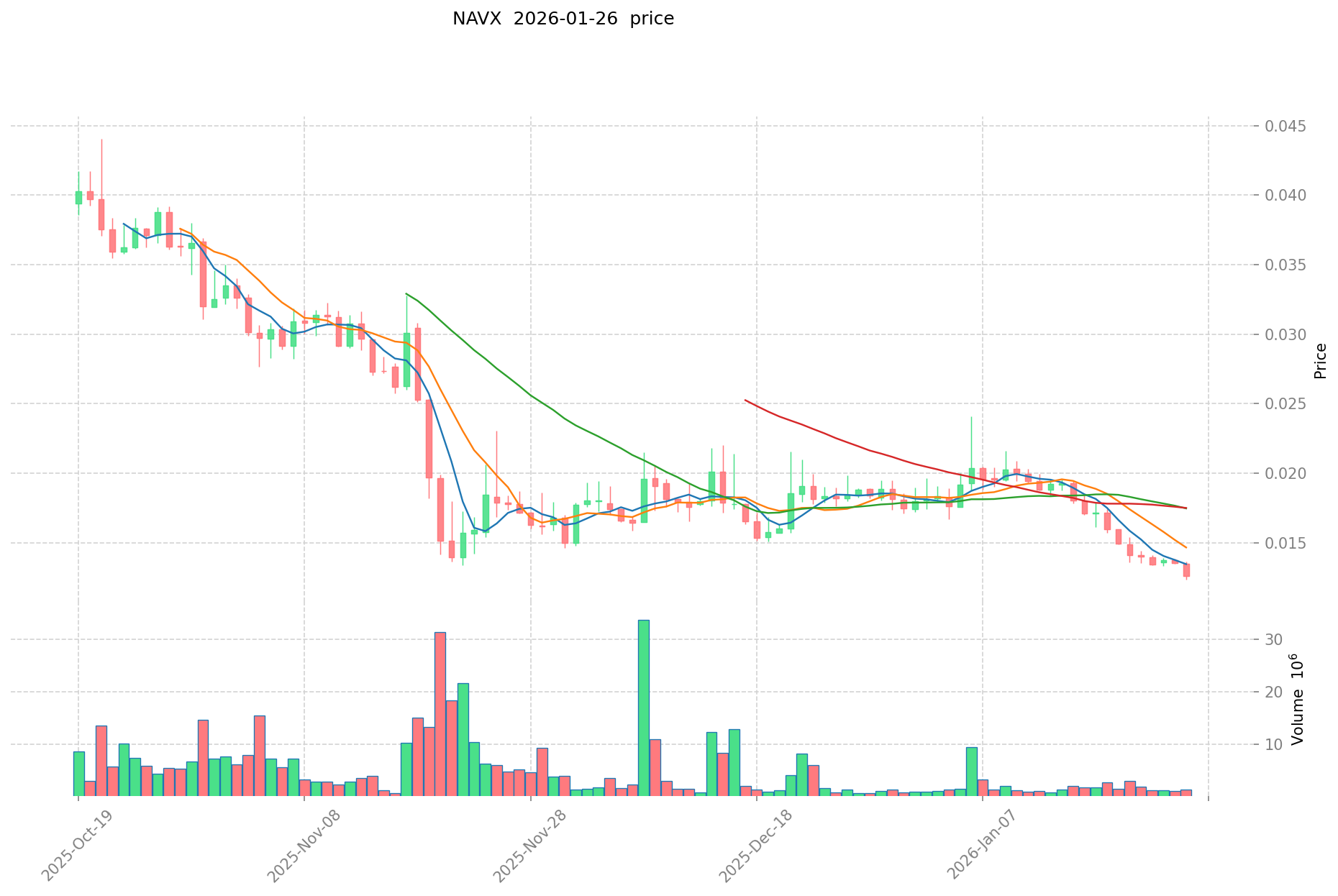
As of January 26, 2026, NAVX is trading at $0.01254, with a circulating market capitalization of approximately $10.23 million. The token demonstrates moderate trading activity with a 24-hour trading volume of $18,670.98.
The current price represents a significant decrease from its historical peak, trading approximately 97% below the all-time high. Recent market performance shows:
- 1-hour price movement: -0.32%
- 24-hour price movement: -7.52%
- 7-day price movement: -21.52%
- 30-day price movement: -32.07%
- 1-year price movement: -88.71%
The token has a circulating supply of 816.17 million NAVX, representing approximately 81.62% of the total supply of 1 billion tokens. The fully diluted market cap stands at $12.54 million, indicating relatively limited difference from the current circulating market cap.
NAVX maintains a market share of 0.0004% in the cryptocurrency market, ranking at position 1,178. The token is available across 15 different trading platforms and has approximately 96,015 holders, suggesting a distributed but limited user base. The current market sentiment index registers at 20, indicating conditions of extreme fear among market participants.
Click to view current NAVX market price
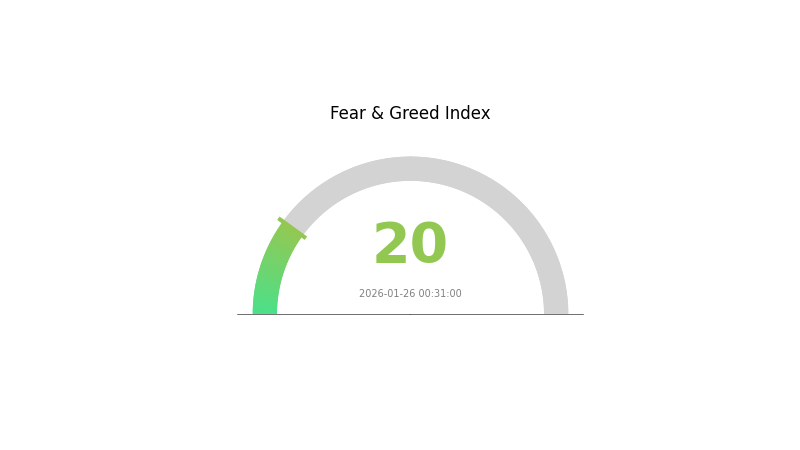
NAVX Market Sentiment Index
2026-01-26 Fear & Greed Index: 20 (Extreme Fear)
Click to view the current Fear & Greed Index
The cryptocurrency market is currently experiencing extreme fear, with the NAVX index at 20. This exceptionally low reading reflects widespread market pessimism and risk aversion among investors. During such periods, asset prices often reach attractive levels, presenting potential opportunities for contrarian investors. However, extreme fear also signals heightened volatility and uncertainty. Market participants should exercise caution, conduct thorough analysis before trading, and consider their risk tolerance carefully during this volatile phase.
NAVX Token Holding Distribution
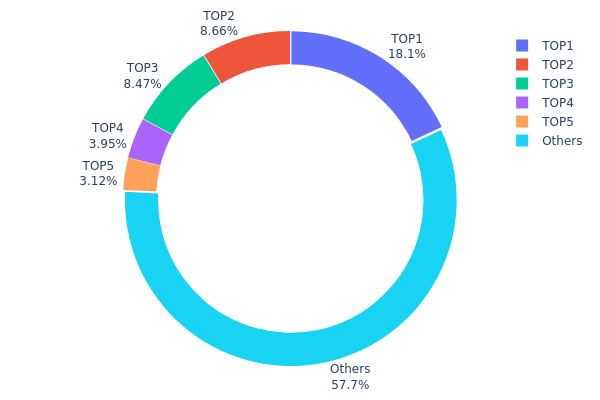
The token holding distribution chart illustrates the allocation of NAVX tokens across different wallet addresses on the blockchain, providing insights into the level of decentralization and potential concentration risks within the token's ecosystem. This metric is crucial for assessing market structure, as it reveals whether the token supply is broadly distributed among numerous holders or concentrated in the hands of a few large addresses.
Based on the current data, NAVX exhibits a moderate level of concentration. The top holder controls approximately 18.05% of the total supply (180.54M tokens), while the second and third largest addresses hold 8.66% and 8.47% respectively. Collectively, the top five addresses account for approximately 42.24% of the circulating supply, with the remaining 57.76% distributed among other holders. This concentration level suggests a partially centralized holding structure, where a significant portion of tokens remains under the control of major stakeholders, potentially including team wallets, treasury reserves, or early investors.
From a market dynamics perspective, this distribution pattern presents both opportunities and risks. The substantial holdings by top addresses could introduce volatility risks, as large-scale transactions by these entities may significantly impact market prices. Additionally, concentrated holdings can potentially facilitate coordinated market actions, raising concerns about price manipulation or sudden liquidity events. However, the fact that over half of the supply is distributed among other holders indicates a growing level of community participation and organic adoption, which contributes positively to the token's long-term stability and decentralization trajectory.
Click to view current NAVX Token Holding Distribution
| Top |
Address |
Holding Qty |
Holding (%) |
| 1 |
0x39c7...c3d9ba |
180542.27K |
18.05% |
| 2 |
0x0d39...d3bfb2 |
86611.11K |
8.66% |
| 3 |
0x0fae...4691b1 |
84744.42K |
8.47% |
| 4 |
0x60dd...b0984d |
39459.07K |
3.94% |
| 5 |
0x18d3...72daf2 |
31217.00K |
3.12% |
| - |
Others |
577426.12K |
57.76% |
II. Core Factors Influencing NAVX's Future Price
Based on the available information, there is insufficient data regarding NAVX's supply mechanisms, institutional dynamics, macroeconomic positioning, and technical development to provide a comprehensive analysis at this time. As the project evolves and more information becomes available, these factors will be crucial in understanding the token's price trajectory.
Investors and observers should monitor official announcements and verified sources for updates on supply tokenomics, institutional adoption, technological upgrades, and ecosystem expansion that may materially impact NAVX's valuation.
III. 2026-2031 NAVX Price Forecast
2026 Outlook
- Conservative prediction: $0.00673-$0.01247
- Neutral prediction: $0.01247
- Optimistic prediction: $0.01796 (requires favorable market conditions and ecosystem development)
2027-2029 Outlook
- Market stage expectation: The token is projected to enter a gradual growth phase, with price volatility expected as the ecosystem matures and adoption increases.
- Price range forecast:
- 2027: $0.01202-$0.02008
- 2028: $0.00953-$0.02312
- 2029: $0.01427-$0.02324
- Key catalysts: Platform adoption growth, potential partnerships, and broader cryptocurrency market sentiment may serve as primary drivers for price movement.
2030-2031 Long-term Outlook
- Base scenario: $0.02006-$0.02181 (assuming steady ecosystem growth and stable market conditions)
- Optimistic scenario: $0.02432-$0.02683 (contingent upon accelerated adoption and positive regulatory developments)
- Transformative scenario: $0.02724 (under exceptionally favorable conditions including mass adoption and significant technological breakthroughs)
- 2026-01-26: NAVX trading at baseline levels (early stage of projected growth trajectory)
| Year |
Predicted High Price |
Predicted Average Price |
Predicted Low Price |
Price Change |
| 2026 |
0.01796 |
0.01247 |
0.00673 |
0 |
| 2027 |
0.02008 |
0.01521 |
0.01202 |
21 |
| 2028 |
0.02312 |
0.01765 |
0.00953 |
40 |
| 2029 |
0.02324 |
0.02038 |
0.01427 |
62 |
| 2030 |
0.02683 |
0.02181 |
0.02006 |
73 |
| 2031 |
0.02724 |
0.02432 |
0.02067 |
93 |
IV. NAVX Professional Investment Strategy and Risk Management
NAVX Investment Methodology
(I) Long-term Holding Strategy
- Suitable for: Investors who believe in the long-term development potential of DeFi protocols on the Sui ecosystem and prefer stable asset allocation
- Operational recommendations:
- Consider accumulating positions during market corrections when NAVX price approaches key support levels
- Monitor the protocol's TVL growth, user adoption metrics, and ecosystem development progress as fundamental indicators
- Implement a dollar-cost averaging approach to mitigate timing risk in volatile market conditions
- Storage solution: Use Gate Web3 Wallet for secure self-custody, ensuring private key management follows best practices
(II) Active Trading Strategy
- Technical analysis tools:
- Moving Averages: Track 20-day and 50-day moving averages to identify trend directions and potential entry/exit points
- Volume Analysis: Monitor 24-hour trading volume changes to assess market participation and potential breakout signals
- Swing trading key points:
- Pay attention to the token's historical volatility patterns, noting recent 7-day decline of 21.52% and 30-day decline of 32.07%
- Set stop-loss levels based on support zones and maintain disciplined risk-reward ratios for each trade
NAVX Risk Management Framework
(I) Asset Allocation Principles
- Conservative investors: 1-3% of total crypto portfolio
- Aggressive investors: 3-7% of total crypto portfolio
- Professional investors: May allocate up to 10% based on comprehensive risk assessment and market analysis
(II) Risk Hedging Solutions
- Portfolio diversification: Balance NAVX holdings with established assets and other Sui ecosystem tokens to reduce concentration risk
- Position sizing: Avoid over-exposure to a single asset, especially given NAVX's current market cap of approximately $10.23 million and relatively lower liquidity
(III) Secure Storage Solutions
- Hot wallet recommendation: Gate Web3 Wallet for convenient trading and DeFi interaction while maintaining security
- Cold storage solution: Consider hardware wallet solutions for long-term holdings exceeding personal comfort levels in hot wallets
- Security precautions: Never share private keys or seed phrases, enable two-factor authentication, verify contract addresses before transactions, and be cautious of phishing attempts
V. NAVX Potential Risks and Challenges
NAVX Market Risks
- High volatility: The token has experienced an 88.71% decline from its all-time high of $0.428, demonstrating significant price volatility inherent in emerging DeFi tokens
- Liquidity concerns: With 24-hour trading volume of approximately $18,671, liquidity may be limited during volatile market conditions, potentially impacting execution prices
- Market sentiment dependency: As a relatively smaller-cap project with market cap around $10.23 million, NAVX is susceptible to broader crypto market trends and sentiment shifts
NAVX Regulatory Risks
- DeFi protocol scrutiny: Increasing regulatory attention on decentralized finance platforms globally may impact protocol operations and token utility
- Jurisdictional uncertainty: Evolving regulatory frameworks across different regions may affect protocol accessibility and compliance requirements
- Token classification risks: Potential changes in how utility tokens are classified by regulators could impact trading and usage scenarios
NAVX Technical Risks
- Smart contract vulnerabilities: As with any DeFi protocol, potential undiscovered bugs or exploits in smart contracts could affect user funds and protocol integrity
- Sui blockchain dependency: NAVX's functionality is entirely dependent on the Sui blockchain's performance, security, and ongoing development
- Protocol competition: The DeFi lending space is highly competitive, and NAVX faces challenges from established protocols and new entrants in the Sui ecosystem
VI. Conclusion and Action Recommendations
NAVX Investment Value Assessment
NAVI Protocol represents an early-stage opportunity in the Sui ecosystem's DeFi infrastructure, offering native liquidity solutions with innovative features like Automatic Leverage Vaults and Isolation Mode. While the protocol demonstrates technical innovation and has attracted over 96,000 holders, investors should weigh the long-term potential against significant short-term risks, including high price volatility (88.71% decline from ATH), relatively low liquidity, and the challenges facing emerging DeFi protocols in a competitive landscape.
NAVX Investment Recommendations
✅ Beginners: Start with minimal exposure (under 2% of crypto portfolio) to gain familiarity with DeFi protocols, focus on understanding the protocol's mechanics before increasing position size, and use only funds that can be entirely lost without financial hardship
✅ Experienced investors: Consider strategic accumulation during market corrections while maintaining strict position sizing discipline, monitor protocol development milestones and ecosystem growth metrics, and employ dollar-cost averaging to manage timing risk
✅ Institutional investors: Conduct thorough due diligence on protocol security audits, team background, and competitive positioning; consider NAVX as a potential speculative allocation within a broader Sui ecosystem portfolio strategy; implement comprehensive risk management frameworks including position limits and regular rebalancing
NAVX Trading Participation Methods
- Spot trading: Access NAVX through Gate.com and other supporting exchanges for direct token purchase and trading
- Protocol participation: Engage with NAVI Protocol directly on Sui blockchain to utilize lending and borrowing features while earning protocol rewards
- Portfolio integration: Include NAVX as part of a diversified Sui ecosystem exposure strategy, balancing risk across multiple protocols and use cases
Cryptocurrency investment carries extremely high risks, and this article does not constitute investment advice. Investors should make prudent decisions based on their own risk tolerance and are advised to consult professional financial advisors. Never invest more than you can afford to lose.
FAQ
What is NAVX token? What are its main uses and application scenarios?
NAVX is a utility token designed for the Web3 ecosystem, enabling governance participation, transaction settlement, and access to decentralized services. Its primary applications include staking rewards, DeFi protocol interactions, and ecosystem incentive mechanisms.
What is the price prediction trend for NAVX in 2024-2025?
NAVX demonstrated strong growth momentum through 2024-2025, driven by increasing adoption and market demand. Analysts project continued upward trajectory with potential consolidation phases. Key factors include ecosystem development, transaction volume growth, and broader market sentiment favoring quality blockchain projects.
What are the main factors affecting NAVX price fluctuations?
NAVX price is influenced by market demand and supply dynamics, overall cryptocurrency market sentiment, trading volume and liquidity, project development progress and announcements, regulatory environment changes, and macroeconomic factors affecting the broader digital asset market.
What are the advantages and disadvantages of NAVX compared to other mainstream cryptocurrencies?
NAVX offers innovative privacy features and efficient transaction processing with lower fees. However, it has smaller trading volume and less market liquidity compared to Bitcoin or Ethereum, requiring stronger community adoption and development ecosystem expansion.
What risks should I be aware of when investing in NAVX? How should I develop an investment strategy?
NAVX investment requires monitoring market volatility and liquidity. Develop a strategy by diversifying your portfolio, setting clear profit targets, and maintaining disciplined position sizing. Start with small allocations, gradually increase exposure as you gain market experience, and stay updated on project developments and market trends.
* The information is not intended to be and does not constitute financial advice or any other recommendation of any sort offered or endorsed by Gate.