This comprehensive article provides an in-depth analysis of Osmosis (OSMO) token pricing and market forecast from 2026 to 2031. Currently trading at $0.056 with a market cap of $42.49 million, OSMO functions as a governance token within the Cosmos ecosystem's advanced AMM protocol. The analysis examines historical price trends, macroeconomic factors, and ecosystem development to deliver professional price forecasts across conservative, neutral, and optimistic scenarios. For investors seeking exposure to DeFi infrastructure and interoperability solutions, the article outlines practical investment strategies including long-term accumulation, active trading approaches, and comprehensive risk management frameworks. Additionally, it addresses key regulatory and technical risks while providing actionable recommendations for beginners, experienced traders, and institutional investors interested in OSMO through Gate.com trading platforms.
Introduction: OSMO's Market Position and Investment Value
Osmosis (OSMO), as an advanced AMM protocol built on the Cosmos SDK, has been facilitating decentralized exchange innovation since its launch in 2021. As of 2026, OSMO maintains a market capitalization of approximately $42.49 million, with a circulating supply of around 759.49 million tokens, trading at approximately $0.056. This asset, recognized as a "governance-focused DeFi protocol," is playing an increasingly significant role in the decentralized finance and cross-chain liquidity ecosystem.
This article will comprehensively analyze OSMO's price trends from 2026 to 2031, combining historical patterns, market supply and demand dynamics, ecosystem development, and macroeconomic environment factors to provide investors with professional price forecasts and practical investment strategies.
I. OSMO Price History Review and Market Status
OSMO Historical Price Evolution Trajectory
- 2022: In March 2022, OSMO reached a notable price milestone, with the token trading at elevated levels during this period.
- 2023-2025: The market experienced significant volatility, with price movements reflecting broader ecosystem developments and market dynamics.
- 2026: At the beginning of January 2026, OSMO recorded a lower price point, demonstrating the cyclical nature of digital asset markets.
OSMO Current Market Situation
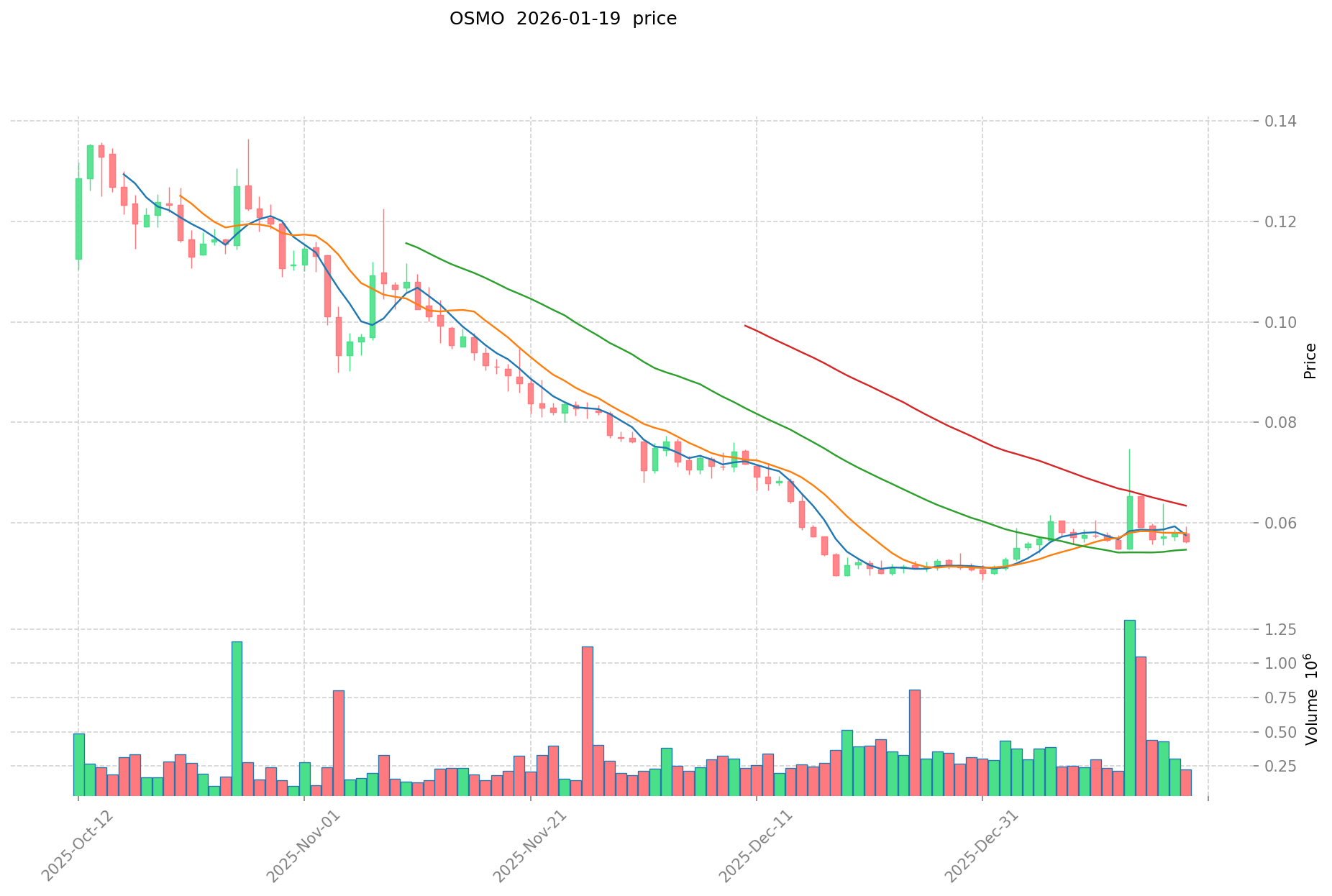
As of January 20, 2026, OSMO is trading at $0.05595, representing a decrease of 4.52% over the past 24 hours. The token's 24-hour trading range has fluctuated between $0.05355 and $0.05892, with a total trading volume of $18,042.45.
The current market capitalization stands at approximately $42.49 million, with a circulating supply of 759.49 million tokens, representing 75.95% of the total supply of 985.38 million tokens. The maximum supply is capped at 1 billion tokens. The fully diluted market capitalization is valued at approximately $55.13 million.
Over different time horizons, OSMO has shown varied performance: a modest increase of 0.18% in the past hour, relatively stable over the past 7 days with a 0.18% change, and a positive movement of 6.55% over the past 30 days. The market share of OSMO currently represents 0.0016% of the total cryptocurrency market.
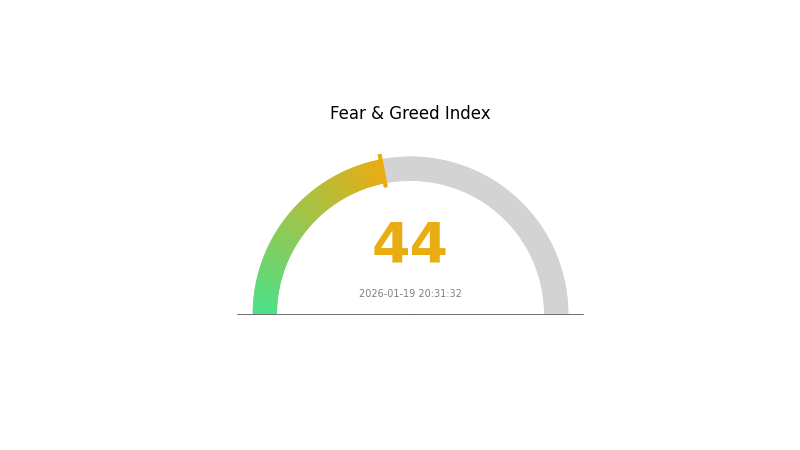
The Gate.com Crypto Fear & Greed Index currently indicates a reading of 44, suggesting a "Fear" sentiment in the broader market. OSMO is actively traded on 22 exchanges, with Gate.com providing trading support for the token.
Click to view the current OSMO market price
Market Sentiment Indicator
2026-01-19 Fear and Greed Index: 44 (Fear)
Click to view the current Fear & Greed Index
The cryptocurrency market is currently experiencing a fear-driven sentiment with an index reading of 44. This moderate fear level suggests investors are exercising caution in their trading decisions. Market participants should remain vigilant as this sentiment often precedes potential buying opportunities for contrarian investors. Monitor price movements and market fundamentals closely to identify strategic entry points. The fear index typically signals heightened risk awareness among traders, making it an important indicator for portfolio management strategies during this period.
OSMO Holding Distribution
The holding distribution chart provides a comprehensive view of how OSMO tokens are allocated across different wallet addresses, serving as a critical indicator of token concentration and potential centralization risks. This metric reveals the degree to which a small number of addresses control a significant portion of the total circulating supply, offering insights into market structure stability and potential price manipulation vulnerabilities.
Based on the current data, OSMO demonstrates a relatively moderate concentration pattern, with the top addresses controlling a notable but not excessive portion of the total supply. While the largest holders maintain significant positions, the distribution suggests a healthier decentralization structure compared to many emerging tokens. This balance indicates that while institutional or early investors retain meaningful stakes, the broader community participation remains substantial enough to mitigate extreme concentration risks.
From a market dynamics perspective, the current holding distribution carries important implications for price volatility and market resilience. The presence of multiple large holders without extreme dominance by a single entity reduces the risk of coordinated market manipulation, though concentrated positions still warrant monitoring during periods of significant market movements. The on-chain structure reflected in this distribution suggests a maturing ecosystem with established stakeholders maintaining long-term positions while allowing for adequate liquidity and trading activity across secondary markets.
Click to view current OSMO Holding Distribution

| Top |
Address |
Holding Qty |
Holding (%) |
II. Core Factors Influencing OSMO's Future Price
Supply Mechanism
- Token Staking Dynamics: OSMO operates within the Cosmos ecosystem as the native token of Osmosis, a decentralized exchange protocol. The token features staking mechanisms that directly influence circulating supply through validator rewards and governance participation.
- Historical Patterns: Supply dynamics have historically correlated with price movements, where increased staking participation tends to reduce available circulating supply, potentially supporting price levels during periods of ecosystem growth.
- Current Impact: As of early 2026, market participants should monitor staking ratios and validator activity, as changes in these metrics may signal shifts in holder confidence and supply availability.
Institutional and Major Holder Activity
- Institutional Position: While specific institutional holdings data remains limited in available materials, the broader Cosmos ecosystem has attracted attention from blockchain infrastructure investors focused on interoperability solutions.
- Enterprise Adoption: The Osmosis protocol serves as DeFi infrastructure within Cosmos, with adoption tied to cross-chain trading volume and liquidity provision rather than direct enterprise implementation.
- Regulatory Environment: Global regulatory approaches to DeFi protocols continue evolving, with potential implications for decentralized exchange tokens like OSMO depending on jurisdictional frameworks.
Macroeconomic Environment
- Monetary Policy Influence: Central bank policies regarding interest rates and liquidity conditions affect risk appetite across digital asset markets, including DeFi tokens. Tighter monetary conditions may pressure speculative assets, while accommodative policies could support inflows.
- Inflation Hedge Characteristics: DeFi tokens like OSMO demonstrate complex relationships with inflation dynamics, influenced more by crypto-specific adoption trends than traditional inflation hedging behavior.
- Geopolitical Factors: International developments affecting blockchain regulation, cross-border payment systems, and technological sovereignty may indirectly influence sentiment toward interoperability-focused ecosystems.
Technological Development and Ecosystem Building
- Cross-Chain Infrastructure: Osmosis continues developing interoperability features within the Cosmos ecosystem, enabling asset transfers across multiple blockchain networks. Enhanced cross-chain functionality may expand the protocol's addressable market and utility.
- DeFi Protocol Evolution: Ongoing improvements to automated market maker algorithms, liquidity mining programs, and governance mechanisms represent key development areas that could affect platform competitiveness and token demand.
- Ecosystem Applications: The Osmosis DEX serves as foundational infrastructure for Cosmos-based applications, with ecosystem growth potentially driving increased transaction volume and protocol revenue over time.
III. 2026-2031 OSMO Price Prediction
2026 Outlook
- Conservative Forecast: $0.03301 - $0.05595
- Neutral Forecast: $0.05595
- Optimistic Forecast: $0.06378 (subject to favorable market conditions and ecosystem development)
2027-2029 Mid-term Outlook
- Market Stage Expectation: The market may experience gradual growth with periodic volatility as the broader crypto ecosystem matures and adoption expands
- Price Range Forecast:
- 2027: $0.03592 - $0.06466
- 2028: $0.05977 - $0.06475
- 2029: $0.03239 - $0.06795
- Key Catalysts: Ecosystem expansion, technological upgrades, and increased adoption within the interchain network could serve as primary price drivers
2030-2031 Long-term Outlook
- Baseline Scenario: $0.05587 - $0.06573 (assuming steady ecosystem growth and stable market conditions through 2030)
- Optimistic Scenario: $0.06280 - $0.10007 (contingent upon significant technological breakthroughs and widespread adoption by 2031)
- Transformative Scenario: Approaching $0.10007 (under exceptionally favorable conditions including major partnerships and network effects)
- 2026-01-20: OSMO trading within the predicted range of $0.03301 - $0.06378 (establishing baseline for future growth trajectory)
| Year |
Predicted High Price |
Predicted Average Price |
Predicted Low Price |
Price Change |
| 2026 |
0.06378 |
0.05595 |
0.03301 |
0 |
| 2027 |
0.06466 |
0.05987 |
0.03592 |
7 |
| 2028 |
0.06475 |
0.06226 |
0.05977 |
11 |
| 2029 |
0.06795 |
0.06351 |
0.03239 |
13 |
| 2030 |
0.0723 |
0.06573 |
0.05587 |
17 |
| 2031 |
0.10007 |
0.06902 |
0.0628 |
23 |
IV. OSMO Professional Investment Strategy and Risk Management
OSMO Investment Methodology
(1) Long-term Holding Strategy
- Target Investors: Investors who believe in the long-term value of decentralized exchange protocols and Cosmos ecosystem development
- Operational Recommendations:
- Consider accumulating OSMO positions during market pullbacks, given its current price is approximately 99.5% below its historical high
- Monitor Osmosis protocol development updates and governance proposals to assess long-term value trajectory
- Storage Solution: Use Gate Web3 Wallet for secure storage with private key control, ensuring backup of recovery phrases in multiple secure locations
(2) Active Trading Strategy
- Technical Analysis Tools:
- Moving Averages: Monitor 50-day and 200-day moving averages to identify trend reversals and potential entry points
- Volume Analysis: Track 24-hour trading volume ($18,042.45) relative to market cap to gauge trading activity and liquidity
- Swing Trading Points:
- The 24-hour price range ($0.05355 - $0.05892) indicates moderate volatility suitable for intraday trading
- Consider setting stop-loss orders 5-8% below entry price to manage downside risk
OSMO Risk Management Framework
(1) Asset Allocation Principles
- Conservative Investors: 1-3% of crypto portfolio
- Aggressive Investors: 5-10% of crypto portfolio
- Professional Investors: Up to 15% with active monitoring and hedging strategies
(2) Risk Hedging Solutions
- Portfolio Diversification: Balance OSMO holdings with stablecoins and established cryptocurrencies to reduce concentration risk
- Position Sizing: Implement dollar-cost averaging strategy to mitigate timing risk in volatile markets
(3) Secure Storage Solutions
- Hot Wallet Recommendation: Gate Web3 Wallet for convenient access to trading and DeFi activities
- Cold Storage Solution: Hardware wallet for long-term holdings exceeding significant value thresholds
- Security Precautions: Never share private keys, enable two-factor authentication, and verify all transaction addresses before confirming transfers
V. OSMO Potential Risks and Challenges
OSMO Market Risks
- Extreme Volatility: OSMO has experienced an 87.72% decline over the past year, demonstrating significant price volatility that may continue
- Low Market Share: With only 0.0016% market dominance, OSMO faces substantial competition from established DEX protocols
- Liquidity Concerns: Relatively modest 24-hour trading volume may result in slippage during larger transactions
OSMO Regulatory Risks
- DeFi Regulatory Uncertainty: Evolving global regulations regarding decentralized exchanges may impact protocol operations
- Governance Token Classification: Potential regulatory scrutiny regarding OSMO's classification as a governance token
- Cross-border Compliance: Multi-jurisdictional regulatory requirements may affect protocol accessibility in certain regions
OSMO Technical Risks
- Smart Contract Vulnerabilities: As with all DeFi protocols, potential security exploits could affect user funds
- Network Dependencies: OSMO's performance is tied to Cosmos SDK infrastructure and cross-chain communication protocols
- Competition Risk: Emergence of more efficient AMM protocols could reduce Osmosis market position and OSMO token utility
VI. Conclusion and Action Recommendations
OSMO Investment Value Assessment
Osmosis represents an advanced AMM protocol within the Cosmos ecosystem, offering customizable liquidity solutions for developers. The OSMO governance token provides holders with protocol decision-making rights. However, the substantial year-over-year decline of 87.72% and low market dominance of 0.0016% indicate significant short-term risks. The token's current price near historical lows may present opportunity for those with high risk tolerance and conviction in Cosmos ecosystem growth, though caution is warranted given market conditions.
OSMO Investment Recommendations
✅ Beginners: Start with minimal allocation (under 2% of crypto portfolio) and focus on understanding Osmosis protocol mechanics before increasing position size
✅ Experienced Investors: Consider strategic accumulation during favorable market conditions, while maintaining strict risk management and portfolio diversification
✅ Institutional Investors: Conduct thorough due diligence on protocol security, tokenomics, and competitive positioning before establishing positions, with emphasis on governance participation
OSMO Trading Participation Methods
- Spot Trading: Purchase OSMO through Gate.com with support for multiple trading pairs and competitive liquidity
- DeFi Participation: Interact directly with Osmosis protocol for liquidity provision and governance activities
- Portfolio Management: Utilize Gate Web3 Wallet for integrated trading, staking, and cross-chain asset management
Cryptocurrency investment carries extremely high risk, and this article does not constitute investment advice. Investors should make cautious decisions based on their own risk tolerance and are advised to consult professional financial advisors. Never invest more than you can afford to lose.
FAQ
What is the future price prediction for OSMO token?
OSMO token price is predicted to potentially reach $2.75 in the future. Based on latest forecasts, OSMO may achieve $1.15 by 2036 under ideal conditions. The exact price depends on multiple market factors and network adoption.
What are the main factors affecting OSMO price?
OSMO price is primarily driven by DeFi adoption rates and Cosmos ecosystem growth. Increased trading volume and liquidity provision directly boost OSMO demand. Network upgrades, validator participation, and market sentiment also play significant roles in price movements.
Osmosis has strong development prospects with expanding liquidity and ecosystem growth. These fundamentals are expected to drive OSMO price appreciation over the long term, supported by increasing trading volume and platform adoption.
What are the advantages of OSMO tokens compared to other DEX tokens such as UNI and AAVE?
OSMO offers superior liquidity mining mechanisms with higher yields and greater flexibility. Its innovative governance model and incentive structure provide more attractive returns for users compared to UNI and AAVE.
How to predict OSMO price trends through technical analysis?
Analyze OSMO price charts to identify support and resistance levels using trend lines and moving averages. Apply technical indicators like RSI and MACD to gauge momentum. Monitor trading volume and historical price patterns for comprehensive trend forecasting.
Is OSMO suitable for long-term holding? What are the investment risks?
OSMO shows strong potential for long-term holding with its solid ecosystem fundamentals. Key risks include market volatility, regulatory changes, and competition in the DeFi sector. Monitor market trends closely before investing.
* The information is not intended to be and does not constitute financial advice or any other recommendation of any sort offered or endorsed by Gate.