This comprehensive analysis examines PINGO's price trajectory from 2026 to 2031, providing expert forecasts for investors in this AI+DePIN project on the TON network. The article evaluates PINGO's current market position at $0.019387 with a $3.59 million market cap, analyzing historical volatility and supply dynamics that shape future price movements. It presents three scenarios across the forecast period: conservative estimates ranging $0.01739-$0.02396 for 2026, progressing to optimistic outlooks potentially reaching $0.05129 by 2031. The guide details professional investment strategies suitable for different investor profiles, including long-term holding and active trading approaches through Gate, complemented by comprehensive risk management frameworks and identification of regulatory, technical, and market challenges. Investors should carefully evaluate PINGO's early-stage nature and execute thorough due diligence before allocation decisions.
Introduction: PINGO's Market Position and Investment Value
PinGo (PINGO), positioned as the first AI+DePIN project on the TON network, has been redefining how computational resources, datasets, and artificial intelligence are accessed since its launch in 2024. As of January 30, 2026, PINGO maintains a market capitalization of approximately $3.59 million, with a circulating supply of around 185.03 million tokens and a trading price near $0.019387. This asset, serving as a bridge for idle computing power resources, is playing an increasingly significant role in optimizing access to computational resources and advancing machine learning applications.
This article will comprehensively analyze PINGO's price trajectory from 2026 to 2031, combining historical patterns, market supply and demand dynamics, ecosystem development, and macroeconomic conditions to provide investors with professional price forecasts and practical investment strategies.
I. PINGO Price History Review and Market Status
PINGO Historical Price Evolution Trajectory
- 2025: PINGO reached a peak price of $0.45 on January 6, marking a significant milestone in its early trading phase, price experienced substantial volatility following its launch in November 2024 at $0.025
- 2026: Price declined to a low of $0.00942 on January 14, representing considerable downward pressure, the token showed signs of recovery with a 30-day gain of 6.81%
PINGO Current Market Status
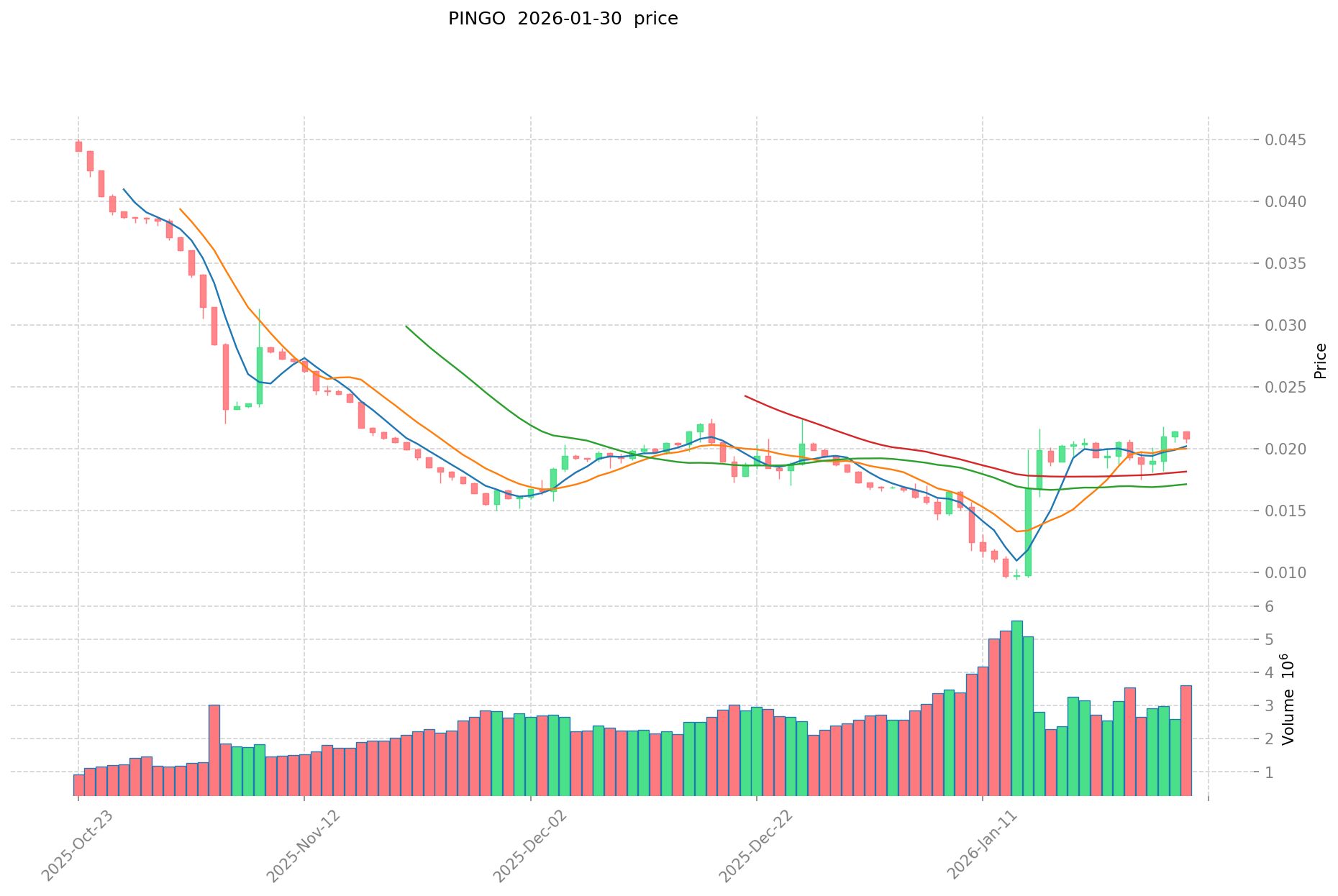
As of January 30, 2026, PINGO is trading at $0.019387, with a 24-hour trading volume of $73,466.07. The token has experienced a decline of 8.43% over the past 24 hours, with the price fluctuating between $0.01932 and $0.021289 during this period.
The current circulating supply stands at 185,033,600 PINGO tokens, representing 18.50% of the maximum supply of 1 billion tokens. The market capitalization has reached $3,587,246.40, while the fully diluted market cap is calculated at $19,387,000. PINGO currently holds a market dominance of 0.00066% within the cryptocurrency ecosystem.
Short-term price trends show mixed signals, with a modest decline of 0.16% over the past hour, while the 7-day performance reflects a positive movement of 1.89%. The 30-day trend demonstrates a gain of 6.81%, suggesting some recovery momentum. However, the 1-year performance shows a decline of 93.91% from its peak.
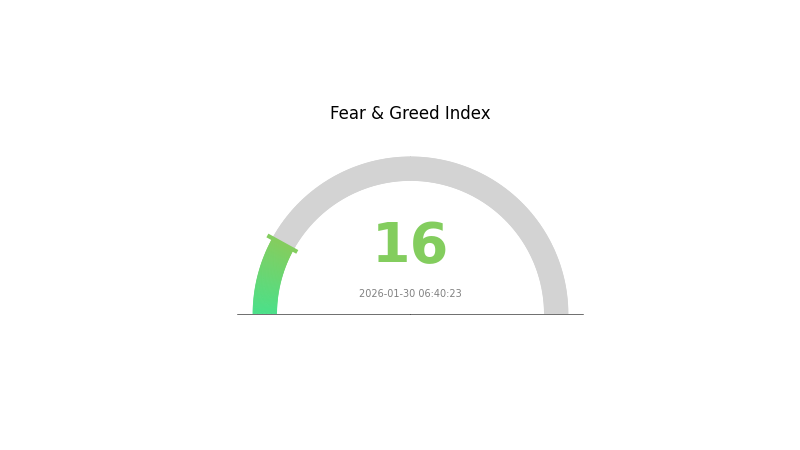
The token has attracted 12,290 holders and is currently listed on Gate.com. Market sentiment indicators suggest a cautious environment, with the Fear and Greed Index registering 16, indicating "Extreme Fear" among market participants.
PinGo operates as a bridge connecting idle computing resources, addressing fragmented and underutilized computational power through integration of AI, DePIN (Decentralized Physical Infrastructure), and Decloud solutions. The project provides computational resources for AI model development and offers user engagement through the PinGo MiniBot, which enables participants to earn airdrop rewards and stay informed about ecosystem developments.
Click to view current PINGO market price
PINGO Market Sentiment Index
2026-01-30 Fear and Greed Index: 16 (Extreme Fear)
Click to view current Fear & Greed Index
The crypto market is currently experiencing extreme fear, with the index hitting just 16 points. This exceptional level of fear often signals capitulation and potential market bottoming. When sentiment reaches such extreme lows, historically savvy investors have found compelling opportunities to accumulate quality assets at discounted prices. However, extreme fear also reflects genuine market concerns and volatility risks. Traders should exercise caution while considering this contrarian signal for long-term positioning.
PINGO Token Distribution
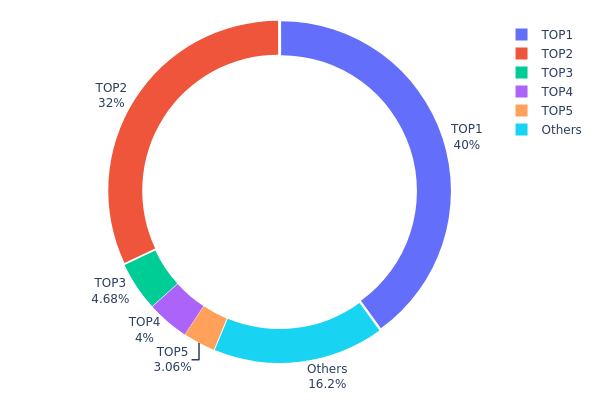
The token distribution chart illustrates the allocation of PINGO tokens across different holder addresses, providing crucial insights into the project's decentralization level and potential market manipulation risks. According to the latest on-chain data, PINGO exhibits a highly concentrated distribution pattern that warrants careful examination.
The top holder controls 400,000K tokens, representing 40.00% of the total supply, while the second-largest address holds 320,215.20K tokens (32.02%). Combined, these two addresses control approximately 72% of the entire token supply, indicating an extremely concentrated ownership structure. The third through fifth largest holders possess 4.67%, 4.00%, and 3.05% respectively, with the remaining 162,456.76K tokens (16.26%) distributed among smaller addresses.
This distribution pattern reveals significant centralization risks that could substantially impact market dynamics. The overwhelming concentration in the top two addresses creates potential vulnerabilities, including heightened price volatility susceptibility and increased manipulation possibilities. Large holders possess considerable influence over market movements, as their trading activities can trigger substantial price fluctuations. Furthermore, this concentration level may discourage broader market participation, as smaller investors might perceive elevated risks associated with such uneven distribution. From a governance perspective, if PINGO implements on-chain voting mechanisms, the current structure could compromise decentralized decision-making processes.
Click to view current PINGO Token Distribution
| Top |
Address |
Holding Qty |
Holding (%) |
| 1 |
UQD0Nl...DaeyRp |
400000.00K |
40.00% |
| 2 |
UQBnfV...kArfcj |
320215.20K |
32.02% |
| 3 |
UQDgGa...c1QGrH |
46772.48K |
4.67% |
| 4 |
UQALnl...oG-RTc |
40000.00K |
4.00% |
| 5 |
UQDtAV...g9eDUR |
30555.55K |
3.05% |
| - |
Others |
162456.76K |
16.26% |
II. Core Factors Influencing PINGO's Future Price
Supply Mechanism
The current supply mechanism for PINGO remains unclear based on available information. Market demand, chip scarcity, and investor confidence appear to be the primary drivers affecting price movements. Early-stage token scarcity, combined with recent positive market trends, may contribute to continued price appreciation.
Market Demand and Token Scarcity
- Early Holder Distribution: The scarcity of early-stage chips has created limited supply conditions in the market.
- Recent Market Performance: Positive market trends have been sustained, potentially limiting opportunities for observers to enter positions.
- Investor Sentiment: Growing confidence among market participants may support continued upward momentum.
Technical Development and Ecosystem Building
Technological advancement and ecosystem development could serve as additional catalysts for price movement. As the project continues to evolve, improvements in infrastructure and expanded use cases may attract increased attention from market participants. However, specific technical upgrades or ecosystem applications have not been detailed in the available materials.
Market Dynamics
The cryptocurrency market demonstrates high sensitivity to both speculative activity and future narratives. Price movements often reflect forward-looking expectations rather than immediate fundamentals alone. For PINGO, the combination of supply constraints and positive market sentiment creates conditions that may influence near-term price behavior, though long-term sustainability will likely depend on broader adoption and utility development.
III. 2026-2031 PINGO Price Prediction
2026 Outlook
- Conservative prediction: $0.01739 - $0.01932
- Neutral prediction: Around $0.01932
- Optimistic prediction: Up to $0.02396 (requires favorable market conditions and increased adoption)
2027-2029 Outlook
- Market stage expectation: Gradual recovery and growth phase with incremental value appreciation
- Price range prediction:
- 2027: $0.01363 - $0.02359, with an average around $0.02164
- 2028: $0.01515 - $0.03256, with an average around $0.02261
- 2029: $0.02345 - $0.03807, with an average around $0.02759
- Key catalysts: Ecosystem expansion, technological improvements, broader market acceptance, and potential partnerships that could drive sustainable price growth
2030-2031 Long-term Outlook
- Baseline scenario: $0.02167 - $0.04859 (assuming steady market development and maintained project momentum)
- Optimistic scenario: $0.03283 - $0.05129 (requires strong adoption, favorable regulatory environment, and successful ecosystem integration)
- Transformative scenario: Potential to reach upper bounds of $0.05129 by 2031 (contingent on breakthrough partnerships, mass adoption, and favorable macroeconomic conditions)
- 2026-01-30: PINGO showing baseline expectations with predicted average price of $0.01932 (early-stage valuation period)
| Year |
Predicted High Price |
Predicted Average Price |
Predicted Low Price |
Price Change |
| 2026 |
0.02396 |
0.01932 |
0.01739 |
0 |
| 2027 |
0.02359 |
0.02164 |
0.01363 |
11 |
| 2028 |
0.03256 |
0.02261 |
0.01515 |
16 |
| 2029 |
0.03807 |
0.02759 |
0.02345 |
42 |
| 2030 |
0.04859 |
0.03283 |
0.02167 |
69 |
| 2031 |
0.05129 |
0.04071 |
0.02198 |
109 |
IV. PINGO Professional Investment Strategy and Risk Management
PINGO Investment Methodology
(I) Long-term Holding Strategy
- Target Investors: Investors who believe in the potential of AI+DePIN infrastructure and TON ecosystem development
- Operational Recommendations:
- Consider accumulating positions during market corrections when the token trades closer to support levels
- Monitor PinGo's ecosystem development milestones and partnership announcements for long-term value assessment
- Use Gate Web3 Wallet for secure storage with private key control
(II) Active Trading Strategy
- Technical Analysis Tools:
- Moving Averages: Track 50-day and 200-day moving averages to identify potential trend reversals and momentum shifts
- Volume Analysis: Monitor trading volume patterns on Gate.com to gauge market interest and potential breakout scenarios
- Swing Trading Key Points:
- Set stop-loss orders at 5-8% below entry points to manage downside risk
- Take partial profits during price rallies of 15-20% to secure gains while maintaining core positions
PINGO Risk Management Framework
(I) Asset Allocation Principles
- Conservative Investors: 1-2% of crypto portfolio
- Aggressive Investors: 3-5% of crypto portfolio
- Professional Investors: 5-10% of crypto portfolio based on thorough due diligence
(II) Risk Hedging Solutions
- Position Sizing: Never allocate more than you can afford to lose entirely, given the volatility of emerging tokens
- Diversification: Balance PINGO holdings with exposure to established cryptocurrencies and other blockchain infrastructure projects
(III) Secure Storage Solutions
- Gate Web3 Wallet Recommendation: Utilize Gate Web3 Wallet for self-custody with multi-layer security features
- Cold Storage Option: For larger holdings, consider transferring tokens to hardware wallets compatible with TON network
- Security Precautions: Enable two-factor authentication, never share private keys, and verify all transaction addresses carefully
V. PINGO Potential Risks and Challenges
PINGO Market Risks
- High Volatility: PINGO has experienced substantial price fluctuations, with a 93.91% decline from its historical peak, indicating significant volatility risk
- Limited Liquidity: With a 24-hour trading volume of approximately $73,466 and trading primarily on one exchange, liquidity constraints may impact execution during volatile periods
- Market Cap Concentration: The circulating supply represents only 18.5% of total supply, suggesting potential dilution risk as more tokens enter circulation
PINGO Regulatory Risks
- AI and DePIN Regulatory Uncertainty: Evolving regulations around AI infrastructure and decentralized physical infrastructure networks may impact project operations
- TON Ecosystem Compliance: Regulatory developments affecting the TON network could indirectly influence PINGO's operational environment
- Cross-border Considerations: AI computing resource networks may face varying regulatory frameworks across different jurisdictions
PINGO Technical Risks
- Smart Contract Vulnerabilities: As with all blockchain projects, potential smart contract bugs or exploits could affect token functionality
- Network Dependencies: PinGo's reliance on TON network infrastructure means any technical issues or downtime on TON could impact operations
- Integration Challenges: Successfully integrating AI, DePIN, and Decloud technologies presents complex technical hurdles that may affect development timelines
VI. Conclusion and Action Recommendations
PINGO Investment Value Assessment
PinGo represents an innovative approach to addressing idle computing resource challenges through AI and decentralized infrastructure. As the first AI+DePIN project on the TON network, it occupies a unique niche targeting machine learning computational needs. However, investors should carefully weigh the project's early-stage nature, with a current market cap of approximately $3.59 million and limited exchange availability. The substantial decline from historical peaks suggests caution is warranted. Long-term value depends on successful execution of the technical roadmap and adoption of the computing resource platform.
PINGO Investment Recommendations
✅ Beginners: Consider allocating only a small experimental portion (0.5-1%) of your crypto portfolio after thoroughly researching the project fundamentals and TON ecosystem
✅ Experienced Investors: May consider a 2-3% allocation as a speculative position focused on AI infrastructure trends, with clearly defined exit strategies
✅ Institutional Investors: Conduct comprehensive due diligence on team, technology, and market positioning before considering any allocation, maintaining strict risk parameters
PINGO Trading Participation Methods
- Spot Trading on Gate.com: Access PINGO spot trading pairs with competitive fees and user-friendly interface
- Dollar-Cost Averaging: Consider systematic accumulation strategies to mitigate timing risk in volatile markets
- Gate Web3 Integration: Utilize Gate Web3 Wallet for seamless on-chain interaction and secure asset management
Cryptocurrency investment carries extremely high risk, and this article does not constitute investment advice. Investors should make prudent decisions based on their own risk tolerance, and it is recommended to consult professional financial advisors. Never invest more than you can afford to lose.
FAQ
What is PINGO token and what are its uses and application scenarios?
PINGO is a decentralized GPU network token built on The Open Network blockchain. It aggregates idle computing resources from data centers and providers to offer scalable, cost-effective AI and machine learning solutions. The PINGO token powers platform operations, governance, and resource sharing in the distributed computing ecosystem.
PINGO has shown volatility with an all-time low of ¥0.065716 and all-time high of ¥3.127700. Currently trading at ¥0.143600, the token exhibits moderate recovery potential with growing market interest and trading volume expanding steadily in recent periods.
Analyze PINGO using technical analysis(K-line patterns, moving averages), fundamental analysis(project development, transaction volume), and market sentiment. Monitor on-chain metrics, trading volume trends, and compare with similar DePIN projects for comprehensive price forecasting.
What are the main factors affecting PINGO price?
PINGO price is primarily influenced by market demand, supply volume, market liquidity, and global economic factors. Trading volume and market volatility also significantly impact its price movements.
PINGO price prediction中存在哪些风险需要注意?
PINGO价格预测风险包括市场波动、政策变化和供应链不确定性。全球环境变化可能影响需求,交易额波动也会带来价格风险。建议关注市场动态和基本面信息。
What are the advantages or disadvantages of PINGO compared to similar tokens?
PINGO's main advantage is its Skate AMM functionality, supporting multi-chain trading with minimal slippage, ideal for frequent traders. Disadvantages include intense market competition and high technical dependency.
What are professional analysts' predictions for PINGO's future price?
Professional analysts project PINGO could experience significant growth driven by increased adoption and market demand. While predictions vary, bullish sentiment suggests potential upside as the project strengthens its ecosystem and user base expands in the coming months.
* The information is not intended to be and does not constitute financial advice or any other recommendation of any sort offered or endorsed by Gate.