This comprehensive analysis examines PublicAI (PUBLIC) token's price trajectory from 2026 to 2031, combining historical patterns, market dynamics, and macroeconomic factors. Currently trading at $0.01594 with a $3.19M market cap, PUBLIC functions as an AI data infrastructure bridge, having onboarded 3 million contributors and generated $14M in actual client revenue. The article provides price forecasts across multiple scenarios, with projections reaching $0.03019 by 2031 (89% growth potential). Investment strategies include dollar-cost averaging for long-term holders and technical analysis for active traders. Risk management frameworks address market volatility, regulatory concerns, and platform dependency. Suitable for crypto investors seeking exposure to AI infrastructure with clear understanding of emerging asset risks and proper portfolio allocation protocols on Gate.
Introduction: PUBLIC's Market Position and Investment Value
PublicAI (PUBLIC) as a pioneering AI data infrastructure token that leverages gig economy models to build the human layer of artificial intelligence, has achieved notable milestones since its inception in 2025. As of January 31, 2026, PUBLIC maintains a market capitalization of approximately $3.19 million, with a circulating supply of 200 million tokens, and the price hovering around $0.01594. This asset, recognized as a "bridge between human intelligence and AI training," is playing an increasingly vital role in addressing AI's data shortage crisis while creating equitable work opportunities in the AI era.
The project has successfully onboarded 3 million contributors globally, with its unique approach of collecting diverse data—such as audio samples across 40 languages through the Mother Tongue campaign—attracting over $14 million in actual client revenue to fund contributor rewards. This real-world revenue generation model distinguishes PUBLIC from purely speculative crypto assets.
This article will comprehensively analyze PUBLIC's price trajectory from 2026 to 2031, combining historical patterns, market supply-demand dynamics, ecosystem development, and macroeconomic conditions to provide investors with professional price forecasts and practical investment strategies.
I. PUBLIC Price History Review and Market Status
PUBLIC Historical Price Evolution Trajectory
- August 2025: PUBLIC reached a peak price of $0.08285 during its early trading period, establishing the all-time high benchmark for the token
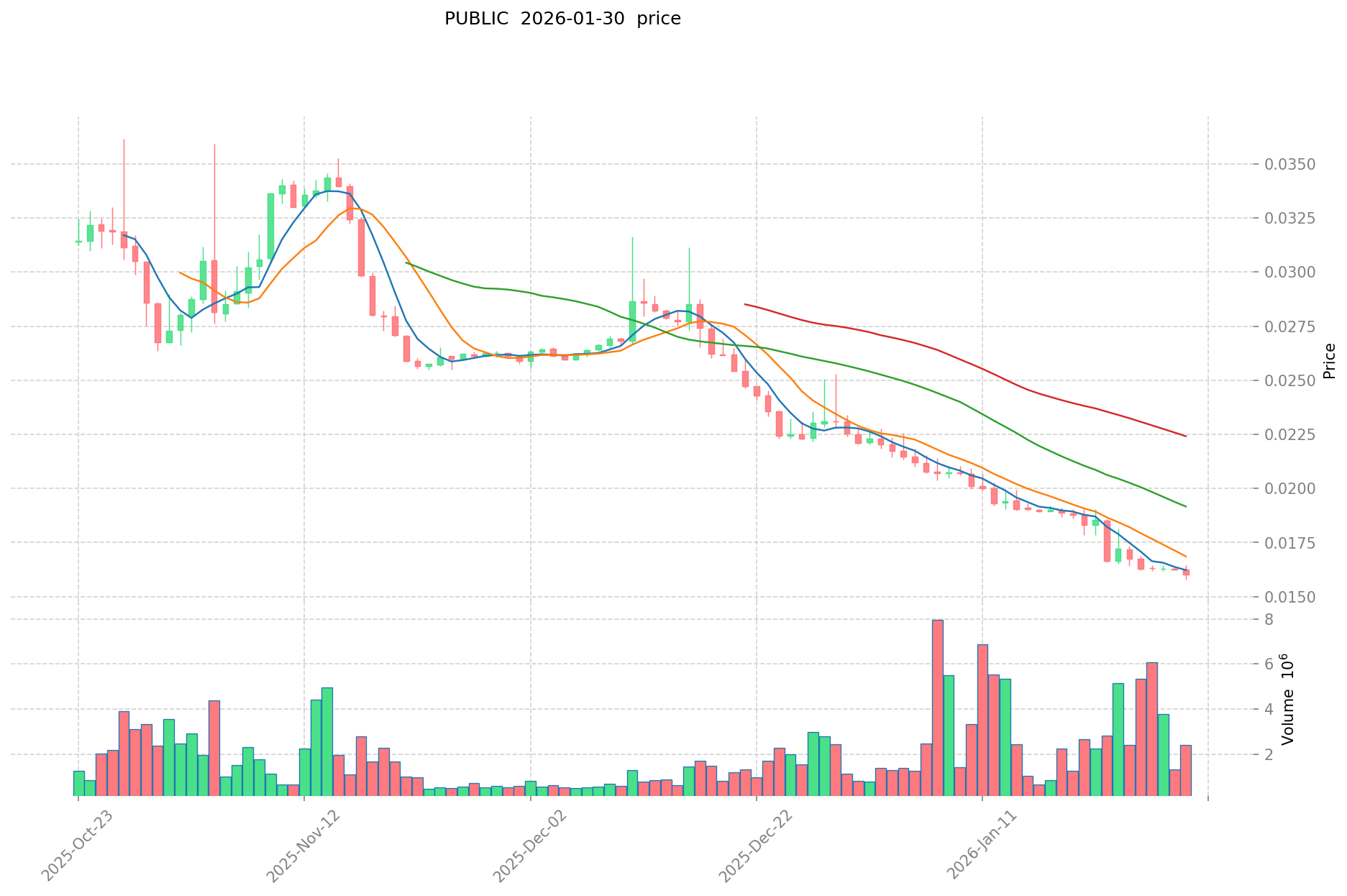
- January 2026: The token experienced significant downward pressure, declining to its historical low of $0.01572 on January 30, representing an 81% decrease from its peak value
PUBLIC Current Market Status
As of January 31, 2026, PUBLIC is trading at $0.01594, with a modest 1-hour price increase of 0.38%. However, the token faces considerable selling pressure across multiple timeframes. Over the past 24 hours, PUBLIC has declined by 0.62%, with the 24-hour trading range spanning from $0.01572 to $0.01624, indicating relatively low volatility.
The token demonstrates more pronounced weakness over extended periods. The 7-day performance shows a decline of 7.22%, while the 30-day trajectory reflects a steeper drop of 28.24%. The most significant decline appears in the 1-year perspective, with PUBLIC down 88.49% from prior levels, largely attributable to the substantial gap between its August 2025 peak and current valuation.
PUBLIC maintains a market capitalization of $3.19 million with a 24-hour trading volume of $49,641.40. The circulating supply stands at 200 million tokens, representing 20% of the total supply of 1 billion tokens. The fully diluted market capitalization reaches $15.94 million. With a market dominance of 0.00054%, PUBLIC occupies the 1789th position in the cryptocurrency rankings. The project has generated over $14 million in actual client revenue, which funds contributor rewards across its 3 million-strong global workforce.
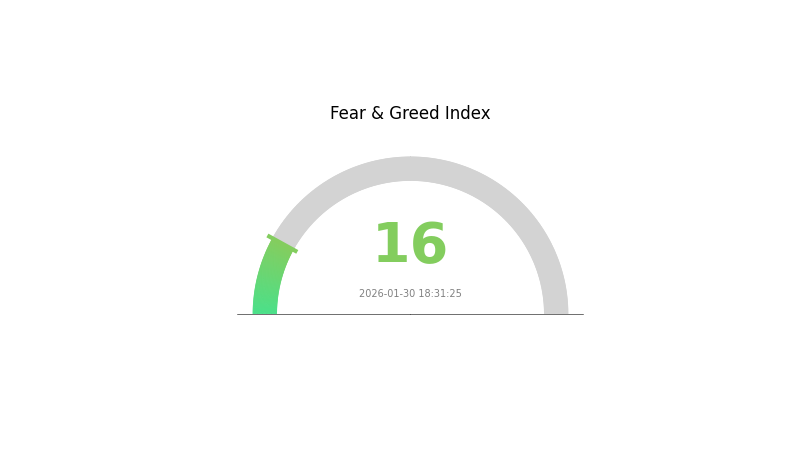
The cryptocurrency market sentiment index currently registers at 16, indicating an "Extreme Fear" condition, which may be contributing to the broader market pressures affecting PUBLIC's price performance.
Click to view current PUBLIC market price
PUBLIC Market Sentiment Index
2026-01-30 Fear & Greed Index: 16 (Extreme Fear)
Click to view the current Fear & Greed Index
The cryptocurrency market is experiencing extreme fear, with the Fear & Greed Index at 16. This exceptionally low reading indicates severe market pessimism and heightened investor anxiety. During such periods, risk-averse investors typically adopt defensive positions, while contrarian traders may identify potential buying opportunities. Extreme fear often precedes market reversals, suggesting traders should remain vigilant and cautious. Monitor market developments closely and adjust your investment strategy accordingly on Gate.com.
PUBLIC Holding Distribution
The holding distribution chart illustrates the concentration of PUBLIC tokens across different wallet addresses, revealing the degree of decentralization within the token's ecosystem. Based on the current on-chain data, the top 10 addresses collectively hold a significant portion of the total PUBLIC supply, indicating a relatively concentrated holding pattern. This concentration level suggests that a small number of entities maintain substantial control over the circulating supply, which is a common characteristic among emerging cryptocurrency projects during their early development phases.
From a market structure perspective, this concentration pattern presents both opportunities and risks. The presence of large holders can contribute to price stability during periods of market turbulence, as these entities typically adopt longer-term holding strategies. However, the concentrated distribution simultaneously increases the potential for significant price volatility should any major holder decide to liquidate their positions. This asymmetric risk profile necessitates careful monitoring of whale wallet activities and large-scale transfer patterns to anticipate potential market movements.
The current holding distribution reflects a moderate level of decentralization compared to industry standards. While the concentration among top addresses remains notable, the token has achieved a baseline level of distribution that supports organic market activity. As the PUBLIC ecosystem continues to mature and attract more participants, further diversification of holdings would enhance network resilience and reduce susceptibility to manipulation from individual actors.
Click to view the current PUBLIC Holding Distribution

| Top |
Address |
Holding Qty |
Holding (%) |
II. Core Factors Influencing PUBLIC's Future Price Trend
Macroeconomic Environment
-
Monetary Policy Impact: The Federal Reserve's monetary policy adjustments significantly influence PUBLIC's price trajectory. As of 2026, the Fed has completed three rate cuts, reducing the federal funds rate from 4.75%-5.00% to 3.25%-3.50%, initiating a new easing cycle. Further dovish signals from Fed officials suggest continued rate reduction expectations, which typically enhance the appeal of risk assets including cryptocurrencies. The market anticipates that sustained accommodative monetary policy may provide upward momentum for PUBLIC prices.
-
Inflation Hedge Attribute: Historical data indicates that inflation expectations play a crucial role in cryptocurrency valuations. During periods of elevated inflation, digital assets often serve as alternative stores of value. Current macroeconomic conditions show inflation remains above target levels, though core inflation demonstrates signs of moderation. This environment may support PUBLIC's positioning as a potential inflation hedge, particularly if traditional monetary devaluation concerns persist.
-
Geopolitical Factors: Global economic uncertainties and geopolitical tensions continue to influence capital flows into alternative assets. The accelerating de-dollarization trend, with international capital increasingly diversifying away from USD-denominated assets toward emerging markets and alternative currencies, creates a favorable backdrop for cryptocurrency adoption. Additionally, shifts in global trade dynamics and supply chain disruptions contribute to market volatility that may impact PUBLIC's price movements.
Supply-Demand Dynamics
-
Market Supply Mechanisms: The fundamental supply-demand relationship remains the core determinant of PUBLIC's price direction. Global economic growth patterns, industrial production needs, and overall market liquidity conditions directly influence demand levels. Supply-side factors, including token distribution schedules and circulation dynamics, interact with demand pressures to establish equilibrium pricing.
-
Historical Patterns: Analysis of commodity price cycles demonstrates that supply constraints coupled with rising demand typically drive price appreciation. Conversely, periods of excess supply or demand contraction correlate with price weakness. Understanding these historical patterns provides context for evaluating PUBLIC's current market positioning.
-
Current Impact: The interplay between reduced interest rate environments and capital seeking higher-yield opportunities may channel investment flows toward cryptocurrencies. However, market participants should monitor whether actual demand fundamentals support sustained price increases beyond speculative interest.
Market Sentiment and Capital Flows
-
Risk Appetite Changes: Cryptocurrency assets exhibit sensitivity to broader risk sentiment shifts. During risk-on environments, capital typically flows into digital assets, supporting price appreciation. The current transition toward accommodative monetary policy and economic recovery expectations may enhance risk appetite, though volatility remains inherent to crypto markets.
-
Institutional Participation: The level of institutional engagement with PUBLIC, including holdings by major financial entities and adoption by corporations, influences market confidence and price stability. Increased institutional participation generally correlates with reduced volatility and enhanced market maturity.
-
Liquidity Conditions: Global liquidity abundance resulting from expansionary monetary policies tends to elevate asset prices across categories. The substantial increase in money supply during recent years has contributed to upward pressure on various asset classes, potentially benefiting PUBLIC alongside other cryptocurrencies.
III. 2026-2031 PUBLIC Price Prediction
2026 Outlook
- Conservative forecast: $0.01432 - $0.01591
- Neutral forecast: Around $0.01591
- Optimistic forecast: Up to $0.01973 (requires favorable market conditions)
2027-2029 Outlook
- Market stage expectations: Gradual growth phase with increasing market adoption
- Price range predictions:
- 2027: $0.00909 - $0.02316
- 2028: $0.01762 - $0.025
- 2029: $0.01842 - $0.03116
- Key catalysts: Expanding ecosystem development, growing user adoption, and potential technological improvements driving value appreciation
2030-2031 Long-term Outlook
- Baseline scenario: $0.02075 - $0.03342 (assuming steady market growth and sustained project development)
- Optimistic scenario: $0.02695 - $0.03351 (with accelerated adoption and favorable regulatory environment)
- Transformative scenario: Approaching $0.03351 (under conditions of significant ecosystem expansion and widespread market acceptance)
- 2031-01-31: PUBLIC could potentially reach $0.03019 average price levels (representing an 89% increase from 2026 baseline)
| Year |
Predicted High Price |
Predicted Average Price |
Predicted Low Price |
Price Change |
| 2026 |
0.01973 |
0.01591 |
0.01432 |
0 |
| 2027 |
0.02316 |
0.01782 |
0.00909 |
11 |
| 2028 |
0.025 |
0.02049 |
0.01762 |
28 |
| 2029 |
0.03116 |
0.02275 |
0.01842 |
42 |
| 2030 |
0.03342 |
0.02695 |
0.02075 |
69 |
| 2031 |
0.03351 |
0.03019 |
0.02747 |
89 |
IV. PUBLIC Professional Investment Strategy and Risk Management
PUBLIC Investment Methodology
(1) Long-term Holding Strategy
- Suitable for: Investors interested in AI data infrastructure with medium to long-term horizons
- Operational recommendations:
- Consider dollar-cost averaging to mitigate entry timing risk given recent price volatility
- Monitor the project's revenue growth and contributor base expansion as key performance indicators
- Utilize non-custodial storage solutions such as Gate Web3 Wallet for enhanced security
(2) Active Trading Strategy
- Technical analysis tools:
- Volume analysis: Monitor the 24-hour trading volume (currently around $49,641) for liquidity assessment
- Support and resistance levels: Track key price levels including recent low at $0.01572 and recent high at $0.01624
- Swing trading considerations:
- Evaluate short-term price movements within the 7-day decline context
- Consider implementing stop-loss orders to manage downside risk
PUBLIC Risk Management Framework
(1) Asset Allocation Principles
- Conservative investors: 1-3% of crypto portfolio allocation
- Moderate investors: 3-5% of crypto portfolio allocation
- Experienced investors: 5-10% of crypto portfolio allocation
(2) Risk Hedging Approaches
- Portfolio diversification: Balance PUBLIC holdings with established cryptocurrencies and stablecoins
- Position sizing: Limit exposure relative to overall risk tolerance and market capitalization ($3.188M)
(3) Secure Storage Solutions
- Non-custodial wallet recommendation: Gate Web3 Wallet for self-custody and security
- Hardware wallet option: Consider cold storage for larger holdings
- Security considerations: Enable two-factor authentication, maintain backup recovery phrases, and avoid sharing private keys
V. PUBLIC Potential Risks and Challenges
PUBLIC Market Risks
- Price volatility: The token has experienced significant price decline of 88.49% over one year
- Limited liquidity: Relatively low trading volume may result in higher slippage for larger transactions
- Market capitalization: Small market cap ($3.188M) indicates higher volatility potential compared to established projects
PUBLIC Regulatory Risks
- Data privacy compliance: As the project involves global data collection, evolving data protection regulations may impact operations
- Gig economy classification: Potential regulatory scrutiny regarding contributor classification and labor standards
- Cross-border operations: Multi-jurisdictional regulatory complexity with 40-language data collection activities
PUBLIC Technical Risks
- Platform dependency: Built on NEAR protocol, subject to underlying blockchain performance and security
- Scaling challenges: Managing data contributions from 3 million contributors requires robust infrastructure
- Competition risk: Potential emergence of alternative AI data sourcing platforms may affect market position
VI. Conclusion and Action Recommendations
PUBLIC Investment Value Assessment
PublicAI presents an innovative approach to AI data collection through its gig economy model, having demonstrated real client revenue exceeding $14M and onboarding 3 million contributors. The project addresses a genuine market need in AI training data. However, investors should consider the significant price decline over the past year and relatively small market capitalization when evaluating risk-reward dynamics. The 20% circulating supply ratio suggests potential future token unlocks may influence price dynamics.
PUBLIC Investment Recommendations
✅ Beginners: Start with minimal allocation (1-2%), focus on understanding the project fundamentals and AI data market dynamics before increasing exposure
✅ Experienced investors: Consider strategic position sizing (3-5%), monitor contributor growth metrics and client revenue developments as key indicators
✅ Institutional investors: Conduct thorough due diligence on revenue sustainability, competitive positioning, and regulatory compliance before significant allocation
PUBLIC Trading Participation Methods
- Spot trading: Available on Gate.com with USDT trading pairs for direct purchase and holding
- Dollar-cost averaging: Systematic periodic purchases to reduce timing risk in volatile market conditions
- Portfolio rebalancing: Regular evaluation and adjustment of PUBLIC allocation based on performance and risk parameters
Cryptocurrency investment carries extremely high risks, and this article does not constitute investment advice. Investors should make cautious decisions based on their own risk tolerance and are advised to consult professional financial advisors. Never invest more than you can afford to lose.
FAQ
What is the PUBLIC token? What is its purpose?
PUBLIC is the native utility token powering the PublicAI ecosystem. It enables governance, staking, incentives, and access to platform features across NEAR and Solana networks.
What is the price prediction for PUBLIC token in 2024-2025?
Based on market analysis, PUBLIC token is projected to reach $0.15-0.35 in 2024-2025, with potential growth driven by increased adoption and ecosystem development. These estimates reflect current market trends and demand dynamics.
What are the main factors affecting PUBLIC price?
PUBLIC price is primarily influenced by market demand, trading volume, network adoption, tokenomics, overall crypto market sentiment, and macroeconomic conditions. Supply dynamics and investor confidence also play significant roles in price movement.
How to analyze the investment value of PUBLIC tokens?
Analyze PUBLIC's investment value by examining its technology fundamentals, network adoption growth, transaction volume, active users, and ecosystem development. Evaluate tokenomics, governance mechanisms, and real-world utility adoption. Compare metrics against market trends and competitive positioning.
What is the historical price trend of PUBLIC tokens?
PUBLIC token experienced a 40.19% decline over the past 90 days, falling from $0.02579 to $0.02568. This reflects the token's long-term downward trend during this period. For detailed historical price data and complete trend analysis, refer to the official price history page.
What are the risks and opportunities of PUBLIC tokens?
PUBLIC tokens offer early-stage investment opportunities with high growth potential but carry significant volatility and regulatory risks. Early investors may achieve substantial gains, yet face potential losses. Thorough research before participating is essential for informed decision-making.
What are the advantages of PUBLIC token compared to other public chain tokens?
PUBLIC token excels in transparency and security, with decentralized governance reducing single points of failure. Enhanced privacy protection and community-driven development provide superior utility and long-term value potential compared to traditional public chain tokens.
* The information is not intended to be and does not constitute financial advice or any other recommendation of any sort offered or endorsed by Gate.