This comprehensive guide analyzes Rarible's native RARI token through 2031, combining historical performance review with market outlook. Currently trading at $0.1892 with extreme fear sentiment, RARI presents both opportunities and risks for investors. The article examines core factors influencing price movements—including supply dynamics, macroeconomic conditions, and NFT ecosystem development—while providing detailed predictions across conservative, neutral, and optimistic scenarios. From 2026-2031, RARI ranges from $0.165-$0.421 depending on market conditions. Detailed investment strategies tailored for beginners to institutional investors address asset allocation, risk management, and secure storage via Gate Web3 Wallet. Critical risks including volatility, limited liquidity, and regulatory uncertainty require careful evaluation. This analysis equips traders with professional frameworks for informed RARI trading decisions on Gate and understanding long-term governance token value proposition.
Introduction: RARI's Market Position and Investment Value
Rarible (RARI), serving as the native governance token of the Rarible ecosystem and infrastructure powering onchain commerce, has been actively facilitating NFT marketplace operations and cross-chain reward programs since its launch in 2020. As of 2026, RARI maintains a market capitalization of approximately $3.43 million, with a circulating supply of around 18.12 million tokens, and its price hovering near $0.19. This governance-focused asset plays an increasingly significant role in decentralized NFT commerce and community governance within the Web3 space.
This article will comprehensively analyze RARI's price trends from 2026 to 2031, combining historical patterns, market supply-demand dynamics, ecosystem development, and macroeconomic conditions to provide investors with professional price forecasts and practical investment strategies.
I. RARI Price History Review and Market Status
RARI Historical Price Evolution Trajectory
- 2021: Token reached its peak performance in March, with price climbing to $46.7 during the NFT market boom period
- 2021-2025: Following the initial surge, RARI experienced significant market correction, with price declining substantially from historical highs
- 2026: Price reached a record low of $0.183685 on January 30, reflecting continued downward pressure in the broader NFT marketplace sector
RARI Current Market Situation
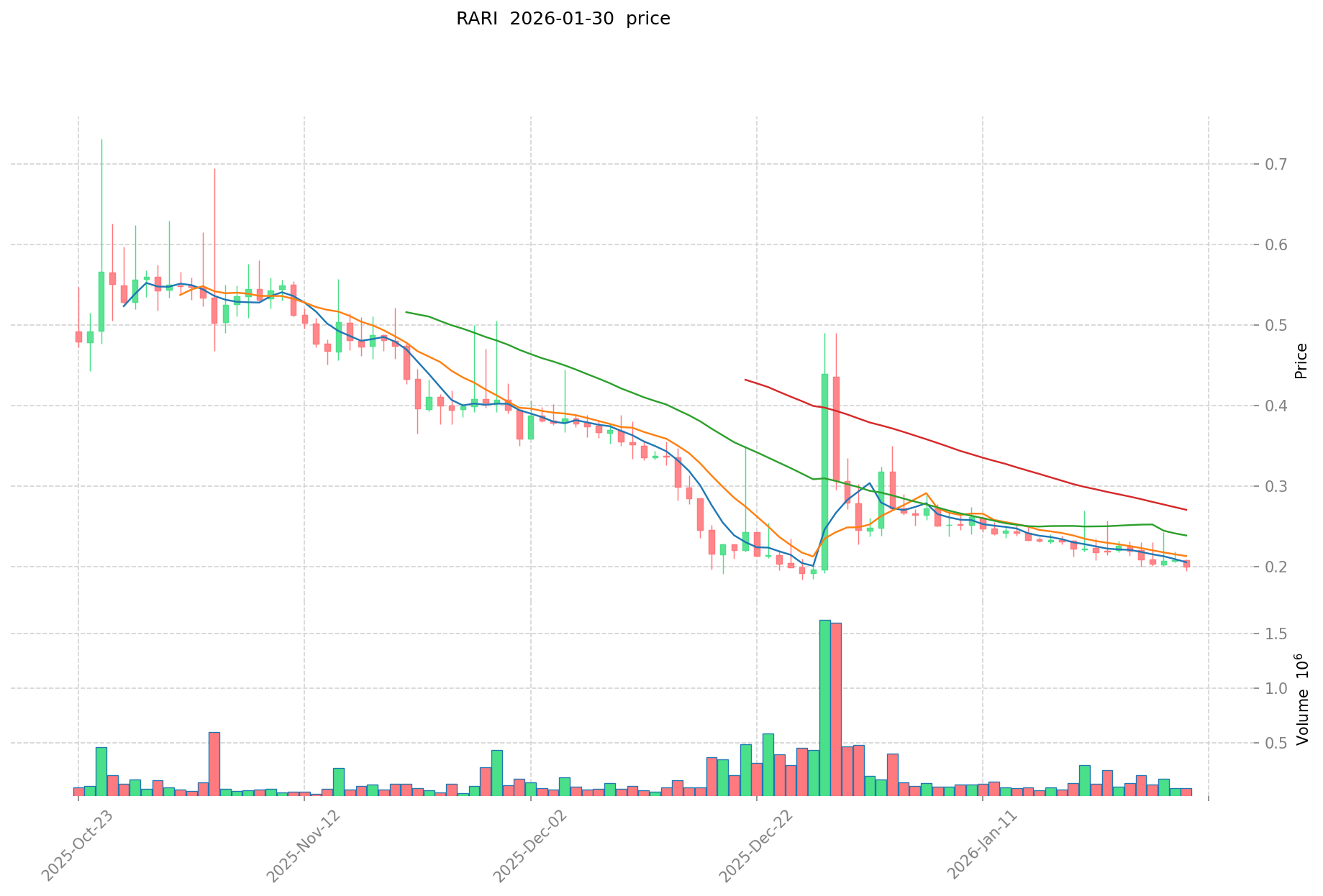
As of January 30, 2026, RARI is trading at $0.1892, representing an 8.08% decline over the past 24 hours. The token's intraday range spans from $0.1828 to $0.2072, indicating moderate volatility within current trading sessions.
The circulating supply stands at 18,121,882 RARI tokens, accounting for approximately 72.49% of the maximum supply of 25,000,000 tokens. The current market capitalization reaches $3,428,660, with 24-hour trading volume recorded at $19,230. RARI maintains a market dominance of 0.00016% within the broader cryptocurrency ecosystem.
Short-term price movements show mixed signals, with a 1.11% gain over the past hour contrasted by a 13.52% decline over the past week. The 30-day performance reflects a 21.79% decrease, while the annual metric indicates an 89.66% reduction from previous levels. The market capitalization to fully diluted valuation ratio stands at 72.49%, suggesting a significant portion of tokens are already in circulation.
The token is currently available for trading on 9 exchanges, with Gate.com providing direct access to RARI markets. The holder base comprises 24,446 addresses, reflecting the project's community distribution across the Ethereum network.
Click to view current RARI market price
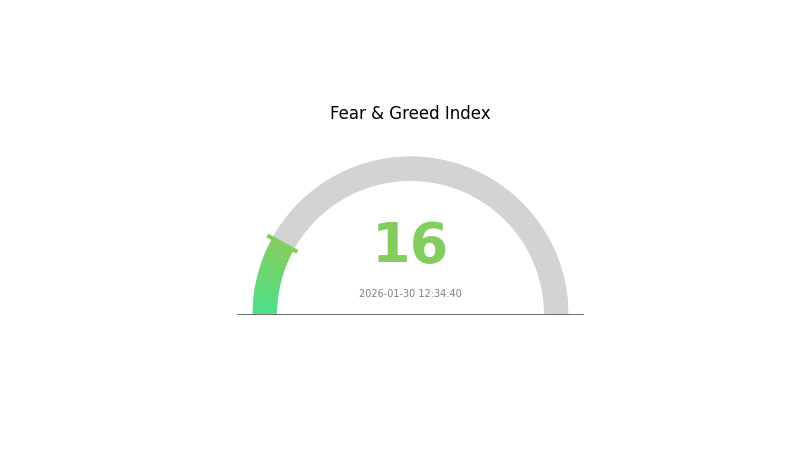
RARI Market Sentiment Index
2026-01-30 Fear and Greed Index: 16 (Extreme Fear)
Click to view current Fear & Greed Index
The cryptocurrency market is currently experiencing extreme fear, with the Fear and Greed Index at 16. This indicates strong negative sentiment among investors, suggesting heightened market anxiety and risk aversion. During such periods, market volatility typically increases as investors reassess their positions. This extreme fear environment often presents potential opportunities for contrarian investors, though careful risk management remains essential. Traders should monitor market developments closely and consider their investment strategies accordingly during these uncertain times.
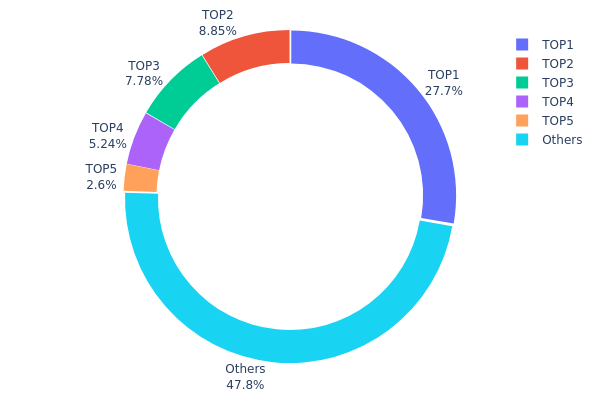
RARI Token Holdings Distribution
The holdings distribution chart reveals the allocation of RARI tokens across different wallet addresses, serving as a critical indicator of decentralization and potential market manipulation risks. Currently, the top holder controls approximately 6.93 million tokens (27.72% of total supply), while the top five addresses collectively hold 12.05 million tokens, representing 48.17% of the circulating supply. This concentration pattern suggests a moderately centralized distribution structure, where nearly half of all tokens remain in the hands of a small group of major holders.
From a market structure perspective, this level of concentration presents both opportunities and challenges. The dominant position of the top holder, controlling over one-quarter of the supply, creates significant price impact potential during large transactions or liquidation events. The presence of multiple mid-sized holders (ranging from 2.6% to 8.85%) provides some distribution balance, yet the fact that "Others" category accounts for only 47.83% indicates limited retail participation or broader ecosystem adoption. This structure typically correlates with higher volatility during market downturns, as large holders possess the capacity to influence price movements substantially.
The current distribution pattern reflects a developing ecosystem with institutional or early-stage investor dominance rather than widespread community adoption. While not exhibiting extreme centralization risks seen in some projects where a single entity controls majority supply, the 48%+ concentration among top five addresses warrants careful monitoring. This structure suggests that RARI's on-chain governance and price stability remain vulnerable to coordinated actions by major stakeholders, though the relatively diversified "Others" segment indicates growing decentralization momentum as the project matures.
View current RARI Holdings Distribution
| Top |
Address |
Holding Qty |
Holding (%) |
| 1 |
0x0bcb...f80ccf |
6931.16K |
27.72% |
| 2 |
0xa9d1...1d3e43 |
2213.58K |
8.85% |
| 3 |
0x6c0f...168a12 |
1944.40K |
7.77% |
| 4 |
0xb625...76ef78 |
1308.88K |
5.23% |
| 5 |
0x3369...1202f7 |
650.08K |
2.60% |
| - |
Others |
11951.89K |
47.83% |
II. Core Factors Influencing RARI's Future Price
Supply Mechanism
- Limited Circulation: RARI currently maintains a circulation rate of approximately 15.58%, indicating a relatively small circulating supply with a dispersed holder address distribution. The team has not disclosed specific release schedules for investor and team tokens, which introduces uncertainty factors into the supply dynamics.
- Historical Patterns: The restricted circulation and decentralized holder structure have contributed to price volatility, as concentrated supply releases could potentially impact market liquidity and price stability.
- Current Impact: The lack of transparency regarding future token releases creates an unpredictable supply environment, which may influence investor sentiment and price movements in the near term.
Institutional and Major Holder Dynamics
- Holder Distribution: RARI demonstrates a relatively dispersed holding pattern among addresses, which may reduce the risk of single-entity price manipulation but also reflects limited institutional concentration compared to more established tokens.
- Market Classification: Industry analysts currently classify RARI as a high-risk asset, with future price movements subject to considerable uncertainty and potential for both rebounds and corrections.
Macroeconomic Environment
- Regulatory Clarity: As regulatory frameworks evolve in the cryptocurrency sector, licensed entities and compliant projects may see increased attention from institutional capital, potentially affecting the competitive landscape for NFT and DeFi platforms.
- Capital Flow Trends: The broader crypto market has experienced shifts in venture capital deployment, with some reports indicating significant changes in investment patterns that could influence smaller-cap projects' access to funding and development resources.
Technology Development and Ecosystem Building
- Platform Innovation: The success of decentralized platforms like Rarible depends heavily on innovation in NFT infrastructure and user experience improvements. The development of multi-chain compatibility and enhanced trading features may play important roles in ecosystem growth.
- Security Considerations: Following security incidents affecting various DeFi protocols, including past vulnerabilities in related lending platforms, the industry faces ongoing scrutiny regarding platform security. Maintaining robust security measures remains essential for building long-term user confidence.
- Market Demand Factors: The NFT platform's future performance is influenced by actual business demand and narrative excitement within the sector. Both practical use cases and compelling market storytelling contribute to sustained ecosystem development and token value proposition.
III. 2026-2031 RARI Price Prediction
2026 Outlook
- Conservative Prediction: $0.165-$0.190
- Neutral Prediction: $0.190-$0.210
- Optimistic Prediction: $0.210-$0.232 (contingent on sustained market recovery and increased NFT platform adoption)
2027-2029 Outlook
- Market Phase Expectation: Potential transition from consolidation to moderate growth phase, with gradual recovery in NFT market sentiment and ecosystem expansion
- Price Range Predictions:
- 2027: $0.192-$0.272
- 2028: $0.198-$0.346
- 2029: $0.229-$0.311
- Key Catalysts: Platform utility enhancements, strategic partnerships within the NFT ecosystem, and broader digital asset market sentiment shifts
2030-2031 Long-term Outlook
- Baseline Scenario: $0.206-$0.303 (assuming moderate market growth and steady platform development)
- Optimistic Scenario: $0.303-$0.421 (assuming accelerated NFT market adoption and significant protocol upgrades)
- Transformative Scenario: $0.361-$0.421 (under conditions of widespread mainstream NFT integration and substantial ecosystem expansion)
- 2026-01-30: RARI trading within initial consolidation range as market participants assess long-term value proposition
| Year |
Predicted High Price |
Predicted Average Price |
Predicted Low Price |
Price Change |
| 2026 |
0.23204 |
0.1902 |
0.16547 |
0 |
| 2027 |
0.27235 |
0.21112 |
0.19212 |
11 |
| 2028 |
0.34568 |
0.24173 |
0.19822 |
27 |
| 2029 |
0.31133 |
0.29371 |
0.22909 |
55 |
| 2030 |
0.4205 |
0.30252 |
0.20571 |
59 |
| 2031 |
0.37597 |
0.36151 |
0.18437 |
91 |
IV. RARI Professional Investment Strategy and Risk Management
RARI Investment Methodology
(I) Long-term Holding Strategy
- Target Investors: NFT ecosystem believers and governance participants who understand the Rarible platform's long-term value proposition
- Operational Recommendations:
- Consider accumulating RARI during market downturns when trading volume on the NFT marketplace may temporarily decline
- Participate in staking programs to delegate voting power and earn APY while contributing to ecosystem governance
- Store RARI tokens using Gate Web3 Wallet for secure custody with convenient access to staking features
(II) Active Trading Strategy
- Technical Analysis Tools:
- Volume Analysis: Monitor the correlation between Rarible.com NFT marketplace trading activity and RARI price movements, as marketplace fees are collected and distributed in RARI
- Moving Averages: Track short-term and long-term trends given RARI's historical volatility patterns
- Swing Trading Key Points:
- Monitor NFT market sentiment shifts as they directly impact Rarible platform usage and RARI token utility
- Pay attention to RARI Foundation announcements regarding cross-chain rewards program updates that may affect token distribution
RARI Risk Management Framework
(I) Asset Allocation Principles
- Conservative Investors: 1-3% of crypto portfolio allocation
- Aggressive Investors: 5-10% of crypto portfolio allocation
- Professional Investors: Up to 15% with active monitoring of NFT market conditions
(II) Risk Hedging Solutions
- Diversification Approach: Balance RARI exposure with other NFT marketplace tokens and broader crypto assets
- Liquidity Management: Maintain sufficient liquid positions given RARI's relatively modest 24-hour trading volume of approximately $19,230
(III) Secure Storage Solutions
- Hot Wallet Recommendation: Gate Web3 Wallet for convenient staking participation and governance activities
- Security Best Practices: Never share private keys or seed phrases, enable two-factor authentication, and regularly verify contract addresses when interacting with RARI staking mechanisms
V. RARI Potential Risks and Challenges
RARI Market Risks
- High Volatility: RARI has experienced significant price fluctuations, with a 1-year decline of approximately 89.66%, reflecting sensitivity to broader NFT market cycles
- Limited Liquidity: With 24-hour trading volume around $19,230 and market cap of approximately $3.43 million, large trades may face slippage challenges
- NFT Market Dependency: RARI's value proposition is closely tied to Rarible.com marketplace activity, making it vulnerable to NFT market downturns
RARI Regulatory Risks
- Governance Token Classification: Evolving regulatory frameworks may impact how governance tokens like RARI are classified and regulated across different jurisdictions
- NFT Marketplace Regulations: Potential regulatory scrutiny of NFT platforms could affect Rarible's operations and subsequently RARI token utility
- Cross-chain Compliance: The cross-chain rewards program may face varying regulatory requirements across different blockchain networks
RARI Technical Risks
- Smart Contract Vulnerabilities: Staking mechanisms and reward distribution systems require robust security audits to prevent potential exploits
- Platform Dependency: RARI's utility is primarily tied to the Rarible ecosystem, creating concentration risk if the platform faces technical challenges
- Cross-chain Integration Complexity: Operating across multiple blockchains introduces technical challenges that could affect reward distribution efficiency
VI. Conclusion and Action Recommendations
RARI Investment Value Assessment
RARI represents a governance token within the NFT marketplace infrastructure sector, offering holders participation rights in the Rarible ecosystem and potential yield through staking mechanisms. The token's long-term value proposition depends on sustained growth in NFT marketplace activity and effective execution of the cross-chain rewards program. However, significant short-term risks include high volatility, limited liquidity, and strong correlation with broader NFT market sentiment. The substantial decline over the past year highlights the challenging market environment for NFT-related tokens.
RARI Investment Recommendations
✅ Beginners: Start with minimal exposure (1-2% of crypto portfolio) and focus on understanding NFT marketplace dynamics before increasing position size. Consider participating in staking to learn about governance mechanisms while earning potential yields.
✅ Experienced Investors: Evaluate RARI as a tactical position within a diversified NFT ecosystem portfolio, with allocation of 3-7% depending on NFT market outlook. Monitor Rarible marketplace metrics and RARI Foundation initiatives for informed decision-making.
✅ Institutional Investors: Conduct thorough due diligence on Rarible's competitive positioning within the NFT marketplace landscape, governance structure, and tokenomics sustainability before considering strategic positions.
RARI Trading Participation Methods
- Spot Trading: Access RARI through Gate.com and other cryptocurrency exchanges supporting the token, with careful attention to liquidity conditions
- Staking Programs: Participate in RARI staking to delegate voting power and earn APY while contributing to ecosystem governance decisions
- Gradual Accumulation: Consider dollar-cost averaging strategies to mitigate volatility impact, particularly given RARI's historical price fluctuations
Cryptocurrency investment carries extremely high risks, and this article does not constitute investment advice. Investors should make cautious decisions based on their own risk tolerance and are advised to consult professional financial advisors. Never invest more than you can afford to lose.
FAQ
What is the RARI token and what is its role in the Rarible ecosystem?
RARI is the native cryptocurrency token of the Rarible protocol, a decentralized NFT marketplace platform. It functions as an ERC-20 token on the Ethereum blockchain, facilitating transactions and user incentives within the Rarible ecosystem while enabling governance participation.
RARI reached an all-time high of US$46.70 and an all-time low of US$0.1848. Currently trading 99.56% below its peak, yet 10.97% above its lowest point, reflecting significant volatility in historical performance.
What are the main factors affecting RARI price?
RARI price is mainly influenced by market sentiment, investor confidence, trading volume, cryptocurrency market trends, and major announcements or technical developments.
What are the 2024 RARI price predictions and market outlook?
RARI is predicted to average around 2.65 USD in 2024, with potential highs reaching 4.02 USD. Market sentiment remains positive with relatively stable volatility expected. Growing adoption and ecosystem development support bullish long-term prospects.
What are the risks to pay attention to when investing in RARI tokens?
RARI tokens carry high volatility risk with potential for significant price fluctuations. As a speculative asset, investors should carefully assess market risks and their personal risk tolerance before investing.
RARI offers lower centralization with over 70% community allocation, compared to FLOW and BLUR. RARI has smaller team and investor distributions, providing greater transparency and higher community participation in governance.
* The information is not intended to be and does not constitute financial advice or any other recommendation of any sort offered or endorsed by Gate.