This comprehensive analysis examines REEF token's price trajectory from 2026 to 2031, combining historical patterns and market fundamentals to guide investment decisions. Currently trading at $0.0000968 with extreme fear sentiment, REEF presents a speculative opportunity in the Layer 1 blockchain space with predictions ranging from $0.00007 to $0.0002 by 2031. The article addresses key factors including supply dynamics, macroeconomic conditions, and ecosystem development affecting REEF's valuation across multiple scenarios. Professional investment strategies encompass long-term holding and active trading approaches, with risk management frameworks tailored for conservative to aggressive investors. Comprehensive risk assessment covers market volatility, liquidity constraints, and regulatory uncertainties. Investors can participate via spot trading on Gate.com, though this high-risk asset requires careful portfolio positioning and strict risk protocols.
Introduction: REEF's Market Position and Investment Value
Reef (REEF), positioned as a fast, affordable, and efficient Layer 1 blockchain, has been dedicated to making Web3 accessible to all users since its launch in 2020. As of February 2026, Reef has a market capitalization of approximately $2.21 million, with a circulating supply of around 22.82 billion tokens, and the price is maintained at approximately $0.0000968. This asset, recognized for its extremely low transaction fees (less than $0.01), is playing an increasingly important role in simplifying blockchain access and usage.
This article will comprehensively analyze REEF's price trends from 2026 to 2031, combining historical patterns, market supply and demand, ecosystem development, and macroeconomic environment to provide investors with professional price forecasts and practical investment strategies.
I. REEF Price History Review and Market Status
REEF Historical Price Evolution Trajectory
- 2020: REEF token was launched at a publication price of $0.00125, marking the beginning of its trading journey in the cryptocurrency market
- 2021: The token experienced significant growth momentum, reaching an all-time high of $0.05746 on March 15, representing a substantial appreciation from its initial listing price
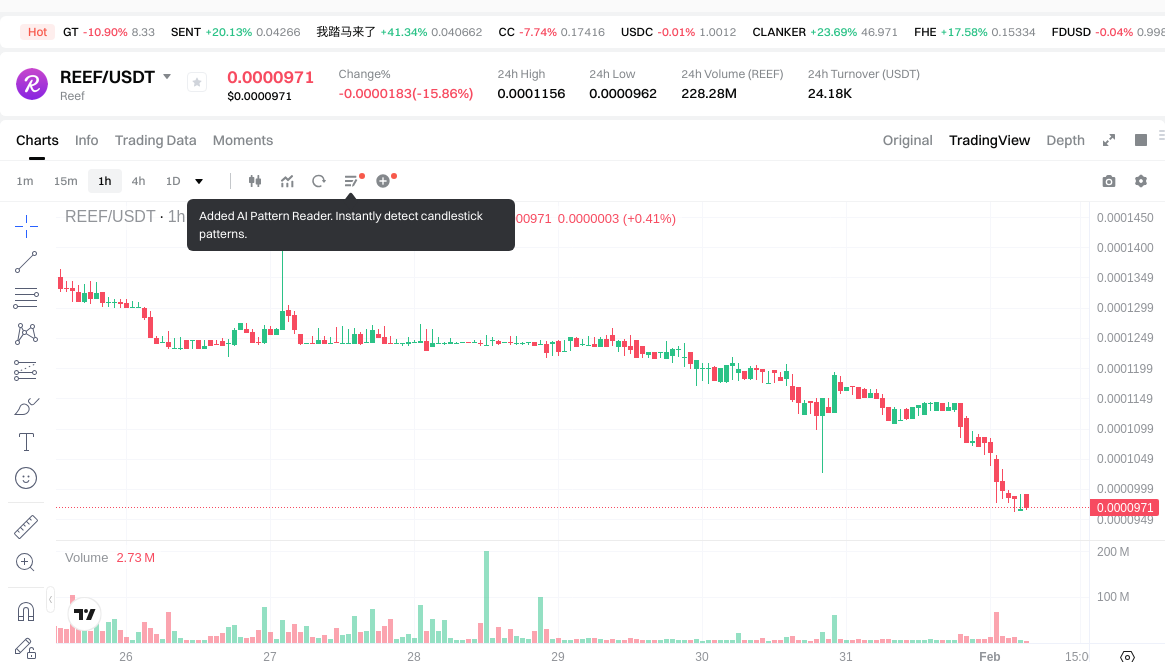
- 2024-2026: The market entered a challenging period, with the price declining sharply and reaching an all-time low of $0.00009694 on February 1, 2026
REEF Current Market Status
As of February 1, 2026, REEF is trading at $0.0000968, showing notable volatility across different timeframes. The token has experienced a 0.51% increase over the past hour, while facing a 15.64% decline in the last 24 hours. The 24-hour trading range spans from $0.0000962 to $0.0001156.
From a broader perspective, REEF has encountered substantial downward pressure, with a 28.51% decrease over the past week and a 33.87% decline over the past month. The annual performance shows an 80.24% decrease, reflecting challenging market conditions.
The current market capitalization stands at approximately $2.21 million, with a 24-hour trading volume of $24,162.74. The circulating supply comprises 22.82 billion REEF tokens, representing 100% of the maximum supply. The fully diluted market capitalization is approximately $4.36 million, indicating complete token circulation in the market.
With a market dominance of 0.00015% and availability on 11 exchanges, REEF maintains a presence in the cryptocurrency ecosystem. The project has attracted 107,316 token holders, demonstrating a degree of community engagement. The current market sentiment index registers at 1, classified as "Extreme Fear" with a VIX score of 20, suggesting a cautious market environment.
REEF operates as a Layer 1 blockchain platform focusing on speed, affordability, and efficiency, with transaction fees maintained below $0.01. The platform aims to provide accessible blockchain solutions for Web3 users through both centralized and decentralized exchange availability.
Click to view current REEF market price
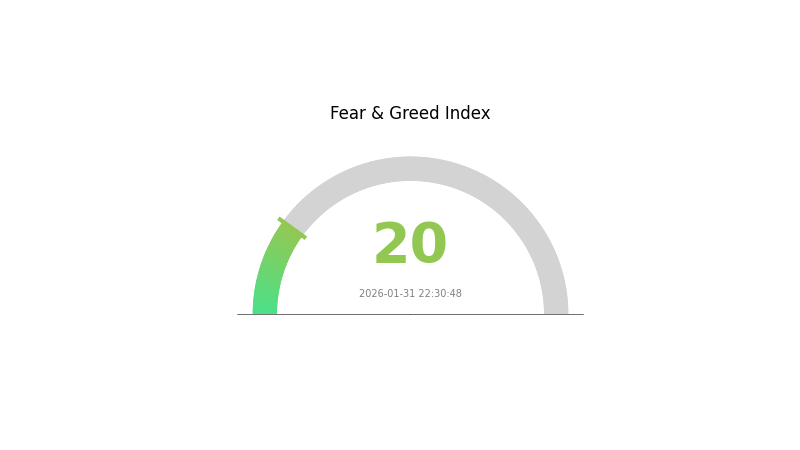
REEF Market Sentiment Indicator
2026-01-31 Fear & Greed Index: 20 (Extreme Fear)
Click to view current Fear & Greed Index
The REEF market is currently experiencing extreme fear, with the Fear & Greed Index standing at 20. This indicates significant investor pessimism and heightened market anxiety. During periods of extreme fear, opportunities often emerge for contrarian investors, as panic selling may create attractive entry points. However, risk remains elevated, and market volatility is expected to persist. Traders should exercise caution and implement proper risk management strategies while monitoring market developments closely for potential trend reversals.
REEF Holder Distribution
The holder distribution chart represents the allocation of REEF tokens across different wallet addresses, revealing the concentration level of token ownership within the ecosystem. By analyzing the proportion of tokens held by top addresses, we can assess the degree of decentralization and potential market influence wielded by major holders.
Current data indicates a relatively high concentration pattern in REEF's holder structure. The top-ranked addresses collectively control a substantial percentage of the circulating supply, suggesting that token ownership is not evenly distributed across the network. This concentration level reflects a market structure where a limited number of entities possess significant holdings, which is characteristic of many cryptocurrency projects in their developmental stages. The disparity between large holders and smaller participants demonstrates a hierarchical distribution pattern that warrants careful monitoring.
Such concentration dynamics carry important implications for market stability and price discovery mechanisms. When token supply is heavily concentrated among a few addresses, it increases the potential for heightened volatility, as large-scale transactions from major holders can trigger significant price movements. Additionally, this structure may amplify susceptibility to coordinated activities, where substantial holders could theoretically exert outsized influence on market direction. From a decentralization perspective, the current distribution pattern suggests that REEF's on-chain governance and ecosystem control remain partially centralized, which may impact the project's long-term resilience and community-driven development trajectory.
Click to view current REEF holder distribution

| Top |
Address |
Holding Qty |
Holding (%) |
II. Core Factors Influencing REEF's Future Price
Supply Mechanism
- Market Demand Fluctuations: Market demand volatility directly affects REEF's price trajectory. Changes in supply and demand dynamics create price pressure in both directions.
- Historical Patterns: Supply mechanism alterations have historically influenced price movements through market equilibrium adjustments.
- Current Impact: Ongoing market demand variations continue to shape price expectations through standard supply-demand interactions.
Institutional and Major Holder Dynamics
Insufficient data regarding institutional holdings and corporate adoption patterns for REEF currently limits comprehensive analysis in this area.
Macroeconomic Environment
- Monetary Policy Impact: Global monetary policies and interest rate environments may influence cryptocurrency market sentiment, potentially affecting REEF's valuation alongside broader digital asset markets.
- Inflation Hedge Attributes: Economic uncertainty and inflation concerns could drive interest in alternative assets, though REEF's specific performance characteristics require further observation.
- Geopolitical Factors: International policy developments and regulatory frameworks may create market volatility affecting cryptocurrency valuations generally.
Technological Development and Ecosystem Building
- Ecological Conservation Policy: Environmental protection regulations and climate-related policies may influence market perception of ecologically-themed projects.
- Climate Change Impact: Global climate trends and environmental sustainability discussions could affect the perceived value proposition of ecosystem-focused initiatives.
- Ecosystem Applications: Development of practical applications within environmental conservation frameworks may support long-term utility considerations.
III. 2026-2031 REEF Price Prediction
2026 Outlook
- Conservative prediction: $0.00007
- Neutral prediction: $0.0001
- Optimistic prediction: $0.00012 (requires favorable market conditions and increased adoption)
2027-2029 Outlook
- Market stage expectation: Gradual growth phase with potential for moderate volatility as the project develops its ecosystem and expands user base
- Price range prediction:
- 2027: $0.0001 - $0.00014
- 2028: $0.00006 - $0.00018
- 2029: $0.00011 - $0.00018
- Key catalysts: Technological advancements, strategic partnerships, broader market sentiment, and increasing adoption of DeFi solutions
2030-2031 Long-term Outlook
- Baseline scenario: $0.00013 - $0.00019 (assuming steady market growth and consistent project development)
- Optimistic scenario: $0.00017 - $0.0002 (assuming accelerated adoption and favorable regulatory environment)
- Transformative scenario: Up to $0.0002 (under extremely favorable conditions including mainstream adoption and significant ecosystem expansion)
- 2026-02-01: REEF trading around baseline levels with projected annual growth of approximately 1% in initial phase
| Year |
Predicted High Price |
Predicted Average Price |
Predicted Low Price |
Price Change |
| 2026 |
0.00012 |
0.0001 |
0.00007 |
1 |
| 2027 |
0.00014 |
0.00011 |
0.0001 |
11 |
| 2028 |
0.00018 |
0.00012 |
0.00006 |
26 |
| 2029 |
0.00018 |
0.00015 |
0.00011 |
57 |
| 2030 |
0.00019 |
0.00017 |
0.00013 |
71 |
| 2031 |
0.0002 |
0.00018 |
0.00012 |
86 |
IV. REEF Professional Investment Strategy and Risk Management
REEF Investment Methodology
(I) Long-Term Holding Strategy
- Suitable for: Investors seeking exposure to Layer 1 blockchain infrastructure with a multi-year horizon
- Operational Recommendations:
- Consider accumulating positions during periods of market weakness, given REEF's current price is near historical lows ($0.0000968 as of February 1, 2026)
- Monitor on-chain metrics including the existing 107,316 holders for community strength indicators
- Utilize Gate Web3 Wallet for secure long-term storage with multi-signature protection
(II) Active Trading Strategy
- Technical Analysis Tools:
- Volume Analysis: Monitor 24-hour trading volume (currently $24,162.74) relative to historical averages for momentum signals
- Price Action Patterns: Track movements within the recent 24-hour range ($0.0000962 - $0.0001156) for short-term entry/exit points
- Swing Trading Essentials:
- Given the recent 7-day decline of 28.51%, identify potential reversal patterns before establishing positions
- Set stop-loss orders at key support levels to manage downside risk in volatile conditions
REEF Risk Management Framework
(I) Asset Allocation Principles
- Conservative Investors: 1-2% of crypto portfolio allocation
- Aggressive Investors: 3-5% of crypto portfolio allocation
- Professional Investors: Up to 7-10% with active hedging strategies
(II) Risk Hedging Solutions
- Portfolio Diversification: Balance REEF exposure with established Layer 1 tokens and stablecoins
- Position Sizing: Implement scaling strategies that account for REEF's high volatility profile
(III) Secure Storage Solutions
- Cold Storage Recommended: Gate Web3 Wallet with hardware wallet integration for holdings exceeding short-term trading needs
- Hot Wallet Management: Maintain only active trading balances on exchange platforms
- Security Precautions: Enable two-factor authentication, regularly update security protocols, and never share private keys or seed phrases
V. REEF Potential Risks and Challenges
REEF Market Risks
- Price Volatility: REEF has experienced an 80.24% decline over the past year, indicating sustained bearish pressure
- Liquidity Concerns: Market cap of approximately $2.21 million suggests limited institutional participation and potential liquidity constraints
- Market Share: With only 0.00015% crypto market dominance, REEF faces significant competition from larger Layer 1 platforms
REEF Regulatory Risks
- Jurisdictional Uncertainty: Evolving global cryptocurrency regulations may impact Layer 1 blockchain projects
- Compliance Requirements: Potential changes in token classification standards across major markets
- Exchange Availability: Currently listed on 11 exchanges, regulatory changes could affect accessibility
REEF Technical Risks
- Network Security: As a Layer 1 blockchain, maintaining validator integrity and preventing attacks is critical
- Development Activity: Continued technical innovation is necessary to compete with established blockchain platforms
- Token Economics: With 100% circulation ratio and fully diluted valuation matching market cap, supply dynamics require monitoring
VI. Conclusion and Action Recommendations
REEF Investment Value Assessment
REEF presents as a high-risk, speculative opportunity in the Layer 1 blockchain space. While the project emphasizes low transaction fees (below $0.01) and accessibility, current market conditions reflect significant challenges. The token trades near all-time lows, having reached $0.00009694 on February 1, 2026, down from its March 2021 peak of $0.05746. The relatively small market capitalization and limited trading volume suggest investors should approach with extreme caution and position REEF as a minor allocation within diversified crypto portfolios.
REEF Investment Recommendations
✅ Beginners: Avoid or allocate no more than 0.5-1% of crypto portfolio; prioritize understanding Layer 1 blockchain fundamentals before investing
✅ Experienced Investors: Consider small speculative positions (2-3% of crypto holdings) with strict stop-loss protocols; monitor development updates and on-chain activity
✅ Institutional Investors: Conduct thorough due diligence on technical roadmap and competitive positioning; limit exposure to 1-2% within alternative Layer 1 allocations
REEF Trading Participation Methods
- Spot Trading: Available on Gate.com with REEF/USDT pairs for direct price exposure
- Dollar-Cost Averaging: Implement systematic purchase schedules to mitigate timing risk during volatile periods
- Limit Orders: Use strategic limit orders to enter positions during price retracements rather than market orders
Cryptocurrency investments carry extreme risk, and this article does not constitute investment advice. Investors should make cautious decisions based on their own risk tolerance and are advised to consult professional financial advisors. Never invest more than you can afford to lose.
FAQ
What is the REEF token price prediction for 2024?
According to long-term price prediction data, REEF token's minimum predicted price for 2024 is $0.001149. This forecast is based on 2023 analysis and represents conservative price estimates for that period.
What are the main factors affecting REEF price?
REEF price is influenced by supply and demand dynamics, market sentiment driven by news and investor confidence, regulatory developments such as policy changes, and overall cryptocurrency market trends. Trading volume and ecosystem adoption also play significant roles in price movements.
REEF enables fast, secure smart contract execution and cost-effective decentralized applications. The token powers transaction fees, incentive mechanisms, and supports diverse DeFi services and tools on the Reef Chain ecosystem.
What are REEF's competitive advantages compared to other DeFi tokens?
REEF offers a unique ecosystem with innovative reward mechanisms and distinctive technical features that provide potential advantages in specific DeFi applications, enabling differentiated value delivery in the competitive market.
What is the historical price trend and technical analysis of REEF?
REEF has experienced significant price volatility throughout its history. Technical analysis reveals multiple chart patterns including head-and-shoulders, triangles, and double tops that may signal potential trend reversals. Key support and resistance levels are evident on longer timeframes. Current momentum indicators suggest continued consolidation with potential breakout opportunities in coming quarters.
What are the risks of investing in REEF tokens?
REEF token investment faces market volatility, regulatory uncertainty, and technical security risks. Price fluctuations and policy changes can increase investment risks. Network security vulnerabilities may also lead to fund losses.
* The information is not intended to be and does not constitute financial advice or any other recommendation of any sort offered or endorsed by Gate.