This comprehensive analysis examines REN token's price trajectory and investment potential from 2026 through 2031. Currently trading at $0.005703 with a market cap of $5.7 million, REN serves as a distributed dark pool protocol for cross-chain crypto trading. The article reviews historical price evolution, analyzes current market sentiment amid broader sector challenges, and evaluates core factors influencing future valuations including supply dynamics, institutional adoption, and macroeconomic conditions. Professional price forecasts range from $0.00547-$0.00701 in 2026 to $0.0096-$0.01376 by 2031 under various scenarios. The guide provides segmented investment strategies for different investor profiles on Gate, detailed risk management frameworks, and identifies key challenges including liquidity constraints and regulatory scrutiny. Suitable for investors seeking institutional-grade dark pool exposure with thorough due diligence.
Introduction: REN's Market Position and Investment Value
Ren (REN), positioned as a distributed dark pool trading protocol for cross-chain crypto assets including BTC/ETH, BTC/ERC20, and ETH/ERC20 pairs, has been operational since its launch in 2018. As of January 2026, REN maintains a market capitalization of approximately $5.7 million, with a circulating supply of 1 billion tokens and a current price hovering around $0.005703. This asset, known for facilitating private large-scale trading through its innovative "Dark Nodes" infrastructure, continues to serve institutional investors seeking confidentiality in their crypto transactions.
This article will comprehensively analyze REN's price trajectory from 2026 to 2031, incorporating historical patterns, market supply-demand dynamics, ecosystem developments, and macroeconomic factors to provide investors with professional price forecasts and practical investment strategies.
I. REN Price History Review and Market Status
REN Historical Price Evolution Trajectory
- 2018: Project launched in February with initial trading price at $0.0561, establishing its presence in the distributed dark pool trading protocol space
- 2021: Reached peak valuation on February 20, with price climbing to $1.8, representing a significant milestone during the broader crypto market bull cycle
- 2025-2026: Price experienced substantial decline, dropping to an all-time low of $0.00506349 on December 31, 2025, reflecting broader market correction
REN Current Market Status
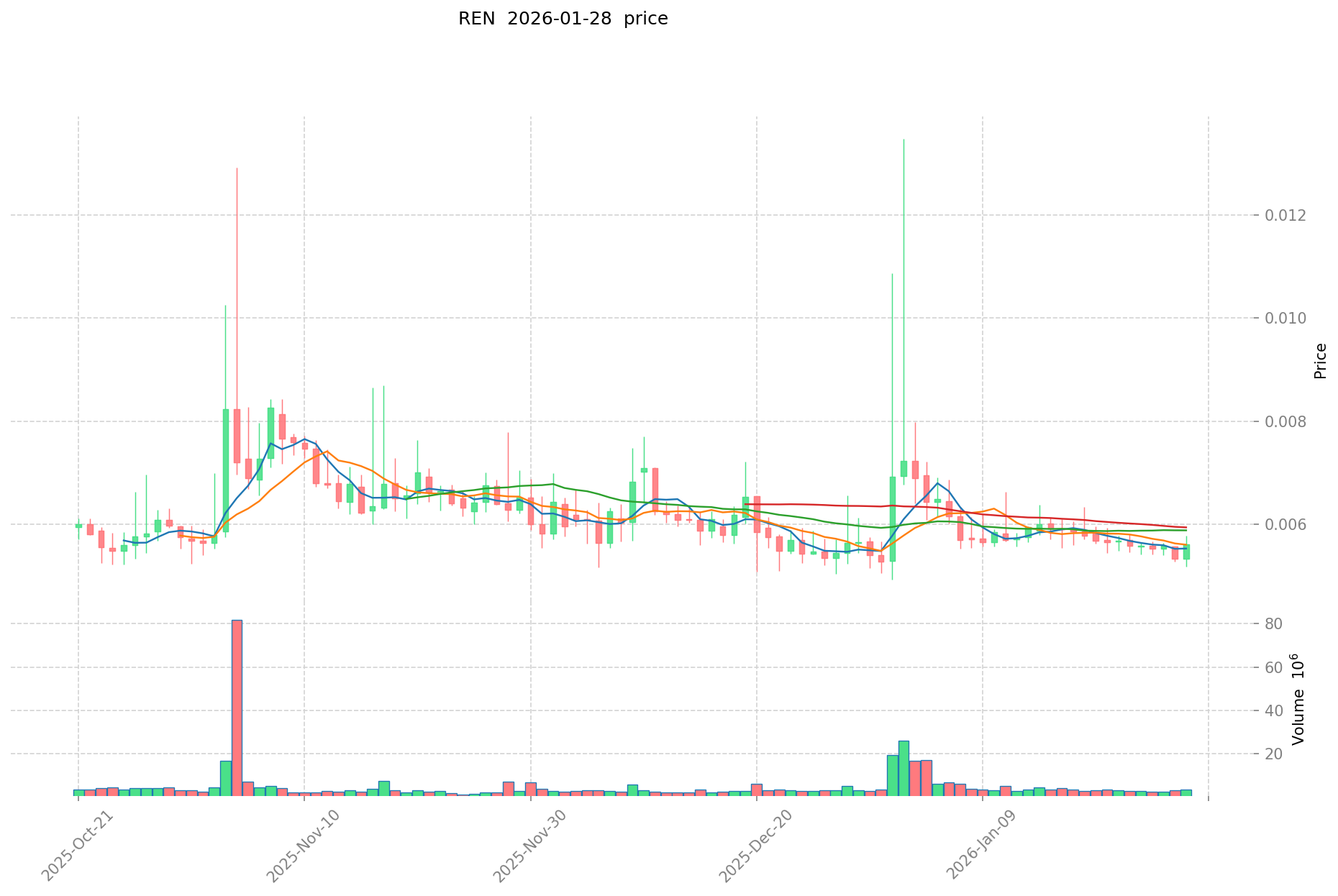
As of January 29, 2026, REN is trading at $0.005703, showing a 4.35% increase over the past 24 hours. The token has demonstrated short-term volatility with a 24-hour high of $0.005784 and a low of $0.00544, generating a trading volume of approximately $15,708.
The project maintains a market capitalization of $5.703 million, ranking #1469 in the overall cryptocurrency market with a dominance of 0.00018%. With all 1 billion tokens in circulation (100% of maximum supply), the fully diluted valuation matches the current market cap at $5.703 million.
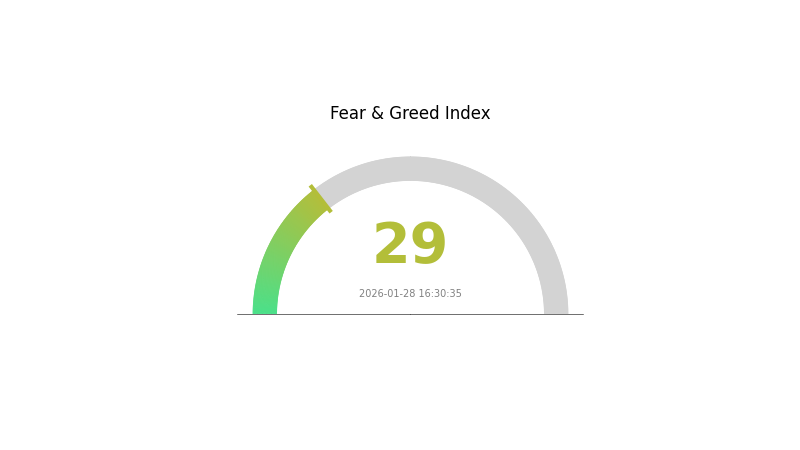
Recent price trends indicate mixed performance across different timeframes: a slight 0.19% decrease over the past hour, a 0.45% decline over the past week, and a 1.59% decrease over the past month. The year-over-year performance shows a significant 78.31% decrease, reflecting the challenging market conditions. The current market sentiment indicator registers at level 1, while the broader crypto market fear and greed index stands at 29, indicating a "Fear" sentiment environment.
REN is currently traded on 6 exchanges and is held by 61,337 addresses, maintaining its presence as a protocol designed for large-scale encrypted asset trading across BTC/ETH, BTC/ERC20, and ETH/ERC20 pairs through distributed dark pool mechanisms.
Click to view current REN market price
REN Market Sentiment Index
2026-01-28 Fear and Greed Index: 29 (Fear)
Click to view the current Fear & Greed Index
The market sentiment remains in a fear state, indicating heightened investor caution and risk aversion in the cryptocurrency market. With an index reading of 29, market participants are displaying significant concern about potential downside risks. This fearful sentiment typically creates opportunities for contrarian investors, as extreme fear often precedes market rebounds. Traders should monitor key support levels and market catalysts that could shift sentiment. Consider implementing proper risk management strategies and maintaining a balanced portfolio allocation during periods of elevated market uncertainty.
REN Holding Distribution
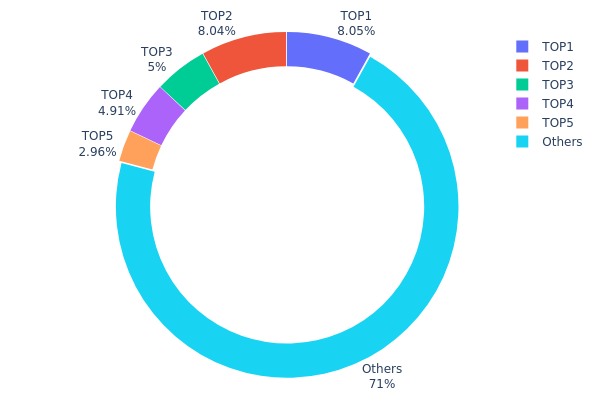
The holding distribution chart reflects the percentage of total circulating supply held by addresses ranked by their holdings. It serves as a key indicator of token centralization and provides insights into potential market manipulation risks and overall network decentralization.
According to the current data, REN exhibits a moderate level of concentration. The top 5 addresses collectively hold approximately 28.92% of the total supply, with the largest holder (0x60ab...1f8782) accounting for 8.05% and the second-largest (0xbfab...86ab25) holding 8.03%. The remaining 71.08% is distributed among other addresses, suggesting a relatively balanced distribution structure. While the top two addresses hold significant portions, the absence of a single dominant entity controlling over 15% indicates that REN avoids extreme centralization seen in some projects where majority holdings reside with a few wallets.
This distribution pattern suggests moderate risk exposure to potential market manipulation. Although large holders possess sufficient holdings to influence short-term price movements, the substantial portion held by smaller addresses (71.08%) provides a buffer against coordinated selling pressure. The current structure reflects a maturing token economy where early concentration has partially dissipated through market circulation. From a decentralization perspective, REN demonstrates acceptable network distribution characteristics, maintaining reasonable resistance to single-point control while still carrying concentration risks typical of established cryptocurrency projects. Investors should monitor any significant changes in top holder positions, as shifts could signal strategic repositioning or potential liquidity events.
Click to view current REN Holding Distribution
| Top |
Address |
Holding Qty |
Holding (%) |
| 1 |
0x60ab...1f8782 |
80500.00K |
8.05% |
| 2 |
0xbfab...86ab25 |
80372.57K |
8.03% |
| 3 |
0x7daf...706f83 |
49978.70K |
4.99% |
| 4 |
0xd2dd...e6869f |
49096.33K |
4.90% |
| 5 |
0x76db...c310c2 |
29599.17K |
2.95% |
| - |
Others |
710452.87K |
71.08% |
II. Core Factors Influencing REN's Future Price
Supply Mechanism
- Token Distribution Model: REN operates under a structured token distribution framework that directly impacts circulating supply levels. The protocol implements planned token releases that influence market availability.
- Historical Patterns: Past supply adjustments in similar cryptocurrency projects have demonstrated significant correlations with price movements, where controlled supply releases tend to support price stability during market expansion phases.
- Current Impact: Token supply dynamics continue to play a role in market valuation, with circulation levels being monitored by market participants as an indicator of potential price pressure or support.
Institutional and Major Holder Dynamics
- Institutional Holdings: Major cryptocurrency holders maintain positions across various digital assets, with institutional participation patterns reflecting broader market sentiment and risk appetite in the digital asset space.
- Market Adoption: The cryptocurrency sector continues to see varying degrees of adoption across different market segments, with institutional and retail participants evaluating digital assets based on fundamental and technical factors.
- Policy Landscape: Regulatory frameworks for digital assets continue to evolve across different jurisdictions, with market participants monitoring policy developments that may influence cryptocurrency market dynamics.
Macroeconomic Environment
- Monetary Policy Influence: Central bank policy directions, particularly regarding interest rate trajectories, influence risk asset valuations including cryptocurrencies. Market expectations regarding potential Federal Reserve policy adjustments in 2026 may impact digital asset pricing dynamics.
- Inflation Hedge Characteristics: Digital assets demonstrate varying correlations with inflation metrics, with market participants evaluating cryptocurrency positioning within broader portfolio allocation strategies during different economic conditions.
- Geopolitical Considerations: International developments and economic uncertainties contribute to market sentiment across asset classes, including digital currencies, as investors assess risk-return profiles in evolving global conditions.
Technical Development and Ecosystem Building
- Protocol Enhancement: Ongoing technical development within blockchain infrastructure continues to influence network capabilities and functionality, with upgrades potentially impacting user experience and application performance.
- Network Evolution: Blockchain technology advancement focuses on scalability, security, and interoperability features that support broader ecosystem development and use case expansion.
- Ecosystem Applications: Decentralized application development and protocol integration within cryptocurrency networks contribute to utility expansion, with various projects building on blockchain infrastructure to deliver services across different sectors.
III. 2026-2031 REN Price Forecast
2026 Outlook
- Conservative Forecast: $0.00547 - $0.0057
- Neutral Forecast: Around $0.0057
- Optimistic Forecast: Up to $0.00701 (requires favorable market conditions and increased adoption)
2027-2029 Outlook
- Market Stage Expectation: Gradual recovery phase with moderate volatility, as the project continues to establish its position in the cross-chain liquidity sector
- Price Range Forecast:
- 2027: $0.00445 - $0.00655
- 2028: $0.00465 - $0.008
- 2029: $0.00376 - $0.00867
- Key Catalysts: Protocol upgrades, expansion of cross-chain partnerships, broader DeFi ecosystem integration, and potential improvements in overall crypto market sentiment
2030-2031 Long-term Outlook
- Base Scenario: $0.00501 - $0.01185 (assuming steady project development and moderate market growth)
- Optimistic Scenario: $0.0096 - $0.01376 (assuming significant protocol adoption, strategic partnerships, and favorable regulatory environment)
- Transformative Scenario: Beyond $0.01376 (requires breakthrough technological advancements, mass adoption of cross-chain solutions, and exceptional bull market conditions)
- 2026-01-29: REN trading within the predicted range of $0.00547 - $0.00701 (current market positioning phase)
| Year |
Predicted High Price |
Predicted Average Price |
Predicted Low Price |
Price Change |
| 2026 |
0.00701 |
0.0057 |
0.00547 |
0 |
| 2027 |
0.00655 |
0.00636 |
0.00445 |
11 |
| 2028 |
0.008 |
0.00645 |
0.00465 |
13 |
| 2029 |
0.00867 |
0.00723 |
0.00376 |
26 |
| 2030 |
0.01185 |
0.00795 |
0.00501 |
39 |
| 2031 |
0.01376 |
0.0099 |
0.0096 |
73 |
IV. REN Professional Investment Strategy and Risk Management
REN Investment Methodology
(1) Long-Term Holding Strategy
- Target Investors: Investors seeking exposure to cross-chain liquidity protocols with a long-term perspective on decentralized dark pool trading infrastructure
- Operational Recommendations:
- Consider accumulating positions during periods of market consolidation, given REN's current trading range
- Monitor protocol development updates and node operation metrics as indicators of network health
- Implement secure storage solutions using Gate Web3 Wallet for enhanced asset protection
(2) Active Trading Strategy
- Technical Analysis Tools:
- Volume Analysis: Track the 24-hour trading volume ($15,708.30) relative to market cap to identify liquidity patterns and potential breakout signals
- Support and Resistance Levels: Monitor the 24-hour range ($0.00544 - $0.00578) to establish entry and exit points for short-term positions
- Swing Trading Considerations:
- The token's recent 24-hour increase of 4.35% suggests potential short-term momentum opportunities
- Consider the broader trend context, noting the 7-day decline of 0.45% and 30-day decline of 1.59%
REN Risk Management Framework
(1) Asset Allocation Principles
- Conservative Investors: 1-3% of crypto portfolio allocation
- Aggressive Investors: 3-7% of crypto portfolio allocation
- Professional Investors: 5-10% with active monitoring and rebalancing protocols
(2) Risk Hedging Approaches
- Position Sizing: Limit individual position exposure given REN's market cap of $5.70 million and ranking of #1469
- Diversification Strategy: Balance REN holdings with established cross-chain and DeFi protocols to mitigate concentration risk
(3) Secure Storage Solutions
- Hot Wallet Recommendation: Gate Web3 Wallet for active trading and staking participation
- Cold Storage Approach: Hardware wallet solutions for long-term holdings exceeding active trading needs
- Security Precautions: Enable two-factor authentication, maintain secure backup procedures, and never share private keys or seed phrases
V. REN Potential Risks and Challenges
REN Market Risks
- Liquidity Constraints: With a market cap of $5.70 million and 24-hour volume of $15,708.30, REN faces potential liquidity challenges that may impact execution quality for larger orders
- Price Volatility: The token's 1-year decline of 78.31% demonstrates significant downside risk and market sentiment challenges
- Market Cap Position: Ranked #1469 with a market share of 0.00018%, REN faces competitive pressures from larger cross-chain protocols
REN Regulatory Risks
- Dark Pool Scrutiny: The protocol's dark pool trading mechanism may face regulatory examination as authorities increase focus on transaction transparency
- Cross-Chain Compliance: Multi-asset bridging functionality (BTC/ETH, BTC/ERC20, ETH/ERC20) may encounter evolving regulatory frameworks across different jurisdictions
- Node Operation Requirements: The requirement for Dark Nodes to stake 100,000 REN tokens may face regulatory classification challenges regarding securities laws
REN Technical Risks
- Smart Contract Vulnerabilities: Cross-chain protocols inherently face complex security challenges that may expose users to potential exploits
- Node Centralization: The high barrier to entry (100,000 REN tokens) for operating Dark Nodes may lead to network centralization concerns
- Bridge Security: Cross-chain asset transfers represent a critical attack vector, as demonstrated by numerous bridge exploits across the industry
VI. Conclusion and Action Recommendations
REN Investment Value Assessment
REN represents a specialized protocol addressing institutional-grade dark pool trading in the cryptocurrency market, drawing parallels to traditional finance where dark pools account for 10-30% of trading volume. However, the token faces significant challenges reflected in its 78.31% annual decline and limited market capitalization. The protocol's unique positioning in distributed dark pool infrastructure offers potential long-term value for investors who believe in the maturation of institutional crypto trading, though near-term risks remain elevated given current market conditions and the token's distance from its all-time high of $1.80 (currently trading at $0.005703).
REN Investment Recommendations
✅ Beginners: Exercise extreme caution given REN's significant volatility and limited liquidity. New investors should prioritize educational research over immediate position-taking and consider REN only as a minor portfolio component after establishing positions in more established assets.
✅ Experienced Investors: Consider REN as a speculative allocation within a diversified cross-chain protocol strategy. Monitor network metrics, node participation rates, and protocol development milestones before establishing or expanding positions.
✅ Institutional Investors: Evaluate REN's dark pool infrastructure as a potential complementary protocol for privacy-focused trading strategies, though conduct thorough due diligence on liquidity constraints and regulatory positioning before any significant capital allocation.
REN Trading Participation Methods
- Spot Trading: Access REN trading pairs on Gate.com with competitive fee structures and deep order book liquidity
- Web3 Integration: Utilize Gate Web3 Wallet for secure self-custody and direct protocol interaction
- Gradual Accumulation: Implement dollar-cost averaging strategies to mitigate entry timing risk given the token's current volatility profile
Cryptocurrency investment carries extremely high risk, and this article does not constitute investment advice. Investors should make prudent decisions based on their own risk tolerance and are advised to consult professional financial advisors. Never invest more than you can afford to lose.
FAQ
What is REN token and what are its main use cases?
REN token serves as a bond mechanism securing the REN network's stability. It grants users eligibility to participate in dark pool trading through Darknodes, enabling decentralized cross-chain liquidity swaps while maintaining network integrity.
What are the main factors affecting REN price?
REN price is influenced by regulatory policies in major countries, market demand, overall crypto market trends, and network adoption. Changes in regulatory stance directly impact its value.
What is the price prediction for REN in the coming years?
REN is projected to reach $56.53 by 2027, with a future price forecast of $0.3505. Based on its market positioning, REN is expected to maintain strong growth momentum in the coming years.
What are REN's advantages compared to other privacy coins or cross-chain projects?
REN offers superior cross-chain interoperability, enabling seamless asset bridging between blockchains. Its decentralized RenVM architecture provides enhanced security and privacy, while maintaining true asset portability without wrapping risks, making it the preferred cross-chain solution in Web3.
How to buy and store REN tokens?
To buy REN tokens, create a Web3 wallet and use stablecoins like USDT for transactions. For storage, transfer your REN to a personal cold wallet to ensure security and full control of your assets.
What is the development roadmap for the REN project?
REN's roadmap focuses on enhancing cross-chain interoperability and privacy protection, integrating multi-chain ecosystems. Key goals include enabling efficient, secure cross-chain transactions while continuously optimizing technology and expanding partnerships.
What are the main risks and challenges of REN?
REN faces market competition, regulatory changes, and technological obsolescence risks. Financial instability and geopolitical tensions pose significant challenges to ecosystem stability and adoption.
* The information is not intended to be and does not constitute financial advice or any other recommendation of any sort offered or endorsed by Gate.