This comprehensive analysis examines RHEA Finance's price trajectory from 2026 to 2031, offering professional forecasts based on historical market data, ecosystem developments, and macroeconomic factors. RHEA, established through the strategic merger of Ref Finance and Burrow Finance on NEAR Protocol, currently trades at $0.01408 with a market cap of $2.816 million. The article provides conservative to optimistic price predictions, ranging from $0.00943 to $0.03154 by 2031, alongside practical investment strategies for different investor profiles. Key sections cover market sentiment analysis, holding distribution patterns, risk management frameworks, and secure storage solutions via Gate Web3 Wallet. The analysis addresses technical risks, regulatory challenges, and liquidity concerns while recommending appropriate allocation percentages based on investor experience levels.
Introduction: RHEA's Market Position and Investment Value
Rhea Finance (RHEA), as the innovative evolution of NEAR Protocol's original DeFi powerhouses, has established itself as the primary liquidity hub and chain-abstracted liquidity layer since its strategic merger of Ref Finance and Burrow Finance. As of January 2026, RHEA maintains a market capitalization of approximately $2.82 million, with a circulating supply of around 200 million tokens, and the price hovering around $0.01408. This asset, recognized as a unified foundation for NEAR's DeFi ecosystem, is playing an increasingly important role in supporting protocol-level integrations and community incentive mechanisms.
This article will comprehensively analyze RHEA's price trends from 2026 to 2031, combining historical patterns, market supply and demand dynamics, ecosystem development, and macroeconomic environment to provide investors with professional price forecasts and practical investment strategies.
I. RHEA Price History Review and Market Status
RHEA Historical Price Evolution Trajectory
- 2025: RHEA launched on January 29, 2025, marking the strategic merger and rebranding of Ref Finance and Burrow Finance on NEAR Protocol. The token reached its all-time high of $0.35778 on August 1, 2025, demonstrating strong initial market interest in this unified DeFi liquidity hub.
- 2025: Following the peak in August, RHEA experienced significant market correction, with price declining to its all-time low of $0.01311 on November 5, 2025, representing a substantial pullback from its historical high.
RHEA Current Market Situation
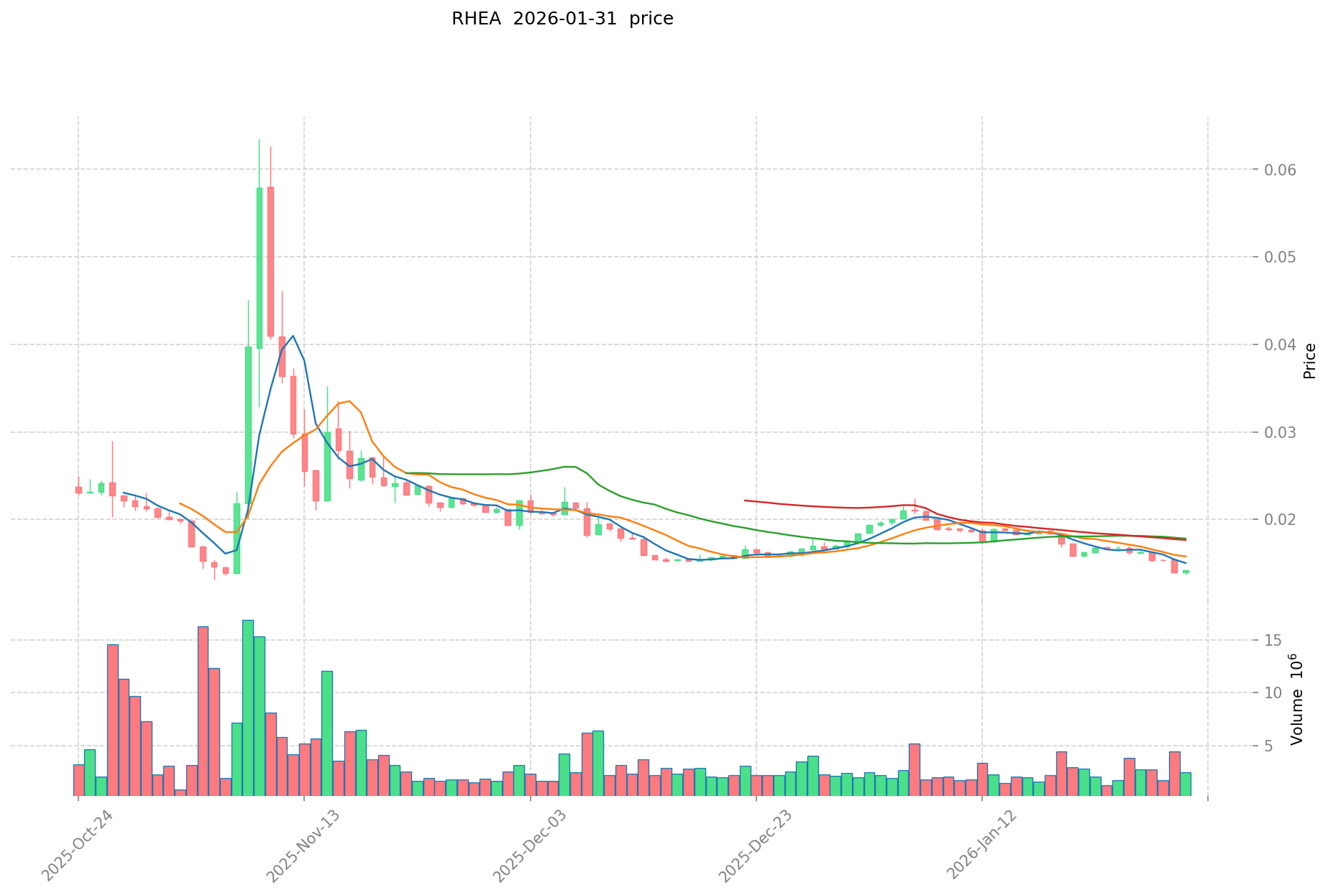
As of January 31, 2026, RHEA is trading at $0.01408, showing a 24-hour price increase of 2.32%. The token has experienced mixed performance across different timeframes, with a 1-hour decline of 0.069%, a 7-day decrease of 15.93%, a 30-day drop of 21.21%, and a yearly decline of 65.60%.
The current market capitalization stands at $2.816 million, with a fully diluted valuation of $14.08 million. RHEA maintains a circulating supply of 200 million tokens out of a maximum supply of 1 billion tokens, representing a 20% circulation ratio. The 24-hour trading volume reached $32,724.81, indicating moderate trading activity for this NEAR-based DeFi protocol.
The token's market dominance is 0.00047%, ranking at position 1865 in the cryptocurrency market. The market cap to fully diluted valuation ratio stands at 20%, reflecting the significant portion of tokens yet to enter circulation. RHEA's intraday price range fluctuated between $0.01371 and $0.01423.
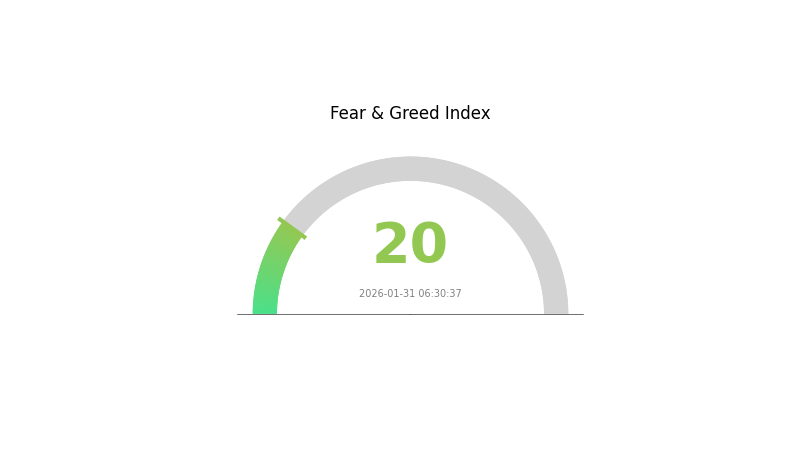
Currently, the Fear and Greed Index registers at 20, indicating an "Extreme Fear" sentiment in the broader cryptocurrency market, which may influence RHEA's short-term price movements.
Click to view current RHEA market price
RHEA Market Sentiment Index
2026-01-31 Fear and Greed Index: 20 (Extreme Fear)
Click to view current Fear & Greed Index
The crypto market is currently experiencing extreme fear, with the Fear and Greed Index at 20. This indicates significant market pessimism and heightened investor anxiety. During such periods, assets are typically undervalued as fear drives selling pressure. Experienced traders often view extreme fear as a potential buying opportunity, as markets tend to recover from panic-driven sell-offs. However, caution is advised, as downward momentum may continue. Monitoring key support levels and market fundamentals is essential before making investment decisions during this volatile period.
RHEA Holding Distribution
The RHEA holding distribution chart reflects the concentration level of token holdings across different wallet addresses, serving as a key indicator for assessing the degree of decentralization and potential market manipulation risks. By analyzing the proportion of tokens held by top addresses, investors can better understand the on-chain structure and evaluate whether there is excessive concentration that could impact price stability.
Based on current on-chain data, RHEA exhibits a relatively concentrated holding pattern, with top addresses controlling a significant portion of the total supply. This concentration structure suggests that a small number of large holders possess considerable influence over market dynamics. When major holders execute large-scale buy or sell operations, it can trigger substantial price volatility, increasing market uncertainty and potentially exposing retail investors to amplified risks.
From a market structure perspective, this concentrated distribution pattern reflects certain limitations in RHEA's decentralization level. While concentration itself does not necessarily indicate negative intentions, it does create conditions for potential coordinated actions or market manipulation. Investors should closely monitor the transfer activities and trading behaviors of these major addresses, as their movements often serve as leading indicators of market trends and can provide valuable reference points for investment decisions.
Click to view the current RHEA Holding Distribution

| Top |
Address |
Holding Qty |
Holding (%) |
II. Core Factors Influencing RHEA's Future Price
Based on the available information, there is insufficient data regarding RHEA's supply mechanisms, institutional dynamics, macroeconomic influences, and technical developments to provide a comprehensive analysis at this time. As more information becomes available about RHEA's tokenomics, adoption patterns, and ecosystem development, a more detailed assessment of price-influencing factors can be conducted.
III. 2026-2031 RHEA Price Prediction
2026 Outlook
- Conservative Forecast: $0.00943 - $0.01408
- Neutral Forecast: $0.01408
- Optimistic Forecast: $0.01901 (contingent on favorable market conditions and increased adoption)
2027-2029 Outlook
- Market Stage Expectation: Potential transition from early accumulation to gradual growth phase, with increasing volatility as the project matures
- Price Range Forecast:
- 2027: $0.01472 - $0.02382, representing approximately 17% growth from 2026 baseline
- 2028: $0.01938 - $0.02261, indicating 43% cumulative appreciation with consolidation patterns
- 2029: $0.01091 - $0.02268, projecting 51% overall increase despite potential mid-cycle corrections
- Key Catalysts: Platform development milestones, strategic partnerships, broader market recovery cycles, and enhanced liquidity across major trading platforms
2030-2031 Long-term Outlook
- Baseline Scenario: $0.01322 - $0.02204 (assuming steady project execution and moderate market conditions)
- Optimistic Scenario: $0.02204 - $0.02843 (contingent on accelerated adoption, successful ecosystem expansion, and favorable regulatory developments)
- Transformative Scenario: $0.02069 - $0.03154 (requires breakthrough partnerships, significant protocol upgrades, and sustained bullish crypto market sentiment)
- 2031-12-31: RHEA could potentially reach $0.03154 (representing 79% cumulative growth from 2026 baseline under optimal market conditions)
| Year |
Predicted High Price |
Predicted Average Price |
Predicted Low Price |
Price Change |
| 2026 |
0.01901 |
0.01408 |
0.00943 |
0 |
| 2027 |
0.02382 |
0.01654 |
0.01472 |
17 |
| 2028 |
0.02261 |
0.02018 |
0.01938 |
43 |
| 2029 |
0.02268 |
0.02139 |
0.01091 |
51 |
| 2030 |
0.02843 |
0.02204 |
0.01322 |
56 |
| 2031 |
0.03154 |
0.02523 |
0.02069 |
79 |
IV. RHEA Professional Investment Strategies and Risk Management
RHEA Investment Methodology
(1) Long-Term Holding Strategy
- Suitable for: Value-oriented investors who believe in NEAR's DeFi ecosystem development and chain abstraction technology
- Operational Recommendations:
- Consider accumulating positions during market corrections, particularly when RHEA trades near support levels around $0.013-$0.014
- Monitor the project's progress in integrating protocol-level liquidity and AI-powered frameworks within the NEAR ecosystem
- Storage Solution: Utilize Gate Web3 Wallet for secure storage, ensuring proper backup of recovery phrases and enabling multi-factor authentication
(2) Active Trading Strategy
- Technical Analysis Tools:
- Moving Averages: Track 7-day and 30-day moving averages to identify potential trend reversals, noting RHEA's recent 15.93% decline over 7 days
- Volume Analysis: Monitor 24-hour trading volume ($32,724) relative to market cap to assess liquidity conditions and trading opportunities
- Swing Trading Key Points:
- Focus on intraday price ranges between $0.01371-$0.01423 based on recent 24-hour data
- Be cautious of lower liquidity compared to major tokens, which may result in higher slippage
RHEA Risk Management Framework
(1) Asset Allocation Principles
- Conservative Investors: 1-2% of crypto portfolio
- Moderate Investors: 3-5% of crypto portfolio
- Aggressive Investors: 5-10% of crypto portfolio (with strict stop-loss parameters)
(2) Risk Hedging Solutions
- Diversification Strategy: Balance RHEA holdings with established NEAR ecosystem tokens and stablecoins
- Position Sizing: Implement dollar-cost averaging to mitigate entry risk given current price volatility
(3) Secure Storage Solutions
- Mobile Wallet Recommendation: Gate Web3 Wallet offers user-friendly interface for managing NEAR-based tokens
- Hardware Wallet Option: Consider cold storage solutions for long-term holdings exceeding $1,000
- Security Precautions: Never share private keys, verify contract address (token.rhealab.near) before transactions, and be wary of phishing attempts targeting NEAR ecosystem users
V. RHEA Potential Risks and Challenges
RHEA Market Risks
- Price Volatility: RHEA has declined 65.60% over the past year and 21.21% in the last 30 days, indicating significant downside pressure
- Liquidity Concerns: With a relatively modest 24-hour trading volume of $32,724 and market cap of $2.816 million, liquidity may be limited during market stress
- Market Cap Concentration: Only 20% of total supply is currently circulating (200 million of 1 billion tokens), which could lead to substantial dilution pressure if additional tokens enter circulation
RHEA Regulatory Risks
- DeFi Protocol Scrutiny: Increasing regulatory attention on decentralized finance platforms globally may impact operational flexibility
- Cross-Chain Compliance: As Rhea operates as a chain-abstracted liquidity layer, it may face complex regulatory requirements across multiple jurisdictions
- Token Classification: Uncertainty around how regulators may classify governance and utility tokens in the DeFi space
RHEA Technical Risks
- Smart Contract Vulnerabilities: As a merger of Ref Finance and Burrow Finance, integration complexity may introduce potential security weaknesses
- Protocol Integration Risk: Dependencies on NEAR's chain abstraction and AI framework development could delay feature rollout or create unforeseen technical issues
- Competition Risk: Facing competition from established DeFi protocols on other chains and within the NEAR ecosystem itself
VI. Conclusion and Action Recommendations
RHEA Investment Value Assessment
Rhea Finance represents an ambitious consolidation effort within the NEAR ecosystem, aiming to establish unified liquidity infrastructure for DeFi applications. The project leverages NEAR's technical capabilities, including chain abstraction and AI integration. However, the significant price decline of 65.60% over the past year and continued downward pressure over shorter timeframes reflect market skepticism. The project's long-term value depends heavily on successful execution of protocol integrations, adoption by NEAR DeFi projects, and the overall growth trajectory of the NEAR ecosystem. In the short term, investors should be prepared for continued volatility and limited liquidity conditions.
RHEA Investment Recommendations
✅ Beginners: Avoid allocating significant capital to RHEA until clearer adoption signals emerge; if interested, limit exposure to less than 1% of crypto portfolio and use Gate Web3 Wallet for secure storage
✅ Experienced Investors: Consider small speculative positions (2-3% of crypto portfolio) with strict stop-loss orders; monitor ecosystem developments and trading volume trends closely
✅ Institutional Investors: Conduct thorough due diligence on protocol architecture and team execution capabilities; consider waiting for clearer evidence of liquidity hub adoption before substantial allocation
RHEA Trading Participation Methods
- Spot Trading: Purchase RHEA directly on Gate.com and other supported exchanges, with awareness of potential liquidity constraints
- DCA Strategy: Implement systematic dollar-cost averaging to smooth out entry prices given current market conditions
- Ecosystem Participation: Engage with Rhea's DeFi protocols directly on NEAR to better understand product-market fit and utility value
Cryptocurrency investments carry extremely high risks, and this article does not constitute investment advice. Investors should make prudent decisions based on their own risk tolerance and are advised to consult professional financial advisors. Never invest more than you can afford to lose.
FAQ
What is RHEA and what is its use case in the cryptocurrency market?
RHEA is a cryptocurrency token designed for decentralized trading and digital asset exchange. Its primary use case involves facilitating peer-to-peer transactions and serving as a utility token within blockchain ecosystems, enabling users to participate in trading activities and access decentralized finance protocols.
What factors influence RHEA price movements and market trends?
RHEA price movements are driven by market sentiment, technical developments, user adoption rates, trading volume, and macroeconomic events. Community engagement and project milestones also significantly impact price trends.
How do analysts predict RHEA token price in the short and long term?
Analysts predict RHEA token will reach $0.03421 by end of 2026, $0.03096 by 2030, and $0.08150 by 2040. Predictions are based on trading volume, market trends, and historical price patterns.
What is the current market cap and trading volume of RHEA?
As of January 31, 2026, RHEA has a market cap of $2.81 million and a 24-hour trading amount of $4.17 million, with the token currently trading at $0.0138.
What are the risks and challenges associated with RHEA price volatility?
RHEA exhibits extreme price volatility with frequent single-day fluctuations of 10-20%. The token has experienced significant drawdowns from historical highs, creating substantial downside risks for traders and investors exposed to rapid price movements.
How does RHEA compare to other similar tokens in the same sector?
RHEA demonstrates higher volatility potential due to its smaller market cap, offering greater growth opportunities compared to established competitors like NEAR. RHEA focuses on DeFi innovation with emerging ecosystem advantages, while maintaining distinct technological differentiation in the sector.
* The information is not intended to be and does not constitute financial advice or any other recommendation of any sort offered or endorsed by Gate.