This comprehensive analysis examines RIF Token's market position and investment outlook through 2031. Currently trading at $0.03559 with a $35.59 million market cap, RIF serves as the native utility token for Rootstock's blockchain infrastructure. The article reviews historical price performance, analyzes current market sentiment (Fear Index: 32), and provides price forecasts ranging from conservative to optimistic scenarios. It outlines core investment strategies including long-term holding and active trading approaches, with risk management frameworks for different investor profiles. The token demonstrates recent 30-day gains of 13.20% despite annual declines of 59.34%, offering infrastructure sector exposure on Gate.com with considerations for volatility, liquidity, and competitive risks in the evolving blockchain landscape.
Introduction: RIF's Market Position and Investment Value
RIF Token (RIF), as the cornerstone utility token of the Rootstock Infrastructure Framework and the first integrated open blockchain infrastructure operating system, has been establishing its ecosystem since its launch in 2018. As of 2026, RIF maintains a market capitalization of approximately $35.59 million, with a circulating supply of 1 billion tokens, and the price holding around $0.03559. This asset, characterized as an infrastructure-enabling token, is playing an increasingly significant role in facilitating decentralized services and blockchain infrastructure solutions.
This article will comprehensively analyze RIF's price trajectory from 2026 to 2031, combining historical patterns, market supply and demand dynamics, ecosystem development, and macroeconomic conditions to provide investors with professional price forecasting and practical investment strategies.
I. RIF Price History Review and Market Status
Historical Price Evolution of RIF
-
2019: RIF Token launched in November 2018 with an initial offering price of $0.2151. By June 2019, the token reached its historical low of $0.0091475, representing a significant decline during the early market consolidation phase.
-
2021: During the broader crypto market bull run in April, RIF achieved its historical peak at $0.455938, demonstrating substantial growth momentum within the blockchain infrastructure sector.
-
2022-2025: The token experienced a prolonged correction phase alongside broader market cycles, with prices gradually adjusting from previous peaks.
Current Market Status of RIF
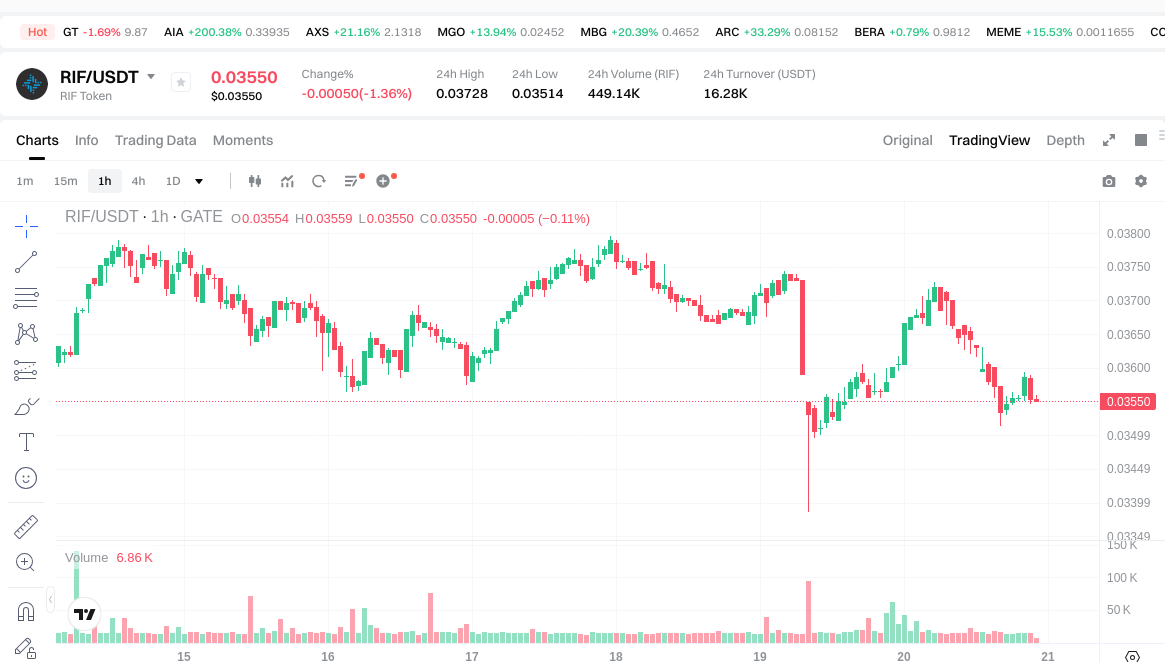
As of January 20, 2026, RIF Token is trading at $0.03559, with a 24-hour trading volume of $16,473.38. The token has experienced a slight decline of 1.22% over the past 24 hours, with intraday fluctuations between $0.03514 and $0.03728.
From a broader timeframe perspective, RIF shows mixed performance across different periods. The 1-hour change stands at -0.84%, while the 7-day performance indicates a modest gain of 0.31%. The 30-day trend demonstrates more substantial growth at 13.20%, suggesting recent positive momentum. However, the 1-year performance reflects a decline of 59.34%, indicating continued adjustment from previous valuation levels.
RIF maintains a market capitalization of $35.59 million, with a fully diluted valuation matching this figure due to 100% token circulation. The project ranks 638th in the cryptocurrency market with a market dominance of 0.0011%. With a total supply of 1 billion tokens, all tokens are currently in circulation, eliminating potential future dilution concerns.
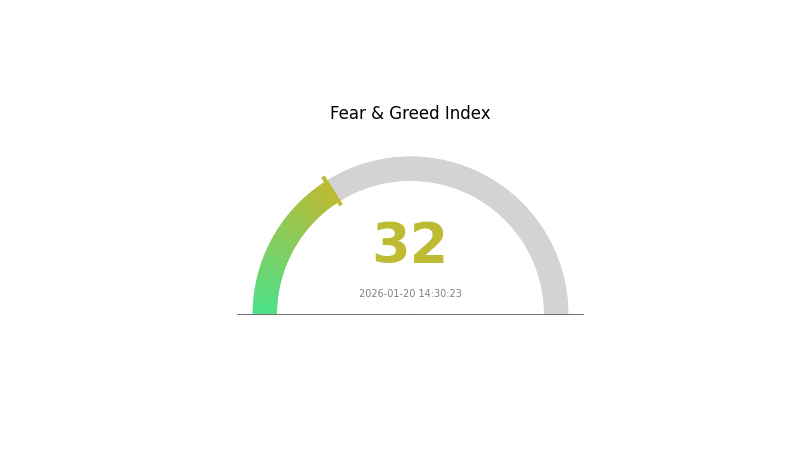
The current trading environment reflects a market sentiment index of 32, categorized as "Fear," which may indicate cautious investor positioning across the broader cryptocurrency market. RIF is available for trading on 12 exchanges, with Gate.com providing active trading support for the token.
Click to view the current RIF market price
RIF Market Sentiment Indicator
2026-01-20 Fear and Greed Index: 32 (Fear)
Click to view the current Fear & Greed Index
The crypto market is currently in a fear-dominated state with an index reading of 32. This low score indicates heightened market anxiety and risk aversion among investors. During such periods, market volatility typically increases as traders reassess their positions. The fear sentiment often creates both challenges and opportunities—while prices may experience downward pressure, contrarian investors may view this as a potential entry point for long-term positions. Monitor key support levels and market developments closely, as sentiment shifts can trigger rapid price movements in either direction.
RIF Holding Distribution
According to the current on-chain data, RIF token holdings demonstrate a relatively concentrated distribution pattern. The top address holds 99,999,800 RIF tokens, accounting for 9.99% of the total supply, while the second-ranked address controls 83,010,000 tokens (8.30%). The top ten addresses collectively hold approximately 267.67 million tokens, representing 26.77% of the total circulation. This concentration level indicates a moderate degree of decentralization, with no single entity dominating the market structure.
From a market impact perspective, this holding distribution presents both opportunities and risks. The relatively balanced distribution among top holders helps maintain market stability and reduces the likelihood of extreme price manipulation. However, the cumulative holdings of top addresses still possess sufficient influence to generate significant market volatility during large-scale trading activities. The current distribution structure suggests a maturing ecosystem where early investors and institutional participants maintain substantial positions while allowing for broader community participation.
The on-chain holding pattern reflects RIF's gradual evolution from its initial distribution phase toward a more diversified ownership structure. This moderate concentration level is common among established blockchain projects and generally supports healthy market development. The distribution data indicates that RIF maintains sufficient liquidity for normal trading activities while preserving a stable holder base that can provide long-term ecosystem support.
Click to view current RIF Holding Distribution

| Top |
Address |
Holding Qty |
Holding (%) |
II. Core Factors Influencing RIF's Future Price
Due to the absence of specific data regarding RIF's supply mechanisms, institutional holdings, macroeconomic correlations, and technical developments in the provided materials, a comprehensive analysis of the core factors affecting RIF's future price cannot be generated at this time. Key information such as tokenomics structure, major institutional positions, enterprise adoption cases, regulatory developments, and ecosystem upgrades would be essential for conducting a thorough evaluation of RIF's price determinants.
III. 2026-2031 RIF Price Prediction
2026 Outlook
- Conservative Forecast: $0.02308 - $0.0355
- Neutral Forecast: Around $0.0355
- Optimistic Forecast: Up to $0.0426 (requires favorable market conditions and increased adoption)
2027-2029 Outlook
- Market Phase Expectation: The token may enter a gradual growth phase with increasing market recognition and ecosystem development
- Price Range Prediction:
- 2027: $0.02773 - $0.05116 (approximately 9% growth from 2026)
- 2028: $0.03698 - $0.06405 (approximately 26% growth from 2026)
- 2029: $0.03438 - $0.06331 (approximately 53% growth from 2026)
- Key Catalysts: Potential ecosystem expansion, technological improvements, and broader market acceptance could drive price appreciation during this period
2030-2031 Long-term Outlook
- Baseline Scenario: $0.04362 - $0.07839 (assuming steady ecosystem development and stable market conditions)
- Optimistic Scenario: $0.04944 - $0.08515 (assuming accelerated adoption and favorable regulatory environment)
- Transformative Scenario: Beyond $0.08515 (requires breakthrough developments and widespread mainstream adoption)
- January 20, 2026: RIF trading around $0.0355 (current market positioning)
| Year |
Predicted High Price |
Predicted Average Price |
Predicted Low Price |
Price Change |
| 2026 |
0.0426 |
0.0355 |
0.02308 |
0 |
| 2027 |
0.05116 |
0.03905 |
0.02773 |
9 |
| 2028 |
0.06405 |
0.0451 |
0.03698 |
26 |
| 2029 |
0.06331 |
0.05457 |
0.03438 |
53 |
| 2030 |
0.07839 |
0.05894 |
0.04362 |
65 |
| 2031 |
0.08515 |
0.06867 |
0.04944 |
92 |
IV. RIF Professional Investment Strategy and Risk Management
RIF Investment Methodology
(I) Long-term Holding Strategy
- Suitable for: Investors seeking exposure to blockchain infrastructure and decentralized services
- Operational Recommendations:
- Consider accumulating RIF tokens during market corrections, particularly when prices approach key support levels
- Monitor RIF operating system development progress and ecosystem expansion as long-term value indicators
- Implement dollar-cost averaging to mitigate timing risk given the token's historical volatility
- Storage Solution: Gate Web3 Wallet provides secure storage with multi-chain support for RIF tokens on the Rootstock network
(II) Active Trading Strategy
- Technical Analysis Tools:
- Moving Averages: Monitor 50-day and 200-day moving averages to identify trend reversals; RIF's recent 30-day gain of 13.20% suggests emerging upward momentum
- Support/Resistance Levels: Track the 24-hour range ($0.03514-$0.03728) for short-term trading opportunities
- Band Trading Key Points:
- Consider taking partial profits during periods of rapid appreciation given RIF's 59.34% decline over the past year
- Maintain strict stop-loss orders at 5-8% below entry points to limit downside exposure
RIF Risk Management Framework
(I) Asset Allocation Principles
- Conservative Investors: 1-2% of cryptocurrency portfolio allocation
- Aggressive Investors: 3-5% of cryptocurrency portfolio allocation
- Professional Investors: Up to 5-8% with active hedging strategies
(II) Risk Hedging Solutions
- Portfolio Diversification: Balance RIF exposure with established cryptocurrencies and stablecoins to reduce concentration risk
- Position Sizing: Limit single-token exposure and maintain adequate liquidity reserves for market volatility
(III) Secure Storage Solutions
- Web3 Wallet Recommendation: Gate Web3 Wallet offers user-friendly interface with robust security features for RIF token storage
- Hardware Wallet Solution: For larger holdings, consider cold storage solutions with offline key management
- Security Precautions: Never share private keys, enable two-factor authentication, and verify contract addresses (0x2aCc95758f8b5F583470bA265Eb685a8f45fC9D5) before transactions
V. RIF Potential Risks and Challenges
RIF Market Risks
- Volatility Risk: RIF has experienced substantial price fluctuation, with a 59.34% decline over the past year from higher levels
- Liquidity Risk: With 24-hour trading volume of approximately $16,473, limited liquidity may result in slippage during larger transactions
- Competition Risk: The blockchain infrastructure sector faces intense competition from alternative layer-2 solutions and service providers
RIF Regulatory Risks
- Jurisdictional Uncertainty: Evolving regulatory frameworks for blockchain infrastructure tokens may impact RIF's operational environment
- Compliance Requirements: Changes in cryptocurrency taxation or reporting obligations could affect token utility and adoption
- Cross-border Restrictions: Potential limitations on international token transfers may constrain ecosystem growth
RIF Technical Risks
- Smart Contract Vulnerabilities: Despite established protocols, potential security flaws in the RIF operating system could impact token value
- Network Dependency: RIF's functionality relies on Rootstock infrastructure; any network disruptions or technical issues could affect token utility
- Integration Challenges: Difficulties in maintaining compatibility with evolving blockchain technologies may hinder platform adoption
VI. Conclusion and Action Recommendations
RIF Investment Value Assessment
RIF Token presents a specialized opportunity within the blockchain infrastructure sector, offering exposure to the Rootstock ecosystem and decentralized services framework. The token's recent 30-day gain of 13.20% indicates renewed market interest, though its 59.34% annual decline underscores significant volatility. With a fully diluted market cap of $35.59 million and 100% token circulation, RIF demonstrates complete supply transparency. However, investors should carefully weigh the potential for infrastructure adoption against market risks, limited liquidity, and competitive pressures in the evolving blockchain landscape.
RIF Investment Recommendations
✅ Beginners: Start with minimal allocation (0.5-1% of portfolio) and prioritize education about blockchain infrastructure before increasing exposure
✅ Experienced Investors: Consider strategic accumulation during market corrections with 2-3% portfolio allocation, maintaining active risk management
✅ Institutional Investors: Evaluate RIF within broader blockchain infrastructure thesis with appropriate due diligence on ecosystem development and competitive positioning
RIF Trading Participation Methods
- Spot Trading: Purchase RIF tokens on Gate.com with competitive pricing and sufficient liquidity for retail investors
- Dollar-Cost Averaging: Implement systematic purchase plans to reduce timing risk and build positions gradually
- Portfolio Integration: Combine RIF holdings with complementary blockchain infrastructure tokens for diversified sector exposure
Cryptocurrency investment carries extremely high risks, and this article does not constitute investment advice. Investors should make prudent decisions based on their own risk tolerance and are advised to consult professional financial advisors. Never invest more than you can afford to lose.
FAQ
What is RIF token and what is its role in the Rootstock ecosystem?
RIF is the native utility token of Rootstock, powering smart contracts, transactions, and governance. It incentivizes network participation, enables DApp services, and secures the RSK blockchain through staking mechanisms.
How to analyze RIF price trends? What technical and fundamental indicators deserve attention?
Monitor key metrics: trading volume, market capitalization, and network activity. Track technical indicators like moving averages, RSI, and MACD. For fundamentals, follow developer adoption, protocol upgrades, and ecosystem expansion. RIF shows strong growth potential as infrastructure adoption accelerates in 2026.
What are the main factors affecting RIF price? How do Bitcoin price, ecosystem development, and market sentiment impact it?
RIF price is primarily driven by Bitcoin's market movements, RSK ecosystem adoption and development progress, overall crypto market sentiment, trading volume, and investor confidence in the platform's technology and use cases.
What are the risks of RIF price prediction? What should I pay attention to when investing in RIF?
RIF price is influenced by market sentiment, technology developments, and adoption rates. Monitor trading volume and market trends. Consider your risk tolerance and investment horizon. Diversify your portfolio and only invest capital you can afford to lose.
What are the advantages and disadvantages of RIF compared to other Layer 2 solution tokens?
RIF advantages: native RSK ecosystem integration, lower fees, faster transactions. Disadvantages: smaller liquidity compared to major L2s like Arbitrum or Optimism, less developer adoption, lower trading volume. RIF's niche focus on Bitcoin sidechain solutions differentiates but limits mainstream adoption.
* The information is not intended to be and does not constitute financial advice or any other recommendation of any sort offered or endorsed by Gate.