This comprehensive article analyzes Rayls (RLS) price dynamics and investment prospects from 2026 to 2031. Currently trading at $0.007622 with a $11.43 million market cap, RLS bridges traditional finance and DeFi through compliant blockchain infrastructure. The analysis covers historical price evolution, market sentiment indicators showing extreme fear, holding distribution patterns, and key value drivers including supply mechanisms and ecosystem development. Professional price predictions range from $0.00624-$0.01019 in 2026 to $0.01354-$0.02303 by 2031, representing potential 104% growth. The article provides actionable investment strategies for different investor profiles, risk management frameworks utilizing Gate trading and Web3 Wallet solutions, and detailed assessment of market, regulatory, and technical risks. Ideal for institutional investors and experienced traders evaluating early-stage blockchain infrastructure tokens.
Introduction: RLS Market Position and Investment Value
Rayls (RLS), positioned as a blockchain ecosystem bridging Traditional Finance and DeFi in a compliant and privacy-preserving manner, has been making strides in the digital asset space since its inception. As of January 2026, RLS maintains a market capitalization of approximately $11.43 million, with a circulating supply of 1.5 billion tokens and a current price hovering around $0.007622. This asset, designed to enable institutional-grade liquidity and regulatory compliance, is playing an increasingly important role in the tokenization of real-world assets and the convergence of traditional and decentralized finance.
This article will comprehensively analyze RLS price trends from 2026 to 2031, combining historical patterns, market supply and demand dynamics, ecosystem development, and macroeconomic factors to provide investors with professional price forecasts and practical investment strategies.
I. RLS Price History Review and Current Market Status
RLS Historical Price Evolution Trajectory
- December 2025: Project launched on exchanges, with an initial price reaching a peak of $0.0601 on December 1, 2025
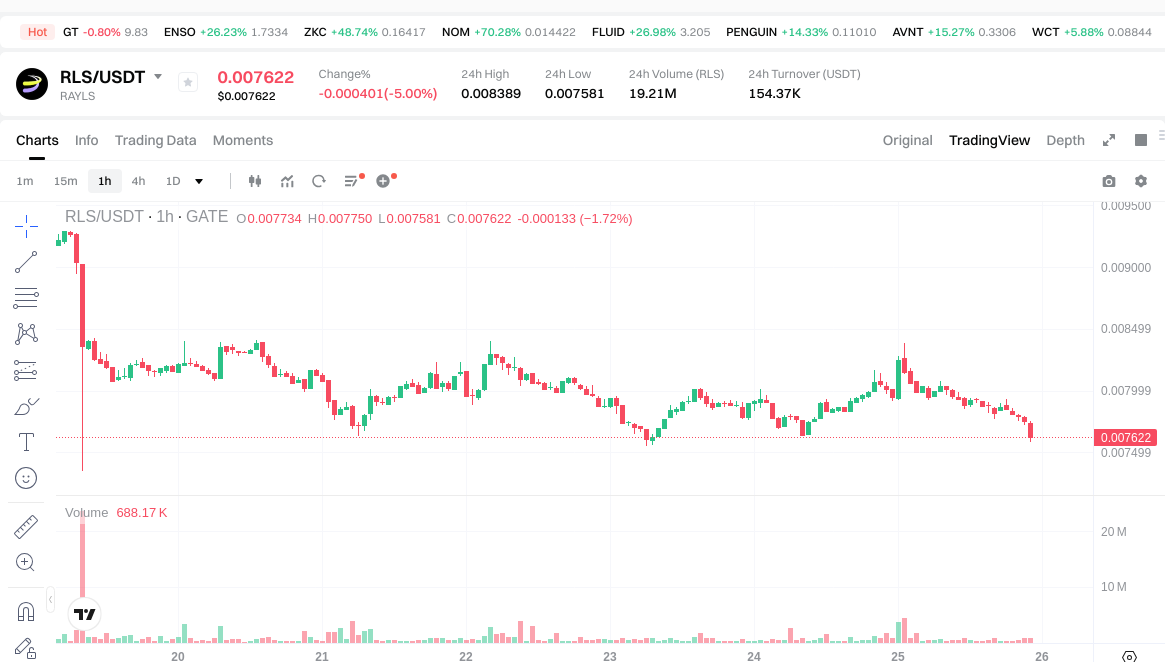
- January 2026: Market experienced significant correction, with price declining from historical high to $0.007353 on January 19, 2026, representing an approximate 87.8% decrease
RLS Current Market Situation
As of January 25, 2026, RAYLS (RLS) is trading at $0.007622, showing mixed short-term performance across different timeframes. The token has experienced a 2.05% decline over the past hour and a 5.16% decrease in the last 24 hours, with the 24-hour trading range spanning from $0.007581 to $0.008389.
The broader trend indicates more substantial price pressure, with a 17.74% drop over the past week and a notable 40.58% decline across the 30-day period. The current price remains close to its all-time low of $0.007353, recorded on January 19, 2026.
RLS maintains a market capitalization of approximately $11.43 million, with a circulating supply of 1.5 billion tokens out of a maximum supply of 10 billion tokens, representing a 15% circulation ratio. The token ranks at position 1134 in the cryptocurrency market, with a market dominance of 0.0024%. The 24-hour trading volume stands at $155,566.75, and the token is currently listed on 16 exchanges, with approximately 46,502 holders.
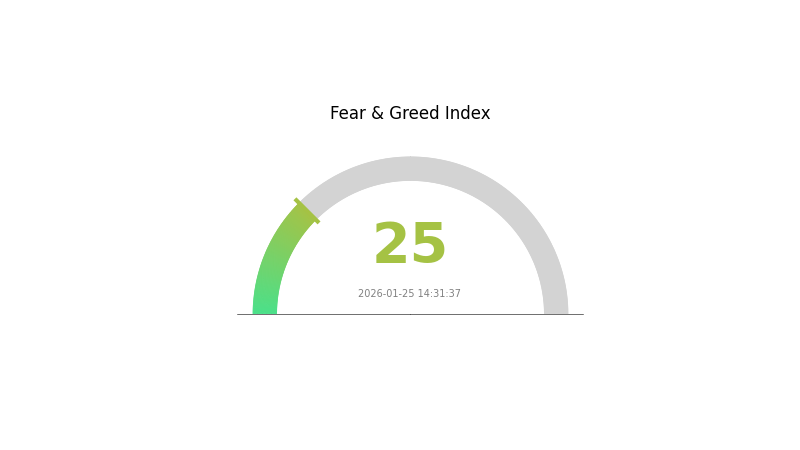
The fully diluted market capitalization reaches $76.22 million, indicating a market cap to FDV ratio of 15%. The cryptocurrency fear and greed index currently registers at 25, reflecting "Extreme Fear" sentiment in the broader market.
Click to view current RLS market price
RLS Market Sentiment Indicator
2026-01-25 Fear and Greed Index: 25 (Extreme Fear)
Click to view current Fear & Greed Index
The cryptocurrency market is currently experiencing extreme fear, with the Fear and Greed Index standing at 25. This level indicates significant market pessimism and heightened risk aversion among investors. During periods of extreme fear, market volatility tends to increase sharply, and asset prices often experience substantial corrections. However, historical data suggests that extreme fear periods can also present contrarian investment opportunities for experienced traders. Investors should exercise caution, conduct thorough research, and consider their risk tolerance before making trading decisions in such volatile market conditions.
RLS Holding Distribution
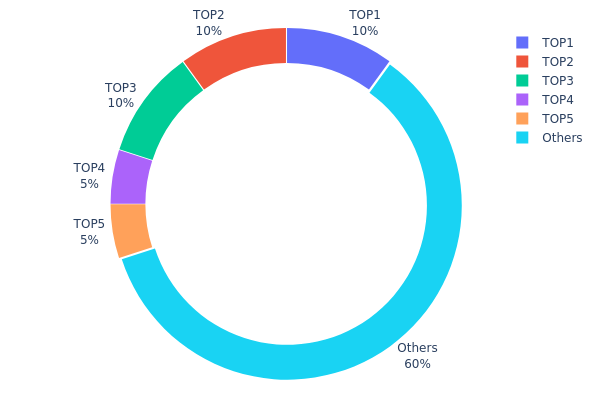
The holding distribution chart reflects the allocation of RLS tokens across different on-chain addresses, revealing the degree of concentration among major holders and the overall decentralization level of the token. According to the latest data as of January 25, 2026, the top three addresses collectively hold 3,000,000K RLS tokens, accounting for 30% of the total supply, with each address holding exactly 10% (1,000,000K tokens). The fourth and fifth largest addresses each hold 500,000K tokens, representing 5% of the supply respectively. The remaining 60% of tokens are distributed among other addresses, indicating a relatively moderate level of concentration.
From a market structure perspective, this distribution pattern presents a dual characteristic. While the top five addresses control 40% of the total supply, the majority of tokens (60%) remain dispersed among smaller holders, suggesting a reasonable balance between centralization and decentralization. This structure provides certain stability to the market, as large holders possess sufficient influence to support price stability during volatile periods. However, the identical holdings among the top three addresses (each at exactly 10%) may indicate strategic allocation by the project team or institutional investors, warranting close monitoring of their trading behavior.
The current holding distribution also implies potential risks of price manipulation. When a small number of addresses control significant token quantities, coordinated selling actions could trigger substantial price fluctuations. Nevertheless, the 60% distribution among other addresses serves as a buffer mechanism, helping to absorb potential selling pressure from large holders. Overall, RLS demonstrates a moderately concentrated on-chain structure that balances market liquidity with decentralization principles, though investors should remain vigilant regarding the movements of major holders.
Click to view current RLS Holding Distribution
| Top |
Address |
Holding Qty |
Holding (%) |
| 1 |
0xe2ff...292f5a |
1000000.00K |
10.00% |
| 2 |
0x3077...8cfb27 |
1000000.00K |
10.00% |
| 3 |
0x9873...ee5495 |
1000000.00K |
10.00% |
| 4 |
0xd562...ecdd2f |
500000.00K |
5.00% |
| 5 |
0x0142...6b716f |
500000.00K |
5.00% |
| - |
Others |
6000000.00K |
60% |
II. Core Factors Affecting RLS Future Price
Based on the current available information, the key factors that may influence RLS's future price performance include supply mechanisms, institutional dynamics, macroeconomic conditions, and technological developments. However, due to limited data availability regarding RLS specifically, a comprehensive analysis across all dimensions cannot be provided at this time.
Supply Mechanism
Detailed information about RLS's supply mechanism, including token distribution schedules, emission rates, or burning mechanisms, is not currently available in the provided materials. The historical correlation between supply changes and price movements cannot be established without specific data.
Institutional and Major Holder Dynamics
Information regarding institutional holdings, corporate adoption, or nation-state level policies specifically related to RLS is not available in the current dataset. These factors typically play significant roles in cryptocurrency valuation but cannot be assessed for RLS at this time.
Macroeconomic Environment
The broader macroeconomic context, including monetary policy shifts by major central banks, inflation dynamics, and geopolitical developments, generally impacts cryptocurrency markets. However, RLS's specific sensitivity or correlation to these macro factors has not been documented in the available materials.
Technology Development and Ecosystem Building
Detailed information about technological upgrades, protocol improvements, or ecosystem applications related to RLS is not present in the provided materials. The development roadmap and active dApp ecosystem, which are crucial for long-term value assessment, remain unclear based on current data availability.
III. 2026-2031 RLS Price Prediction
2026 Outlook
- Conservative prediction: $0.00624 - $0.00761
- Neutral prediction: $0.00761 (average price level)
- Optimistic prediction: up to $0.01019 (requires favorable market conditions and sustained buying pressure)
2027-2029 Outlook
- Market stage expectation: The token is anticipated to enter a gradual growth phase, with price volatility potentially moderating as the project develops its ecosystem and user base.
- Price range predictions:
- 2027: $0.00667 - $0.01014, representing approximately 16% growth from 2026 levels
- 2028: $0.00524 - $0.01323, with potential 24% increase in average price
- 2029: $0.00728 - $0.01604, showing 49% growth trajectory as adoption potentially accelerates
- Key catalysts: Platform development milestones, strategic partnerships, enhanced liquidity provision, and broader cryptocurrency market recovery cycles could drive price appreciation during this period.
2030-2031 Long-term Outlook
- Baseline scenario: $0.00905 - $0.01741 (assuming steady ecosystem growth and stable market conditions)
- Optimistic scenario: $0.01354 - $0.02303 (contingent upon successful protocol upgrades, significant user adoption, and favorable regulatory environment)
- Transformative scenario: potential to approach $0.02303 by 2031 (requires breakthrough technological implementation, mainstream adoption, and sustained bull market momentum, representing approximately 104% cumulative growth from 2026 baseline)
- January 25, 2026: RLS trading within the established range of $0.00624 - $0.01019 (early-stage price discovery phase)
| Year |
Predicted High Price |
Predicted Average Price |
Predicted Low Price |
Price Change |
| 2026 |
0.01019 |
0.00761 |
0.00624 |
0 |
| 2027 |
0.01014 |
0.0089 |
0.00667 |
16 |
| 2028 |
0.01323 |
0.00952 |
0.00524 |
24 |
| 2029 |
0.01604 |
0.01138 |
0.00728 |
49 |
| 2030 |
0.01741 |
0.01371 |
0.00905 |
79 |
| 2031 |
0.02303 |
0.01556 |
0.01354 |
104 |
IV. RLS Professional Investment Strategies and Risk Management
RLS Investment Methodology
(I) Long-term Holding Strategy
- Target Investors: Institutional investors and individual investors seeking exposure to compliant blockchain infrastructure connecting traditional finance with DeFi
- Operational Recommendations:
- Consider dollar-cost averaging to mitigate entry timing risk given the token's recent volatility (down 17.74% over 7 days and 40.58% over 30 days)
- Monitor the project's progress in onboarding regulated institutions and expanding its EVM Layer-1 ecosystem
- Utilize Gate Web3 Wallet for secure self-custody solutions with multi-signature protection
(II) Active Trading Strategy
- Technical Analysis Tools:
- Support and Resistance Levels: Monitor the 24-hour range between $0.007581 and $0.008389 for potential entry and exit points
- Volume Analysis: Track daily trading volume (currently $155,566.75) to identify liquidity trends and potential breakout signals
- Swing Trading Considerations:
- Consider the token's elevated volatility with price swings exceeding 5% in 24-hour periods
- Set stop-loss orders to manage downside risk given the token's proximity to its all-time low of $0.007353
RLS Risk Management Framework
(I) Asset Allocation Principles
- Conservative Investors: 1-3% of cryptocurrency portfolio allocation
- Aggressive Investors: 5-8% of cryptocurrency portfolio allocation
- Professional Investors: Up to 10% with active hedging strategies
(II) Risk Hedging Solutions
- Portfolio Diversification: Balance RLS exposure with established Layer-1 tokens and stablecoins to reduce ecosystem-specific risk
- Position Sizing: Limit individual position size based on the token's circulating supply of only 15% (1.5 billion out of 10 billion total supply)
(III) Secure Storage Solutions
- Hot Wallet Recommendation: Gate Web3 Wallet for active trading and DeFi interactions with built-in security features
- Cold Storage Solution: Hardware wallet storage for long-term holdings, ensuring private key security
- Security Precautions: Enable two-factor authentication, regularly update security protocols, and never share private keys or seed phrases
V. RLS Potential Risks and Challenges
RLS Market Risks
- High Volatility: The token has experienced significant price fluctuations, declining 40.58% over the past 30 days from recent levels
- Limited Liquidity: With a daily trading volume of approximately $155,567 and market cap of $11.43 million, the token may face liquidity constraints during market stress
- Low Circulation Rate: Only 15% of total supply is currently circulating, creating potential dilution risk as additional tokens enter the market
RLS Regulatory Risks
- Compliance Uncertainty: While Rayls emphasizes regulatory compliance, the evolving global regulatory landscape for tokenized traditional assets may impact operations
- Institutional Adoption Barriers: Banks and regulated institutions may face jurisdictional restrictions when interacting with blockchain-based private chains
- Cross-border Regulatory Complexity: The project's goal of connecting traditional finance with DeFi across multiple jurisdictions introduces compliance challenges
RLS Technical Risks
- Smart Contract Vulnerabilities: As an ERC-20 token on Ethereum (contract address: 0xb5f7b021a78f470d31d762c1dda05ea549904fbd), the project is exposed to potential smart contract exploits
- Scalability Concerns: The dual-architecture combining public EVM Layer-1 with private chains requires robust technical infrastructure to maintain performance
- Interoperability Challenges: Achieving seamless interaction between regulated private chains and open DeFi markets presents ongoing technical complexity
VI. Conclusion and Action Recommendations
RLS Investment Value Assessment
Rayls presents an innovative approach to bridging traditional finance and DeFi through its compliant, privacy-preserving blockchain infrastructure. The project targets a growing market opportunity in institutional asset tokenization with quantum-secure technology and predictable fee structures. However, the token faces significant near-term challenges, including substantial price depreciation (down 40.58% in 30 days), limited circulating supply (15%), and relatively low liquidity ($155,567 daily volume). Long-term value depends on successful institutional adoption, regulatory acceptance, and technical execution of its dual-chain architecture. Current market conditions suggest elevated risk for short-term positions.
RLS Investment Recommendations
✅ Beginners: Consider waiting for greater price stability and proven institutional adoption before initiating positions; if investing, limit exposure to less than 2% of total cryptocurrency portfolio
✅ Experienced Investors: Employ dollar-cost averaging with strict position limits (3-5% of crypto portfolio) and closely monitor institutional partnership announcements and regulatory developments
✅ Institutional Investors: Conduct thorough due diligence on compliance framework, assess pilot program results with regulated entities, and consider strategic small-scale allocation (up to 5%) with active risk management
RLS Trading Participation Methods
- Spot Trading: Purchase RLS tokens on Gate.com with limit orders to optimize entry prices given current volatility
- Secure Storage: Transfer holdings to Gate Web3 Wallet for self-custody with enhanced security features
- Portfolio Monitoring: Track project developments including institutional partnerships, regulatory approvals, and technical milestones that may impact token value
Cryptocurrency investment carries extremely high risk, and this article does not constitute investment advice. Investors should make prudent decisions based on their own risk tolerance and are advised to consult professional financial advisors. Never invest more than you can afford to lose.
FAQ
What is the historical price trend of RLS and what is the current price?
RLS has demonstrated strong growth momentum since launch, with price appreciation driven by increasing adoption and market demand. Currently trading at dynamic levels reflecting market conditions, RLS continues to build ecosystem value through community engagement and development initiatives.
What are the main factors affecting RLS price?
RLS price is influenced by market demand, trading volume, network activity, investor sentiment, regulatory developments, and macroeconomic conditions. Strong community support and technology updates typically drive positive price movements.
How to conduct RLS price prediction? What analysis methods are available?
Analyze RLS through technical analysis(examining charts and trends), fundamental analysis(evaluating project metrics and adoption),on-chain analysis(tracking transaction volume and holder distribution),and market sentiment analysis. Combine these methods to assess potential price movements.
What are the risks and limitations of RLS price predictions?
RLS price predictions face limitations including market volatility, limited historical data, sudden regulatory changes, and unpredictable macroeconomic factors. Predictions rely on technical analysis and on-chain metrics, which may not capture all market dynamics. Past performance doesn't guarantee future results.
RLS demonstrates strong market positioning with competitive price momentum. Compared to similar utility tokens, RLS shows resilience during market cycles and benefits from its growing ecosystem adoption, resulting in outperformance in trading volume and liquidity metrics among peers.
What are professional analysts' expectations for RLS future price?
Professional analysts project RLS could experience significant growth driven by increasing adoption and market demand. Many experts anticipate price appreciation as the ecosystem expands and utility strengthens over the coming years.
* The information is not intended to be and does not constitute financial advice or any other recommendation of any sort offered or endorsed by Gate.