This comprehensive analysis examines RWA's price trajectory from 2026 through 2031, providing professional forecasts for the tokenized securities market. RWA, positioning itself as the world's first tokenized stock trading platform, has achieved significant milestones including $2.2 billion in tokenized assets and a $100 million lending facility. The article analyzes historical price patterns, market supply-demand dynamics, and macroeconomic factors influencing RWA's future value. Key sections cover current market sentiment, institutional adoption trends, ecosystem development, and technological advancement. The analysis presents conservative, neutral, and optimistic price scenarios while offering actionable investment strategies for different investor profiles. Risk management frameworks and regulatory considerations are provided to guide informed decision-making on Gate and other exchanges.
Introduction: RWA's Market Position and Investment Value
Allo (RWA), positioning itself as the world's first tokenized stock trading platform, has emerged as an innovative player in the real-world asset (RWA) tokenization space since its launch in 2025. The project has achieved notable milestones including tokenizing $2.2 billion in real-world assets, staking $50 million in BTC, and launching a $100 million lending facility. As of January 29, 2026, RWA maintains a market capitalization of approximately $5.28 million, with a circulating supply of 1.8 billion tokens and a current price around $0.002936. This asset, operating on the BSC blockchain, is playing an increasingly important role in democratizing access to tokenized securities through 24/7 trading, low fees, and instant settlement capabilities.
This article provides a comprehensive analysis of RWA's price trajectory from 2026 through 2031, examining historical patterns, market supply and demand dynamics, ecosystem development, and macroeconomic factors to offer investors professional price forecasts and practical investment strategies.
I. RWA Price History Review and Market Status
RWA Historical Price Evolution Trajectory
- 2025: Token launched in May, reaching an all-time high of $0.01829 on May 24, demonstrating initial market interest in the tokenized stock trading platform
- 2025: Price experienced significant correction during December, declining to an all-time low of $0.002718 on December 18, reflecting broader market adjustments
RWA Current Market Situation
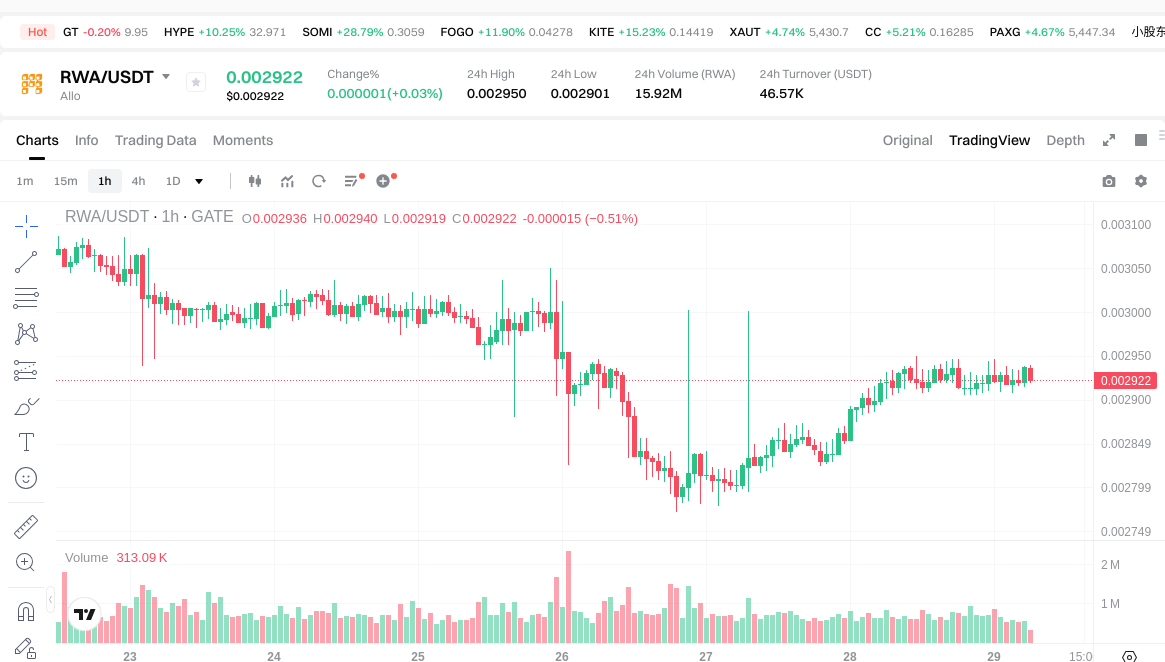
As of January 29, 2026, RWA is trading at $0.002936, showing a modest 24-hour gain of 0.34%. The token has demonstrated mixed short-term performance, with a 1-hour decline of 0.1% and a 7-day decrease of 4.09%. Over the past 30 days, RWA has declined by 1.05%.
The project maintains a market capitalization of approximately $5.28 million, with 1.8 billion tokens in circulation representing 18% of the total supply. The fully diluted market cap stands at $29.36 million based on a maximum supply of 10 billion tokens. Current 24-hour trading volume reaches $46,395.48, indicating moderate market activity.
RWA operates on the BEP-20 standard and has attracted 17,652 holders across its network. The token is listed on 15 exchanges, with its market dominance at 0.00092%. The current price represents an 83.95% decline from its historical peak, while remaining 8.02% above its all-time low.
Click to view current RWA market price
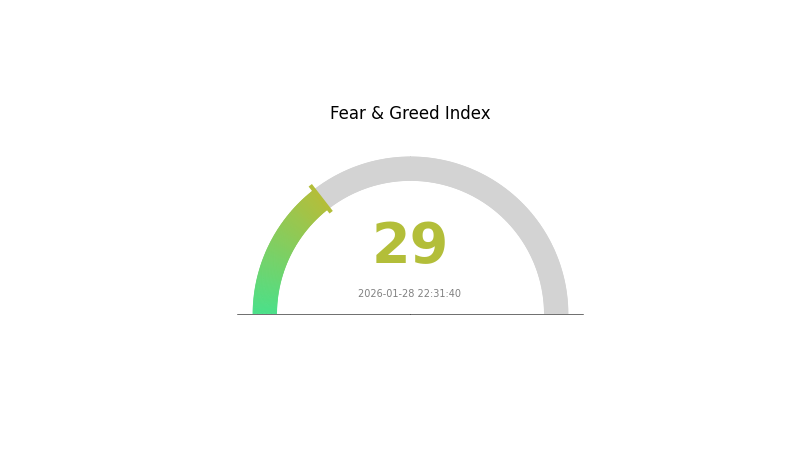
RWA Market Sentiment Indicator
2026-01-28 Fear and Greed Index: 29 (Fear)
Click to view current Fear & Greed Index
The RWA market is currently experiencing a fear sentiment with an index reading of 29, indicating heightened market anxiety and risk aversion among investors. This lower index level suggests pessimistic market conditions, where traders are adopting defensive positions and reducing exposure. Such fear-driven markets often present contrarian opportunities for long-term investors, as panic selling may create attractive entry points. Market participants should exercise caution while monitoring key support levels and awaiting signs of sentiment reversal to confirm potential bottom formations.
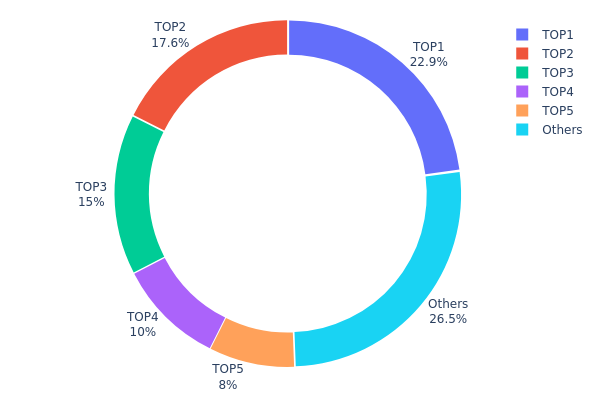
RWA Holdings Distribution
The holdings distribution chart represents the concentration of RWA tokens across different wallet addresses, revealing the degree of token centralization and the overall decentralization level of the project. This metric serves as a critical indicator for assessing market structure stability and potential manipulation risks, as highly concentrated holdings may lead to increased price volatility and vulnerability to coordinated selling pressure.
According to the current data, the top five addresses collectively hold 72.49% of the total RWA supply, indicating a relatively high concentration level. The largest holder controls 2.29 million tokens (22.89%), while the second and third-largest addresses hold 17.60% and 15.00% respectively. The remaining category accounts for only 26.51% of the total supply, demonstrating that a significant portion of tokens is controlled by a small number of entities. This concentration pattern suggests potential centralization risks that could impact market dynamics.
Such a concentrated distribution structure may amplify price volatility, as large holders possess substantial market influence and their trading decisions could trigger significant price movements. From a positive perspective, if these major holders represent project team members, institutional investors, or ecosystem partners with long-term commitments, this concentration could provide price stability. However, from a risk management standpoint, this distribution pattern increases the possibility of coordinated market manipulation and reduces the project's decentralization characteristics, potentially affecting investor confidence in the token's long-term value proposition.
Click to view current RWA Holdings Distribution
| Top |
Address |
Holding Qty |
Holding (%) |
| 1 |
0x7106...a0311a |
2290000.00K |
22.89% |
| 2 |
0x1351...53b950 |
1760000.00K |
17.60% |
| 3 |
0xc056...2719e3 |
1500000.00K |
15.00% |
| 4 |
0xfdc9...30353f |
1000000.00K |
10.00% |
| 5 |
0x69e7...f5e5f4 |
800000.00K |
8.00% |
| - |
Others |
2650000.00K |
26.51% |
II. Core Factors Influencing RWA's Future Price
Supply Mechanisms
- Tokenization Scale: RWA tokenization converts real-world assets into blockchain-based digital tokens, with market scale directly impacting supply dynamics. According to RWA.xyz data, the total market value of RWA exceeded $12.7 billion, with projections suggesting continued growth as more asset classes undergo tokenization.
- Historical Patterns: Since May 2023, the RWA sector experienced substantial expansion, with Total Value Locked (TVL) growing approximately 6,000% year-over-year. The number of token holders steadily increased to over 45,000, nearly doubling compared to previous periods.
- Current Impact: Market forecasts indicate RWA's total market value could reach $16 trillion by 2030. This expansion is driven by traditional financial asset tokenization trends and investor demand for enhanced liquidity and transparency.
Institutional and Major Holder Dynamics
- Institutional Holdings: Major financial institutions including BlackRock, Ondo Finance, and Superstate have actively entered the RWA space. BlackRock launched its first blockchain-based fund, while Ondo Finance established presence in the stablecoin market with its USDY token. Superstate successfully introduced its first tokenized Treasury fund, attracting substantial capital inflows.
- Corporate Adoption: Franklin Templeton's BENJI fund achieved $776 million in assets under management, demonstrating growing institutional acceptance. The collaboration between Ant Digital Technology and Longshine Technology in charging station asset tokenization represents practical RWA application in the new energy sector.
- Regulatory Environment: Different jurisdictions maintain varying regulatory approaches toward RWA. Regions such as Switzerland and Singapore offer relatively accommodating regulatory environments with clear guidance and sandbox frameworks. The U.S. regulatory landscape involves multiple agencies including the SEC and CFTC, presenting more complex compliance requirements.
Macroeconomic Environment
- Monetary Policy Impact: Global financial market uncertainty drives investors toward diversified investment portfolios. RWA provides alternative access to traditional markets while maintaining cryptocurrency market flexibility, attracting both institutional and individual investors.
- Inflation Hedging Attributes: RWA's integration with traditional assets offers potential inflation protection. Real estate and commodity tokenization projects enable investors to participate in markets typically offering inflation hedging characteristics through lower investment thresholds.
- Geopolitical Factors: Cross-border regulatory coordination and capital flow management remain critical considerations. China's policy restricts domestic tokenization, while cross-border capital flows must comply with foreign exchange regulations. Data security and privacy protection in cross-border contexts present core challenges.
Technological Development and Ecosystem Building
- Blockchain Technology Advancement: Technological progress, particularly innovations in blockchain and smart contracts, continues driving RWA development. Enhanced transaction transparency and efficiency, combined with reduced costs, increase RWA's market appeal.
- DeFi Platform Integration: The rise of decentralized finance (DeFi) platforms provides new application scenarios for RWA, including lending, staking, and yield generation. DeFi's core objective of creating permissionless, transparent, and efficient financial systems aligns with RWA's capabilities.
- Ecosystem Applications: Key projects such as Centrifuge, Maple Finance, and Ondo Finance play significant roles in advancing RWA market development. These platforms provide financing channels for real-world assets through decentralized infrastructure, addressing traditional financial pain points including liquidity constraints and financing difficulties. Their collaboration and competition drive continuous innovation in product development and user experience optimization.
III. 2026-2031 RWA Price Prediction
2026 Outlook
- Conservative prediction: $0.00283
- Neutral prediction: $0.00292
- Optimistic prediction: $0.0033
2027-2029 Mid-term Outlook
- Market stage expectation: The token is anticipated to enter a gradual growth phase, with increasing adoption and ecosystem development potentially driving upward momentum.
- Price range predictions:
- 2027: $0.00258 - $0.00448
- 2028: $0.00254 - $0.0047
- 2029: $0.00255 - $0.00514
- Key catalysts: Market expansion, technological advancements, and broader adoption within the real-world asset tokenization sector may serve as primary drivers.
2030-2031 Long-term Outlook
- Baseline scenario: $0.00437 - $0.00634 (assuming steady market conditions and continued project development)
- Optimistic scenario: $0.00507 - $0.00695 (contingent upon accelerated adoption and favorable regulatory developments)
- Transformative scenario: Potential growth of up to 88% by 2031 compared to 2026 levels (under conditions of significant market breakthrough and widespread institutional adoption)
- 2026-01-29: RWA trading at approximately $0.00292 (baseline market conditions)
| Year |
Predicted High Price |
Predicted Average Price |
Predicted Low Price |
Price Change |
| 2026 |
0.0033 |
0.00292 |
0.00283 |
0 |
| 2027 |
0.00448 |
0.00311 |
0.00258 |
6 |
| 2028 |
0.0047 |
0.00379 |
0.00254 |
29 |
| 2029 |
0.00514 |
0.00425 |
0.00255 |
45 |
| 2030 |
0.00634 |
0.00469 |
0.00437 |
60 |
| 2031 |
0.00695 |
0.00552 |
0.00507 |
88 |
IV. RWA Professional Investment Strategy and Risk Management
RWA Investment Methodology
(1) Long-term Holding Strategy
- Suitable for: Investors focused on the tokenized securities market and real-world asset adoption
- Operational Recommendations:
- Consider accumulating RWA tokens during market consolidation phases, particularly when trading near support levels
- Monitor the project's progress in expanding its tokenized stock platform and lending services
- Utilize secure storage solutions such as Gate Web3 Wallet for long-term holding
(2) Active Trading Strategy
- Technical Analysis Tools:
- Volume Analysis: Monitor the 24-hour trading volume ($46,395) relative to market capitalization to identify liquidity patterns
- Price Range Trading: Track the recent 24-hour range between $0.002901 and $0.00295 for short-term entry and exit points
- Swing Trading Considerations:
- Pay attention to the 7-day trend showing -4.09% movement for potential reversal opportunities
- Set appropriate stop-loss levels considering the token's volatility and relatively low liquidity
RWA Risk Management Framework
(1) Asset Allocation Principles
- Conservative Investors: 1-3% of crypto portfolio allocation
- Aggressive Investors: 5-8% of crypto portfolio allocation
- Professional Investors: Up to 10% with active monitoring and rebalancing strategies
(2) Risk Hedging Solutions
- Portfolio Diversification: Combine RWA holdings with established cryptocurrencies and stablecoins to reduce concentration risk
- Position Sizing: Limit initial exposure and scale positions based on project development milestones and market conditions
(3) Secure Storage Solutions
- Multi-Signature Wallet Recommendation: Gate Web3 Wallet offers enhanced security features for BEP-20 tokens
- Hardware Wallet Solution: Consider cold storage options for long-term holdings to minimize online exposure risks
- Security Precautions: Always verify contract addresses (0x9c8b5ca345247396bdfac0395638ca9045c6586e on BSC), enable two-factor authentication, and regularly update security protocols
V. RWA Potential Risks and Challenges
RWA Market Risks
- Liquidity Risk: With a current 24-hour trading volume of approximately $46,000 and market cap of $5.28 million, the token may experience significant price slippage during larger trades
- Volatility Risk: Recent price movements show notable fluctuations, with a 7-day change of -4.09%, indicating potential for rapid price changes
- Market Adoption Risk: As an emerging platform in the tokenized securities space, broader market acceptance and user adoption remain uncertain factors
RWA Regulatory Risks
- Securities Classification: Tokenized stocks and real-world assets face evolving regulatory frameworks across different jurisdictions, which could impact platform operations
- Compliance Requirements: Changes in financial regulations regarding digital asset securities may affect the project's business model and market access
- Cross-border Restrictions: International trading of tokenized securities may face varying legal limitations depending on regional regulatory approaches
RWA Technical Risks
- Smart Contract Vulnerabilities: As a BEP-20 token with complex financial operations, potential smart contract bugs or exploits could pose security concerns
- Platform Dependency: The token's utility is closely tied to the Allo platform's functionality and operational stability
- Integration Challenges: Technical issues in bridging traditional financial assets with blockchain infrastructure may impact service delivery
VI. Conclusion and Action Recommendations
RWA Investment Value Assessment
RWA represents an innovative approach to democratizing access to tokenized securities through blockchain technology. The project has demonstrated tangible progress with $2.2 billion in tokenized real-world assets, $50 million in BTC staking, and a $100 million lending facility. However, with only 18% of total supply currently circulating and relatively modest trading volumes, the token faces both growth opportunities and liquidity challenges. Long-term value depends on successful execution of the 24/7 tokenized stock trading platform and expanding regulatory acceptance of such innovations.
RWA Investment Recommendations
✅ Beginners: Start with minimal allocation (1-2% of crypto portfolio) to gain exposure while learning about the tokenized securities ecosystem. Focus on understanding the project's fundamentals before increasing position size
✅ Experienced Investors: Consider a moderate allocation (3-5%) with regular monitoring of platform development milestones, trading volume trends, and regulatory developments in the RWA sector
✅ Institutional Investors: Conduct comprehensive due diligence on the platform's legal structure, custody solutions, and compliance frameworks before considering larger allocations or strategic partnerships
RWA Trading Participation Methods
- Spot Trading: Access RWA through Gate.com and other supporting exchanges for direct token ownership and participation in the ecosystem
- Dollar-Cost Averaging: Implement regular periodic purchases to build positions while mitigating timing risk in this emerging market
- Active Monitoring: Track the project's progress through official channels (https://allo.xyz/ and https://x.com/allo_xyz) to stay informed about platform updates and market developments
Cryptocurrency investments carry extremely high risks, and this article does not constitute investment advice. Investors should make prudent decisions based on their own risk tolerance and are advised to consult professional financial advisors. Never invest more than you can afford to lose.
FAQ
What is RWA (Real World Assets)? How does it differ from traditional crypto assets?
RWA represents real-world assets like real estate and art tokenized on blockchain. Unlike traditional crypto assets, RWA bridges physical assets with digital trading, enabling fractional ownership and liquidity of tangible value.
What are the main factors affecting RWA price?
RWA price is primarily influenced by overall cryptocurrency market sentiment, Bitcoin price fluctuations, and market liquidity. Changes in underlying assets and regulatory policies also significantly impact RWA token valuation.
Analyze futures open interest, funding rates, and liquidation data to predict RWA price trends. Use technical analysis software and cryptocurrency platforms to monitor market signals, leverage imbalances, and cascade effects for accurate forecasting.
RWA Price Prediction Risks and Limitations
RWA price predictions face market volatility, regulatory uncertainty, and complex compliance challenges. Macro-economic shifts, industry trends, and asset quality variations affect accuracy. Additionally, limited historical data, emerging regulatory frameworks, and technological uncertainties create prediction challenges for price forecasting models.
What are the main RWA projects currently? How is their price performance?
Main RWA projects include Lanxin Technology (renewable energy charging piles), Xieqin Energy (photovoltaic assets), and Xunying Group (battery swap cabinets). Prices fluctuate based on asset performance and market demand. BlackRock's BUIDL fund represents US investment-focused RWA. These projects show positive momentum, with prices generally tracking underlying asset values and cash flow stability.
What are the future development prospects and price trend expectations for the RWA market?
The RWA market is projected to grow significantly, reaching over 16 trillion USD by 2030 with a compound annual growth rate of 47%. Price trends are expected to maintain an upward trajectory driven by increased institutional adoption and tokenized asset expansion.
* The information is not intended to be and does not constitute financial advice or any other recommendation of any sort offered or endorsed by Gate.