This comprehensive analysis examines SAROS's market position on the Solana blockchain, currently trading at $0.001925 with a $5.05 million market cap as of January 2026. The article provides detailed price forecasts spanning 2026-2031, projecting potential growth from conservative ($0.00137-$0.00193) to optimistic scenarios ($0.00411-$0.00443), based on ecosystem development and adoption trends. Core sections evaluate supply dynamics, institutional involvement, and macroeconomic factors shaping token value. Professional investment strategies are presented for different investor profiles, including long-term holding and active trading approaches via Gate exchange. The analysis addresses critical risks including high volatility, limited liquidity, regulatory uncertainties, and smart contract vulnerabilities. Tailored recommendations guide beginners, experienced, and institutional investors through portfolio allocation strategies and security practices. Comprehensive risk management framework and FAQ section equ
Introduction: SAROS Market Position and Investment Value
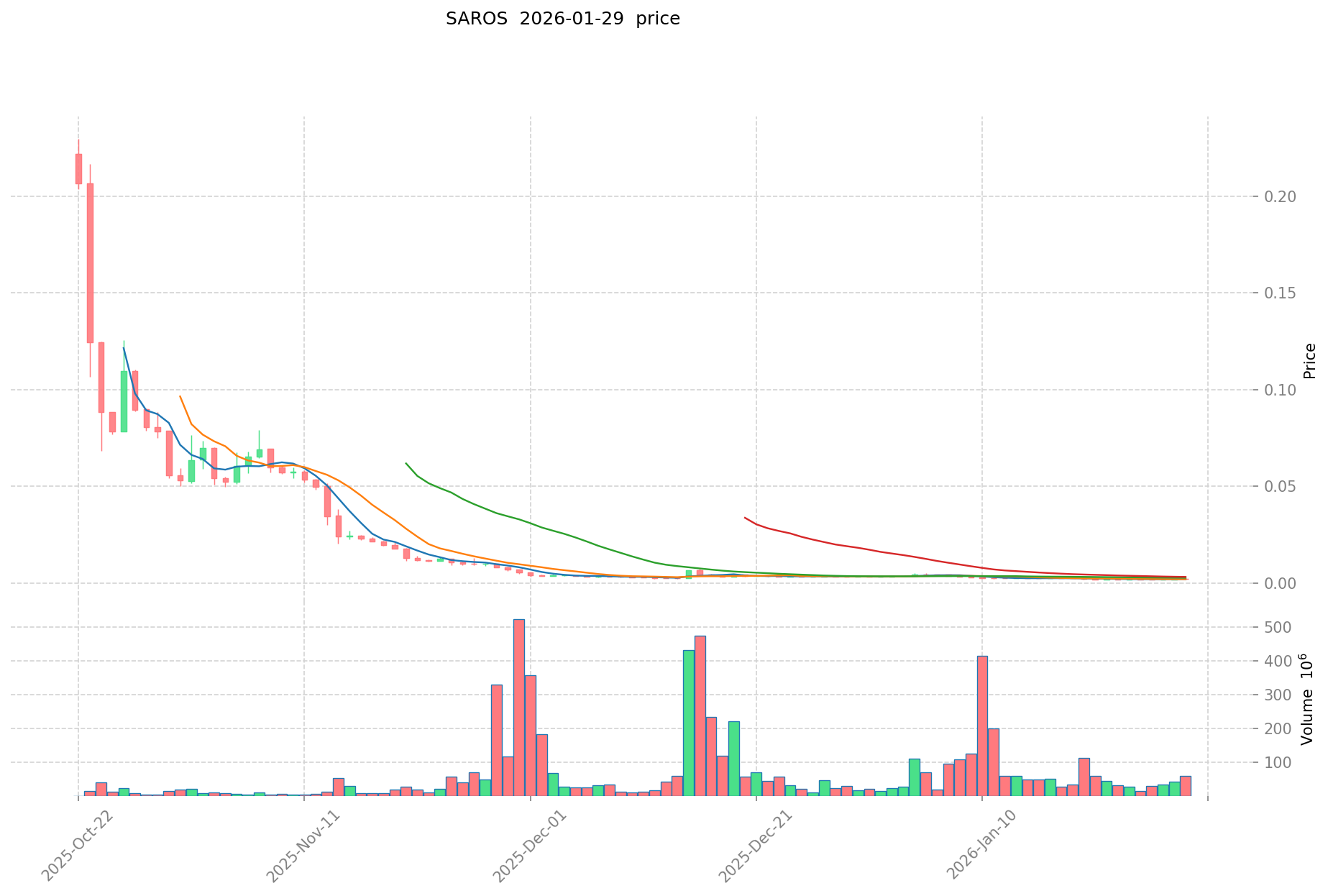
Saros (SAROS), positioned as the ultimate application designed to redefine the Web3 experience on Solana, has been evolving strategically since its launch in 2025. As of January 29, 2026, SAROS maintains a market capitalization of approximately $5.05 million with a circulating supply of about 2.62 billion tokens, trading at around $0.001925. This asset, recognized for its comprehensive integration of mobile consumer applications and functionalities spanning ID, DePIN, and payment solutions within the Solana ecosystem, is playing an increasingly important role in the Web3 infrastructure sector.
This article will comprehensively analyze SAROS price trends from 2026 through 2031, combining historical patterns, market supply-demand dynamics, ecosystem development, and macroeconomic conditions to provide investors with professional price forecasts and practical investment strategies.
I. SAROS Price History Review and Market Status
SAROS Historical Price Evolution Trajectory
- 2024: Project launched on Solana ecosystem with initial price of $0.01, experienced significant volatility with price reaching a low of $0.001029 on August 5
- 2025: Market showed strong momentum in September, with price reaching $0.429 on September 14
- 2026: Price exhibited correction trend, declining from previous levels to current trading range around $0.001925
SAROS Current Market Situation
As of January 29, 2026, SAROS is trading at $0.001925, with a 24-hour trading volume of $110,468.09. The token has experienced a 13.32% decrease over the past 24 hours, trading within a range of $0.001911 to $0.002284.
The circulating supply stands at 2.62 billion tokens, representing 26.25% of the total supply of 10 billion tokens. The current market capitalization is approximately $5.05 million, with a fully diluted market cap of $19.25 million. SAROS holds a market dominance of 0.00061% and is ranked at position 1525.
Over different time periods, SAROS has shown varied performance: a 0.41% decline in the past hour, a 2.18% decrease over 7 days, a 40.57% drop over 30 days, and a 77.58% decline over the past year. The token is currently listed on 18 exchanges and has 11,602 holders.
The market sentiment index currently registers at 26, indicating a "Fear" level in the cryptocurrency market.
Click to view current SAROS market price
SAROS Market Sentiment Index
2026-01-29 Fear and Greed Index: 26 (Fear)
Click to view the current Fear & Greed Index
The cryptocurrency market is currently experiencing a fear-driven sentiment with an index reading of 26. This indicates heightened risk aversion among investors, reflecting concerns about market volatility and potential downside risks. During such periods, market participants typically adopt more cautious positions, reducing exposure to high-risk assets. This sentiment presents both challenges and opportunities—while it may signal near-term pressure, fear-driven markets often create buying opportunities for long-term investors with a higher risk tolerance. Monitor key support levels and market catalysts closely during this phase.

SAROS Token Holder Distribution
The token holder distribution chart serves as a critical metric for evaluating the decentralization level and ownership structure of a cryptocurrency project. By analyzing the concentration of tokens across different addresses, investors can assess potential market manipulation risks, liquidity characteristics, and the overall health of the token's ecosystem. This data provides essential insights into whether a project maintains a balanced distribution or exhibits excessive centralization that could impact price stability.
According to the current on-chain data, SAROS demonstrates a moderately concentrated holder structure. The top five addresses collectively control approximately 48.07% of the total token supply, with the largest holder possessing 14.11% (348,563.42K tokens). The second and third largest addresses hold 10.94% and 9.80% respectively, while the remaining addresses classified as "Others" account for 51.93% of the supply. This distribution pattern suggests that while no single entity dominates the token supply, a relatively small group of major holders maintains significant influence over the market.
From a market structure perspective, this level of concentration presents both opportunities and risks. The presence of several large holders could potentially lead to increased price volatility if these addresses decide to execute significant sell orders simultaneously. However, the fact that the majority (51.93%) remains distributed among smaller holders indicates a reasonable degree of decentralization, which helps maintain market liquidity and reduces the risk of complete market manipulation by any single entity. The current distribution structure suggests that SAROS has achieved a moderate balance between whale influence and community participation, though investors should remain cognizant of the substantial holdings concentrated in the top addresses when making investment decisions.
Click to view the current SAROS Holder Distribution

| Top |
Address |
Holding Qty |
Holding (%) |
| 1 |
GMHPeJ...k7fPGc |
348563.42K |
14.11% |
| 2 |
9Zifro...bPoL2x |
270392.35K |
10.94% |
| 3 |
8TWNcX...YxCJEA |
242059.86K |
9.80% |
| 4 |
FQEmsV...uW1M9f |
210000.01K |
8.50% |
| 5 |
2Ejnns...z2Ps3e |
116711.15K |
4.72% |
| - |
Others |
1282269.53K |
51.93% |
II. Core Factors Influencing SAROS's Future Price
Supply Mechanism
- Blockchain Infrastructure: SAROS operates on the Solana blockchain, which is known for its high-speed transactions and low transaction costs. This technical foundation may influence the token's supply efficiency and network scalability.
- Market Demand Dynamics: The future price trajectory of SAROS appears to be closely tied to overall market demand patterns and the adoption rate of blockchain technology in various sectors.
Institutional and Major Holder Dynamics
- Enterprise Adoption: Analysis suggests that technological advancements and competitive positioning within the market play significant roles in shaping institutional interest in SAROS.
- Market Competition: The evolving landscape of blockchain projects and competing platforms may affect institutional allocation decisions and large-holder strategies.
Macroeconomic Environment
- Regulatory Framework: Regulatory changes in the cryptocurrency sector remain a key factor that analysts monitor closely, as policy shifts can create both opportunities and constraints for token price movement.
- Market Sentiment: Broader market conditions and investor sentiment toward blockchain-based assets continue to influence SAROS's price potential.
Technology Development and Ecosystem Building
- Solana Network Performance: The underlying Solana blockchain's characteristics—including transaction speed and cost efficiency—provide technical advantages that may support SAROS's ecosystem growth.
- Market Positioning: SAROS's position within the broader blockchain ecosystem and its ability to differentiate itself through technological innovation represent important factors for future price development.
III. 2026-2031 SAROS Price Prediction
2026 Outlook
- Conservative Forecast: $0.00137 - $0.00193
- Neutral Forecast: $0.00193 (average price level)
- Optimistic Forecast: Up to $0.0025 (requires favorable market conditions and increased adoption)
2027-2029 Mid-term Outlook
- Market Stage Expectation: The token is anticipated to enter a gradual growth phase, with increasing market recognition and ecosystem development potentially driving upward momentum.
- Price Range Predictions:
- 2027: $0.00193 - $0.00279, representing approximately 15% growth from 2026 baseline
- 2028: $0.00238 - $0.00348, showing continued expansion with 29% cumulative growth potential
- 2029: $0.00173 - $0.00353, with wider volatility range reflecting market maturation and an average price target of $0.00299
- Key Catalysts: Ecosystem expansion, technical developments, broader cryptocurrency market sentiment, and potential partnership announcements could serve as primary drivers for price appreciation during this period.
2030-2031 Long-term Outlook
- Baseline Scenario: $0.00313 - $0.00443 in 2030 (assuming steady ecosystem growth and stable market conditions), with average price stabilizing around $0.00326
- Optimistic Scenario: $0.00308 - $0.00411 in 2031 (contingent on successful platform upgrades and increased user adoption), targeting an average of $0.00384
- Growth Trajectory: The projections indicate a potential 99% cumulative increase by 2031 compared to 2026 baseline levels, suggesting a maturing project with expanding utility and market presence over the five-year forecast period.
| Year |
Predicted High Price |
Predicted Average Price |
Predicted Low Price |
Price Change |
| 2026 |
0.0025 |
0.00193 |
0.00137 |
0 |
| 2027 |
0.00279 |
0.00221 |
0.00193 |
15 |
| 2028 |
0.00348 |
0.0025 |
0.00238 |
29 |
| 2029 |
0.00353 |
0.00299 |
0.00173 |
55 |
| 2030 |
0.00443 |
0.00326 |
0.00313 |
69 |
| 2031 |
0.00411 |
0.00384 |
0.00308 |
99 |
IV. SAROS Professional Investment Strategy and Risk Management
SAROS Investment Methodology
(1) Long-term Holding Strategy
- Target Investors: Investors seeking exposure to Solana ecosystem DeFi infrastructure with a focus on mobile-first Web3 applications
- Operational Recommendations:
- Consider accumulating positions during market corrections, given the token's significant decline from its all-time high of $0.429
- Monitor the development progress of Saros's comprehensive product roadmap, including ID, DePIN, and payment functionalities
- Utilize secure storage solutions like Gate Web3 Wallet for long-term holdings
(2) Active Trading Strategy
- Technical Analysis Tools:
- Price Range Monitoring: Track the 24-hour range between $0.001911 and $0.002284 to identify short-term support and resistance levels
- Volume Analysis: Monitor the 24-hour trading volume of $110,468 to gauge market interest and liquidity conditions
- Swing Trading Considerations:
- Be mindful of the token's high volatility, as evidenced by a 13.32% decline in the past 24 hours
- Consider the relatively low circulating supply of 26.25% when planning entry and exit points
SAROS Risk Management Framework
(1) Asset Allocation Principles
- Conservative Investors: 1-2% of crypto portfolio allocation
- Aggressive Investors: 3-5% of crypto portfolio allocation
- Professional Investors: Up to 7% with active monitoring and stop-loss mechanisms
(2) Risk Hedging Approaches
- Portfolio Diversification: Balance SAROS holdings with other Solana ecosystem tokens to spread risk
- Position Sizing: Limit individual position size based on the token's market capitalization of approximately $5 million
(3) Security Storage Solutions
- Mobile Wallet Recommendation: Gate Web3 Wallet for convenient access and enhanced security features
- Multi-Signature Setup: Consider implementing multi-signature arrangements for larger holdings
- Security Precautions: Never share private keys, enable two-factor authentication, and regularly verify contract addresses on Solana Explorer
V. SAROS Potential Risks and Challenges
SAROS Market Risks
- High Volatility: The token has experienced a 77.58% decline over the past year, indicating significant price instability
- Limited Liquidity: With a relatively modest 24-hour trading volume of $110,468, large trades may face slippage challenges
- Low Market Dominance: SAROS holds only 0.00061% market share, making it susceptible to broader market movements
SAROS Regulatory Risks
- DeFi Regulatory Uncertainty: As a DEX and comprehensive DeFi application, Saros may face evolving regulatory scrutiny in various jurisdictions
- Payment Function Compliance: The planned payment functionalities could attract regulatory attention regarding financial services licensing
- Cross-Border Transaction Oversight: DePIN and payment features may encounter compliance requirements in different markets
SAROS Technical Risks
- Smart Contract Vulnerabilities: As with all DeFi protocols, potential bugs or exploits in smart contracts could impact user funds
- Solana Network Dependency: The project's reliance on the Solana blockchain means it inherits any technical issues or network outages affecting Solana
- Development Execution Risk: The ambitious roadmap spanning DEX, ID, DePIN, and payment systems presents significant technical and operational challenges
VI. Conclusion and Action Recommendations
SAROS Investment Value Assessment
SAROS presents an interesting proposition as a comprehensive mobile-first Web3 application within the Solana ecosystem. The project's vision to integrate DEX, identity, DePIN, and payment functionalities demonstrates ambition, though the token's performance shows significant volatility with a 77.58% decline over the past year. The relatively low circulating supply of 26.25% suggests potential for future token unlocks that could impact price dynamics. While the Solana ecosystem continues to gain traction, SAROS's modest market capitalization of approximately $5 million and limited liquidity present both opportunity and risk for investors.
SAROS Investment Recommendations
✅ Beginners: Consider starting with a minimal allocation (under 2% of crypto portfolio) and focus on understanding the Solana ecosystem before investing. Use dollar-cost averaging to mitigate timing risk.
✅ Experienced Investors: May allocate 3-5% of crypto portfolio with active monitoring of development milestones and market conditions. Implement stop-loss orders to manage downside risk.
✅ Institutional Investors: Conduct thorough due diligence on the team, technology roadmap, and competitive positioning. Consider the low liquidity constraints when sizing positions and planning exit strategies.
SAROS Trading Participation Methods
- Spot Trading: Purchase SAROS tokens directly on Gate.com, which offers trading pairs and liquidity for the token
- Strategic Accumulation: Build positions gradually during market downturns, taking advantage of price volatility
- Active Monitoring: Track development updates through official channels including the project website at saros.xyz and Twitter account to stay informed about product launches and ecosystem developments
Cryptocurrency investment carries extremely high risks, and this article does not constitute investment advice. Investors should make prudent decisions based on their own risk tolerance and are advised to consult professional financial advisors. Never invest more than you can afford to lose.
FAQ
What is SAROS? What are its main uses and value?
SAROS is the native token of the Saros ecosystem, enabling governance voting and platform operations. Holders participate in ecosystem governance decisions, including protocol upgrades and fee adjustments, creating core utility and value within the Saros DeFi protocol.
What are the main factors affecting SAROS price?
SAROS price is influenced by market sentiment, technological development, user adoption rate, and macroeconomic events. These factors collectively determine its market performance.
How to forecast and analyze the future price of SAROS?
Analyze SAROS price charts to identify support and resistance levels. Use technical indicators like moving averages and RSI to study historical trading patterns. Monitor trading volume and market sentiment. Consider fundamental developments and market cycles for comprehensive price prediction analysis.
SAROS reached an all-time high of $0.4253 and an all-time low of $0.001. Recently, it gained 4.31% in the past hour and declined 1.48% over the past 7 days, showing moderate volatility in the current market.
What are the risks of investing in SAROS?
SAROS investment carries risks including price volatility, potential capital loss, and market fluctuations. Investors should conduct thorough research and only invest amounts they can afford to lose. Market conditions and project developments may significantly impact token value.
What are the advantages and disadvantages of SAROS compared to other cryptocurrencies?
SAROS offers scalable decentralized storage with high-speed processing and strong enterprise adoption. However, it faces competition from established alternatives like LINK and lacks broader market recognition. Regulatory compliance remains a challenge for SAROS development.
What are professional analysts' price predictions for SAROS?
Professional analysts predict SAROS could experience significant potential fluctuations from 2026 to 2033, with varied minimum, average, and maximum price projections. Specific valuations depend on market conditions and technical analysis during each period.
* The information is not intended to be and does not constitute financial advice or any other recommendation of any sort offered or endorsed by Gate.