This comprehensive guide analyzes SMB (Social Master & Branch), a Web3 commerce infrastructure token, providing professional price forecasts and investment strategies through 2031. Currently trading at $0.39 with a $2.74M market cap on Gate exchange, SMB bridges digital economies with real-world transactions. The article examines historical price evolution from March 2025 launch to January 2026, revealing extreme market volatility. Key price predictions range from $0.25-$0.55 in 2026 to $0.45-$1.12 by 2031, driven by ecosystem development and adoption trends. The guide addresses core growth drivers including DeFi integration, payment innovation, and regulatory factors. Investment strategies accommodate beginners through institutional investors with tailored risk management frameworks. Critical challenges include concentrated holdings (78% in top 5 addresses), limited exchange availability, and technical execution risks. Ideal for investors seeking exposure to Web3 payment solutions with clear understanding of
Introduction: SMB's Market Position and Investment Value
Social Master & Branch (SMB), as a Web3 commerce infrastructure token designed to bridge digital economies with real-world transactions, has been developing its ecosystem since its launch in March 2025. As of January 2026, SMB has achieved a market capitalization of approximately $2.74 million, with a circulating supply of around 6.97 million tokens, and its price is maintained at approximately $0.39. This asset, known as a "Web3 payment network facilitator," is playing an increasingly important role in decentralized commerce and peer-to-peer trading ecosystems.
This article will comprehensively analyze SMB's price trends from 2026 to 2031, combining historical patterns, market supply and demand dynamics, ecosystem development, and macroeconomic conditions to provide investors with professional price forecasts and practical investment strategies.
I. SMB Price History Review and Current Market Status
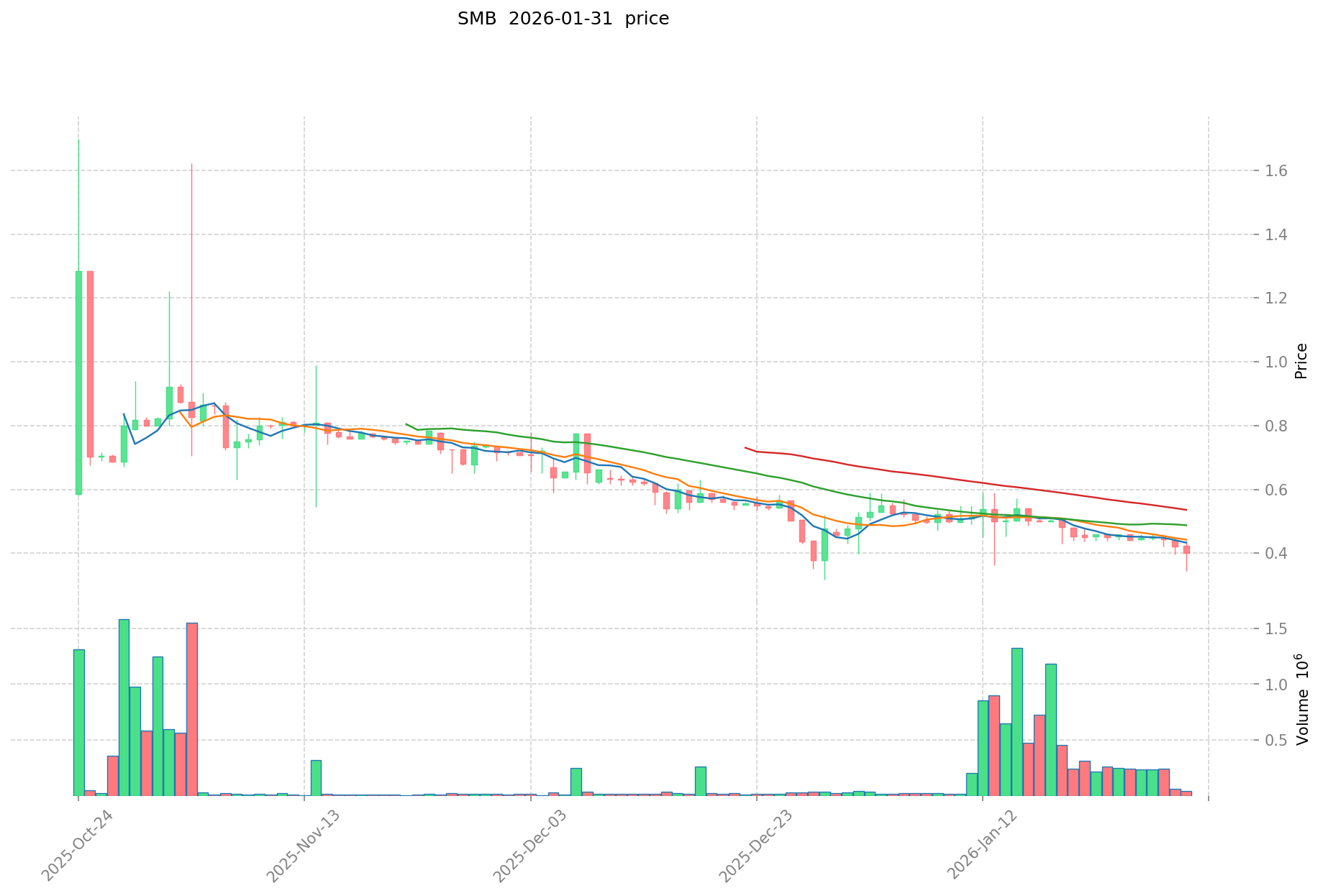
SMB Historical Price Evolution Trajectory
- March 2025: SMB recorded its all-time low at $0.02844, reflecting the initial market discovery phase following its launch
- October 2025: The token reached its all-time high of $1.69984, representing a substantial appreciation from its launch price of $0.07
- January 2026: Market entered a consolidation phase, with price stabilizing around $0.39261 after experiencing volatility throughout late 2025
SMB Current Market Status
As of January 31, 2026, SMB is trading at $0.39261, showing a 24-hour increase of 9.73%. The token's 24-hour trading range spans from $0.3436 to $0.40904, with a total trading volume of $13,066.41.
The current circulating supply stands at 6,972,000 SMB tokens, representing approximately 62.18% of the maximum supply of 1,121,280,000 tokens. The market capitalization has reached $2,737,276.92, while the fully diluted market cap is calculated at $440,225,740.80. The token currently ranks #1883 in the overall cryptocurrency market with a market dominance of 0.014%.
SMB is deployed on the Polygon network with a holder base of 8,510 addresses. The project is currently listed on Gate.com, providing trading accessibility for market participants.
Recent price momentum shows mixed signals across different timeframes: while the 1-hour performance indicates a decline of 2.4%, the 24-hour period demonstrates positive movement. However, the 7-day and 30-day performances show declines of 14.57% and 13.37% respectively, suggesting near-term price pressure.
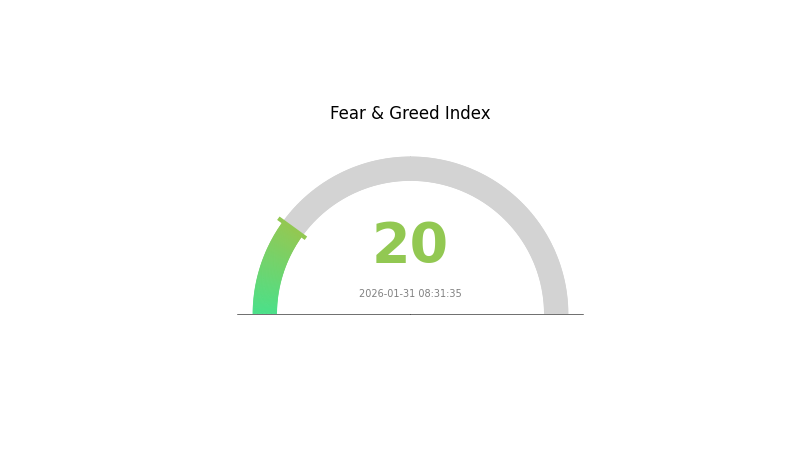
The current market sentiment index stands at 20, indicating an "Extreme Fear" condition in the broader market environment.
Click to view current SMB market price
SMB Market Sentiment Index
2026-01-31 Fear and Greed Index: 20 (Extreme Fear)
Click to view current Fear & Greed Index
The crypto market is experiencing extreme fear, with the Fear and Greed Index dropping to 20. This significant decline reflects heightened market uncertainty and investor anxiety. When fear levels reach such extremes, it often signals potential buying opportunities for contrarian investors, as sentiment-driven panic selling may create undervalued assets. However, traders should remain cautious and conduct thorough analysis before making investment decisions. Monitor market developments closely during this volatile period to identify optimal entry and exit points aligned with your investment strategy.
SMB Holdings Distribution
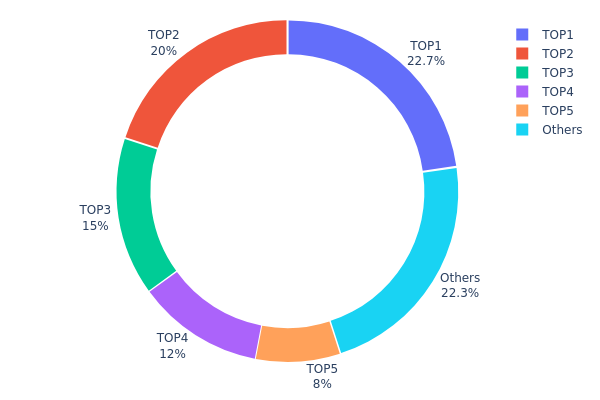
The holdings distribution chart visually represents the concentration of SMB tokens across different wallet addresses, providing insights into the decentralization level and potential market manipulation risks. Based on the current on-chain data, the top 5 addresses collectively hold 877,681.03K SMB tokens, accounting for 78.27% of the total supply, while the remaining addresses hold only 22.27%.
This distribution pattern reveals a significantly high concentration level. The largest holder controls 22.74% of the supply, and when combined with the second-largest holder at 20.00%, these two addresses alone possess over 42% of all circulating tokens. The top three addresses command nearly 58% of the total supply, indicating that SMB's ownership structure is heavily centralized among a small number of entities. Such concentrated holdings create substantial imbalances in market power dynamics.
From a market structure perspective, this high concentration poses several risks. Large holders, commonly referred to as "whales," have the capability to significantly influence price movements through substantial buy or sell orders. This creates an environment where retail investors face heightened volatility risks and potential market manipulation concerns. The limited distribution among the broader community also suggests weaker decentralization, which contradicts the fundamental principles of blockchain technology and may impact long-term investor confidence in the project's governance and sustainability.
Click to view current SMB Holdings Distribution
| Top |
Address |
Holding Qty |
Holding (%) |
| 1 |
0xbe7d...fe3dab |
255082.15K |
22.74% |
| 2 |
0xfbb6...7aa2cf |
224256.00K |
20.00% |
| 3 |
0x8671...ed468b |
168086.88K |
14.99% |
| 4 |
0xb1b5...81158a |
134553.60K |
12.00% |
| 5 |
0xddfe...aaf192 |
89702.40K |
8.00% |
| - |
Others |
249598.97K |
22.27% |
II. Core Factors Influencing SMB's Future Price
Technology Development and Ecosystem Building
-
Decentralized Finance (DeFi) Integration: SMB focuses on deploying decentralized finance applications, NFT markets, and diverse DApp projects on the Solana blockchain. This strategic positioning in the DeFi space represents a key driver for its ecosystem expansion and potential value appreciation.
-
Payment Standard Innovation: Through its Master Coin + Branch Coin model, SMB addresses price volatility challenges by anchoring Branch Coins 1:1 with fiat currencies, maintaining stable value. This design eliminates inconveniences caused by price fluctuations, positioning SMB as a practical payment solution in the cryptocurrency space.
-
Ecosystem Applications: The project emphasizes multi-dimensional development across DeFi protocols, NFT marketplaces, and various decentralized applications on the Solana chain, creating a comprehensive ecosystem that could drive adoption and demand.
Market Demand and Adoption Trends
-
Technological Advancement Impact: SMB's future price trajectory is closely tied to continuous technological iterations and ecosystem development. The integration of emerging blockchain technologies and expansion of use cases within the Solana ecosystem may influence market perception and valuation.
-
Market Dynamics: Market trends and investor sentiment play significant roles in shaping SMB's price movement. The cryptocurrency's focus on practical payment solutions and DeFi applications positions it to benefit from broader industry adoption trends.
Regulatory Environment
-
Regulatory Framework: The regulatory landscape represents a crucial factor affecting SMB's future price performance. Changes in cryptocurrency regulations, compliance requirements, and policy developments across different jurisdictions could impact adoption rates and market accessibility.
-
Policy Considerations: As regulatory frameworks continue to evolve globally, SMB's compliance approach and adaptability to regulatory requirements may influence its long-term viability and market position.
III. 2026-2031 SMB Price Forecast
2026 Outlook
- Conservative estimate: $0.25069 - $0.38568
- Neutral estimate: $0.38568
- Optimistic estimate: $0.54767 (requires favorable market conditions and increased adoption)
2027-2029 Outlook
- Market phase expectation: The token may enter a recovery and growth phase, with gradual price appreciation driven by ecosystem development and market sentiment shifts.
- Price range predictions:
- 2027: $0.35467 - $0.63934
- 2028: $0.42582 - $0.58619
- 2029: $0.41581 - $0.71769
- Key catalysts: Platform upgrades, strategic partnerships, broader market recovery, and increased utility adoption could serve as primary drivers for price movement.
2030-2031 Long-term Outlook
- Baseline scenario: $0.59859 - $0.95903 (assuming steady ecosystem growth and moderate market conditions)
- Optimistic scenario: $0.80134 - $1.12187 (contingent upon significant technological breakthroughs and widespread adoption)
- Transformative scenario: Above $1.12187 (requires exceptional market bull run and dominant platform positioning)
- 2031-12-31: SMB could potentially reach the $0.44875 - $1.12187 range (subject to market conditions and project development)
| Year |
Predicted High Price |
Predicted Average Price |
Predicted Low Price |
Price Change |
| 2026 |
0.54767 |
0.38568 |
0.25069 |
-1 |
| 2027 |
0.63934 |
0.46667 |
0.35467 |
18 |
| 2028 |
0.58619 |
0.55301 |
0.42582 |
40 |
| 2029 |
0.71769 |
0.5696 |
0.41581 |
45 |
| 2030 |
0.95903 |
0.64365 |
0.59859 |
63 |
| 2031 |
1.12187 |
0.80134 |
0.44875 |
104 |
IV. SMB Professional Investment Strategy and Risk Management
SMB Investment Methodology
(1) Long-term Holding Strategy
- Target Investors: Web3 commerce believers and blockchain payment system advocates
- Operational Recommendations:
- Consider accumulating positions during price corrections below the 30-day average
- Monitor SMB's mainnet development progress and branch coin ecosystem expansion
- Storage Solution: Gate Web3 Wallet provides secure multi-chain support for MATIC-based tokens like SMB
(2) Active Trading Strategy
- Technical Analysis Tools:
- Volume Analysis: Monitor the 24-hour trading volume (currently $13,066) relative to price movements to identify trend strength
- Support and Resistance Levels: Track the 24-hour range between $0.3436 and $0.40904 for entry and exit points
- Swing Trading Key Points:
- SMB has shown notable volatility with 9.73% gain in 24 hours but -14.57% decline over 7 days
- Consider scaling positions during periods of high volatility while maintaining strict stop-loss levels
SMB Risk Management Framework
(1) Asset Allocation Principles
- Conservative Investors: 1-3% of crypto portfolio allocation
- Aggressive Investors: 5-8% of crypto portfolio allocation
- Professional Investors: Up to 10-15% with active hedging strategies
(2) Risk Hedging Solutions
- Portfolio Diversification: Balance SMB holdings with established payment tokens and stablecoins
- Position Sizing: Use dollar-cost averaging to mitigate entry point risk given SMB's price volatility
(3) Secure Storage Solutions
- Multi-chain Wallet Recommendation: Gate Web3 Wallet supports Polygon network and provides secure custody for SMB tokens
- Cold Storage Option: For long-term holdings, consider transferring to hardware wallet solutions after initial accumulation
- Security Precautions: Always verify the correct contract address (0x68f610f2220a6974eb69963bdaf5a0de0dc9bd8c) on Polygon network before transactions, enable two-factor authentication, and never share private keys
V. SMB Potential Risks and Challenges
SMB Market Risks
- High Volatility: SMB experienced 1.69984 all-time high in October 2025 but currently trades 76.9% below that peak, indicating significant price fluctuation risk
- Limited Exchange Availability: Trading on only 1 exchange may result in liquidity constraints and wider bid-ask spreads
- Low Market Capitalization: With a market cap of approximately $2.74 million and ranking at 1883, SMB faces risks associated with smaller market cap tokens including susceptibility to large holder movements
SMB Regulatory Risks
- Payment Token Classification: As SMB positions itself as a Web3 payment network token, evolving payment token regulations could impact its operational framework
- Cross-border Commerce Compliance: The project's focus on global commerce may face varying regulatory requirements across different jurisdictions
- Token Economics Scrutiny: The reward token model and local currency branch coin system may attract regulatory attention regarding securities classification
SMB Technical Risks
- Smart Contract Dependency: As a Polygon-based token, SMB inherits risks associated with the underlying blockchain infrastructure
- Ecosystem Development Risk: Success depends on the practical adoption of SMBWallet and the expansion of the Web3 commerce ecosystem
- Mainnet Implementation: The white paper's mainnet strategy introduces technical execution risks that could affect token utility and value proposition
VI. Conclusion and Action Recommendations
SMB Investment Value Assessment
SMB presents an innovative approach to Web3 commerce by bridging digital tokens with real-world economic activity through its payment network and local currency branch coin model. The project addresses limitations observed in earlier decentralized commerce platforms like OpenBazaar by creating sustainable user engagement through token incentives. However, the token currently faces challenges including significant price decline from its all-time high (-76.9%), limited exchange presence (1 exchange), and a relatively small market capitalization ranking (1883). The long-term value proposition depends on successful ecosystem expansion and mainstream adoption of the SMB payment network, while short-term risks include continued price volatility and liquidity constraints.
SMB Investment Recommendations
✅ Beginners: Start with minimal exposure (0.5-1% of portfolio) to understand Web3 payment tokens, use dollar-cost averaging, and focus on learning the SMBWallet ecosystem before increasing position size
✅ Experienced Investors: Consider 3-5% allocation with active monitoring of mainnet development milestones, employ technical analysis for entry timing, and diversify across multiple Web3 infrastructure projects
✅ Institutional Investors: Evaluate SMB as part of a broader Web3 commerce thesis with 2-4% allocation, conduct thorough due diligence on branch coin implementation progress, and establish direct communication channels with the project team for ecosystem updates
SMB Trading Participation Methods
- Spot Trading: Purchase SMB tokens directly through available exchanges with USDT or other trading pairs
- Wallet Integration: Utilize Gate Web3 Wallet to store SMB tokens securely and participate in the SMBWallet ecosystem
- Community Engagement: Monitor SMB's official channels and participate in the growing holder community (8,510 holders) to stay informed about ecosystem developments
Cryptocurrency investment carries extreme risks, and this article does not constitute investment advice. Investors should make cautious decisions based on their own risk tolerance and are advised to consult professional financial advisors. Never invest more than you can afford to lose.
FAQ
What is SMB and what are the main factors affecting its price?
SMB is a cryptocurrency whose price is primarily influenced by market sentiment, trading volume, and overall industry trends. Market volatility and correlation with the broader crypto market are key factors driving price movements.
How to conduct SMB price prediction, what are the common analysis methods?
Common SMB price prediction methods include technical analysis using price and trading volume trends, fundamental analysis examining project metrics, and sentiment analysis tracking market opinions. Time series analysis and regression models also help forecast price movements based on historical data patterns.
How accurate is SMB price prediction, and what are the risks and limitations?
SMB price prediction accuracy is limited due to high market uncertainty and information asymmetry. Key limitations include volatile trading volume, unpredictable market sentiment, and external factors affecting cryptocurrency prices. Predictions serve as reference only.
What makes SMB price prediction special compared to other investment products?
SMB price prediction offers higher volatility and greater return potential than traditional assets. It responds more sensitively to market sentiment and economic factors, presenting unique opportunities for traders seeking dynamic market exposure.
What are the successful and failed cases of SMB price prediction in history?
Successful SMB price predictions focused on precise market segmentation and rapid scaling, while failures resulted from inadequate price strategy adjustments and poor market adaptation. Key success factors include accurate demand forecasting and timely strategy optimization.
What are professional institutions and analysts' predictions for SMB's future price?
Professional institutions predict SMB will maintain steady growth through 2025-2030, driven by supply-demand dynamics and macroeconomic factors. Market analysis suggests positive momentum as the ecosystem expands, with historical data indicating continued upward price trajectory based on adoption trends and market fundamentals.
* The information is not intended to be and does not constitute financial advice or any other recommendation of any sort offered or endorsed by Gate.