This comprehensive article analyzes Sophon (SOPH) token pricing from 2026-2031, providing professional forecasts for investors. SOPH, launched January 2025 on Gate.com, currently trades at $0.01182 with a $23.64M market cap and extreme fear sentiment index (20). The analysis covers SOPH's market position as a data monetization blockchain platform bridging mainstream users to crypto. The article examines historical price evolution, current market status, and detailed price predictions: 2026 ($0.00764-$0.01269), 2027-2029 ($0.00945-$0.01803), and 2030-2031 ($0.01246-$0.02978). Key sections include investment methodologies (long-term holding and active trading strategies), comprehensive risk management frameworks, and regulatory compliance considerations. The article addresses critical challenges including extreme token concentration (87.2% held by top address), limited liquidity ($124,094 daily volume), and regulatory uncertainties surrounding data monetization. Professional recommendations stratify advice by i
Introduction: SOPH's Market Position and Investment Value
Sophon (SOPH), positioned as a platform dedicated to onboarding the next generation of crypto users through consumer products that monetize daily-generated data, has been making strides since its launch in 2025. As of January 2026, Sophon has achieved a market capitalization of approximately $23.64 million, with a circulating supply of 2 billion tokens and a current price hovering around $0.01182. This asset, designed to power blockchain applications beyond speculation, is playing an increasingly important role in bridging mainstream users to the crypto ecosystem through practical, friction-free experiences.
This article will comprehensively analyze SOPH's price trends from 2026 to 2031, combining historical patterns, market supply-demand dynamics, ecosystem development, and macroeconomic factors to provide investors with professional price forecasts and practical investment strategies.
I. SOPH Price History Review and Market Status
SOPH Historical Price Evolution Trajectory
- 2025: Sophon launched on Gate.com on January 28, 2025, experiencing significant price volatility in its early trading period
- 2025: Price reached a peak of $0.0799 on May 28, 2025, marking a substantial increase from its initial trading levels
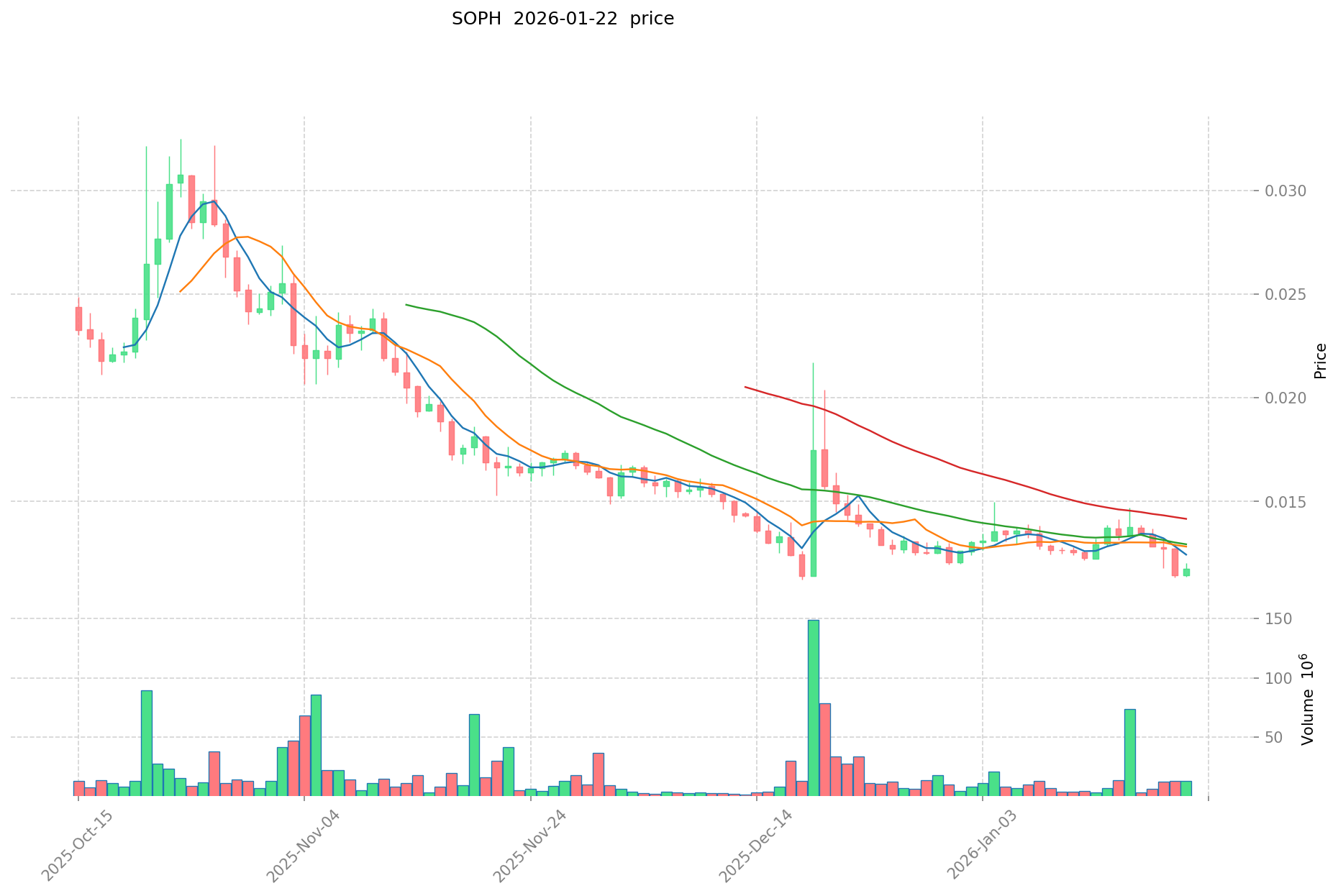
- 2025: Market correction occurred in the second half of the year, with price declining from the peak of $0.0799 to a low of $0.01123 on December 18, 2025
SOPH Current Market Status
As of January 22, 2026, SOPH is trading at $0.01182, showing a modest 24-hour increase of 0.76%. The token has experienced recent downward pressure, with a 7-day decline of 11.42% and a 30-day decrease of 16.91%. The current price represents an 85.37% decline from its peak value, reflecting the broader market correction and adjustment period.
SOPH maintains a market capitalization of $23.64 million, with a fully diluted valuation of $118.2 million. The circulating supply stands at 2 billion tokens, representing 20% of the total supply of 10 billion tokens. The token currently ranks 804th by market capitalization, with a market dominance of 0.0037%.
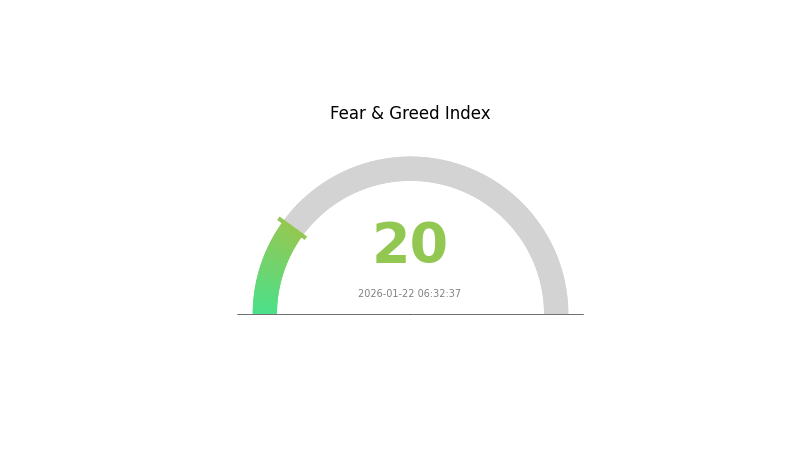
The 24-hour trading volume reached $124,094, indicating moderate trading activity. The token holder count stands at 3,443 addresses, suggesting a developing user base. The market sentiment index currently indicates a level of 20, corresponding to an "Extreme Fear" classification, reflecting cautious investor sentiment in the current market environment.
Click to view current SOPH market price
SOPH Market Sentiment Index
2026-01-22 Fear and Greed Index: 20 (Extreme Fear)
Click to view current Fear & Greed Index
The cryptocurrency market is currently experiencing extreme fear, with the Fear and Greed Index standing at 20. This indicates severe market pessimism and heightened investor anxiety. Such extreme fear levels often present contrarian opportunities for experienced traders, as markets have historically rebounded from these depressed sentiment conditions. However, caution is advised, as further downside risk remains possible. Investors should carefully evaluate their risk tolerance and portfolio allocation during this volatile period.
SOPH 持仓分布
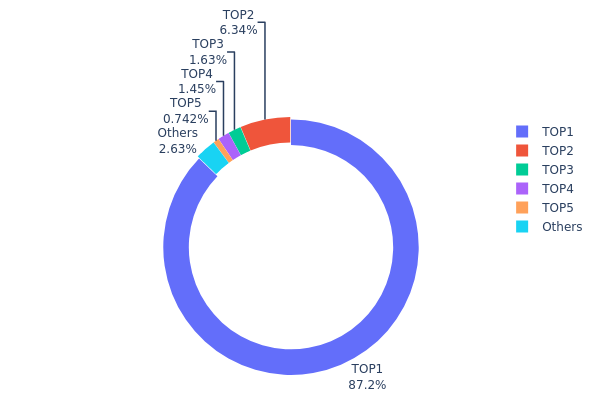
The holding distribution chart represents the concentration of token ownership across different wallet addresses, serving as a critical indicator for assessing the degree of decentralization and potential market manipulation risks within a cryptocurrency ecosystem. By analyzing the proportion of tokens held by top addresses versus the broader holder base, investors can gauge whether the token's supply is widely distributed among retail participants or concentrated in the hands of a few major holders.
Based on the current SOPH holding distribution data, the token exhibits an extremely high concentration level. The top address alone controls 407,606.99K SOPH, accounting for 87.20% of the total supply, while the second-largest holder possesses only 6.34%. The top five addresses collectively hold approximately 97.35% of the entire token supply, leaving merely 2.65% distributed among all other addresses. This severe concentration pattern suggests that SOPH's on-chain structure is dominated by a single entity or a closely coordinated group, significantly deviating from the decentralized ideal typically sought in blockchain projects.
Such extreme concentration carries substantial implications for market dynamics and price stability. The dominant holder possesses overwhelming control over the token's circulating supply, creating considerable vulnerability to large-scale sell-offs or coordinated price manipulation. Any significant movement by the top address could trigger dramatic price fluctuations, as the limited liquidity from other holders would be insufficient to absorb major transactions. This structural imbalance heightens volatility risks and may deter institutional investors seeking assets with more balanced distribution patterns. Additionally, the minimal holdings among retail participants indicate limited community engagement and weak grassroots support, which could constrain organic growth potential and long-term sustainability of the project's ecosystem.
Click to view current SOPH holding distribution
| Top |
Address |
Holding Qty |
Holding (%) |
| 1 |
0xf977...41acec |
407606.99K |
87.20% |
| 2 |
0x98d6...60be35 |
29636.69K |
6.34% |
| 3 |
0x8894...e2d4e3 |
7603.05K |
1.62% |
| 4 |
0xd971...3b670d |
6777.83K |
1.45% |
| 5 |
0x0d07...b492fe |
3469.13K |
0.74% |
| - |
Others |
12306.80K |
2.65% |
II. Core Factors Influencing SOPH's Future Price
Due to the absence of specific data regarding SOPH's supply mechanisms, institutional holdings, macroeconomic correlations, and technical developments in the provided materials, a comprehensive analysis of the core factors influencing SOPH's future price cannot be generated at this time. Key information such as token economics, major stakeholder activities, ecosystem developments, and technical upgrades would be essential for conducting a thorough evaluation of SOPH's price drivers.
III. 2026-2031 SOPH Price Prediction
2026 Outlook
- Conservative prediction: $0.00764 - $0.01175
- Neutral prediction: Around $0.01175
- Optimistic prediction: Up to $0.01269 (requires favorable market conditions)
2027-2029 Outlook
- Market stage expectation: The token is projected to enter a gradual growth phase with increasing volatility
- Price range prediction:
- 2027: $0.01161 - $0.01686
- 2028: $0.00945 - $0.01803
- 2029: $0.00945 - $0.01694
- Key catalysts: Market adoption expansion and ecosystem development may serve as primary drivers for price movements
2030-2031 Long-term Outlook
- Baseline scenario: $0.01246 - $0.02475 (assuming steady market growth)
- Optimistic scenario: $0.01717 - $0.02978 (assuming enhanced ecosystem utility and broader adoption)
- Transformative scenario: Potential to reach $0.02978 (under exceptionally favorable conditions including significant technological breakthroughs and mass adoption)
- 2026-01-22: SOPH trading within the early-stage price discovery range
| Year |
Predicted High Price |
Predicted Average Price |
Predicted Low Price |
Price Change |
| 2026 |
0.01269 |
0.01175 |
0.00764 |
0 |
| 2027 |
0.01686 |
0.01222 |
0.01161 |
3 |
| 2028 |
0.01803 |
0.01454 |
0.00945 |
23 |
| 2029 |
0.01694 |
0.01629 |
0.00945 |
37 |
| 2030 |
0.02475 |
0.01661 |
0.01246 |
40 |
| 2031 |
0.02978 |
0.02068 |
0.01717 |
74 |
IV. SOPH Professional Investment Strategy and Risk Management
SOPH Investment Methodology
(1) Long-term Holding Strategy
- Target Investors: Investors who believe in the long-term vision of monetizing user data through blockchain technology and are willing to hold through market volatility
- Operational Recommendations:
- Consider accumulating SOPH gradually during price corrections, as the token has shown significant volatility with a 1-year decline of approximately 85%
- Monitor the project's progress in developing consumer-facing applications that can drive organic demand
- Implement a secure storage solution immediately after purchase to minimize security risks
(2) Active Trading Strategy
- Technical Analysis Tools:
- Moving Averages: Given SOPH's current short-term volatility (24H change of 0.76%, 7D decline of 11.42%), traders may use short-term moving averages to identify entry and exit points
- Volume Analysis: With 24-hour trading volume of approximately $124,094, monitoring volume spikes can help identify potential trend reversals
- Swing Trading Key Points:
- The current price of $0.01182 is near the historical low of $0.01123, which may present potential support levels for short-term traders
- Consider the 30-day decline of 16.91% when setting stop-loss levels to manage downside risk
SOPH Risk Management Framework
(1) Asset Allocation Principles
- Conservative Investors: 1-2% of crypto portfolio, as part of a highly diversified allocation given the early-stage nature and high volatility
- Aggressive Investors: 3-5% of crypto portfolio, with readiness to withstand significant price fluctuations
- Professional Investors: 5-10% of crypto portfolio, with active monitoring and rebalancing strategies
(2) Risk Hedging Solutions
- Position Sizing: Limit SOPH exposure to a small percentage of total holdings, given the token's volatility and relatively low market cap of approximately $23.64 million
- Diversification: Combine SOPH holdings with more established digital assets to balance portfolio risk
(3) Secure Storage Solutions
- Non-Custodial Wallet Recommendation: Gate Web3 Wallet, which supports ERC20 tokens and provides users with full control over their private keys
- Hardware Wallet Solution: For larger holdings, consider transferring SOPH to a hardware wallet that supports BSC (BNB Smart Chain) tokens
- Security Precautions: Never share private keys or seed phrases, enable two-factor authentication on all accounts, and verify contract addresses (0x31dba3c96481fde3cd81c2aaf51f2d8bf618c742 on BSC) before any transactions
V. SOPH Potential Risks and Challenges
SOPH Market Risks
- High Volatility: SOPH has experienced substantial price fluctuations, with the token trading approximately 85% below its previous high, indicating significant market risk
- Limited Liquidity: With a 24-hour trading volume of around $124,094 and availability on 25 exchanges, liquidity may be constrained during periods of high market stress
- Market Capitalization: The current circulating market cap of approximately $23.64 million represents only 20% of the fully diluted valuation, suggesting potential future supply pressure
SOPH Regulatory Risks
- Data Monetization Compliance: As Sophon focuses on monetizing user-generated data, the project may face regulatory scrutiny regarding data privacy laws and user consent requirements across different jurisdictions
- Token Classification: Regulatory authorities in various regions may have different interpretations of SOPH's token classification, which could impact trading and distribution
- Cross-border Operations: Operating a platform that rewards users for data may encounter varying regulatory frameworks in different countries, creating compliance complexity
SOPH Technical Risks
- Smart Contract Security: As an ERC20 token deployed on BSC, SOPH faces inherent smart contract risks that could potentially affect token functionality
- Platform Development Risk: The success of SOPH depends on Sophon's ability to deliver user-friendly consumer applications that successfully bridge traditional and crypto experiences
- Adoption Risk: With approximately 3,443 holders, the project is still in early stages of user adoption, and achieving mainstream acceptance remains uncertain
VI. Conclusion and Action Recommendations
SOPH Investment Value Assessment
SOPH represents an early-stage project attempting to bridge mainstream consumer applications with blockchain technology through data monetization. While the long-term vision of creating frictionless crypto experiences for everyday users holds potential, the token currently faces substantial challenges including high volatility, limited adoption (3,443 holders), and significant price decline from previous levels. The project's success will largely depend on its ability to deliver compelling consumer products that drive organic user growth and token utility. Short-term risks remain elevated given market conditions and the early developmental stage.
SOPH Investment Recommendations
✅ Beginners: Consider waiting for more established track record and user adoption before investing. If interested, start with minimal allocation (less than 1% of crypto portfolio) to gain exposure while limiting downside risk
✅ Experienced Investors: May consider small speculative positions (2-3% of crypto portfolio) while closely monitoring platform development milestones and user growth metrics. Implement strict stop-loss levels given historical volatility
✅ Institutional Investors: Conduct thorough due diligence on the team, technology roadmap, and competitive positioning before considering allocation. May evaluate strategic investment opportunities with direct engagement with project stakeholders
SOPH Trading Participation Methods
- Spot Trading: SOPH is available for spot trading on Gate.com and 24 other exchanges, with the BSC contract address: 0x31dba3c96481fde3cd81c2aaf51f2d8bf618c742
- Gradual Accumulation: Given the current price near historical lows, investors may consider dollar-cost averaging to build positions over time while managing entry risk
- Active Monitoring: Track project announcements, product launches, and user growth metrics through official channels including the project website (sophon.xyz) and social media platforms
Cryptocurrency investment carries extremely high risk, and this article does not constitute investment advice. Investors should make prudent decisions based on their own risk tolerance and are advised to consult professional financial advisors. Never invest more than you can afford to lose.
FAQ
What is SOPH? What are its uses and basic characteristics?
SOPH is a utility token designed for the Web3 ecosystem, enabling governance, transaction settlement, and community participation. It features fast blockchain processing, low transaction fees, and smart contract functionality, making it ideal for DeFi applications and decentralized services.
What are the main factors affecting SOPH's price?
SOPH's price is primarily influenced by market demand and supply dynamics, trading volume, overall cryptocurrency market sentiment, Bitcoin's price movements, project developments and announcements, community engagement levels, and macroeconomic factors affecting the crypto sector.
How to predict SOPH price? What are the analysis methods?
Analyze SOPH price through technical analysis(chart patterns, moving averages), fundamental analysis(project development, adoption rate), market sentiment analysis(social media, community activity), and on-chain metrics(transaction volume, holder distribution)to forecast price trends.
What are the risks and uncertainties in SOPH price predictions?
SOPH price predictions face market volatility, liquidity fluctuations, and macroeconomic factors. Regulatory changes, technological developments, and sentiment shifts can significantly impact prices. Trading volume variations and unforeseen events also introduce uncertainty into predictive models.
SOPH demonstrates strong price resilience against comparable crypto assets. With consistent market activity and growing adoption, SOPH maintains competitive momentum. Historical data shows SOPH outperforming sector averages during market cycles, driven by solid fundamentals and increasing transaction volume.
What are the professional institutions' price predictions for SOPH?
Leading crypto analysts project SOPH could reach $0.50-$1.20 by 2026, based on adoption growth and market momentum. Some institutions forecast higher valuations if mainstream adoption accelerates. However, predictions vary widely depending on market conditions and technological developments.
* The information is not intended to be and does not constitute financial advice or any other recommendation of any sort offered or endorsed by Gate.