This comprehensive analysis examines STOS (Stratos) as a decentralized data grid infrastructure token currently trading at $0.037 with a market cap of $2.59 million. The article evaluates historical price movements from 2021's $5.18 peak to the current 85.42% decline, while analyzing core market drivers including token supply mechanisms, institutional participation, and ecosystem development within the Stratos decentralized storage network. Professional investment strategies encompass long-term holding approaches for infrastructure believers and active trading methods utilizing technical analysis, complemented by detailed risk management frameworks for conservative, moderate, and aggressive investors. The analysis includes token price scenarios across 2026-2031, holding distribution insights revealing 37.85% concentration among top addresses, and critical risk considerations spanning market volatility, limited liquidity with only 2 trading venues, regulatory uncertainties in decentralized storage, and competi
Introduction: STOS Market Position and Investment Value
Stratos (STOS), as a decentralized data grid infrastructure project serving blockchain and Web 3.0, has been developing its ecosystem since its inception in 2021. As of 2026, STOS maintains a market cap of approximately $2.59 million, with a circulating supply of around 70.08 million tokens, and the price stabilizes at approximately $0.037. This asset, positioned as a "next-generation decentralized data infrastructure," is playing an increasingly important role in areas such as decentralized storage, NFT development, DeFi applications, and smart home solutions.
This article will comprehensively analyze STOS's price trends from 2026 to 2031, combining historical patterns, market supply and demand dynamics, ecosystem development, and macroeconomic environment to provide investors with professional price forecasts and practical investment strategies.
I. STOS Price History Review and Market Status
STOS Historical Price Evolution Trajectory
- 2021: STOS reached a notable price level of $5.18 on November 26, 2021, representing a significant milestone in its early trading phase
- 2025: The token experienced substantial downward pressure, with price declining to $0.03286932 on October 19, 2025
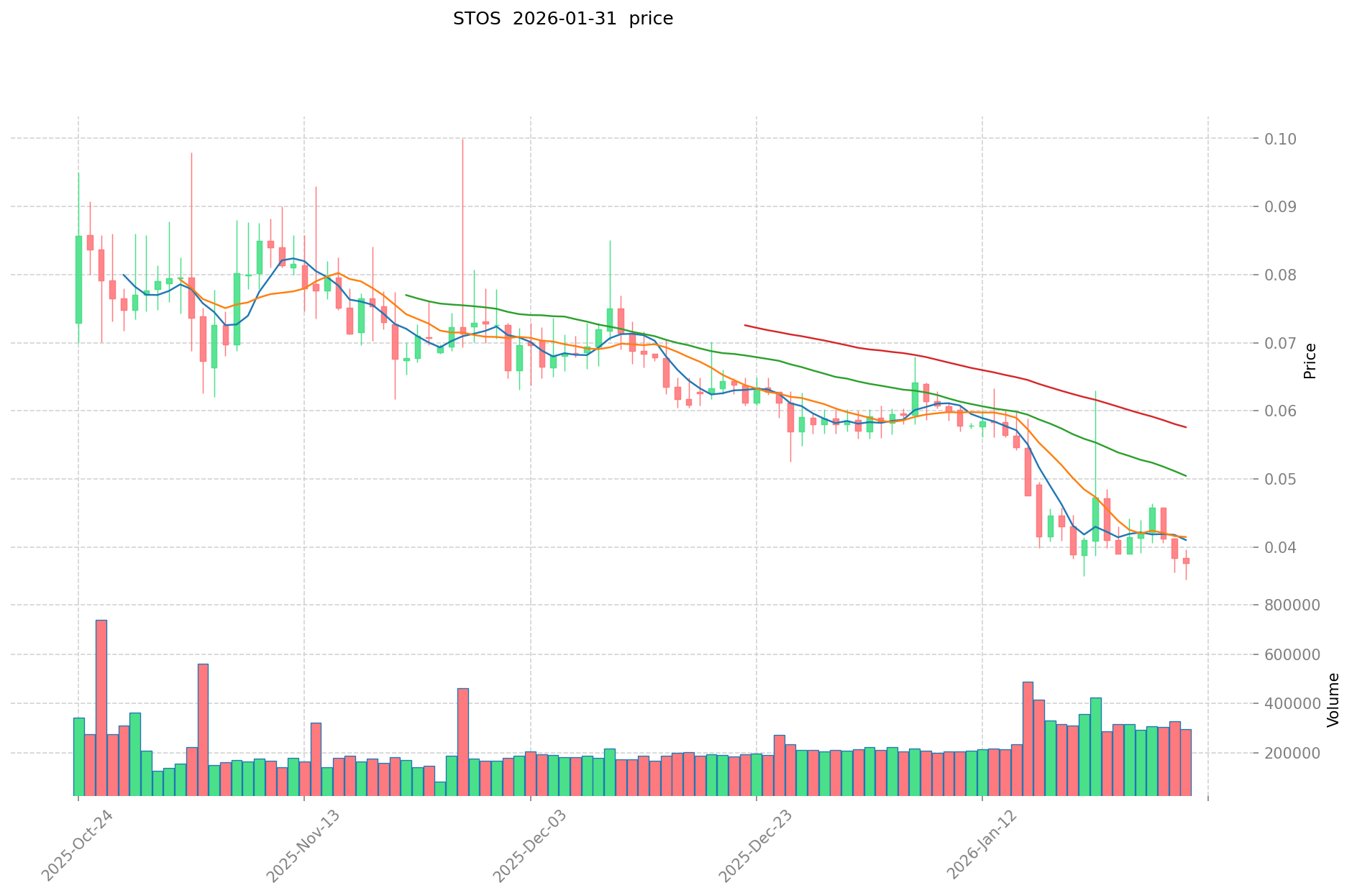
- 2026: Within the past year, STOS has undergone a considerable correction, with price declining approximately 85.42%
STOS Current Market Situation
As of January 31, 2026, STOS is trading at $0.03694, reflecting a 24-hour decrease of 3.52%. The token has demonstrated volatility across different timeframes, with a 1-hour increase of 0.047%, a 7-day decline of 10.71%, and a 30-day decrease of 36.34%. The 24-hour trading range spans from $0.03649 to $0.03838, with a total trading volume of $11,553.42.
The token maintains a circulating supply of 70,084,080 STOS, representing 70.08% of the maximum supply of 100,000,000 tokens. The current market capitalization stands at approximately $2.59 million, with a fully diluted valuation of $3.69 million. STOS holds a market dominance of 0.00012% and ranks #1915 among cryptocurrencies.
The token holder base comprises 6,217 addresses, and STOS is currently available for trading on 2 exchanges. Market sentiment indicators show a fear index reading of 20, characterized as "Extreme Fear," suggesting cautious market conditions. The market cap to fully diluted valuation ratio stands at 70.08%, indicating that a substantial portion of the total supply is already in circulation.
Click to view the current STOS market price
STOS Market Sentiment Index
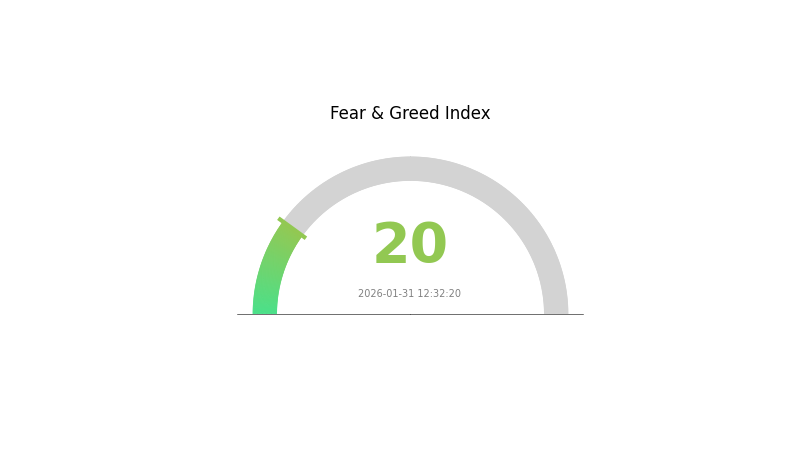
2026-01-31 Fear and Greed Index: 20 (Extreme Fear)
Click to view current Fear & Greed Index
The cryptocurrency market is experiencing extreme fear with an index reading of 20. This exceptionally low sentiment suggests investors are highly risk-averse and pessimistic about market conditions. During periods of extreme fear, opportunities may emerge for contrarian investors, as asset prices often become oversold. However, cautious risk management remains essential. Monitor market developments closely and consider your investment strategy carefully during such volatile periods. The Fear and Greed Index serves as a valuable tool for gauging overall market psychology and potential turning points in crypto trading cycles.
STOS Holding Distribution
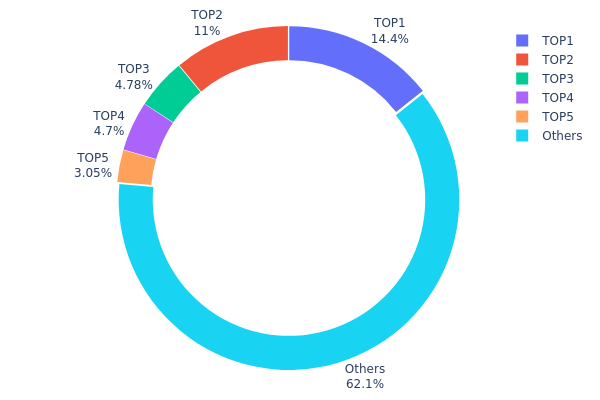
The holding distribution chart provides a visual representation of token allocation across different wallet addresses, offering critical insights into the concentration of wealth within a cryptocurrency ecosystem. This metric is essential for evaluating the degree of decentralization and potential vulnerability to market manipulation by large holders, commonly referred to as "whales."
Based on the current data, STOS exhibits a moderately concentrated holding structure. The top five addresses collectively control approximately 37.85% of the total token supply, with the largest single address holding 14.35% (4.45 million tokens). The second-largest holder possesses 10.99%, while the remaining top three addresses hold between 3.04% and 4.78% each. The majority of tokens (62.15%) are distributed among other addresses, suggesting a relatively diverse ownership base beyond the top holders.
This concentration level presents a mixed outlook for market dynamics. While the 62.15% distribution among smaller holders indicates reasonable decentralization, the presence of two addresses controlling over 10% each introduces potential risks. These large holders possess significant influence over price movements, particularly during periods of low liquidity. Coordinated selling by the top addresses could trigger substantial volatility, while their accumulation behavior might signal confidence in the project's long-term prospects. From a market structure perspective, this distribution pattern suggests that STOS maintains adequate on-chain stability, though investors should remain cognizant of the potential impact that major holders can exert on short-term price action.
Click to view current STOS Holding Distribution
| Top |
Address |
Holding Qty |
Holding (%) |
| 1 |
0x0000...e08a90 |
4451.16K |
14.35% |
| 2 |
0x7088...fcef8a |
3411.48K |
10.99% |
| 3 |
0x9642...2f5d4e |
1483.66K |
4.78% |
| 4 |
0x0d07...b492fe |
1456.84K |
4.69% |
| 5 |
0x858d...c334c5 |
945.29K |
3.04% |
| - |
Others |
19265.44K |
62.15% |
II. Core Factors Influencing STOS Future Price
Supply Mechanism
- Token Distribution and Utility: The STOS token economics, including token quantity, distribution structure, and utility within the Stratos ecosystem, play a crucial role in determining its value. The overall market demand for the token and its functional applications within the network are important considerations for price evaluation.
- Historical Pattern: Market demand trends and adoption rates have historically influenced STOS price movements, with periods of increased utility showing correlation with positive price momentum.
- Current Impact: The token's utility in the Stratos ecosystem and broader market demand continue to serve as primary drivers for price expectations.
Institutional and Whale Dynamics
- Institutional Participation: Institutional involvement and participation levels affect the price outlook for Stratos, contributing to market stability and long-term growth potential.
- Market Adoption: The adoption trends within the decentralized storage and computing sector influence STOS demand dynamics and price trajectory.
Macroeconomic Environment
- Monetary Policy Impact: Broader economic factors, including global monetary policies and interest rate environments, affect cryptocurrency markets and STOS price performance.
- Economic Conditions: General economic conditions and market sentiment in the cryptocurrency sector contribute to price volatility and investment flows.
Technical Development and Ecosystem Building
- Ecosystem Expansion: The development and growth of the Stratos decentralized infrastructure platform, including its storage and computing capabilities, impact token utility and demand.
- Network Applications: The expansion of use cases and applications built on the Stratos network influences long-term value proposition and adoption rates.
III. 2026-2031 STOS Price Forecast
2026 Outlook
- Conservative Prediction: $0.0217 - $0.0368
- Neutral Prediction: $0.0368 (average scenario)
- Optimistic Prediction: $0.0413 (requires favorable market conditions and positive project developments)
2027-2029 Outlook
- Market Stage Expectation: The token may experience gradual growth as the project matures and adoption potentially increases
- Price Range Forecast:
- 2027: $0.0234 - $0.0453
- 2028: $0.0295 - $0.0510
- 2029: $0.0354 - $0.0648
- Key Catalysts: Market sentiment shifts, technological developments within the ecosystem, and broader cryptocurrency market trends
2030-2031 Long-term Outlook
- Baseline Scenario: $0.0290 - $0.0557 (assuming stable market conditions and steady project progress)
- Optimistic Scenario: $0.0557 - $0.0774 (assuming enhanced adoption and favorable regulatory environment)
- Transformative Scenario: $0.0446 - $0.0885 (under exceptionally favorable conditions including significant partnerships and mainstream adoption)
- 2026-01-31: STOS shows potential for moderate growth trajectory with price predictions ranging from conservative to optimistic scenarios
| Year |
Predicted High Price |
Predicted Average Price |
Predicted Low Price |
Price Change |
| 2026 |
0.04127 |
0.03685 |
0.02174 |
0 |
| 2027 |
0.04531 |
0.03906 |
0.02344 |
5 |
| 2028 |
0.05104 |
0.04219 |
0.02953 |
14 |
| 2029 |
0.0648 |
0.04662 |
0.03543 |
26 |
| 2030 |
0.07743 |
0.05571 |
0.02897 |
50 |
| 2031 |
0.08854 |
0.06657 |
0.0446 |
80 |
IV. STOS Professional Investment Strategy and Risk Management
STOS Investment Methodology
(1) Long-term Holding Strategy
- Suitable for: Investors who believe in decentralized storage infrastructure and are willing to hold through market cycles
- Operational Recommendations:
- Consider accumulating STOS during market downturns when the token trades significantly below historical averages
- Monitor project development milestones and ecosystem adoption metrics as indicators of long-term value
- Utilize secure storage solutions such as Gate Web3 Wallet for managing STOS holdings
(2) Active Trading Strategy
- Technical Analysis Tools:
- Support and Resistance Levels: Track the 24-hour range ($0.03649 - $0.03838) to identify potential entry and exit points
- Volume Analysis: Monitor the 24-hour trading volume ($11,553.42) to assess market liquidity and potential price movements
- Swing Trading Considerations:
- Pay attention to short-term volatility, with 24H change at -3.52% and 7D change at -10.71%
- Set appropriate stop-loss orders to manage downside risk in volatile market conditions
STOS Risk Management Framework
(1) Asset Allocation Principles
- Conservative Investors: 1-2% of total crypto portfolio
- Moderate Investors: 3-5% of total crypto portfolio
- Aggressive Investors: 5-10% of total crypto portfolio
(2) Risk Hedging Solutions
- Portfolio Diversification: Balance STOS holdings with other blockchain infrastructure tokens to reduce concentration risk
- Position Sizing: Avoid overexposure to a single asset, especially given the token's market cap of approximately $2.59 million
(3) Secure Storage Solutions
- Hot Wallet Recommendation: Gate Web3 Wallet for convenient trading and staking activities
- Cold Storage Option: Consider hardware wallet solutions for long-term holdings to minimize security risks
- Security Precautions: Enable two-factor authentication, regularly update wallet software, and never share private keys or seed phrases
V. STOS Potential Risks and Challenges
STOS Market Risks
- High Volatility: The token has experienced a significant decline of -85.42% over the past year, indicating substantial price volatility
- Limited Liquidity: With a 24-hour trading volume of $11,553.42 and only 2 exchanges listing the token, liquidity may be constrained during periods of high trading activity
- Market Cap Ranking: Currently ranked at #1915 with a market dominance of 0.00012%, suggesting limited market recognition and potential for further price fluctuations
STOS Regulatory Risks
- Decentralized Storage Regulations: Evolving regulatory frameworks for decentralized storage solutions may impact project operations and token utility
- Compliance Requirements: Changes in cryptocurrency regulations across different jurisdictions could affect token accessibility and trading
- Data Privacy Laws: Future data protection regulations may influence the adoption and implementation of decentralized storage solutions
STOS Technical Risks
- Network Scalability: The ability to maintain performance as the decentralized data grid expands remains a critical technical challenge
- Competition: Numerous projects are developing decentralized storage solutions, creating a competitive landscape that may affect STOS adoption
- Smart Contract Vulnerabilities: Potential security risks associated with smart contract implementations could impact user confidence and token value
VI. Conclusion and Action Recommendations
STOS Investment Value Assessment
STOS represents a project focused on building decentralized storage infrastructure for blockchain and Web 3.0 applications. While the technology addresses real needs in the blockchain ecosystem, including support for various data types, fast retrieval, and high availability storage, the token has faced significant price pressure over the past year. The project's long-term value depends on successful adoption of its decentralized data grid by developers and enterprises. However, short-term risks include market volatility, limited liquidity, and intense competition in the decentralized storage sector.
STOS Investment Recommendations
✅ Beginners: Allocate only a small portion of your portfolio to STOS after thoroughly researching the project fundamentals and understanding the high-risk nature of small-cap cryptocurrencies
✅ Experienced Investors: Consider STOS as a speculative position within a diversified blockchain infrastructure portfolio, focusing on technical developments and ecosystem growth
✅ Institutional Investors: Conduct comprehensive due diligence on the project's technology, team, and market positioning before considering any allocation
STOS Trading Participation Methods
- Spot Trading: Purchase STOS through Gate.com or other supporting exchanges for direct token ownership
- Dollar-Cost Averaging: Implement a systematic investment approach to reduce the impact of short-term price volatility
- Portfolio Integration: Include STOS as part of a broader decentralized infrastructure theme alongside other Web 3.0 projects
Cryptocurrency investment carries extremely high risks, and this article does not constitute investment advice. Investors should make prudent decisions based on their own risk tolerance and are advised to consult professional financial advisors. Never invest more than you can afford to lose.
FAQ
What is the current price of STOS token? What are its all-time high and all-time low prices?
STOS is currently trading between $0.0409 and $0.04527. Its all-time high price reached $5.4959, while the all-time low stands at $0.03259.
What are the main factors affecting STOS price?
STOS price is primarily influenced by protocol upgrades, network adoption rate, overall crypto market sentiment, trading volume, and major technological developments in the Stratos ecosystem.
What price predictions do professional analysts have for STOS in the future?
Professional analysts predict STOS price will be influenced by supply dynamics, adoption trends, and market sentiment. Based on tokenomics and historical performance, many expect potential growth as the Stratos network expands its infrastructure adoption.
What are the advantages and disadvantages of STOS compared to similar tokens?
STOS offers enhanced regulatory compliance and institutional-grade security features, enabling faster capital formation. However, it faces stricter regulatory requirements and potentially lower liquidity compared to utility tokens in less regulated markets.
What is the current state of STOS's technical and fundamental aspects?
STOS demonstrates solid technical momentum with upward trending indicators and strong basic fundamentals showing consistent revenue growth. The project maintains stable ecosystem development and healthy transaction volume metrics supporting positive price trajectory potential.
What risks should be noted when investing in STOS?
STOS investments carry liquidity risk as tokens may be difficult to sell quickly, project risk including potential issuer failure, and regulatory risk from policy changes across jurisdictions. Conduct thorough research on project fundamentals, legal compliance status, and asset backing before investing.
What is the liquidity and trading volume of STOS?
STOS maintains a market cap of $1.69M with 24-hour trading volume of $55.74K. The circulating supply is 38.80M tokens, providing stable liquidity for trading activities across the ecosystem.
What is STOS project's roadmap and future plans?
STOS plans to expand its DePIN ecosystem with new partnerships and applications. The team targets market cap doubling within three years through continuous tech innovation and market expansion, maintaining industry leadership.
* The information is not intended to be and does not constitute financial advice or any other recommendation of any sort offered or endorsed by Gate.