This comprehensive analysis examines Syscoin (SYS) price predictions from 2026 to 2031, providing expert forecasts for investors and traders. As a blockchain infrastructure platform for decentralized commerce since 2014, SYS currently trades at $0.01997 with a market cap of $16.95 million, demonstrating both growth potential and significant volatility. The article evaluates historical price trends, current market sentiment, and token distribution patterns to establish realistic price targets, predicting potential growth to $0.03441 by 2031. It outlines professional investment strategies suitable for different investor profiles—from conservative long-term holders to active traders—while emphasizing rigorous risk management through portfolio diversification and secure storage solutions via Gate Web3 Wallet. Additionally, it addresses market risks including high volatility, regulatory uncertainties, and technical challenges investors must monitor. Expert recommendations guide beginners, experienced investors, an
Introduction: SYS's Market Position and Investment Value
Syscoin (SYS), positioned as a blockchain infrastructure platform for decentralized commerce and data security, has been operational since 2014 and has achieved several notable milestones including the development of a decentralized DAG network and becoming a founding member of Microsoft's identity authentication foundation. As of 2026, Syscoin holds a market capitalization of approximately $16.95 million, with a circulating supply of around 849 million tokens, and the price is maintained at approximately $0.01997. This asset, recognized for its low-cost financial transaction capabilities, is playing an increasingly important role in diverse sectors including e-commerce, healthcare applications, insurance, supply chain logistics, finance, and gaming.
This article will comprehensively analyze SYS's price trends from 2026 to 2031, combining historical patterns, market supply and demand dynamics, ecosystem development, and macroeconomic conditions to provide professional price forecasts and practical investment strategies for investors.
I. SYS Price History Review and Market Overview
SYS Historical Price Evolution Trajectory
- 2014: Syscoin launched as one of the early crowdfunding projects in the blockchain space, with an initial offering price of approximately $0.002039
- 2015: The token experienced significant volatility, reaching a historical low of $0.00020971 on February 22
- 2016: The project underwent a major upgrade to SYS 2.0 in late April, with adjustments to its algorithm and total supply
- 2022: SYS reached its all-time high of $1.3 on January 2, marking a substantial appreciation from its launch price
- Recent period: The token has experienced considerable price fluctuations, with the current price showing a decline from its peak levels
SYS Current Market Status
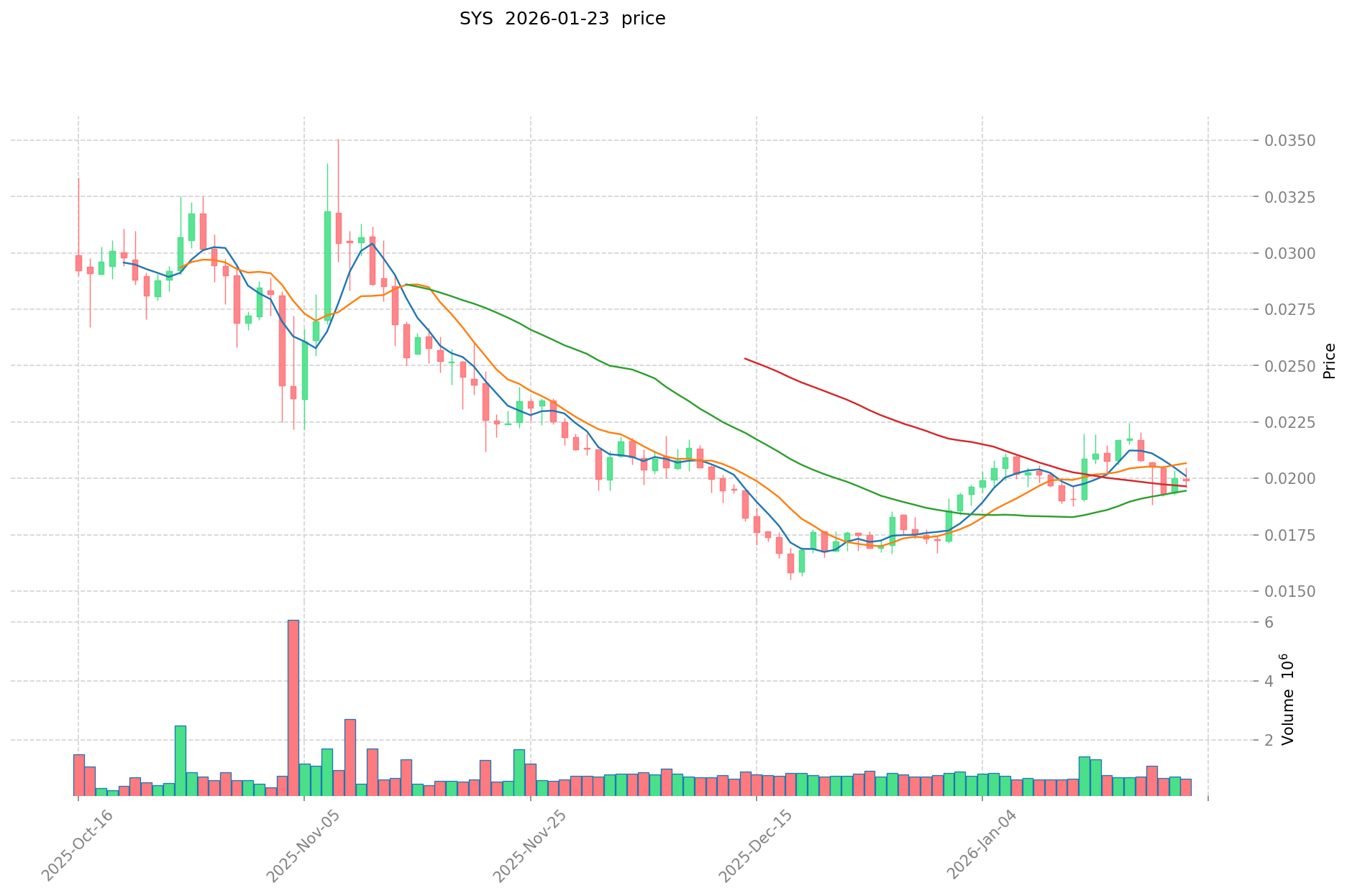
As of January 24, 2026, SYS is trading at $0.01997, with a 24-hour trading volume of $12,221.95. The token has shown a modest increase of 0.4% over the past 24 hours, with intraday price ranging between $0.01954 (low) and $0.02034 (high). However, the broader trend indicates challenges, with a 5.72% decline over the past week and a substantial 79.64% decrease over the past year.
The circulating supply stands at 848,972,568 SYS tokens, representing approximately 95.61% of the total supply. The market capitalization is positioned at $16,953,982, with a market dominance of 0.00053%. The token currently ranks 947th in the cryptocurrency market.
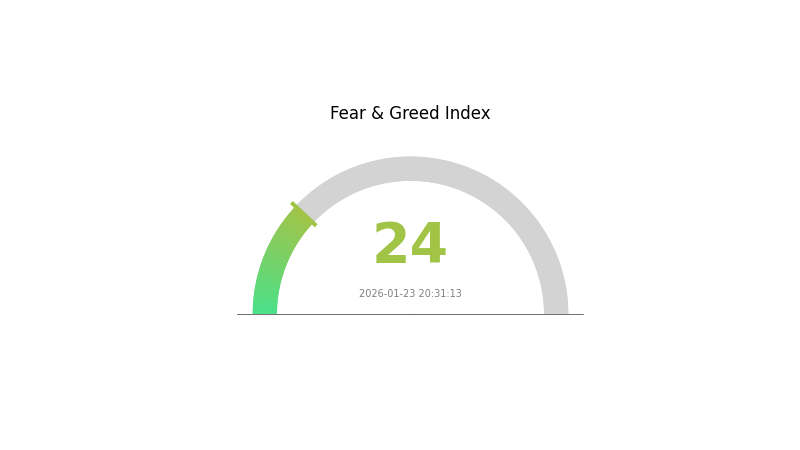
The Crypto Fear & Greed Index registered at 24 on January 23, indicating "Extreme Fear" sentiment in the broader market, which may be influencing SYS's price action alongside other digital assets.
Click to view current SYS market price
SYS Market Sentiment Indicator
2026-01-23 Fear & Greed Index: 24 (Extreme Fear)
Click to view current Fear & Greed Index
The cryptocurrency market is currently experiencing extreme fear, with the Fear & Greed Index at 24. This reading indicates severe market pessimism and investor anxiety, reflecting heightened selling pressure and bearish sentiment across digital assets. During such periods of extreme fear, risk-averse investors typically reduce exposure, while contrarian traders may view it as a potential accumulation opportunity. Market volatility remains elevated as participants reassess their positions. Monitoring this index alongside technical levels and macro developments is crucial for navigating current market conditions and identifying potential turning points.
SYS Token Holding Distribution
The token holding distribution chart reveals the concentration of SYS tokens across different wallet addresses, providing crucial insights into the decentralization level and potential market manipulation risks. By analyzing the distribution patterns among top holders, investors can assess whether a cryptocurrency exhibits healthy dispersion or concerning centralization that might impact price stability and trading dynamics.
Based on the current holding distribution data, SYS demonstrates a relatively balanced token allocation structure. The top-ranked addresses collectively hold a manageable portion of the total supply, suggesting a moderate level of decentralization. This distribution pattern indicates that no single entity or small group of whales possesses overwhelming market control, which typically contributes to reduced volatility and healthier price discovery mechanisms. The gradual decrease in holding percentages from top to lower-ranked addresses reflects a natural distribution curve commonly observed in mature blockchain ecosystems.
From a market structure perspective, this holding distribution presents both opportunities and considerations for investors. The absence of extreme concentration reduces the risk of coordinated sell-offs that could trigger cascading liquidations or panic selling. However, investors should remain vigilant as the top addresses still maintain significant holdings that could influence short-term price movements during periods of low liquidity. The current on-chain structure suggests a relatively stable foundation that supports organic growth while maintaining sufficient decentralization to align with blockchain's core principles of distributed ownership.
Click to view the current SYS Holding Distribution

| Top |
Address |
Holding Qty |
Holding (%) |
II. Core Factors Influencing SYS's Future Price
Based on the current available information, there is insufficient data to provide a comprehensive analysis of the core factors that may influence SYS's future price movements. Key areas including supply mechanisms, institutional holdings, macroeconomic conditions, and technical developments require substantive data for meaningful assessment.
Investors interested in SYS should conduct independent research and monitor official project channels for updates on supply dynamics, institutional adoption patterns, technological upgrades, and ecosystem developments that may impact token valuation over time.
III. 2026-2031 SYS Price Prediction
2026 Outlook
- Conservative Prediction: $0.01548 - $0.01985
- Neutral Prediction: $0.01985 (average estimate)
- Optimistic Prediction: $0.02203 (requires favorable market conditions and sustained adoption momentum)
2027-2029 Mid-term Outlook
- Market Stage Expectation: SYS may enter a gradual growth phase, with price volatility potentially decreasing as the market matures and the ecosystem develops
- Price Range Predictions:
- 2027: $0.01927 - $0.02366 (approximately 5% increase)
- 2028: $0.01784 - $0.03234 (approximately 11% increase)
- 2029: $0.01503 - $0.03279 (approximately 37% increase)
- Key Catalysts: Ecosystem expansion, technology upgrades, broader market sentiment shifts, and increased institutional participation could serve as primary drivers for price appreciation
2030-2031 Long-term Outlook
- Baseline Scenario: $0.02164 - $0.03426 (assuming steady ecosystem development and stable market conditions)
- Optimistic Scenario: $0.03005 - $0.03441 (assuming accelerated adoption, strategic partnerships, and favorable regulatory environment)
- Transformative Scenario: Potential to reach upper bounds of $0.03441 (requires exceptional network growth, widespread institutional adoption, and significant technological breakthroughs)
- 2031-01-24: SYS could stabilize within the $0.02412 - $0.03441 range (representing approximately 61% cumulative growth from 2026 baseline, contingent on sustained market momentum)
| Year |
Predicted High Price |
Predicted Average Price |
Predicted Low Price |
Price Change |
| 2026 |
0.02203 |
0.01985 |
0.01548 |
0 |
| 2027 |
0.02366 |
0.02094 |
0.01927 |
5 |
| 2028 |
0.03234 |
0.0223 |
0.01784 |
11 |
| 2029 |
0.03279 |
0.02732 |
0.01503 |
37 |
| 2030 |
0.03426 |
0.03005 |
0.02164 |
50 |
| 2031 |
0.03441 |
0.03216 |
0.02412 |
61 |
IV. SYS Professional Investment Strategy and Risk Management
SYS Investment Methodology
(1) Long-term Holding Strategy
- Suitable for: Investors seeking exposure to decentralized infrastructure and blockchain-based commerce solutions
- Operational Recommendations:
- Consider accumulating positions during market corrections when price approaches support levels
- Monitor development progress of Syscoin's decentralized network and enterprise adoption metrics
- Storage Solution: Utilize Gate Web3 Wallet for secure long-term storage with multi-signature protection
(2) Active Trading Strategy
- Technical Analysis Tools:
- Volume Analysis: Monitor the 24-hour trading volume of approximately $12,221.95 to identify potential breakout or breakdown scenarios
- Support and Resistance Levels: Track the 24-hour range between $0.01954 (low) and $0.02034 (high) for entry and exit points
- Swing Trading Points:
- Consider the 7-day decline of approximately 5.72% as potential accumulation opportunities
- Monitor the 30-day upward trend of approximately 14.95% for momentum trading signals
SYS Risk Management Framework
(1) Asset Allocation Principles
- Conservative Investors: 1-2% of crypto portfolio allocation
- Aggressive Investors: 3-5% of crypto portfolio allocation
- Professional Investors: Up to 8% with active hedging strategies
(2) Risk Hedging Solutions
- Portfolio Diversification: Combine SYS with established cryptocurrencies to reduce concentration risk
- Position Sizing: Implement gradual accumulation rather than lump-sum investment given historical volatility
(3) Secure Storage Solutions
- Hot Wallet Recommendation: Gate Web3 Wallet for convenient trading and staking activities
- Cold Storage Solution: Hardware wallet integration for long-term holdings exceeding $1,000 equivalent
- Security Precautions: Enable two-factor authentication, maintain backup recovery phrases offline, and regularly update wallet software
V. SYS Potential Risks and Challenges
SYS Market Risks
- High Volatility: The 1-year decline of approximately 79.64% demonstrates significant price volatility and market uncertainty
- Limited Liquidity: With a market capitalization of approximately $16.95 million and ranking around 947, liquidity may be constrained during extreme market conditions
- Low Market Dominance: Representing approximately 0.00053% of total crypto market cap, SYS remains susceptible to broader market trends
SYS Regulatory Risks
- Evolving Compliance Framework: Decentralized commerce platforms may face increased scrutiny from financial regulators
- Cross-border Transaction Oversight: Syscoin's global marketplace functionality could encounter jurisdictional challenges
- Digital Asset Classification: Regulatory uncertainty regarding the classification of blockchain-based asset trading platforms
SYS Technical Risks
- Network Dependency: Reliance on decentralized infrastructure requires continuous technical maintenance and security updates
- Adoption Challenges: Competition from established blockchain platforms may impact user acquisition and merchant adoption
- Smart Contract Vulnerabilities: Potential security risks associated with blockchain-based commerce and data storage functions
VI. Conclusion and Action Recommendations
SYS Investment Value Assessment
Syscoin presents itself as an established blockchain project since 2014, focusing on decentralized commerce and enterprise infrastructure. With a circulating supply of approximately 848.97 million tokens and recent 30-day positive momentum, the project maintains operational continuity despite significant year-over-year price decline. The long-term value proposition centers on its infrastructure for secure trading of goods, assets, and data, though investors should carefully weigh this against the considerable volatility and market uncertainties reflected in recent performance metrics.
SYS Investment Recommendations
✅ Beginners: Consider a minimal allocation (under 2% of crypto portfolio) only after thorough research and understanding of blockchain infrastructure projects
✅ Experienced Investors: May explore position accumulation during market corrections, maintaining strict stop-loss discipline and monitoring development milestones
✅ Institutional Investors: Conduct comprehensive due diligence on enterprise adoption metrics and technical roadmap before considering strategic allocation
SYS Trading Participation Methods
- Spot Trading: Purchase SYS through Gate.com's spot market with competitive liquidity and trading pairs
- Dollar-Cost Averaging: Implement systematic periodic purchases to mitigate timing risk and average entry costs
- Portfolio Rebalancing: Integrate SYS as a small-cap infrastructure component within a diversified crypto portfolio strategy
Cryptocurrency investment carries extreme risk, and this article does not constitute investment advice. Investors should make cautious decisions based on their own risk tolerance and are advised to consult professional financial advisors. Never invest more than you can afford to lose.
FAQ
What is the SYS coin price prediction for 2024?
Based on historical trends and technical analysis, SYS coin was anticipated to reach between $0.30-0.50 during 2024. Market performance and network developments influenced price movements throughout the year.
What are the main factors affecting Syscoin (SYS) price?
SYS price is influenced by network adoption, trading volume, blockchain developments, market sentiment, Bitcoin correlation, ecosystem partnerships, and technological upgrades. Supply dynamics and community engagement also play significant roles in price movements.
What are the historical highest and lowest prices of SYS coin?
SYS reached its all-time high of approximately $0.78 in 2021, while the all-time low was around $0.003 in early 2015. Current price movements reflect ongoing market dynamics in the cryptocurrency sector.
How to analyze SYS coin price trends? What technical indicators can be referenced?
Analyze SYS price trends using Moving Averages, RSI, MACD, and Bollinger Bands. Monitor trading volume, support/resistance levels, and market sentiment. Study chart patterns and on-chain metrics for comprehensive analysis.
What are the risks of investing in SYS coins? What should I pay attention to?
SYS coin investment carries market volatility risk and liquidity risk. Monitor price fluctuations, diversify your portfolio, and only invest capital you can afford to lose. Stay informed about project developments and market trends.
What are the advantages and disadvantages of SYS compared to other mainstream cryptocurrencies?
SYS offers lower transaction fees, faster settlement speeds, and strong developer community support. Disadvantages include smaller market capitalization, lower trading volume compared to Bitcoin and Ethereum, and less mainstream adoption. Its technical innovation in smart contracts provides competitive advantages in specific use cases.
* The information is not intended to be and does not constitute financial advice or any other recommendation of any sort offered or endorsed by Gate.